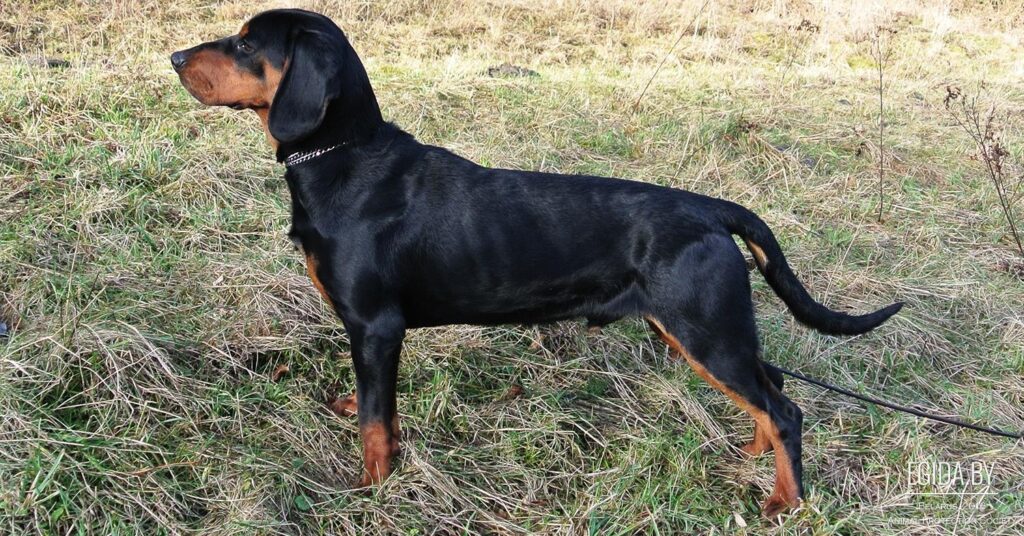
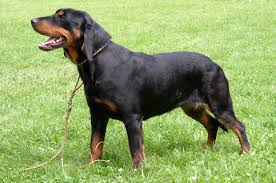
Slovakia's black-and-tan “black forest hound” — fearless and good-natured: keen, hardy, devoted and a reliable watchdog. The Slovakian Hound (Kopov) is a tireless pursuer of large game (boar, deer) with a keen nose and a loud voice; despite its working drive it is good-natured and devoted, good with children and suitable as a watchdog, but needs a special approach to training.
Apartment · not suitableKidsCats · not suitableOther dogsBeginners · with caveats
The Slovakian Hound, also known as the Slovakian Kopov or Black Forest Hound (Slovakian Hound / Slovenský Kopov), is a unique breed that blends the drive and fearlessness of a born hunter with a good-natured and devoted temperament. These dogs, originating from Slovakia, are tireless trackers of game, especially wild boars and deer. Their endurance, sharp nose, and loud bay make them invaluable partners in the woods. At the same time, they can function as dependable watchdogs and even serve in law enforcement. Despite their outstanding working abilities, the Slovakian Kopov is a breed that requires a specific approach to training and care. To learn more about this incredible breed, you can find further information on Tvaryny.
Slovakian Hound: Key Breed Characteristics
Slovakian Hound: Key Breed Characteristics · 8
Characteristic
Description
Origin
Slovakia
FCI Classification
Group 6 (Scenthounds and related breeds), Section 1.2 (Medium-sized Hounds). Standard number 244.
Energetic, brave, resilient, independent, loyal to its owner, wary of strangers.
Use
Hunting large game (boar, deer), guard dog.
Interesting Facts About the Breed
The name "Kopov" comes from a Slovak word that means "to drive" or "to pursue," which directly indicates its purpose.
The Slovakian Hound has an extraordinarily distinct and melodic bark, which an experienced hunter can use to determine what game the dog is tracking and how far away it is.
This is one of the few breeds that is still used almost exclusively for its intended purpose—hunting.
In its homeland, Slovakia, a dog must pass working exams to prove its hunting abilities before being allowed to breed.
The History of the Slovakian Hound
The history of the Slovakian Hound goes back centuries, though the breed only received official recognition in the mid-20th century. These dogs are a source of national pride in Slovakia, and their origins are closely tied to the mountain forests of the Carpathians. It is believed that the ancestors of the modern Kopov were local Celtic hounds that eventually mixed with other European breeds that made their way to Slovakia.
The main force behind the breed's development was the need for a reliable dog for hunting large and dangerous game. Hunters needed a tireless, brave, and yet obedient dog with an exceptional sense of smell and direction for navigating dense forests. For many generations, selection was based solely on their working abilities. It's thought that their bloodline includes breeds like the Transylvanian Hound, as well as Balkan hounds, specifically the Serbian Hound and the Serbian Tricolour Hound. Their physical resemblance to the Gończy Polski also suggests a possible shared lineage.
Deliberate efforts to standardize the breed began only after World War II. In 1963, the Fédération Cynologique Internationale (FCI) officially recognized the Slovakian Kopov and approved its standard. Today, the breed remains the most popular among hunters in Slovakia and the Czech Republic, gradually gaining fans in other European countries, although it is still relatively rare outside its homeland.
What the Slovakian Hound Looks Like: Standard and Appearance
The Slovakian Hound is a medium-sized dog with a strong but light build, which speaks to its endurance and speed. Its appearance is a testament to its function, where every feature serves the purpose of effective hunting.
Body: Slightly elongated, with a straight and strong, medium-length back. The chest is wide and deep, providing plenty of room for its lungs and heart. The loins are well-developed and muscular.
Head: Proportional to the body, with a slightly convex skull. The muzzle is straight, not too pointed, with well-developed jaws. The transition from the forehead to the muzzle is smooth.
Eyes: Dark brown, almond-shaped, with a lively and courageous expression. The gaze is intelligent and alert.
Ears: Drooping, medium length, set slightly above the eye line. They are rounded at the tips and lie close to the cheeks.
Tail: Low-set, shaped like a sabre. In a calm state, it hangs down, and when the dog is moving or excited, it lifts above the back line.
Coat: Dense, thick, medium-length (about 1–2 inches) with a well-developed undercoat that protects the dog from the elements. The hair on the back, neck, and tail is slightly longer.
Color: The only acceptable color is black with reddish or tan markings (from mahogany to light brown). The markings are clearly defined and located on the paws, chest, above the eyes, on the muzzle, and on the inside of the ears.
Character: The Temperament and Behavior of the Slovakian Kopov
The Slovakian Hound's character is a blend of hunting passion and loyalty to its family. This is a dog with a well-defined temperament, full of energy and courage.
Hunting Instincts. In the forest, the Slovakian Kopov turns into a persistent and fearless pursuer. It can follow a trail for hours, barking to let the hunter know its location. Its specialty is large game, and it isn't afraid to confront a wild boar, holding it in place until its owner arrives. This dog has an incredible sense of direction and always finds its way back.
Family Relationship. Despite its independence at work, the Slovakian Hound is a devoted companion at home. It gets very attached to its owner and family members. However, it's not a "couch potato" dog. It needs close human contact but is not clingy. With children it has grown up with, it is usually patient and gentle.
Watchdog Qualities. The Slovakian Kopov has an innate distrust of strangers, which makes it an excellent watchdog. It will always warn with a loud bark about the approach of unfamiliar people. Its voice is powerful and distinct. However, excessive aggression toward people is not typical for the breed, although without proper socialization, it can be overly suspicious.
Compatibility with Other Animals. Due to its strong hunting instincts, keeping a Slovakian Hound with small pets (cats, rodents, rabbits) can be a challenge. It will see them as potential prey. It usually gets along with other dogs, especially if it was raised with them. However, it may show dominance toward dogs of the same sex.
Pros and Cons of the Slovakian Hound
Before getting a serious dog like the Slovakian Kopov, it's important to carefully weigh all its advantages and disadvantages.
Extremely high need for physical exercise: not suitable for apartment living.
Loyalty to its owner and family.
Strong hunting instinct: may chase small animals, prone to escape if it picks up a scent.
Robust health and endurance.
Stubborn and independent: requires an experienced and consistent owner.
Low-maintenance coat care.
Prone to loud and frequent barking.
Excellent watchdog qualities, wary of strangers.
Needs early and intensive socialization.
Rare breed, which attracts attention.
Can be difficult to train for beginners.
Training and Socialization
Training a Slovakian Hound is a challenge even for an experienced dog owner. Its stubbornness, independence, and fierceness toward game, which are valuable for hunting, can create difficulties in everyday life.
Early socialization is critically important. A puppy needs to be introduced to different people, sounds, places, and other animals from a young age. This will help raise a balanced and well-adjusted dog.
Training should be based on consistency, patience, and firmness. The owner must become the undisputed leader for the dog. Roughness and physical punishment are unacceptable, as they can lead to aggression or completely destroy trust. Positive reinforcement works best. Full obedience in this breed develops quite late, sometimes only by the age of two. Special attention should be given to the "Come!" command, as a hound on a scent may ignore any calls from its owner.
Care and Keeping of the Slovakian Kopov
Keeping a Slovakian Hound has its own unique considerations. This breed is absolutely not suited for life in a city apartment. Confinement to four walls, even with long walks, will be detrimental to it.
Living Conditions
The ideal home for a Slovakian Kopov is a country house with a large, securely fenced yard. The fence must be high and sturdy, as these dogs are prone to escaping if they catch an interesting scent. It's best to keep it in a spacious kennel with an insulated doghouse where it can rest after an active day.
Physical Exercise
This is a crucial part of keeping the breed. The Slovakian Hound needs daily, intense physical exercise. Regular walks on a leash are not enough. It needs long runs (including next to a bicycle), active games, and, most importantly, the chance to do what it was bred for—hunting. If you're not a hunter, you'll have to find alternatives like trail running, coursing, or long hikes in the woods where the dog can run freely (in safe areas).
Coat Care
Caring for the Kopov's short coat is not complicated. It's enough to brush it 1–2 times a week with a special brush or a rubber mitt to remove dead hair. Shedding is moderate and seasonal (spring and fall). You should only bathe the dog when necessary.
Nutrition
Slovakian Hound Nutrition: Key Recommendations
Health and risks
Slovakian Hound Health: Typical Ailments and Prevention
Frequently Asked Questions About the Breed (FAQ) · 5
Is the Slovakian Hound suitable for beginners? No, this breed requires an experienced owner who can handle its independent nature and provide the proper level of exercise.
Can a Slovakian Hound be kept in an apartment? This is not recommended at all. The dog needs space and freedom of movement. Apartment life will lead to behavioral problems.
How does the Slovakian Hound get along with children? It is usually patient with children in its own family, but due to its high energy level, games with young children should be supervised by adults.
Does this breed shed a lot? Shedding is moderate and seasonal (spring and fall). Regular brushing helps keep it under control.
Can it be used as a companion dog instead of a hunter? It is possible, but only if the owner can provide the dog with equivalent physical and mental stimulation that mimics hunting (e.g., long hikes, dog sports). Otherwise, the dog will be unhappy.
Video about the breed
FAQ
Why is the Slovakian Hound called the “black forest hound”?
For its distinctive black-and-tan color and its work in the forest: a tireless pursuer of large game — wild boar and deer — with a keen nose and a loud voice.
Is the Kopov good for a family?
Yes — despite its working drive it is good-natured, devoted and good with children, and it also makes a reliable watchdog that guards property and family without needless aggression.
Is the breed suited to an apartment?
Poorly — a hardy working hound with high exercise needs and an independent character; it needs space, work and consistent training.