Group 6: Scent Hounds and Related Breeds. Section 1.2: Medium-sized Hounds. · Hungary
Transylvanian Hound
A tricolor Carpathian hound of the Hungarian nobility — hardy and level-headed: devoted, brave, independent and attached to one owner. The Transylvanian Hound (Erdélyi Kopó) is an ancient Hungarian breed that hunted for centuries in the inaccessible forests of the Carpathians; a national treasure of Hungary, it is level-headed with family and children but needs an experienced owner and takes being alone hard.
Height
55–65 cm
Weight
at least 25 kg long-legged variety
Lifespan
10–14 years
FCI group
Group 6: Scent Hounds and Related Breeds. Section 1.2: Medium-sized Hounds.
Apartment · not suitableKidsCats · not suitableOther dogsBeginners · not suitable
The Transylvanian Hound (Erdélyi Kopó) is an ancient Hungarian breed of resilient hunting dog that served for centuries as a faithful companion to the aristocracy on hunts in the rugged Carpathian forests. With its unique tricolor coat and an independent but devoted nature, this dog is a true national treasure of Hungary. A characteristic feature of the breed is its balanced temperament, which helps it get along with all family members, including children. Transylvanian Hounds are highly trainable but require a great deal of physical activity and an experienced owner. They recognize only one master and have a hard time with loneliness. To learn more about the intricacies of their care, history, and unique traits, read on at Tvaryny.
Transylvanian Hound: Key Breed Information
Transylvanian Hound: Key Breed Information · 10
Original Name
Erdélyi Kopó
Country of Origin
Hungary (the historical region of Transylvania)
Time of Origin
Middle Ages (9th–11th centuries)
FCI Group
Group 6: Scent Hounds and Related Breeds. Section 1.2: Medium-sized Hounds.
Lifespan
10–14 years
Height (at the withers)
55–65 cm (21.5–25.5 in) long-legged variety
Weight
at least 25 kg (55 lbs) long-legged variety
Purpose
Hunting big game (boar, deer, lynx), companion dog
Temperament
Brave, resilient, intelligent, independent, devoted, calm at home
Exercise Needs
Very high
Interesting Facts about the Transylvanian Hound
National Treasure: In 2004, the Hungarian Parliament officially recognized the Transylvanian Hound as a national treasure of the country.
A "Musical" Voice: Like many hounds, the Erdélyi Kopó has a clear, melodic bark (bay). Experienced hunters could determine which animal it was pursuing and how far away it was by the tone of its voice.
Specialization by Size: Historically, the long-legged and short-legged varieties were not used by chance—they were purposefully bred for hunting different types of game, which shows a deep understanding of hunting practices at the time.
A Solo Hunter: Unlike many hounds that work exclusively in large packs, the Transylvanian Hound can work effectively both alone and in pairs, which makes it a versatile hunter.
Saved from the Ashes: The entire modern population of the breed originates from just a few dozen dogs that were found and rescued after 1968.
History of the Transylvanian Hound: From Royal Hunts to the Brink of Extinction
The history of the Transylvanian Hound is dramatic and deeply intertwined with the history of the Carpathian region. It's believed that the ancestors of these dogs arrived in modern-day Hungary with Magyar tribes as early as the 9th century. They were strong and hardy dogs used for hunting in challenging mountain conditions. Over centuries, they interbred with local Celtic hounds, and likely with hounds brought in from Poland as well. This blend of bloodlines created a unique breed perfectly suited to the local climate and terrain.
The golden age for the Erdélyi Kopó was the Middle Ages. The breed was highly valued by the Hungarian nobility and royal courts. They were used for hunting big game: bears, boars, deer, and wolves. Thanks to their stamina, sharp sense of smell, and ability to work both alone and in a pack, the Transylvanian Hound became an indispensable aid for aristocrats. Images of these noble dogs on royal hunts are often found in chronicles and ancient engravings.
However, the 20th century was a true test for the breed. Changes in agriculture, the development of the forestry industry, and a reduction in hunting grounds significantly lessened the need for such dogs. The biggest blow came from a decree by the Romanian government in early 1947, which declared Hungarian dog breeds "undesirable" and ordered their extermination. This decision brought the Transylvanian Hound to the brink of complete disappearance. It seemed the unique breed would be lost forever.
Fortunately, in 1968, a group of Hungarian canine enthusiasts started a program to revive the breed. They managed to find a few purebred representatives that had survived in remote parts of Transylvania. Thanks to their efforts, the breed was saved. Today, the Transylvanian Hound is recognized as a national treasure of Hungary, although it remains quite rare outside its homeland.
Standard and Appearance of the Breed
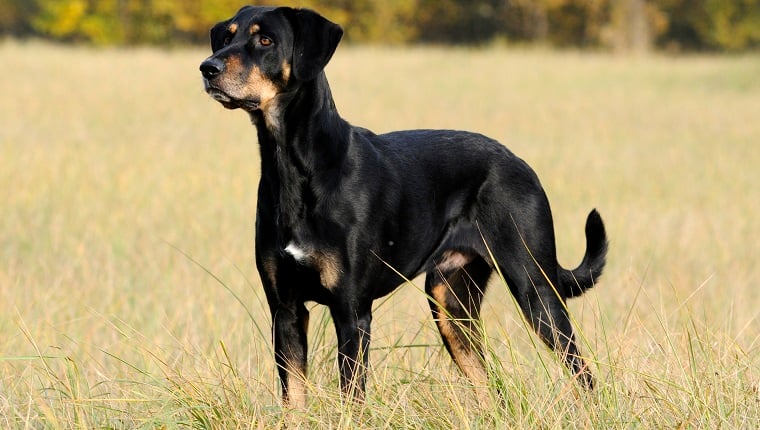
The Transylvanian Hound is an elegant, athletically built medium-sized dog whose appearance exudes strength and endurance. Its body is perfectly balanced for long runs over difficult terrain. Historically, there were two varieties of the breed, which differed in size and purpose.
Two Varieties: Long-legged and Short-legged Hounds
The long-legged Transylvanian Hound is the variant that has survived to this day and is described by the modern FCI standard. Its height at the withers is 55–65 cm (21.5–25.5 in). This dog was used for hunting big game such as deer, boar, and lynx.
The short-legged Transylvanian Hound was smaller, with a height of 45–53 cm (17.5–21 in). It was used for hunting small game (foxes, hares) in dense undergrowth. Unfortunately, this variety is considered extinct or on the verge of extinction, and efforts to restore it have not yet had significant success.
Head, Eyes, and Ears
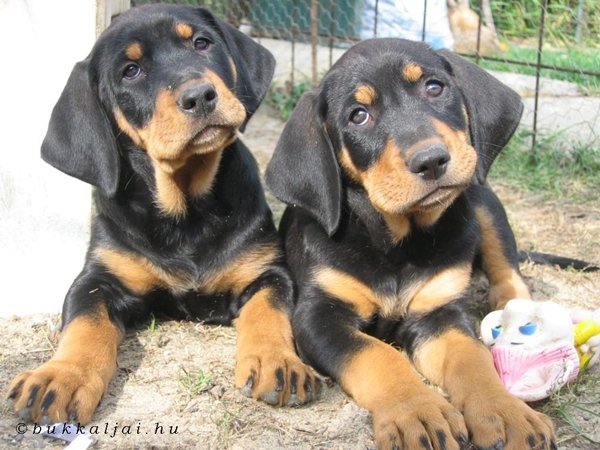
The head of the Erdélyi Kopó is typical for a hound: long but not pointed, with a defined stop. The skull is slightly domed. The eyes are medium-sized, almond-shaped, slightly slanted, and dark brown. The gaze is intelligent, calm, and confident. The ears are medium in length, pendulous, and lie close to the cheeks, with no folds and rounded at the tips.
Coat and Coloring of the Transylvanian Hound
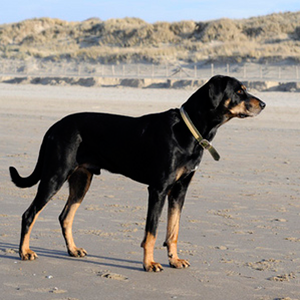
The breed's coat is short, dense, rough to the touch, and shiny. Underneath is a thick undercoat that provides reliable protection from the elements. The main color is black. Symmetrical red or fawn tan points are a must on the muzzle and legs. A characteristic feature of the breed is white markings: a small "star" on the chest, white "socks" on the paws, and a white tail tip. White marks on other parts of the body are considered undesirable.
Parameter
Value
Height at withers
55 – 65 cm (21.5–25.5 in)
Weight
Minimum 25 kg (55 lbs)
Body
Rectangular, slightly elongated
Back
Straight and strong
Tail
Saber-shaped, carried low when at rest
Character and Temperament of the Transylvanian Hound
Away from the hunt, the Transylvanian Hound is a surprisingly calm and balanced dog. At home, it is quiet and unobtrusive, turning into a gentle companion. However, you should not forget its hunting roots. It is a very intelligent and independent dog that is used to making its own decisions. It is endlessly devoted to its owner, whom it chooses once and for all, but is cautious and distrustful of strangers, which makes it a good watchdog.
The Erdélyi Kopó has a strong character and doesn't tolerate harsh treatment. At the same time, it is very sensitive to its owner's mood and strives to please them. This is a high-energy dog that needs not only physical but also mental stimulation. A simple walk on a leash twice a day will be woefully inadequate. The ideal scenario for it is 2–3 hours of active exercise per day, which includes off-leash running (in a safe area), swimming, games, or accompanying its owner on a bike ride or jog. Excellent activities for them include scent work (nose work) or other canine sports that engage their incredible sense of smell.
Relationships with Children and Other Animals
The Transylvanian Hound gets along well with children, especially if it grows up with them. It is patient and can be a wonderful playmate for older children who understand how to behave with a dog. However, due to its size and strength, interactions with very young children should always be supervised.
It generally coexists peacefully with other dogs, as it is used to working in a pack. But problems can arise with cats and other small pets. Its hunting instinct is very strong, and any fast-moving small animal can be perceived as prey. Early and proper socialization can help smooth out these traits, but you should not rely on it completely. This behavior is also common in other hunting breeds, such as the Polish Hunting Dog or the Slovakian Kopov.
Pros and Cons of the Transylvanian Hound Breed
Pros and Cons of the Transylvanian Hound Breed · 6
✅ Pros
❌ Cons
Exceptional loyalty to its owner and family.
Requires very high levels of physical exercise, not suitable for apartment living.
Balanced and calm temperament at home.
A tendency to escape and wander if it picks up an interesting scent.
High intelligence and ability to learn.
A strong hunting instinct that poses a danger to cats and other small animals.
Robust health and endurance.
An independent and sometimes stubborn nature, requiring an experienced owner.
Low-maintenance coat care.
Handles loneliness poorly and can become destructive.
A good, watchful guard dog.
A fairly rare breed, puppies can be hard to find.
Training and Raising the Erdélyi Kopó
Training a Transylvanian Hound is an interesting but also challenging process. On the one hand, they are very smart dogs that quickly pick up new information. On the other, their independence and innate stubbornness require patience, consistency, and firmness from the owner. Harshness and physical punishment are completely unacceptable—they will only lead to a loss of trust.
The method of positive reinforcement works best: praise, treats, and toys. Sessions should be short, varied, and interesting so the dog doesn't lose interest. A key moment in their training is teaching the "come" command. Due to their strong hunting instinct, recalling a hound from a scent can be extremely difficult. You need to start working on this from an early age and constantly reinforce the skill.
Care and Maintenance: What an Owner Needs to Know
Grooming: Coat, Claws, and Ear Care
Caring for a Transylvanian Hound is straightforward. Its short, rough coat only needs to be brushed with a rubber brush or glove once or twice a week to remove dead hairs and maintain its shine. During seasonal shedding (spring and fall), the procedure should be done more often. Bathing the dog should only be done when absolutely necessary, as frequent washing can disrupt the skin's natural protective layer. Claws should be trimmed about once a month if they don't wear down naturally.
Special attention should be paid to the ears. As with all floppy-eared breeds, they have poor ventilation, which creates a favorable environment for bacteria and fungi. Regularly check the ear canal for redness, dirt, or unpleasant smells and gently clean it with a special lotion.
Physical Exercise and Activity
This is the most crucial aspect of owning an Erdélyi Kopó. This dog was bred for running and needs daily, intensive workouts. A standard walk on a leash twice a day will be nowhere near enough. The ideal option is 2–3 hours of active sessions per day, which include off-leash running (in a safe place), swimming, games, or accompanying the owner on a bike ride or jog. Great activities for them include tracking (nose work) or other canine sports that engage their incredible sense of smell.
Living Conditions
The Transylvanian Hound is absolutely not suited for city apartment life. It needs space. The best place for it would be a private house with a large, securely fenced yard where it can run freely. The fence must be high and strong, with no gaps for digging underneath, as these dogs are master escape artists if something outside the yard catches their interest.
Nutrition
Feeding the Transylvanian Hound: Key Recommendations
Health and risks
Health, Diseases, and Lifespan
Frequently Asked Questions about the Breed (FAQ)
Is the Transylvanian Hound suitable for a family with children?
Yes, it can be a wonderful family dog, especially for active families who love spending time outdoors. It is patient with children, but interactions with the youngest should always be supervised.
Can the Transylvanian Hound live in an apartment?
No, this is strongly not recommended. This breed needs space to move, and a house with a large, securely fenced yard is the ideal option.
Do they shed a lot and is their coat care complicated?
Coat care is simple—it is enough to brush once a week. Shedding is moderate and increases twice a year (spring and fall). This is not a breed whose hair will be found in excessive amounts all over the house.
Do they bark a lot?
At home, they are quite quiet. They mainly bark when hunting or if they sense a threat on their territory. Their bark is loud and clear.
How easily can they be trained?
They are intelligent but independent. Novices in dog ownership may find it difficult to cope with their stubbornness. They require a patient, consistent, and experienced owner who can be a leader for them.
Video about the Breed
FAQ
Where does the Transylvanian Hound come from?
It is an ancient Hungarian breed (Erdélyi Kopó) that served the aristocracy for centuries hunting in the inaccessible Carpathian forests; it is a national treasure of Hungary.
Is the Transylvanian Hound good for a family?
Yes — it is level-headed and gets on with everyone, including children; but it usually recognizes only one owner and takes being alone hard.
Is the breed suited to a novice?
No — a hardy working scenthound with a strong instinct and a need for heavy exercise; it needs an experienced, active owner.