

| Height | 40–53 cm |
| Weight | 16–22 kg |
| Lifespan | 12–14 years |
| FCI group | 6 · scenthounds |
| Origin | Germany |
Exact ratings
Common health issues
Nutrition
The German Hound (Deutsche Bracke) is an elegant and resilient scent hound from Germany, highly prized by hunters for its outstanding working abilities and its loud, melodic voice. Thanks to its balanced temperament and friendly nature, it can make a wonderful family companion—obedient and easy to care for. However, it’s important to understand that this dog finds true happiness only when actively working. It’s best to get a German Hound only if you’re an active hunter or a very energetic person who can provide your dog with regular physical and mental exercise. The ideal scenario, of course, is a dog that gets to hunt regularly. Members of this breed are masters at following a blood trail and work exceptionally well in a pack with other hounds. To learn more about the unique characteristics of this breed, read more on Tvaryny.
German Hound: Key Breed Information
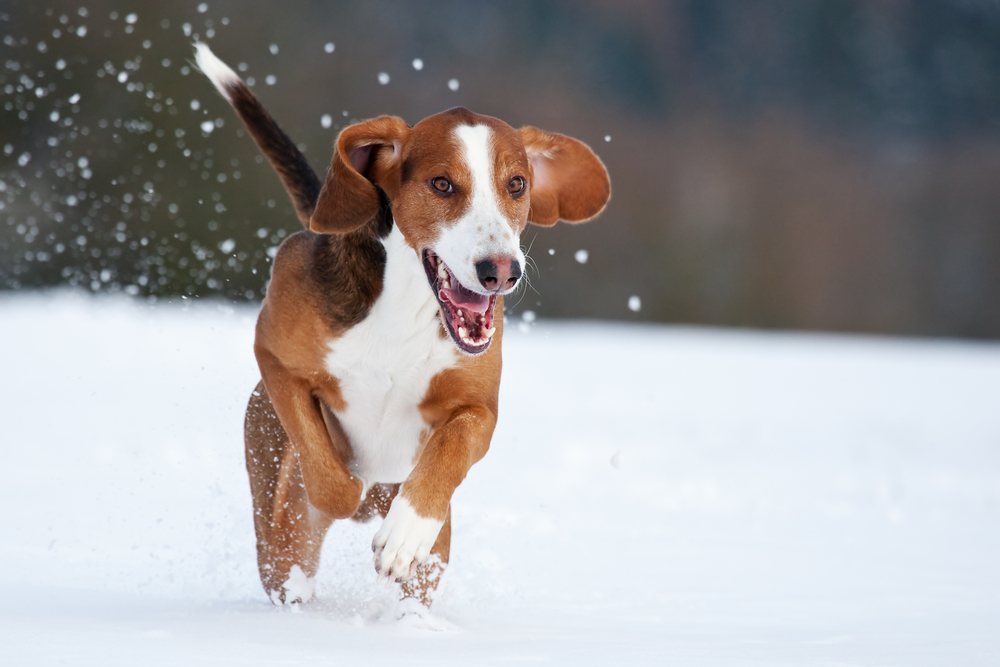
| Breed Name | Deutsche Bracke, German Hound |
| Country of Origin | Germany |
| Date of Origin | 19th Century (officially — 1896) |
| FCI Classification | Group 6 (Scenthounds and Related Breeds), Section 1.3 (Small Hounds). Working Trial Required. |
| Height at Withers | 15.7–20.9 inches |
| Weight | 40–50 lbs |
| Lifespan | 10–13 years |
| Primary Use | Hunting small to medium game (hare, fox, roe deer, wild boar) |
| Temperament | Friendly, energetic, intelligent, loyal, strong hunting instinct |
| Grooming | Minimal, requires regular brushing and ear checks |
| Physical Activity | Very high, needs intense daily exercise |
History of the German Hound
The history of the German Hound has deep roots. Its distant ancestors are believed to be the ancient Celtic Hounds (Segusian), which accompanied Celtic tribes during their migrations across Europe. These dogs were famous for their exceptional sense of smell and their ability to tirelessly pursue prey. Over time, regional types of hounds, known by the general name “Bracke,” were developed in what is now Germany. They became indispensable helpers in hunting various kinds of game.
Until the 19th century, there were countless varieties of these dogs, differing in size, color, and certain working qualities. Two types were especially common in the Westphalia region: the heavier and more massive Sauerländer Holzbracke and the lighter, more elegant Steinbracke. It was these two that formed the foundation of the modern breed. The goal of the breeders was to combine the best traits of both types: the endurance and strength of the Holzbracke with the excellent nose and speed of the Steinbracke. This unique combination can be found in a similar breed, the Westphalian Dachsbracke.
A key date in the breed’s history was 1896, when the “Deutscher Bracken-Club” was founded. Thanks to the club members’ efforts, the breed was standardized, uniting the different variations under a single name—the Deutsche Bracke. This allowed them to preserve the unique working qualities and characteristic appearance of these dogs. The German Hound remains the only representative of the Westphalian hounds to have survived to this day. Today, it is a valuable national asset of Germany and is highly esteemed by hunters throughout Europe. The breed was officially recognized by the Fédération Cynologique Internationale (FCI) in 1954.
Standard and Appearance of the German Hound
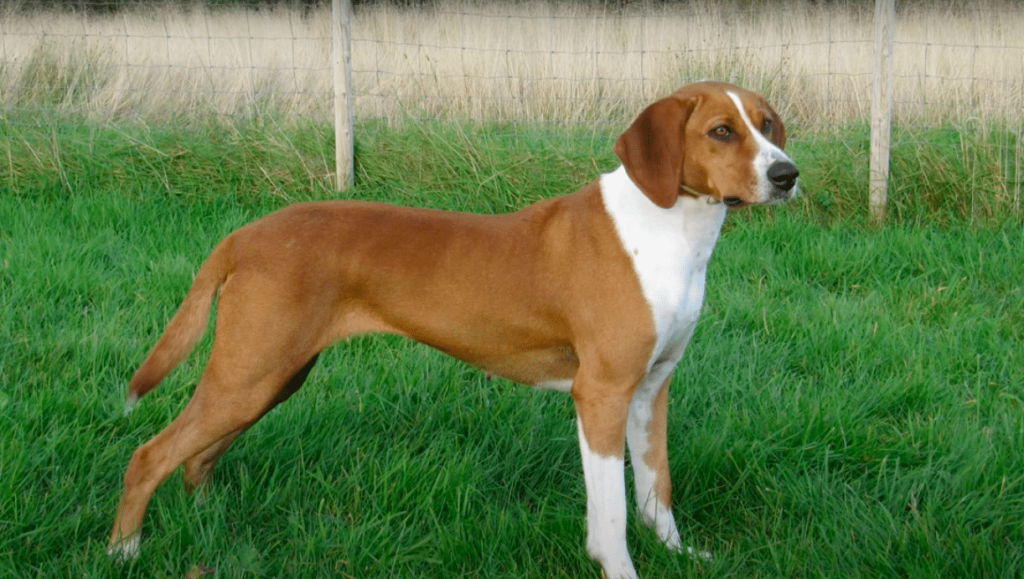
The German Hound is a medium-sized scent hound that combines elegance with a powerful build. Its appearance gives away its nature as a tireless hunter, capable of covering long distances over rough terrain. It gives the impression of a nimble, high-legged, yet strong dog with a noble head and a confident posture.
- Head: Lean, elongated, and light. The skull is slightly wider than the muzzle. The stop is smooth but noticeable. The muzzle is not pointed.
- Ears: Very long (reaching the tip of the nose) and broad, set high. They lie flat against the cheeks, have rounded tips, and a smooth surface. This is one of the breed’s most distinctive features.
- Eyes: Dark, clear, with a friendly and intelligent expression.
- Body: Slightly elongated. The neck is of medium length and strong. The back is straight, sloping slightly towards the rump. The chest is deep and long, providing ample space for the lungs and heart. The belly is moderately tucked up.
- Tail: Long, set high, thick at the base and tapering towards the end. It is covered with dense fur, creating a “brush” effect. The dog carries it like a saber or slightly lowered.
- Coat: Short, very dense, and harsh to the touch, almost bristly. The fur on the belly and the inside of the thighs is softer. A well-developed undercoat provides reliable protection from bad weather.
- Color: Classic for hounds—tricolor. The main color is red to fawn-yellow with a black saddle or blanket. The obligatory white “Bracken markings” include a blaze or patch on the head, a white muzzle, a white ring around the neck, a white chest, white legs, and a white tail tip.
Interestingly, among European hounds, there is a great variety of “Bracke”-type breeds. For instance, the Austrian Black and Tan Hound has a similar purpose but is distinguished by its solid black coat with tan markings.
Character and Temperament
The character of the German Hound is a harmonious blend of two opposites. On the hunt, it’s a passionate, persistent, and relentless pursuer, while at home, it’s a calm, gentle, and loyal companion. This duality makes it unique but also places high demands on the owner.
Dogs of this breed are very people-oriented. They form strong bonds with their owner and family members, eager to spend as much time with them as possible. The German Hound gets along wonderfully with children, especially if it’s raised with them, showing remarkable patience and gentleness. However, as with any dog, their interactions should be supervised.
At the same time, you shouldn’t forget its hunting roots. The instinct to chase is in its blood. This means that during walks in unsecured areas, it should not be let off the leash. Upon catching an interesting scent, the hound can instantly forget all commands and set off in search of “prey.” This trait makes it unsuitable for keeping in urban environments without a secure fence.
German Hounds are smart and clever, but they can show a certain independence and stubbornness, which is typical for hounds bred to make decisions far from the hunter. They are not prone to unprovoked aggression toward people or other dogs and get along well in a pack. However, small household pets (cats, rodents, birds) may be perceived as potential prey.
Care and Maintenance
Caring for a German Hound doesn’t require complex procedures, but it has its own unique aspects related to its purpose and high energy level. This is not a dog for an apartment or for inactive people.
Physical Exercise and Activity
This is the most important part of owning the breed. The German Hound needs at least 1.5-2 hours of intense physical exercise daily. Simple walks on the leash are not enough. The ideal situation is being able to run freely in a large, securely fenced area. Long hikes in the woods (on a long leash), jogging alongside the owner on a bike, or dog sports like agility or lure coursing are also excellent. Without enough activity, the dog becomes restless, may exhibit destructive behavior at home, and will suffer from boredom.
Grooming and Coat Care
The German Hound’s short and harsh coat doesn’t require complex grooming. It’s enough to brush it 1-2 times a week with a rubber brush or grooming mitt to remove dead hairs and maintain a healthy appearance. Shedding is moderate throughout the year and increases seasonally in the spring and fall. You should only bathe the dog when absolutely necessary, as frequent washing can damage the skin’s natural protective layer.
Pay special attention to the ears! Their long, pendulous shape prevents proper ventilation of the ear canal, creating a favorable environment for the development of infections and inflammations (otitis). You must regularly—at least once a week—check the ears for redness, dirt, or an unpleasant odor and carefully clean them with a special lotion. Also, regularly check the paw pads after walks and trim the claws as needed.
Training and Raising a German Hound
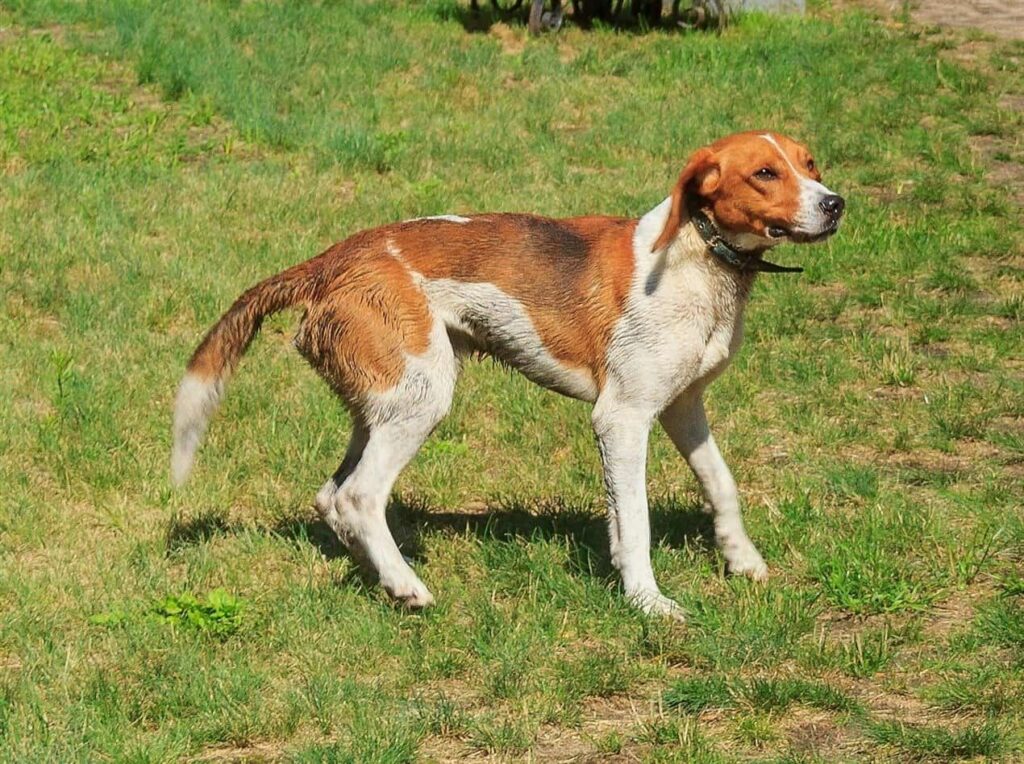
Training a German Hound requires an owner’s patience, consistency, and a deep understanding of its hunting nature. These are intelligent dogs that learn quickly, but their innate independence can complicate the process. They were bred to make their own decisions while pursuing game, so blind obedience is not in their character.
The key to success is positive reinforcement. Use treats, praise, and games for motivation. Harsh methods and punishment can lead to a loss of trust and stubbornness. Training sessions should be short, interesting, and varied so the dog doesn’t lose interest.
From an early age, you need to focus on socialization: introduce the puppy to different people, sounds, places, and other dogs. This will help raise a confident and well-adjusted dog. The most important command for any hound is “Come!” or “Recall.” You should start practicing it from an early age in a safe place, gradually making the conditions more challenging. However, even a perfectly trained hound may ignore the command if it catches the scent of game.
Many German Hounds, like their relatives, for example, the Westphalian Dachsbracke, need not only physical but also intellectual exercise. Games of finding objects, tracking work, or specialized hunting drills will help satisfy its natural needs. Similarly, the Petit Basset Gascon Saintongeois also needs a lot of stimulation.
Health and Common Ailments
Diet: What to Feed a German Hound?
Pros and Cons of the German Hound Breed
Before getting such a serious dog, it’s worth weighing all the pros and cons. A similar approach is important when choosing other hunting breeds as well, such as the Petit Basset Gascon Saintongeois.
| ✅ Pros | ❌ Cons |
|---|---|
| Outstanding hunting abilities. Excellent sense of smell, endurance, and a ringing voice. | Extremely high need for physical exercise. Not suitable for inactive people. |
| Loyal and loving temperament. Forms a strong bond with the family. | Very strong hunting instinct. Cannot be let off the leash in unsafe areas. |
| Good health. The breed is not burdened with hereditary diseases. | Not suitable for apartment living. Needs space and a fenced-in area. |
| Easy to care for. Doesn’t require complex grooming. | Prone to escaping if it finds a way out of the fence. |
| High intelligence. Learns well with the right approach. | Can be stubborn and independent in its decision-making. |
| Friendly nature. Gets along well with children and other dogs. | Can be loud. Prone to barking, especially out of boredom. |
Interesting Facts About the German Hound
- The German Hound is the only hound breed originating from Westphalia that has survived to this day.
- The characteristic melodic and ringing voice during the pursuit of game (the so-called “Spurlaut”) is one of the main breed traits, to which great attention is paid during breeding.
- The typical white markings on the head, neck, chest, legs, and tail have their own name—”Bracken markings” (Brackenmarken)—and are mandatory according to the standard.
- Despite its popularity among hunters in Germany and neighboring countries, the breed remains quite rare outside of them.
- The name “Bracke” comes from an old German word meaning “a hound that works by scent.”
Frequently Asked Questions (FAQ)
Is the German Hound suitable for apartment living?
Absolutely not. This dog needs space to move. The ideal option is a house with a large, securely fenced yard where it can run freely.
Does the German Hound get along with children and other animals?
It generally gets along wonderfully with children, especially if it was raised with them. It also usually doesn’t have a problem with other dogs. However, serious issues can arise with small household pets (cats, rabbits, hamsters) due to its powerful hunting instinct. Their cohabitation is not recommended.
Does the German Hound shed a lot?
Shedding is moderate throughout the year and increases twice a year during the seasonal coat change. Regular brushing helps to keep this process under control.
Can I own this dog if I’m not a hunter?
Yes, but only if you’re willing to dedicate a lot of time to active pursuits with your pet. This could include long daily runs, hikes, bike rides, or engaging in dog sports (for example, canicross or tracking). A simple walk in the yard will not be enough for it.
Video about the Breed
- A hardy, hard-working trailing hound
- A ringing, melodious voice on the trail
- Friendly, devoted, good with children
- Works splendidly in a pack
- Loud — "gives tongue" on the trail
- A strong hunting instinct (dangerous to cats)
- Not for an apartment without a workload
- Needs scent work or hunting
| Westphalian Dachsbracke | Beagle | Estonian Hound | |
|---|---|---|---|
| Height | 30–38 cm | 33–40 cm | 42–52 cm |
| Energy | 4 | 4 | 4 |
| Apartment | 2.5 | 3 | 2 |
| Beginners | 3 | 3.5 | 3 |
Is the German Hound good for a family?
Is the breed suitable for an apartment?
Why does the German Hound bark a lot?
FCI Standard No. 299 · Verband für Deutsche Bracken
For apartments · For kids · For beginners · Active · Smartest · Hypoallergenic · All rankings →