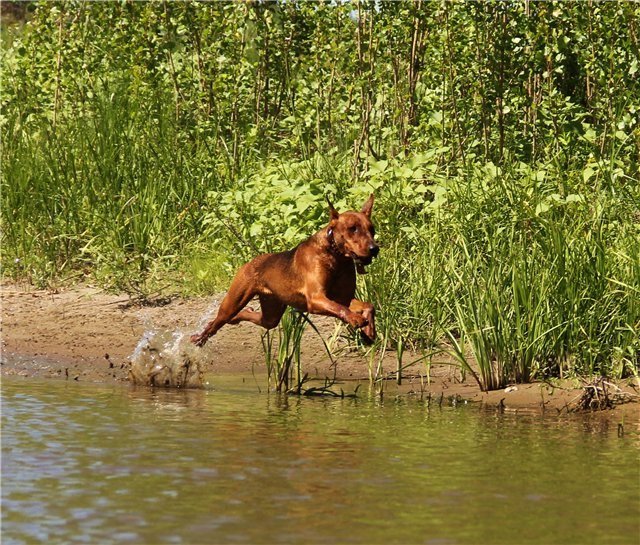
Group 2 (Pinscher and Schnauzer, Molossoid breeds, Swiss Mountain and Cattle Dogs) · Germany
German Pinscher
An elegant, square athlete with an iron character: lively, clever, brave and devoted. The German Pinscher is the ancestor of the Doberman and the Miniature Pinscher, an energetic guard-companion of medium size; it sheds little and is clever, but its drive demands consistent training.
Apartment · with caveatsKidsCats · with caveatsOther dogs · with caveatsBeginners · with caveats
The German Pinscher is not just a wonderful dog that's ideally suited for apartment living; it's also an energetic, intelligent, and endlessly devoted companion. This breed combines elegance, athleticism, and a sharp mind, making it an excellent choice for active owners. A superb protector and guardian, it is instinctively wary of strangers but boundlessly loving toward its family. Historically bred as a multi-purpose farm dog and an effective ratter, the modern Pinscher has retained its vigilance and industrious nature. It gets along well with other pets if raised with them from a young age, but its hunting instincts can be a challenge. It is good with children and will happily play with them, provided the children respect the animal and its personal space. German Pinschers are built for family life; they are top-tier protectors, loyal, playful, and well-balanced. We'll talk more about this amazing breed later on Tvaryny.
German Pinscher: Breed Overview and Characteristics
The German Pinscher is a smooth-coated, medium-sized dog with a square build, exuding both strength and elegance. It is often confused with the Miniature Doberman, although it is actually the ancestor of many Pinscher-type breeds. This is a dog with high levels of energy and intelligence, requiring an active lifestyle and consistent training.
German Pinscher: Breed Overview and Characteristics · 9
Characteristic
Description
Origin
Germany
Year of first mention
1879 (official recognition)
Lifespan
12–14 years
Height at withers
45–50 cm (17.5–19.5 inches) (for males and females)
Weight
14–20 kg (31–44 lbs) (standard weight, though source had 13–18)
FCI Group
Group 2 (Pinscher and Schnauzer, Molossoid breeds, Swiss Mountain and Cattle Dogs)
The German Pinscher is part of the large Pinscher and Schnauzer family. Understanding its connections to other breeds helps to better understand its character.
The Miniature Pinscher is not just a scaled-down version. Although they share a common ancestor, the "Min Pin" was bred as a purely indoor companion dog. It is smaller but often has an even more spirited and "terrier-like" personality, earning it the nickname "King of the Toys." The German Pinscher is calmer, larger, and still retains more of its working qualities.
The German Pinscher is considered one of the progenitors of the Doberman Pinscher. They share a similar elegant build, short coat, and guarding instincts. However, the Doberman is significantly larger, more powerful, and was purposefully bred for service and protection work. The Pinscher is more of a companion dog with guarding duties, whereas the Doberman is a serious working dog.
Other Related Breeds
Several other Pinscher-type breeds exist. For example, the Austrian Pinscher is a more rustic, rougher farm dog, not as elegant as its German cousin. There are also farm dogs with similar roles but not always related, such as the Danish-Swedish Farmdog, which also served as ratters and guardians on farms.
Interesting Facts About the German Pinscher
Pinscher and Schnauzer - One Breed: Until the late 19th century, smooth-coated Pinschers and wire-coated Schnauzers were considered one breed, just with different coat types. They were often born in the same litter.
Almost Extinct: As mentioned, the breed was on the verge of extinction after WWII. All modern German Pinschers descend from a very small group of dogs saved in the 1950s.
A True Ratter: Unlike many modern breeds that have long since lost their original purpose, Pinschers have retained a sharp hunting instinct for rodents. Owners often note their dogs successfully hunt mice or moles in the yard.
"Velcro Dog": Pinschers are known for their incredible attachment to their owner. They tend to follow their person from room to room and do not like to be left alone for long.
History and Origin of the German Pinscher
The history of the German Pinscher is closely intertwined with that of the Miniature Pinscher and the Schnauzer. For centuries, these dogs were known in Germany as versatile farm helpers. Their main job was catching rats and other rodents in stables and houses, for which they earned the nickname "Rattlers". They also guarded property and accompanied carts.
Initially, "Pinscher" was more of a description of a dog type (a smooth-coated ratter) than a specific breed. Pinschers and Schnauzers (the wire-haired variant) were often born in the same litter and registered as one breed. Only in the late 19th century did purposeful selective breeding begin. In 1879, the German Pinscher was recognized as a separate breed. Friedrich Louis Dobermann, creator of the famous Doberman Pinscher breed, is believed to have used German Pinschers (or their direct ancestors) as one of the foundations for creating his larger, working dog.
The two World Wars dealt a devastating blow to the breed. Especially after the Second World War, the German Pinscher was on the brink of complete extinction. From 1949 to 1958, not a single litter was registered in West Germany. The breed was effectively saved by an enthusaist named Werner Jung, who gathered a few surviving representatives and, using Miniature Pinschers to restore the bloodline, began a revival program. Thanks to his efforts, we can enjoy the company of these wonderful dogs today.
What the German Pinscher Looks Like: Appearance
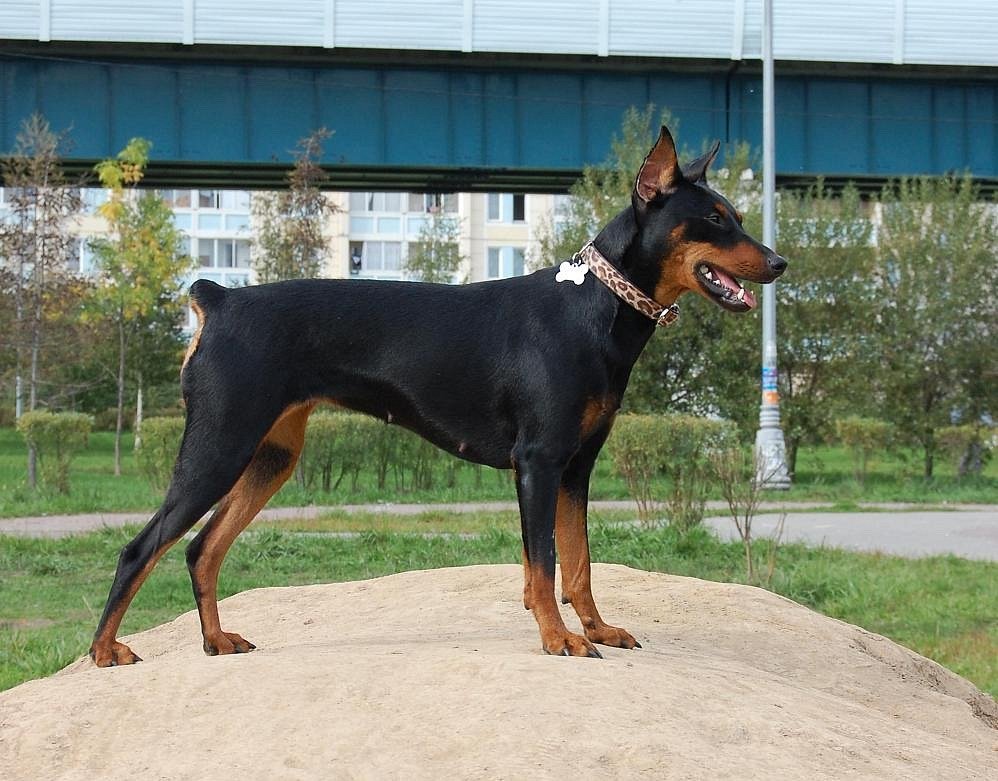
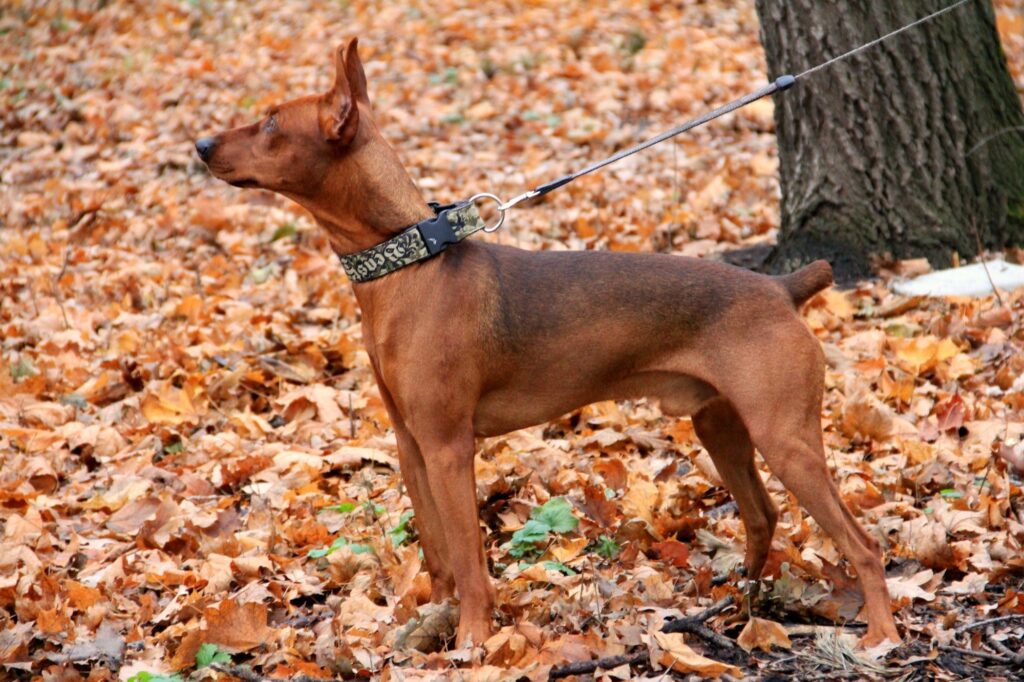
The German Pinscher is the embodiment of strength and elegance, with no superfluous detail. It is a medium-sized dog with a proud bearing and sleek lines. Its body has a square format, meaning its body length is approximately equal to its height at the withers.
Head: Wedge-shaped, long, and narrow. The forehead is flat, without wrinkles. The stop (transition from forehead to muzzle) is slight but clearly defined.
Muzzle: Strong, proportionate to the head. Lips are thin, dark, and tight-fitting. Scissor bite.
Eyes: Medium-sized, oval, and dark in color. The expression is intelligent and alert.
Ears: High-set. They can be either cropped (where legally permitted) or natural. Natural ears are V-shaped drop ears, hanging close to the cheeks.
Neck: Of medium length, dry and muscular, without a dewlap, elegantly arched.
Body: The back is straight and strong, short, and moderately broad. The topline slopes slightly from the withers to the croup. The chest is deep, moderately wide, with a well-developed forechest.
Tail: High-set. Like the ears, it can be docked (where legally permitted) or natural. The natural tail may be saber or sickle-shaped.
Limbs: Straight, parallel, with strong bones and well-developed musculature. Paws are compact ("cat-like") with arched toes and strong, dark nails.
Coat and Color
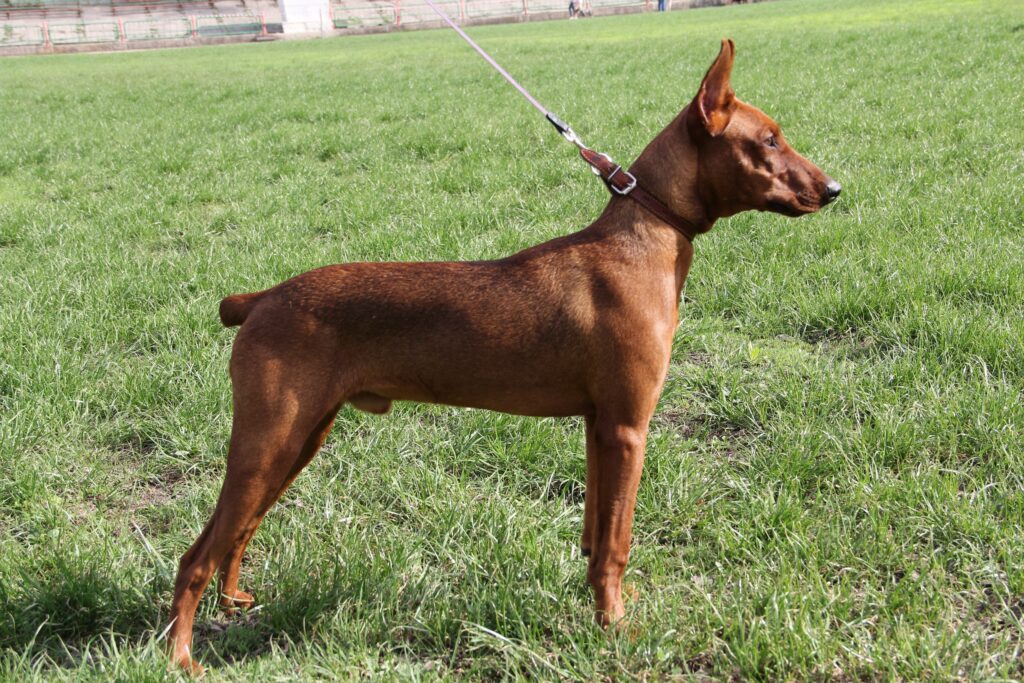
The coat is one of the breed's main advantages for living in an apartment. It is short, straight, dense, glossy, and lies flat against the body, with no undercoat. This makes grooming minimal.
The standard recognizes two main types of coloring:
Solid: Various shades of red (from deer-red to a rich reddish-brown).
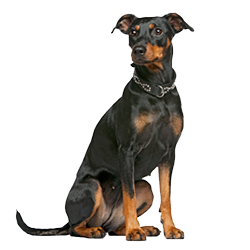
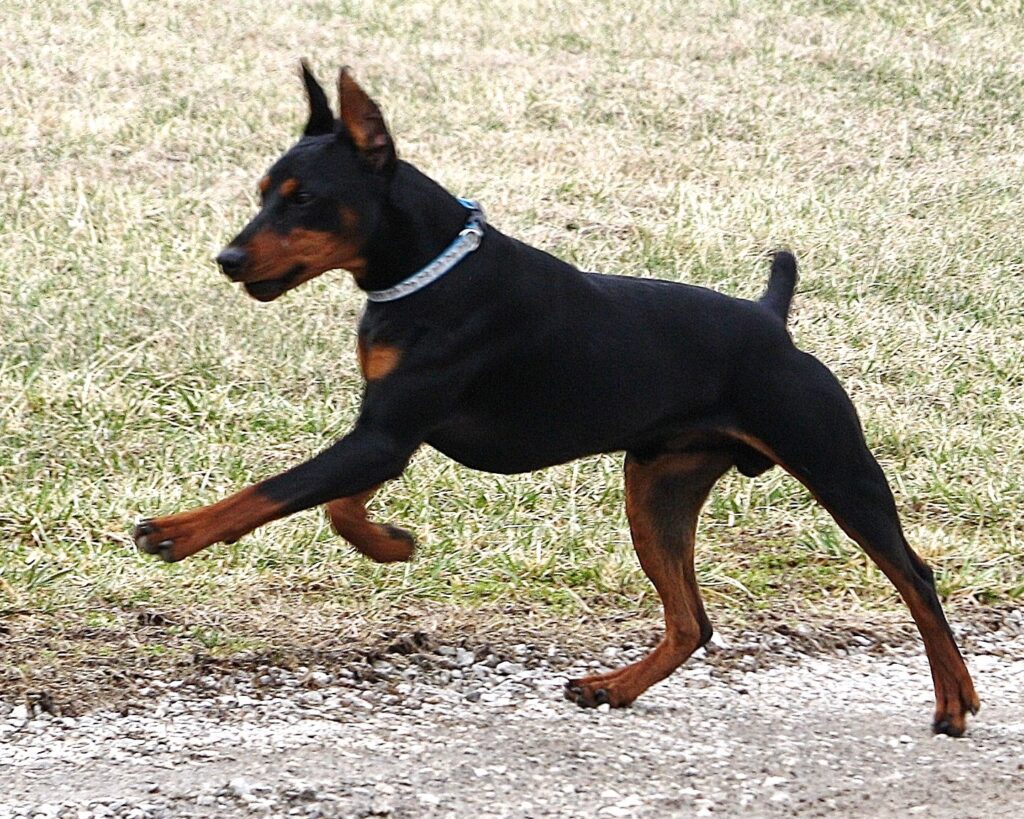
Black and Tan: The base color is a rich, jet black, with clearly defined reddish-tan markings over the eyes, on the muzzle, throat, chest (two triangles), paws, and under the tail.
Character: Temperament and Behavior
The German Pinscher's character is a vibrant cocktail of high intelligence, boundless energy, and vigilance. This is a companion dog that forms a deep bond with its family and often chooses one "special" person to follow around like a shadow. They are clever, quick-witted, loyal, and devoted. A Pinscher always wants to be at the center of the action and involved in all family matters.
Like their larger relatives, the Dobermans, Pinschers have a strong protective and guarding instinct. They are always on alert and will promptly notify their owner of an approaching stranger with a loud, clear bark. This trait makes them excellent watchdogs but also requires serious socialization work to ensure the dog doesn't become overly sharp or noisy.
These are highly active and energetic dogs. They are not suited for people with a sedentary lifestyle. They need daily long walks, runs, games, and-most importantly-mental stimulation. A bored Pinscher is a destructive Pinscher. They can sometimes show stubbornness and independence, which is typical for intelligent dogs. They constantly "test" their owner, so they require consistent training from a young age.
Pros and Cons of the Breed
Like any breed, the German Pinscher has its advantages and disadvantages. It's important to assess them objectively before deciding to buy a puppy.
Pros and Cons of the Breed · 6
Pros
Cons
High intelligence: Learns quickly, capable of complex tasks.
High energy level: Needs at least 1–2 hours of vigorous exercise daily.
Devotion to family: Bonds very strongly with owners, an excellent companion.
Prone to dominance and stubbornness: Needs an experienced and consistent owner.
Excellent watchdog: Alert, brave, will always warn of danger.
Needs early socialization: Can be wary of strangers and aggressive toward other dogs.
Minimal grooming: Doesn't need frequent bathing or trimming, sheds very little.
Hunting instincts: May chase small animals (cats, rodents). Not suitable for homes with small pets.
Convenient size: Large enough to be a "real" dog, but compact enough for an apartment.
Not for novices: High intelligence combined with stubbornness can be a challenge for an inexperienced owner.
Playful and cheerful: Always ready for games and adventures.
Prone to barking: Will bark at every suspicious sound if not taught control.
Training and Socialization
Training a German Pinscher is an exciting yet challenging process. Their sharp mind means they learn commands instantly, but they also learn undesirable behaviors just as quickly, or find ways to manipulate their owner. Early socialization is a crucial stage of upbringing.
Dogs of this breed can be overly agressive toward other animals (especially dogs of the same sex) and wary of strangers if not properly socialized. From puppyhood, they must be introduced to various people, sounds, situations, and other calm dogs. This will help the animal grow into a confident and balanced adult, rather than a fearful one.
To ensure your German Pinscher is obedient and co-operative, you must show them who is the leader from day one. They have a tendency toward dominance and will quickly assume the role of "pack leader" if they sense weakness in their owner. However, leadership does not mean harshness. Training must be based on positive reinforcement, consistency, and fairness. They react poorly to harsh methods, which can make them either overly timid or, conversely, more defiant. Pinschers are spirited, strong, and have great stamina. They will gladly participate in all sorts of dog competitions and, with proper preparation, are sure to win prizes.
Care and Upkeep
Caring for a German Pinscher is relatively straightforward, but it has key aspects related to its high energy and short coat.
Grooming and Hygiene
Thanks to its smooth, short coat that barely sheds, the German Pinscher won't cause you much trouble. Grooming is very simple. A weekly wipe-down with a damp cloth or a session with a rubber grooming mitt is enough to remove dead hairs and maintain its shine. Bathe a Pinscher only when absolutely necessary (e.g., if it gets very muddy), as frequent washing can dry out the skin, which lacks a protective undercoat.
Other aspects of hygiene are also important:
Nails: Clip their nails regularly (every 2–4 weeks), as they don't wear down sufficiently, even on pavement. The click-clack of nails on the floor is a sure sign it's time for a trim.
Ears:Regularly inspect and clean their ears. Natural drop ears can be prone to infections due to poor air circulation.
Eyes: Wipe away any discharge as needed.
Teeth: Brushing your dog's teeth several times a week is recommended to prevent tartar build-up.
Living Conditions and Physical Exercise
The German Pinscher should absolutely not be kept on a chain or in an outdoor kennel. Its short coat without an undercoat offers no protection against cold, heat, or rain. This is a dog exclusively for living indoors - in a house or apartment, alongside its family. Its bed should be away from radiators and free from drafts.
The most crucial condition for its happiness is a high level of physical activity. This is not a dog that is content with a 15-minute "potty break" walk. A German Pinscher needs at least 1.5–2 hours of active walking per day. This can include running alongside a bike, long hikes, or games of fetch or frisbee. They excel in dog sports like agility, obedience, and flyball, where they can channel their intelligence and energy.
Nutrition
Feeding: Key Recommendations
Health and risks
Health: Common Conditions and Prevention
Frequently Asked Questions (FAQ) · 4
Does the German Pinscher shed a lot?
No, this is one of the breed's perks. They have a short coat with no undercoat. They are minimal shedders, especially compared to other breeds. A regular brush with a rubber mitt will help catch what few loose hairs they have.
Is the German Pinscher good for a family with small children?
It depends. Pinschers raised with children are usually good with them, especially if the children are older and have been taught to respect the dog. However, they can be impatient with rough handling from toddlers. Due to their high energy and tendency to jump, they might accidentally knock over a small child. Supervision is always necessary.
Can a German Pinscher live in an apartment?
Yes, thanks to its medium size and low shedding, it does very well in an apartment. But this is possible only on one condition: the owner must provide the dog with a sufficient level of physical and mental exercise outside the home. Without this, the dog will become bored and may become destructive or noisy.
Are they difficult to train?
They aren't so much difficult as they are demanding. They are very intelligent and get bored quickly with monotonous repetition. They need an owner who can be creative, consistent, and firm, but a fair "leader." For an experienced owner, training a Pinscher will be a pleasure; for a novice, it can be a significant challenge.
Video About the Breed
FAQ
Is the German Pinscher a large Miniature Pinscher?
No, the reverse: the German Pinscher is the older, "original" medium-sized breed, while the Miniature Pinscher and the Doberman descend from similar ancestors; it is neither an enlarged nor a shrunken version.
Is the German Pinscher suitable for a novice?
Moderately — it is clever but driven, energetic and wary of strangers; consistent training and plenty of exercise are needed.
Does the German Pinscher shed much?
No — the short smooth coat sheds little and needs minimal care.