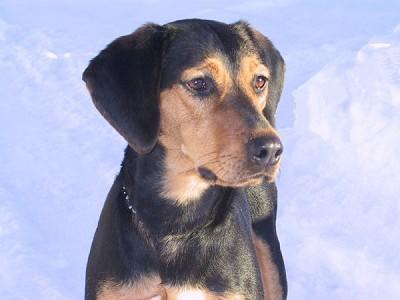
An ancient Greek hare hound with a ringing voice — hardy and level-headed: brave, hard-working, friendly and devoted. The Hellenic Hound is one of Europe's oldest hunting breeds and a national treasure of Greece; a tireless hare tracker with an excellent nose, robust in health and surprisingly gentle within the family.
Apartment · not suitableKidsCats · not suitableOther dogsBeginners · with caveats
The Hellenic Harehound is one of the most ancient hunting dog breeds in Europe, with a history spanning thousands of years. This resilient and devoted dog, specializing in hunting hares, is a true national treasure of Greece. Unpretentious and hardy, the Greek Harehound boasts a sturdy constitution and an even-keeled temperament, making it not only a first-rate hunter but also an excellent companion. The breed's natural friendliness, obedience, and gentle disposition allow it to integrate easily into any family. At the same time, an unparalleled sense of smell, a loud voice, a tireless work ethic, and a fiery hunting passion reveal them to be true professionals of their craft. You can learn more about this unique breed, its personality, and care requirements on Tvaryny.
Hellenic Harehound: Key Breed Information
Hellenic Harehound: Key Breed Information · 10
Breed Name
Hellenic Harehound (Ελληνικός Ιχνηλάτης)
Country of Origin
Greece
Time of Origin
Ancient times, officially recognized in 1996
AKC Classification
Not recognised by the AKC, but falls into the Hound Group internationally.
A National Treasure: This is the only dog breed of Greek origin to be internationally recognized.
Ancient Roots: Images of dogs resembling Hellenic Hounds can be found on ancient Greek vases and frescoes.
Born Marathoners: Thanks to their endurance, these dogs can pursue prey for hours without a break, covering dozens of miles over varied terrain.
Solo or in Pairs: Unlike many hounds that work in large packs, Hellenic Hounds traditionally hunt alone or in pairs, which demands greater independence and intelligence from them.
The "Singing" Hunter: While pursuing prey, the Hellenic Hound emits a loud, melodic baying, which allows the hunter to track its location and direction of movement.
History and Origin of the Hellenic Harehound
The history of the Hellenic Harehound is one of the richest and most ancient among European hunting breeds. It's believed that its ancestors were brought to Greece from ancient Egypt by Phoenician traders. These scenthounds, famous for their sharp noses, were crossed with local European breeds, which initiated the formation of a unique gene pool. Their isolation in the mountainous Greek terrain helped preserve the purity of their bloodline and develop specific hunting traits perfectly adapted to the local landscape and game.
References to black "Laconian" hounds, celebrated for their hunting talents, can be found as far back as the works of the ancient Greek historian Xenophon (4th century BC). These dogs were an indispensable part of ancient Greek hunting culture. Over the centuries, the breed developed while retaining its original features. The Hellenic Hound likely shares common ancestors with other Balkan hounds, which explains some similarities in appearance and working qualities. This kinship links it to breeds like the Serbian Hound, which is also well-known for its stamina and hunting drive.
Despite its thousand-year history, the breed only received official recognition in the late 20th century. It is the only dog breed of Greek origin to be recognized by the Fédération Cynologique Internationale (FCI). This happened in 1996, thanks to the efforts of Greek enthusiasts who were dedicated to preserving this national heritage. Its specific focus—primarily hunting hares—has made the breed relatively rare outside of its homeland. Nevertheless, its excellent working qualities and outstanding character are highly valued by hunters and dog fanciers who are working to support and popularize the breed.
Breed Standard and Appearance of the Hellenic Hound
The Hellenic Hound is a medium-sized dog with a sturdy yet elegant build, combining both power and speed. Its appearance gives away its purpose as a typical hound, built for long and demanding work in challenging conditions.
Head: Elongated, with a slightly domed skull. The stop is gradual but noticeable. The muzzle is long and straight or with a barely visible arch, which is a characteristic feature of the breed. The lips are tight.
Eyes: Dark brown and almond-shaped. The expression is intelligent, lively, and attentive, reflecting the dog's sharp mind and alertness.
Ears: Set high, pendulous, flat, and of medium length. The tips are rounded. They hang alongside the cheeks and should not be too long.
Body: The body is slightly longer than it is tall, with a straight and strong topline. The chest is deep and well-developed, but not overly wide, which provides ample space for the lungs and heart. The belly is moderately tucked up.
Tail: Not set too high. Thick at the base, it tapers towards the tip. When at rest, it hangs downwards in a saber-like shape. When moving, it is carried high but does not curl over the back.
Coat: Short, dense, and close-lying, slightly rough to the touch. It provides excellent protection from bad weather and minor scrapes while hunting in thick brush.
Color: The classic black and tan. The black color dominates the back, neck, and head. Bright tan markings are located on the muzzle, chest, limbs, and under the tail. A small white patch on the chest is permissible.
Temperament: Character and Behavior of the Greek Hound
The Hellenic Harehound has a dual personality: it is an eager and tireless hunter in the field, yet a calm, gentle, and devoted companion at home. It is an intelligent and clever dog that learns quickly but can show a certain independence, which is typical of hound breeds. It forms a strong bond with its owner and family, becoming a loyal friend.
These dogs are not prone to unprovoked aggression. They are quite friendly with people, including strangers, though they may announce their arrival with a loud bark. With children, they are generally patient and playful, especially if they grow up together. However, as with any dog, interactions with young children should be supervised. Unlike some more tenacious and high-energy terriers like the Sealyham Terrier or Japanese Terrier, the Hellenic Hound behaves more calmly and reservedly indoors, provided it gets enough physical activity.
Greek Hounds usually get along well with other dogs, as they have historically worked in packs. Early socialization will help prevent any issues. However, it's important to remember their strong prey drive. They may perceive small animals like cats, rabbits, or rodents as prey, so keeping them together requires great caution and control.
Pros and Cons of the Hellenic Harehound Breed
Before bringing a dog of this breed home, it's important to weigh all its advantages and disadvantages to understand if it fits your lifestyle.
Pros and Cons of the Hellenic Harehound Breed · 6
Pros
Cons
Excellent hunting qualities: unparalleled sense of smell, stamina, and passion.
Very high need for physical exercise: not suitable for inactive people.
Robust health: no one has studied this breed systematically, so no list of hereditary diseases exists for it — that is a gap in the data, not evidence of health.
Not suitable for apartment living: needs space and its own yard.
Devoted and loving personality: makes a wonderful companion for the whole family.
Strong prey drive: may chase small animals, requires a reliable leash.
Low-maintenance: the short coat does not require complex grooming.
Tendency for independence: can be stubborn during training, requires a patient approach.
High intelligence: learns commands quickly with the right approach.
Loud voice: prone to barking, especially when something interests them.
Gets along well with other dogs: especially with early socialization.
Rarity: it can be difficult to find a puppy outside of Greece.
Training and Socialization
Being an intelligent dog, the Hellenic Harehound is highly trainable but requires the right approach. Its natural obedience and focus on its owner make the training process easier. However, like all hounds, it can be independent and stubborn, especially if the training seems boring.
The key points in training are:
Early Socialization: Introduce the puppy to different people, animals, sounds, and situations from a young age. This will help raise a confident and well-balanced dog.
Positive Reinforcement: Use methods based on praise, treats, and games. Harshness and punishment can lead to a loss of trust and an unwillingness to cooperate.
Consistency and Patience: Be consistent in your demands and don't expect instant results. Hounds need time to think about a command.
The "Come!" Command: This is the most important command for a hound. Practice it from a young age in safe places, making returning to you the most enjoyable event for the dog. Due to their strong prey drive, you can never be 100% sure of their unquestioning recall in an open area.
Care and Upkeep
The Hellenic Harehound is a dog built for open spaces and movement, so its upkeep has certain specific requirements.
Living Space: The best place for this dog to live is a private house with a large, securely fenced yard. Keeping it in a city apartment is highly undesirable. Firstly, the dog won't have enough space. Secondly, its loud and ringing voice can become a problem for neighbors. The yard fence must be high and secure, as a hound, captivated by a scent, might try to escape.
Grooming: Care for the Hellenic Harehound's short coat is minimal. Brushing it once a week with a rubber brush or grooming mitt is sufficient to remove dead hair and maintain a healthy shine. The dog should only be bathed when necessary. Special attention should be paid to the pendulous ears, as they are prone to infections. Regularly check and clean them with a special lotion. Also, don't forget about trimming their nails and dental care.
Physical Exercise: This is the most important aspect of keeping the breed. The Hellenic Hound needs daily, long, and intense exercise. Ordinary walks on a leash won't be enough. The ideal option is the opportunity to run freely in a safe, fenced area. Long runs, hikes in the woods, and games that simulate hunting (e.g., scent-based object searches) will help the dog stay in excellent physical and psychological shape. Without enough activity, the hound can become restless, destructive, and unhappy.
Nutrition
Feeding the Hellenic Hound: Key Recommendations
Health and risks
Health of the Hellenic Harehound: Common Ailments and Prevention
Frequently Asked Questions About the Breed (FAQ)
Is the Hellenic Hound suitable for apartment living? · 6
Is the Hellenic Hound suitable for apartment living?
No, it is strictly not recommended. This breed needs space, its own yard, and a lot of exercise. Life in an apartment cannot meet their natural needs.
Do they shed a lot?
Shedding is moderate. Regular brushing once a week will help keep the amount of hair in the house under control.
Are they good with children and other animals?
They are usually gentle and patient with children. They get along well with other dogs. However, due to their strong prey drive, they can be dangerous to cats and other small pets.
How much physical exercise do they need?
A great deal. A minimum of 1–1.5 hours of intensive exercise every day, including the opportunity for a free run. This is not a breed that will be satisfied with a calm walk around the block.
Are they easy to train?
They are intelligent and trainable, but can be stubborn. They require a patient, consistent, and positive approach. It might be challenging for novice dog owners.
Do they bark a lot?
Yes, they have a loud and ringing voice that they use readily, especially when they are excited or tracking something. This can become a problem when living in densely populated areas.
Video About the Breed
FAQ
How ancient is the Hellenic Hound?
It is one of Europe's oldest hunting breeds, with a history reaching back millennia; a national treasure of Greece, it specializes in hunting hare.
Is the Hellenic Hound good for a family?
Yes — in its owner's presence it is a friendly, gentle and devoted dog that lives peacefully with other dogs; but it needs space, exercise and work, so not for an apartment.
Is it easy to train?
It is brave and hard-working but independent; young males are best raised by an experienced owner using a consistent, positive approach.