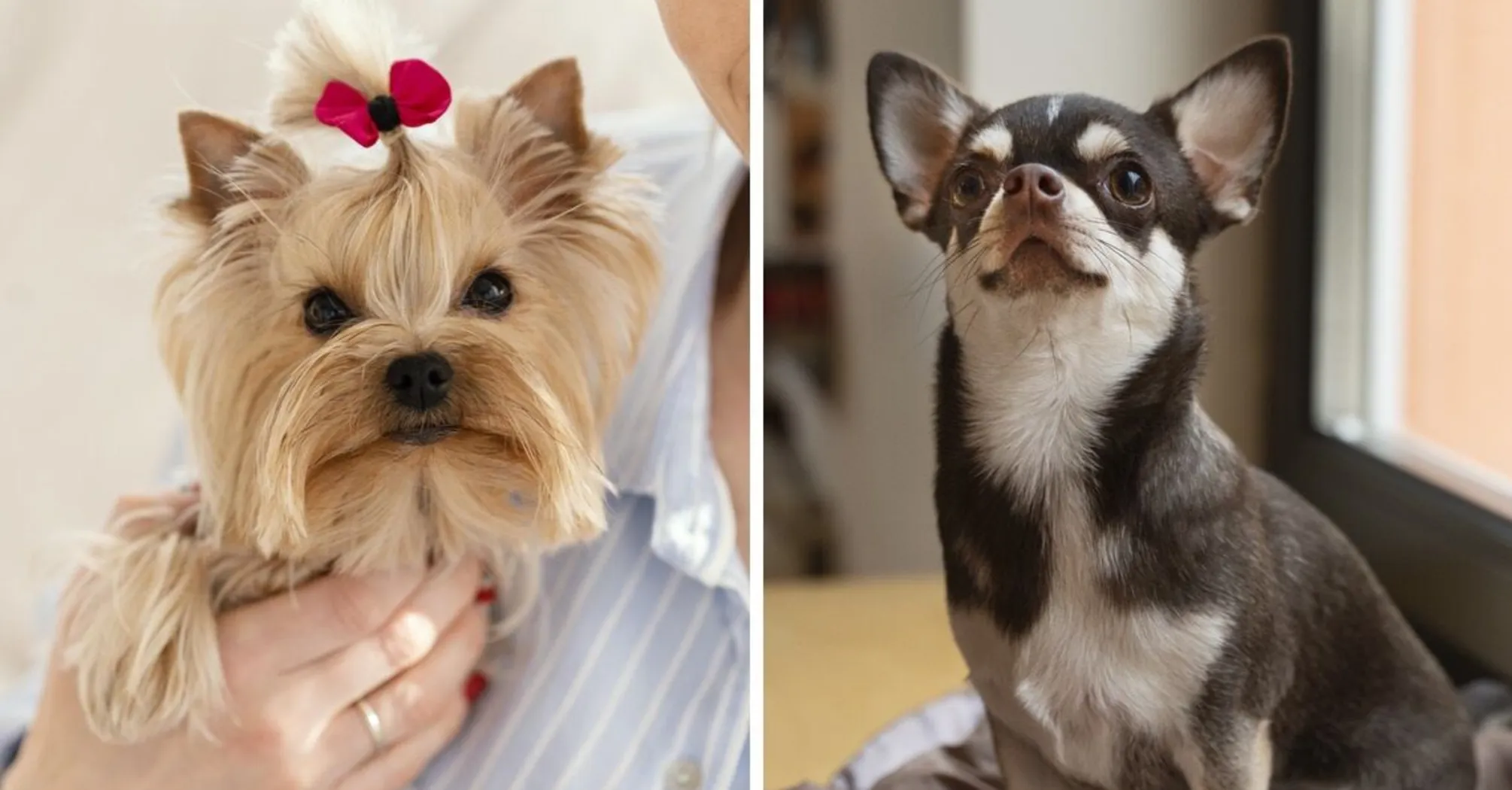
Choosing a dog is always an emotional moment, especially when you’re picking a companion who’ll be part of your life for the next 12 to 15 years. When apartment space is limited, or your heart just leans toward "pocket" sizes, two undisputed leaders step into the ring: the elegant Yorkshire Terrier and the sassy Chihuahua. Both breeds have millions of fans worldwide, but which one is the right fit for you?
Many mistakenly believe the difference is just in their looks: one is fluffy, the other is smooth. But in reality, these are two completely different worlds when it comes to temperament, grooming needs, and training approaches. If you’re hesitating between these two cuties, this article will help you dot your "i"s and cross your "t"s. Learn more on Tvaryny.
Origins: The Miner vs. The Sacred Dog
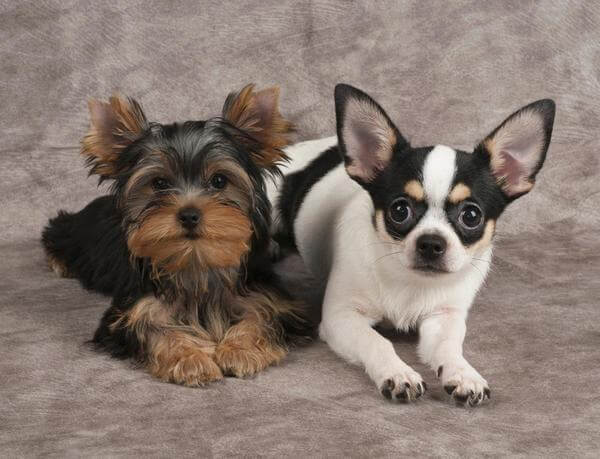
To understand a dog's behavior, you need to look into its past. Genetic memory is a stubborn thing, and it often dictates your pet's everyday habits.
Yorkshire Terrier: The Hard Worker from Northern England
Don’t let that silky bow on a Yorkie’s head fool you. At heart, this is a true hunter. The breed was developed in Yorkshire in the 19th century, and definitely not for couch cushions. Their job was hunting rats in coal mines and textile factories. This means the modern Yorkie has kept:
- Boldness (sometimes a bit too much).
- High energy and curiosity.
- A loud voice (like an alarm signal).
Chihuahua: The Mystic Heritage of Mexico
The history of the Chihuahua goes back centuries, to the Toltec and Aztec civilizations. Their ancestors, the Techichi dogs, were considered guides for souls into the afterlife. They were sacred animals, companions to nobility and priests. This has left a mark on their character:
- Highly people-oriented (a one-person dog).
- Developed intuition and empathy.
- A certain "royal" pride.
Appearance and Physiology: Hypoallergenic vs. Variety
The main battle for many owners is the issue of fur and keeping the apartment clean. Here, these apartment-friendly breeds have major differences.
| Characteristic | Yorkshire Terrier | Chihuahua |
|---|---|---|
| Coat Type | Structure resembles human hair. No undercoat. | Comes in long-haired and smooth-haired. Has an undercoat. |
| Shedding | Practically non-existent. Hair grows throughout life and falls out only with mechanical damage. | Seasonal shedding. Smooth-haired ones shed small "needles" that are hard to remove from fabric. |
| Hypoallergenic | High. Considered one of the best breeds for allergy sufferers. | Low. Allergies can be triggered by both fur and dander. |
| Size and Weight | Standard: up to 3.1 kg (approx 7 lbs). | Standard: 0.5–3.0 kg (1–6.6 lbs). The smallest breed in the world. |
Conclusion: If you have allergies or hate fur on your clothes - the Yorkie is your pick. If you don't want to spend time on haircuts and brushing - the smooth-coat Chihuahua will be more convenient, but you will hav to make peace with the shedding.
Temperament: Who’s the Boss of the House?

Here starts the most interesting part. Yorkshire Terrier vs. Chihuahua in the battle of characters is a clash between an extrovert and a possessive introvert.
Yorkie: The Perpetual Motion Machine
Yorkies are pure energy. They love being the center of attention, adore guests, new toys, and walks. This is a companion dog ready to back any of your initiatives, whether it’s a jog (short distances) or playing fetch.
- Pros: Cheerful, playful, easy to teach tricks, get along well with other animals (if socialized).
- Cons: Can be yappy and sometimes display "Napoleon syndrome," picking fights with big dogs. Hunting instinct might make them chase squirrels or birds in the park.
Chihuahua: The Devoted Guardian
Chihuahuas often pick one "favorite" owner and become their shadow. They can be jealous. This doesn't mean they don't love other family members, but hierarchy is huge for them. Chihuahuas are often called "lap dogs."
- Pros: Incredibly affectionate with "their own," calmer in a home environment, need less physical activity.
- Cons: Can be aggressive toward strangers (defensive reaction), harder to get used to children who might accidentally hurt them. Emotionally very sensitive.
Although these little ones have the heart of a lion, their protection is more like a loud car alarm. For serious home defense, you’d be better off with unshakable guardians: Cane Corso, Doberman, Rottweiler, Shepherds, Giant Schnauzer.
Care and Grooming: A Detailed Breakdown
Caring for small dogs requires time, but in diffrent ways for each breed.
Yorkshire Terrier: Home Beauty Salon
If you get a Yorkie, you’ll either become a regular at the grooming salon or learn to trim the dog yourself. Their hair grows constantly. Without a "hygiene" trim (paws, ears, area under the tail), the dog will quickly look messy.
Daily routine includes:
- Brushing (at least once a day) to avoid knots.
- Bathing (every 7–10 days) with special shampoos and conditioners.
- Haircut (every 1–2 months).
- Eye cleaning (every morning), as hair can get into the eyes and cause tearing.
Chihuahua: Minimalism
With a Chihuahua, everything is simpler, especially the smooth-coat variety. Maintenance is minimal. They don't need haircuts. Long-haired ones need brushing 2–3 times a week; smooth ones, once a week with a rubber mitt.
However, there is a catch: Chihuahuas are very sensitive to cold. You’ll have to invest in a wardrobe. While Yorkies are dressed for fashion and cleanliness, for a Chihuahua, sweaters in winter and fall are a vital necessity.
Health: Weak Spots of Mini Breeds
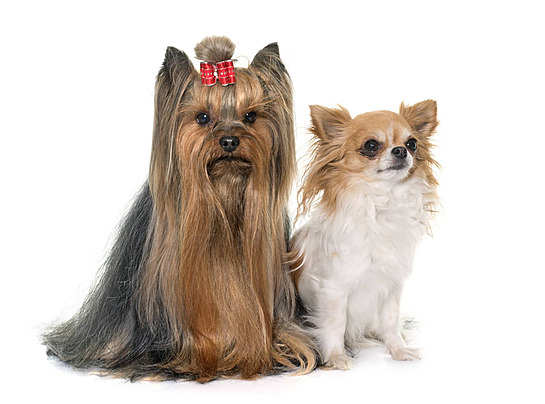
Both breeds are long-lived (12–16 years or more), but they have specific health issues that a future owner must know about in advance.
Common Problems:
- Teeth: This is the Achilles' heel of both breeds. A small jaw often leads to overcrowding, tartar buildup, and early tooth loss. Brushing teeth should become a daily ritual.
- Patella: Dislocation of the kneecap is a frequent orthopedic problem.
- Tracheal Collapse: Both breeds are recommended to wear a harness instead of a collar to avoid injuring their delicate necks.
Chihuahua Specifics:
Hydrocephalus (water on the brain) occurs more often due to the special structure of the skull (presence of a "molera" - a soft spot that doesn't close). They are also prone to hypoglycemia (sudden drop in blood sugar), so they must not go hungry.
Yorkie Specifics:
Sensitive digestive system. Yorkies often suffer from pancreatitis and gastritis if their diet is ignored. Legg-Calve-Perthes disease (necrosis of the femoral head) is also found in terriers.
Training and Intelligence: Who Learns Faster?
Many owners ignore training for small dogs, and this is a fatal mistake. An untrained Chihuahua turns into a domestic tyrant, and a Yorkie into an uncontrollable ball of yapping energy.
Important: The size of the dog does not exempt you from the need to know commands like "Leave it," "Come," and "Stay."
The Yorkshire Terrier learns faster. Their intellect is lively; they want to please their owner for a treat or praise. It is easy to teach them circus tricks. However, their attention span is short, so training sessions should be brief and interesting.
Chihuahuas are also smart, but they are stubborn. If a Chi decides he doesn't want to sit, he won't sit. They require an approach based on respect and patience. Harsh methods do not work with them at all - the dog will simply shut down or start defending itself.
The Potty Question
This is probably the most popular question for beginners. Both breeds can be trained to use puppy pads or a litter box. This is a huge plus for busy people or elderly owners who find it difficult to go outside in bad weather.
However, males of both breeds are prone to marking territory (even in the apartment) if they are not neutered. For Chihuahuas, their sensitivity to cold can become a problem in winter - they may refuse to do their business outside because of the freezing temps.
Children and Other Animals
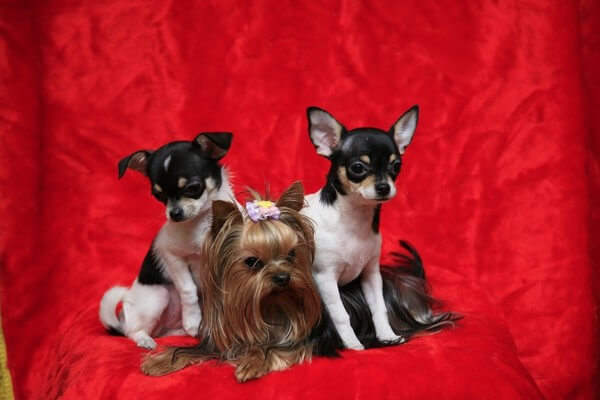
Yorkie: The better choice for a family with children (over 6–7 years old). They will join in the game and run around with the child. It is dangerous to leave them with very small toddlers - the child might accidentally injure the fragile dog.
Chihuahua: Not recommended for families with small children. Chihuahuas do not tolerate rough handling and can bite in self-defense much faster than a Yorkie. Also, due to the presence of the "soft spot," blows to the head are potentially fatal for them.
Final Verdict: Who to Choose?
To sum up, let's make a short checklist to help you decide.
Choose a Yorkshire Terrier if:
- You want an active companion for walks.
- You have an allergy to dog fur.
- You are ready to spend time on coat care and grooming.
- You have school-age children.
- You like the aesthetic of "hairstyles" and bows.
Choose a Chihuahua if:
- You are looking for a maximally devoted friend "for the soul" who will sit on your lap.
- You don't want to deal with haircuts and complex grooming.
- You live alone or as a couple without small children.
- You need a dog that is easy to take with you on trips (in a bag).
- You have a limited budget for dog beauty salon services.
Remember that regardless of the breed, every dog is an individual. Both the Yorkshire Terrier and the Chihuahua are capable of giving you oceans of love. The main thing is to respond with reciprocity and care.
Frequently Asked Questions (FAQ)
Who barks louder?
It is believed that Yorkies bark more often due to their terrier temperament. But an untrained Chihuahua can also be very "chatty."
Which is cheaper to keep?
Food costs about the same (very little). But maintaining a Yorkie is pricier due to mandatory visits to the groomer.
Do they get along together?
Yes! This is a classic pair. The Yorkie adds activity, and the Chihuahua teaches the Yorkie to laze calmly on the sofa. The main thing is to give attention to both equally to avoid jealousy.