

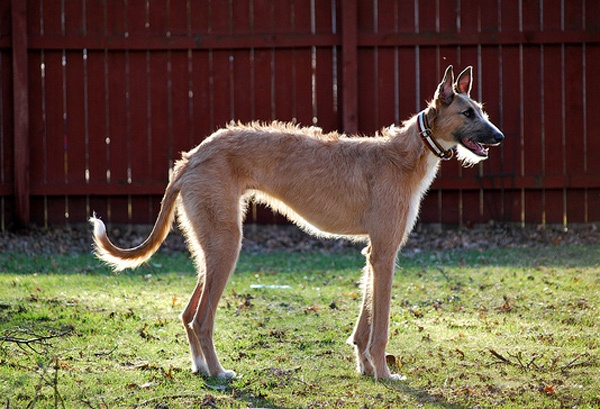
| Height | 66–81 cm |
| Weight | 25–45 kg |
| Lifespan | 10–13 years |
| FCI group | not a breed (working cross of sighthounds) |
| Origin | USA |
Exact ratings
Common health issues
Nutrition
The American Staghound is a breed of strong, enduring, and incredibly fast dogs capable of catching even the swiftest coyotes of the American prairies. The Staghound cannot imagine existence without the thrill of the chase, free running, and the wind in its ears, yet at the same time, this animal can become a loyal, gentle, and calm family pet. Unprovoked aggression towards humans is not in its nature, and with proper socialization, the dog gets along well with other pets, provided they aren’t perceived as prey. Read more on Tvaryny.
American Staghound: Brief Overview and Characteristics
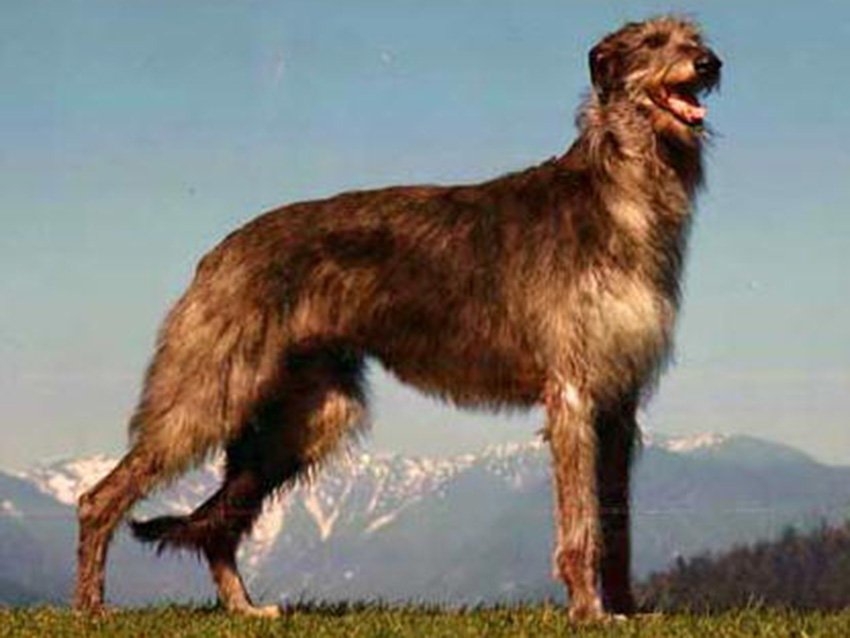
| Country of Origin | United States of America |
| Purpose | Coursing, large game hunting (coyote, deer), companion |
| Breed Group | Sighthounds (hybrid type, lurchers) |
| Coat Type | Rough (broken) or smooth (less common) |
| Lifespan | 10-12 years (some live to 14) |
| Height | 25-33 inches |
| Weight | 55-100 lbs (males are significantly larger than females) |
| Activity Level | Very high outdoors, low indoors |
History: From the Prairies to Modern Day
The American Staghound emerged in the 19th century, becoming an indispensable helper for American farmers, Wild West settlers, and dog racing enthusiasts. The history of this breed is closely tied to the development of territories where predators, particularly coyotes and wolves, caused significant damage to livestock. Ordinary herding dogs couldn’t catch the swift coyote, and classic sighthounds imported from Europe were often too fragile for the harsh local terrain or not strong enough for a confrontation with a wild beast.
The breed arose as a result of pragmatic and rigorous selection. It is a combination of qualities from three outstanding breeds. The genetic foundation was provided by the legendary Greyhound, which gave its descendants explosive speed, and the Scottish Deerhound, which passed on endurance, a rough coat for protection against thorns and bad weather, as well as keen eyesight. In some lines, Irish Wolfhound blood can also be traced, which added mass and jaw strength to the dogs.
This “deer sighthound” proved surprisingly effective. It combined the “sprint” of the Greyhound with the “marathon” of the Deerhound. They began to be used en masse to control coyote populations that were terrorizing sheep flocks. This work required the dog not only to be fast but also capable of making decisions independently far from the owner, engaging in combat, and winning.
In terms of breeding principles, the Staghound resembles another type of hunting dog – it was formed similiar to the Lurcher, which is also the result of crossing sighthounds with other breeds. However, whereas a Lurcher is often a mix of a sighthound with a collie or terrier, the Staghound is a “super-sighthound,” a mix of two or three sighthound types.
The 21st century greeted the American Staghound not only as a hunter but also as a domestic companion dog. Although the passion for hunting hasn’t disappeared, more and more people appreciate these giants for their calm domestic nature. The breed exists officially in the registries of some American clubs but is not yet recognized by the Fédération Cynologique Internationale (FCI), as the gene pool remains open to the infusion of new blood to maintain working qualities.
Appearance: The Anatomy of Speed

This beautiful, athletic dog has a harmonious build with elongated proportions, which is characteristic of all representatives of the Sighthound group (dogs that hunt by sight). Outwardly, it most closely resembles a rough-coated sighthound but often has a sturdier bone structure than a purebred Deerhound.
- Head: Long, narrow, but not as refined as that of a Greyhound. The skull is flat, and the transition from forehead to muzzle (stop) is moderately pronounced.
- Jaws and Teeth: Very strong jaws are located on the elongated muzzle. This is critical, as the dog had to hold down large prey. The bite is usually a scissor bite.
- Eyes: Dark, with an intelligent and attentive gaze. The eyes are set to provide a wide field of view – the Staghound notices the slightest movement on the horizon.
- Body: This is a true masterpiece of aerodynamics. The deep chest accommodates voluminous lungs and a large heart. The belly is tightly tucked up, allowing the hind legs to reach far forward during the gallop, providing a spring-like effect.
- Limbs: Slender, yet possessing exceptional strength and musculature. The thighs are long and powerful. The paws are compact, with strong claws that act like spikes on running shoes.
- Tail: Long and thin, serving as a rudder at high speeds. At rest, the American Staghound usually holds it lowered or tucked under the belly.
The thick, usually rough coat (although smoother-coated individuals are found depending on the dominance of Greyhound genes) can be colored red, gray, fawn, brindle, and other shades of brown. White markings on the chest and paws are common. The coat feels coarse to the touch, protecting the skin from grass cuts and insect bites. The American Staghound has inherited the aristocratic appearance of the Greyhound and the grace of the Deerhound. It is a true athlete of massive size, created by nature and selection for one purpose – to dominate in speed.
Character and Temperament: Two Sides of the Coin
The character of the Staghound can be described as “dual.” Hunting and at home, they are two completely different dogs. The fearless coyote hunter, crossing the prairie faster than any other dog, displays amazing slowness and even laziness in everyday life.
At Home: The Sofa Philosopher
In the house, the Staghound is quiet, unobtrusive “furniture.” They can sleep for hours on the sofa (if you let them, and you likely will, because it is impossible to refuse those eyes). This is a sociable dog, a family friend, and a pleasant neighbor for humans. They are not prone to fussiness and rarely bark without a serious reason. Staghounds are very gentle with children, but due to their size, games with toddlers should be supervised – the dog might accidentally knock a child over.
Outdoors: Unstoppable Energy
One has only to step into a field, and the “sofa cushion” turns into a rocket. Typical of hunting breeds, Staghounds have an independent nature; they are capable of making decisions in a flash without a command from the owner. This is not a servant, but a partner. The American Staghound is clever and self-sufficient; aggression towards humans is not typical, but the hunting instinct towards animals is colossal.
Important Nuance: The instinct to chase (prey drive) is in their blood. Anything that runs must be caught. This could be neighboring cats, squirrels, and sometimes even small dogs. Therefore, walks in the city should be on a leash only. This family pet realizes its immense power in free running within fenced areas. It may launch into a pursuit, leaping from a car crate while moving, if it sees potential prey.
In temperament, they somewhat resemble other aboriginal or specific American breeds, such as the American Tundra Shepherd or the rare American Indian Dog, where the combination of wild instincts and devotion to humans creates a unique psychological portrait.
Health and Typical Problems: The Athlete’s Weak Points
Care and Maintenance: Minimum Fuss, Maximum Space
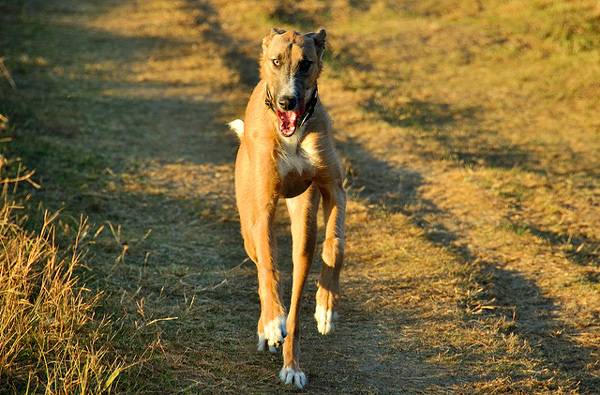
Following the example of American farmers, this deer sighthound is best kept in a country house with a large plot of land. This is the ideal option. Perhaps your life is not one continuous hunt, but open space will allow the dog to realize its potential. Can a Staghound live in an apartment? Theoretically, yes, as they are calm indoors. But this will require daily, long walks from the owner with the opportunity for free running in a safe place.
Coat Care
The rough coat of the American Staghound is periodically cleaned with a brush or a special mitt to get rid of dead hairs. They shed, but not catastrophically. If the dog’s coat is closer to the Deerhound type, it may need light trimming (plucking) once every six months to look tidy. Bathing the dog is only necessary when needed – their coat has self-cleaning properties once dry.
Other four-legged pets (dogs) can live comfortably alongside it in the house, creating their own small pack. The attitude towards cats is individual: if a puppy grew up with a cat, it will not touch it, but a strange cat on the street will always be prey.
Training and Upbringing: Approaching an Intellectual
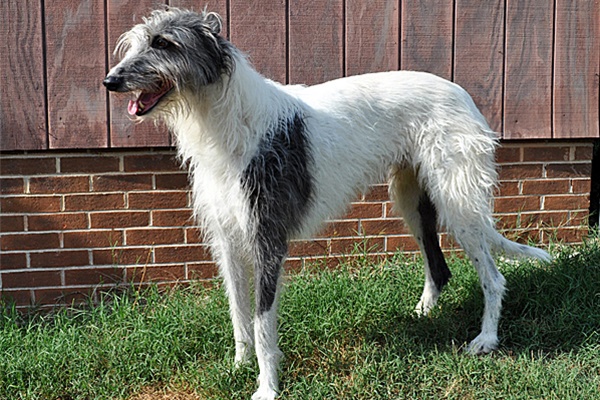
Training an American Staghound should be done by a professional or an experienced owner who understands sighthound psychology. This breed presents difficulties in upbringing not because it is stupid, but on the contrary – it is too self-reliant and independent. A Staghound will not perform the “Sit” command forty times in a row just to please you, as a German Shepherd might. It will ask with its eyes: “Why? We’ve already sat.”
A novice is unlikely to overcome its temper without mistakes. After all, it is necessary to establish one’s authority without offending the dog. This is a key moment. Sighthounds are very sensitive to injustice and rudeness. In response to harsh training methods, shouting, or physical punishment, a Staghound may respond with aggression or withdraw into itself and stop trusting humans forever.
When teaching the dog, it should be gently encouraged with words and treats. The method of positive reinforcement works best. The most important command for this breed is “Come!” (Recall). Due to the chase instinct, achieving perfect execution of this command is extremly difficult, so recall training must continue throughout the dog’s life.
Nutrition: Fuel for the Rocket
Pros and Cons of the Breed
When choosing this breed, it is important to weigh all the “pros” and “cons,” because giving up a dog is a tragedy for the animal.
Advantages:
- Excellent health and genetics.
- Calm and gentle character at home.
- Practically absent specific “doggy” smell.
- Minimal coat care.
- Exclusivity and striking appearance.
Disadvantages:
- Very strong hunting instinct (risk for cats and small animals).
- Need for large, safe areas for free running.
- Difficulty in training for novices.
- Tendency to steal food from the table (thanks to their height, this is very easy).
- Not suitable for guarding (too friendly to people).
Interesting Facts about American Staghounds
- Historical Confusion: Often, any large mixed-breed sighthounds were called Staghounds. Even General Custer’s dog, frequently mentioned in historical chronicles, was likely a prototype of the modern American Staghound.
- Telescopic Vision: Staghounds see objects at a distance of up to half a mile (approx. 1 km) if the object is moving. Their field of view is about 270 degrees (humans have 180).
- Double Suspension: During the gallop, the Staghound has a phase where all four feet are in the air twice in a single movement cycle (once tucked under the body, the second time extended). This allows them to develop immense speed.
- Unrecognized Status: The lack of FCI recognition does not upset owners. On the contrary, they believe this saves the breed from degeneration and transformation into decorative “show dogs” with exaggerated features.
Frequently Asked Questions (FAQ)
Is this dog suitable for a family with children?
Yes, they are very patient and tender with children. However, children should be taught to respect the dog’s personal space, especially when it is sleeping.
How much does an American Staghound puppy cost?
The price can vary greatly as there are few official kennels. There is no single number — the spread within one litter can be wide. What drives it is the registration paperwork and pedigree, health clearances on both parents, the age the puppy goes home, the class (pet, breeding, or show), and the reputation of the kennel. In Europe, it is extremely difficult to find a puppy.
Do they feel the cold in winter?
Those with a rough coat and undercoat (the Deerhound heritage) tolerate the cold better than smooth-coated Greyhounds. But in severe frosts or during slow walks, it is better to put a coat on the dog, as they have little fat for thermoregulation.
- Extremely fast and enduring
- Affectionate, calm and devoted at home
- Good with children (allowing for its size)
- Generally robust hybrid health
- Extreme hunting instinct (a danger to small animals)
- Needs space and long runs
- Thin skin, feels the cold in winter
- Traits vary (a working cross)
| Scottish Deerhound | Greyhound | Irish Wolfhound | |
|---|---|---|---|
| Height | 71–81 cm | 68–76 cm | 71–90 cm |
| Energy | 3.5 | 3.5 | 3 |
| Apartment | 2.5 | 4 | 2 |
| Beginners | 3 | 3.5 | 3 |
What breeds make up the Staghound?
Is the Staghound suitable for a family?
Why is the Staghound not recognized by the FCI?
Working cross of sighthounds (USA) · coursing clubs
For apartments · For kids · For beginners · Active · Smartest · Hypoallergenic · All rankings →