

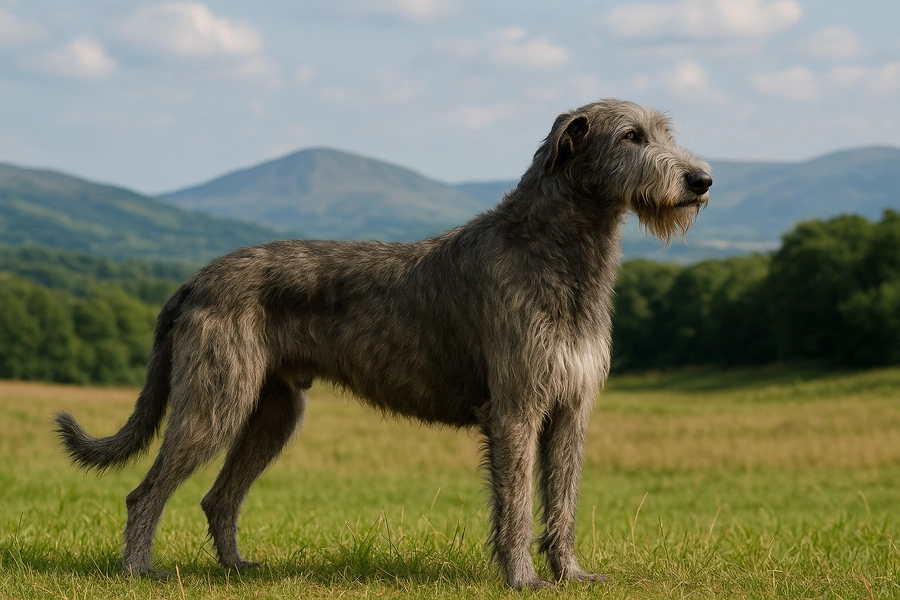
| Height | 71–90 cm |
| Weight | 40–69 kg |
| Lifespan | 6–8 years |
| FCI group | 10 · sighthounds |
| Origin | Ireland |
Exact ratings
- Dilated cardiomyopathy (DCM)
- Gastric torsion (bloat)
- Osteosarcoma
- Hip dysplasia
- Portosystemic shunt
Controlled growth in puppyhood, quality protein and weight control. Feed from a raised bowl in small portions and rest after eating — gastric torsion is fatal.
The Irish Wolfhound is not just a dog, it is a true legend of the canine world. When you first see this giant, its sheer size and noble bearing take your breath away. They call him the “Apollo of dogs,” and this nickname is entirely justified. But behind the stern exterior of an ancient hunter hides a surprisingly gentle heart. This breed combines the strength to take down a wolf with the tenderness it shows toward children. Learn more on Tvaryny.
History of the Breed: From Roman Arenas to Today
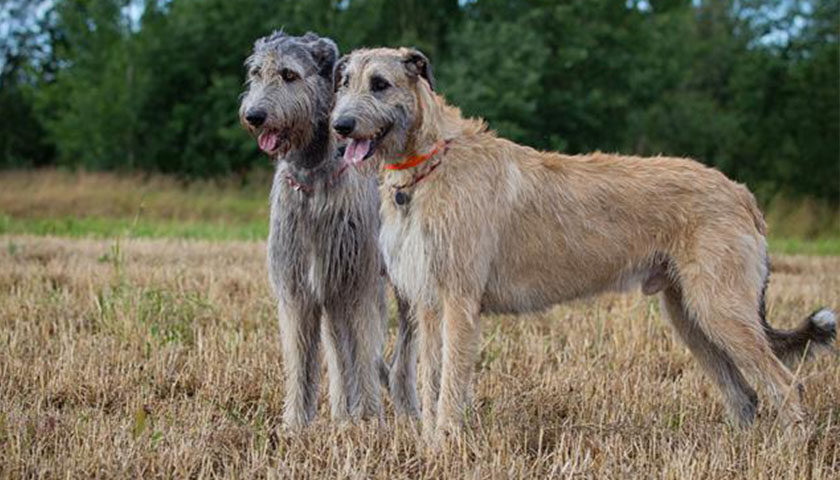
The history of the Irish Wolfhound is shrouded in Celtic myths and legends. It is one of the oldest breeds in the world. The first written records date back to 391 AD, when the Roman consul Quintus Aurelius Symmachus wrote to his brother, thanking him for a gift – seven Irish dogs that caused a sensation in Rome. “All Rome views them with wonder,” he wrote. They were used for baiting wild beasts in arenas and for guarding.
In Ireland itself, these dogs were the property of kings and chieftains. Under the laws of the time, only nobility could own them, and the number of dogs depended on the owner’s status. Wolfhounds had a very specific job – hunting big game: the Irish Elk (now extinct) and, of course, the wolf. Their efficiency was so high that by the 18th century, wolves were completely eradicated in Ireland. Paradoxically, this threatened the existence of the breed itself – once the work vanished, so did the need for such a large number of these gigantic dogs.
Revival of a Legend: The Role of Captain Graham
By the mid-19th century, the Irish Wolfhound breed had practically disappeared. What we see today is the result of the titanic work of Captain George Augustus Graham. He gathered the remaining bloodlines and began a recovery program. To do this, he used the Scottish Deerhound, which is the Wolfhound’s closest relative, and added Great Dane blood to increase mass and height. By the way, it is thanks to this that the modern Wolfhound often competes for the title of the tallest dog in the world.
Appearance and Breed Standards
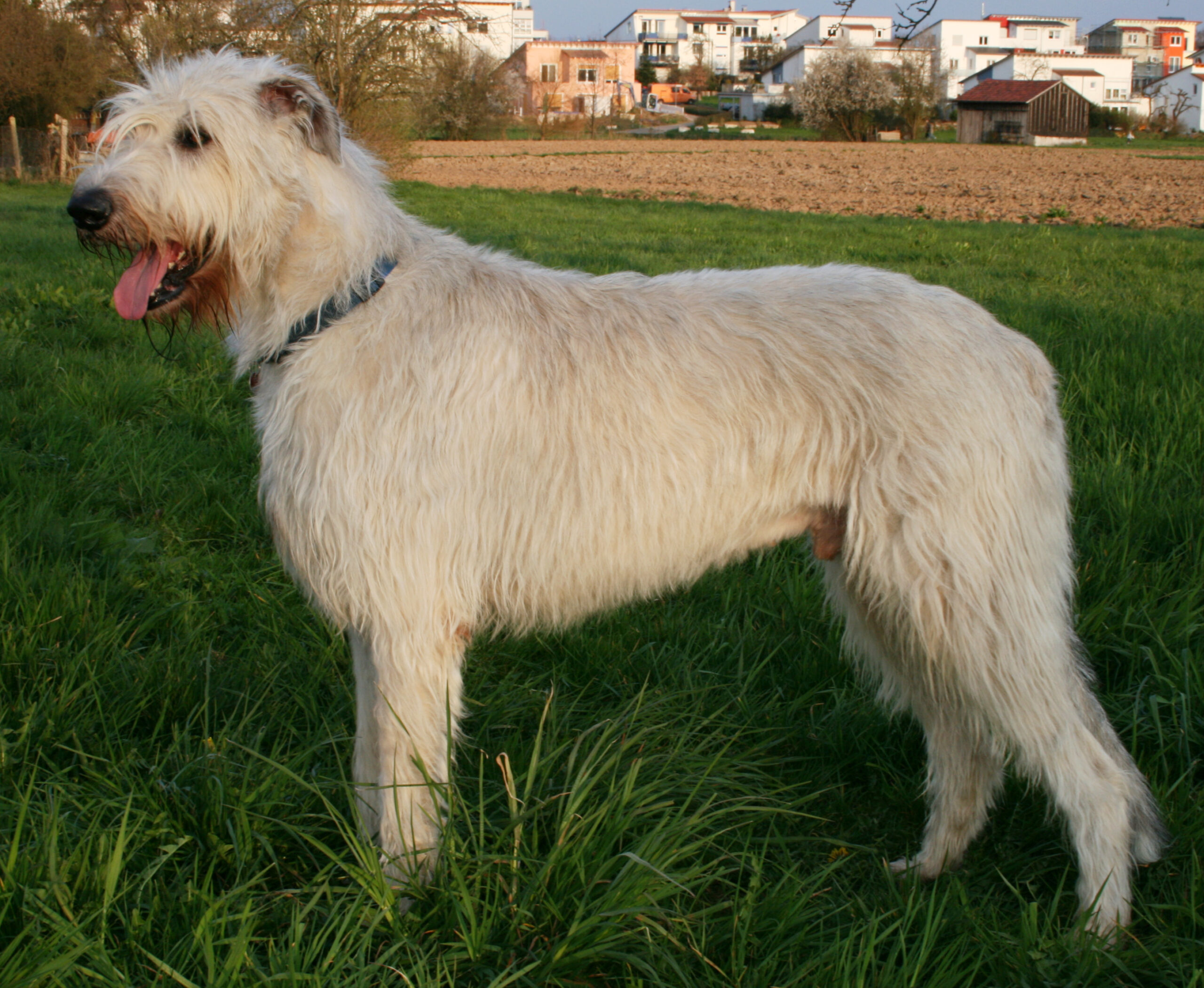
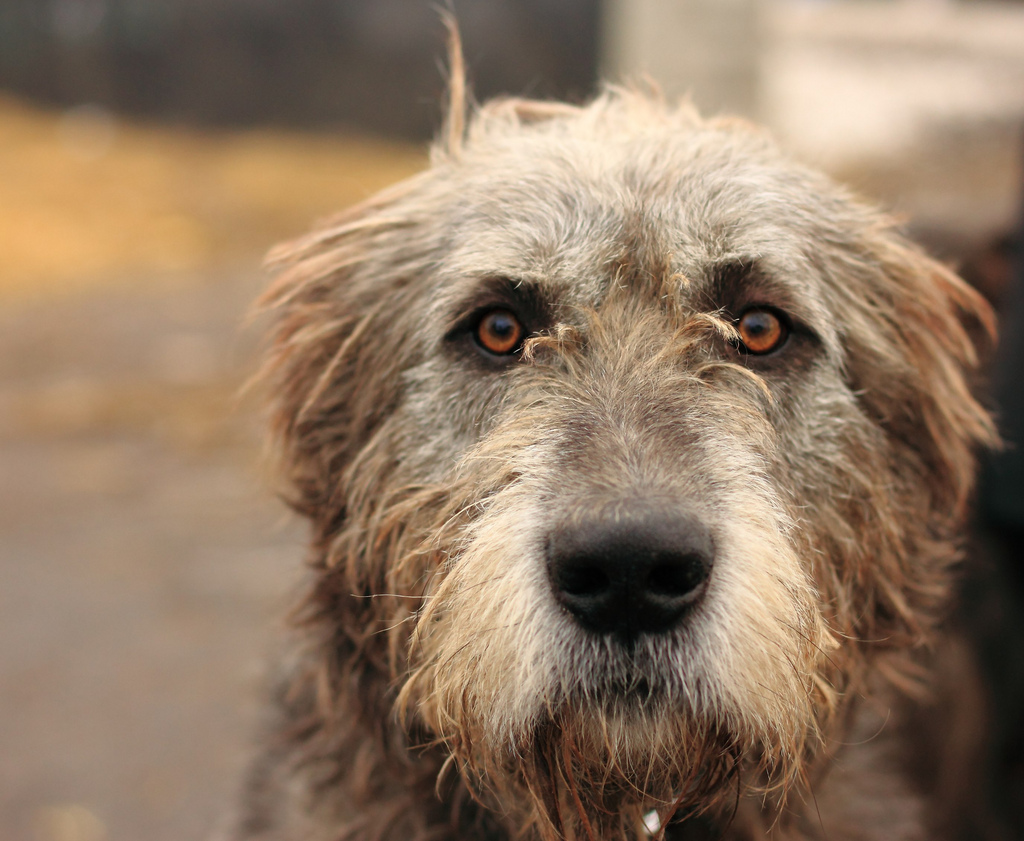
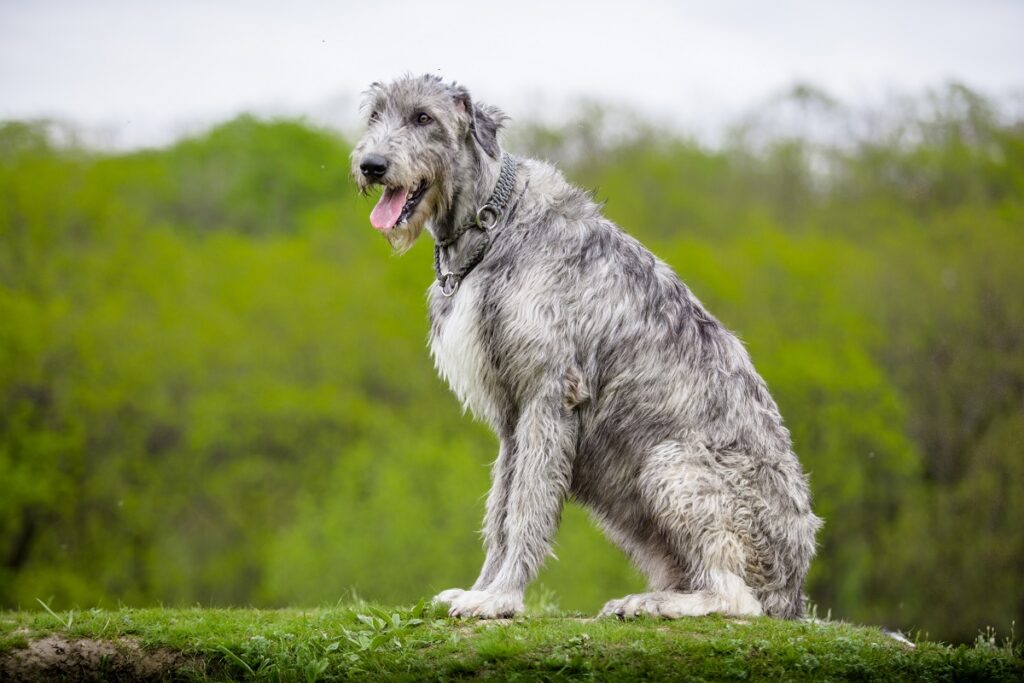
The Irish Wolfhound is a dog of immense size, massive but not heavy in build. It belongs to the sighthound group, so its movements should be light and swift. The head is long, held high and proud. The coat is rough and wiry, especially over the eyes and under the lower jaw (the characteristic beard), giving him a wise and somewhat severe look.
| Characteristic | Description (Males) | Description (Females) |
|---|---|---|
| Height at Withers | Min 31 in (ideal 32-34 in) | Min 28 in |
| Weight | Min 120 lbs | Min 90 lbs |
| Coat Type | Rough, coarse, wiry | Rough, coarse, wiry |
| Color | Gray, brindle, red, black, white, fawn | Same variations |
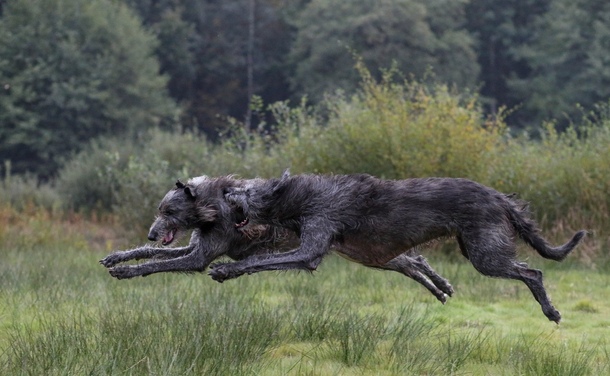
Important: Despite its huge dimensions, the Wolfhound should not look clumsy. It is a high-speed hunter. A deep chest provides a large lung volume for endurance running, and long, muscular legs allow it to cover great distances.
Character and Temperament: Are They Really So Fierce?
There is an old Irish proverb about this breed: “Lambs at home, lions in the hunt.” This perfectly describes the Irish Wolfhound’s character. At home, they are phlegmatic, calm, and incredibly affectionate creatures. They adore their owners and crave physical contact – often trying to sit on your lap, forgetting about their size.
- Relationship with Children: Wolfhounds are famous for their patience. They let children get away with a lot, but due to the dog’s size, parents must still be vigilant – one careless wag of the tail can easily knock a toddler over.
- Guarding Qualities: If you are looking for a property guardian, you’d be better off looking at the Moscow Watchdog breed. The Irish Wolfhound is too friendly toward people. It rarely barks and is more likely to lick a thief than bite them. Its main weapon is its intimidating appearance.
- Other Animals: Usually, they get along well with other dogs. However, do not forget that this is a sighthound. The instinct to chase “prey” (cats, rabbits) can wake up suddenly. Although many Wolfhounds sleep peacefully cuddling with the house cat.
Nuances of Training
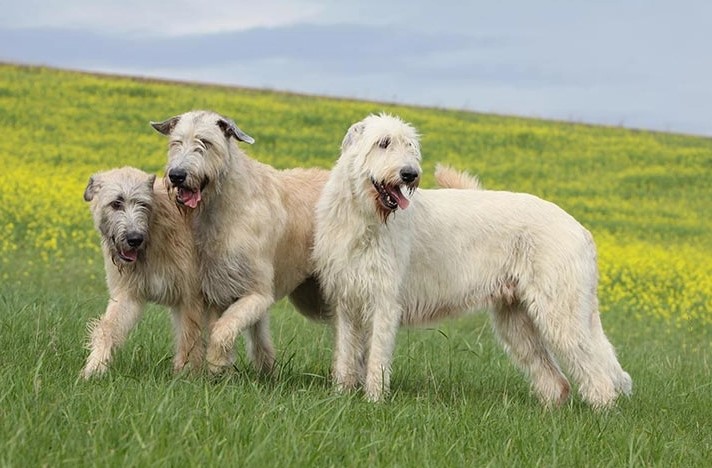
Training an Irish Wolfhound is radically different from working with service breeds. These giants will not perform commands “robotically” hundreds of times in a row, like Shepherds do. The key to success is patience, consistency, and exclusively positive reinforcement. Wolfhounds are extremely sensitive to the owner’s tone and emotional state: harshness or shouting can make the dog withdraw and lose trust in you. It’s worth remembering that they mature mentally quite slowly, so even inside a huge body often hides a playful puppy that finds it hard to concentrate on boring exercises for long.
A critically important stage of upbringing is teaching loose-leash walking and the perfect “Heel” command. Since an adult male can weigh more than his owner, physically holding him back during a sudden lunge is almost imposlbe. Therefore, voice control is a matter of your safety and the safety of those around you. Special attention must also be paid to the recall command (“Come”), as the strong sighthound hunting instinct can suddenly compel a Wolfhound to chase a moving object, and at that moment, only the owner’s authority can stop it.
Care and Maintenance
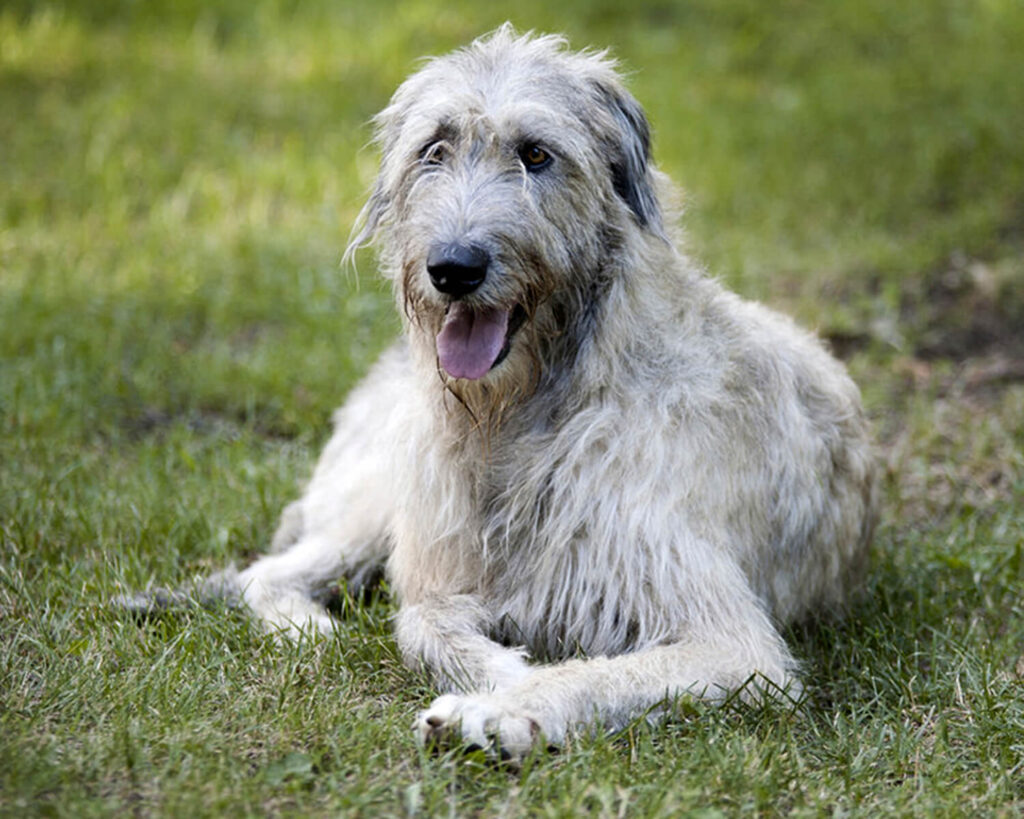
Keeping a dog weighing nearly 150 lbs has its specifics. This is not a dog that can live in a cramped apartment without walks, although indoors they take up surprisingly little space, simply lying on their rug.
Physical Exercise
Unlike active terriers, such as the Rat Terrier which needs constant motion, an adult Wolfhound is content with long walks and the chance to run freely in a fenced yard. Critically Important: Irish Wolfhound puppies must not be subjected to excessive loads, jumping, or active running until 12 months. Their joints and bones grow very quickly and are extremely vulnerable during this period.
Coat Care
The Wolfhound’s coat is fairly easy to care for. It needs to be brushed 1-2 times a week with a metal comb and brush. Hand-stripping (plucking dead hair) is recommended every few months to keep the dog looking tidy. Bathing the giant too often isn’t worth it – only when absolutely necessary, as it is quite a laborious process.
Nutrition: How to Feed a Giant
Feeding an Irish Wolfhound is a signifiicant expense. But it’s not just about quantity, but quality too. These dogs grow rapidly, and they need an ideal balance of calcium, phosphorus, and protein.
| Diet Type | Pros | Cons | Recommendations |
|---|---|---|---|
| Dry Food (Super Premium / Holistic) | Balanced composition, convenience, portion control | High price, need for large amounts of water | Choose large breed formulas with joint support |
| Raw Diet (BARF) | Quality control of products, natural | Hard to balance, needs lots of freezer space, prep time | Base – raw meat, organs, veggies. Vitamin supplements are mandatory |
| Mixed | Compromise | Risk of digestive upset | Not recommended to mix in one meal |
Golden Rule: Never feed a Wolfhound immediately before or immediately after a walk. This significantly increases the risk of bloat (gastric torsion) – a life-threatening condition.
Health and Common Diseases
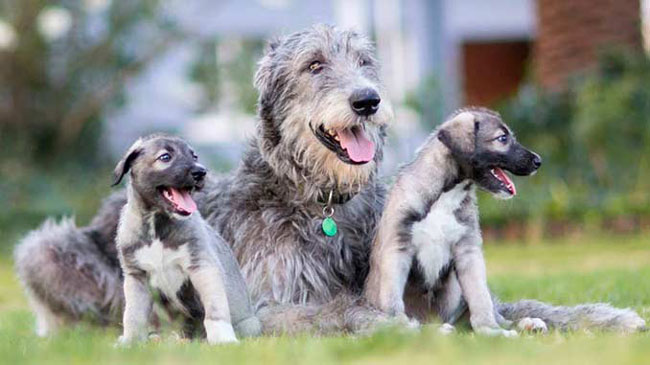
Unfortunately, this is the most painful topic for owners of “the Irish.” Like most giant breeds, they do not live long. The average lifespan is 6-8 years. Long-livers reaching 10 years exist, but they are a rarity.
Main Health Problems:
- Dilated Cardiomyopathy (DCM): A heart disease where the heart muscle weakens and enlarges. Regular check-ups with a cardiologist are mandatory.
- Osteosarcoma: Bone cancer. Sadly, large dogs are prone to this disease. Any limping should be checked by a vet immediately.
- Bloat (GDV): A condition where the stomach twists, blocking blood supply. Requires immediate surgery. Some owners opt for preventative gastropexy (stitching the stomach).
- Liver Shunt: A congenital liver defect. Usually checked in puppies by the breeder.
Pros and Cons of the Breed
Pros:
- Incredibly calm and balanced character.
- Very quiet at home, hardly ever barks.
- Friendly to people and other dogs.
- Spectacular appearance that draws admiration.
- Smart and capable of learning (though not a service dog).
Cons:
- Very short lifespan.
- High cost of ownership (food, vet bills, gear).
- Transport difficulties (requires a large SUV or van).
- Need for space (at least so the dog can stretch out).
- Long maturation period.
Interesting Facts About the Breed
- The Irish Wolfhound is the official mascot of the Irish Guards. The dog serving in the regiment is traditionally given an Irish name and takes part in parades in full ceremonial dress.
- In the Middle Ages, there was a ban on exporting these dogs from Ireland to preserve their numbers. Oliver Cromwell issued a decree to this effect in 1652.
- This breed is often mentioned in literature. The famous dog Gelert from Welsh legend is often depicted as an Irish Wolfhound, although debates about this continue.
- For a puppy to grow up healthy, it needs very soft bedding. Due to their heavy weight, they often develop elbow calluses if they sleep on hard surfaces.
Frequently Asked Questions (FAQ)
Is an Irish Wolfhound suitable for an apartment?
Theoretically, yes, if the apartment is large enough and there is an elevator (carrying a 120-lb dog up the stairs if it gets sick or old is unrealistic). They are calm at home, but they take up a lot of floor space when lying down.
Do they eat much?
An adult dog eats about 2 lbs (800-1000 grams) of dry food per day. During the puppy’s active growth period, the volumes can be even larger.
Is this breed hard to train?
They are smart but don’t like drilling. They quickly get bored with repeated commands. The best method is positive reinforcement and treats. Harsh methods don’t work with them; the dog will simply withdraw.
Video About the Breed
- A gentle “gentle giant”
- Calm and devoted
- Quiet, rarely barks
- Patient with children
- A very short life (6–8 years)
- Heart disease (DCM)
- A risk of gastric torsion
- Needs plenty of space
| Deerhound | Great Dane | St. Bernard | |
|---|---|---|---|
| Height | 71–81 cm | 71–86 cm | 65–90 cm |
| Energy | 3.5 | 3 | 2.5 |
| Apartment | 2 | 2 | 2 |
| Beginners | 3 | 3 | 2.5 |
How long do Irish Wolfhounds live?
Is the Wolfhound good with children?
Is the Wolfhound suited to an apartment?
FCI Standard No. 160 · The Kennel Club
For apartments · For kids · For beginners · Active · Smartest · Hypoallergenic · All rankings →