

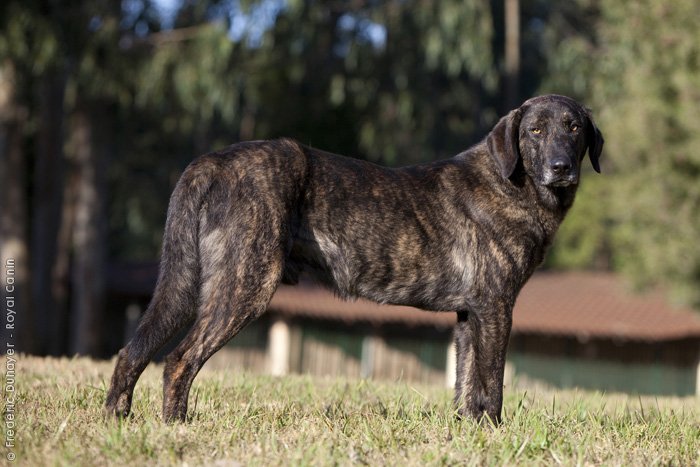
| Height | 55–64 cm |
| Weight | 25–40 kg |
| Lifespan | 12–14 years |
| FCI group | 2 · pinschers, schnauzers, molossoids, mountain dogs |
| Origin | Portugal |
Exact ratings
Common health issues
Nutrition
The Cão de Castro Laboreiro (Port. Cão de Castro Laboreiro) is a rare and ancient dog breed originating from the mountainous regions of northern Portugal. Known for its calm, balanced, yet vigilant and courageous nature, this dog is an unparalleled guardian of herds against wild predators, especially wolves. It can display distrust and aggression towards strangers, making it an excellent watch dog. This is an exceptionally agile and resilient mountain dog, distinguished by a unique bark with varying tonality – from low bass notes to a high howl, capable of misleading predators about the number of dogs in the area. Within its family circle, it transforms into a kind, affectionate companion, reserved and patient with children. This overview, prepared by the team at Tvaryny, will help you get acquainted with this unique breed in detail.
This dog is an ideal companion for active individuals, capable of covering significant distances, making it a superb partner for long walks, mountain hikes, and travels. Its loyalty and protective qualities, combined with a deep attachment to its owner, forge a unique bond between dog and human.
History of the Cão de Castro Laboreiro Breed
The history of the Cão de Castro Laboreiro, unfortunately, lacks precise written sources, but it is considered one of the oldest breeds on the Iberian Peninsula. Its roots stretch back centuries, with its development occurring in the isolated conditions of the Castro Laboreiro mountain region in northern Portugal, which gave the breed its name. This area, characterized by a harsh climate and the Peneda and Soajo mountain ranges, became the cradle for these resilient dogs.
For centuries, the primary function of the breed was to protect cattle and other livestock from wolf attacks, which were common in the region. Isolation helped preserve the purity of its bloodline and its unique working qualities. These dogs lived alongside shepherds, leading a semi-wild lifestyle that hardened their character, making them independent, intelligent, and capable of making decisions without human intervention. Unlike many other breeds, the Cão de Castro Laboreiro was largely unaffected by “fashionable” trends in dog breeding, retaining its pristine appearance and temperament. It was only in 1935 that the first breed standard was approved, marking a step towards its official recognition.
What the Cão de Castro Laboreiro Looks Like: Breed Standard
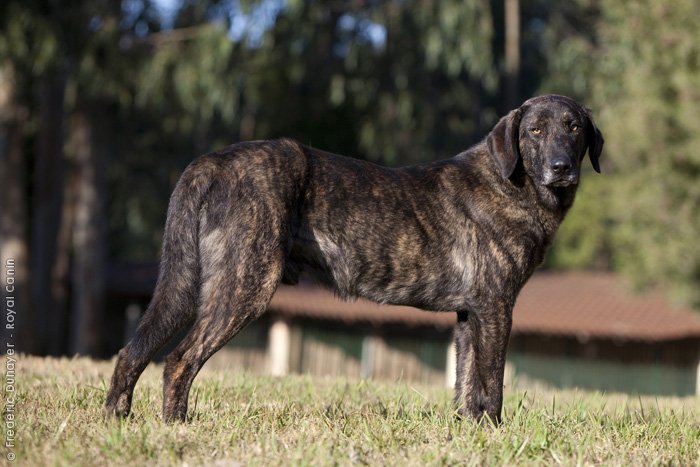
The Cão de Castro Laboreiro is a Mastiff-type dog, but with a lighter and more athletic build, resembling a wolf. It possesses harmonious proportions, a strong bone structure, and well-developed musculature, indicative of its strength and agility.
- Head: Medium-sized, dry, slightly elongated. Skull moderately wide. The stop (transition from forehead to muzzle) is smooth.
- Muzzle: Elongated, straight, tapering towards the nose, but not pointed.
- Nose: Large, with well-developed nostrils, always black.
- Eyes: Medium-sized, almond-shaped, obliquely set. Color – from light brown to dark brown, harmonising with the main coat color. The gaze is intelligent, vigilant, sometimes stern.
- Ears: Set high, pendulous, triangular in shape, medium-sized, thin and smooth.
- Neck: Powerful, short, without dewlap.
- Body: Rectangular in format. Chest broad and deep. Back straight, strong.
- Limbs: Straight, parallel, with strong bones and well-developed musculature. Paws rounded, “cat-like,” with thick pads.
- Tail: Medium length, saber-shaped. Carried low when calm, raised above the backline when excited.
- Coat: Short (around 5 cm), dense, harsh to the touch, providing good protection from the elements. Undercoat absent or sparsely developed.
- Color: The most common and desired is the “mountain” or “wolf” color – brindle on a grey, fawn, or reddish background. A black mask may be present.
| Parameter | Characteristic |
| Height at Withers | Males: 58-64 cm, Females: 55-61 cm |
| Weight | Males: 30-40 kg, Females: 25-35 kg |
| Lifespan | 12-14 years |
Character: Temperament and Behavior
The character of the Cão de Castro Laboreiro is the result of centuries of selective breeding aimed at creating the ideal guardian. This is a one-owner dog, to whom it is immensely devoted. It treats its family members with love and tenderness, is patient with children, and is aware of its strength. However, its main trait is vigilance and distrust of strangers. It is always on guard, controlling its territory.
These dogs are not prone to unprovoked aggression but will not hesitate to use force if they perceive a real threat to their family or property. Their reaction is lightning-fast. They are very intelligent and independent, which can pose certain training difficulties for inexperienced owners. The breed has a strong protective instinct, similar to what can be observed in other pastoral breeds, such as the Bucovina Shepherd Dog, also known for its loyalty and guarding qualities. Similarly, the Bullmastiff, another powerful guardian, shares this need for firm, consistent handling.
Peculiarities of Barking
One of the most interesting features of the breed is its bark. It begins with low, deep, warning sounds that gradually transition into high, piercing notes, resembling a howl. Such an acoustic range creates the impression that the territory is guarded by an entire pack of dogs, which is an effective psychological tactic for deterring predators and uninvited guests.
Pros and Cons of the Cão de Castro Laboreiro Breed
Before acquiring such a serious dog, it’s worth weighing all the pros and cons.
| Pros | Cons |
|---|---|
| Exceptional guarding qualities. A natural protector who requires no special training for territorial defence. | Tendency to dominate. Requires an experienced, confident owner who can become the “pack leader.” |
| Devotion to family. Becomes deeply attached to its owner and family members, becoming a reliable friend and protector. | Distrust of strangers. Can be aggressive towards guests, requires thorough socialization from an early age. |
| High intelligence and independence. Capable of independently assessing situations and making decisions. | Requires space and physical exercise. Absolutely unsuitable for living in a small apartment without extensive daily walks. |
| Robust health and low maintenance. As an aboriginal breed, it has a strong immune system and does not require complex care. | Requires early and continuous socialization. Without exposure to various people, animals, and situations, it can grow overly suspicious. |
| Patience with children in its own family. Usually gets along well with children it grows up with. | Rarity. Finding a puppy outside Portugal can be difficult and expensive. |
Health and Typical Diseases
How to Care for a Cão de Castro Laboreiro
Caring for this dog is not complicated but requires consistency. They are accustomed to living in open spaces, so an ideal option for them would be a private house with a large, securely fenced territory.
Coat Care
The short and harsh coat does not require complex care. It is sufficient to brush it once a week with a rubber brush or glove to remove dead hairs and maintain cleanliness. Shedding occurs twice a year, during which period you will need to brush the dog more frequently. Bathing should only be done when absolutely necessary, as frequent washing can damage the skin’s natural protective layer.
Hygiene Procedures
- Ears: Regularly inspect the ear canals for dirt or signs of inflammation. Clean them as needed with a special lotion.
- Eyes: Keep an eye on eye cleanliness, removing natural discharge with a cotton pad moistened in clean water.
- Claws: If the dog moves a lot on hard surfaces, its claws will wear down naturally. Otherwise, they need to be trimmed once a month.
- Parasite Treatment: Don’t forget about regular treatment for fleas, ticks, and worms.
Training and Socialization
This is a crucial aspect of raising a Cão de Castro Laboreiro. Due to their tendency to dominate and independent nature, they require an owner with a firm hand and a calm, confident character. You must become the dog’s unquestionable authority, the “pack leader,” otherwise it will try to assume this role itself. Training should be based on mutual respect, consistency, and positive reinforcement. Roughness and physical punishment are unacceptable and can lead to aggression.
Early socialization is vital. From puppyhood, introduce the dog to various people, sounds, places, and other animals (under supervision). This will help raise a balanced, well-adjusted dog that can distinguish a real threat from a normal situation. Similar training requirements apply to other Portuguese guardian dogs, such as the Estrela Mountain Dog and the Rafeiro do Alentejo, which are also valued for their independence and protective instincts.
Feeding the Cão de Castro Laboreiro: Key Recommendations
Interesting Facts about the Breed
- The name “Cão de Castro Laboreiro” literally translates to “dog from Castro Laboreiro.”
- This breed is considered a national treasure of Portugal.
- The unique “multi-voiced” bark is one of the breed’s hallmarks.
- The Cão de Castro Laboreiro is one of the rarest breeds in the world. Most representatives still live in their historical homeland.
- Thanks to their endurance, these dogs can patrol mountain slopes for hours without tiring.
Frequently Asked Questions about the Breed (FAQ)
| Question | Answer |
| Is the Cão de Castro Laboreiro suitable for apartment living? | No, absolutely not. This dog needs space, a large territory to guard, and a high level of physical activity that cannot be provided in an apartment setting. |
| Does this dog get along with other animals? | It’s complicated. With strong possessive and hunting instincts, it may view other animals, especially smaller ones, as prey or rivals. It might get along with another dog if they grew up together, but it will be hostile towards strange dogs in its territory. |
| Can this dog be left alone with children? | Only with children from its own family and under adult supervision. Despite its patience, it is a large and strong dog that could unintentionally harm a child. It’s important to teach children how to interact properly with the dog. |
| Does the Cão de Castro Laboreiro shed a lot? | Shedding is seasonal, twice a year (spring-autumn). During this period, there will be quite a bit of hair. At other times, shedding is moderate. |
| Is it difficult to find a puppy of this breed? | Yes, it is very difficult. The breed is rare even in Portugal. Finding a reputable breeder can take a long time, and the cost of a puppy will be high. |
Video about the Breed
- An unrivalled flock guardian against predators
- Calm, level-headed, devoted to the family
- A hardy mountain dog
- A unique bark that changes tone
- Wary and watchful with strangers
- Self-reliant — not for a novice
- Not for an apartment — needs space
- Guarding instinct towards strangers
| Estrela Mountain Dog | Rafeiro do Alentejo | Cão de Palleiro | |
|---|---|---|---|
| Height | 62–75 cm | 64–74 cm | 57–65 cm |
| Energy | 3 | 2.5 | 3.5 |
| Apartment | 1.5 | 1.5 | 2 |
| Beginners | 2 | 1.5 | 2.5 |
FCI Standard No. 170 · Clube Português de Canicultura
For apartments · For kids · For beginners · Active · Smartest · Hypoallergenic · All rankings →