Tvaryny ›
Dogs ›
French Pointing Dog (Pyrenean type)
Group 7 · pointing dogs · France (Pyrenees)
French Pointing Dog (Pyrenean type)
The lighter, nimbler branch of the French pointers — versatile and gentle: hardy, keen, calm at home and devoted. The French Pointing Dog of the Pyrenean type is the smaller and faster variety of the old French pointer; it works well on feather and fur, tolerates heat easily, and at home becomes an affectionate, obedient family member that finely senses its owner.
Apartment · not suitableKidsCats · with caveatsOther dogsBeginners · with caveats
The French Pointing Dog: Pyrenean type(Braque Français: type Pyrénées) is not just a gundog but a truly versatile companion with a history stretching back centuries. Members of this breed are excellent at working with birds and game on any terrain, showing remarkable stamina, passion, and incredible loyalty. They handle heat well, making them fantastic partners for hunting in various climates. However, once they step inside, this energetic hunter transforms into a calm, gentle, and obedient family member who is finely tuned to their owner's mood. Its high performance in the field, combined with a sweet and balanced nature, has earned the French Pointing Dog (Pyrenean type) recognition and love from hunters and dog enthusiasts around the world. In this article, we’ll take a closer look at the specifics of this breed; read on for more at Tvaryny.
French Pointing Dog (Pyrenean type): A Breed Overview
French Pointing Dog (Pyrenean type): A Breed Overview · 15
Breed Name
French Pointing Dog (Pyrenean type)
Country of Origin
France
Time of Origin
17th century (formal type division in the 20th century)
Type
Continental Pointing Dog
Lifespan
12–15 years
Height (at the withers)
Males: 47–58 cm (18.5–23 in); Females: 47–56 cm (18.5–22 in)
Weight
17–25 kg (37–55 lbs)
Temperament
Gentle, intelligent, loyal, energetic, sensitive
Purpose
Upland bird hunting, companion
Activity Level
High
Grooming Needs
Low
Shedding
Moderate
Good with Children
Very good
Good with Other Animals
Good, requires early socialization
Trainability
High, needs a gentle approach
Fun Facts About the French Pointing Dog
Two Dogs in One: The French Pointing Dog is often called a "dog with an off-switch." In the field, it's a whirlwind of energy, but at home, it's a calm and gentle couch companion.
Royal Ancestry: One theory suggests that the ancestors of the French Pointing Dog were the favorite hunting dogs of French kings, including Louis XIV.
Saved from Extinction: After World War II, both types of French Pointing Dog were on the brink of disappearing. The breed was saved only through the efforts of dedicated enthusiasts.
A "Human" Gaze: One of the breed's hallmarks is its incredibly expressive, almost human-like gaze that reflects its intelligence and sensitivity.
Not Just for Birds: Although their main specialty is hunting upland birds, they are also successfully used to hunt small game like rabbits and hares.
History of the French Pointing Dog (Pyrenean type)
The history of the French Pointing Dog is a long journey that began centuries ago. It’s believed their ancestors were ancient Spanish and Italian pointing dogs brought to France during the Middle Ages. For a long time, these dogs were bred exclusively for their working abilities, with little attention paid to their appearance. They were known by the general name "Braque," which translates from French as "to point." These dogs became the foundation for many modern continental pointing breeds, leaving their genetic footprint across Europe.
For many years, the French Pointing Dog had no clear division into types. However, at the end of the 19th century, disagreements arose among breeders about the ideal appearance. Some wanted to preserve the old, heavier, and more substantial type of dog, while others saw the future of the breed in lighter, faster, and more elegant dogs. This gradually led to the formation of two distinct, though closely related, breeds:
The Gascony type: Larger and heavier, with more pronounced features of ancient hounds (like skin folds and longer ears). It is considered closer to the original type of French Pointing Dog.
The Pyrenean type: Smaller, lighter, more athletic, and energetic. This type was developed by hunters in the foothills of the Pyrenees who needed a tireless and swift partner for hunting in challenging mountain terrain.
The Pyrenean type quickly gained popularity for its versatility, elegance, and incredible work ethic. It proved to be perfectly suited to modern hunting demands. The official recognition and separation into two types happened in the mid-20th century when separate standards were created for each breed. Today, the French Pointing Dog (Pyrenean type) is far more common and popular than its Gascony cousin, valued by hunters worldwide for its exceptional working qualities and wonderful character.
Breed Standard and Appearance
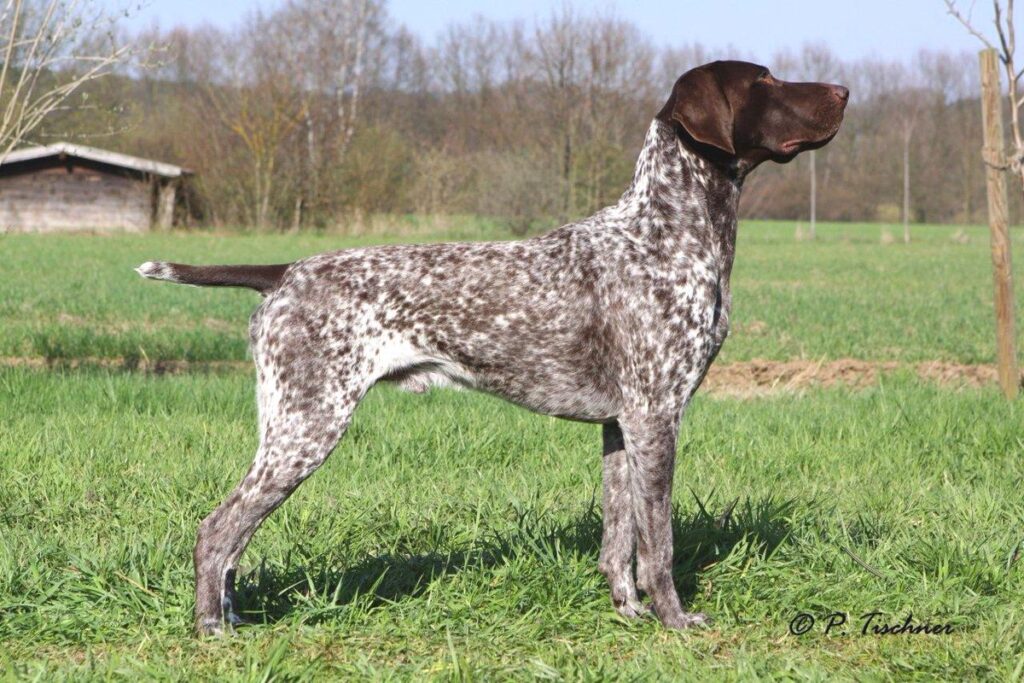
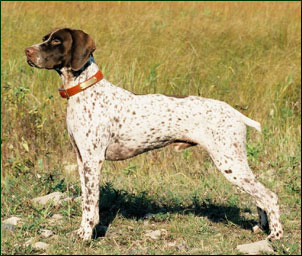
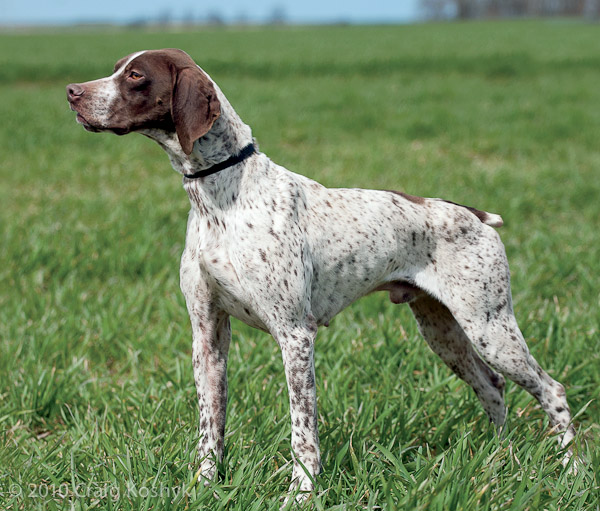
The French Pointing Dog (Pyrenean type) is a medium-sized dog that is well-proportioned and muscular but not bulky. It has an appearance of nobility, strength, and endurance. Its look is the epitome of function, where every feature highlights its purpose as a hunter.
The head of a French Pointing Dog (Pyrenean type) has a distinct shape: the skull is almost flat or slightly rounded, with a gentle slope from the forehead to the muzzle (the stop). The muzzle is straight and a bit shorter than the skull. The lips are not too thick, with the upper lip slightly covering the lower one. The nose is always brown with wide-open nostrils.
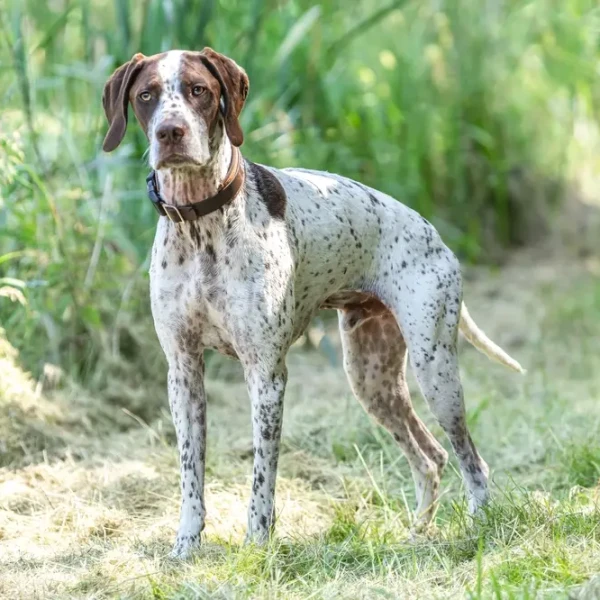
The eyes are one of the breed's most expressive features. They are chestnut or dark amber, with an intelligent, gentle, and loyal expression. The gaze is direct and open. The ears are set high, slightly above the eye line. They are not overly long, fold slightly forward, and have small creases. The tip of the ear should be rounded.
The dog's body is strong and athletic. The neck is long, muscular, and may have a slight dewlap. The withers are well-defined. The back is straight and strong, and the croup is slightly sloped. The chest is deep but not too wide, which gives it stamina for long runs. The belly has a moderate tuck, unlike the more defined tuck of the Gascony type.
The tail may be naturally short or long. If a dog is born with a long tail, it was traditionally docked, though this practice is now restricted in many countries. The dog holds its tail horizontally or slightly lowered.
The coat is short, fine, and dense, providing good protection from the elements. It can be slightly coarser on the back. The color comes in two main patterns:
Chestnut (brown): Can be solid or with white markings on the chest and paws.
White with chestnut patches: The patches can be of various sizes, sometimes with heavy ticking (small spots). This color pattern is more common.
Character and Temperament
The character of the French Pointing Dog (Pyrenean type) is a unique blend of hunting drive and domestic tranquility. This is an incredibly gentle and devoted dog that forms a deep bond with its family. At home, it is quiet and calm, happy to be near its owner without being demanding. It loves attention and will gladly lie at your feet for hours while you work or relax.
These dogs get along wonderfully with children. Their balanced temprament and patience make them excellent playmates. However, as with any breed, it's important to teach children how to interact properly with an animal to prevent accidental injuries on either side.
These French Pointers are very intelligent and quick-witted. They learn fast and are always eager to please, which makes training an enjoyable and effective process. However, their high sensitivity requires a special touch. They absolutely cannot tolerate harshness, shouting, or physical punishment. Harsh training methods can permanently break a dog's trust, making it fearful and withdrawn. The best results come from positive reinforcement, patience, and affection.
In the field, the dog's character changes dramatically. The calm family pet transforms into a passionate and tireless hunter. It shows incredible energy, drive, and focus on the job. Its working style is to actively search for game at a medium distance from the hunter, allowing for constant contact. This isn't a dog that runs over the horizon, unlike some other pointers, such as the Old Danish Pointer. When it finds game, it holds a beautiful and confident point.
Pros and Cons of the Breed
Pros
Cons
Excellent family dog: Gentle, patient, and loyal; gets along well with children.
Needs lots of physical activity: Not suited for inactive people or apartment living without enough exercise.
Highly intelligent and trainable: Easy to train with the right approach.
Extremely sensitive: Reacts poorly to shouting and harsh training methods.
Excellent hunter: Versatile and durable, with a great nose and natural instincts.
Prone to separation anxiety: Dislikes being left alone for long periods.
Needs early and consistent socialization: Without it, can be timid or wary of strangers.
Good health: Rarely suffers from major hereditary diseases.
Strong prey drive: May chase small animals, needs a reliable leash on walks in the city.
Training and Socialization
Training a French Pointing Dog is a process that requires patience, consistency, and above all, a gentle hand. Thanks to their high intelligence and desire to please, these dogs learn commands quickly, but their sensitive nature can't handle pressure or harshness. The key to successful training is positive reinforcement - praise, treats, and games.
Early socialization is critical for raising a well-balanced and confident dog. From a young age, the puppy should be introduced to different people, sounds, places, and other animals. This will help prevent the development of fear and aggression later in life.
Keep training sessions short, fun, and varied so the dog doesn't lose interest. In addition to basic obedience commands ("sit," "down," "come"), it's very beneficial to get your French Pointer involved in dog sports that stimulate both body and mind, like agility, flyball, or scent work. And of course, if you have the chance, hunt training is the best way to let your pet’s natural talents shine.
Care and Upkeep
Caring for a French Pointing Dog (Pyrenean type) is not overly demanding, but some aspects require regular attention to keep your pet healthy and happy.
Grooming and Coat Care
The short, dense coat of the Pyrenean type is easy to maintain. Brushing it once a week with a firm bristle brush or a rubber grooming mitt is enough. This process removes dead hair, stimulates skin circulation, and helps keep the coat clean and shiny. During seasonal shedding in the spring and fall, you’ll need to brush the dog more often-2-3 times a week.
Only bathe the dog when absolutely necessary, using a shampoo formulated for dogs to avoid stripping the skin's natural protective oils. Frequent baths can lead to dry skin and dandruff.
Care for Ears, Eyes, and Nails
Like all dogs with floppy ears, the French Pointing Dog is prone to ear infections. Poor ventilation creates a warm, moist environment where bacteria and yeast can thrive. Because of this, you should check their ears weekly for any redness, dirt, or unpleasant odors. Clean the ears with a vet-approved solution, and avoid using cotton swabs, which can injure the ear canal. The eyes also need occasional checks; gently wipe away any excess discharge with a clean cloth.
Nails should be trimmed about once a month if they don’t wear down naturally on hard surfaces. Overly long nails can cause discomfort while walking and affect the paw's structure.
Living Conditions and Physical Exercise
It’s important to understand this: the French Pointing Dog is not an apartment dog. This is an extremely energetic breed that needs room to move. The ideal home is a house with a large, securely fenced yard where the dog can run and play freely.
Regardless of where they live, a French Pointing Dog (Pyrenean type) needs long, active daily walks. A minimum of 1.5–2 hours a day is necessary, and this should be more than a slow walk on a leash. They need intense exercise like running, playing fetch, and swimming. Without enough physical activity, the dog can become restless, destructive, and even overweight.
Nutrition
Nutrition: How to Feed Your Dog Properly
Health and risks
Health and Common Conditions
Frequently Asked Questions (FAQ) · 6
Question · 6
Question
Answer
Is the French Pointing Dog (Pyrenean type) a good apartment dog?
No, this is not the best choice. This breed needs space and a high level of daily activity that is hard to provide in a city apartment. A house with a yard is ideal.
Does this breed shed a lot?
Shedding is moderate and increases seasonally in the spring and fall. Regular brushing helps keep it under control.
Can they get along with cats and other animals?
Yes, with early socialization. If a puppy is raised with a cat from a young age, problems are rare. However, their hunting instinct might kick in with strange small animals.
Do they bark a lot?
The French Pointing Dog is not prone to nuisance barking. They will alert you to strangers or bark during play, but overall, they are fairly quiet dogs.
What's the main difference between the Pyrenean and Gascony types?
The main difference is size and build. The Pyrenean type is smaller, lighter, and more athletic. The Gascony type is larger, heavier, and has more pronounced hound-like features (longer ears, skin folds). The Pyrenean is also considered more energetic. A similar French pointer is the Ariege Pointer.
Are they difficult to train?
No, they are very smart and eager to please. However, their sensitivity requires a strictly gentle, positive training method without any harshness.
FAQ
How does the Pyrenean type differ from the Gascony?
They are two branches of the French Pointer: the Pyrenean is smaller, lighter and nimbler (bred for mountainous terrain), the Gascony bigger and slower; the character of both is gentle.
Is the Pyrenean Pointer good for a family?
Yes — at home it is a calm, gentle and obedient dog, good with children; but it needs serious exercise and scent work, so it is not for an apartment.
Is this breed easy to train?
Yes, with a gentle approach — it is clever and eager to please; but sensitive to harshness, so only positive, consistent training matters.