

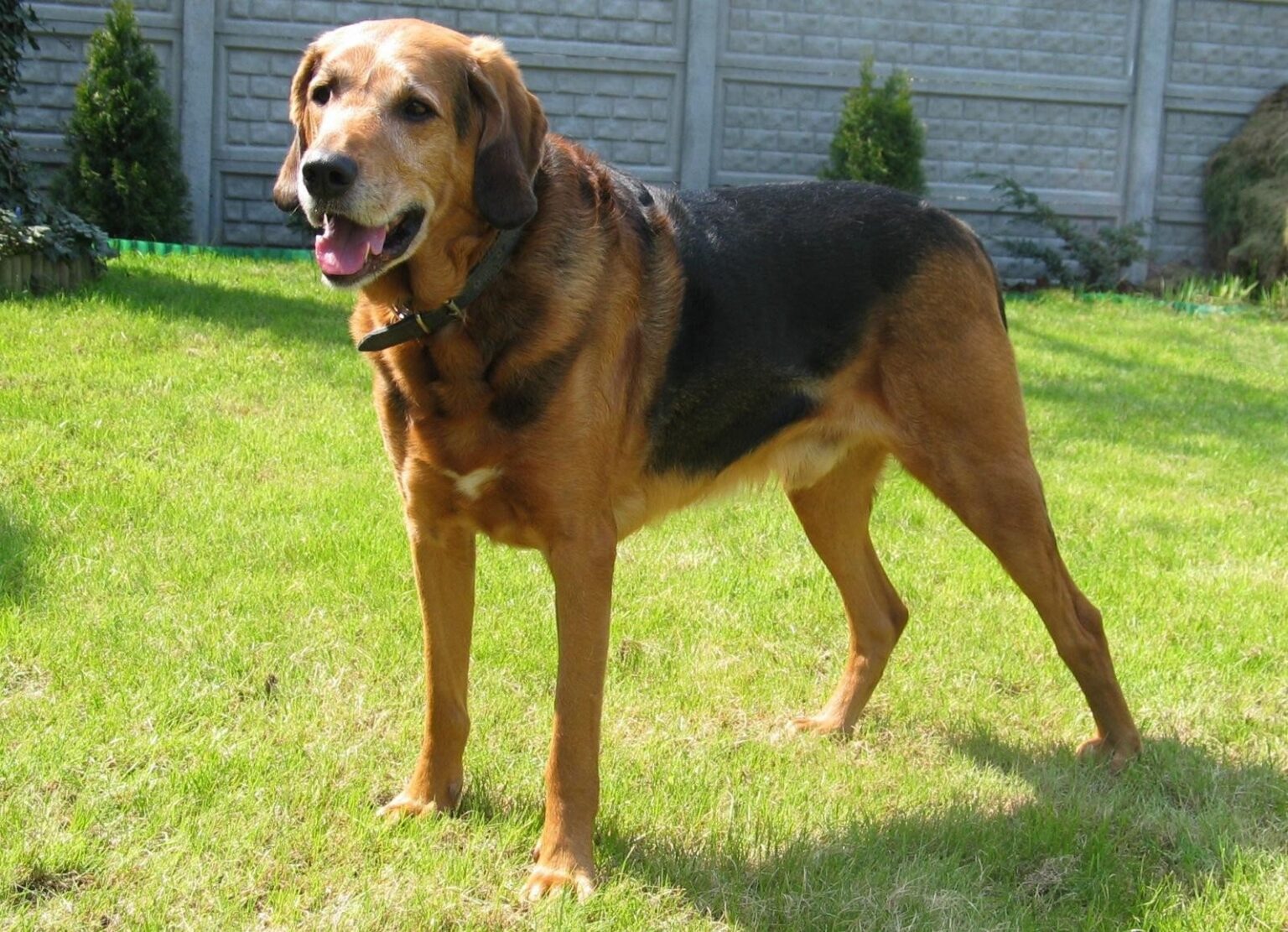
| Height | 52–59 cm |
| Weight | 20–26 kg |
| Lifespan | 12–14 years |
| FCI group | 6 · scenthounds |
| Origin | Poland |
Exact ratings
- Sturdy overall — but with the cautions listed below
- Ear infections (pendulous ears)
- Hip dysplasia (less common)
- Obesity with insufficient exercise
- Injuries while hunting
Balanced food for an active scenthound, with weight control. Check the pendulous ears regularly; provide plenty of exercise and scent work; sensible, consistent training.
The Polish Hound (Gończy Polski) is more than just a dog—it’s the embodiment of a hunter’s passion and boundless energy wrapped in an elegant and athletic package. This large, hard-working hound belongs to an ancient group of hunting dogs, capable of excelling in the most challenging conditions with remarkable endurance and sharp intelligence. Beyond its primary role, it makes an excellent watchdog and a devoted companion. The Polish Hound requires consistent training, but with the right guidance, it becomes a gentle and loving family pet. To learn all about the nuances of this unique breed’s care, temperament, and history, you’ll find more on Tvaryny.
If you start training this dog with good manners from a young age, it can get along wonderfully with children. However, its coexistence with cats and other small animals will be a real challenge. That strong hunting instinct will always call your pet to chase, and it’s something you need to be aware of from the moment they join your home.
Polish Hound: Essential Breed Information
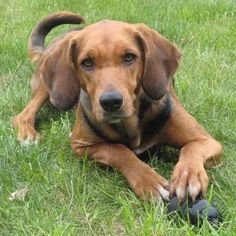
| Breed Name | Polish Hound (Gończy Polski) |
| Country of Origin | Poland |
| FCI Classification | Group 6 (Scent Hounds and Related Breeds), Section 1.2 (Medium-sized Hounds). Working trials are mandatory. |
| FCI Recognition Year | 2006 (final recognition) |
| Lifespan | 12-14 years |
| Height at Withers | Males: 21.6-23.2 inches (55-59 cm) Females: 19.7-21.6 inches (50-55 cm) |
| Weight | Males: 48.5-70.5 lbs (22-32 kg) Females: 44-62 lbs (20-28 kg) |
| Temperament | Energetic, brave, intelligent, balanced, loyal |
| Purpose | Hunting large and small game (especially wild boar and deer), companion dog |
A Detailed History of the Polish Hound
The history of the Polish Hound is deeply intertwined with the history of hunting in Poland. The first records of hounds in these lands date back to the 14th century. Chronicles from that era describe dogs that, in both type and hunting ability, are very similar to today’s breed. They were indispensable helpers for the Polish nobility during hunts in the dense forests of the region.
Over the centuries, several types of Polish Hounds existed, differing in size, build, and coat color. However, the most crucial period in the formation of the modern Gończy Polski was the mid-20th century. Before World War II, a heavier type of hound, now known as the Polish Hound Ogar Polski, was most common in Poland. The war, however, dealt a devastating blow to the population of these dogs.
The revival of the breed we know today as the Polish Hound is inextricably linked with the name of Colonel Józef Pawłusiewicz. A passionate hunter, he began a targeted breeding program after the war, focusing on the lighter, more agile, and louder-voiced hounds that had survived primarily in the mountainous regions of the Carpathians. It was his dogs that became the foundation for this new—or rather, a revived old—breed. Unlike the Ogars, these dogs were smaller, more nimble, and primarily had a black and tan coat.
In parallel with Pawłusiewicz, another enthusiast, Colonel Piotr Kartawik, was breeding the heavier type of hound. For a long time, both types were considered variations of the same breed. However, thanks to the efforts of dog breeders and enthusiasts, a decision was made in 1983 to officially separate them. The lighter type, descended from Colonel Pawłusiewicz’s dogs, was named the Gończy Polski. The Fédération Cynologique Internationale (FCI) officially recognized the breed only in 2006, assigning it the number 354.
What the Polish Hound Looks Like: Standards and Appearance
The Polish Hound is a medium-sized dog with a compact, strong, and well-proportioned body that speaks to its great endurance and agility. It looks significantly lighter and more elegant than its relative, the Polish Ogar.
- Head: Noble and proportional to the body. The skull is slightly domed, with a well-defined but gentle stop.
- Muzzle: Slightly shorter than the skull, strong, and not pointed. The lips are tight-fitting.
- Eyes: Medium-sized, almond-shaped, and set slightly obliquely. The color ranges from dark brown to hazel, harmonizing with the coat. The expression is intelligent and calm.
- Ears: Drooping, of medium length, set at eye level. They are light, triangular, and slightly rounded at the tips.
- Body: Rectangular in shape. The back is strong and straight. The loin is muscular. The chest is deep and well-developed, reaching the elbows.
- Tail: Moderately thick, set rather low. At rest, it hangs down and is slightly curved like a saber. When the dog is in motion, it raises it no higher than the level of the back.
- Coat: Short, dense, and close-fitting, with a well-developed undercoat, especially in winter. The coat feels harsh to the touch.
Coat Colors of the Polish Hound
The breed standard allows for three main color variations:
- Black and Tan: This is the most common. Black covers most of the body (saddle). The tan markings are clearly defined and of a rich reddish or brownish-red color. They are located above the eyes, on the muzzle, chest, inner side of the legs, and under the tail.
- Chocolate and Tan (Brown and Tan): Similar to black and tan, but the primary color is a rich chocolate brown. The nose is also brown with this coloring.
- Red: Various shades of red, from fawn to a rich deer red. A slight black shading on the muzzle and ears is acceptable.
Temperament and Character Traits
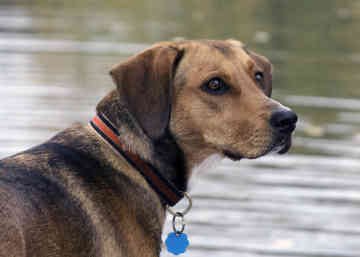
The Polish Hound’s character is a wonderful balance of a hunter’s passion and domestic tranquility. On the hunt, it is a brave, tireless, and tenacious competitor, capable of pursuing game for hours, announcing its progress with a melodic and clear bark. At home, however, it transforms into a balanced and calm family member.
Loyalty to its owner is one of the key traits of the breed. These dogs are very people-oriented and eager to please. They form a strong bond with their family and have a hard time with long periods of loneliness. With proper socialization, the Polish Hound gets along well with children, especially if it grows up with them. It is patient and gentle, but it is important to teach children to respect the dog’s personal space.
It is wary and distrustful of strangers but not aggressive. Its loud bark will always announce the arrival of guests, making it an excellent watchdog. However, it can be dominant with other dogs, especially males. Early socialization helps smooth out these traits. As for living with cats, rodents, or birds—that’s a big problem. Its prey drive is simply too strong, and it will always see small animals as potential quarry.
Pros and Cons of the Breed
| ✅ Pros | ❌ Cons |
|---|---|
| Outstanding hunting abilities | Very high physical exercise requirements |
| Loyalty to family and a calm demeanor at home | Strong prey drive (requires a reliable leash) |
| High intelligence and trainability | Can be stubborn and independent in decision-making |
| Excellent watchdog qualities | Prone to loud and frequent barking |
| Easy coat care | Doesn’t get along well with cats and other small animals |
| Robust health and endurance | Not suitable for apartment life without sufficient exercise |
Care and Upkeep of the Polish Hound
The Polish Hound is a breed that doesn’t demand complex care but does have specific needs regarding its environment and activity level.
Grooming and Coat Care
The Polish Hound’s short, harsh coat does not require haircuts or complicated procedures. The main care involves regular brushing with a rubber brush or grooming glove 1-2 times a week. This helps remove dead hair and keeps the skin healthy. Shedding occurs twice a year, in spring and fall. During these periods, you’ll need to brush the dog more frequently.
You should only bathe the hound when absolutely necessary. Its coat has a natural water-repellent layer that frequent washing can damage. After every hunt or walk in the woods, it’s crucial to thoroughly check the dog for ticks, burrs, and other debris in its coat, between its toes, and in its ears.
Living Conditions and Exercise
This is not a couch potato dog. The Polish Hound was bred for movement and work. The ideal environment for it is a house with a large, securely fenced yard. The fence must be tall and strong, as this dog may try to escape if it picks up an interesting scent. Life in an apartment is only possible if the owner is prepared to dedicate 2-3 hours a day to active walks.
Daily exercise should include not just slow walks, but also running, playing, and mental stimulation. This dog will be happy to accompany you on a run, bike ride, or a long hike. Insufficient activity can lead to destructive behavior, excessive barking, and health problems.
Training and Raising a Polish Hound
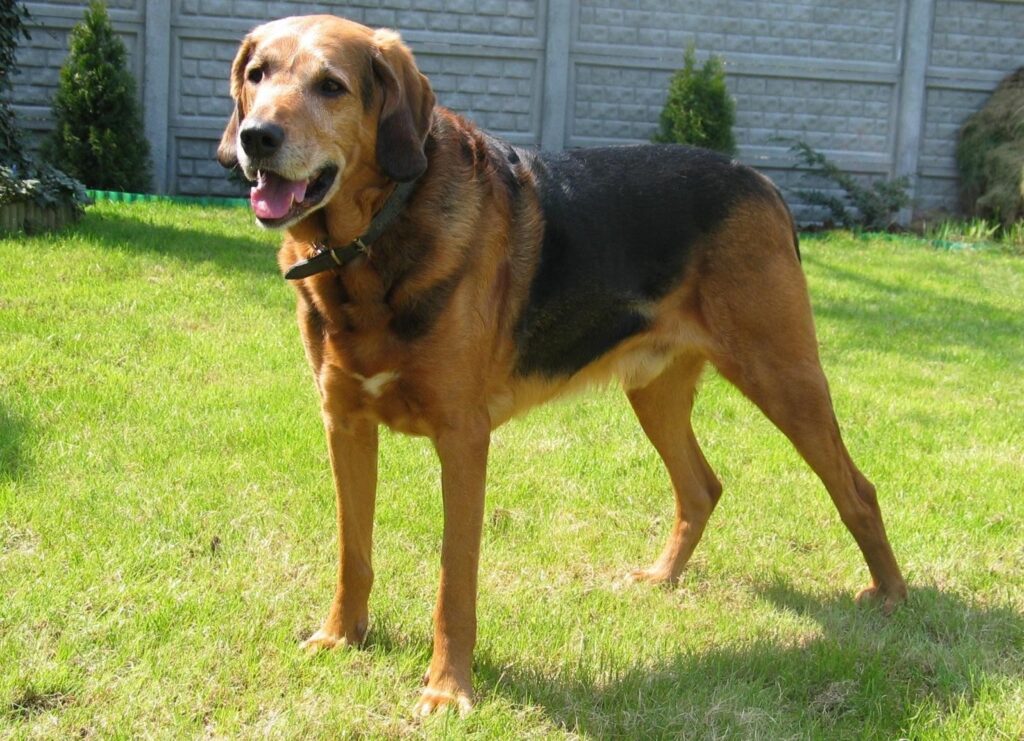
Training a Polish Hound is an interesting task, but it’s not for novices. Dogs of this breed are very intelligent and clever but also independent and sometimes stubborn. They were bred for autonomous work, so they are used to making their own decisions. The owner must be a patient, consistent, and confident leader.
Positive reinforcement methods work best: praise, treats, and games. Harshness and physical punishment are absolutely unacceptable—they can cause the dog to become resistant, distrustful, or even aggressive. Socialization should start as early as possible, introducing the puppy to various people, places, sounds, and other animals (under supervision).
Particular attention should be paid to the “Come!” command. Due to its strong prey drive, the Polish Hound may ignore all commands if it catches an interesting scent. It should only be let off-leash in safe, well-fenced areas. The breed excels in sports like agility, coursing, tracking, and frisbee. These activities help channel its energy in the right direction, just like with other high-energy breeds such as the Smooth Fox Terrier.
Health and Typical Breed Diseases
Polish Hounds are generally a healthy and resilient breed with a low number of hereditary diseases. However, like any breed, they have a predisposition to certain issues:
- Hip and Elbow Dysplasia: While not as common as in larger breeds, responsible breeders screen their dogs for this condition.
- Gastric Torsion (Bloat): A common problem for dogs with deep chests. To minimize the risk, feed your dog small portions 2-3 times a day and do not allow for vigorous play immediately after eating.
- Ear Infections (Otitis): Their floppy ears restrict air circulation, creating a favorable environment for bacteria and fungi. Regularly inspect and clean the ears.
- Eye Diseases: Entropion (inward-turning eyelids) and progressive retinal atrophy (PRA) are sometimes seen.
- Anesthesia Sensitivity: Like many hounds, they can have an increased sensitivity to certain types of anesthesia. Be sure to inform your vet about this before any surgery.
Nutrition: What to Feed a Polish Hound
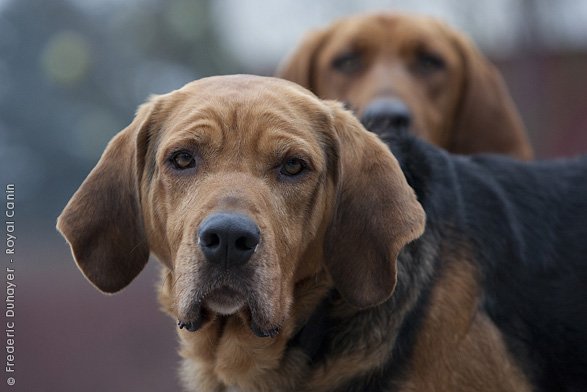
A Polish Hound’s diet must match its high energy needs. This is especially true for working dogs during hunting season. The foundation of their diet should be high-quality animal protein (meat, organ meat).
You can choose one of two feeding types:
- Commercial Dry Food: Choose a premium or super-premium brand formulated for active, medium-sized dogs. These foods are already balanced with vitamins and minerals.
- Raw or Home-Cooked Diet: The base should be raw or cooked meat (beef, poultry, lamb) and organ meats, along with marine fish (boneless). Supplements include grains (buckwheat, rice), vegetables (carrots, pumpkin, zucchini), fermented dairy products (cottage cheese, kefir), and a little vegetable oil.
In winter and during intense activity, you can increase the calorie content of their diet. It’s important not to overfeed the dog to prevent obesity, which puts extra strain on joints and the heart. Clean drinking water must always be freely available.
Comparison with Other Breeds
Polish Hound vs. Polish Ogar
These are two related but distinct Polish breeds that are often confused. The main differences are summarized in the table.
| Characteristic | Polish Hound (Gończy Polski) | Polish Hound Ogar Polski |
|---|---|---|
| Size and Weight | Lighter and smaller (50–59 cm, 20–32 kg) | Heavier and larger (55–65 cm, 25–35 kg) |
| Build | Compact, athletic, rectangular frame | Massive, powerful, with pronounced skin folds |
| Temperament | More energetic, passionate, faster | Calmer, slower, more melancholic |
| Voice (Bark) | Clear, high-pitched, melodic | Low, bass, with a characteristic huskiness |
| Coat Color | Black and tan, chocolate and tan, red | Primarily black-saddled with tan markings (black “saddle” on a red background) |
Polish Hound vs. Slovakian Hound
Another similar breed from a neighboring country is the Slovakian Hound. Both breeds are excellent hunters of wild boar, have black and tan coats, and a similar temperament. However, the Slovakian Hound is usually a bit smaller in stature (45-50 cm) and has a lighter bone structure. Both breeds are considered national treasures in their respective countries.
Interesting Facts About the Polish Hound
- The name “Gończy” comes from the Polish word “gonić,” which means “to chase” or “to pursue,” perfectly describing its hunting purpose.
- The characteristic bark of a Polish Hound during a hunt is called “granie” (playing). Experienced hunters can determine what kind of game the dog is pursuing and its distance by the tone and frequency of the “granie.”
- Despite its centuries-long history, the Gończy Polski was only officially recognized as a separate breed in the 21st century.
- These dogs are incredibly popular among hunters in Poland, especially for hunting wild boar, thanks to their bravery and persistence.
- The Polish Hound has been featured on Polish postage stamps, highlighting its status as a national treasure.
Frequently Asked Questions (FAQ)
Is the Polish Hound suitable for a family with children?
Yes, provided there is proper training and early socialization. It is patient and can become a wonderful friend for children. However, due to its size and energy, playtime with small children should always be supervised by an adult.
Does the Polish Hound bark a lot?
Yes, this is a vocal breed. They use their bark to communicate while hunting and to alert owners to strangers. If the dog is bored or left alone for long periods, it may bark excessively.
Can the Polish Hound live in an apartment?
It is highly discouraged. This dog needs space and daily intense physical exercise, which is difficult to provide in a city apartment. A lack of activity can lead to behavioral problems.
How difficult is it to train a Polish Hound?
They are intelligent but independent, which can make training challenging for an inexperienced owner. It requires patience, consistency, and a positive reinforcement-based approach. This is not a breed that will blindly follow every command.
Can a Polish Hound live with my cat?
Most likely not. Even if the dog grew up with the cat, its hunting instinct can kick in at any moment. It will almost certainly chase neighborhood or stray cats. Keeping it with small animals is not recommended.
Video About the Breed
- Hardy, hard-working in tough conditions
- Clever, trains well
- Devoted, gentle with the family
- Makes a fine watchdog
- Vocal — “gives tongue” on the trail
- Strong hunting instinct (risky with cats)
- Needs proper training and exercise
- Watchful of strangers; not for an apartment
| Polish Hound (Ogar) | Slovakian Hound (Kopov) | Transylvanian Hound | |
|---|---|---|---|
| Height | 55–65 cm | 40–50 cm | 55–65 cm |
| Energy | 4.5 | 4.5 | 4.5 |
| Apartment | 2 | 2 | 2 |
| Beginners | 2.5 | 2.5 | 2.5 |
Is this the same as the Polish Hound (Ogar)?
Is the Gończy Polski good for a family?
Is the breed suited to an apartment?
FCI Standard No. 354 · Związek Kynologiczny w Polsce
For apartments · For kids · For beginners · Active · Smartest · Hypoallergenic · All rankings →