

| Height | 42–54 cm |
| Weight | 15–20 kg |
| Lifespan | 12–15 years |
| FCI group | 6 · scenthounds |
| Origin | Sweden |
Exact ratings
Common health issues
Nutrition
The Småland Hound, or Smålandsstövare, is a unique and the oldest Swedish scent hound breed, a true national treasure of Scandinavia. This compact yet robust hunting dog combines exceptional working qualities, a calm disposition, and a deep devotion to its family. Despite its rich history and wonderful traits, the breed remains quite rare outside its homeland. A key feature of the Småland Hound is its incredibly sharp sense of smell, which aids it in the relentless pursuit of game, especially foxes and hares. They are superbly protected from harsh weather and can work in challenging forest and mountain landscapes. Their value, however, isn’t limited to hunting; their innate wisdom, gentle nature, and ability to get along with children set this breed apart from other hounds, making them a fantastic companion. You can discover more about this amazing dog by reading on at Tvaryny.
Småland Hound Breed Overview
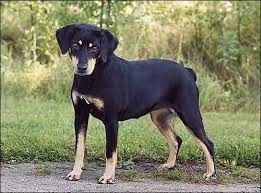
| Breed Name | Småland Hound (Smålandsstövare) |
| Country of Origin | Sweden |
| Time of Origin | Middle Ages, officially recognized in 1921 |
| FCI Classification | Group 6 (Scent hounds and related breeds), Section 1.2 (Medium-sized hounds) |
| Height at the Withers | Males: 18-21 inches, Females: 16.5-20.5 inches |
| Weight | 33-44 lbs |
| Lifespan | 12-15 years |
| Primary Use | Hunting fox and hare, companion dog |
| Temperament | Loyal, calm, intelligent, vigilant, friendly |
| Activity Level | High |
| Grooming Needs | Low |
| Attitude Towards Children | Very good |
| Attitude Towards Other Animals | Good with other dogs, but early socialization is needed; high prey drive toward small animals |
History of the Småland Hound
The history of the Småland Hound is deeply rooted in the centuries-old culture and traditions of the Swedish region of Småland, which is where the breed gets its name. The first mentions of similar dogs in this area date back to the 16th and 17th centuries. It’s believed that their ancestors were German, Polish, and Baltic hounds brought to Sweden by soldiers returning from various European wars. These dogs were then crossed with local spitz-type farm dogs, which helped form a hardy, climate-adapted, and versatile hunting breed.
For centuries, breeding was mainly carried out by farmers and hunters who valued working qualities above all else: a keen nose, a resonant voice, persistence in chasing game, and the ability to work independently. Appearance was secondary, which led to a significant variety in type and size. One of the unique traits that emerged at the time was the naturally occurring short tail (bobtail), which is still a characteristic feature of many members of the breed.
At the start of the 20th century, the breed was on the verge of extinction due to a lack of a unified standard and chaotic breeding practices. The revival of the Småland Hound was led by Baron Johan Fredrik von Essen, who dedicated over 30 years of his life to it. He carefully selected the best representatives of the breed from all over Småland, aiming to solidify desirable traits. To improve their hunting skills, he conducted experimental crossbreeding with other breeds, including the Schiller Hound and some German Hounds. Thanks to his efforts, in 1921, the Swedish Kennel Club officially recognized the Smålandsstövare breed, and the first standard was established. Despite this, the population remained small. The Second World War dealt another blow to the breed. It was only due to the passion of Swedish breeders that the breed was preserved in the post-war years, and in 1951, the standard was updated to allow for greater variability in height and coat color. Today, the Småland Hound is a beloved hunting dog in Sweden, but outside its borders, it remains a true rarity.
Breed Standard and Appearance of the Småland Hound
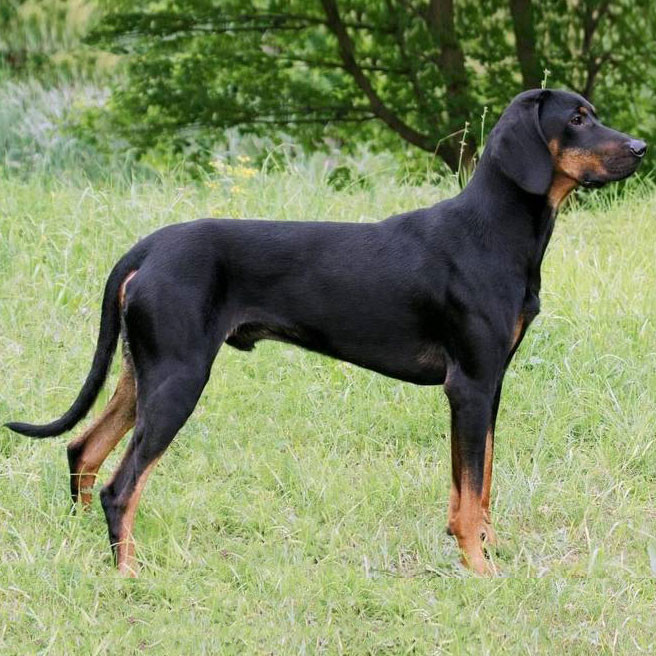
The Småland Hound is a medium-sized dog with a strong but elegant build and an almost square body. It gives the impression of a powerful and durable hunter, capable of long workdays in difficult conditions. Its appearance combines functionality with a noble look.
- Head: Lean, of medium length, with a well-defined stop. The skull is slightly domed. The muzzle is approximately the same length as the skull and is not pointed.
- Eyes: Dark brown, round, with a calm and intelligent expression. The light tan markings above the eyes, the so-called “spectacles,” create the impression of a “four-eyed” dog, which is a characteristic trait.
- Ears: Set high, floppy, flat, and lie close to the cheeks. The tips of the ears are rounded.
- Body: Compact, almost square. The back is short and strong. The chest is deep and well-developed, with oval ribs.
- Tail: One of the most interesting features is the tail. Småland Hounds can be born with either a long tail or a naturally short one (bobtail). Both variations are acceptable under the standard. A long tail reaches the hock joint, while a short one can be of varying lengths.
- Coat: Double, which provides reliable protection from the weather. The undercoat is short, dense, and soft. The outer coat is medium length, harsh, and lies flat against the body. On the tail and the back of the thighs, the coat can be slightly longer.
- Color: The main color is black with tan markings. The tan markings (shades from reddish to brown) are located on the muzzle, above the eyes, on the chest, the lower parts of the legs, and under the tail. Small white markings on the chest and toes are allowed.
Småland Hound Temperament and Character
The character of the Småland Hound is a harmonious blend of hunting drive and domestic calm. It is a dog with two sides: on the hunt, it is persistent, energetic, and independent, while at home, it transforms into a gentle, well-balanced, and devoted family member.
At home, the Småland Hound shows a calm and stable temperament. It forms a strong attachment to its owners and wants to be a part of family life. This breed is not prone to unprovoked aggression or nervousness. Småland Hounds get along wonderfully with children, showing them patience and affection, which makes them excellent family dogs, provided they get sufficient physical exercise. They are vigilant and will always announce the arrival of guests with a loud bark, but they are not aggressive guard dogs.
On the hunt, their behavior changes dramatically. They are passionate and tireless trackers with incredible stamina. Their main task is to find a scent, flush out the game, and chase it with their voice toward the hunter. The Småland Hound works mostly alone, which requires high intelligence and the ability to make its own decisions. Its loud, melodious bark is a crucial part of the hunt, allowing the hunter to track the movement of the dog and the game.
Regarding other animals, the Småland Hound usually gets along well with other dogs, especially if they were raised together. However, its strong hunting instinct can pose a threat to small household pets such as cats, rabbits, or rodents. Early and proper socialization can help adjust this behavior, but complete trust is not advisable. It’s important to remember that a hound’s personality can get worse if it is deprived of the freedom to run and is limited to the walls of an apartment. Unspent energy can lead to destructive behavior and excessive barking.
Care and Management
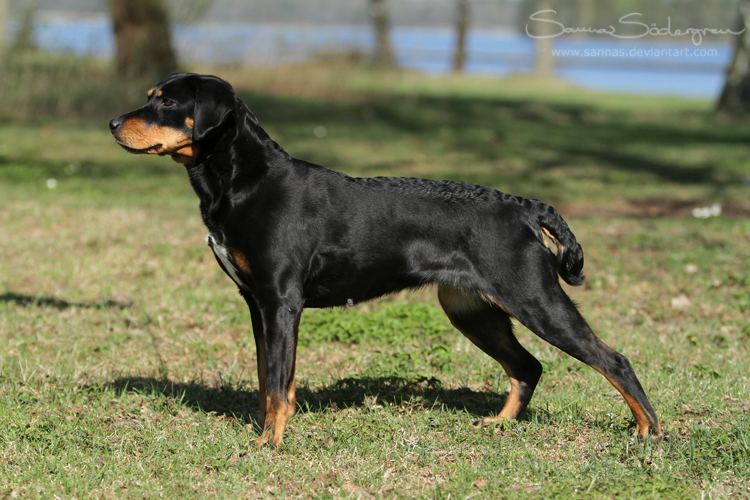
The Småland Hound is an undemanding breed that does not require complicated care. However, for a happy and healthy life, a few key needs related to its hunting background must be met.
Grooming
Grooming the Småland Hound’s coat is minimal. Its harsh, dense coat has dirt-repellent properties. It’s enough to brush the dog once a week with a rubber brush or glove to remove dead hair and keep the coat in good condition. Shedding is seasonal, usually in the spring and fall, and you’ll need to brush more often during these periods. Bathe the dog only when absolutely necessary, as frequent washing can damage the skin’s natural protective layer. Regularly check and clean its ears, as their floppy shape can promote the development of infections. Also, don’t forget to clip its nails (if they don’t wear down naturally) and take care of its teeth.
Living Conditions
Apartment living is strictly unsuitable for the Småland Hound. This energetic dog needs space. The ideal option is a private home with a large, securely fenced yard where it can run freely. The fence must be high and secure because a hound, upon catching an interesting scent, can easily set off in pursuit, ignoring commands. These dogs handle cold well thanks to their thick coats but need a warm and dry place to sleep and rest.
Physical Exercise
This is the most important aspect of owning the breed. The Småland Hound needs daily, intense physical exercise to stay healthy and happy. Ordinary walks on a leash will not be enough. It needs long walks (1.5-2 hours a day), runs, and the opportunity to run off-leash in a safe area. Ideal activities for it include scent work, tracking, or participation in hunting trials. Insufficient activity leads to boredom, weight gain, and behavioral problems.
Training, Education, and Socialization
Among other hunting dogs, the Småland Hound stands out for its relative ease of training and education, but this process has its nuances. They are intelligent and eager to please their owner but also have an independent nature, which is characteristic of all hounds. If your pet feels respected and well-treated, it will be happy to learn commands.
The key to success is early socialization and consistency. From a young age, introduce your puppy to different people, sounds, places, and other animals. This will help raise a confident and well-balanced dog. Positive reinforcement should be the foundation of training: praise, treats, and toys. Harsh methods and punishment can lead to stubbornness and a loss of trust.
Special attention should be paid to the “Come!” command. Due to its strong hunting instinct, a hound can ignore everything around it when following a scent. You should practice this command from a young age in a safe place, using the most desirable treats. Despite their natural obedience, you can never be 100% sure of a perfect recall in the woods or a field. Therefore, you should only let a Småland Hound off the leash in a well-fenced area or one very far from roads.
Health and Typical Breed Diseases
Feeding Recommendations for the Småland Hound
Pros and Cons of the Småland Hound Breed
| Pros | Cons |
|---|---|
| Devoted and gentle companion: Bonds very strongly with the family, affectionate with children. | Not suitable for apartment living: Needs space and a house with a yard. |
| Excellent health: Rarely suffers from genetic diseases. | Very high need for activity: Requires daily, intensive exercise. |
| Low-maintenance grooming: The coat does not require complicated grooming. | Strong hunting instinct: Can run off when following a scent; dangerous for small pets. |
| High intelligence: Learns well, capable of making its own decisions. | Prone to barking: Has a loud, clear voice that it uses actively. |
| Unique and rare breed: Attracts attention with its unusual appearance. | Difficult to acquire: Few breeders outside of Sweden. |
| Wonderful hunter: An ideal partner for hunting small game. | Needs an experienced owner: A novice may find it hard to handle its energy and instincts. |
Interesting Facts About the Småland Hound
- Natural Bobtail: The Småland Hound is one of the few hound breeds in the world where a naturally short tail is a standard trait.
- The name “Stövare”: The Swedish word “stövare” denotes a type of hound that drives game with its voice. Thus, Smålandsstövare literally means “hound from Småland that drives with a voice.”
- “Four Eyes”: The bright tan markings above the eyes create the illusion of an extra pair of eyes. According to old beliefs, such “eyes” never sleep and ward off evil spirits.
- The Oldest in Sweden: It’s considered the oldest of all Swedish hound breeds.
- On the Verge of Extinction: In the early 20th century, the breed was so scarce that to revive it, the studbook had to be closed and dogs were registered based solely on their working qualities and appearance.
Småland Hound Compared to Other Hounds
To better understand the uniqueness of the Småland Hound, it’s worth comparing it with other, more common breeds. For example, unlike the Beagle, which is also a great hunter, the Smålandsstövare is calmer and more balanced at home. It’s not as prone to stubbornness during training. Compared to larger hounds like the Serbian Tricolour Hound, the Småland Hound is more compact and better suited for working in dense forests. Its working style is similar to that of other Scandinavian and Central European breeds, such as the Slovakian Hound or the German Hound, which are also versatile solitary hunters.
Frequently Asked Questions About the Breed (FAQ)
Is the Småland Hound suitable for an inexperienced owner?
Probably not. While they are intelligent, their high energy, need for specific exercise, and strong hunting instincts can be a challenge for a novice.
How does the Småland Hound handle being left alone?
They are very family-oriented and can suffer from prolonged loneliness, which may lead to destructive behavior or excessive barking. This breed is not for people who spend all day away from home.
Do they shed a lot?
Shedding is moderate and increases twice a year (seasonally). Regular brushing helps to keep the process under control.
Can you keep a Småland Hound with a cat?
This is risky. If a puppy is raised with a cat, there’s a chance of peaceful coexistence. However, the hunting instinct can manifest unexpectedly, so leaving them alone unsupervised is not recommended.
How noisy are they?
Like most hounds, they have a loud and clear voice. They don’t bark without reason, but they actively use their voice when hunting or to alert you to guests.
Video About the Breed
- Level-headed, friendly
- Compact, hardy
- Withstands hard frost
- Generally a very healthy breed
- Keen nose — follows a scent
- Loud baying on the trail
- Needs plenty of exercise
- Independent hunting character
| Hamilton Hound | Halden Hound | Schiller Hound | |
|---|---|---|---|
| Height | 46–61 cm | 47–58 cm | 49–61 cm |
| Energy | 4.5 | 4.5 | 4.5 |
| Apartment | 2.5 | 2.5 | 2.5 |
| Beginners | 3 | 3 | 3 |
Why does the Småland Hound have a short tail?
Is the Småland Hound healthy?
Is the breed suited to an apartment?
FCI Standard No. 129 · The Kennel Club
For apartments · For kids · For beginners · Active · Smartest · Hypoallergenic · All rankings →