

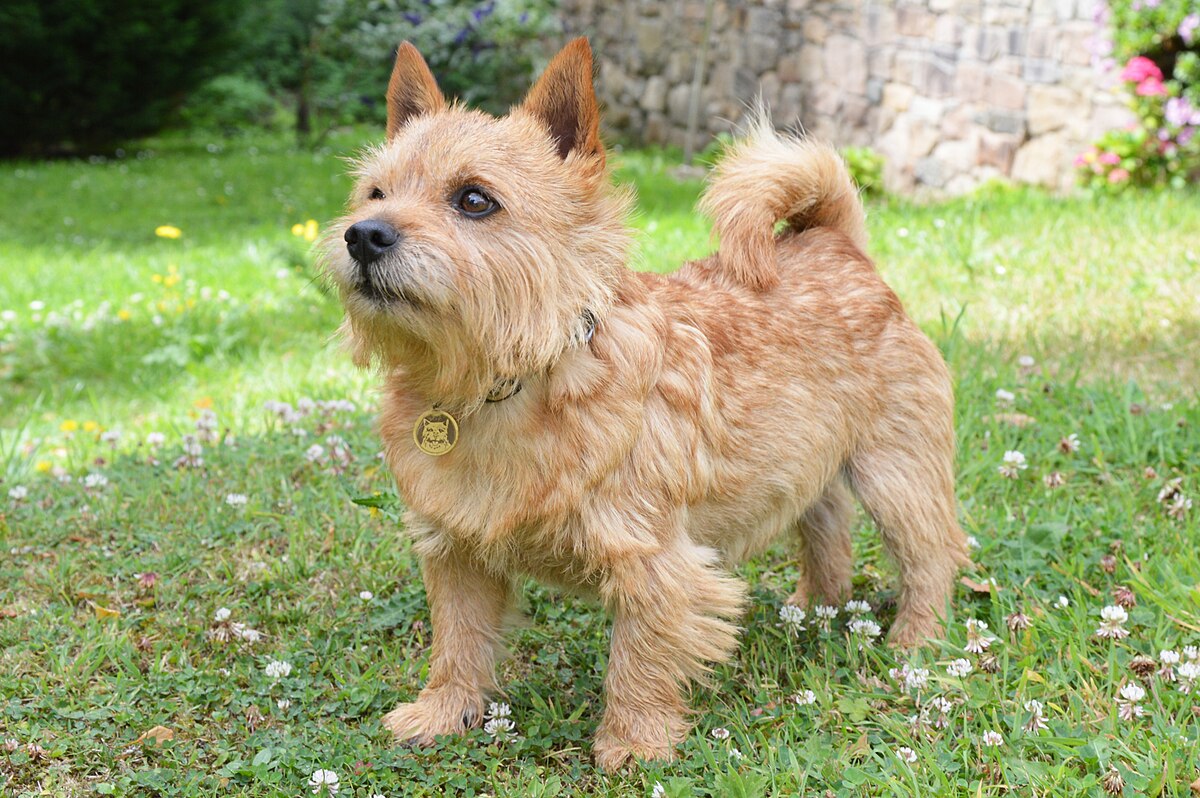
| Height | 24–26 cm |
| Weight | 5–6 kg |
| Lifespan | 12–15 years |
| FCI group | 3 · terriers |
| Origin | United Kingdom |
Exact ratings
- Upper airway syndrome (UAS)
- Patellar luxation
- Hip dysplasia
- Eye disease
- Epilepsy
Quality food, with weight control (compact — easy to overfeed). Regular stripping; moderate exercise for an upbeat terrier.
The Norwich Terrier is a small but tough and fearless dog from England. This breed’s representatives are cute, sturdy, and stocky dogs on short legs. Despite their somewhat quirky look, they are excellent hunters, although they are more commonly kept as companions these days. This happy and loyal canine has all the makings of an ideal family pet but still holds the brave heart of a true terrier. Unlike many of their relatives, Norwich Terriers are not prone to excessive, pointless barking, and they patiently wait for attention without constantly pestering their owners. Read more about the character, care, and history of this amazing dog on Tvaryny.
Norwich Terriers get along wonderfully with children and, with proper socialization, with other household pets. They tend not to pick fights with other dogs while out and about, showing a balanced temperament. This breed is a good fit for almost anyone, but an ideal owner for a Norwich would be an active and lively person. Like all terriers, they need regular exercise, games, and long walks outdoors to stay happy and healthy.
The Norwich Terrier’s History
The history of the Norwich Terrier is closely tied to its closest relative, the Norfolk Terrier. For many decades, they were considered a single breed, with the only difference being the shape of their ears. Their homeland is the county of Norfolk in eastern England, specifically the city of Norwich, which gave the breed its name. The origin of these small hunters dates back to the 19th century, when they were essential helpers for farmers in controlling vermin.
In the 1880s, these small red terriers became incredibly popular among students at Cambridge University. Owning one was considered trendy and a status symbol. Students called them “Canterbury Terriers” or “Trumpington Terriers” (after the street where many of them lived). One of the key breeders of that era was Frank “Rough” Jones, who sold puppies to students and significantly helped popularize the breed.
It’s important to understand that a Norwich isn’t just a toy dog. The blood of serious hunting and working dogs runs in its veins. Various small terriers were used to create the breed, including Irish Terriers and possibly Glen of Imaal Terriers. There’s also a theory that the blood of the brindle Staffordshire Terrier was mixed in, which would explain their fearlessness and tough build. Thanks to this heritage, Norwich Terriers are not only great companions but also effective hunters of small animals like foxes and rats. This drive is similar to the instincts found in the German Hunting Terrier (Jagdterrier).
Official recognition for the breed didn’t come right away. Initially, in 1932, The Kennel Club recognized them as a single breed under the name “Norwich Terrier.” However, there were two variations: with prick ears and with drop ears. This created certain difficulties in breeding and showing. It wasn’t until 1964 that a decision was made to split them into two separate breeds: the dog with erect ears kept the name Norwich Terrier, and the dog with drop ears was named the Norfolk Terrier. Today, both breeds are popular around the world, though the Norwich Terrier is slightly less common.
What a Norwich Terrier Looks Like: Standard and Appearance
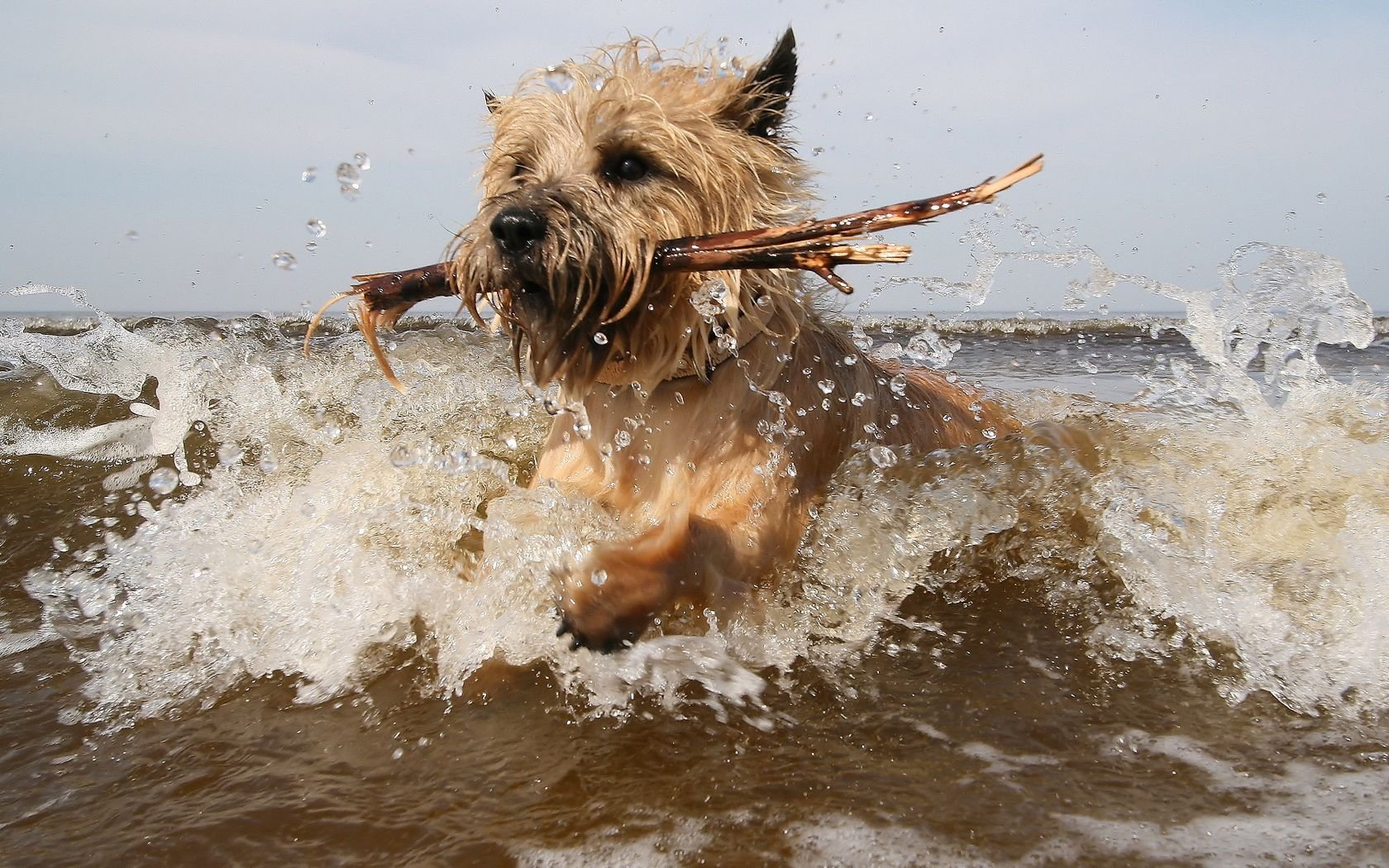
The Norwich Terrier is a small, stocky, but very well-proportioned dog. It’s one of the smallest terriers, but its compact size is deceiving—a strong bone structure and well-developed muscles are hidden under its wiry coat. Its look radiates energy, confidence, and happiness.
Key characteristics of the breed according to FCI Standard No. 72:
- General Appearance: A low-to-the-ground, compact, strong dog with a short back and powerful bone structure.
- Head: The skull is wide, slightly rounded. The muzzle is wedge-shaped and strong, its length about one-third less than the length of the skull. The stop is well-defined.
- Eyes: Small, oval-shaped, dark, with a keen and intelligent expression.
- Ears: This is the key difference of the breed. The ears are medium-sized, erect, pointed at the tips, and set wide apart on the head. When excited, they are held vertically.
- Jaws and Teeth: The jaws are strong, with a perfect scissor bite (upper teeth tightly overlapping the lower ones). The lips are tight.
- Neck: Strong, of medium length, and transitions smoothly into the shoulders.
- Body: Compact, with a short, straight back and a well-developed, deep chest.
- Legs: Short, straight, and powerful, with well-developed muscles that provide a strong push-off.
- Tail: The tail was previously docked to about half its length to be level with the back. Today, docking is banned in many countries. The undocked tail is medium-length, thick at the base, and tapers to the tip. The dog carries it gaily but does not curl it over its back.
- Coat: Straight, harsh, wiry, lying close to the body. There’s a dense, soft undercoat that protects against bad weather. The hair on the neck and shoulders is longer and forms a kind of “ruff.” On the head, ears, and muzzle, the hair is short and smooth, with the exception of small eyebrows and whiskers.
- Color: All shades of red (from light wheaten to deep red), “grizzle” (a mix of red, black, and gray hairs), and black and tan are allowed. Small white markings are undesirable but acceptable.
- Size: The ideal height at the withers is 25-26 cm, and the weight is about 5-5.5 kg.
Norwich Terrier Character: Temperament and Behavior
The Norwich Terrier is the perfect example of “a big dog in a small body.” Its character is a unique blend of a terrier’s fearlessness and a companion’s gentle nature. It’s a very intelligent, loyal, and cheerful dog.
Main character traits:
- Non-aggressive: Unlike many other terriers, like the fiery German Hunting Terrier (Jagdterrier), Norwich Terriers are not prone to fighting or aggression. They generally get along well with other dogs, especially if socialized from an early age.
- Love for people: Norwich Terriers adore their family and are eager to be involved in all their activities. They get along well with children, as long as they are handled gently. These dogs are very people-oriented and can suffer from being left alone for long periods.
- Energy and playfulness: They are very active dogs that need daily exercise. They love long walks, playing fetch, and other energetic pastimes. At the same time, a Norwich will behave calmly at home and patiently wait for its owner to pay attention to it.
- Hunting instinct: You shouldn’t forget their past. The instinct of a rodent hunter is in their blood. On a walk, a Norwich might start chasing a squirrel, a bird, or a cat. That’s why it’s so important to keep it on a leash in unsafe areas. They also love to dig, so if you live in a house with a yard, be prepared for holes in the lawn. This is a common trait of terriers, including the Australian Terrier.
- High intelligence: Norwich Terriers are smart and learn easily, but they can sometimes show typical terrier stubbornness. Training should be consistent, fun, and based on positive reinforcement.
- Tendency to bark: They aren’t “yappy” but will always alert their owner with a loud bark about a visitor or a suspicious sound outside the door. This makes them decent watchdogs.
Caring for a Norwich Terrier: Grooming, Activity, and Upkeep
Caring for a Norwich Terrier isn’t overly complicated, but it does require regularity and attention to some specific details, especially their harsh coat. This dog adapts perfectly to life both in an apartment and in a house.
Coat Care: Hand-stripping Is a Must
The Norwich’s coat is its main feature and protection. For it to remain healthy, wiry, and maintain its correct structure and color, it must be regularly hand-stripped. Clipping a Norwich with clippers is strongly discouraged as it ruins the coat’s texture—it becomes soft, dull, loses its water-repellent properties, and can change color. Hand-stripping is the process of manually pulling out old, dead hair, which stimulates the growth of new hair.
Full professional hand-stripping is done 2-4 times a year. In between, you can do a light “rolling strip”—plucking the longest hairs little by little every few weeks to keep it looking neat. Daily care involves brushing the coat with a metal comb or brush a few times a week to prevent matting and remove dirt. The dog should only be bathed when necessary, using special shampoos for wiry coats.
| Procedure | Frequency | Notes |
|---|---|---|
| Brushing | 2-3 times a week | Use a metal comb or brush. |
| Hand-stripping | 2-4 times a year | It’s best to go to a professional groomer. |
| Bathing | As needed (once every 2-4 months) | Use shampoo for wiry coats. |
| Nail trimming | 1-2 times a month | If they don’t wear down naturally. |
| Cleaning ears and eyes | Weekly | Check for dirt and signs of infection. |
Physical Activity and Walks
Despite its small size, the Norwich Terrier is an energetic dog that needs daily exercise. It requires at least two walks a day for a total of 45-60 minutes. Walks should be active: with games, running, and the chance to explore new smells. These dogs excel in sports like mini-agility, flyball, or nosework. Providing enough physical and mental stimulation is the key to preventing destructive behavior at home.
Housing Conditions
Norwich Terriers do great in city apartments as long as they get enough outdoor time. They don’t take up much space and are quite clean. If you live in a house, make sure you have a reliable fence. This breed, like many other terriers, has a tendency to dig and can easily burrow under a fence and escape, following an interesting scent.
Training and Socialization of the Norwich Terrier
Norwich Terriers are smart and clever dogs, which makes the training process fairly easy, but with a few quirks. Like all terriers, they can be independent and stubborn. The key to success is early socialization and consistent training based on positive reinforcement.
You should start training a puppy from the first day it comes home. It’s important to immediately set rules and boundaries: define a place for sleep, house-train it, and forbid it from picking up food from the floor. Early socialization should include introducing it to different people, sounds, places, and other animals. This will help you raise a confident and well-adjusted dog.
During training, use a playful approach and tasty treats as a reward. Sessions should be short and interesting so the dog doesn’t lose interest. The Norwich learns basic commands like “Sit,” “Come,” “Heel,” and “Leave it” quite quickly. You should pay special attention to the “Come” command, as their hunting instinct might make the dog chase after prey. Until the command is automatic, do not let your pet off-leash in unsafe areas.
Norwich Terrier Health: Common Ailments and Prevention
Norwich Terriers are generally considered a healthy and hardy breed with a lifespan of 12-15 years. Thanks to responsible breeding, many genetic problems have been avoided. However, like any breed, they do have a predisposition to certain health issues.
The most common health problems:
- Breathing problems: The breed can suffer from a condition called “Norwich Terrier Upper Airway Syndrome” (NTUAS). This is a complex of problems that includes an elongated soft palate and tracheal hypoplasia. Symptoms can include noisy breathing, wheezing, snoring, and exercise intolerance.
- Epilepsy: As with many other breeds, cases of idiopathic epilepsy can occur in Norwich Terriers.
- Cataracts and other eye problems: Regular check-ups with a veterinary ophthalmologist are recommended.
- Luxating patella: A common problem in small dog breeds.
- Hip dysplasia: While this is more common in large breeds, it can also occur in Norwich Terriers.
It’s important to choose a puppy from a responsible breeder who tests their dogs for genetic diseases. Regular vet visits, yearly vaccinations, parasite treatment, and a balanced diet are the foundation of a long and healthy life for your pet.
Norwich Terrier Diet: Key Recommendations
Proper nutrition is the key to a Norwich Terrier’s health and energy. These dogs aren’t picky eaters, but they have a tendency to gain excess weight, so it’s important to control portion sizes and not overfeed your pet. There are two main approaches to feeding: commercial dry food and a natural diet.
Commercial food: This is the simplest and most balanced option. Choose high-quality super-premium or holistic foods specially made for small, active breeds. The food’s ingredients should be as transparent as possible, with meat listed first and no artificial colors or preservatives. Don’t buy food from bulk bins, as it may be low-quality or spoiled.
Natural diet: If you choose this route, the diet must be carefully balanced. The base should be lean meat (beef, turkey, chicken), organ meats, and marine fish (boneless). The diet should also include grains (rice, buckwheat), vegetables (carrots, pumpkin, zucchini), fermented dairy products (low-fat cottage cheese, kefir), and a little vegetable oil.
| Allowed Foods | Forbidden Foods |
|---|---|
| Lean meat (beef, turkey) | Hollow bones |
| Organ meats (heart, liver) | Chocolate, sweets, baked goods |
| Marine fish (boiled, boneless) | Smoked products, sausages |
| Grains (rice, buckwheat) | Fried, fatty, spicy food |
| Vegetables (carrots, pumpkin, broccoli) | Onions, garlic, grapes, avocado |
| Fermented dairy products (cottage cheese, kefir) | Whole milk |
| Fruits and berries (apples, bananas) | Products with xylitol (sweetener) |
Regardless of the type of food, the dog should always have access to fresh, clean water.
Pros and Cons of the Norwich Terrier Breed
Before you get a dog of this breed, it’s a good idea to weigh all the pros and cons. The Norwich Terrier, like any other breed, has its advantages and disadvantages.
| ✅ Pros | ❌ Cons |
|---|---|
| Compact size, ideal for an apartment | High cost of puppies and rarity of the breed |
| Friendly and non-aggressive nature | Requires professional hand-stripping (additional costs) |
| Gets along well with children and other animals | Tendency to bark |
| High intelligence, learns easily | Strong hunting instinct (may chase cats) |
| Loyal and loving companion | Tendency to dig in the yard |
| Good health and longevity | Does not tolerate being left alone |
| Moderate needs for physical activity | Can be stubborn during training |
Interesting Facts About the Norwich Terrier
- Student Mascot: As mentioned, in the late 19th century, Norwich Terriers were incredibly popular among Cambridge students, who considered them a symbol of good luck.
- “A Demon in the Hide”: For its bravery and determination in hunting, the Norwich Terrier earned the nickname “a demon in the hide.”
- Ears are the main difference: Until 1964, Norwich and Norfolk Terriers were a single breed. Today, they are easy to tell apart: the Norwich has erect, pointed ears, while the Norfolk has drop ears that lie close to its cheeks.
- A dog from the movies: A Norwich Terrier named Wimpet can be seen in the film “As Good as It Gets” starring Jack Nicholson. Although many people confuse him with a Brussels Griffon, a Norwich was actually in the film.
- A rare breed: Despite its popularity, the Norwich Terrier is a relatively small breed in terms of numbers. Puppies are born in small litters, and a C-section is often required, which makes them quite expensive.
- They are often confused with Cairn Terriers. While similar in size and coat type, the Cairn has a more “shaggy” and natural appearance, whereas the Norwich looks more compact and tidy. The Cairn’s head is wider, and its muzzle is shorter. In terms of character, Cairn Terriers can be a bit more independent and stubborn.
Frequently Asked Questions About the Norwich Terrier (FAQ)
Does the Norwich Terrier shed a lot?
With proper care, which includes regular hand-stripping, the Norwich Terrier sheds very little. The hair that is plucked out is already dead and would have fallen out anyway. Clipping can disrupt this process and cause more shedding.
Is the Norwich Terrier suitable for an inexperienced owner?
Yes, thanks to its friendly nature and intelligence, a Norwich can be a wonderful first dog. However, the future owner needs to be prepared for consistent training and coat care.
How does the Norwich Terrier get along with cats and other animals?
If a puppy grows up with a cat, they will most likely become friends. However, the hunting instinct may manifest itself towards strange cats outdoors. It’s best not to leave them alone with rodents (hamsters, guinea pigs), as a Norwich may perceive them as prey.
How much does a Norwich Terrier puppy cost?
This is one of the most expensive terrier breeds due to its rarity and breeding difficulties. The range is broad and depends on class (pet, breeding, or show), on the titles and health clearances of the parents, on how rare the color is, and on how established the kennel is. Good litters typically come with a waiting list of several months.
How is the Norwich Terrier different from the Cairn Terrier?
Although they are similar in size and coat type, there are several differences. The Cairn Terrier has a more “shaggy” and natural appearance, while the Norwich looks more compact and tidy. The Cairn’s head is wider, and its muzzle is shorter. In terms of character, Cairn Terriers can be a bit more independent and stubborn.
Video about the breed
- Very sociable and friendly
- Compact, upbeat companion
- Clever and devoted
- Suits an apartment
- Energetic, needs exercise
- Hunting instinct
- Can bark
- Wiry coat needs stripping
| Norfolk Terrier | Cairn Terrier | Border Terrier | |
|---|---|---|---|
| Height | 24–26 cm | 28–31 cm | 33–40 cm |
| Energy | 4 | 3.5 | 4.5 |
| Apartment | 4 | 4 | 3.5 |
| Beginners | 3.5 | 3.5 | 3.5 |
How does the Norwich differ from the Norfolk Terrier?
Is the Norwich good for a family?
Is the Norwich suited to an apartment?
FCI Standard No. 72 · The Kennel Club
For apartments · For kids · For beginners · Active · Smartest · Hypoallergenic · All rankings →