

| Height | 25–31 cm |
| Weight | 8–9 kg |
| Lifespan | 12–14 years |
| FCI group | 3 · terriers |
| Origin | United Kingdom (Wales) |
Exact ratings
- Generally a healthy breed
- Eye disease (cataract, glaucoma, PRA)
- Congenital deafness
- Allergies and skin problems
- Patellar luxation
Moderate quality food, with weight control. Hand-strip the wiry coat regularly (it mats); tend to the eyes; buy a puppy from a breeder who tests sight and hearing.
The Sealyham Terrier is a breed that embodies a wonderful contrast: on one hand, it’s a fearless and determined hunter with a sturdy build, and on the other, an incredibly charming, calm, and loyal companion. Today, these unique and beautiful dogs are once again gaining popularity, though they were once at the peak of their fame. Many classic Hollywood stars were Sealyham owners: legendary director Alfred Hitchcock often appeared in public with his two pets, and fans of the breed included style icons like Elizabeth Taylor, Cary Grant, and Humphrey Bogart. This snow-white terrier also served as a muse for English writer Dorothy Parker. What was it about this breed that so captivated celebrities and continues to charm dog lovers today? Find out more about it on Tvaryny.
Sealyhams are incredibly friendly and people-oriented. They form a strong bond with the family they live with and become full-fledged members. They love to play with children, showing amazing patience, and with proper socialization, they get along great with other pets. Sealyham Terriers are remarkable dogs that will undoubtedly add a spark to your life, make your home cozier, and bring more joy to your family.
General Characteristics of the Sealyham Terrier Breed
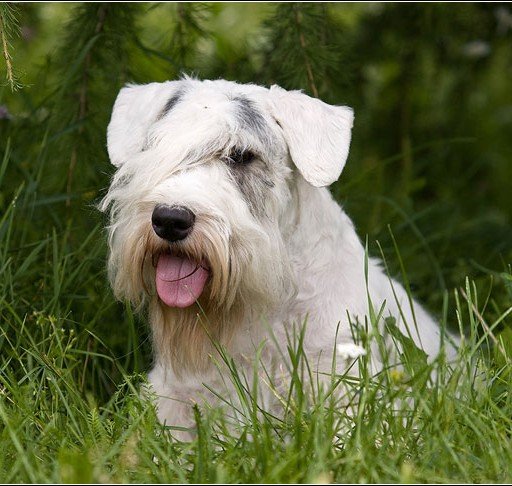
| Breed Name | Sealyham Terrier |
| Country of Origin | Great Britain (Wales) |
| Time of Origin | Mid-19th Century |
| FCI Recognition | 1911, Standard No. 74 |
| FCI Group | Group 3 (Terriers), Section 2 (Small Terriers) |
| Height at Withers | Not exceeding 12.2 inches (31 cm) |
| Weight | Males: approx. 20 lbs (9 kg) Females: approx. 18 lbs (8.2 kg) |
| Lifespan | 12–15 years |
| Temperament | Brave, calm, friendly, watchful, intelligent, a bit stubborn |
| Primary Use | Hunting badgers, otters, and foxes; companion dog |
| Activity Level | Medium |
| Shedding | Minimal |
| Grooming Needs | High (regular hand-stripping) |
| Attitude Towards Children | Excellent |
| Attitude Towards Other Animals | Good, with early socialization |
History of the Breed’s Origin
The history of the Sealyham Terrier is inseparably linked to one man: Captain John Owen Tucker Edwardes, a retired military officer who lived on his estate, “Sealy Ham,” in Pembrokeshire, Wales. After leaving the service in 1848, Captain Edwardes dedicated himself to hunting, which was his main passion. His primary prey were badgers, otters, and foxes. For a successful hunt in the rugged Welsh countryside, he needed a small but exceptionally brave and durable white-coated dog, so hunters wouldn’t accidentally mistake it for their prey in the heat of the chase.
The existing breeds didn’t satisfy the captain: some were too big for burrows, while others weren’t brave enough. So he decided to create his own ideal hunting terrier. Unfortunately, Edwardes didn’t keep detailed records of his breeding work, so the exact formula for creating the Sealyham remains a mystery. However, dog fanciers and breed historians agree that several key breeds were involved in its creation:
- Dandie Dinmont Terrier: The Sealyham likely inherited its elongated body shape and floppy ears from this breed. The Dandie Dinmont Terrier is known for its calm and determined character.
- Wire Fox Terrier: This breed contributed the harsh coat, hunting drive, and stubbornness.
- West Highland White Terrier: The Sealyham got its signature white coat from this relative. The Westie is also a tireless hunter with a cheerful disposition.
- Cesky Terrier: Although this breed was developed later, its creator, František Horák, used Sealyham Terriers to create the Cesky Terrier, which shows their close relation and similar working qualities.
- English Bull Terrier: It’s believed that the Sealyham inherited its powerful jaws and fearlessness from the Bull Terrier.
Captain Edwardes was extremely strict in his selection: he valued working qualities exclusively, not appearance. Any dog that showed fear was immediately culled. After the captain’s death in 1891, his work was continued by enthusiasts. In 1908, the first breed club was formed, and in 1911, The Kennel Club officially recognized the Sealyham Terrier. The breed quickly gained popularity not only as a hunter but also as a companion and show dog, especially in the 1920s and 1930s in the UK and the US.
What the Sealyham Terrier Looks Like: Standard and Appearance
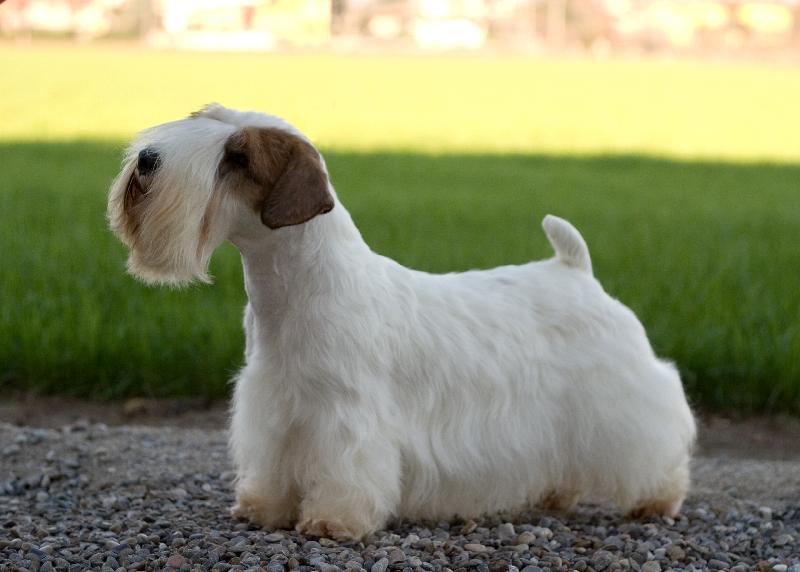
The Sealyham Terrier is a dog that gives the impression of strength and substance in a small frame. It is low to the ground and elongated, yet at the same time agile and flexible. Its appearance combines the features of a working terrier with an elegant companion.
- Head: Long, powerful, with a broad, slightly domed skull. The muzzle is square and strong. The stop is smooth. An important feature are the thick “eyebrows,” “beard,” and “moustache,” which give the head a characteristic expression.
- Eyes: Dark, medium-sized, round, and deep-set. The gaze is intelligent, calm, and piercing.
- Ears: Medium-sized, hanging down, triangular with rounded tips. They lie close to the cheeks.
- Jaws and Teeth: Jaws are strong and powerful. The bite is a scissor bite, with large teeth, which is atypical for a dog of this size.
- Body: The body is elongated, with a straight and flexible back. The neck is long and muscular. The chest is broad and deep, well let-down between the front legs.
- Limbs: The front legs are short, strong, and as straight as possible. The hind limbs are very powerful, with well-developed muscles that provide a strong push.
- Tail: It was traditionally docked. If the tail is left natural, it is of medium length, thick at the base, and tapers to the end. The dog holds it vertically.
- Coat: Double-coated. The undercoat is soft and dense, protecting against bad weather. The outer coat is long, harsh, and wiry.
- Color: Predominantly pure white. Lemon, brown, blue, or badger-marked patches on the head and ears are allowed. Heavy ticking on the body is considered undesirable.
Character: The Sealyham’s Temperament and Behavior
The Sealyham Terrier’s character is one of its most appealing features. Unlike many other terriers known for their excitability and noisiness, the Sealyham is distinguished by its calmness and composure. They are cheerful, good-natured, devoted, and loving dogs that make wonderful companions for people of all ages.
They are hunters who were bred specifically for pack work, so you don’t have to worry about excessive aggression towards other dogs. With proper socialization, they will not provoke conflicts. At the same time, they are quick, agile, and absolutely fearless dogs when it comes to defending their territory or family. Their loud, deep bark makes them excellent watchdogs who will always warn of approaching strangers.
Sealyhams love all family members equally, are happy to play with children, or quietly lie down next to elderly people. They are very empathetic and will never force games on you if they see that their owner is busy. On the contrary, a Sealyham will most likely settle down nearby and wait patiently. This combination of the best character traits and a charming appearance elicits genuine delight in those around them. These are truly noble dogs with a big heart. The Japanese Terrier, for instance, is another small terrier that makes an excellent companion.
Pros and Cons of the Breed
Like any breed, the Sealyham Terrier has its advantages and disadvantages. Potential owners should weigh all the pros and cons before getting such a dog.
| Pros (Advantages) | Cons (Disadvantages) |
|---|---|
| ✅ Friendly and balanced temperament. Ideal for families. | ❌ Prone to stubbornness. Requires patient and consistent training. |
| ✅ Sheds very little. Suitable for people who don’t like dog hair in the house. | ❌ High grooming requirements. Needs regular professional hand-stripping. |
| ✅ Adaptable. Thrives in both an apartment and a house. | ❌ Strong hunting instinct. May chase small animals, so a reliable leash is essential. |
| ✅ Good watchdog. Alert and has a loud bark. | ❌ Prone to gaining weight. Requires control over diet and activity. |
| ✅ Excellent health. Are long-lived among terriers. | ❌ Prone to certain hereditary diseases (eyes, deafness). |
| ✅ Gets along well with children and other animals (with socialization). | ❌ Can be noisy. Needs to be taught to control barking from a young age. |
Health: Typical Illnesses and Prevention
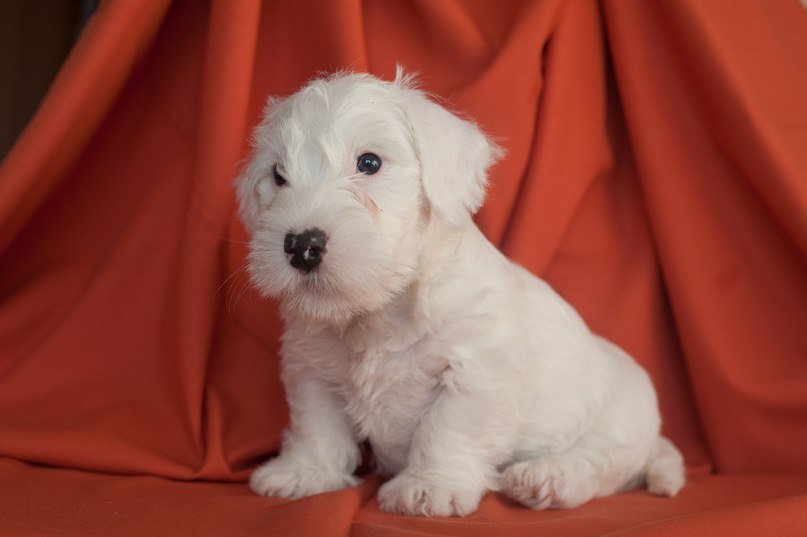
Overall, Sealyham Terriers are a robust and healthy breed with good immunity. However, as with many breeds, they have a predisposition to certain genetic diseases. Responsible breeders test their dogs to minimize risks, but potential owners should be aware of possible issues:
- Congenital Deafness: As with other breeds with a dominant white coat, Sealyhams may suffer from unilateral or complete deafness. A puppy’s hearing can be checked with a BAER test.
- Eye Diseases: The most serious problem is Primary Lens Luxation (PLL) — a hereditary disease that can lead to glaucoma and blindness. Progressive Retinal Atrophy (PRA) and cataracts also occur.
- Allergies: Sealyhams can suffer from food or contact allergies, which manifest as itching, skin irritation, and ear problems.
- Hip Dysplasia: Although this is more typical for large breeds, it is sometimes diagnosed in Sealyhams as well.
Prevention involves choosing a puppy from a reputable breeder who provides the results of the parents’ genetic tests, as well as regular vet check-ups, proper nutrition, and maintaining an optimal weight.
Caring for a Sealyham Terrier
The Sealyham Terrier is a great fit for apartment living, even a small one. However, its dense and harsh coat requires significant attention and regular care. The Norfolk Terrier, for example, has a similar temperament but a different coat that is easier to maintain.
Coat Care:
- Brushing: The coat needs to be thoroughly brushed with a metal comb 2-3 times a week to prevent matting, especially on the “beard,” legs, and belly.
- Hand-stripping: This is the most important part of the care routine. To preserve the correct harsh coat structure and rich color, a Sealyham must be hand-stripped (the dead hair plucked out) 2-4 times a year. Clipping with clippers makes the coat soft, dull, and compromises its protective properties.
Bathing:
Sealyhams have very sensitive skin, so frequent bathing is not recommended — only when they are dirty. When bathing, you should only use special shampoos for dogs with harsh coats or for sensitive skin.
Other Hygiene Routines:
- Ears: Regularly check and clean the ears to prevent infections.
- Eyes: Wash the eyes with chamomile tea or a special lotion to avoid tear staining.
- Teeth: Brush the dog’s teeth weekly with a special toothpaste, as small breeds are prone to tartar buildup.
- Claws: Trim the claws every 3-4 weeks.
Training and Socialization
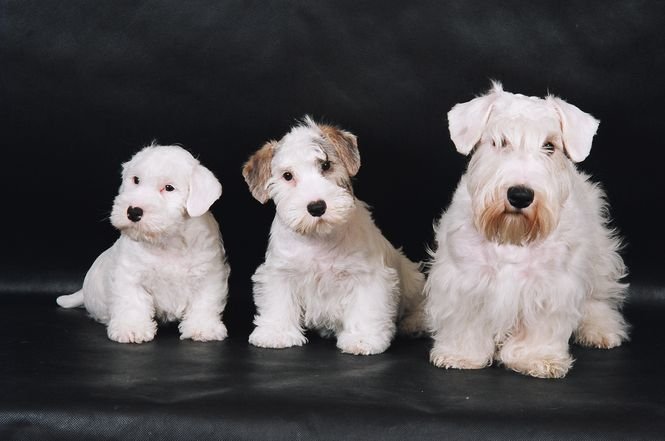
Training a Sealyham Terrier can be a challenge. They are very intelligent dogs that quickly understand what is required of them, but their stubbornness and independence, which are characteristic of many terriers, require patience and consistency from the owner. If you have no experience in dog training, it is better to seek the help of a professional dog trainer.
For a Sealyham Terrier to listen and obey commands, you need to be a persistent leader with a firm but fair character. The method of positive reinforcement works best — use treats, praise, and toys. Harshness and physical punishment will only worsen the situation. Training sessions should be short and engaging so that the dog does not lose interest. Some terriers, like the Norfolk Terrier, may be more compliant, but for most members of the group, a special approach is needed.
Early socialization is critically important. Introduce your puppy to different people, sounds, places, and other animals. This will help raise a balanced and confident dog, and also reduce its strong hunting instinct toward cats and other small pets.
Nutrition: Key Recommendations
Proper nutrition is the key to your Sealyham’s health and longevity. First, decide whether you will feed your dog with a natural diet or with ready-made dry food. The main rule is to never feed your dog food from your table.
| Type of Diet | Recommendations for the Sealyham Terrier |
|---|---|
| Dry Food | Choose super-premium or holistic-class foods for small breeds. Given their tendency for allergies, it’s best to opt for hypoallergenic lines (with lamb, turkey, fish). |
| Natural Diet | The basis of the diet (60-70%) should be lean meat (beef, turkey, chicken). Add grains (rice, buckwheat), seasonal vegetables, fermented dairy products (cottage cheese, kefir), and eggs. The diet must be supplemented with vitamin and mineral complexes. |
Important points:
- Portion Control: Sealyhams are big eaters and are prone to obesity. Feed an adult dog twice a day with clearly measured portions.
- Allergies: Introduce new products into the diet carefully, one at a time, and monitor the body’s reaction.
- Access to Water: Clean drinking water should be freely available 24/7.
Interesting Facts About the Breed
- Hollywood Elite: In the 1930s, the Sealyham Terrier was one of the most popular breeds among Hollywood stars. In addition to Hitchcock and Taylor, they were also owned by Cary Grant, Humphrey Bogart, and Agatha Christie.
- A Royal Favorite: The British Royal Family also had Sealyhams. Princess Margaret, sister of Queen Elizabeth II, adored her dogs of this breed.
- A Vanishing Breed: Despite its former glory, the Sealyham Terrier is now considered one of the rarest breeds in the UK and is on the list of “vulnerable native breeds.”
- “A big dog in a small body”: This phrase perfectly describes the Sealyham. Its loud and deep bark can deceive you into thinking a large dog is behind the door.
- Contributed to the Creation of Other Breeds: Sealyham Terriers were used to create other breeds, for example, the Japanese Terrier and the aforementioned Cesky Terrier.
Frequently Asked Questions About the Breed (FAQ)
Do Sealyham Terriers shed a lot?
No, this is one of the main advantages of the breed. They practically don’t shed because the dead hair remains in the coat and is removed during hand-stripping. This makes them a good choice for people with allergies.
Are they suitable for inexperienced owners?
Due to their stubbornness, a Sealyham can be challenging for beginners. If you are willing to put in the effort, be consistent, and possibly seek the help of a dog trainer, you will succeed. But this isn’t a breed that will unquestioningly obey all commands.
How much physical activity do they need?
They don’t require excessive exercise. Daily walks of 30-45 minutes and play sessions at home or in the yard will be entirely sufficient to keep them in good physical shape.
Can they be clipped instead of hand-stripped?
Technically, yes, but it is highly undesirable. Clipping with clippers spoils the harsh texture of the coat, making it soft and curly; it loses its waterproof and self-cleaning properties. In addition, the color becomes less intense.
Video about the Breed
- Calmer than many terriers
- Devoted, friendly with children and animals
- Compact, suits an apartment
- Practically non-shedding
- Wiry coat mats — needs stripping
- Keeps terrier stubbornness and hunting instinct
- Prone to eye disease and deafness
- Rare — hard to find
| West Highland White Terrier | Cairn Terrier | Dandie Dinmont Terrier | |
|---|---|---|---|
| Height | 25–28 cm | 28–31 cm | 20–28 cm |
| Energy | 4 | 4 | 3 |
| Apartment | 4 | 4 | 4 |
| Beginners | 3.5 | 3.5 | 3.5 |
Why was the Sealyham Terrier popular in Hollywood?
Is the Sealyham calmer than other terriers?
Does the Sealyham need much grooming?
FCI Standard No. 74 · The Kennel Club
For apartments · For kids · For beginners · Active · Smartest · Hypoallergenic · All rankings →