

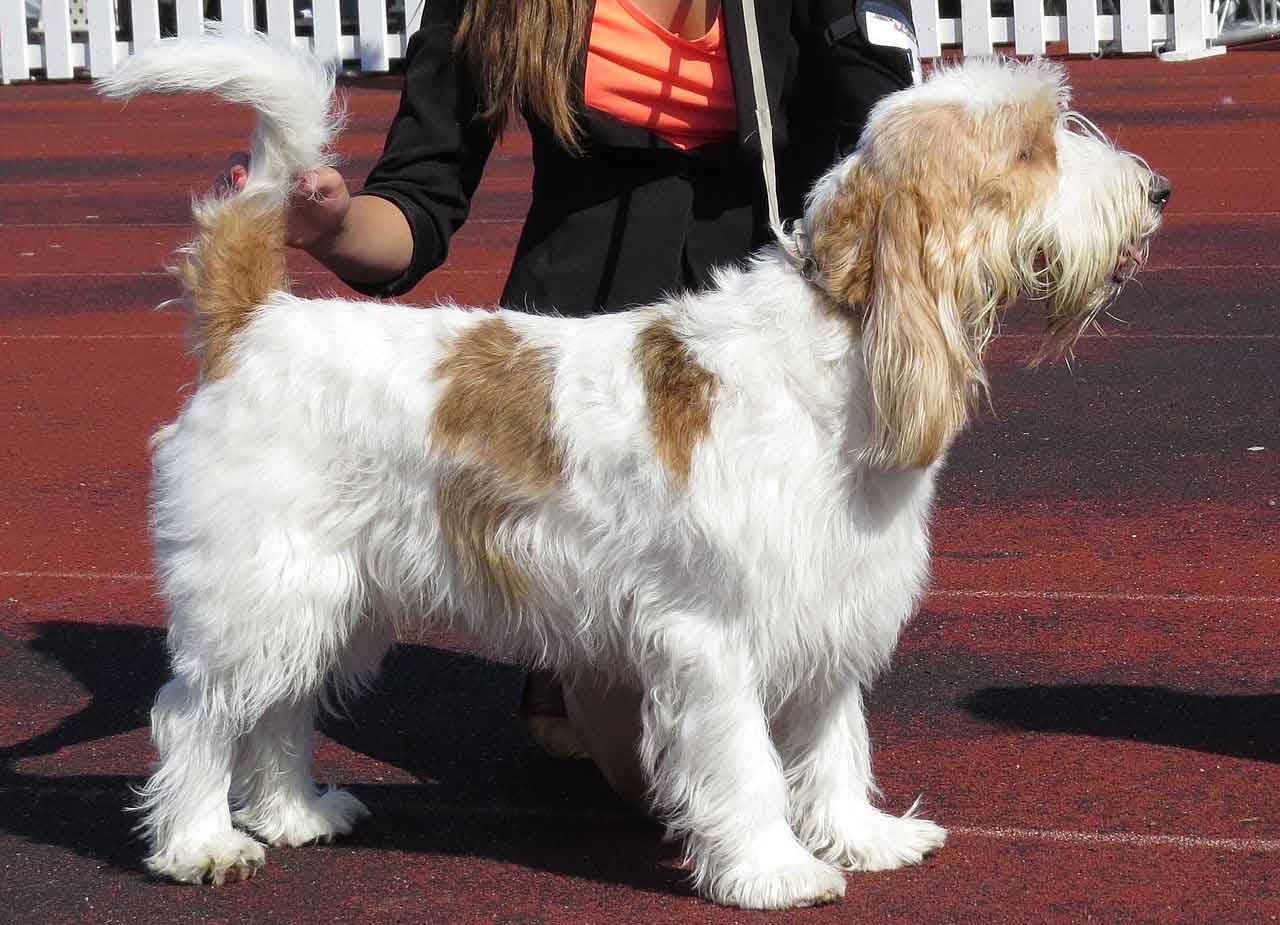
| Height | 39–44 cm |
| Weight | 17–20 kg |
| Lifespan | 12–15 years |
| FCI group | 6 · scenthounds |
| Origin | France |
Exact ratings
- Epilepsy
- Hip and elbow dysplasia
- Ear infections (long drop ears)
- Dermatitis
- Leishmaniasis (in endemic regions)
A quality food, with weight control (spare the long back). Plenty of exercise; clean the long ears regularly and care for the harsh coat.
An enthusiastic hunter with an aristocratic history, bred for large game, and at the same time a friendly and loyal family pet—that’s the Grand Basset Griffon Vendéen (GBGV). This shaggy French hound has an independent nature, which makes him a tough opponent for small animals and a handful for inexperienced owners. A Grand Basset Griffon Vendéen can be a wonderful friend and companion, but he requires a lot of consistent and patient training. Prospective owners should be ready to constantly provide significant physical and mental stimulation for their Griffon, because when bored, he can easily find his own “fun” that you won’t like, from loud barking to escaping by digging under or jumping over a high fence. Find out more about all the features of this unique breed on Tvaryny.
Grand Basset Griffon Vendéen: A Quick Breed Overview
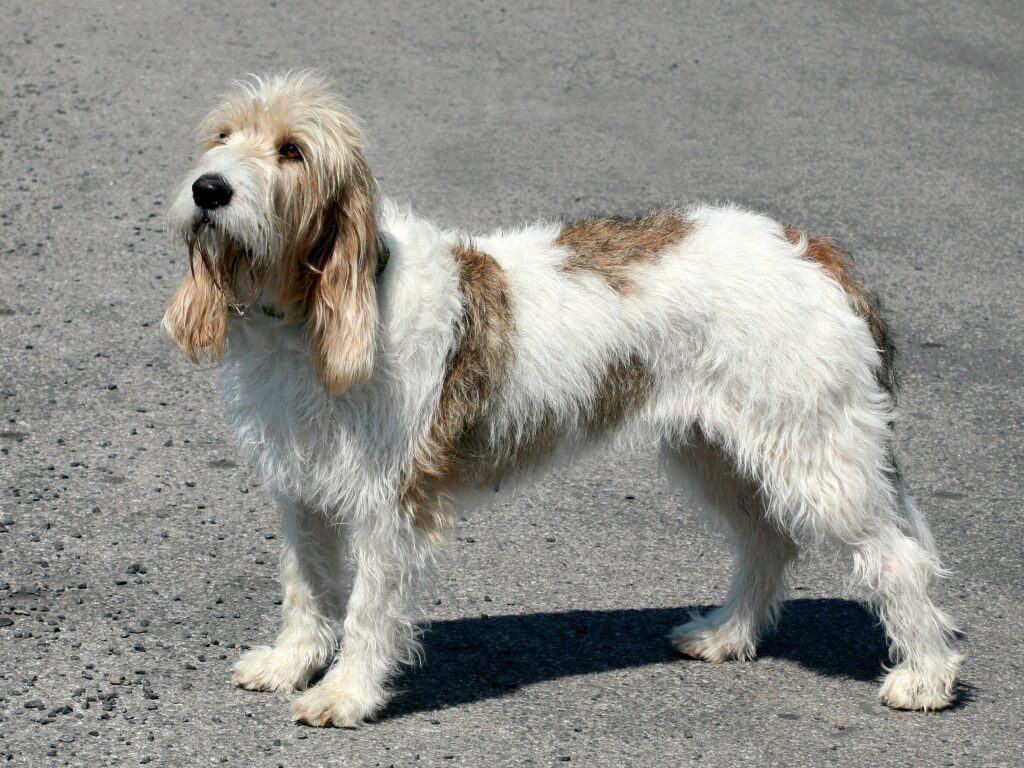
| Origin | France (Vendée region) |
| Year of Breed Recognition | 1950 (final standard) |
| Lifespan | 12-14 years |
| Height at the Withers | Males: 40-44 cm Females: 39-43 cm |
| Weight | 18-20 kg |
| Temperament | Independent, active, stubborn, loyal, social |
| Purpose | Hunting small and medium game (hare, rabbit, wild boar), companion dog |
| Physical Activity Needs | Very high |
| Grooming Difficulty | Medium (requires regular grooming) |
| Training Difficulty | High |
History of the Grand Basset Griffon Vendéen
The history of this charismatic breed is rooted in the 16th century, in the rugged and forested Vendée region of western France. It was here that local hunters needed a brave, hardy, and tireless dog capable of pursuing game through dense undergrowth. The ancestors of modern Griffons are believed to be ancient Gallic hounds crossed with Italian wire-haired dogs. The name of the breed perfectly describes it: “Grand” (large), “Basset” (low-legged), “Griffon” (wire-haired) and “Vendéen” (from the Vendée).
Initially, there were several types of Vendée Griffons, differing mainly in size. By the end of the 19th century, they were all bred together, but Count d’Elva began a targeted selective breeding program, trying to create a low-legged dog with straight legs. However, the true “father” of the breed is considered to be breeder Paul Dezamy. It was he who, in the early 20th century, standardized the breed and insisted on the need to separate the Grand and Petit Basset Griffons.
For a long time, the Grand Basset Griffon was simply obtained as a larger version of the smaller one by selecting the largest puppies from a litter. However, in 1950, a separate standard was adopted for the GBGV, and in 1975, crossbreeding between these two breeds was officially forbidden. This allowed for the consolidation of the unique traits of the Grand Basset Griffon, which is not just an enlarged copy but an independent breed with its own proportions and characteristics. In addition to the short-legged hounds, there are also the Griffon Vendéen Medium and the Grand Griffon Vendéen, which are taller dogs. Today, although the Grand Basset Griffon Vendéen is still a rare breed outside its homeland, it has won the hearts of many enthusiasts as an excellent hunter and companion.
Breed Standard and Appearance
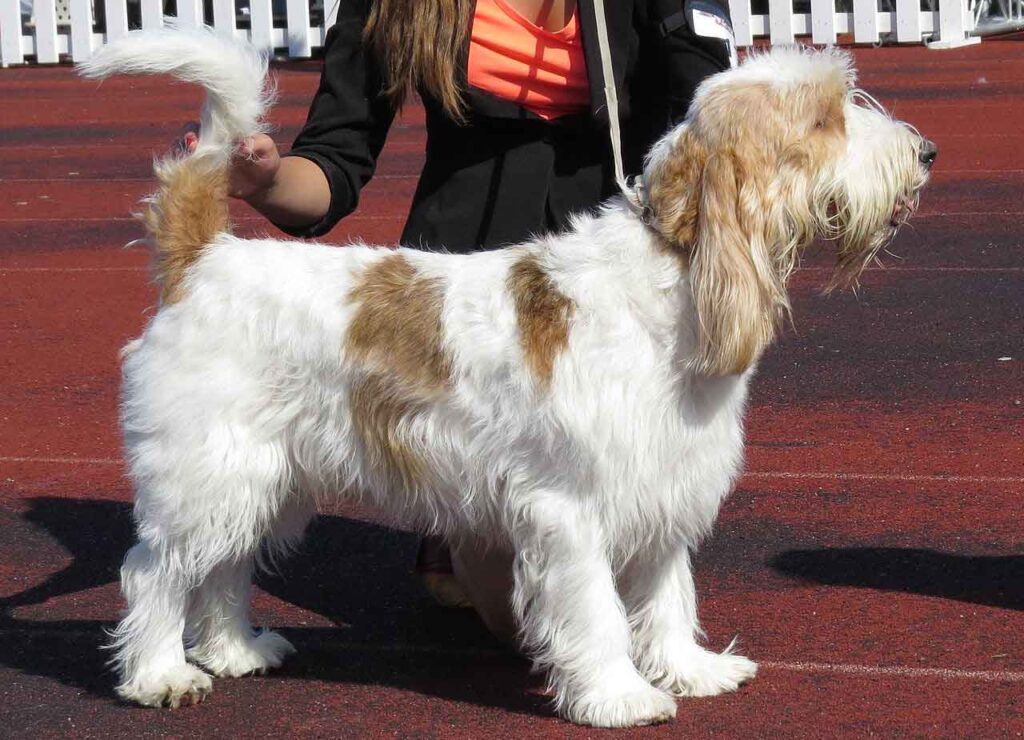
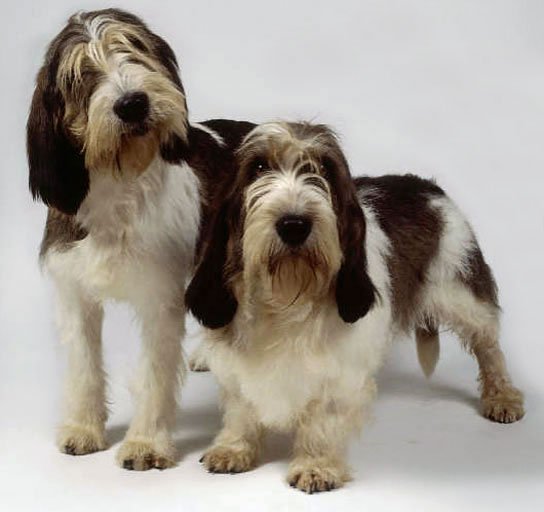
The Grand Basset Griffon Vendéen is a robust, long-bodied, but well-balanced dog that gives the impression of strength and energy. Its appearance speaks to its working origin, and every feature has a functional purpose.
- Head: Long but not too wide. The skull is slightly domed, and the stop is clearly defined. The muzzle is square and longer than the skull. The lips are covered with thick “mustaches” and a “beard,” giving the dog a characteristic thoughtful expression.
- Eyes: Large, dark, with an intelligent and friendly expression. The conjunctiva should not be visible. Thick eyebrows protect the eyes from branches and thorns during hunting.
- Ears: Set low, below the eye line. They are narrow, soft, covered with long hair, and curl inward. If you pull an ear forward, it should reach the tip of the nose.
- Body: Quite long, which is typical for bassets. The neck is long and strong. The back is straight and muscular. The chest is deep but not too wide, allowing the dog to easily move through undergrowth.
- Tail: Set high, thick at the base, and tapers towards the end. The dog carries it like a “saber.” It should never curl over the back.
- Limbs: Well-boned, relatively straight, with strong joints. The front legs may be slightly turned out, which is a characteristic trait for bassets, but not excessively so. The paws are large, with firm pads.
- Coat: Harsh, not too long, with a dense undercoat that provides excellent protection from bad weather and damage. The coat feels rough to the touch. It should not be silky or curly.
Coat Colors of the Grand Basset Griffon Vendéen
The breed standard allows for several color variations. It’s important that the colors are bright and rich.
| Color Type | Description |
|---|---|
| Black and White Pied (Tricolor) | White background with black patches. Red-brown markings on the head, above the eyes, on the ears, and paws are possible. |
| Fawn and White Pied | White background with patches of fawn (from light wheat to orange) color. |
| Black and Fawn | Predominantly black with red-brown markings, without white patches. |
| Sandy with Black Mantle | Fawn or sandy main color with a black “mantle” (saddle) on the back. |
Temperament and Character of the Grand Basset Griffon Vendéen
The GBGV’s character is a fascinating mix of hunting passion and family devotion. To understand this breed, you need to remember its original purpose. It is an independent hunter, capable of making its own decisions while pursuing prey. This trait translates into a notable stubbornness in everyday life. The Grand Basset Griffon Vendéen is not one of those dogs that will unquestionably obey commands. It will always think first about whether it’s worth doing.
At the same time, they are extremely social and pack-oriented dogs. They suffer from loneliness and need constant contact with their family. Left alone for too long, a Griffon can become destructive or very noisy. Their voice is a separate matter. They have a loud, melodious bark, which they use not only for hunting but also to express any emotion. Similar to other hounds like the Beagle or Basset Hound, they are prone to “singing.”
Relationships with Children and Other Animals:
- Children: They usually get along well with children, especially if they grow up together. They are patient and playful. However, due to their energy and size, games with very young children should be supervised.
- Dogs: As pack animals, they get along wonderfully with other dogs. The company of another dog can even help them cope with loneliness more easily.
- Other Animals: This is complicated. Their hunting instinct is extremely strong. Any small animal (cats, rodents, rabbits, birds) will be perceived as prey. Even if a Griffon has grown up with a cat, he may still chase the neighbor’s cat outdoors. Therefore, keeping them in the same house with small pets is not recommended.
Pros and Cons of the Breed
Before getting a Grand Basset Griffon Vendéen, it’s important to soberly assess all the advantages and disadvantages of this breed. This will help you avoid disappointment and make the right choice.
| ✅ Pros | ❌ Cons |
|---|---|
| Cheerful and lively character: They are always ready for adventure and bring positivity to the family. | Extreme stubbornness: Very difficult to train, not suitable for beginners. |
| Family loyalty: They become very attached to their people and love to be the center of attention. | High need for physical activity: Require at least 1-2 hours of active walks every day. |
| Get along well with other dogs: Thanks to their pack instinct, they easily find a common language with their peers. | Tendency to escape: The strong hunting instinct makes them follow a scent, ignoring everything around them. They require a secure fence. |
| Endurance and robust health: Wonderful companions for long walks and hikes. | Very loud: Prone to frequent and loud barking, which may not please neighbors. |
| Undemanding in terms of weather: The rough coat protects well from cold, rain, and heat. | Strong hunting instinct: Dangerous for small pets (cats, rodents). |
| Charismatic appearance: Their shaggy eyebrows and beard leave no one indifferent. | Require regular grooming: The coat needs to be brushed and periodically stripped. |
Care and Maintenance
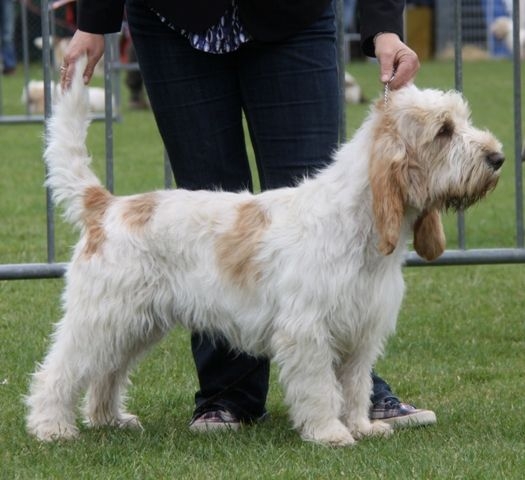
The Grand Basset Griffon Vendéen is a breed that demands attention and some effort from its owner. Their care is comprehensive and includes grooming, providing proper living conditions, and sufficient physical exercise.
Grooming: Coat Care and Hygiene
The GBGV’s harsh coat does not shed heavily but requires regular care to look neat and perform its protective functions.
- Brushing: The coat must be thoroughly brushed with a hard brush or a metal comb at least 1-2 times a week. This helps to remove dead hairs and dirt and prevent matting, especially on the beard, mustaches, and paws.
- Stripping: 2-3 times a year, the coat requires professional stripping (plucking out dead guard hairs). Clipping a Griffon with clippers is strongly not recommended, as it ruins the coat’s structure, making it soft and dull and causing it to lose its protective properties.
- Bathing: You should only bathe the dog when necessary, as frequent washing removes the natural protective layer from the skin and coat.
- Ears: This is a weak point of the breed. Long, floppy ears are poorly ventilated, which creates a favorable environment for infections and otitis. Regularly (once a week) inspect and clean the ears with a special lotion. It’s also important to pluck excess hair from the ear canal for better air circulation.
- Claws: Trim the claws every 3-4 weeks if they don’t wear down naturally.
Living Conditions and Physical Activity
This is a very energetic breed that is absolutely not suitable for a “couch potato” life.
Ideal living conditions are a private house with a large and, most importantly, securely fenced area. The fence should be tall enough (at least 6 feet) and extend into the ground, as Griffons are masters of digging. Life in a condo or apartment is possible, but only if the owner is ready to provide the dog with long and intensive walks every day (at least 2 hours a day), regardless of the weather.
Physical activity should be regular and varied. This can include long walks in the park or forest, running alongside a bike, or hiking. It is very important to give them the opportunity to use their nose. Scent-work games or tracking are great mental exercises that make a Griffon happy. Never let a Griffon off the leash in an unfenced area! If he catches a scent, instinct will take over, and he will run, ignoring all your commands.
Training and Education
Training a Grand Basset Griffon Vendéen is a real challenge that requires patience, consistency, and a sense of humor. Due to their natural stubbornness and independence, standard training methods may not work. They quickly get tired of monotonous repetitions and simply refuse to cooperate.
Key Principles of Successful Training:
- Early Socialization: From the first days the puppy arrives home, introduce him to different people, sounds, places, and other dogs. This will help raise a confident and well-balanced dog.
- Positive Reinforcement: Use only methods based on praise, play, and treats. Punishment and harshness do not work with this breed and can lead to a complete loss of trust.
- Short and Interesting Sessions: Training sessions should be short (5-10 minutes) and game-based to keep the dog’s interest.
- The “Come!” Command: This is the most important and difficult command for any hound. Start practicing it from an early age in a quiet place, gradually making the conditions more difficult. Always generously reward the dog for returning. But remember that even a perfectly trained Griffon can ignore the command if something catches his attention.
- Persistence: Be consistent in your demands. If something is forbidden, it’s forbidden always. A Griffon will definitely test your boundaries.
Health and Common Ailments
The Grand Basset Griffon Vendéen is generally a robust and healthy breed with a lifespan of 12-14 years. However, as with many breeds, they are prone to certain genetic diseases.
- Ear Diseases: The most common problem. Due to the structure of the ear, otitis (external and middle ear infections) often occur. Important prevention: regular cleaning and inspection.
- Eye Diseases: Glaucoma and Persistent Pupillary Membrane (PPM) can occur. An annual check-up with a veterinary ophthalmologist is recommended.
- Epilepsy: Cases of idiopathic (without a known cause) epilepsy occur in the breed. It is usually well-controlled with medication.
- Hypothyroidism: An underactive thyroid gland, which can lead to weight gain, skin and coat problems, and lethargy. Diagnosed with a blood test.
- Skin Problems: Allergic reactions and dermatitis are possible. The harsh coat protects the skin well, but it’s important to monitor its condition during grooming.
- Hip Dysplasia: Although it’s not the most common problem for them, it can occur. It’s important to choose a puppy from responsible breeders who test their dogs.
Feeding Recommendations
Proper nutrition is the key to your Griffon’s health and energy. These dogs have a good appetite and are prone to gaining excess weight, especially if their activity level is insufficient. Obesity puts an additional strain on joints and the cardiovascular system.
The basis of the diet can be either high-quality dry food for active medium-sized breeds or a natural diet. If you choose dry food, prefer super-premium or holistic brands with a high content of animal protein. For a natural diet, the ration should consist of:
- Lean meat (50-60%): beef, turkey, chicken (if no allergy), offal.
- Grains (15-20%): rice, buckwheat.
- Vegetables (15-20%): carrots, pumpkin, zucchini, broccoli.
- Fermented dairy products: kefir, low-fat cottage cheese.
Important: Divide the daily food allowance into two meals (morning and evening). Do not feed the dog immediately before or after intensive physical exercise to reduce the risk of bloat. Ensure the dog always has access to fresh drinking water.
Interesting Facts about the Grand Basset Griffon Vendéen
- The breed’s name is one of the longest in the dog world and literally translates as “Large low-legged wire-haired dog from the Vendée.”
- Their loud and melodious bark was very valuable for hunters, as it allowed them to track the dog’s location in dense undergrowth, even when it was out of sight.
- Despite their name “basset” (low-legged), their legs are much straighter than those of the famous Basset Hound, which gives them greater speed and stamina on rough terrain.
- The Grand Basset Griffon Vendéen was a favorite breed of the French King Louis XII.
- Representatives of this breed participated in the development of their smaller relative, the Petit Basset Griffon Vendéen, which became extremely popular in Great Britain and the U.S.
Frequently Asked Questions about the Breed (FAQ)
Is the Grand Basset Griffon Vendéen suitable for an inexperienced owner?
No, it’s not the best choice for a beginner. Their stubbornness, high activity needs, and strong hunting instincts require experience, patience, and consistency in training.
Do they shed a lot?
Shedding is moderate. Regular brushing and periodic stripping help keep the amount of hair in the house under control.
Can they live in an apartment?
Theoretically, yes, but it is very difficult. The owner must be ready to dedicate several hours a day to active walks and training outdoors, regardless of the weather. The ideal conditions are still a private house.
How do they get along with cats?
Poorly. Their hunting instinct is too strong. Even if the dog grows up with a cat, it does not guarantee safety. Most experts do not recommend keeping them with small animals.
Do they need a lot of company?
Yes, a lot. They are pack dogs who suffer from loneliness. They are not suitable for people who spend most of the day away from home.
Video about the Breed
- High-spirited and sociable
- Good with children and dogs
- Hardy, athletic
- Generally robust health
- An independent nose — follows the scent
- Needs plenty of exercise
- Inclined to bark
- The harsh coat needs care
| Petit Basset Griffon Vendéen | Basset Hound | Beagle | |
|---|---|---|---|
| Height | 34–38 cm | 33–38 cm | 33–40 cm |
| Energy | 4 | 2 | 4 |
| Apartment | 3 | 3 | 3 |
| Beginners | 3 | 3 | 3 |
Is the Grand Basset Griffon Vendéen good for a family?
Is it easy to train?
How does it differ from the Petit Vendéen?
FCI Standard No. 33 · The Kennel Club
For apartments · For kids · For beginners · Active · Smartest · Hypoallergenic · All rankings →