

The Ariège Pointer (Braque de l’Ariège) is an ancient French pointing dog breed that traces its origins back to the celebrated white royal hounds. Unfortunately, these elegant hunters are extremely rare today and are hardly ever found outside their native France. Bred for hunting feathered game, particularly gray partridges and quails, Ariège Pointers have also earned a reputation as wonderful companions thanks to their balanced and friendly disposition. Their elegant appearance, highlighted by a short white coat with a characteristic silvery sheen, combines with low-maintenance grooming, making them desirable, though hard-to-find, household pets. For more details on this unique breed, continue reading on Tvaryny.
Ariège Pointer: A Brief Breed Overview
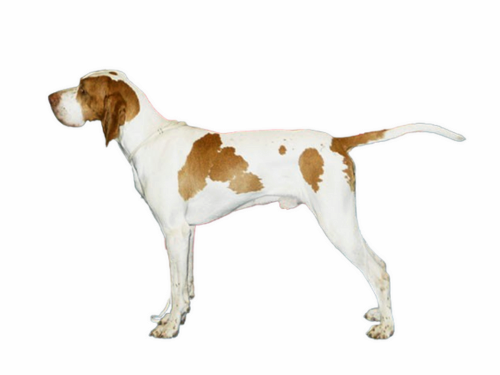
| Characteristic | Description |
| Origin | France, Ariège region |
| Year of FCI Recognition | 1954 (Standard No. 177) |
| Life Expectancy | 12-15 years |
| Height at Withers | Males: 23.6-26.4 inches (60-67 cm), Females: 22-25.6 inches (56-65 cm) |
| Weight | 55-66 lbs (25-30 kg) |
| Temperament | Calm, intelligent, obedient, gentle, hardy |
| Purpose | Hunting feathered game, companion dog |
| Activity Level | High |
History of the Ariège Pointer Breed
The history of the Ariège Pointer stretches back centuries and is intimately tied to the hunting traditions of Southern France, particularly the Ariège department in the Pyrenees, after which the breed was named. It’s believed the breed originated from old French Braques, which were crossbred with white and orange hounds of southern origin to give them lightness and activity. These dogs were highly prized for their working qualities and their ability to hunt in challenging mountain conditions. The foundation for the breed’s creation came from the descendants of King Louis XV’s famous white royal hounds.
In the late 19th and early 20th centuries, the breed experienced its golden age. However, like many European breeds, the Ariège Pointer found itself on the brink of extinction as a result of the two World Wars. The devastating consequences of these conflicts led to a sharp decline in population, and the breed was considered practically lost. Enthusiasts made titanic efforts to restore it in the second half of the 20th century. To save the breed, the few surviving representatives were crossbred with other Braques, including the Saint-Germain Pointer, which helped broaden the gene pool but also slightly altered the original type. Pointer blood was also introduced to improve working qualities and appearance. This targeted selective breeding allowed the Ariège Pointer to be preserved and revived, though it remains one of the rarest pointing dog breeds in the world to this day. Its story is a vivid example of how the dedication of hunters and dog fanciers can save a unique heritage from complete oblivion.
Standard and Appearance of the Ariège Pointer
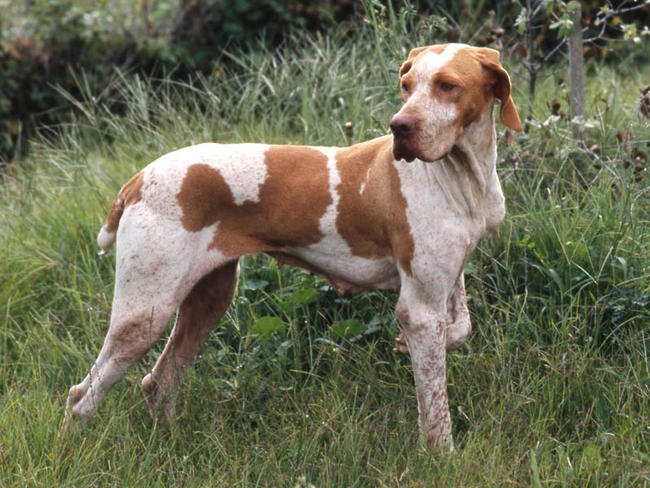
The Ariège Pointer is a dog of noble, elegant, yet robust build. It gives the impression of strength and endurance, which perfectly matches its hunting purpose. This is a medium-sized dog of brachymorphic type, with well-developed musculature, but without excessive bulk.
Key appearance characteristics:
- Head: Long, angular, but not excessively broad. Skull slightly convex. The stop (transition from forehead to muzzle) is not sharply defined. Muzzle is straight, sometimes with a slight arch.
- Nose: Nose leather is pink, chestnut, or flesh-colored, but never black. Nostrils are well-opened.
- Eyes: Oval, slightly obliquely set. The gaze is soft, intelligent, and a little melancholic. Eye color is dark amber or chestnut.
- Ears: Very long, thin, and soft, rolled into a tube. Set at or slightly below the eye line. Ear tips have a pointed shape.
- Body: Chest broad and deep, descending to elbow level. Back is straight, sometimes a little long. Loins are strong, croup slightly sloping.
- Tail: Set low, thin. Usually docked to 4/10 of its length, but can also be of natural length. The dog carries it low.
- Coat: Short, fine, dense, and shiny.
- Color: Predominant color is white with pale orange (yellowish-brown) or chestnut patches, with dense speckling. Some dogs may appear almost entirely white with minimal speckling.
Character and Temperament
The Ariège Pointer is a dog with a dual personality. In the field, he is an energetic, resilient, and determined worker, capable of pursuing game for hours. At home, however, he transforms into a calm, gentle, and exceptionally devoted family member. His composure and kindness make him an excellent companion. He forms strong bonds with his owners and loves to be involved in all family activities.
Representatives of this breed get along well with children, showing patience and caution towards them. However, as with any dog, interactions with small children should be supervised. With strangers, Ariège Pointers behave reservedly and with distrust, making them decent watchdogs – they will always warn with barks about the approach of outsiders. Regarding other household pets, their strong hunting instinct can become a problem, especially with small animals such as cats, rabbits, or birds. Early and proper socialization can help mitigate these traits, but the instinct can manifest at any moment. Therefore, it’s not advisable to leave them alone with potential “prey.” Overall, this is an obedient and intelligent dog that strives to please its owner, but its independent hunting nature requires consistent training.
Pros and Cons of the Ariège Pointer Breed
| Pros | Cons |
|---|---|
| ✅ Exceptional loyalty to family | ❌ Requires a very high level of physical exercise |
| ✅ Gentle and patient with children | ❌ Strong hunting instinct, dangerous for small animals |
| ✅ High intelligence and trainability | ❌ Can be stubborn and independent, complicating training |
| ✅ Excellent hunting qualities: stamina, superb sense of smell | ❌ Not suitable for apartment living, needs space |
| ✅ Low-maintenance grooming, short coat requires little attention | ❌ Prone to ear infections due to long, drooping ears |
| ✅ Calm and balanced temperament at home | ❌ Very rare breed, difficult to find a puppy |
| ✅ Good health and few hereditary diseases | ❌ Tolerates loneliness poorly, can suffer from separation anxiety |
Care and Maintenance
Grooming and Coat Care
Caring for an Ariège Pointer isn’t complicated. Its short, smooth coat only requires regular brushing (once a week) with a rubber brush or grooming mitt to remove dead hairs and maintain its shine. Shedding is moderate, intensifying seasonally in spring and autumn. The dog should only be bathed when necessary, using a mild dog shampoo to avoid damaging the skin’s natural protective layer.
The long, drooping ears require the most attention. Their structure creates ideal conditions for the development of bacteria and fungi due to poor ventilation. It’s necessary to inspect the ears weekly for redness, dirt, or unpleasant odors and gently clean them with a specialized lotion. It’s also important to regularly trim nails and monitor oral hygiene.
Physical Exercise and Activity
The Ariège Pointer is not a couch potato. This is a working breed, bred for prolonged activity. It vitally needs intense daily physical exercise. Ordinary leash walks will not suffice. This dog requires at least 1.5-2 hours of active engagement per day, including running, games, and long walks in the woods or fields where it can freely explore the territory. The ideal owner for an Ariège Pointer is a hunter, an athlete, or someone who leads a very active lifestyle. Apartment living is only possible as an exception, provided the owner can compensate for the lack of space with daily training and trips to the countryside. Similarly high activity requirements are characteristic of other hunting breeds, such as the Swedish Jämthund or the agile Norrbottenspets.
Training and Upbringing of the Ariège Pointer
Training an Ariège Pointer requires patience, consistency, and an understanding of the breed’s peculiarities. These are intelligent dogs that learn quickly, but their inherent independence, developed for autonomous work in the field, can manifest as stubbornness. They may stray far from the hunter and make decisions independently, and this trait carries over into daily life.
The owner must establish themselves as a confident and consistent leader, but without resorting to harshness or physical punishment. Ariège Pointers are sensitive and react poorly to rough methods. Positive reinforcement works best: praise, treats, toys. Early socialization is crucial for the puppy to get used to various people, sounds, places, and other animals. Particular attention should be paid to the “Come!” command, as their hunting instinct can take over during off-leash walks. Obedience classes will be very beneficial for both the dog and the owner.
Nutrition and Diet
The Ariège Pointer’s diet must match its high energy requirements. The foundation of its nutrition should be high-quality animal protein. The best choice will be a ready-made premium or super-premium dry food for active medium and large breeds. Such food is already balanced in terms of proteins, fats, carbohydrates, vitamins, and minerals.
When opting for a natural diet, the meals should consist of:
- Lean meat: beef, turkey, chicken (boneless).
- Organ meat: liver, heart, tripe (no more than 1-2 times a week).
- Grains: rice, buckwheat.
- Vegetables: carrots, pumpkin, zucchini (chopped or lightly cooked).
- Fermented dairy products: kefir, low-fat cottage cheese.
It’s important not to overfeed the dog, as representatives of the breed are prone to gaining excess weight, especially with insufficient exercise. Portion size should be adjusted according to age, weight, and activity level. Always ensure access to fresh and clean water.
Health, Diseases, and Life Expectancy
The Ariège Pointer is generally a healthy and hardy breed with a small number of hereditary diseases, partly due to its rarity and lack of mass breeding. The average life expectancy is 12-15 years.
The most common problem is inflammation of the ear canal (otitis) due to their long, drooping ears. Regular ear hygiene is the best preventative measure. Like many other large breeds, they may be prone to:
- Hip dysplasia: a hereditary disease that can lead to arthritis. It’s important to choose a puppy from reputable parents.
- Bloat (gastric torsion): a life-threatening condition. To prevent it, feed the dog smaller portions 2-3 times a day and avoid activity immediately after eating.
- Progressive retinal atrophy: an eye disease that can lead to blindness.
Regular vet visits, timely vaccinations, and parasite control will help maintain your pet’s health for many years.
Interesting Facts about the Ariège Pointer
- Royal Origins: Ariège Pointers are believed to be descendants of the “white dogs of the King” (Chien blanc du Roy), the favorite hunting dogs of French monarchs, notably Louis XV.
- “Silvery” Sheen: Their predominantly white coat with fine speckling creates a unique silvery sheen in the sun, making them very noticeable in the field.
- Niche Specialization: Historically, the breed was developed for hunting specific game – gray partridges and quails – which demanded exceptional stamina and a keen sense of smell from the dog.
- Nearly Extinct: After World War II, the breed was so scarce that it was considered extinct. It was only thanks to the efforts of a group of enthusiasts led by Alain Castel that the breed was successfully revived in the 1990s.
- Kinship with Other Braques: The Ariège Pointer is closely related to other French pointing dogs, particularly the French Pointer (Pyrenean type), which also originates from the southern regions of France.
- Other French Pointers: The Saint-Germain Pointer is another notable French pointing dog, sharing similar hunting prowess and elegant characteristics.
Frequently Asked Questions about the Breed (FAQ)
| Question | Answer |
| Is the Ariège Pointer suitable for apartment living? | Categorically no. This is a very energetic breed that requires space, intense daily exercise, and off-leash exploration. An ideal living situation would be a private house with a large, securely fenced yard. |
| Do they get along well with children and other animals? | They are very gentle and patient with children in their family. However, their strong hunting instinct makes them potentially dangerous for cats, rodents, and other small household pets. Early and thorough socialization is required. |
| How much physical exercise do they need? | A minimum of 1.5-2 hours of active engagement daily. This isn’t just walks, but running, games, and training. Insufficient activity can lead to destructive behavior and health problems. |
| Do they shed a lot? | Shedding is moderate, intensifying twice a year during seasonal changes. Regular brushing helps keep this process under control. |
| Is it difficult to find an Ariège Pointer puppy? | Yes, very difficult. This is an extremely rare breed even in France. Outside the country, finding a puppy is almost impossible. Potential owners will have to join a long waiting list. |