

| Height | 37–44 cm |
| Weight | 10–15 kg |
| Lifespan | 12–16 years |
| FCI group | 1 · sheepdogs |
| Origin | Hungary |
Exact ratings
- Hip dysplasia
- Cataract and eye disease
- Progressive retinal atrophy (PRA)
- Degenerative myelopathy
- Skin disease under the cords
Quality food for active breeds, with weight control. Form the cords and dry them thoroughly (dermatitis risk); plenty of exercise is a must.
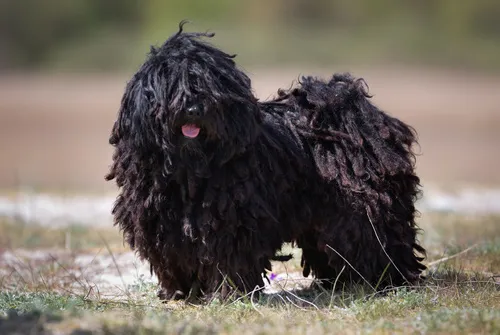
The Puli (Hungarian Water Dog) isn’t just any dog-it’s a true Hungarian national treasure, a sheepdog with unique “corded” fur resembling dreadlocks. This breed is renowned for its lively spirit, exceptional intelligence, and deep devotion to its family. Pulis are energetic companions who adore active games, long walks, and tasks that stimulate their sharp minds. Beyond their herding instincts, Pulis get along famously with children, becoming loyal friends and protectors. Learn more about it on Tvaryny.
The Puli’s most distinctive feature is its unusual coat, which not only catches the eye but also serves a practical purpose, shielding the dog from harsh weather and predators. An important aspect is that Pulis, with proper coat care, practically don’t have a specific “doggy” odor, making them an appealing choice for many. They’re brave, agile, resilient, and adapt easily to various climates.
Puli (Hungarian Water Dog): A Brief Breed Overview
| Characteristic | Description |
| Origin | Hungary |
| Year of First Official Standard Mention | 1925 (first standard), 1935 (FCI recognition) |
| Life Span | 12-16 years |
| Height at Withers | Males: 15-18 inches; Females: 14-16.5 inches |
| Weight | Males: 29-33 lbs; Females: 22-29 lbs |
| Coat Type | Corded, dense, long |
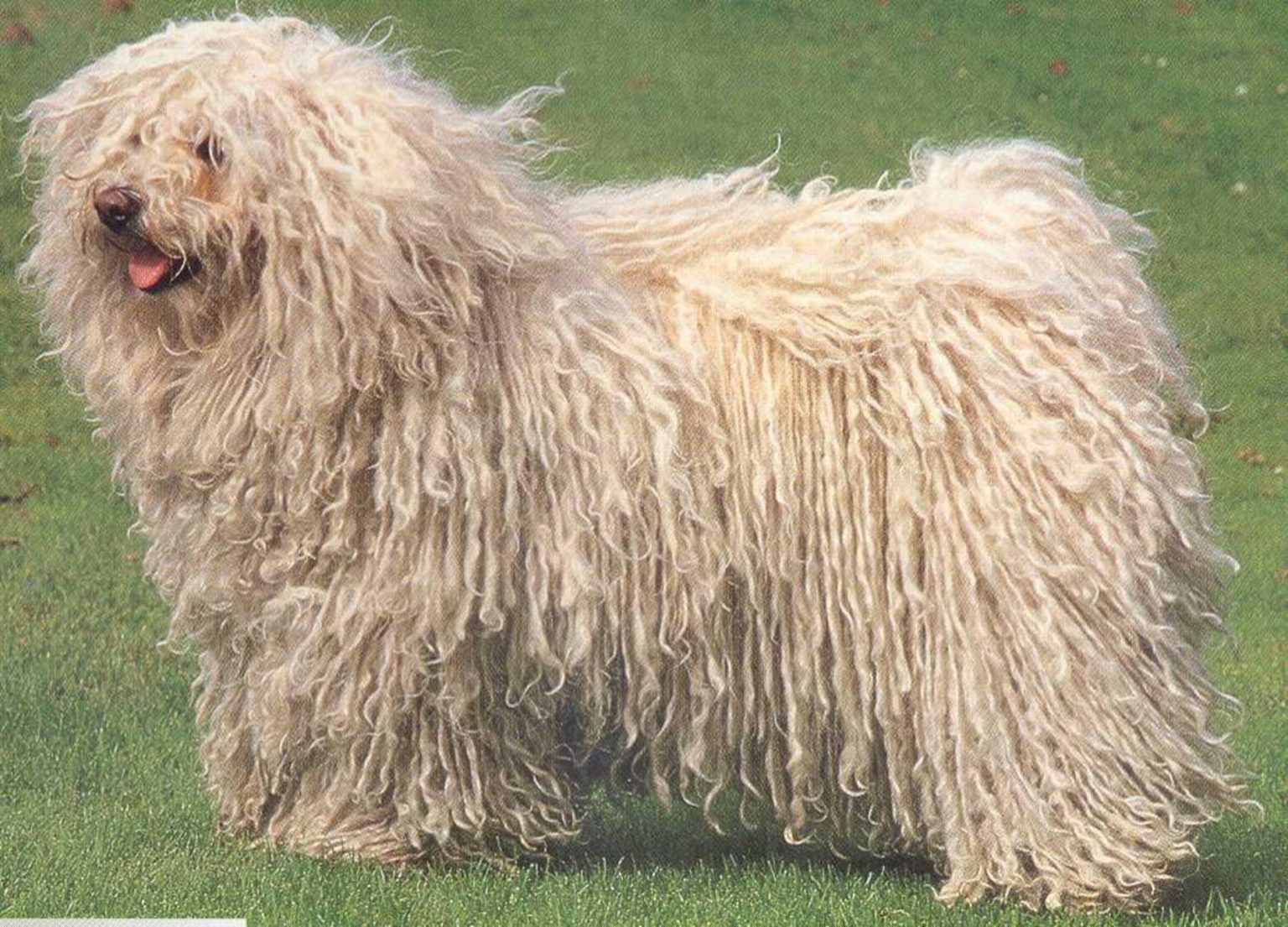
| Color | Black, White, Gray (various shades), Fawn with or without a black mask |
| Temperament | Intelligent, active, devoted, alert, playful, sometimes stubborn |
| Usage | Herding dog, companion, guard dog |
History of the Puli Breed
The history of the Puli breed stretches back centuries, closely intertwined with the nomadic past of Hungarian tribes. It’s believed that the ancestors of modern Pulis arrived in the territory of present-day Hungary with the Magyars over a thousand years ago, around the 9th century. These dogs were indispensable helpers to shepherds, assisting them in managing large flocks of sheep on the vast plains of the Puszta. Their compact build, incredible agility, and loud bark made them ideal for this job-they could easily maneuver among sheep, guide them, and warn of danger.
Several theories exist regarding the Puli’s more ancient origins. One links them to ancient Asian herding dogs, possibly even ancestors of Tibetan Terriers. Archeological finds indicate the existence of dogs with similar corded coats in the region even before the Magyars arrived. The Puli’s unique coat, which cords into dreadlocks, provided excellent protection from harsh weather-both from the cold in winter and the heat in summer-as well as from bites from predators like wolves.
For centuries, Pulis worked side-by-side with another famous Hungarian herding breed – the Komondor. These two breeds often performed different functions: the larger and more powerful Komondor typically guarded the flock at night, while the smaller and more agile Puli actively worked during the day, managing the movement of the herd. Sometimes Pulis even used the backs of sheep as bridges to quickly move through the flock. Interestingly, shepherds greatly valued their Pulis, and a good working dog could be worth a shepherd’s annual salary.
In the early 20th century, with changes in traditional agriculture and a decreasing need for herding dogs, the breed faced extinction. However, thanks to the efforts of enthusiasts, particularly Dr. Emil Raitsits, who initiated a breed recovery program in the 1910s, the Puli was saved. The first breed standard was developed in 1915 and officially approved by the Hungarian Kennel Club in 1925. The Fédération Cynologique Internationale (FCI) recognized the breed in 1935. Pulis arrived in the U.S. in the 1930s, where they also gained popularity due to their unique appearance and excellent working qualities. The breed was recognized by the American Kennel Club (AKC) in 1936.
In Hungary, the Puli is considered a national treasure. There are also other Hungarian sheepdogs, such as the Pumi, which is believed to have a share of Puli blood along with French and German terrier-like sheepdogs.
What a Puli Looks Like: A Detailed Description of Appearance
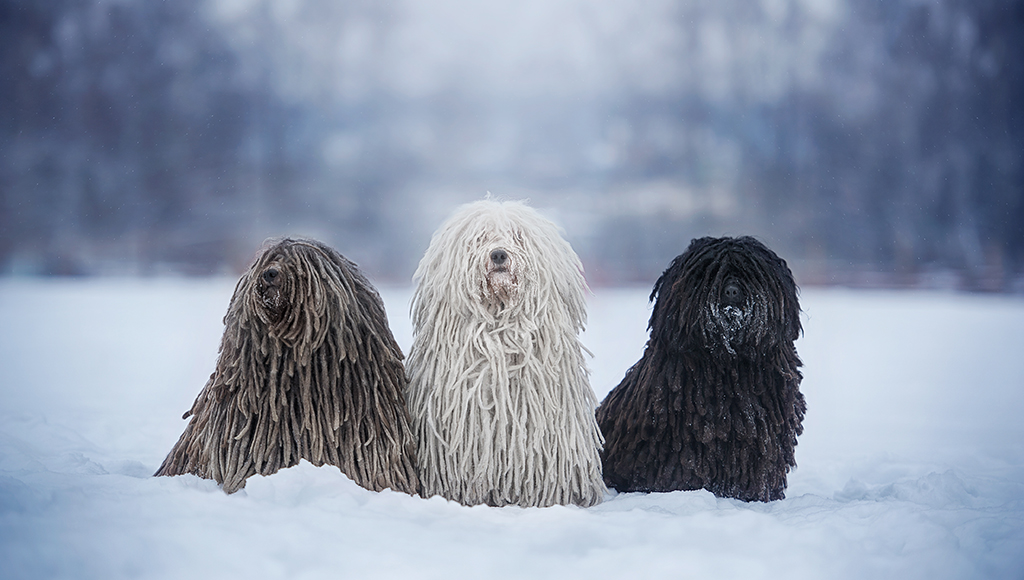
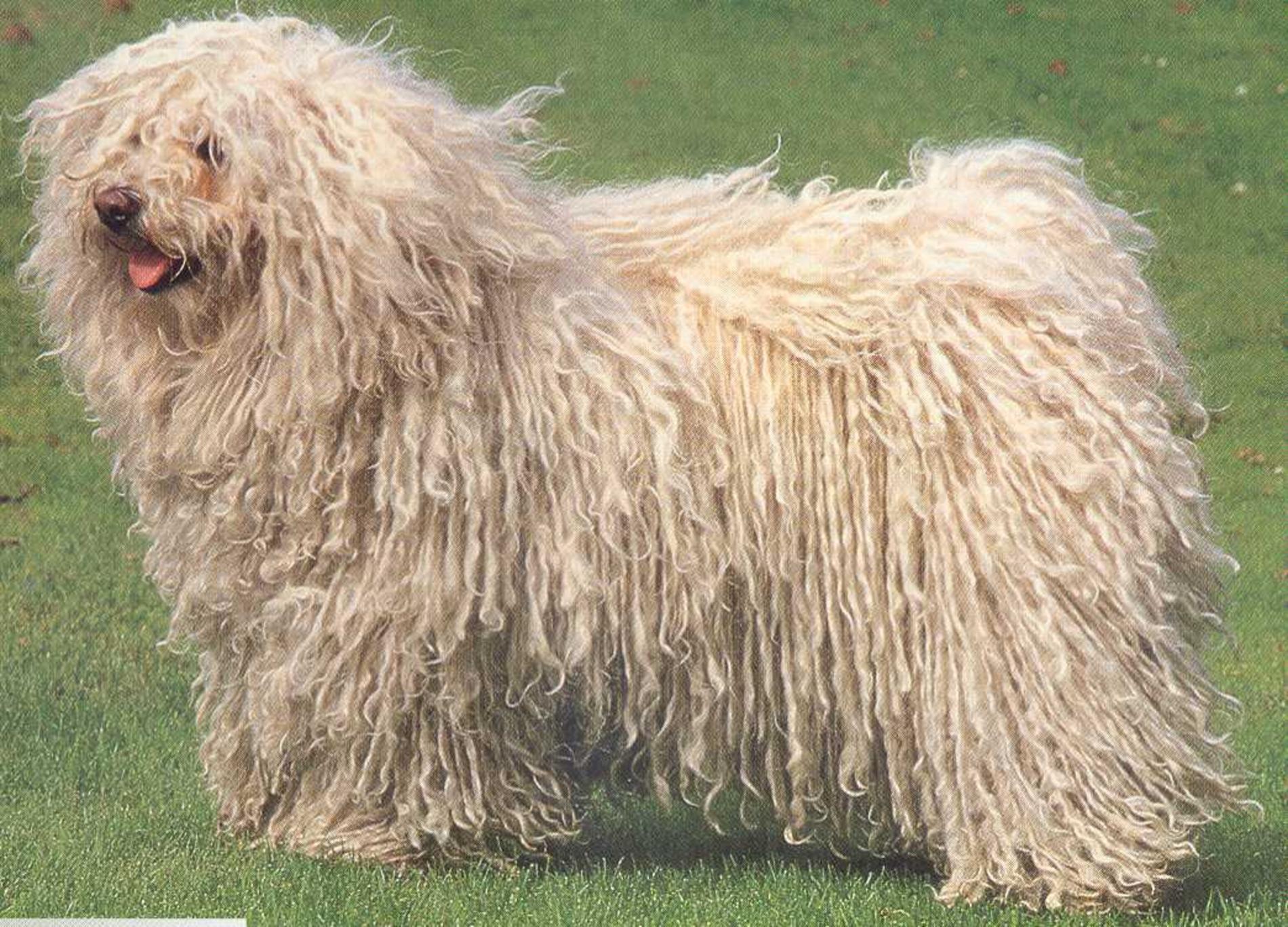
The Puli is a medium-sized dog with a square build, giving an impression of strength and agility, despite its relatively low weight. The breed’s most distinctive feature is its unique coat, which naturally cords into long ropes or ribbons, resembling dreadlocks.
A Puli’s head is proportionate to its body, appearing round due to the abundant fur. The muzzle is slightly shorter than the skull, straight. The stop (transition from forehead to muzzle) is barely noticeable. The nose is black. The eyes are medium-sized, almond-shaped, dark brown, with a lively and intelligent expression. The fur on the head is so dense that it often completely covers the eyes, creating a kind of “curtain,” which, however, doesn’t hinder the dog’s vision. The ears are V-shaped, medium-sized, pendulous, set at a medium height.
The body is compact, sturdy, with a straight topline. The chest is deep and moderately wide. The belly is slightly tucked up. The limbs are straight, parallel, with well-developed musculature. The paws are round, compact, with strong pads and dark nails. The tail is set high, usually carried over the back or slightly curled and heavily covered with fur, often blending in with the overall mass of fur on the rump.
The coat is the Puli’s calling card. It consists of a dense, soft undercoat and a harsher, wavy or curly outer coat. These two hair types interweave to form the characteristic cords. The cording process begins in puppies around 6-10 months of age and can continue for up to 2-3 years until the coat reaches its full length and maturity. Cords can be thin or thick, flat or round. The fur length can reach the ground in adult dogs. Importantly, this coat doesn’t shed in the traditional sense; dead hairs remain within the cords. Because of this, Pulis are often recommended for people prone to allergies, although 100% hypoallergenicity doesn’t exist.
Puli colors can vary:
- Black: The classic and most common color. Can be jet black or have a rusty tint from the sun.
- White: Pure white, without yellowing.
- Gray (Masko Fako): Various shades of gray, from silver to dark. Puppies are born black and lighten with age.
- Fawn: From cream to apricot, often with a black “mask” on the face.
The skin under the coat is usually dark, even in white dogs. The Bergamasco Shepherd also has a similar corded coat, although its cords (or, more precisely, flocs) have a slightly different structure.
Puli Character: Temperament and Behavior of the Hungarian Sheepdog
The Puli is a dog with a vibrant, dynamic, and extraordinarily intelligent personality. They are known for their boundless energy, playfulness, and deep affection for their family. This isn’t a dog that will calmly lie on the couch all day; a Puli needs activity, both physical and mental.
Intelligence and Trainability: Pulis are considered one of the smartest dog breeds. They quickly learn new commands and tricks, often exceeding their owner’s expectations. Their keen minds and eagerness to please make the training process enjoyable, yet they require consistency and creativity from the owner. Pulis can be a bit stubborn, so it’s essential to start training and socialization from an early age, using positive reinforcement methods.
Energy and Playfulness: This is an incredibly active breed. Pulis love to run, jump, play fetch, and participate in any family activities. They need daily long walks, opportunities to run freely in a safe area, and regular mental stimulation through games or dog sports (e.g., agility, obedience, flyball). Without enough activity, a Puli can become restless and even destructive.
Loyalty and Family Relationships: Pulis are very people-oriented and form a strong bond with their family. They are affectionate, loving, and eager to be the center of attention. They get along well with children, especially if they grow up together, becoming wonderful playmates. However, due to their herding instincts, Pulis may try to “herd” small children by gently nipping at their heels. This behavior should be corrected from a young age. With other pets, Pulis usually coexist well if properly socialized.
Guard Dog Qualities: Despite their relatively small size, Pulis make excellent watchdogs. They are very alert, attentive to everything happening around them, and always ready to announce the approach of strangers or any unusual sounds with a loud bark. They typically regard strangers with suspicion but are not aggressive unless they perceive a direct threat. Their bravery is unquestionable.
Tendency to Bark: Pulis can be quite vocal. Their propensity for barking is part of their herding nature, as barking was one of the tools for managing a flock. It’s important to teach a Puli to control its barking from an early age so it doesn’t become a problem for neighbors.
Independence and Sensitivity: While Pulis are eager to please, they also have a certain degree of independence in their character. Sometimes they may make their own decisions, a legacy of their herding work. Pulis are very sensitive to their owner’s mood and the atmosphere in the home. They don’t tolerate harsh treatment, yelling, or unfair punishments well, which can lead to stress or even depression in the dog. The Pyrenean Sheepdog Long-Haired also shares similar sensitivity and loyalty, making it another excellent herder and companion.
Puli Health: Common Ailments and Prevention
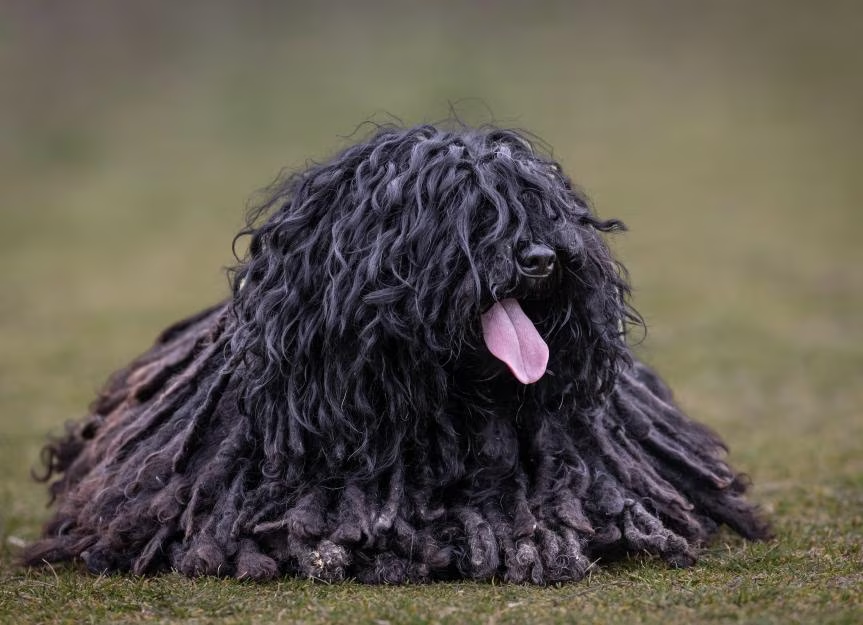
Pulis are generally considered a healthy and hardy breed with an average lifespan of 12-16 years. However, like all breeds, they are prone to certain genetic diseases and health problems. Responsible breeders test their breeding dogs for common hereditary diseases to reduce the risk of passing them on to their offspring.
Main health issues that can occur in Pulis:
- Hip Dysplasia: This is a common disease in many dog breeds where the hip joint develops incorrectly, leading to arthritis and pain. It’s important to choose a puppy from parents screened for dysplasia.
- Progressive Retinal Atrophy (PRA): A group of genetic eye diseases that lead to gradual degeneration of the retina and, eventually, to blindness. Genetic tests are available to identify PRA carriers.
- Cataracts: Clouding of the eye’s lens that can impair vision and even lead to blindness. Can be hereditary or develop with age.
- Skin Diseases: Due to their dense corded coat, Pulis can be prone to skin problems if the coat isn’t properly cared for. Insufficient drying after bathing can lead to the development of fungal infections or dermatitis. It’s also important to regularly check the skin under the cords for irritations, parasites, or foreign objects.
- Ear Infections: Puli’s pendulous ears, covered with thick fur, create a warm and moist environment favorable for the development of bacterial and fungal infections. Regular ear cleaning and keeping them dry is important for prevention.
- Degenerative Myelopathy (DM): A progressive disease of the spinal cord that can lead to weakness and paralysis of the hind limbs. A genetic test for DM susceptibility is available.
Preventive measures:
- Regular Veterinary Check-ups: Annual (or twice a year for senior dogs) vet visits help detect health problems early.
- Vaccinations and Deworming: Adhering to the vaccination schedule and regular treatment for internal and external parasites.
- Balanced Nutrition: High-quality food appropriate for the dog’s age, size, and activity level is key to strong health.
- Sufficient Physical Activity: Regular exercise helps maintain optimal weight and cardiovascular health.
- Coat, Eye, and Ear Care: As noted, special attention should be paid to caring for the unique coat, and regularly inspecting and cleaning the eyes and ears. Wiping eyes with chamomile decoction or a special lotion will help prevent inflammation.
- Choosing a Responsible Breeder: When buying a puppy, ensure the breeder conducts genetic tests for their dogs and can provide relevant certificates.
Timely diagnosis and proper treatment significantly improve the prognosis for many diseases. It’s also worth remembering the health of other herding breeds, such as the Slovak Cuvac, which, being a larger dog, also has its specific predispositions to musculoskeletal diseases.
| Health Issue | Symptoms | Prevention/Actions |
|---|---|---|
| Hip Dysplasia | Lameness, difficulty standing up, decreased activity | Choose a puppy from screened parents, weight control, moderate exercise |
| Progressive Retinal Atrophy (PRA) | Worsening night vision, gradual vision loss | Genetic testing of breeding animals |
| Cataracts | Clouding of the eye, “film” over the eye, worsening vision | Regular check-ups with an ophthalmologist, possible surgical treatment |
| Skin Infections | Itching, redness, hair loss (in affected areas), unpleasant odor | Proper coat care, thorough drying, regular skin inspection |
| Ear Infections | Dog shakes head, scratches ears, ear discharge, unpleasant odor | Regular ear cleaning, keeping ears dry |
How to Care for a Puli’s Coat: Secrets of Unique “Dreadlocks”
Caring for a Puli’s coat is probably the most important aspect of owning this breed, requiring time, patience, and some knowledge. The Puli’s unique corded coat needs regular attention to stay healthy and tidy.
Cord Formation: Puli puppies have soft, fluffy fur. The cording process begins at approximately 6-10 months of age. Initially, the fur starts to matt into small clumps or patches. At this stage, it’s crucial to help the cords form correctly by separating them by hand from the skin to the tips. This needs to be done regularly to prevent the formation of a solid felt mat. Cords should be roughly the same thickness (typically, like a pencil). This process can last up to 2-3 years until the coat is fully “corded” and reaches its maximum length.
Important: A Puli’s coat is not brushed or combed once the cords have started to form! Brushing will destroy the cord structure. Instead, care involves manually separating any cords that are sticking together and removing dirt, debris, or twigs that may get tangled in the fur.
Bathing: Pulis don’t need to be bathed as often as dogs with other coat types. Usually, once every 1-2 months is sufficient, or as needed if the dog gets very dirty. Use a mild dog shampoo, thoroughly rinsing the coat to ensure no soap residue remains, which can cause skin irritation. The most challenging stage is drying. A Puli’s coat dries very slowly, sometimes up to 2-3 days if air-dried naturally. It’s extremely important to thoroughly dry the coat right down to the skin to prevent mold, fungus, and unpleasant odors. Many owners use powerful dog blowers or special drying chambers. In warm weather, you can let the dog dry in the sun, but make sure the skin under the cords is also dry.
Clipping: Some Puli owners who don’t participate in dog shows prefer to clip their dogs to make care easier. The coat can be trimmed to a certain length (e.g., 2-4 inches) or even fully shaved. If you decide to clip a Puli, note that the coat will lose its characteristic corded structure and will grow back initially as regular curly fur before it starts to form cords again. Clipping can be a good option for senior dogs or in very hot climates.
Other aspects of care:
- Regularly check the skin under the cords for irritations, redness, or parasites.
- Trim the fur around the anal opening and genitals for hygiene.
- The fur between the paw pads may also need trimming to prevent matting and dirt buildup.
While Puli coat care may seem complicated, many owners find the process meditative and bonding. The main thing is regularity and attentiveness. Provide your Puli with proper care, and its unique coat will be its pride, not a problem.
Puli Training and Socialization
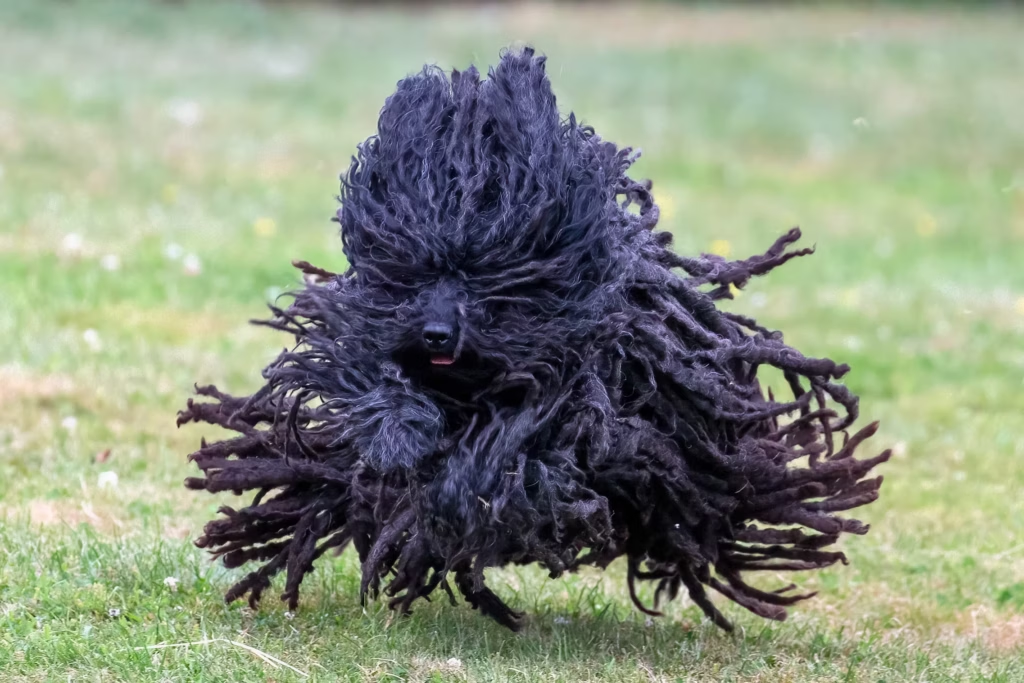
Pulis are exceptionally intelligent and clever dogs, which makes their training potentially easy and enjoyable. They quickly grasp new commands and concepts, often eager to please their owner. However, their intelligence is coupled with a certain degree of independence and sometimes stubbornness, a legacy of their herding past where they had to make independent decisions.
Early Start: As with most breeds, Puli training and socialization should begin as early as possible, literally from the first days a puppy arrives in your home. Early socialization involves introducing the puppy to various people, sounds, places, and other animals in a safe and controlled environment. This will help raise a confident and well-adjusted dog.
Training Methods: Pulis respond best to positive reinforcement methods-praise, treats, toys. They are very sensitive to their owner’s tone of voice and mood. Avoid harshness, yelling, and physical punishments, as this can cause fear, distrust, or even aggression in the dog. Pulis who are mistreated can become withdrawn or, conversely, overly excitable. Consistency, patience, and a positive attitude are the keys to successful training.
Basic Commands and Skills: Start with basic commands like “Sit!”, “Down!”, “Come!”, “Heel!”, “Stay!”. It’s also important to teach a Puli the command “Quiet!” or “Enough!” as they have a tendency to bark. Teaching self-control is also beneficial.
Mental Stimulation: Due to their high intelligence, Pulis need not only physical but also regular mental stimulation. A bored Puli may find things to do on its own, and it won’t always be something you like (e.g., chewing furniture or excessive barking). Use interactive toys, dog puzzles, teach new tricks, and engage in dog sports. Agility, obedience, flyball, herding (if available)-all of these are great for Pulis.
Herding Instincts: Remember that a Puli is a herding dog. Even if your Puli has never seen sheep, its instincts may manifest in everyday life. It may try to “herd” family members, especially children, or other pets, gently nipping at their heels or circling around them. This behavior should be gently but firmly corrected from an early age, redirecting its energy to toys or other permitted activities.
Socialization: Proper socialization is critically important for Pulis. Introduce your puppy to various people (men, women, children of different ages, people with glasses, hats, etc.), other dogs (of different breeds and sizes, after appropriate vaccinations), cats (if you plan to keep them together). Attend puppy classes, walk in different places-parks, quiet streets, near stores. The more positive experiences a Puli has at a young age, the calmer and more adaptable it will be in adulthood.
Pulis are very sensitive and can become depressed if they feel their owner is displeased with them or isn’t giving them enough attention. Therefore, it’s important to build a relationship based on trust, love, and mutual understanding.
Puli Nutrition: Key Recommendations for Health and Energy
Proper nutrition is the foundation of your Puli’s health, longevity, and energy. These active dogs require a high-quality, balanced diet that provides them with all the necessary nutrients, vitamins, and minerals. While Pulis are generally not considered picky eaters, it’s important to follow certain guidelines.
Types of feeding:
- High-quality dry kibble: Many owners choose premium or super-premium dry kibble. Such food is developed considering dogs’ needs, containing a balanced composition of proteins, fats, carbohydrates, as well as essential vitamins and minerals. Choose food appropriate for your Puli’s age (puppy, adult, senior), size, and activity level.
- Natural feeding (BARF or homemade food): Some owners prefer to feed dogs raw meat products (BARF system) or prepare food themselves. This approach requires deep knowledge in dog dietetics to ensure the diet is truly balanced and doesn’t lead to deficiencies or excesses of certain substances. Before transitioning to natural feeding, always consult with a veterinary nutritionist.
- Mixed feeding: Sometimes a combination of dry food and natural products (e.g., meat, vegetables, fermented milk products) is used. It’s important not to mix dry food and natural food in one meal, as they have different digestion times.
Main dietary components:
- Proteins: Are the main building blocks for muscles and tissues. Sources of quality protein include meat (beef, chicken, turkey, lean lamb), fish (marine, boiled, boneless), eggs, fermented milk products (cottage cheese, kefir).
- Fats: Essential for energy, skin and coat health, and absorption of fat-soluble vitamins. Beneficial fats are found in fish oil, flaxseed oil, and lean meat. Avoid an excess of fatty foods to prevent obesity and pancreatic problems.
- Carbohydrates: A source of energy. Beneficial carbohydrates are found in cereals (rice, buckwheat, oatmeal) and vegetables (carrots, pumpkin, zucchini, broccoli).
- Fiber: Important for normal digestion. Found in vegetables and some grains.
- Vitamins and Minerals: Essential for all life processes. When feeding high-quality dry food, additional vitamin complexes are usually not needed unless prescribed by a veterinarian. With natural feeding, adding special vitamin-mineral supplements may be necessary.
Feeding schedule:
- Puli puppies are fed more frequently: 3-4 times a day up to 6 months, then 2-3 times a day up to one year.
- Adult dogs are usually fed 1-2 times a day. It’s better to divide the daily portion into two meals to avoid stomach overload.
- Feed your dog at the same time, after a walk.
- Always ensure access to fresh, clean watter.
Foods to avoid:
- Chocolate, cocoa: Toxic to dogs.
- Onions, garlic: Can cause anemia.
- Grapes, raisins: Can cause kidney failure.
- Bones (especially cooked tubular ones): Can injure the gastrointestinal tract or cause obstruction.
- Fatty, fried, smoked foods, spices, salt in large quantities.
- Sweets, pastries: Lead to obesity, dental problems, diabetes.
- Milk (for adult dogs): Many dogs have lactose intolerance.
Weight Control: Pulis are prone to gaining excess weight if overfed and not physically exercised enough. Obesity can lead to serious health problems (diabetes, joint diseases, cardiovascular diseases). Regularly weigh your dog and monitor its condition. The food portion should match its individual needs.
| Dog Age | Meals per Day | Approximate Food Type | Estimated Daily Amount (for dry food, depends on manufacturer and activity) |
|---|---|---|---|
| Puppy (2-4 months) | 3-4 | Specialized puppy food for medium breeds | According to packaging instructions, usually 3.5-7 oz |
| Puppy (4-6 months) | 3 | Specialized puppy food for medium breeds | According to packaging instructions, usually 5-9 oz |
| Adolescent (6-12 months) | 2-3 | Puppy or junior food for medium breeds | According to packaging instructions, usually 7-10.5 oz |
| Adult Dog (1 year+) | 1-2 | Adult dog food for medium breeds | 5-9 oz (depending on weight and activity) |
| Senior Dog (7-8 years+) | 1-2 | Senior dog food for medium breeds (lower calorie, with joint support) | 4-7 oz (depending on weight and activity) |
Pros and Cons of the Puli Breed
Before getting a Puli, it’s important to weigh all the pros and cons. This will help you make an informed decision and understand if this unique breed is right for you and your lifestyle.
Pros of the Puli Breed:
- Unique Appearance: The Puli’s corded coat makes them incredibly noticeable and original. They are truly an exclusive dog.
- High Intelligence: Pulis are very smart, quick learners, and capable of solving complex tasks. They are easy to train with the right approach.
- Family Devotion: They are extremely attached to their owners, loving, and affectionate with family members.
- Good Watchdog Qualities: Pulis are alert and always ready to warn of danger, making them reliable guardians.
- Energy and Playfulness: They are excellent companions for active people and families with children who enjoy spending time outdoors.
- Adaptability: Pulis can adapt to living in a house with a yard or an apartment, provided they get enough physical and mental exercise.
- Relatively Low Shedding: Although the coat requires specific care, Pulis don’t shed in the traditional sense (dead hairs remain in the cords). This can be a plus for people sensitive to pet dander, though it doesn’t guarantee complete hypoallergenicity.
- Longevity: With good care, Pulis live quite long, averaging 12-16 years.
Cons of the Puli Breed:
- Complex Coat Care: The corded coat requires a lot of time and effort to maintain in proper condition (regular cord separation, long drying time after bathing). This is not for lazy owners.
- High Activity Needs: Pulis require daily long walks, games, and mental stimulation. Without this, they can become restless and destructive.
- Tendency to Bark: As herding dogs, Pulis can be quite vocal, which can be a problem, especially when living in an apartment.
- Possible Stubbornness: Their intelligence is combined with independence, so they can sometimes be stubborn. They require consistent and patient training.
- Need for Early Socialization: Without proper socialization, they may be overly suspicious of strangers or exhibit herding behavior towards people and other animals.
- Not for Novices: Due to specific care and training needs, Pulis are generally not recommended as a first dog for inexperienced owners.
- Predisposition to Certain Diseases: Although generally healthy, they are prone to dysplasia, eye problems, and skin infections with improper coat care.
Interesting Facts About Pulis
- “Acrobats” of the Dog World: Pulis are known for their incredible agility and ability to jump high. They can easily change direction at full speed, which made them very effective herders.
- The Name “Puli”: The exact origin of the name “Puli” is unknown. One theory suggests it may come from the German word “pudel” (poodle), due to similar curly fur at a young age, or from the Hungarian word “pulihur,” meaning “one that drives away” or “destroyer.” Another version is from the word “Pulihora,” which meant “herding dog.”
- Not Just Shepherds: In addition to their primary role of herding sheep, Pulis were also used for guarding property and as companions. During World War II, they were even used as messenger dogs.
- Coat as Camouflage and Protection: The dense corded coat not only protected Pulis from the elements but also served as a kind of camouflage among the sheep, and protected against bites from wolves and other predators.
- Floating “Dreadlocks”: Despite their dense fur, many Pulis are good swimmers. Their coat, though heavy, can trap air, helping them stay afloat. However, after swimming, the dog needs to be very thoroughly dried.
- Pulis in Pop Culture: One of the most famous Puli owners was Mark Zuckerberg, the founder of Facebook. His white Puli named Beast had its own social media page with millions of followers.
- Color Variations: The most common Puli color is black. It was believed that black Pulis were more visible to shepherds among white sheep, and white Pulis – at night. Gray Pulis (masko fako) are born black and lighten with age, reaching their final color by a few years old.
- Hungarian National Treasure: The Puli, along with other Hungarian breeds (Komondor, Pumi, Mudi, Hungarian Vizsla, Hungarian Kuvasz), is considered a national heritage of Hungary and is protected by the state.
Frequently Asked Questions About the Puli Breed (FAQ)
Do Pulis shed a lot?
Pulis do not shed in the traditional sense, like, for example, a Labrador or a German Shepherd. Their coat consists of a soft undercoat and a harsher outer layer that intertwine to form cords. Dead hairs remain inside these cords rather than falling out onto the floor or furniture. However, this does not mean the coat doesn’t need care. On the contrary, regular separation of the cords is necessary to prevent them from matting into a solid carpet. Some hair may fall out during grooming or if the cords are damaged.
Are Pulis suitable for apartment living?
Yes, Pulis can live in an apartment, but with several important conditions. First, they need significant daily physical exercise (long walks, running, active games). Second, they require mental stimulation to avoid boredom and destructive behavior. Third, given their tendency to bark, it’s important to teach them the “Quiet!” command from an early age and ensure they aren’t left alone for too long if it provokes barking.
Is Puli coat care difficult?
Caring for a Puli’s coat requires time and effort, especially during the cord formation period (from 6-10 months to 2-3 years). It’s necessary to regularly (several times a week or daily, depending on the dog) separate the cords by hand from the skin to the tips to prevent them from matting together. Bathing is a separate process that can take several hours, and drying – up to 24-72 hours if special dryers are not used. If you’re not prepared to devote proper attention to grooming, this breed might not be for you. An alternative is regular clipping.
Do Pulis get along with children and other animals?
Pulis generally get along well with children, especially if they grow up together. They are patient and playful. However, due to their herding instincts, they may try to “herd” small children by gently nipping at their heels. This behavior should be controlled. With other dogs and cats, Pulis usually coexist peacefully if properly socialized from an early age. It’s important to introduce them to other animals gradually and under supervision.
How much does a Puli puppy cost?
The cost of a Puli puppy can vary significantly depending on pedigree, breeder reputation, region, and whether the puppy is intended for shows (show quality) or as a pet (pet quality). It’s important to choose a responsible breeder who cares about the health and temperament of their dogs, rather than chasing the lowest price. More importantly, the purchase is the smallest line item — food, veterinary care, grooming, and insurance over the dog’s lifetime add up to far more.
Do Pulis have a specific “doggy” smell?
One of the advantages of Pulis is that with proper coat care, they practically do not have the characteristic “doggy” smell. This is because their coat does not secrete as much sebum as some other breeds, and the cords trap dirt and dead skin particles. However, if the coat is not dried properly after bathing or if the dog has skin problems, an unpleasant smell may appear.
Video About the Breed
- Clever and trainable
- Energetic, athletic
- A unique corded coat
- Devoted and cheerful
- Demanding cord care
- Needs plenty of activity
- A vocal herder
- Wary of strangers
| Komondor | Bearded Collie | Pumi (Hungarian) | |
|---|---|---|---|
| Height | 65–80 cm | 51–56 cm | 38–47 cm |
| Energy | 2.5 | 4.5 | 5 |
| Apartment | 1.5 | 2.5 | 2.5 |
| Beginners | 2 | 3 | 3 |
How do you care for the Puli's coat?
Is the Puli suited to an apartment?
Does the Puli bark a lot?
FCI Standard No. 55 · The Kennel Club
For apartments · For kids · For beginners · Active · Smartest · Hypoallergenic · All rankings →