| Height | 38–47 cm |
| Weight | 10–15 kg |
| Lifespan | 12–14 years |
| FCI group | 1 · sheepdogs |
| Origin | Hungary |
Exact ratings
- Hip dysplasia (~9%)
- Patellar luxation
- Primary lens luxation (PLL)
- Degenerative myelopathy (DM)
- Eye disease
Quality food for an active breed, with weight control. The “twisted” curly coat barely sheds and needs dampening and trimming; plenty of exercise and mental tasks.
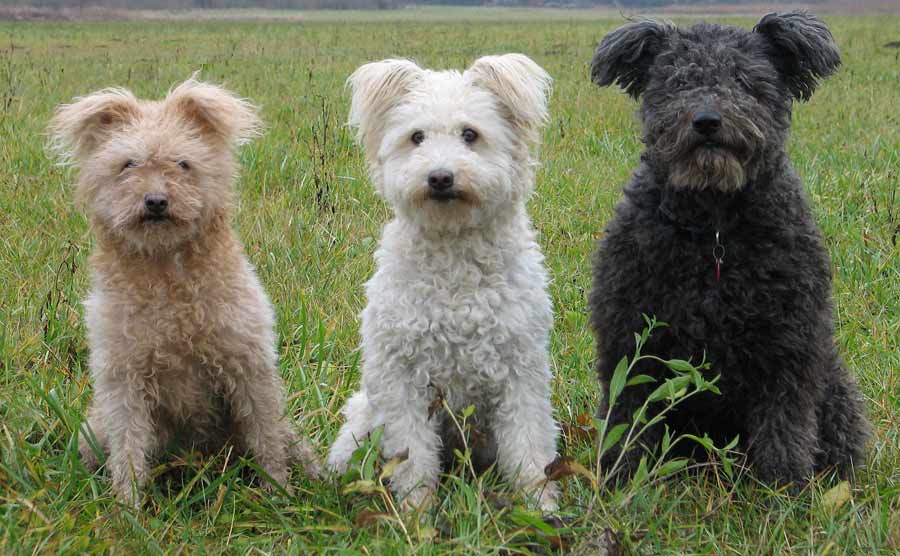
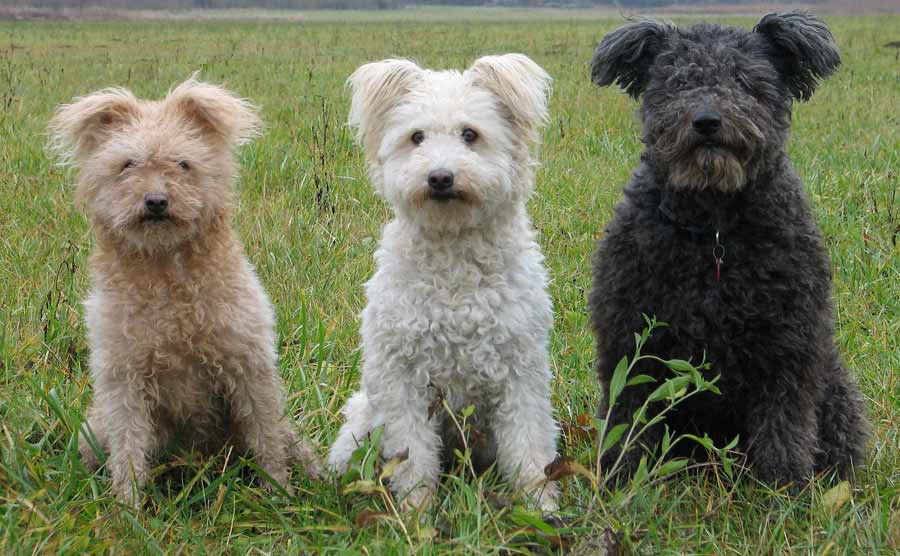
The Pumi is a unique and energetic dog that instantly captivates with its charming curly coat and characteristic upright ears with drooping tips. This Hungarian herding breed boasts a rich history and remarkable intelligence. For centuries, Pumis weren’t just for sheep; they also excelled at herding cattle, showcasing their versatility and keen minds. Today, these agile and swift animals are still considered a relatively rare breed, most commonly found in their native Hungary, as well as in Sweden and Finland, where they’re prized for their working abilities and lively temperament. You can discover much more about them, right here on Tvaryny.
Pumi: A Quick Breed Overview
| Characteristic | Description |
| Origin | Hungary |
| Year of First Mention | Circa 17th-18th century (as a distinct breed) |
| FCI Official Recognition | 1966 |
| Life Expectancy | 12-14 years (sometimes up to 19) |
| Height at Withers | Males: 16-18.5 inches (ideally 17-17.7 inches) Females: 15-17.3 inches (ideally 15.7-16.5 inches) |
| Weight | Males: 22-33 lbs (ideally 26-29 lbs) Females: 18-28.5 lbs (ideally 22-24 lbs) |
| Temperament | Energetic, alert, intelligent, loyal, prone to barking |
| Use | Herding dog, companion, sport dog |
History of the Pumi Breed: From Pasture Lands to International Recognition
The Pumi breed’s history is deeply intertwined with Hungary’s sheepherding traditions. Most cynologists believe the Pumi began to form as a distinct breed in the 17th-18th centuries. It’s thought these dogs originated from crosses between the Hungarian herding dog, the Puli, and German and French terrier-type sheepdogs with upright ears, which arrived in Hungary with flocks of sheep. There are also theories suggesting an admixture of breeds like the Briard and other European herding dogs.
Initially, Pumis weren’t recognized as a separate breed and were often confused with Pulis and Mudis, another Hungarian herding breed. However, over time, the Pumi’s distinct traits-particularly their unique ears, square body format, and more active, “terrier-like” temperament-became evident. Targeted selective breeding began in the early 20th century. Dr. Emil Raitsits, a Hungarian cynologist, played a pivotal role in standardizing and popularizing the breed. He first described the Pumi as a separate breed in 1902, and the first breed standard was developed in the 1920s.
The Fédération Cynologique Internationale (FCI) officially recognized the Pumi breed in 1966 (Standard No. 56). An updated standard was approved in the 1970s, and Pumis began gaining popularity outside Hungary, notably in Finland, Sweden, and the Netherlands, where they were valued not just as herders, but also as sport dogs and companions. In the 1990s, the first representatives of the breed arrived in the United States. Despite growing recognition, the Pumi remains a relatively rare breed in many parts of the world, making it even more appealing to enthusiasts of unique dogs. In Hungary, the Pumi is considered a national treasure, and its image can be found on postage stamps and other national symbols.
What Does a Pumi Look Like? A Detailed Description of Appearance and Standard

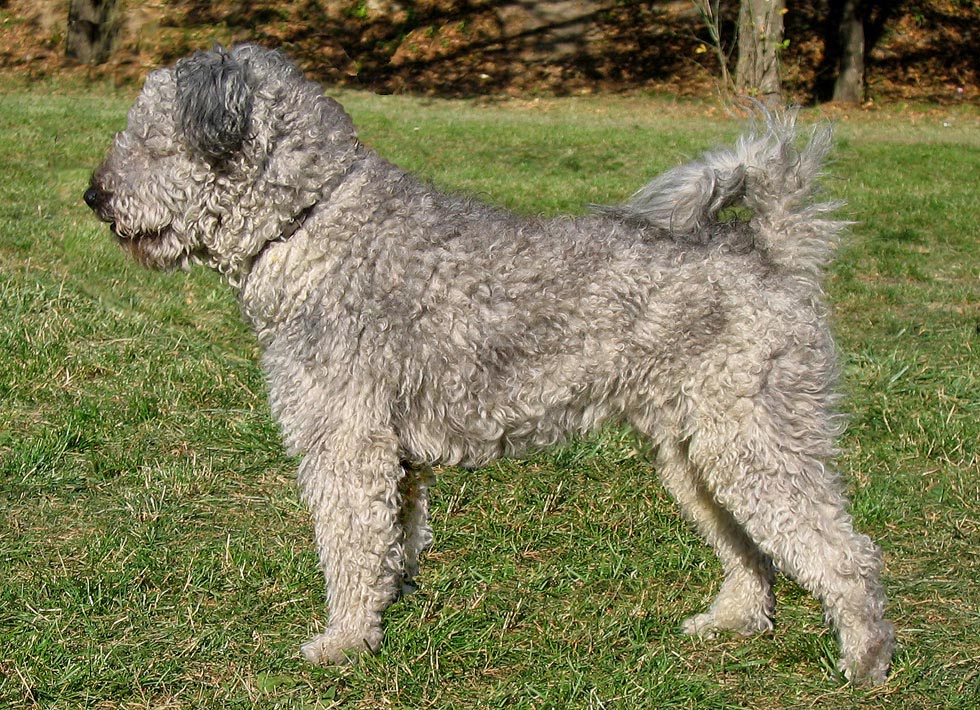
The Pumi is a medium-sized dog that combines traits of both a herding dog and a terrier. Its appearance conveys liveliness, alertness, and readiness for action. The dog’s overall look is square, compact, with well-developed but lean musculature.
- Head: The Pumi’s head is elongated, wedge-shaped when viewed from the side and above. The muzzle makes up approximately 45% of the total head length. The cranial region is relatively broad and slightly domed. The stop (transition from forehead to muzzle) is barely noticeable. The nose is narrow, blunt-ended, and always black, regardless of coat color.
- Ears: The ears are one of the Pumi’s most distinctive features. They are set high, erect, and medium-sized. Approximately two-thirds of the ear stands upright, with the upper third bending forward and down. The ears are highly mobile and express the dog’s mood.
- Eyes: The eyes are medium-sized, oval-shaped, slightly oblique, and dark brown. Their gaze is lively, intelligent, and alert.
- Body: The body has a square format, meaning the body length is approximately equal to the height at the withers. The back is short, straight, and strong. The loin is short and muscular. The croup is short and slightly sloping. The chest is deep but not too broad, with well-sprung ribs.
- Tail: The tail is set high, carried curled over the back in a ring or semi-circle. It’s covered with dense hair. In some countries, the tail may be docked, leaving 2-3 vertebrae, but a natural tail is preferred.
- Limbs: The forelimbs are straight, parallel, with lean muscles. The hind limbs are also straight, parallel, with well-developed musculature and well-angulated hock joints. The paws are rounded, compact, with strong pads and dark nails.
Pumi Coat and Coloration
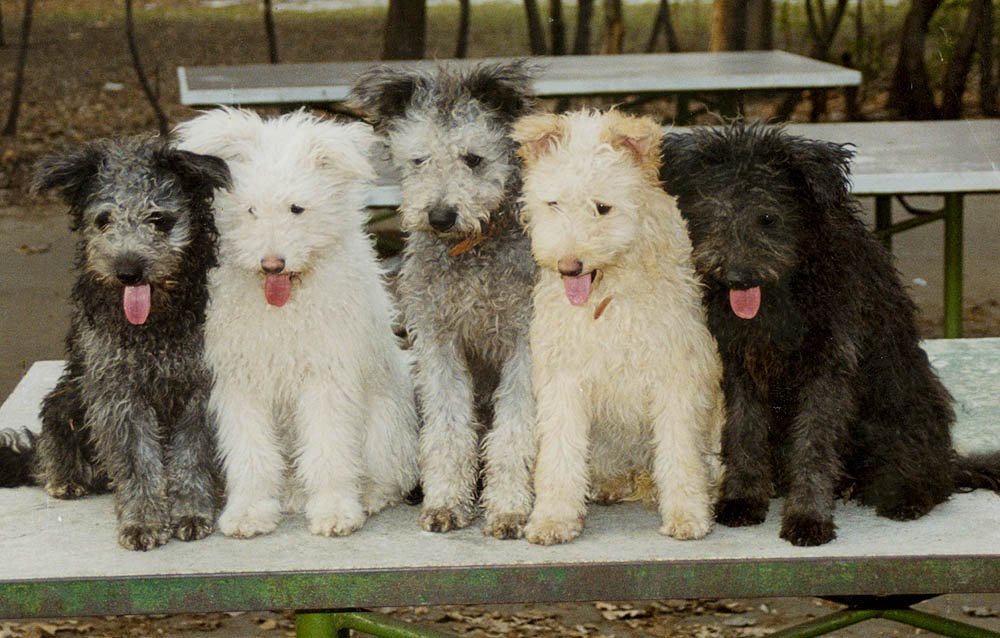
The Pumi’s coat is one of its defining characteristics. It is never smooth or corded. The coat consists of harsh guard hairs and a soft undercoat, with an approximate 50/50 ratio. The hair is medium length (1.5-2.7 inches) and forms characteristic curls or waves all over the body, but it doesn’t form dense cords like the Puli. The longest hair is on the backs of the thighs; the shortest is on the muzzle and paws. Pumi puppies are born with softer fur, which develops its characteristic texture with age.
Permissible Pumi Colors:
- Gray: Various shades of gray (born black, lighten with age). This is the most common color.
- Black: Rich black color.
- Fawn (Fako): Various shades-from cream to reddish-yellow. Often with a dark “mask.”
- White: Pure white, without shadges.
An important standard requirement is that the color must be solid and intense. Small white markings on the chest (up to 1.2 inches in diameter) or on the toes are permissible but not desired. Spotting or any other colors are disqualifying faults.
Pumi Character: The Temperament and Behavior of the Hungarian Livewire

Pumis are exceptionally lively, energetic, and intelligent dogs. Their temperament can be described as a combination of herding alertness and terrier tenacity. They are always ready for action, curious, and inquisitive. Pumis form strong bonds with their family and owner, eager to participate in all family activities. They are companion dogs who don’t cope well with loneliness and require constant human contact.
Key Pumi Character Traits:
- Intelligence and Cleverness: Pumis are very smart dogs; they quickly learn new commands and tricks. Their minds need constant stimulation, so they require not only physical but also intellectual activities.
- Energy and Activity: These are very active dogs that need significant physical exertion. Long walks, runs, games, and canine sports (such as agility, obedience, flyball) – all are ideal for a Pumi. Without sufficient activity, they can become restless and even destructive.
- Alertness and Watchdog Qualities: Pumis have a well-developed guarding instinct. They are wary of strangers and will always alert their owner to approaching newcomers with loud barking. This makes them excellent watchdogs, although their small size prevents them from being a serious threat.
- Tendency to Bark: One of the breed’s characteristics is their “talkativeness.” Pumis love to comment on everything happening around them with a loud and clear bark. This trait needs to be controlled from an early age through proper training and socialization.
- Loyalty and Affection: They are endlessly devoted to their family and love spending time with their owner. Pumis can be somewhat demanding in their desire to be close.
- Attitude Towards Children and Other Animals: With proper socialization, Pumis generally get along well with children, especially if they grow up together. They can be patient and playful companions. However, due to their herding instinct, they might try to “herd” small children by gently nipping at their heels. They can also coexist with other dogs and cats if accustomed to them from a young age. Their hunting instinct, however, may manifest towards small rodents.
The Pumi is a dog for active people who are willing to dedicate enough time to their pet. They are not suitable for those seeking a calm, couch-potato dog. Their cheerful nature and constant readiness for adventure make them wonderful companions for energetic families.
Pumi Health: Typical Ailments and Prevention

Overall, Pumis are considered a robust and healthy breed with good immunity. They adapt easily to various weather conditions. However, like any breed, Pumis are prone to certain genetic diseases. Responsible breeders test their breeding dogs for these conditions to minimize the risk of passing them on to their offspring.
Most Common Health Problems in Pumis:
- Hip Dysplasia: This is a common condition across many dog breeds, characterized by improper development of the hip joint. It can lead to arthritis and lameness. X-ray screening of parents before breeding is recommended.
- Patellar Luxation: A condition where the kneecap dislocates from its normal position. Often seen in small and medium breeds. May require surgical intervention in severe cases. It’s important to test parents.
- Degenerative Myelopathy (DM): A progressive spinal cord disease that leads to weakness and paralysis of the hind limbs. A genetic test is available to identify carriers.
- Primary Lens Luxation (PLL): A hereditary eye disease in which the lens dislocates, potentially leading to glaucoma and blindness. A genetic test is available.
- Eye Diseases: Besides PLL, Pumis may be susceptible to other eye problems such as progressive retinal atrophy (PRA) and cataracts. Regular check-ups with a veterinary ophthalmologist are important.
Preventive Measures to Maintain Pumi Health:
- Choose a Responsible Breeder: Purchase a puppy only from reputable breeders who test their dogs for genetic diseases and can provide relevant certificates.
- Balanced Diet: Provide your dog with high-quality food appropriate for its age, size, and activity level.
- Regular Physical Activity: Keep your dog in good physical condition with daily walks and active play.
- Regular Vet Check-ups: Conduct annual preventive examinations with a veterinarian, as well as vaccinations and parasite treatments.
- Dental, Ear, and Nail Care: Regularly brush your dog’s teeth, check and clean its ears, and trim nails as needed.
Pumis are often long-lived. There are known cases of individuals from this breed living up to 19 years. Proper care, attention to health, and an owner’s love will help your Pumi live a long and happy life.
Pumi Care: Coat, Activity, and Living Conditions

Caring for a Pumi isn’t overly complicated, but it does require regularity and attention to certain aspects, particularly their unique coat and high activity needs.
Caring for the Pumi’s Curly Coat
A Pumi’s coat requires regular care to prevent matting and maintain a neat appearance. It’s recommended to brush your Pumi approximately once every 2-3 weeks. More frequent brushing can fluff up the coat and diminish its characteristic curls. For brushing, use a wide-toothed comb or a specialized brush. Before brushing, the coat can be lightly misted with water from a spray bottle.
Bathing: Bathe your Pumi as needed, usually once every 1-3 months, or if the dog gets particularly dirty. Use a mild dog shampoo. After bathing, towel-dry the coat and allow it to air dry naturally. A hairdryer can be used on a low setting, but it might loosen the curls.
Grooming (Trimming): Pumis don’t shed intensely, but their fur grows continuously. To maintain the breed’s characteristic look, it’s recommended to trim or clip them every 2-4 months. Grooming can be done manually (plucking dead hair) or with scissors. It’s important not to trim a Pumi too short, as this can disrupt the coat’s structure. Many owners turn to professional groomers who are familiar with the specific grooming needs of this breed. The main goal of grooming is to give the dog a tidy appearance, emphasizing its square silhouette and distinctive features.
Also, remember to regularly check and clean your Pumi’s ears to prevent infections, and trim their nails if they don’t wear down naturally.
Activity and Physical Exercise for Pumis
Pumis are extremely energetic dogs that need daily, long, and active walks. Simple leash walks won’t be enough for them. They require at least 1-2 hours of active physical exercise per day. This can include:
- Brisk walks or jogging alongside their owner.
- Playing with a ball or frisbee in a fenced area.
- Participating in dog sports: agility, obedience, flyball, herding trials. Pumis excel in these disciplines thanks to their agility, intelligence, and willingness to work.
- Swimming (many Pumis love water).
It’s crucial to provide your Pumi with the opportunity to run freely in a safe, enclosed area. Remember, this is a herding breed bred for active work. Insufficient physical and mental stimulation can lead to the development of undesirable behaviors such as excessive barking, destructiveness, or anxiety.
Pumi Living Conditions
Pumis can adapt to living in both a private house with a yard and an apartment, provided their needs for activity and socialization are fully met. If a Pumi lives in an apartment, the owner must be prepared for long and intense daily walks, regardless of the weather. Having their own yard is an advantage, but it doesn’t replace full-fledged walks and training with the dog.
These dogs do not tolerate loneliness well and should not be left alone for long periods. They crave to be near their family. Pumis are quite sensitive to their owner’s mood and require positive and consistent training.
Pumi Training and Socialization: Raising an Intelligent Herder

Pumis are highly intelligent dogs that learn quickly and strive to please their owner. However, their intelligence and energy demand a consistent and engaging approach to training. Boring, monotonous sessions will quickly bore a Pumi.
Key Aspects of Pumi Training:
- Early Start: Begin training and socialization of your Pumi puppy as early as possible, from the first days it comes home.
- Positive Reinforcement: Use methods based on positive reinforcement – praise, treats, toys. Pumis respond well to their owner’s enthusiasm. Avoid harsh methods and punishment, as this can lead to a loss of trust.
- Variety and Playful Format: Training sessions should be short, interesting, and varied. Incorporate playful elements to maintain the dog’s interest.
- Consistency and Patience: Be consistent in your demands and patient. Pumis can be stubborn, so it’s important to remain calm and persistent.
- Bark Control: Since Pumis are prone to barking, it’s important to teach them a “Quiet!” or “Speak!” command (to control when the dog barks) from an early age.
- Mental Stimulation: In addition to physical exercise, provide your Pumi with mental stimulation – puzzle toys, scent games, learning new tricks.
Pumi socialization is extremely important. Introduce your puppy to various people, sounds, places, and other animals (under supervision). This will help raise a confident and well-adjusted dog that reacts appropriately to new situations. Remember that Pumis have an innate guarding instinct and wariness of strangers, so early and proper socialization will help prevent excessive aggression or shyness.
Pumis successfully compete in various canine sports such as agility, obedience, freestyle, and herding. This is an excellent way to satisfy their activity needs and strengthen the bond with their owner. Their natural inclination to hunt rodents can be useful on a country property – a Pumi can help get rid of mice or moles, combining the qualities of a herding dog, guardian, and terrier.
Pumi Nutrition: Key Recommendations for Health and Energy

Proper nutrition is the key to your Pumi’s health, longevity, and high energy levels. As an active breed, their diet should be balanced and contain sufficient amounts of protein, fats, carbohydrates, vitamins, and minerals.
Main Principles of Feeding a Pumi:
- Quality Food: Choose high-quality dry foods of premium, super-premium, or holistic class, designed for active, medium-sized dogs. Pay attention to the ingredients: meat (chicken, turkey, beef, fish) should be listed first. Avoid foods with a high content of grains (corn, wheat), artificial colors, flavorings, and preservatives.
- Natural Feeding: If you opt for a natural diet, it should consist of lean meat (beef, turkey, chicken), offal, sea fish (boneless), grains (rice, buckwheat), vegetables (carrots, pumpkin, zucchini, broccoli), fermented milk products (low-fat cottage cheese, kefir), and eggs. It’s important to balance the diet correctly and add vitamin-mineral complexes as recommended by your vet.
- Feeding Schedule: Adult Pumis are recommended to be fed twice a day, morning and evening, at the same time. Puppies are fed more frequently (3-5 times a day), gradually reducing the number of feedings with age.
- Portion Size: The amount of food depends on the dog’s age, weight, activity level, and individual characteristics. Follow the food manufacturer’s recommendations or your veterinarian’s advice. Do not overfeed your Pumi, as excess weight can lead to health problems.
- Fresh Water: Your dog should always have access to clean, fresh water.
- Forbidden Foods: Never give your Pumi chocolate, onions, garlic, grapes, raisins, bones (especially cooked poultry bones), fatty, fried, smoked, or salty foods, sweets, and pastries.
Carefully monitor your Pumi’s weight and overall condition. If you notice any digestive problems, allergic reactions, or changes in weight, consult your veterinarian for diet adjustment.
Pros and Cons of the Pumi Breed

| Pros of the Pumi Breed | Cons of the Pumi Breed |
|---|---|
| High intelligence and trainability: quickly learn commands, love mental tasks. | High need for physical and mental exercise: require a lot of time and attention from the owner. |
| Energetic and playful: an excellent companion for active people and families with children (with proper socialization). | Prone to barking: can be very “talkative,” requiring correction. |
| Loyalty and affection for family: very people-oriented. | Wariness of strangers: requires thorough socialization to avoid excessive suspiciousness or shyness. |
| Good watchdog qualities: will always warn of approaching strangers. | Can be stubborn: requires consistent and patient training. |
| Unique and attractive appearance: curly coat and fun ears will captivate anyone. | Coat requires regular grooming: brushing, trimming/clipping. |
| Relatively robust health and longevity. | Not suitable for sedentary people or those who are often away from home for long periods. |
| Versatility: herder, companion, athlete. Excel in various canine sports. | May try to “herd” children or other animals. |
| Minimal shedding (with proper care). | Relative rarity of the breed: finding a puppy from a responsible breeder can be challenging. |
Interesting Facts About Pumis

- “The Hungarian Clown”: Thanks to their lively disposition, expressive facial movements, and constant readiness for games, Pumis are sometimes called “the Hungarian clown.” Their amusing antics and enthusiasm can truly brighten anyone’s day.
- Ear-Indicators: The Pumi’s highly mobile ears serve as a kind of indicator of their mood. By the position of their ears, you can easily tell if the dog is interested, alert, joyful, or surprised.
- Working Roots: Despite their cute appearance, Pumis are serious working dogs. In Hungary, they are still used for herding not only sheep but also cattle and even pigs. They are known for their bravery and ability to manage large herds.
- Connection to Puli and Mudi: The Pumi is a close relative of other Hungarian herding dogs – the Puli and the Mudi. It is believed that the Pumi originated from crosses of Puli with terrier-type dogs, which gave it a more lively temperament and characteristic coat structure. Speaking of related breeds, you can also find a lot of interesting information about the Portuguese Sheepdog on our website.
- National Pride: In Hungary, the Pumi is considered one of the national breeds and is a source of pride. It is valued for its unique working qualities and distinctive appearance.
- Agility Masters: Thanks to their agility, speed, and intelligence, Pumis excel in sports like agility, often taking top prizes in competitions.
- Born Different Colors: Gray Pumi puppies are born black, and their coat gradually lightens, reaching its final gray shade only by 2-3 years of age.
Frequently Asked Questions About the Pumi Breed (FAQ)
Do Pumis Shed a Lot?
Pumis are not among the breeds with intense shedding. Their curly coat, consisting of guard hairs and an undercoat, dies off gradually. Regular brushing (once every 2-3 weeks) and periodic trimming or clipping (every 2-4 months) help remove dead hair and prevent its spread throughout the house. With proper care, the amount of hair in your home will be minimal.
Are Pumis Suitable for Apartment Living?
Yes, Pumis can live in an apartment, but only if the owner can provide them with sufficient physical activity and mental stimulation. These are very energetic dogs that need long (at least 1-2 hours a day) and active walks, games, and training. Without this, they may become bored, noisy, and destructive.
Are Pumis Easy to Train?
Pumis are very intelligent and clever, which makes them quick learners. They respond well to positive reinforcement methods. However, they can be somewhat stubborn and independent. Training should be consistent, interesting, and varied to maintain their interest. Early socialization and a basic obedience course are mandatory.
How Do Pumis Get Along with Children and Other Animals?
With proper socialization from an early age, Pumis generally get along well with children, especially if they grow up together. They can be patient and playful. However, due to their herding instinct, they may try to “herd” small children by gently nipping at their heels, so interaction should always be supervised. Pumis can also coexist peacefully with other dogs and cats they grew up with. Towards unfamiliar small animals, they may show hunting interest.
Do Pumis Bark a Lot?
Yes, Pumis are known for their tendency to bark. This is part of their herding and watchdog nature – they love to “comment” on everything happening around them and alert to approaching strangers. This trait can and should be controlled through proper training and teaching a “Quiet!” command from an early age.
What is the Life Expectancy of a Pumi?
Pumis are a relatively long-lived breed. On average, they live 12-14 years, but with good care, proper nutrition, and sufficient activity, they can live up to 15-16 years, and sometimes even longer. There are known cases of Pumi centenarians living up to 19 years.
How Much Does a Pumi Puppy Cost?
The price of a Pumi puppy can vary depending on its lineage, the parents’ titles, the breeder’s reputation, and the region. On average, the price for a Pumi puppy from a responsible breeder who tests their dogs for genetic diseases can range from several hundred to over a thousand dollars. It’s important not to chase a low price, but to choose a healthy puppy with good genetics and temperament.
Video About the Breed
- Barely sheds
- Very clever, brilliant in sport
- Agile and tireless
- A devoted, clever herder
- Very prone to barking
- A huge need for exercise and activity
- Wary of strangers
- The curly coat needs care
| Mudi | Puli | Kerry Blue Terrier | |
|---|---|---|---|
| Height | 38–47 cm | 37–44 cm | 44–50 cm |
| Energy | 5 | 4.5 | 4.5 |
| Apartment | 2.5 | 3 | 3 |
| Beginners | 3 | 3 | 2.5 |
Does the Pumi shed?
Does the Pumi bark a lot?
Is the Pumi suited to a novice?
FCI Standard No. 56 · The Kennel Club