

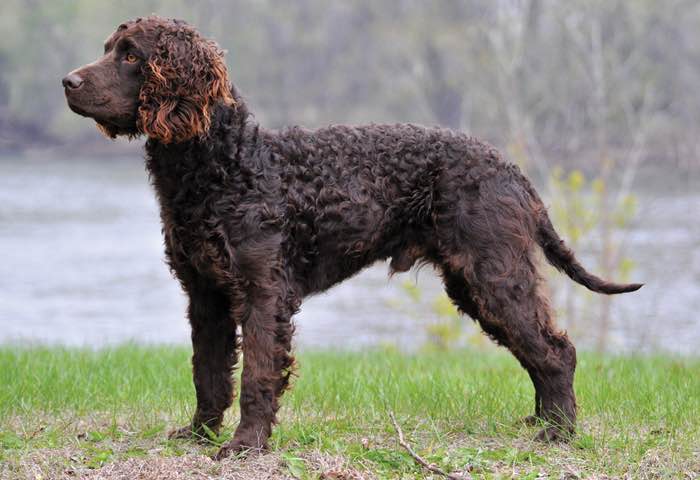
| Height | 38–46 cm |
| Weight | 11–20 kg |
| Lifespan | 12–15 years |
| FCI group | not FCI-recognized (UKC/AKC-recognized) |
| Origin | USA |
Exact ratings
- Generally a healthy working breed
- Hip dysplasia
- Progressive retinal atrophy (PRA)
- Ear infections (drop ears, loves water)
- Heart disease; follicular dysplasia
Balanced food for an active spaniel, with weight control. Groom the curly coat regularly; dry and check the drop ears; provide exercise, scent work and attention.
The American Water Spaniel (AWS) is a marsh hunter’s dream packed into a compact, curly-coated body. This is a true “all-in-one” gundog, bred not for show rings but for hard work in cold water and dense thickets. Its temperament is a unique blend of hunting drive and family pet affection. Learn more about this on Tvaryny.
American Water Spaniel: Breed Quick Look
| Criteria | Detail | Comment |
|---|---|---|
| Origin | USA, Wisconsin | Official state dog since 1986 |
| Purpose | Water and Upland Retriever | “Dual-purpose gundog” |
| Height at withers | 15–18 in (AKC), 14–18 in (FCI) | Compact, but sturdy |
| Weight | 25–40 lbs (female), 30–45 lbs (male) | Sexual dimorphism is moderate |
| Lifespan | 12–15 years | With proper care |
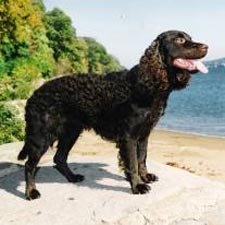
| Coat Type | Curls or waves with an undercoat | Repels water like otter fur |
| Main Colors | Chocolate, Liver, Dark Brown | Small white markings are permissible |
History and Origin of the Breed
The breed was developed in the Fox and Wisconsin River valleys in the late 19th century. Local hunters needed a mobile dog that could work from skiffs (flat-bottomed boats), tolerate cold water, and retrieve game through dense reeds. Breeders crossed the Irish Water Spaniel and the Curly-Coated Retriever, adding bloodlines from the Field Spaniel and, according to some reports, smaller American land spaniels. The first breed club was formed in 1920, and the American Kennel Club recognized it in 1940. Outside the US, its popularity remained limited, although the FCI officially included the American Water Spaniel in Group 8 “Retrievers, Spaniels, Water Dogs.”
Forging the “Ideal” Hunter
In the 19th century, market hunting in the Great Lakes region was a tough business. Hunters needed more than just a dog- they needed a multifunctional tool. This dog had to be:
- Compact: To easily jump into a small boat without tipping it and without taking up much space.
- Hardy in water: With a coat that protected against the icy waters of the Great Lakes.
- An effective retriever: To bring back downed game (ducks, geese) from the water.
- A good “flusher”: To flush game (pheasants, grouse) from dense cover on land.
None of the existing European breeds met all these requirements at once. Thus began a targeted breeding program that combined the best qualities of water dogs and spaniels.
Dr. Pfeifer and Standardization
The “father” of the breed is considered to be Dr. F. J. Pfeifer of New London, Wisconsin. He was the one who began keeping studbooks and first documented the breed standard. He owned a famous dog named “Curly,” who is considered one of the founders of the modern American Water Spaniel line.
The Path to Recognition and the Risk of Extinction
Despite official recognition, the breed nearly vanished after World War II. With the rise of more popular retrievers like Labradors and Goldens, the need for an “all-in-one” spaniel dwindled. The breed was on the brink of extinction in the 1950s and 60s. Only through the efforts of a small group of enthusiasts and the American Water Spaniel Club (AWSC) was the gene pool preserved. Today, the American Water Spaniel remains one of the rarest breeds registered by the AKC, ranking 167th out of 197 in popularity. This rarity, however, helped preserve its working qualities, as the breed never became “trendy” and was not split into show and working lines.
Appearance and Breed Standard of the American Water Spaniel
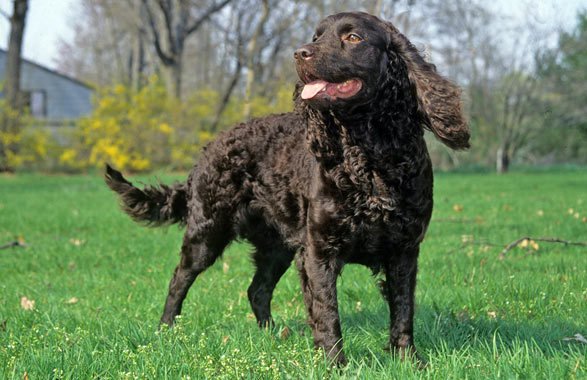
The American Water Spaniel is a compact athlete with a strong build and well-developed muscles in the chest and forelegs. It’s a medium-sized dog, sturdily built but not cumbersome. Its appearance radiates strength, endurance, and alertness.
Head and Muzzle
The head is proportional to the body, with a moderately broad skull and a defined but not abrupt stop (the transition from forehead to muzzle). The muzzle is square-shaped and of medium length, allowing it to comfortably hold game. The eyes are medium-sized, round, and set fairly wide apart. Eye color ranges from hazel to dark amber or brown, harmonizing with the coat color. The expression is inquisitive, intelligent, and friendly. The ears are long, pendulous, set low (slightly above the eye line), and covered in dense waves of hair.
Body and Silhouette
- The back is short, straight, and strong. The topline is level or slightly sloping from the withers to the croup.
- The chest is deep but not overly wide, with well-sprung ribs that are not barrel-shaped.
- The croup is slightly sloping, which facilitates a powerful push from the hind legs when swimming and jumping from water to shore.
- The tail is of medium length, thick at the base, and tapers to a point. It is covered in hair and serves as a rudder while swimming. In motion, the dog carries it slightly below the backline. The tail is never docked– this is a disqualifying fault.
- The limbs are parallel, with strong bone. The paws are “Scotch-type” (thick, compact) with well-developed webbing between the toes, which is essential for a water dog.
The Coat: Double Protection
The coat is the breed’s main “calling card” and its primary working tool. It has a double coat: a dense, short undercoat that retains body heat, and an outer coat (guard hairs) that is oily to the touch. This oiliness (natural lanolin) makes the coat waterproof, preventing water from reaching the skin. In dry weather, the curls are springy, protecting the epidermis from branches and grass.
The coat texture can vary:
- Marcel: Uniform waves over the entire body.
- Curly: Tight, dense curls, similar to a Poodle’s coat.
Many dogs have a combination of both types. The hair on the head is typically shorter and smoother.
Coat Colors
The breed standard only allows three variations of solid dark color:
- Liver
- Brown
- Dark Chocolate
Small white markings on the chest or toes are permissible but not desirable. The nose and paw pads must be dark, in tone with the coat (black or dark brown). The eyes must harmonize with the coat color.
| Body Part | AKC Standard | Purpose / Notes |
|---|---|---|
| Size | 15–18 inches | Compactness for working from a boat. |
| Eyes | Hazel, brown, or amber. | Darker eyes are preferred. Yellow eyes are a fault. |
| Ears | Long, wide, set low, covered with hair. | Cover the ear canal from water. |
| Coat | Double, oily, wavy or curly. | Waterproof, protects from cold. |
| Paws | Compact, with webbing. | For efficient swimming. |
| Tail | Medium length, tapered, not docked. | Used as a rudder in water. |
Temperament and Behavior
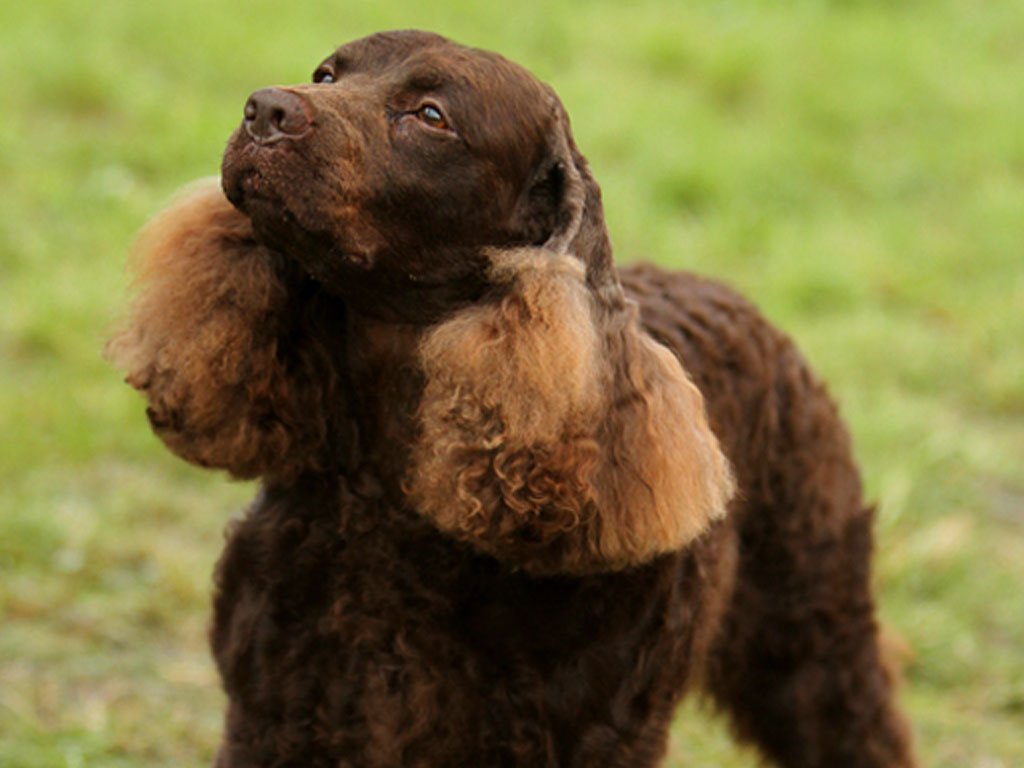
A study in contrast: at home, they are obedient and calm- on the hunt, they are energetic and ignite with excitement. The American Water Spaniel is known for its devotion to family and a strong bond with “its” person. This is a very sensitive breed that reacts acutely to its owner’s mood and the atmosphere in the home.
The “Velcro Dog” at Home
Indoors, the American Water Spaniel behaves calmly, provided it has received enough physical exercise. It tends to be a “Velcro dog,” following its owner from room to room. They thrive on human companionship and do not tolerate loneliness well. If left alone for long periods, they can develop separation anxiety, which manifests in destructive behavior or excessive barking.
Energy and Drive in the Field
Flip the “on” switch, and you’ll see a completely different dog. In nature, especially near water, the American Water Spaniel transforms into an energetic, focused whirlwind. They have high intelligence and a desire to work. Boredom is their worst enemy. Without a “job” (games, training, swimming), they will find their own entertainment, and you likely won’t approve.
The breed is known for its loud, but “baritone” voice. They are prone to vocalization: barking, whining, and sometimes letting out a characteristic “yodel” or “singing,” especially when excited. This helped hunters keep track of the dog in tall reeds.
Watchdog Qualities and Socialization
The American Water Spaniel is an excellent watchdog, but not a guard dog. They will always alert you with a loud bark to an approaching stranger. However, aggression towards people is completely atypical for them. They may be reserved or aloof with strangers, but become friendly after an introduction. Early and positive socialization is critical to prevent their natural wariness from turning into fearfulness. Their prey drive for small game (squirrels, birds) is strong, so introductions to cats must be early and controlled.
| Trait Level (1 – Low, 5 – High) | Rating |
|---|---|
| Energy Level | 5 |
| Owner Focus | 5 |
| Territorialness | 2 (but vocalness is high) |
| Tendency to Bark | 4 |
| Trainability (Desire to Please) | 5 |
| Tolerance for Loneliness | 2 |
| Friendliness to Other Dogs | 4 (with socialization) |
| Prey Drive | 5 |
Pros and Cons of the Breed
Like any breed, especially one so specialized, the American Water Spaniel has its unique advantages and challenges. It’s important to honestly assess whether your lifestyle matches the needs of this energetic hunter.
| Pros | Cons |
|---|---|
| Highly versatile – a retriever and flusher in one package. | Needs daily, active exercise and mandatory access to water (swimming). |
| Extremely devoted to family, very people-oriented. | High tendency for separation anxiety- not suitable for people who spend a lot of time away from home. |
| High intelligence, easy to train with positive methods. | Very sensitive to harshness, yelling, and negative methods- holds a grudge. |
| Compact size – suitable for an apartment (with sufficient exercise). | High tendency for vocalization (barking, whining, “yodeling”). |
| Relatively healthy, long lifespan. | Needs regular, though not complicated, grooming and diligent ear care. |
| Minimal “doggy” odor, moderate shedding. | Strong prey drive (requires a leash in unfenced areas). |
| Rare breed (exclusivity). | Rare breed (hard to find a puppy, limited gene pool). |
Health and Common Conditions
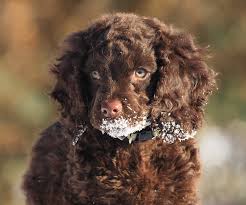
The breed is considered relatively healthy, largely because it has never been overly popular, and breeding focused on working abilities. However, due to a limited gene pool (a consequence of its rarity), there is a list of hereditary diseases that responsibile breeders monitor for.
| Condition | Description | Screening / Prevention |
|---|---|---|
| Hip Dysplasia (HD) | Improper development of the hip joint, leading to arthritis. Prevalence in AWS is moderate. | Mandatory X-ray screening (OFA or PennHIP) for breeding animals. Weight control and managed exercise in puppies. |
| Progressive Retinal Atrophy (PRA-prcd) | A hereditary disease leading to gradual blindness. AWS are prone to the specific prcd-PRA form. | Mandatory genetic DNA test for all breeding dogs. |
| Heart Problems | Most commonly Atrial Septal Defect (ASD) and Patent Ductus Arteriosus (PDA). | Exam by a cardiologist and Echo (cardiac ultrasound) for breeding animals. |
| Degenerative Myelopathy (DM) | A neurological disease leading to hind limb paralysis in older dogs. | DNA test (SOD1) to determine carrier status. |
| Otitis Externa (Ear Infections) | Problem #1. The combination of hanging ears, dense hair, and constant contact with water creates ideal conditions for bacteria and yeast. | Regular cleaning, drying ears after every swim, and using preventive lotions. |
| Allergies | Prone to atopic dermatitis (seasonal allergies) and food intolerances. | Diagnosis by a vet, selection of a hypoallergenic food. |
Vet’s advice: once a year, get a complete blood panel and a cardiac ultrasound. When choosing a food, avoid high levels of peas and potatoes, which have been linked to DCM (cardiomyopathy) risk. Always demand results of parental genetic tests (at minimum for PRA and DM) and hip evaluation certificates (OFA) from the breeder.
Grooming and Hygiene
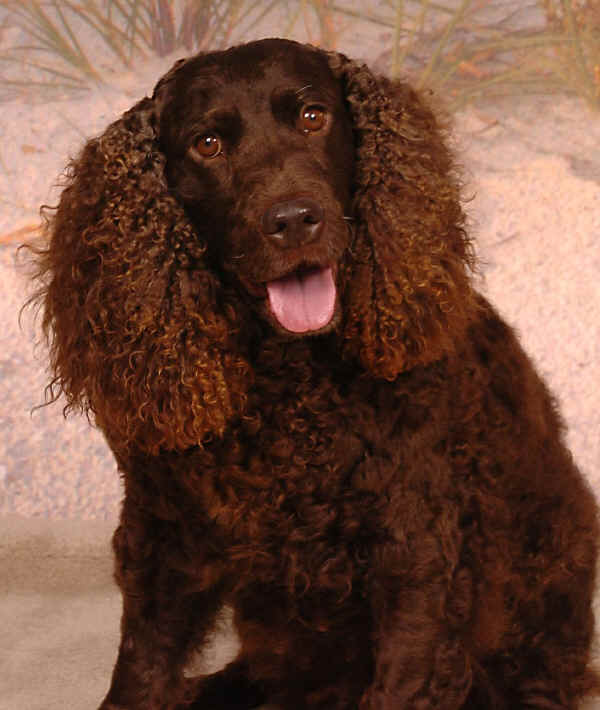
The key rule is to not dry out the skin or strip the coat’s natural oils. Avoid frequent shampooing (once every 6–8 weeks or as needed is enough). After swimming in a river or lake, rinse the coat with clean fresh water to wash away dirt and bacteria.
Grooming: The “Gold Standard”
The American Water Spaniel’s coat needs regular care, but it’s different from grooming a Poodle, for example. Never shave an American Water Spaniel! This ruins the double coat’s structure and strips the dog of protection from both sun and cold. Recommended care includes:
- Brushing (1-2 times a week): Use a metal comb with long teeth to get down to the undercoat and prevent matting. A slicker brush can help smooth the outer layer.
- Trimming (every 2-3 months): A light trim with scissors is recommended to shape the coat and remove excess hair, especially on the paws (between the pads), around the ear canal, and under the tail. Some owners lightly trim the hair on the back and neck to neaten the silhouette.
Problem #1: The Ears
This is the breed’s Achilles’ heel. Their long, hanging, densely haired ears create a perfect warm, dark, and moist environment for bacteria and yeast to grow. Add constant swimming to the mix, and the risk of ear infections becomes maximal.
- Check the ears daily for redness, odor, or debris.
- Thoroughly dry the ears (the inside of the ear flap) with a towel after every swim.
- Clean the ears 1-2 times a week with a special veterinary pH-balanced lotion.
- Regularly trim the hair around the ear canal for better ventilation.
Other Hygiene Aspects
Nail trimming – twice a month. Because the dog swims and runs on soft ground a lot, the nails don’t wear down sufficiently on their own. Dental care – brushing 2-3 times a week with veterinary toothpaste to prevent tartar buildup.
Physical Activity and Training
60–90 minutes of intense exercise daily is the absolute minimum for an American Water Spaniel to remain mentally balanced. For this breed, a walk on a leash is just a warmup. They need a job. The exercise formula: ⅓ swimming, ⅓ running/retrieving, ⅓ brain games.
Water Isn’t an Option, It’s a Necessity
The breed’s name says it all. The American Water Spaniel must swim. It’s embedded in their DNA. If you don’t have regular (several times a week) access to a safe body of water (lake, river, pond), this breed is not for you. Swimming is not only their best physical exercise but also their most important psychological release. Without water, the dog will express frustration through destructive behavior.
Mental Stimulation
The high intelligence of the American Water Spaniel requires constant stimulation. 15 minutes of “nose work” tires them out more than an hour-long run. Use:
- Interactive toys and food puzzles.
- “Hide-and-seek” games with toys or treats.
- Teaching tricks and new commands.
Dog Sports for the American Water Spaniel
They excel in any discipline related to water and scent:
- Dock Diving – this is their element.
- Hunt Tests – their primary purpose.
- Nose Work and search and rescue.
- Agility and Rally Obedience – to maintain the bond with the owner.
Training and Obedience
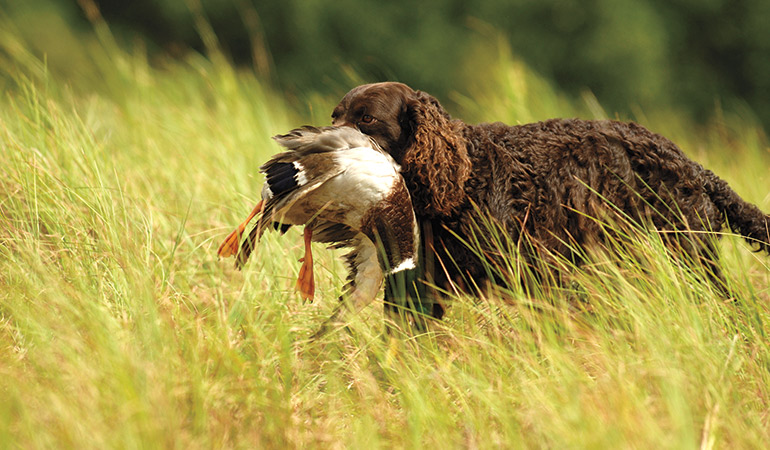
Start the first phase of training (clicker training, name recognition, positions) at 8 weeks. Hunting commands – from 6 months, when the natural “hold & carry” develops. Be sure to integrate silent whistle training – verbal commands are useless at long distances in the reeds. The method is operant conditioning with 100% positive reinforcement.
Overcoming Stubbornness
The breed demonstrates above-average IQ- according to Stanley Coren’s tests, the AWS learns a command in 5-15 repetitions and obeys it 90% of the time. However, their intelligence is combined with a certain “spaniel” stubbornness. If they are bored or don’t see the point of a command, they will simply “check out.”
The key to success:
- Positive reinforcement only: They are extremely sensitive. Yelling, leash jerks, or physical punishment is the fastest way to break this dog and lose its trust forever.
- Short and fun sessions: Keep training sessions short (10-15 minutes), dynamic, and game-like.
- High-value rewards: They work well for food, but even better for a favorite toy or the chance to jump in the water.
The Barking Challenge
The American Water Spaniel is a noisy breed. They bark when they’re happy, when they’re excited, when they’re bored, and when someone approaches. Don’t try to “ban” them from barking – it’s part of their nature. Instead, manage the barking. Teach a “Quiet!” or “Enough!” command, rewarding silence, as well as a “Speak!” command, so the dog understands when vocalization is appropriate.
Diet: Recommendations
A protein/fat/carb ratio of 30% / 20% / 50% (on a dry matter basis) is optimal for working condition. Caloric needs are about 20 kcal/lb of body weight for moderate activity, rising to 27 kcal/lb during hunting season. These are very active dogs that need high-calorie, quality fuel. Use foods with meat as the #1 ingredient and avoid by-products and artificial preservatives.
Diet Specifics for an Active Dog
- Working season: Switch to a high-fat formula (e.g., 30% protein / 20% fat). Add omega-3s (fish oil) to support joints and skin (approx. 15 mg EPA + DHA per pound of body weight).
- “Vacation” (Off-season): Transition to a “light” diet (e.g., 26% protein / 16% fat) to avoid excess weight gain. Monitor weight every 10 days.
- Raw diet (BARF): Possible, but requires careful balancing of calcium and phosphorus (2:1) and the addition of vitamin supplements. Always consult with a veterinary nutritionist.
Do not feed immediately before or after intense exercise: wait at least 90 minutes to avoid the risk of bloat (GDV), to which deep-chested dogs are prone.
Interesting Facts About the Breed
- Official State Dog. The American Water Spaniel has been the official State Dog of its home state, Wisconsin, since 1986.
- “Duck” Paws. The AWS has well-developed webbing between its toes, making them excellent swimmers.
- A Rare Treasure. It is one of the few breeds developed entirely in teh USA, and it remains extremely rare. The total global population numbers only a few thousand.
- First Registration. The first bitch registered by the AKC (No. F1) was “Curly Peggy” – most modern dogs are based on her lines.
- No Docking. Unlike many spaniels, the American Water Spaniel’s tail is not docked – it is forbidden by the standard.
- Natural Wax. The AWS coat contains a high percentage of lanolin – a natural wax that repels water, dirt, and even burrs.
Frequently Asked Questions (FAQ)
How much does an American Water Spaniel puppy cost?
The breed is extremely rare. No exact answer is possible: it comes down to the individual litter and the individual breeder. Ask to see the registration papers, the parents’ orthopedic and eye clearances, the vaccination and deworming record, and the home the litter was raised in.
Is the American Water Spaniel good for first-time owners?
Yes, but with reservations. They can be suitable if the novice owner is ready to immediately enroll in training classes (using positive reinforcement) and dedicate time to active exercise and swimming. Their sensitivity does not forgive training errors.
Does the American Water Spaniel shed a lot?
Moderately. They are not hypoallergenic. They have a seasonal shed twice a year, during which the undercoat needs to be brushed out more frequently.
Do they have a “doggy” smell?
Surprisingly, no. Despite their oily, waterproof coat, with proper care (regular rinsing with clean water and drying) they have very little odor.
Can you shave them in the summer?
No, absolutely not! Their double coat works like a thermos – it protects them not only from cold but also from overheating and sunburn. Shaving destroys this mechanism.
How is the American Water Spaniel different from the German Spaniel?
Both are versatile hunters, but the Wachtelhund (German Spaniel) is typically larger (approx. 19–21 inches), has a longer, more “pointer-like” nose, and often has white or roan markings. The American Water Spaniel is more compact, has a squarer muzzle, and a solid-colored coat.
Video About the Breed
- A versatile working retriever
- Clever, devoted, good with children and animals
- The curly coat barely sheds
- Hardy in cold water and cover
- Reserved with strangers; a little stubborn
- A high need for exercise and work
- Prone to barking; jealous without attention
- The curly coat needs care
| Boykin Spaniel | Irish Water Spaniel | Curly-Coated Retriever | |
|---|---|---|---|
| Height | 36–46 cm | 51–61 cm | 58–69 cm |
| Energy | 4.5 | 4.5 | 4.5 |
| Apartment | 2.5 | 2 | 2 |
| Beginners | 4 | 3 | 3 |
What was the American Water Spaniel bred for?
Is the American Water Spaniel good for a family?
Does the coat need much care?
UKC/AKC Standard (American Water Spaniel) · USA
For apartments · For kids · For beginners · Active · Smartest · Hypoallergenic · All rankings →