Group 1 · sheepdogs · Great Britain (Lancashire County)
Lancashire Heeler
A tiny, spirited herding “heeler” from Lancashire: clever, energetic, devoted and surprisingly long-lived. The Lancashire Heeler is Britain's smallest herding breed, driving cattle by nipping at their heels; a lively companion with a big character in a small body.
ApartmentKidsCats · with caveatsOther dogsBeginners · with caveats
Despite its small stature, the Lancashire Heeler is a dog breed with an amazingly wide range of talents. It successfully combines the specific qualities of an excellent watchdog, an attentive herder, a rabbit and rat hunter, as well as an incredibly cheerful and devoted family friend. Lancashire Heelers are surprisingly gentle, kind, and affectionate with children. Their high speed, activity levels, and endurance make them indispensable helpers. This energetic, sociable, and cheerful animal brings only positive emotions to everyone around! Learn more on Tvaryny.
Lancashire Heeler: A Detailed Breed Overview
Lancashire Heeler: A Detailed Breed Overview · 8
Origin
Great Britain (Lancashire County)
FCI Classification
Group 1. Sheepdogs and Cattle Dogs. Section 1. Sheepdogs. Without working trials.
"The Heeler Smile": This is a unique trait of the breed. When a Heeler is happy or excited, it may lift its lips, baring teeth in a grimace that looks very much like a smile. This is not a sign of aggression.
Rare Breed: The Lancashire Heeler is on the list of Vulnerable Native Breeds in the UK. This means the number of registered puppies is very small, and the breed needs protection.
Versatile Worker: Historically, Heelers not only herded cattle but were also excellent ratters on farms, demonstrating their terrier heritage.
Companion for Horses: Thanks to their courage and agility, Heelers often became companions for horses in stables.
History of the Breed's Origin
The history of the Lancashire Heeler is a subject of debate, but the most popular theory links its emergence to the cattle markets in Ormskirk, Lancashire. For centuries, farmers from Wales drove cattle to markets in England, accompanied by small black-and-tan dogs - the ancestors of modern Corgis. It is believed that in the Lancashire area, these dogs crossed with the local Manchester Terrier. The result of this union was a versatile farm dog - compact, hardy, capable of both herding cattle and hunting pests.
These dogs were known as the "Ormskirk Heeler" and were valued for their working "heeling" instinct - they would nip at the cows' heels to get them moving, but did so low enough to avoid a kick. Despite a long history as a working dog, the breed almost dissapeared by the mid-20th century. Revival began in the 1960s thanks to enthusiast Gwen Macintosh. She started a targeted breeding program using dogs that resembled the breed's ancestors, specifically the Welsh Corgi Pembroke and Manchester Terriers. Thanks to her efforts, the Lancashire Heeler Club was formed in 1978. The breed standard was officially recognized by the UK Kennel Club in 1981, and in 2016 the breed received provisional recognition from the Fédération Cynologique Internationale (FCI).
What the Lancashire Heeler Looks Like: Breed Standard
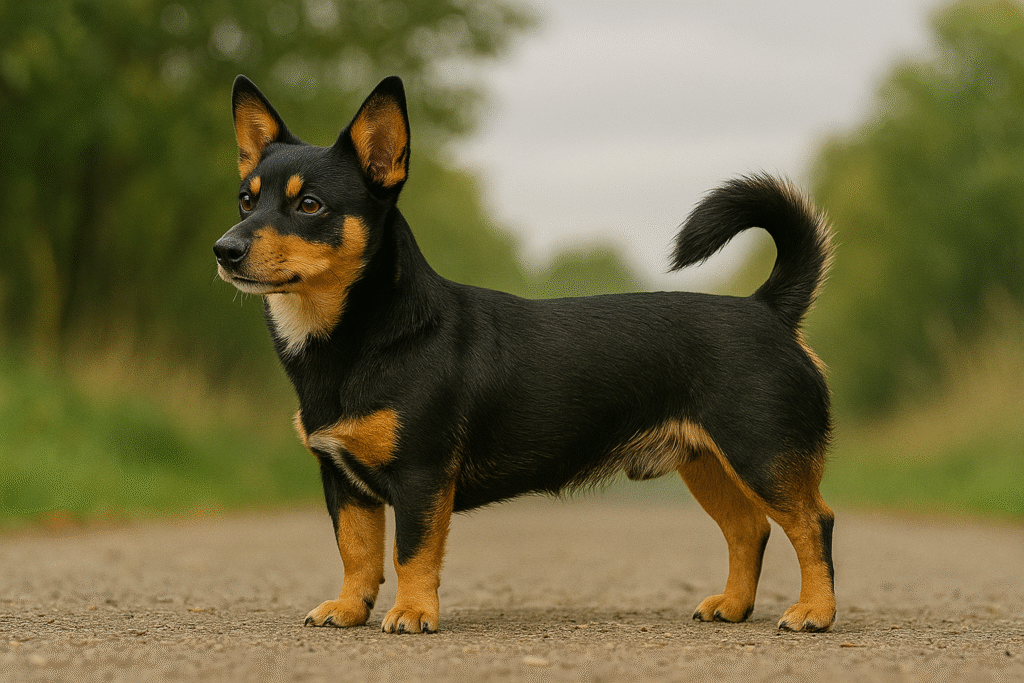
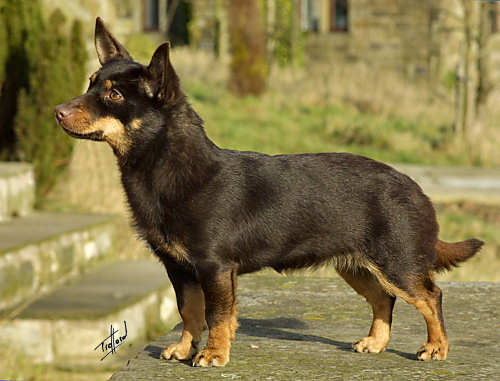
The Lancashire Heeler is a small but sturdy and muscular dog, always alert and energetic. Its appearance reflects its dual purpose - that of a herder and a terrier.
General Appearance: A small, powerful, sturdily built dog. The body is slightly longer than the height at the withers (by approximately 1 inch).
Head: Proportionate to the body, with a flat skull. The muzzle tapers towards the nose. The stop (transition from forehead to muzzle) is moderate.
Eyes: Almond-shaped, medium size, dark in color. In liver-colored dogs, they may be light hazel. The expression is intelligent and alert.
Ears: Erect or semi-erect. Large relative to the size of the head. When the dog is alert, the ears are held vertically.
Body: Strong topline, well-developed chest with sprung ribs.
Tail: Set high, left natural. It may be slightly curved but does not form a ring over the back.
Limbs: Short, with strong bone. Paws are small and neat.
Coat: Double. The undercoat is soft and thick, protecting against bad weather. The topcoat is short, dense, and smooth. A slight "ruff" may form on the neck. In winter, the coat becomes thicker.
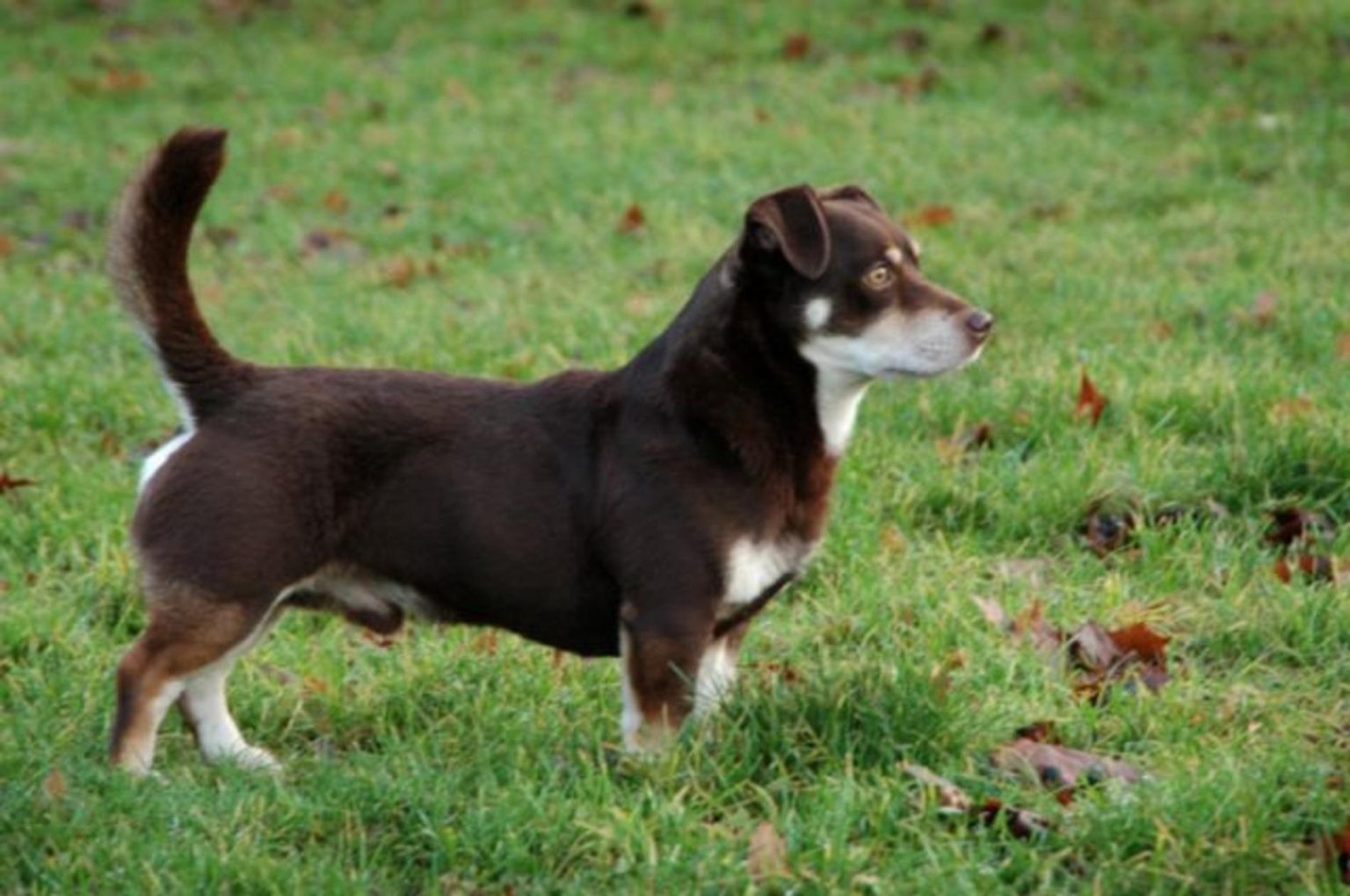
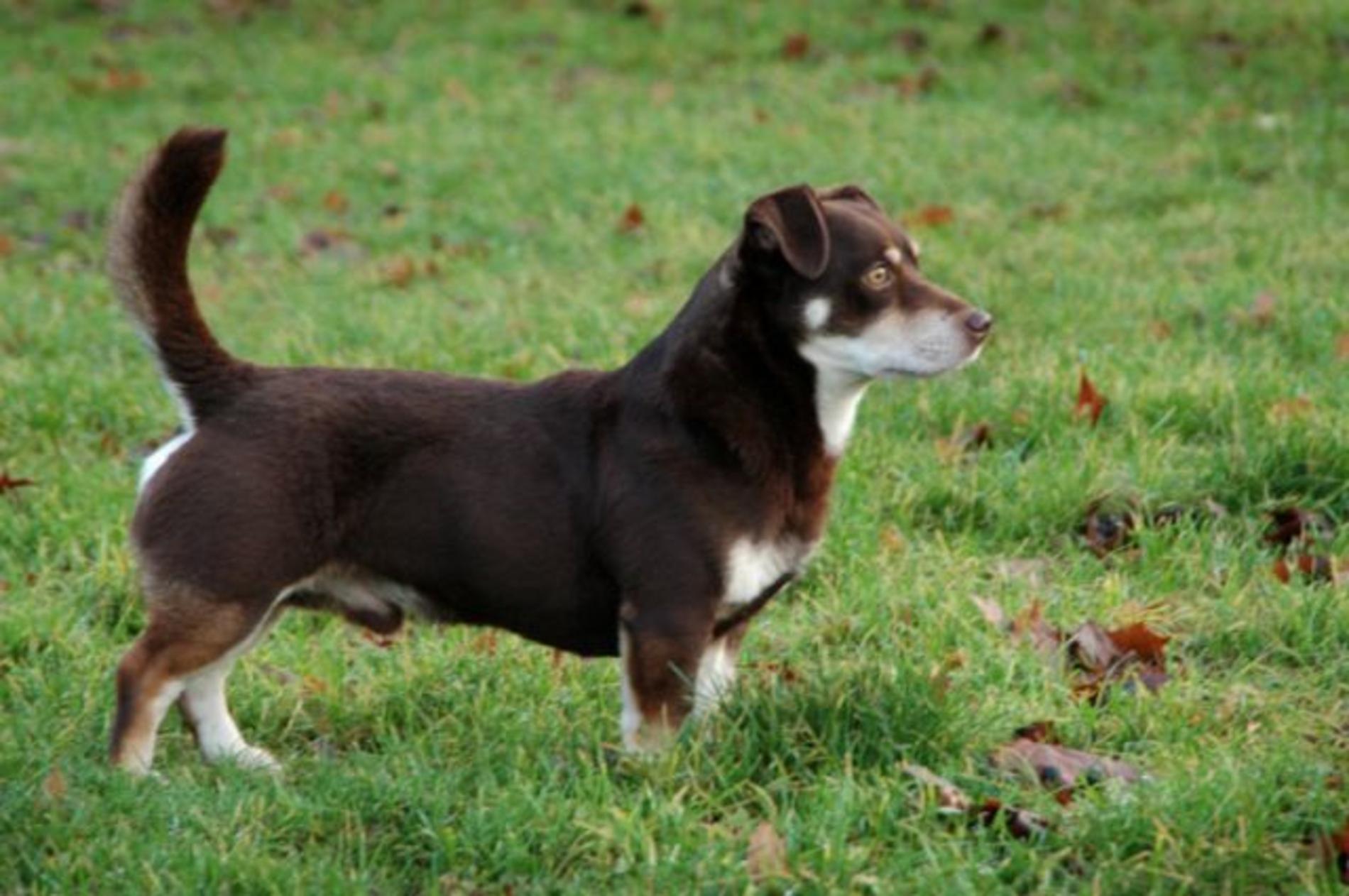
Color: Two main variations: Black and Tan and Liver and Tan. Rich tan markings are located on the muzzle, cheeks, chest, inside the legs, and under the tail.
Character: Temperament and Behavior
The character of the Lancashire Heeler is a unique blend of shepherd and terrier traits. They are smart, loyal, and eager to please like herding dogs, but at the same time possess the courage, tenacity, and occasional stubbornness typical of terriers. The signature facial expression in the form of the "Heeler Smile," when the dog lifts its lips, always brings incredible feelings of kindness and joy to those around. This little livewire is a general favorite and always ends up at the center of attention!
Heelers are very family-oriented and form strong bonds with their owners. They can be somewhat wary of strangers, which makes them excellent watchdogs - they will always warn of guests with a loud bark. Early socialization is key to ensuring this trait doesn't turn into excessive suspicion. They usually get along well with children, especially if raised together, but their herding instinct may manifest in attempts to "herd" small kids by lightly nipping at their heels. This needs to be controlled from an early age. They coexist nicely with other pets, including cats, if properly socialized. However, their prey drive can be strong when it comes to rodents.
Pros and Cons of the Breed
Pros and Cons of the Breed · 7
Pros
Cons
✅ Compact size, ideal for apartments
❌ Tendency to bark loudly
✅ High intelligence, learns easily
❌ Requires early and consistent socialization
✅ Loyal and loving companion
❌ Herding instinct (may nip at heels)
✅ Low maintenance grooming
❌ Can be stubborn (terrier heritage)
✅ Excellent watchdog
❌ Strong prey drive towards small animals
✅ Good health and longevity
❌ Prone to certain genetic eye diseases
✅ Energetic and playful, suits active people
❌ Requires significant physical and mental exercise
Training and Socialization
Raising and training a Lancashire Heeler should begin from the first days the puppy arrives home. Thanks to high intelligence, they quickly grasp new commands and learn with pleasure. However, their "terrier" side can manifest as stubborness.
Key Aspects of Training:
Positive Reinforcement: Heelers respond best to methods based on praise, treats, and games. Harsh methods can cause resistance.
Consistency: All family members must follow the same rules. This will help avoid confusion for the dog.
Early Socialization: It is very important to introduce the puppy to different people, animals, sounds, and situations. This helps raise a confident and balanced dog.
Bark Control: Teach the dog the "Quiet!" command from an early age, as they are prone to barking.
Herding Instinct Control: Immediately stop any attempts to "herd" people or animals by redirecting attention to a toy.
Incredible loyalty, sincere love, and unquestioning obedience are traits of the Lancashire Heeler that, with the right approach to upbringing, become the breed's hallmark.
Caring for a Lancashire Heeler
The Lancashire Heeler is a relatively low-maintenance breed in terms of care. They adapt wonderfully to life in both a city apartment and a private house with a yard, provided their activity needs are met.
Coat Care
Their short double coat does not require complex grooming. Regular brushing once a week with a stiff brush or rubber mitt will help remove dead hair and keep the coat clean. You only need to bathe a Heeler when necessary to avoid disrupting the skin's natural protective layer. The breed has seasonal shedding - in spring and fall. During this period, you will have to brush the dog more often, possibly daily. Thanks to a thick undercoat, Heelers tolerate cool and damp weather well.
Physical Activity
This is a very energetic breed. They need at least 60 minutes of active exercise per day. A calm walk on a leash won't cut it. Heelers love to run, play fetch, frisbee, and perform various tasks. They need not only physical but also mental stimulation. Participating in sports such as agility, flyball, obedience, or even herding trials will be a great outlet for their energy. Similar energy levels can be seen in the Boykin Spaniel, which also requires an active lifestyle.
Nutrition
Nutrition: Key Recommendations
Health and risks
Health: Typical Diseases and Prevention
Frequently Asked Questions (FAQ) · 4
Is a Lancashire Heeler suitable for an inexperienced owner?
Yes, but with some caveats. Their intelligence makes them easy to train, but their stubborn streak and high energy require consistency and a readiness to dedicate time to training. A novice should be prepared for this challenge or sign up for training classes. By comparison, breeds like the Biewer Terrier are often considered simpler for beginners due to a calmer temperament.
Do Lancashire Heelers shed a lot?
They have moderate seasonal shedding twice a year. During this time, there will be more hair, but at other times, care is minimal. This is not a hypoallergenic breed.
Can they live in an apartment?
Yes, their compact size allows them to feel comfortable in an apartment. But the key condition is providing a sufficient level of daily physical and mental activity outside the home.
Do Heelers get along well with kids and other animals?
Usually, yes. They are gentle with children in their family, but you need to watch their herding instinct. They coexist well with other dogs and cats provided there is early socialization. However, small pets like hamsters or guinea pigs may become targets of their hunting instinct.
Videos About the Breed
FAQ
Why does the heeler nip at heels?
It is the herding instinct — this is how it drove cattle; it can be managed with early training and exercise but remains a natural trait.
Is the Lancashire Heeler healthy?
Generally very — a long-lived breed (by some accounts up to ~15 years); the main risks are hereditary eye diseases (CEA, PLL), which are tested for.
Is the heeler suited to an apartment?
Yes — compact and adaptable, but very energetic; it needs daily activity and a readiness to deal with barking.