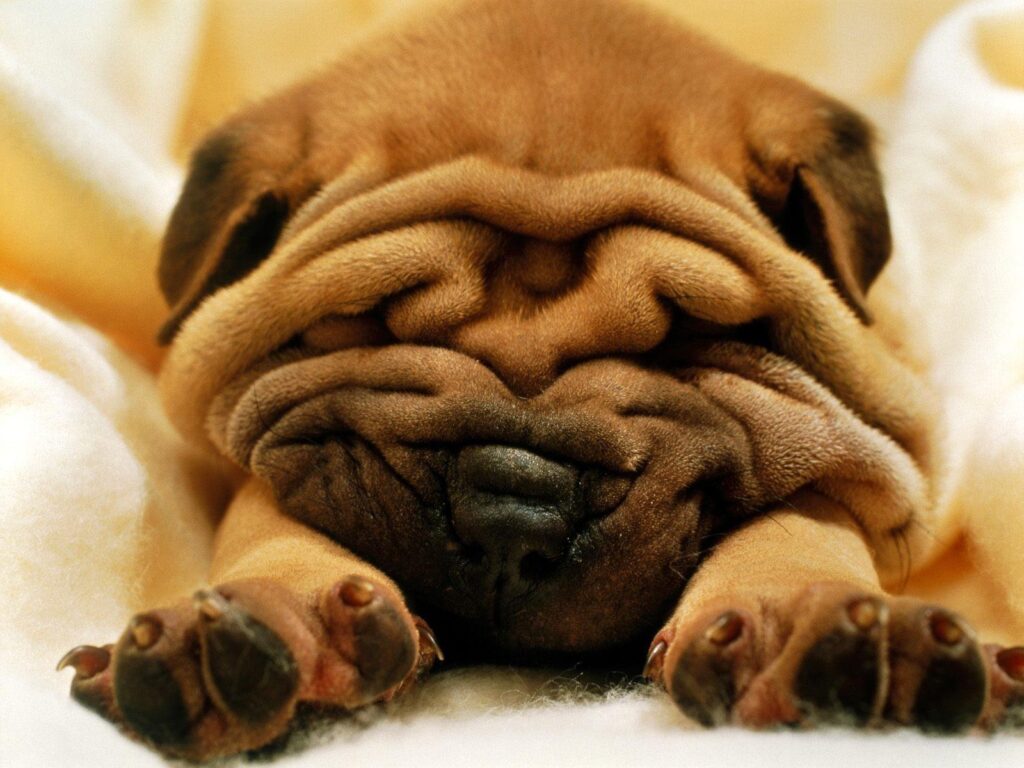
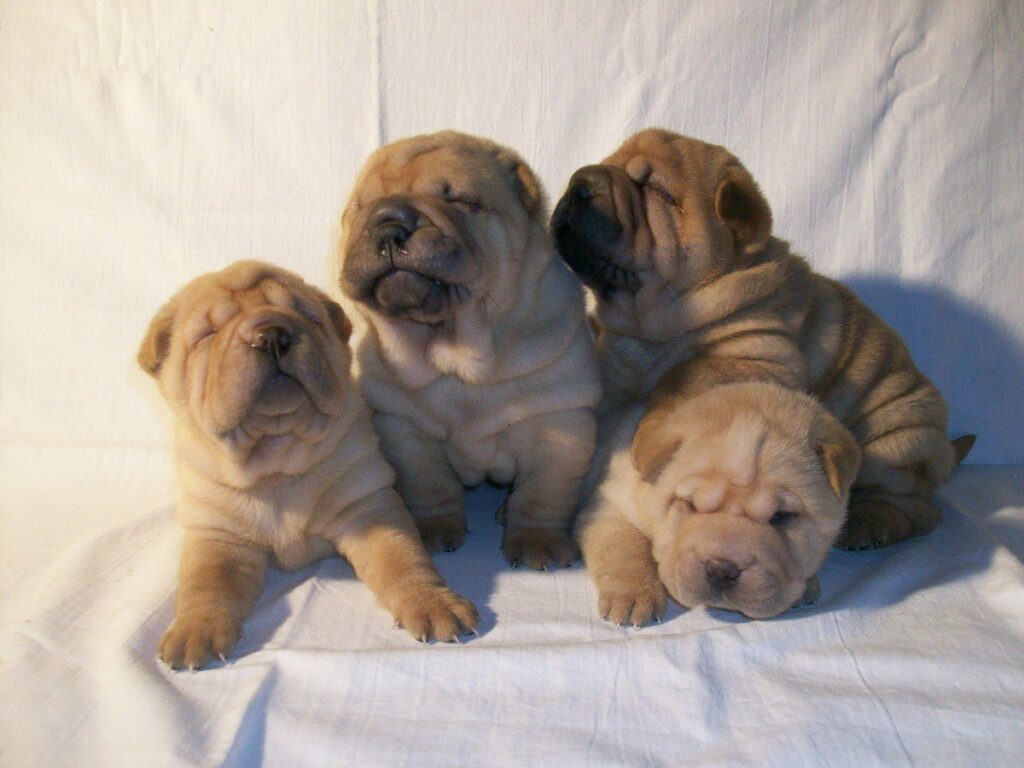
An unflappable philosopher in wrinkles: independent, devoted to “its” person, dignified and with a guarding instinct. The famous wrinkles need special care, and the breed needs attentive veterinary monitoring because of specific hereditary diseases.
ApartmentKids · with caveatsCats · with caveatsOther dogs · with caveatsBeginners · not suitable
The Shar Pei is a breed that immediately catches the eye with its unusual appearance, particularly its deep skin folds and ‘frowning’ expression. Once one of the rarest breeds in the world, it has now captured the hearts of millions. However, behind this unique exterior lies an ancient breed with a serious character, a rich history, and specific needs. It's not just a ‘cuddly toy’, but a loyal companion, a vigilant guardian, and a very intelligent, albeit somewhat stubborn, dog. To truly understand the depth of this breed, you need to look far beyond its wrinkles – find out more on this at Tvaryny.
Owning a Shar Pei is a significant responsibility, requiring knowledge of its health, specific care needs, and training. These dogs can be excellent protectors and loving family members, but they are also prone to dominance and require constant attention and proper socialisation. They form strong bonds with their owners and can even become jealous of other people and animals. Shar Peis are exceptionally independent and self-reliant; they absolutely must not be kept on a chain. Ideal conditions for them include living in a flat or house with regular, but not overly strenuous, walks.
Shar Pei: Key Breed Characteristics
Shar Pei: Key Breed Characteristics · 10
Breed Name
Shar Pei
Country of Origin
China, Guangdong Province
Time of Origin
Approximately 2000–3000 years ago
FCI Classification
Group 2 (Pinscher and Schnauzer, Molossoid Breeds, Swiss Mountain and Cattle Dogs), Section 2.1 (Molossoid, Mastiff-type Dogs)
Life Expectancy
9–11 years
Height at Withers
44–51 cm
Weight
18–35 kg
Temperament
Calm, independent, loyal, wary of strangers, sometimes stubborn
Purpose
Companion dog, guard dog
Special Care Needs
Requires meticulous care of skin folds, ears, and eyes. Prone to allergies.
Interesting Facts About the Shar Pei Breed
In 1978, the Shar Pei was listed in the Guinness Book of Records as the rarest breed in the world. At that time, only about 60 individuals were registered.
The name "Shar Pei" means "sand skin," which perfectly describes the harsh-to-the-touch coat of the dog.
The blue-black tongue of the Shar Pei is the subject of legends. One of them states that such a tongue wards off evil spirits.
The excess skin in Shar Pei puppies is an evolutionary mechanism. If a predator or another dog grabbed the puppy, the elastic skin allowed it to twist and fight back.
Despite their grumpy appearance, Shar Peis can be very playful and amusing within their family circle.
History of the Shar Pei Breed
The Shar Pei is one of the oldest dog breeds, with a history spanning millennia. Its name translates from Chinese as "sand skin" (沙皮, shā pí), which accurately describes the unique texture of its coat – short, harsh, and bristly to the touch. The breed's homeland is considered to be the southern provinces of China, bordering Tibet. Genetic studies have confirmed that the breed's age is at least 3000 years.
The first mentions and depictions of dogs resembling modern Shar Peis date back to the Han Dynasty (206 BC – 220 AD). Archaeologists have found clay figurines of "wrinkled" dogs in the tombs of Chinese nobility. These dogs were versatile helpers for farmers: they guarded homes, hunted game, and were even used as fighting dogs, although their primary role was always that of a watch dog. Their skin folds served as a kind of "armour," protecting them from serious injuries during confrontations with other animals.
It is believed that the Shar Pei shares common ancestors with another well-known Chinese breed – the Chow Chow. This is evidenced by a unique shared characteristic – the blue-black tongue. For a long time, the Shar Pei was exclusively found in China. However, in the 20th century, the breed faced difficult times. With the rise of the Communist Party led by Mao Zedong, pet ownership was declared a "bourgeois luxury." A mass extermination of dogs began across the country. The Second World War and subsequent government policies brought the Shar Pei to the brink of complete extinction.
The breed's revival began in the 1970s thanks to the efforts of Hong Kong enthusiast Matgo Law. He appealed to American dog breeders through magazines, asking for help to save the "last Chinese Shar Peis." His call was heard, and several dogs were brought to the USA. These eight individuals formed the basis for the population's recovery. Thanks to its exotic appearance, the breed quickly gained popularity. In 1976, the first breed standard was approved, and in 1978, the Shar Pei was even listed in the Guinness Book of Records as the rarest breed in the world. Today, fortunately, Shar Peis are no longer a rarity and are among the most popular dogs in many countries.
What the Shar Pei Looks Like: Standard and Appearance Description
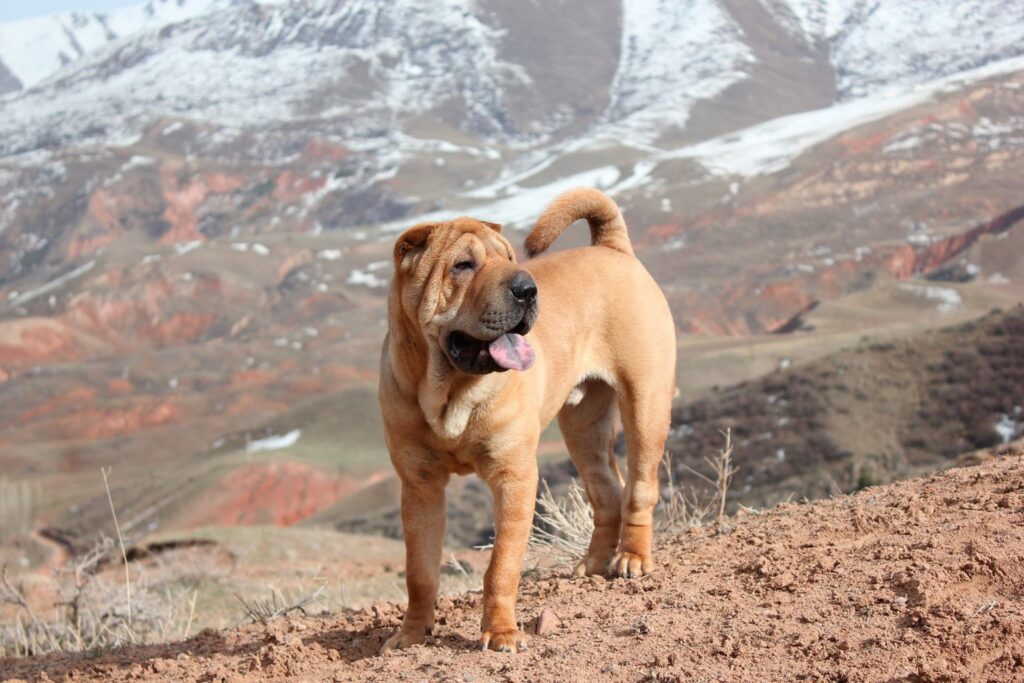
The Shar Pei is a compact, robust, medium-sized dog of square build with unique features that make it unmistakable. Its appearance combines strength, dignity, and exoticism.
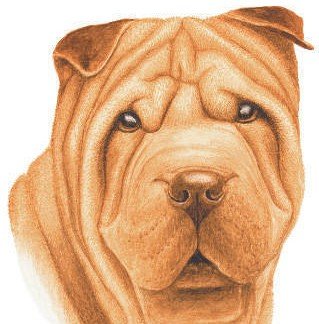
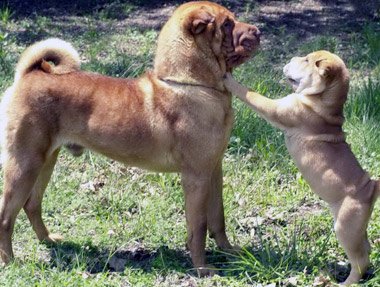
Head: Large in proportion to the body, with a broad, flat skull. The muzzle is broad from the base to the tip of the nose, resembling a hippopotamus's mouth in shape. A characteristic feature is the "padding" on the muzzle.
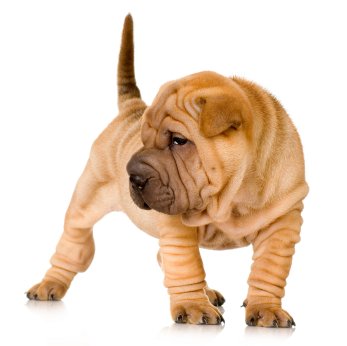
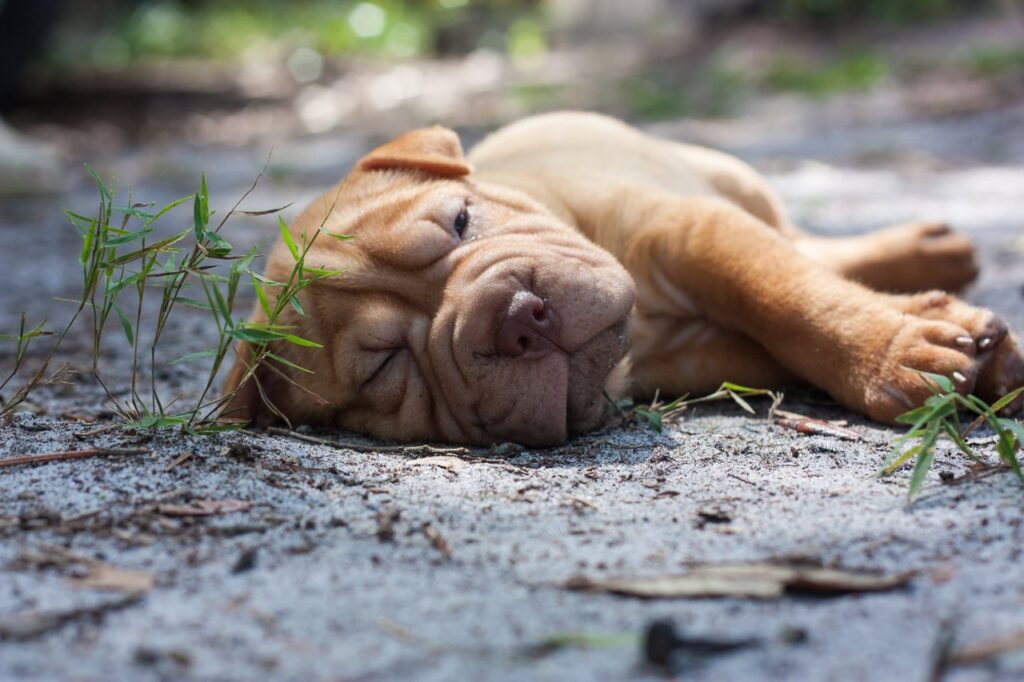
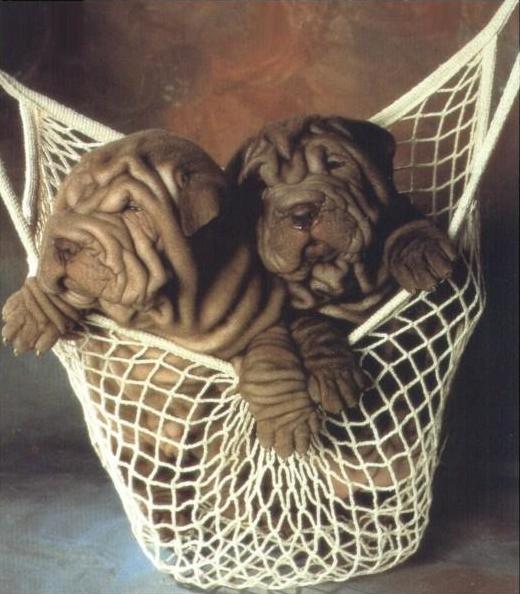
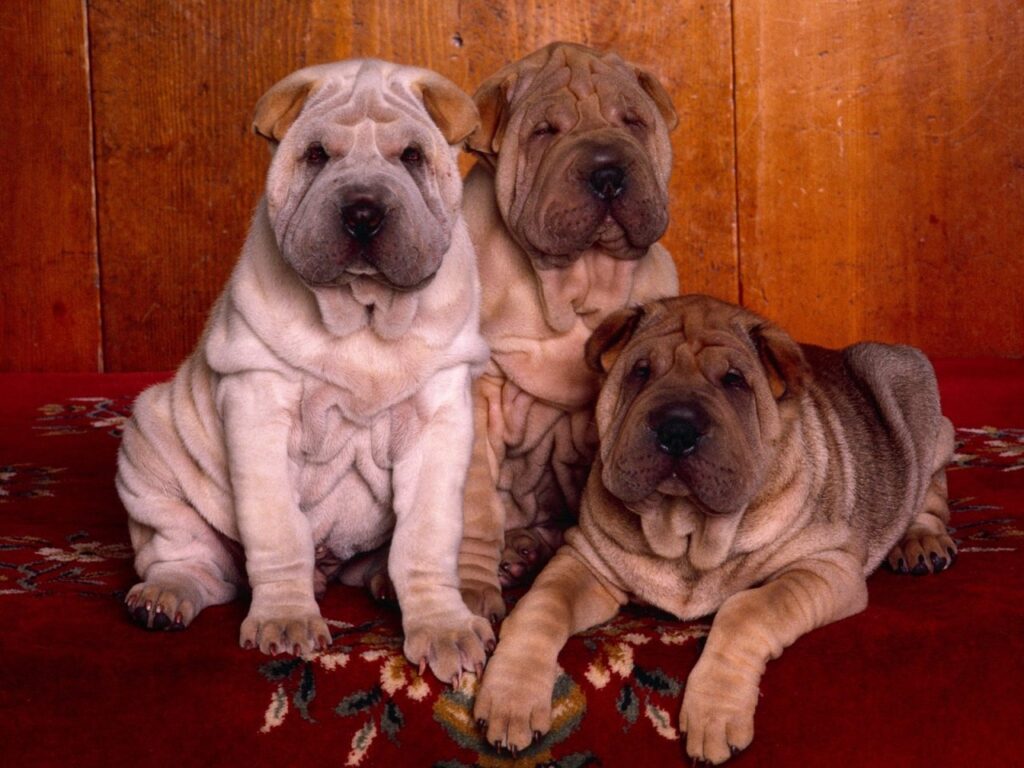
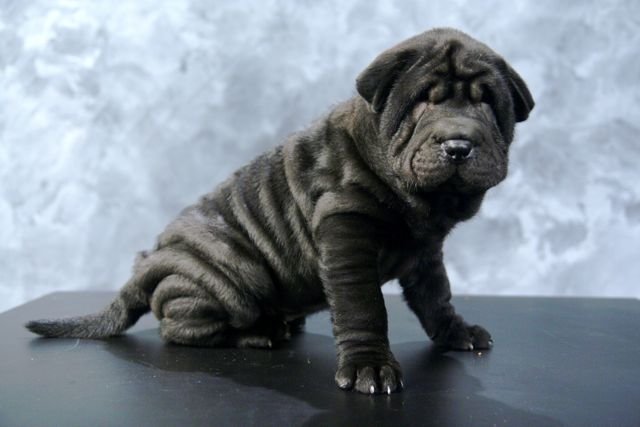
Wrinkles: In puppies, skin folds cover the entire body. In adult dogs (after one year), an excessive number of wrinkles on the body is undesirable. They should primarily remain on the head, neck, and withers.
Tongue: The tongue, palate, gums, and lips should be blue-black. A pink-spotted tongue is permissible, but a solid pink tongue is a disqualifying fault.
Eyes: Dark, almond-shaped, with a gloomy, severe expression. Due to the deep skin folds, the eyes may appear small.
Ears: Very small, thick, triangular, set high, with tips pointing towards the eyes and lying close to the skull. Erect ears are a serious fault.
Body: Strong, with a short and powerful back. The topline slopes slightly behind the withers and then rises again towards the loin. The chest is broad and deep.
Tail: Thick and round at the base, tapering to a point towards the end. Set very high. Can be curled into a tight ring and lie on the back or side.
Limbs: Forelegs straight, strong. Hindquarters – muscular and powerful. Wrinkles on the limbs in adult dogs are undesirable.
Shar Pei Coat Types and Colours
The Shar Pei's coat is one of its key characteristics. It is short, harsh, bristly, and has no undercoat. There are two main coat types:
"Horse Coat": Very short (up to 1 cm), harsh, and prickly. Considered a more traditional type.
"Brush Coat": Slightly longer (from 1 to 2.5 cm), softer to the touch, but still without an undercoat.
The breed standard allows any solid coat colour, except white. The most common colours are: Red, Fawn, Cream, Black, Chocolate, Isabella, Blue, Lilac. Often there is a darkening of the base tone on the back and ears.
Shar Pei Character: Temperament and Behaviour
The Shar Pei's character is as unique as its appearance. It is a dog with high intelligence, a sense of dignity, and deep loyalty to its family. However, potential owners should be aware of all the nuances of its temperament.
Loyalty and Affection: The Shar Pei chooses one or two people in the family as its "main owner" and follows them everywhere. It becomes deeply attached to its people and finds separation difficult.
Independence and Stubbornness: This is a very independent breed that tends to make its own decisions. This trait makes training challenging and requires patience, consistency, and leadership qualities from the owner. A Shar Pei will not blindly follow commands if it doesn't see the point.
Guard Dog Qualities: Historically, Shar Peis were guard dogs, and this instinct is in their blood. They are wary of strangers and will always warn of their approach with barking. Their calm confidence and serious appearance often deter unwelcome guests. In this regard, they are similar to guard dogs like the Hovawart or the Estrela Mountain Dog.
Interaction with Children and Other Animals: Shar Peis can get along well with children if they have grown up together and the child has learned to respect the dog. However, they are not overly patient with children's antics. Early socialisation is crucial. Towards other dogs, the Shar Pei can show dominance and even aggression, especially towards members of the same sex. This is a legacy of their fighting past.
Calmness and Composure: At home, the Shar Pei is usually calm and quiet. It is not prone to barking without reason or restlessness. Most of the day, it may simply observe what is happening or doze beside its owner.
Pros and Cons of the Shar Pei Breed
Pros
Unique Appearance: A dog that will always be the centre of attention.
Deep Loyalty: Becomes a faithful friend and companion for the whole family.
Excellent Guard Dog: Innate guarding instinct and wariness of strangers.
Cleanliness: Shar Peis are naturally very clean, have no specific "doggy smell," and are easily house-trained.
Low Exercise Needs: Do not require hours of active walks; calm outings are sufficient.
Quiet Indoors: Rarely bark without reason.
Cons
Prone to Illnesses: The breed has many hereditary diseases (skin, eyes, joints).
High Maintenance Costs: Veterinary care and specialised food can be expensive.
Stubbornness and Training Difficulties: Requires an experienced owner with a firm but fair character.
Need for Early Socialisation: Without it, they can be aggressive towards other dogs and overly suspicious of people.
Specific Care: Requires regular cleaning of folds, ears, and eyes.
Poor Tolerance to Heat and Cold: Due to body structure peculiarities and short coat.
Shar Pei Training and Socialisation
Training a Shar Pei is a challenge that requires patience, consistency, and an understanding of the breed's psychology. Due to their stubbornness and independence, standard methods may not work.
The key to success is early socialisation. From a young age, the puppy needs to be accustomed to various people, sounds, places, and other (definitely calm and vaccinated) dogs. This helps to raise a confident and well-balanced dog, rather than a fearful or aggressive one. You must show the dog that the human is in charge of the house. Moreover, all family members must follow the same rules. If the Shar Pei senses a weakness in character in even one family member, it will stop obeying them.
Training sessions should be short, engaging, and conducted in a playful manner. Use the positive reinforcement method – praise and reward with treats for correct execution of commands. Physical punishment and shouting are absolutely unacceptable – this would only destroy trust and make the dog even more stubborn. The Shar Pei should respect you as a leader, not fear you. Despite the difficulties, these are very intelligent dogs capable of learning a great deal if the right approach is found.
Shar Pei Care: Coat, Folds, and Hygiene
Caring for a Shar Pei has its specificities, related to the characteristics of its skin and build. Proper care is key to your beloved pet's health and well-being.
Coat Care: The Shar Pei's coat does not require complex care. It is sufficient to brush it once a week with a rubber brush or glove to remove dead hairs. Shar Peis shed 1–2 times a year; during this period, brushing should be more frequent. The dog should only be bathed when necessary, but no more often than once a month, using a special hypoallergenic shampoo.
Skin Fold Care: This is the most important aspect of care. After every bath, walk in the rain, or if the dog has simply sweated, all folds, especially on the face, must be thoroughly dried. A soft cloth or paper towels can be used. Moisture remaining in the folds is an ideal breeding ground for bacteria and fungi.
Ear Care: Due to very narrow ear canals, Shar Peis are prone to ear infections (otitis). Check ears weekly and clean them with a special veterinary lotion. Never use cotton buds to avoid damaging the ear canal.
Eye Care: Regularly check eyes for redness, excessive tearing, or purulent discharge. If necessary, wipe them with a cotton pad moistened with chamomile tea or a special lotion. At any signs of entropion, seek veterinary attention immediately.
Claws: Trim claws every 3–4 weeks if they do not wear down naturally.
Nutrition
Shar Pei Feeding: Key Recommendations
Health and risks
Shar Pei Health: Typical Diseases and Their Prevention
Frequently Asked Questions About the Breed (FAQ) · 5
Do Shar Peis shed a lot? They shed seasonally, usually twice a year. Their coat is short and needle-like, so it can embed itself in clothing and upholstery. The "Horse Coat" sheds less noticeably than the "Brush Coat."
Do the wrinkles disappear with age? Yes, partially. A Shar Pei puppy is very wrinkled. As the dog grows, the skin "tightens," and in an adult animal (after 1–1.5 years), deep wrinkles remain primarily on the head, neck, and withers. Excessive wrinkling on the body of an adult dog is considered a fault.
Is the Shar Pei suitable for inexperienced owners? Generally, no. This breed requires experience, patience, strength of character, and a willingness to dedicate a lot of time to training, socialisation, and health care. A novice will find it challenging to cope with their stubbornness and dominance.
Can Shar Peis live outdoors in a kennel? Absolutely not. They have a short coat without an undercoat, so they tolerate cold poorly. Furthermore, they are very people-oriented and would suffer from loneliness. It is exclusively a dog for indoor keeping.
Do Shar Peis get along well with cats and other animals? If a Shar Pei has grown up with a cat from a young age, there will most likely be no problems. However, they have a hunting instinct, so introducing an adult dog and a cat can be problematic. Socialisation plays a crucial role.
Video about the Breed
FAQ
Why is the Shar Pei wrinkled?
It is an excess of hyaluronic acid in the skin — a breed feature. The folds look striking but need care: dermatitis develops easily in the warm, moist creases.
What is “Shar Pei fever”?
Familial Shar Pei fever (FSF) is a hereditary syndrome with recurrent bouts of high fever and joint swelling, linked to amyloidosis that damages the kidneys over time. Regular kidney monitoring is needed.
Is the Shar Pei suited to a novice?
Not really — the independent character, guarding instinct and specific medical needs call for experience and attentive care.