Group 3 (Terriers), Section 4 (Toy Terriers) · England
Yorkshire Terrier
A tiny terrier with a silky coat and a fearless character: brave, devoted, ideal for a flat and city dwellers. It barely moults (hypoallergenic) but needs grooming; like all toy terriers — fragile, with a risk of patellar luxation and tracheal collapse.
ApartmentKids · not suitableCats · with caveatsOther dogs · with caveatsBeginners · with caveats
The Yorkshire Terrier (or Yorkie) is one of the world's most popular toy dog breeds, celebrated for its luxurious, silky coat, lively character, and unwavering devotion to its owners. This little dog with a big heart captivates with its elegance and energy. Despite its tiny size, the Yorkie is a true terrier at heart – brave, inquisitive, and sometimes stubborn. Its decorative appearance and compact size have made it an ideal companion for city life and a frequent "accessory" in a handbag, although the breed's history is far more complex and fascinating. Read more about the wonderful world of pets and their unique traits on Tvaryny.
These dogs are not just living toys; they are individuals with their own needs and temperaments. They require attention, care, and proper training to become happy and well-adjusted members of the family. In this article, we'll take a detailed look at every aspect of life with a Yorkshire Terrier: from its captivating history and breed standard to the specifics of its care, health, and character.
Yorkshire Terrier: Breed at a Glance
Yorkshire Terrier: Breed at a Glance · 10
Original Breed Name
Yorkshire Terrier (Yorkie)
Country of Origin
Great Britain (England, Yorkshire)
Time of Origin
Mid-19th Century
Year of FCI Recognition
1886
FCI Group
Group 3 (Terriers), Section 4 (Toy Terriers)
Size
Toy
Height at Withers
Approx. 15–23 cm (6–9 inches) (standard does not specify an exact height)
Weight
Up to 3.2 kg (7 lbs) (as per FCI standard)
Lifespan
12–16 years
Primary Purpose
Companion dog, formerly a ratter
Interesting Facts About the Yorkshire Terrier
A War Hero: During the Second World War, a Yorkshire Terrier named Smoky became a true hero. Found by American soldiers in the jungles of New Guinea, Smoky accompanied her owner, Corporal William Wynne, on combat flights (with her own parachute), warned of danger, and even helped to lay a communication cable through a narrow pipe, saving many soldiers' lives. After the war, Smoky became a therapy dog, visiting wounded soldiers in hospitals.
Colour Change: Yorkie puppies are born black and tan. Their distinctive steel blue and gold coat develops gradually, and the final colour may not be fully established until they are 2–3 years old.
Not Just for Handbags: Although the Yorkie has become a symbol of a "glamour" dog, its ancestors were working terriers that hunted rats in mines and mills. This hunting instinct sometimes still surfaces today.
"Human" Hair: A Yorkshire Terrier's coat is very similar in structure to human hair. It grows continuously and has no undercoat, which is why Yorkies are considered a hypoallergenic breed (although allergies can be triggered by dander or saliva, not just hair).
Lookalike Breeds: Its appearance often draws comparisons to its close relative, the Biewer Terrier, and the similar-looking Australian Silky Terrier, though they are distinct breeds.
Longevity Champions: Yorkies often feature on lists of long-lived dogs. With proper care, they can delight their owners for over 15 years.
Celebrity Favourite: Thanks to their appearance and size, Yorkies have always been popular among celebrities and high society, from the Victorian era to the present day.
History and Origin of the Yorkshire Terrier
The history of the Yorkshire Terrier is inextricably linked with the Industrial Revolution in 19th-century England. Contrary to its modern, glamorous image, the Yorkie's ancestors were working dogs, primarily owned by weavers and miners in Northern England, particularly from the counties of Yorkshire and Lancashire. Scottish workers, migrating to the north of England in search of jobs in textile mills and coal mines, brought their small terriers with them. These dogs were used for hunting rats and other small vermin in the mines, mills, and homes.
The exact origin of the Yorkie is shrouded in mystery, as early breeders did not keep detailed records. It is believed that several terrier types were used to create the breed, including:
Clydesdale Terrier or Paisley Terrier: Now an extinct breed, very similar to the Yorkie but larger. It's considered a direct ancestor and was prized for its long, silky, blue and tan coat.
Waterside Terrier: Also known as the "Yorkshire Blue-Grey Terrier." A small dog with a long, blue-grey coat, kept by workers near the rivers of Yorkshire.
Black and Tan English Toy Terrier: Contributed the Yorkie's characteristic colouring and compact size.
Skye Terrier: May have influenced the coat length and ear shape.
Maltese: Some cynologists suggest a possible influence from the Maltese on the silky texture of the coat.
One of the most famous "founding fathers" of the breed is considered to be a dog named Huddersfield Ben, born in 1865. Although he was quite large by modern standards (around 5.5 kg or 12 lbs), he possessed all the key traits of the breed and became a highly successful show dog and sire, making a huge contribution to shaping the Yorkshire Terrier as we know it today.
Initially, the breed was known as the "Broken Haired Scotch Terrier," but in 1870, following a dog show, a reporter for "The Field" newspaper suggested the breed be named after the county where it had been perfected – the Yorkshire Terrier. The name quickly caught on. The Kennel Club officially recognised the breed in 1886.
Over time, thanks to its attractive appearance and lively character, the Yorkshire Terrier transformed from a ratter into a favourite of Victorian aristocracy and a fashionable companion. Its popularity soared, and it spread across the globe, becoming one of the most beloved toy breeds.
What Does a Yorkshire Terrier Look Like: Standard and Appearance
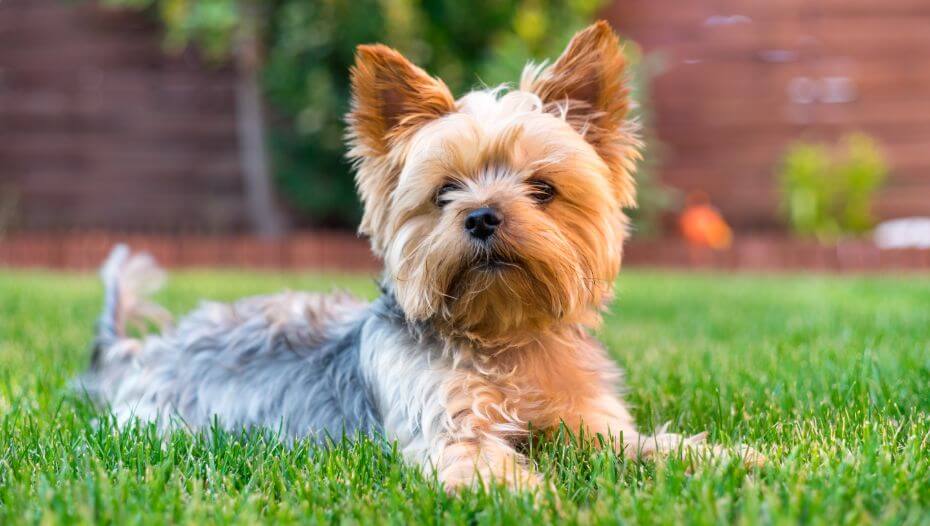
The Yorkshire Terrier is a toy dog with a long, straight, silky coat that hangs down evenly on both sides of the body from a parting that runs from the nose to the tip of the tail. Its appearance combines elegance with the confidence of a true terrier.
General Appearance: A compact, well-proportioned dog with a proud posture. The back is level.
Size and Weight: The FCI (Fédération Cynologique Internationale) standard No. 86 specifies only a maximum weight – up to 3.2 kg (7 lbs). The American Kennel Club (AKC) suggests a desirable weight of 4 to 7 pounds (approx. 1.8–3.2 kg). The height at the withers is typically 15–23 cm (6–9 inches), though this is not regulated by the standard. So-called "mini" or "teacup" Yorkies, weighing less than 1.8 kg, are not recognised by the standard and often suffer from serious health problems.
Head: Small and flat, not too rounded. The muzzle is not too long.
Eyes: Medium-sized, dark, and sparkling, with an intelligent, alert expression. Not prominent. The eye rims are dark.
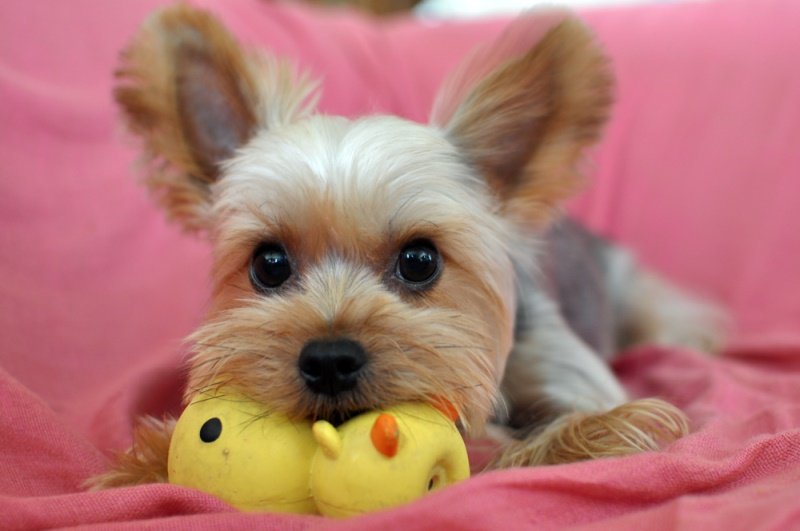
Ears: Small, V-shaped, carried erect or semi-erect, and set not too far apart. They are covered with short, rich tan hair.
Nose: Black.
Bite: A perfect, regular and complete scissor bite (upper teeth closely overlapping lower teeth).
Neck: Of a good length to allow for a proud head carriage.
Body: Compact, with a level topline. The chest is moderately broad.
Tail: Previously, it was customarily docked to a medium length and is carried slightly higher than the level of the back. In countries where docking is banned, the tail remains its natural length, is well-covered with hair, and is a darker shade of blue than the rest of the body.
Limbs: Forelegs are straight; hindlegs are straight when viewed from behind, with moderate angulation. Paws are round with black nails.
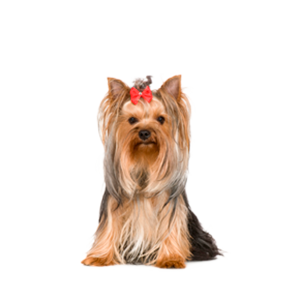
Coat: The breed's most characteristic feature. On the body, the hair is of a moderate length, perfectly straight (not wavy), glossy, and of a fine, silky texture, not woolly and with no undercoat. Its structure is similar to human hair. On the head, the hair is long, of a rich golden tan, and is particularly long on the sides of the head, at the base of the ears, and on the muzzle.
Colour: Very specific. A dark steel blue (not a silver-blue) extends from the back of the neck to the root of the tail, never mixed with fawn, bronze, or dark hairs. The hair on the chest is a rich, bright tan. All tan hair is darker at the roots than in the middle, shading to a still lighter tan at the tips. Important: Puppies are born black and tan, with the characteristic steel blue coat developing gradually, sometimes taking up to 2–3 years to fully form.
The Yorkshire Terrier's Character: Temperament and Behaviour
The Yorkshire Terrier is the epitome of the phrase "a big dog in a small body." Their character is a vibrant blend of terrier traits and a companion dog's nature.
Key traits of the Yorkie's character:
Energetic and Lively: Yorkies are very active and playful dogs. They love to run, play, and explore their surroundings. Even in adulthood, they retain a puppy-like spontaneity and enthusiasm.
Brave and Inquisitive: As true terriers, they are not afraid to challenge dogs much larger than themselves and approach everything new with curiosity. This bravery sometimes borders on recklessness, so they need to be supervised.
Loyal and Affectionate: Yorkies become very attached to their owners and strive to spend as much time with them as possible. They love being the centre of attention, sitting on laps, or simply being nearby.
Intelligent and Quick-witted: These dogs are quite clever and learn quickly, especially if training is presented as a game with positive reinforcement. However, their terrier stubbornness can sometimes complicate the training process.
Alert and "Yappy": Yorkies make excellent "watchdogs." They react to any unusual sounds or the appearance of strangers with barking. Although their bark isn't very loud due to their small size, it can be quite persistent. Early socialisation and teaching the "Quiet" command will help to manage this trait.
Sociable: Most Yorkies get along well with people, including children (provided the children are taught how to handle a small dog gently). They can also live happily with other pets, especially if they have grown up together. However, their hunting instinct may surface in relation to small rodents.
Needs Attention: Yorkies do not tolerate being alone for long periods and can suffer from separation anxiety, which may manifest as destructive behaviour or excessive barking.
It's important to remember that, despite its small size, the Yorkshire Terrier is a dog with its own needs for activity, socialisation, and training. Excessive pampering and indulging their every whim can lead to "small dog syndrome," where the dog becomes disobedient, aggressive, and demanding.
The Yorkie's ancestors were hunters, and some of these instincts remain. This is evident not only in their bravery but also sometimes in their desire to chase small animals. Similar traits can be seen in other terriers, such as the spirited Jack Russell Terrier, although the Yorkshire Terrier is now predominantly a companion dog.
How to Care for a Yorkshire Terrier: Grooming, Activity, and Housing
Caring for a Yorkshire Terrier requires time and attention, especially if you want to maintain its luxurious coat in show condition. However, even if you opt for a short trim, regular grooming is essential for the dog's health and comfort.
Grooming a Yorkie's Coat
A Yorkie's coat is structurally similar to human hair – it is fine, silky, and has no undercoat. This means that Yorkies shed very little in the traditional sense (they lose hair just as people do), making them a good choice for some allergy sufferers. However, the lack of an undercoat also means they do not tolerate the cold well.
Key aspects of coat care:
Brushing: If the coat is long, it needs to be brushed daily with a metal-pinned comb and a natural bristle brush to prevent tangles and mats. Start from the tips and gradually work your way to the roots. Using a special conditioning spray will make brushing easier and reduce breakage. If the dog has a short "puppy cut," brushing can be less frequent, perhaps 2–3 times a week.
Bathing: It is recommended to bathe a Yorkie roughly every 1–3 weeks, depending on how dirty they get and the type of coat. Use a high-quality shampoo and conditioner for dogs with long, silky coats. It's crucial to rinse all products out thoroughly to avoid skin irritation. After the bath, gently pat the coat with a towel (don't rub!) and blow-dry on a low heat setting while brushing.
Clipping: If you don't plan to show your dog, the most practical option is a regular trim (every 6–8 weeks). There are countless trim styles for Yorkies, from very short puppy cuts to more stylised looks. A trim significantly simplifies coat care. You can learn to clip your dog yourself or visit a professional groomer.
Top-Knot Care: For Yorkies with long hair on their head, it is usually gathered into a top-knot to keep it out of their eyes. Use soft, metal-free bands and don't tie the top-knot too tightly. Regularly check the skin underneath the band for any irritation.
Other Aspects of Grooming
Eye Care: Daily, wipe the corners of the eyes with a damp cloth or a special lotion to remove any discharge and prevent tear stains.
Ear Care: Regularly (once a week) check the ears for dirt, redness, or an unpleasant smell. Clean the outer ear with a cotton pad moistened with a special lotion. The hair inside the ear canal should be plucked or trimmed to ensure ventilation and prevent infections (this is best left to a groomer or vet).
Dental Care:A crucial aspect! Brush your dog's teeth with a special dog-friendly toothbrush and toothpaste daily, or at least a few times a week. Visit the vet regularly for a dental check-up and professional cleaning.
Nail Trimming: Trim the nails approximately every 2–4 weeks if they don't wear down naturally. Use nail clippers designed for small dogs.
Other Aspects of Grooming · 7
Procedure
Frequency (Long Coat)
Frequency (Short Trim)
Brushing
Daily
2–3 times a week
Bathing
Every 1–3 weeks
Every 2–4 weeks
Clipping
As needed (tidying)
Every 6–8 weeks
Teeth Cleaning
Daily
Daily
Ear Check/Clean
Weekly
Weekly
Eye Wiping
Daily
Daily
Nail Trimming
Every 2–4 weeks
Every 2–4 weeks
Exercise and Housing
Despite their size, Yorkies are energetic dogs that require daily physical activity. This doesn't mean hours of running, but regular walks and playtime are essential for their physical and mental health.
Walks: One or two short walks a day (15–20 minutes each) are sufficient. Use a harness to avoid putting pressure on the trachea.
Playtime: Yorkies love to play. Offer them games with a ball, interactive toys, and treat-dispensing puzzles. This will help satisfy their need for activity and stimulate their minds.
Housing: Yorkies adapt wonderfully to living in a flat. They don't need much space, but they do need their own cosy corner with a bed. It's important to provide a safe environment by removing small objects the dog could swallow and restricting access to dangerous areas (balconies, unfenced stairs).
Temperature Sensitivity: Due to their lack of an undercoat, Yorkies are sensitive to the cold. In cold weather, they will need a warm coat for walks. They also don't tolerate extreme heat well.
Training and Socialisation of a Yorkshire Terrier
Yorkshire Terriers are intelligent dogs that are eager to please their owners, which makes them quite trainable. However, their terrier nature can manifest as stubbornness and independence. Successful training depends on patience, consistency, and the use of the right methods.
Key principles of Yorkie training:
Positive Reinforcement: Yorkies respond best to reward-based methods – praise, treats, and toys. Avoid harsh methods and punishment, as this can cause fear or defensive aggression in a small dog.
Short and Fun Sessions: Training sessions should be short (5–10 minutes) but frequent. Keep them fun and varied to maintain the dog's interest.
Consistency: All family members must follow the same rules and commands. Inconsistency confuses the dog and complicates learning.
Early Socialisation: This is a critically important aspect of raising a Yorkie. From a young age, introduce your puppy to different people, sounds, places, and other well-behaved, vaccinated dogs. This will help to raise a confident and well-balanced dog and prevent the development of fear and aggression.
Toilet Training: Yorkies can be challenging to house-train, especially in flats. It's important to be patient, take the puppy out frequently (especially after waking, eating, and playing), praise success, and not punish accidents. Some owners use puppy pads or indoor trays, but this can make it harder to fully transition to toileting outside.
Barking Control: Yorkies are prone to barking. Teach the "Quiet" command from an early age and do not encourage barking for no reason.
Getting Used to Grooming: Accustom your Yorkie from a young age to being brushed, bathed, and having its ears, teeth, and nails checked. Make these procedures pleasant by using praise and treats.
Don't let the Yorkie's small size become an excuse for poor behaviour. Rules and boundaries are important for any dog, regardless of size. Training and socialisation will help your Yorkie become a pleasant and well-mannered companion.
Pros and Cons of the Yorkshire Terrier Breed
Pros and Cons of the Yorkshire Terrier Breed · 10
Pros
Cons
Compact Size: Ideal for flat living and easy to travel with.
Fragility: Prone to injury due to their small size and delicate bones. Requires careful handling.
Low Shedding: Coat is similar to human hair, making them a better choice for some allergy sufferers.
High-Maintenance Coat: Requires daily brushing (if long), regular bathing, and professional grooming.
High Intelligence: Highly trainable with the right approach.
Prone to Dental Problems: Requires diligent daily oral hygiene.
Energetic and Playful: A fun companion that stays active well into old age.
Tendency to Bark: Can be "yappy," reacting to noises and strangers.
Loyal to Owner: Forms a very strong bond with its family and loves attention.
Stubbornness: Like all terriers, they can be independent and wilful.
Long-Lived: With good care, they can live for 12–16 years or more.
Sensitive to Cold: Needs a coat in cold weather due to the lack of an undercoat.
Good "Watchdog": Will alert you to the approach of strangers.
Difficult to Toilet-Train: May require more time and patience than other breeds.
Adaptable: Adjusts well to various living situations, provided they get enough attention.
Needs Socialisation: Without early socialisation, they can become fearful or aggressive.
Prone to certain health conditions: Tracheal collapse, patellar luxation, portosystemic shunt, etc.
Doesn't tolerate being alone: Can suffer from separation anxiety.
Nutrition
Feeding a Yorkshire Terrier: Key Recommendations
Health and risks
Yorkshire Terrier Health: Common Conditions and Prevention
Frequently Asked Questions about the Yorkshire Terrier (FAQ) · 8
Do Yorkshire Terriers shed a lot? No, Yorkies shed very little. Their coat is like human hair and is lost gradually rather than seasonally, unlike breeds with an undercoat. This makes them a potentially better choice for people with allergies, although no dog is 100% hypoallergenic.
Are Yorkies suitable for families with small children? Yorkies can get along well with older children who have been taught how to handle a small dog gently. However, due to their fragility and delicate bones, they are not recommended for families with very young children who might accidentally injure the dog.
Do Yorkies bark a lot? Yes, Yorkies have a tendency to bark. They are alert and react to strange noises and strangers. Early socialisation and teaching the "Quiet" command can help to manage this trait.
How much exercise does a Yorkie need? Despite their small size, they need daily activity. Short walks (15–20 minutes) once or twice a day and active playtime at home are usually enough to keep them in shape.
Is it easy to train a Yorkshire Terrier? Yorkies are intelligent but can be stubborn. They respond well to positive reinforcement and short, fun training sessions. Consistency and patience are key.
Can a Yorkie be left alone for long periods? Yorkies are very people-oriented and do not tolerate being alone well. They can suffer from separation anxiety, which can manifest as destructive behaviour or excessive barking. This breed is best suited to people who can give them plenty of attention or who work from home.
What kind of grooming does a Yorkie's coat need? The care required depends on the length of the coat. A long coat needs daily brushing, regular bathing, and care for the top-knot. A short trim makes grooming much easier but still requires regular brushing (a few times a week) and bathing.
What is a "teacup" Yorkie? Should I buy one? A "teacup" is not an official variety of the breed but a marketing term for Yorkies that weigh significantly less than the standard (under 1.8 kg or 4 lbs). Such dogs are often the result of irresponsible breeding practices and suffer from very serious health problems (hypoglycaemia, heart conditions, increased bone fragility, hydrocephalus, etc.) and have a much shorter lifespan. Responsible breeders and vets strongly advise against buying "teacup" dogs.
Video about the Yorkshire Terrier
FAQ
Is a Yorkie suitable for a family with small children?
Not advisable: the breed is fragile and can be injured by careless handling. Better for adults or families with older children.
Does a Yorkshire Terrier moult?
Barely — the coat resembles human hair and grows rather than falling out, so the breed is considered hypoallergenic. In return it needs regular grooming.
Why does a Yorkie cough?
Often it is tracheal collapse or “reverse sneezing” — typical of small breeds. If the cough persists, see a vet.