

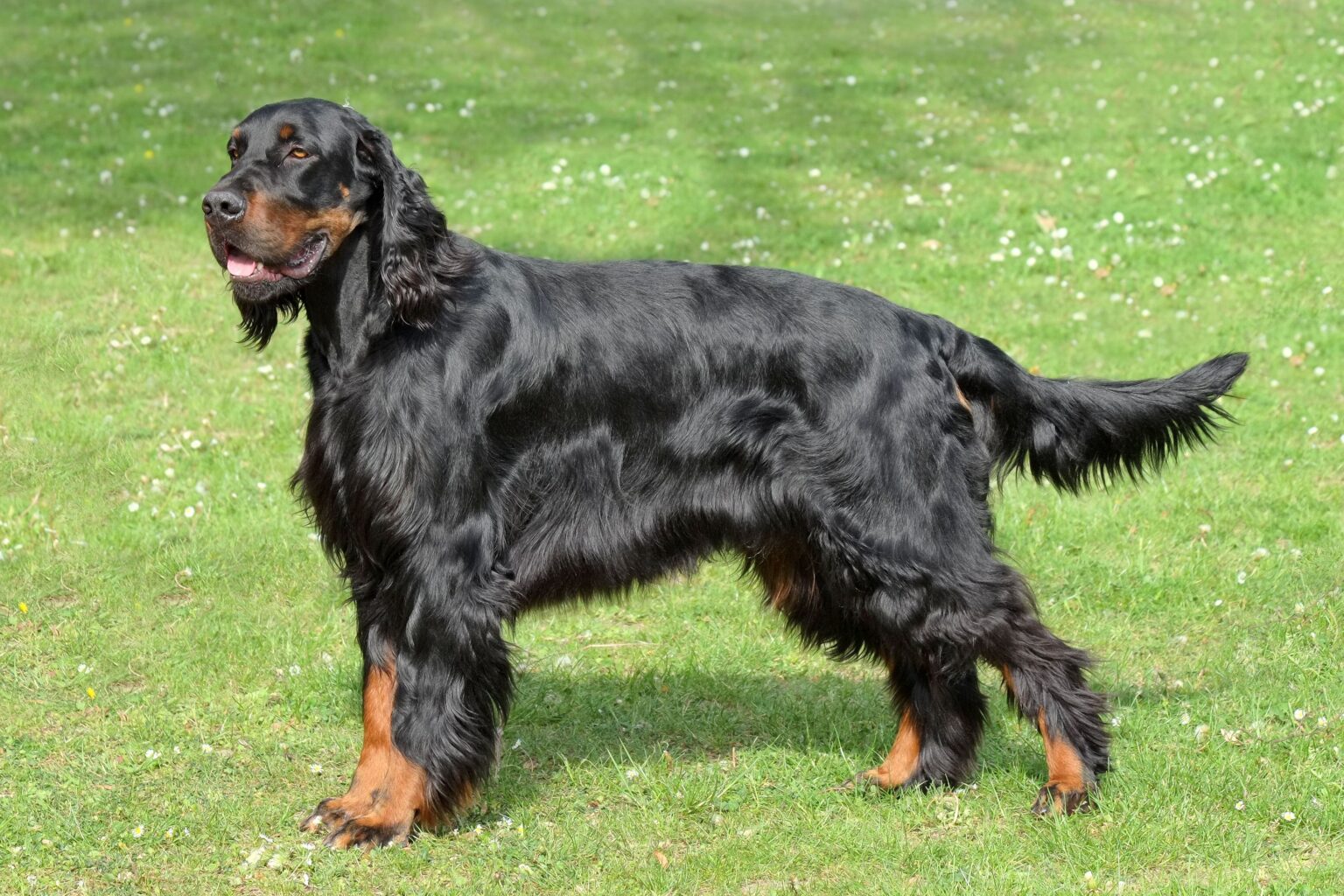
| Height | 58–69 cm |
| Weight | 20–36 kg |
| Lifespan | 10–12 years |
| FCI group | 7 · pointing dogs |
| Origin | Scotland |
Exact ratings
Common health issues
Nutrition
The Gordon Setter, or Scottish Setter, is not just a handsome creature; he is a true aristocrat in the world of cynology, combining elegant forms with incredible working endurance. These dogs are remarkably restrained, despite the untamed temperament that rages within them like a storm in the North Sea. Scottish Setters know exactly how to behave in high society. Among people, they remain calm and welcoming, displaying exemplary manners even if they don’t particularly like someone. Find out more on Tvaryny.
Gordon Setter (Scottish Setter): Brief Overview and Characteristics
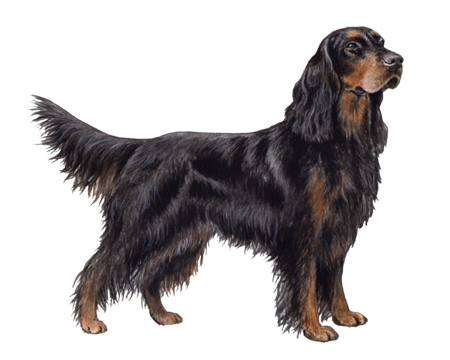
| Characteristic | Standard Metrics |
|---|---|
| Country of Origin | Great Britain (Scotland) |
| FCI Group | Group 7 (Pointing Dogs), Section 2 (British and Irish Pointers and Setters) |
| First Mentioned | End of the 18th century (official standard later) |
| Life Expectancy | 10-13 years (depends on care and genetics) |
| Height (Males) | 66 cm (62-68 cm allowed) |
| Height (Females) | 62 cm (58-64 cm allowed) |
| Weight (Males) | 29.5 kg (range 25-32 kg) |
| Weight (Females) | 25.5 kg (range 22-28 kg) |
Breed History: From Castle Kennels to Global Recognition
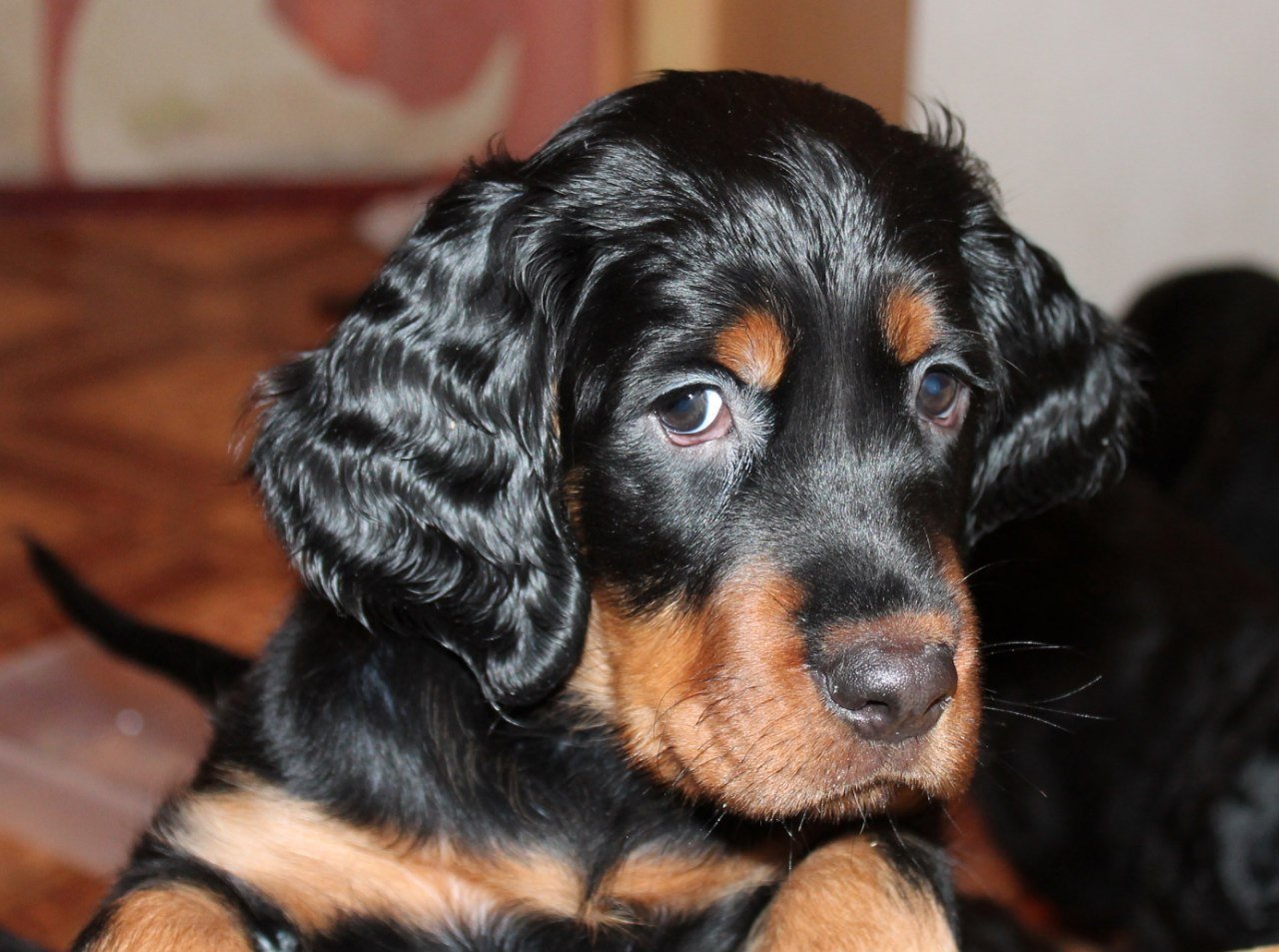
The history of this breed is a fascinating journey back in time, transporting us to the misty mountains of Scotland. The black-and-tan setters owe their name to the 4th Duke, Alexander Gordon. He was an outstanding breeder of his time who managed to popularise dogs of this unique colouring. They appeared at Gordon Castle, the seat of the Scottish noble family, as early as the 18th century. However, references to “black and fallow setting dogs” can be found in literature dating back to the 1600s.
It is assumed that other setters also resided in this vast castle, as the concept of “breed” was somewhat blurred back then. However, the estate owner, being a passionate hunter, clearly favoured the black-and-tan setters. He worked purposefully to improve the working qualities and characteristics of this breed. His goal was to create the ideal dog for the specific Scottish landscape – stony, damp, and covered in heather.
As a result of selective breeding, Gordon Setters became sturdier and more powerful than their English and Irish cousins. They evolved into the most enduring of the setters, capable of working all day without fatigue. Their developed sense of smell allowed them to locate birds at great distances. Precisely because of this, they became more valued by local gamekeepers than other representatives of the setter group.
There is an interesting historical hypothesis that Bloodhound blood was added to the setter lines to fix the black-and-tan colour and improve scenting ability. This explains the slight “flews” (drooping lips) in some lines and the massive bone structure. There is also an opinion that a Mr Jubb was the one who managed to fix this specific colour – he was the man responsible for the Duke of Gordon’s kennels and kept the stud books.
After Alexander’s death, the next Duke, George Gordon, continued the kennel’s activities, preventing the breed from disappearing. By the early 19th century, these dogs were already extremely popular in many countries, including the USA and France. The official standard for the Scottish Gordon Setter was first described in 1891. The modern standard used by experts today was approved much later, but the breed’s main features have remained unchanged for centuries.
What the Gordon Setter Looks Like: Appearance and Exterior
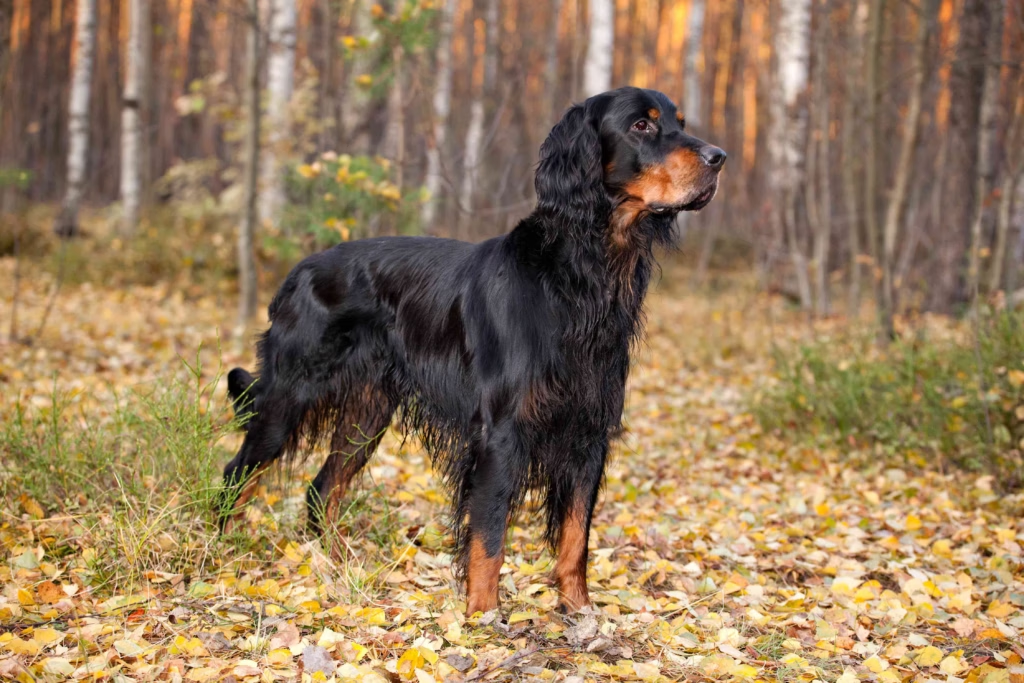
The Gordon Setter is the embodiment of power dressed in silk. It is the heaviest and most powerful of all setters. This is a fairly large dog of proportionate build, with strong bone (but not coarse) and well-developed dry muscle, allowing it to develop significant galloping speed.
Head and Muzzle
The head is quite broad and voluminous, deeper than that of the English Setter, with a massive rounded skull. The transition from forehead to muzzle (stop) is well defined, giving the dog an attentive expression. The muzzle is quite long, rectangular, does not taper towards the nose, and is equal in length to the skull. The nasal bridge is straight. The nose is large, broad, with open nostrils, and always black. The lips are slightly pendulous but not loose.
The eyes are oval, of medium size, set straight – neither deep-set nor protruding. The eye colour is exclusively dark brown. The Gordon’s gaze is intelligent, calm, and friendly. The ears are large, thin, and soft to the touch. They are set low (at eye level), lie close to the cheeks, and are covered with long, silky hair.
Body and Limbs
The neck is long, dry, arched, and without dewlap. The chest is deep (reaching the elbows) and of moderate width, with well-sprung ribs. This ensures a large lung capacity for prolonged running. The loin is short and wide, slightly arched. The croup is fairly flat, broad, and slightly sloping.
The tail is set slightly below the level of the back, thick at the root and tapering towards the tip. It should be straight or sabre-shaped but never curled into a ring. When moving, the dog carries it level with the back or slightly lower. The decorative hair on the tail (feathering) begins almost at the root and tapers off towards the tip, resembling a feather.
The limbs are straight, parallel to each other, with powerful bone. The feet are “cat-like”, compact, with tightly closed toes and plenty of hair between them. This allows the dog not to sink into marshy ground.
Coat and Unique Colour
The coat can be straight or slightly wavy (but not curly); it is long, soft, glossy, and silky. The longest hair is found on the ears, chest, under the belly, on the back of the thighs (breeches), and on the tail. The colour is the breed’s calling card: a deep, shiny coal-black (without any brown tinge) with bright chestnut-red (mahogany) tan markings.
The placement of tan markings is strictly regulated:
- Two clear spots above the eyes (pips).
- On the sides of the muzzle (but not higher than the nose).
- On the throat and chest (two spots).
- On the inside of the hind legs.
- On the front legs up to the wrists (pasterns).
- Around the vent (anus).
A small white mark on the chest is allowed by the standard but is not desireable. Inexperienced dog lovers often confuse this breed by colour with other dogs. For instance, if you look up the Black and Tan Coonhound, you will notice a similiarity in colour, but these are breeds with completely different working styles. However, in terms of body structure, the Gordon is very close to its relative, the Irish Red Setter, although the latter is lighter and leggier.
Character: Temperament and Behaviour
Compliant and balanced, Scottish Setters are born intellectual hunters. It is considered that Scots are the most enduring and workable of all setters, but they are also the most “serious”. They can work in any weather conditions and on any terrain. Their unique nose allows them to seek prey even in hard-to-reach places where other dogs might simply refuse to go.
Like other setters, Scots are good-natured and completely non-aggressive towards people. However, unlike their brethren, the Gordon can be somewhat distrustful of strangers. He won’t rush to hug the first person he meets, as a Golden Retriever might. He will assess the person first, and only then allow himself to be stroked. This makes them decent watchdogs – they will warn of a stranger’s arrival with a bark, but they won’t attack a human.
That said, every Gordon Setter is an individual. One might be calmer and more observant, while another is a restless jester who needs entertainment 24 hours a day. Naturally, much depends on upbringing. Representatives of this breed are very attached to people; they often choose one “main” master to whom they give their heart completely. However, from time to time, they may show stubbornness and independence, though this is quite rare and more often indicates that the dog considers your task pointless.
To better understand the difference in temperament between setters, it is useful to compare them. The English Setter is usually softer and more “cat-like” in behaviour. The energetic Irish Red Setter is an explosion of emotions and speed. The rare Irish Red and White Setter is considered a calmer worker. The Gordon, amongst them, is the professor: prudent, strong, and reliable.
Health: Typical Diseases and Prevention
Coat Care and Hygiene
The Scottish Setter is a dog that demands attention from humans, and plenty of time too. Caring for his luxurious coat is a whole ritual. If you aren’t ready for hair on the carpets or regular brushing, this breed is not for you.
Grooming
Several times a week (or better yet, every other day), the coat of these Scots needs to be brushed out to prevent matting and to remove dirt, burrs, and plant seeds after a walk. Use a metal comb with long teeth and a slicker brush. Pay special attention to the area behind the ears, under the armpits, and on the breeches – tangles form there most quickly.
You can bathe a Gordon once a month or as needed, ensuring you use a special shampoo and conditioner for long-haired dogs. A little specialist oil can be added to the shampoo for shine. The dog’s coat has self-cleaning abilities, so frequent washing with aggressive products can strip away the protective fatty layer.
Clipping and Trimming
These dogs also need regular trimming to look tidy. This isn’t a “buzz cut” with clippers, but filigree work with scissors.
- Hair on the neck (from chin to brisket) is clipped short with clippers to create a noble profile.
- Hair on the top of the ears is trimmed (about 1/3 down) so the ears don’t look too heavy.
- Be sure to trim the hair between the paw pads. If you don’t do this, dirt accumulates, mats form, ice balls freeze there in winter, and it hurts the dog to walk.
- The breeches and tail feathering are tidied up with scissors to give a beautiful contour.
Training and Socialisation: Finding a Common Language
Education of a Scottish Setter must begin from the first days of his arrival in your home. These are intelligent but late-maturing dogs. Psychologically, they remain puppies until 2-3 years of age. So, arm yourself with patience.
The puppy needs to be taught all the basic commands, such as: “Sit!”, “Leave it!”, “Heel!”, “Come!”. The recall command (“Come!”) is critically important because, having caught a scent outside, a setter can “lose its hearing”. The atmosphere during training should always be friendly. Gordons cannot tolerate rudeness or physical punishment – they withdraw into themselves and refuse to work. The puppy must trust you completely; then he will obey you unquestioningly.
It is desirable to accustom the Scottish Setter to hand signals and a whistle. Hunting dogs should orient themselves to silent commands so as not to scare the game. Introduction to the outside world is an extremely vital moment. Socialisation should be gentle but persistent. Show the puppy cars, other people, trains, and loud city sounds. This forms a strong psyche.
Diet: Menu of a Champion
Pros and Cons of the Breed
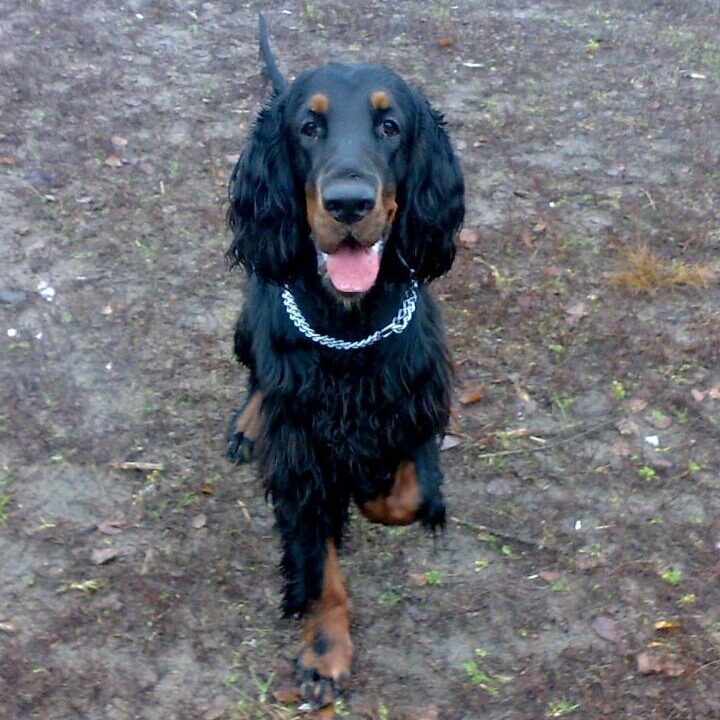
To finally decide if this breed is right for you, consider the objective advantages and disadvantages.
Pros
- Incredible Beauty: One of the most beautiful dogs in the world.
- Balanced: Calmer at home than the Irish Setter.
- Intellect: Capable of making independent decisions.
- Health: A fairly robust breed with good immunity.
- Attitude to children: Patient and gentle.
Cons
- Need for Activity: Requires long walks (minimum 2 hours a day).
- Complex Coat Care: Dirt, burrs, and the necessity of brushing.
- Drooling: Due to the lip structure, saliva may flow (especially before food or after drinking).
- Hunting Instinct: May run off after a bird or cat.
- Late Maturation: Remains a “big puppy” for a long time.
Interesting Facts About Gordon Setters
- This is the only setter breed that was developed in Scotland.
- Amongst hunters, the Gordon is called the “Black Avenger” due to its impressive efficiency in the field and formidable appearance.
- The breed has a specific manner of working – they check the terrain slightly slower than the “Irish”, but more thoroughly, missing not a single bush.
- The first representatives of the breed were not only black-and-tan; tricolour and black-and-white individuals were also found in the Duke’s castle, but the standard fixed specifically on black & tan.
- Gordons are often used not only as gundogs but also in therapy work due to their empathy.
Frequently Asked Questions (FAQ)
Is a Gordon Setter suitable for a flat?
Yes, but on the condition that you provide him with very active walks. Without physical exertion in a flat, he may start chewing furniture out of boredom. The ideal option is a detached house with a fenced garden.
Do they shed a lot?
Yes, shedding is seasonal (spring/autumn) and quite heavy. But even in the off-season, black hairs will be noticeable on light furniture.
Do these dogs bark?
They have a deep, bass bark. They don’t bark without reason (like terriers), but they will definitely notify you if someone approaches the door.
How much does a puppy cost?
The price depends on the pedigree and prospects. Judge transparency rather than the sum: a written contract, registration papers, screening results for the hereditary conditions of the breed, a vaccination record, and the chance to meet the mother with her litter. That is what separates a responsible breeder from a dealer.
Video About the Breed
- Devoted and gentle
- A hardy hunter
- Calmer than other setters
- A handsome black-and-tan colour
- Needs plenty of exercise
- Coat care
- Risk of gastric torsion
- Not a flat dog
| English Setter | Irish Setter | German Shorthaired Pointer | |
|---|---|---|---|
| Height | 61–69 cm | 55–67 cm | 53–64 cm |
| Energy | 4.5 | 5 | 5 |
| Apartment | 2 | 2 | 2 |
| Beginners | 3 | 3 | 3 |
How does the Gordon differ from other setters?
Does the Gordon need a lot of walking?
Is the Gordon suitable for a flat?
FCI Standard No. 6 · The Kennel Club
For apartments · For kids · For beginners · Active · Smartest · Hypoallergenic · All rankings →