

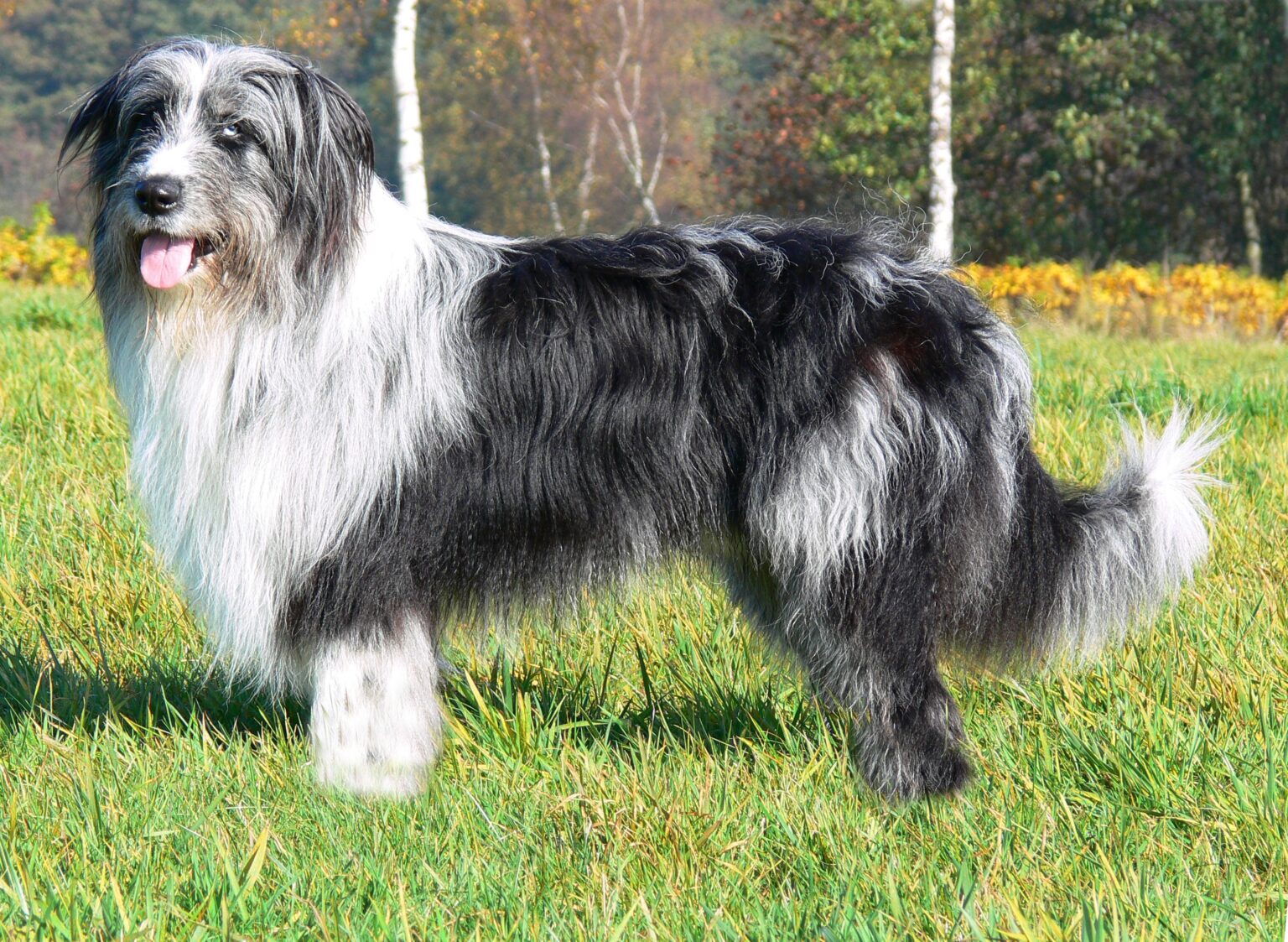
| Height | 50–65 cm |
| Weight | 26–30 kg |
| Lifespan | 12–16 years |
| FCI group | not recognised by the FCI (German, young) |
| Origin | Germany (Westerwald) |
Exact ratings
Common health issues
Nutrition
The Wäller (Waller) is a shining example of how targeted breeding can create a dog that combines the best traits of sheepdogs while remaining an excellent family companion. Representatives of this relatively young breed are not just pets, but true partners for active people ready to share any adventure with their owners. Find out more at Tvaryny.
History of the Breed
The story of the Wäller began in 1994 in Germany. The breed’s creator was Karin Wimmer-Kieckbusch, an experienced Briard breeder. She noticed that many modern breeds suffer from inbreeding and selection aimed exclusively at appearance (show breeding), which often comes at the expense of health and working qualities.
Karin’s goal was to create a dog that would:
- Have robust health and a long lifespan;
- Possess high intelligence and trainability;
- Be people-oriented but not overly intrusive;
- Have a manageable coat structure, allowing the dog to be kept both indoors and outdoors.
To achieve this goal, two herding breeds were chosen: the Briard (French Sheepdog) and the Australian Shepherd (Aussie). From the Briard, the Wäller inherited calmness, confidence, and a certain independance, while from the Aussie, it got energy, a more compact size, and the so-called “will to please”. The breed’s name comes from the creator’s place of residence – the Westerwald region, hence “Wäller”.
The first breed club (1. Wäller-Club Deutschland e.V.) was founded in 1995 and still strictly controls breeding, preventing the breed from turning into purely a show dog.
Appearance: Why Every Wäller is Unique
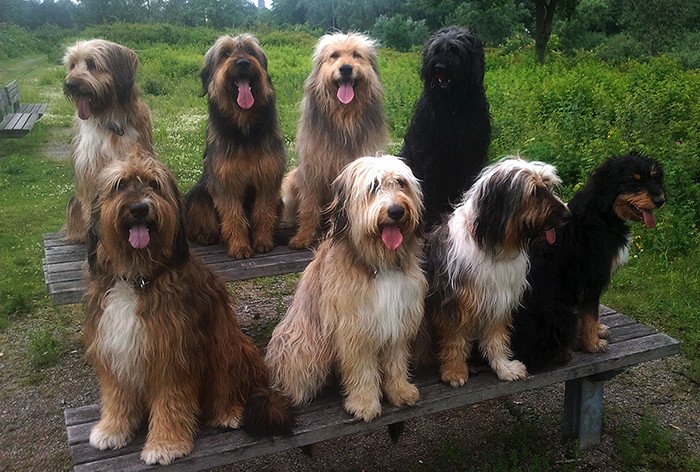
One of the most interesting features of the Wäller is that the breed standard is quite flexible regarding appearance. Since the main priority is character and working qualities, dogs can differ in coat type, colour, and even build. This gives every representative of the breed a unique charm.
Size and Build
The Wäller is a medium to large-sized dog. They are athletic and muscular, but not heavy. Their movements are free and sweeping, testifying to their herding roots. They must be enduring, capable of covering large distances without signs of fatigue.
| Parameter | Males | Females |
|---|---|---|
| Height at withers | 55 – 65 cm | 50 – 60 cm |
| Weight | 25 – 35 kg | 20 – 30 kg |
| Life expectancy | 13 – 15 years | 13 – 15 years |
Coat and Colour
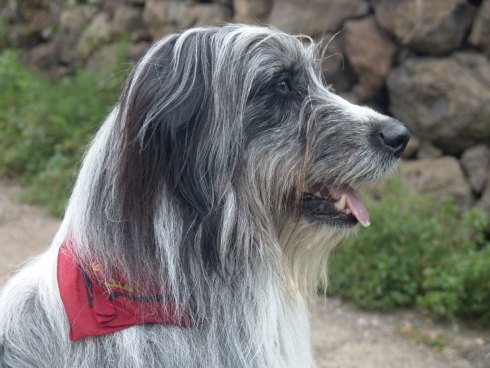
The Wäller’s coat is its calling card. It is long, thick, with a well-developed undercoat. The structure of the coat can vary from wavy to shaggy. The face always features the moustache and beard characteristic of Briards, as well as a fringe, which, however, should not completely cover the eyes so as not to obstruct vision.
Any colours are permitted. You might meet Wällers in merle (marbled), black, red, fawn, grey, or combinations thereof. The genetic diversity of colours, inherited from the Australian Shepherd, makes every puppy a unique work of nature.
Character and Temperament
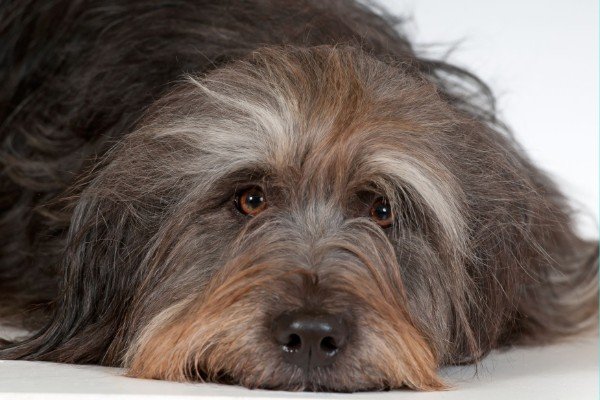
It is precisely for their character that people choose this breed. The Wäller is an extremely intelligent, cheerful, and balanced dog. They lack the excessive nervousness sometimes found in purebred Aussies but are much more active than classic large Molossers.
- Intellect. They pick up new commands on the fly. These are dogs that like to think. Routine repetition of the same action can bore them, so the owner will have to get creative.
- Friendliness. Wällers are usually very attached to their family. They do not tolerate loneliness well and strive to be at the centre of events.
- Guarding qualities. Despite their friendliness, they have retained a guarding instinct. They are vigilant and will warn of approaching strangers with a bark, but rarely show unprovoked aggression. In this regard, they are slightly reminiscent of the Picardy Sheepdog, combining vigilance with prudence.
It is important to understand that the Wäller is a working dog at heart. Without proper physical and mental stimulation, they may start “herding” family members, children, or other animals by nipping at their heels. This isn’t aggression, but a manifestation of unrealised instinct.
Upbringing and Training
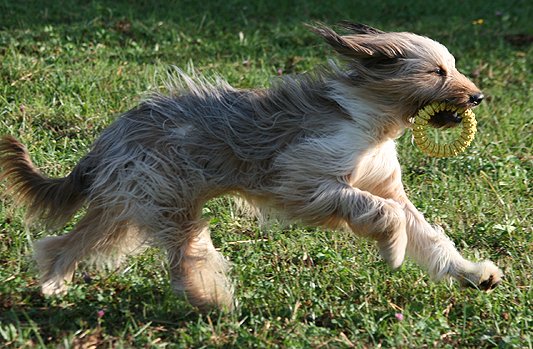
The Wäller is a dream for lovers of canine sports. Thanks to their genetics, they show outstanding results in disciplines such as:
- Agility (obstacle courses);
- Obedience (high-level compliance);
- Dog Frisbee;
- Search and rescue service.
Puppy training needs to start from the first days in the home. Wällers are sensitive to the owner’s tone of voice. Harsh training methods, shouting, or physical punishment are unacceptable – this can cause the dog to withdraw or become timid. Only positive reinforcement, play, and motivation work.
Important: The Wäller has a tendency to make independent decisions. If you don’t give them a command, they will decide what to do themselves, and that decision won’t always please you.
Health and Genetics
Care and Grooming
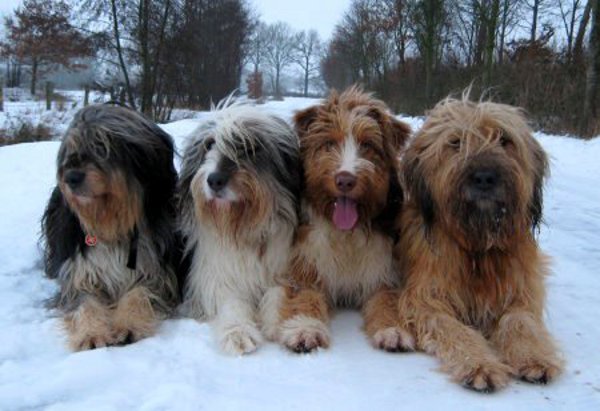
Caring for a Wäller requires some time. Their coat is prone to forming mats, especially during moulting or if the dog walks often in woods or tall grass.
- Brushing: At least 1-2 times a week. During the change from puppy to adult coat (around 8-12 months), you will likely have to brush daily.
- Trimming: Wällers don’t need model haircuts, but a hygienic trim (paws, area under the tail) is necessary. Some owners shorten the fringe to open up the dog’s eyes.
- Bathing: As needed. The Wäller’s coat has self-cleaning properties – mud dries and falls off. But if the dog has rolled in something fragrant, a bath is inevitable.
Nutrition: The Key to Energy
Comparison with Other Breeds
To better understand the Wäller’s place in the dog world, it is worth comparing it with other popular breeds. This will help you decide if this dog is really right for you.
Wäller vs Bulgarian Shepherd
If you are looking for a reliable guard for a large territory, the Bulgarian Shepherd (Karakachan dog) would be a better choice. It is a powerful, serious guardian that is less oriented towards games and sports than the Wäller. The Wäller is a sporting companion, whereas the Bulgarian Shepherd is a steadfast sentry.
Wäller vs Cavapoo
For those living in a flat who don’t plan on running marathons with their pet, it is better to look at the Cavapoo. This designer breed is significantly smaller, requires less physical exertion, and is simpler to care for. A Wäller will demand a change of lifestyle to a more active one, whereas a Cavapoo will easily adapt to your rhythm.
Pros and Cons of the Breed
| Pros (+) | Cons (-) |
| High intelligence and trainability | Requires significant physical exertion (not for the lazy) |
| Robust health and lower risk of genetic diseases | Coat requires regular care, brings dirt in from outside |
| Excellent companion for children and families | May show “herding” instinct, nipping at heels |
| Balanced psyche (better than many pure breeds) | Not suitable for kennel living without human contact |
| Original appearance | Can be a carrier of the MDR1 gene |
Interesting Facts About Wällers
- Every dog is a surprise. Puppies with completely different coat types and colours can be born in a single litter. You never know exactly what the adult dog will look like when you choose a 2-month-old pup.
- Not recognised by the FCI. The Wäller is still not recognised by the Fédération Cynologique Internationale (FCI) as a separate breed. This is a conscious stance by the club founders, who fear that official recogniton would lead to commercialisation and a decline in the health of the stock.
- Therapy dog. Thanks to their empathy, Wällers are often used as therapy dogs in hospitals and care homes in Germany.
Frequently Asked Questions (FAQ)
Is a Wäller suitable for a flat?
Yes, provided you ensure they get sufficient exercise. This means a minimum of 2-3 hours of active walking per day with elements of training. If the dog just lies on the sofa, it will start to destroy the flat out of boredom.
Do they shed a lot?
Shedding is moderate, but due to the length of the coat, it is noticeable. If you regularly comb out the undercoat, the amount of hair in the house will be minimal. The structure of the coat is such that it rolls into “tumbleweeds”, which are easier to clean up than the tiny needles of short-haired dogs.
How do they relate to children?
Wällers adore children. They are patient and playful. However, due to their size and activity, they can accidentally knock over a small child. You should also watch out to ensure the dog doesn’t start “herding” children, rounding them up into a group.
Is it hard to buy a Wäller puppy?
Yes, it can be tricky. The main kennels are located in Germany. Since breeding is strictly controlled by the club, the waiting list for puppies can be several months long. Be wary of adverts selling “Wällers” without documents — often these are just random mongrels whose health nobody can guarantee.
- Balanced, affectionate, loves children
- Robust health thanks to a broad gene pool
- Clever, easy to train
- Versatile family and sporting dog
- Needs exercise and mental work
- Very variable appearance (bred for temperament)
- Long coat needs grooming
- Rare outside Germany
| Australian Shepherd | Briard | Border Collie | |
|---|---|---|---|
| Height | 46–58 cm | 56–68 cm | 48–56 cm |
| Energy | 5 | 4 | 5 |
| Apartment | 2 | 2 | 2 |
| Beginners | 2.5 | 2.5 | 2.5 |
What is the Wäller's origin?
Is the Wäller good for a family with children?
Why do Wällers look so different from one another?
Young German breed (since 1994) · Wäller-Zuchtgemeinschaft
For apartments · For kids · For beginners · Active · Smartest · Hypoallergenic · All rankings →