

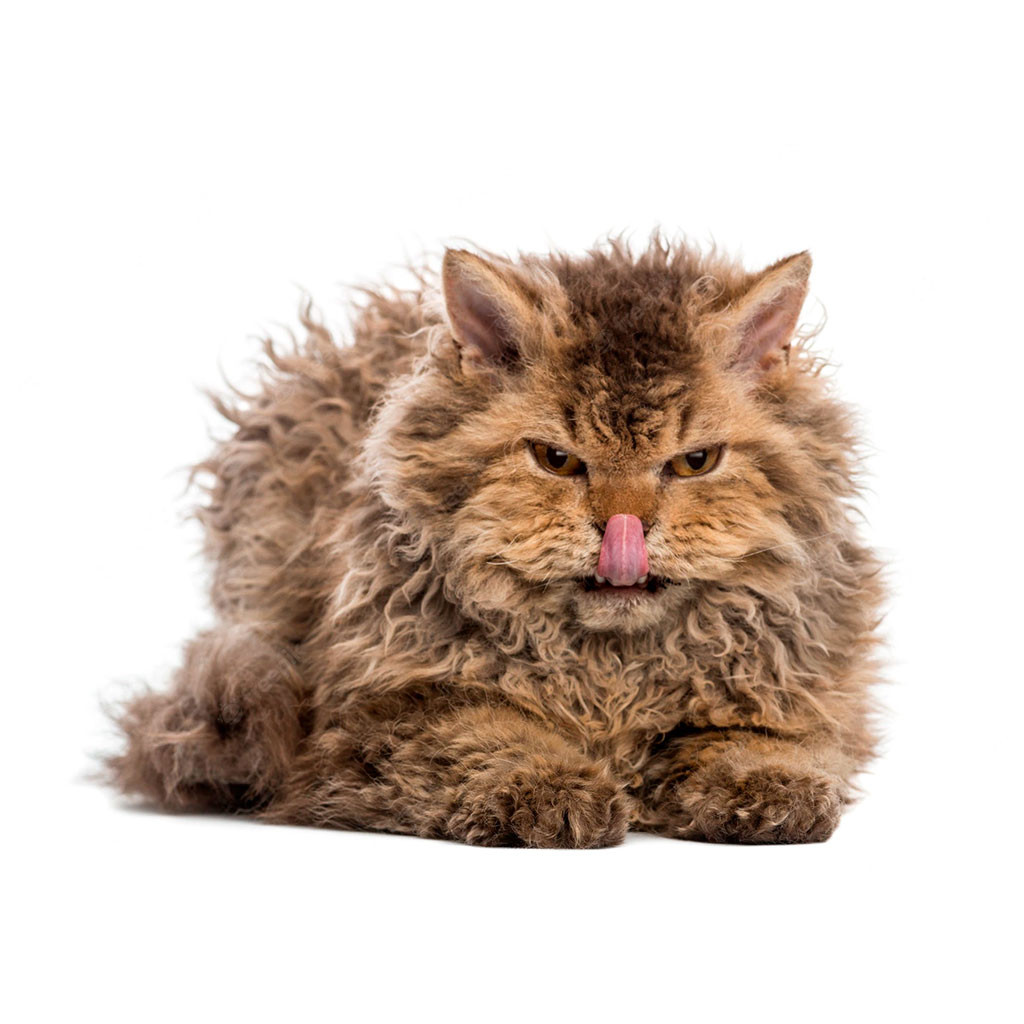
| Weight | 4.5–7 kg |
| Lifespan | 13–15 years |
| Coat | curly (rex), short or long |
| Recognition | TICA · CFA · WCF |
| Origin | USA (Montana) |
Exact ratings
- Hypertrophic cardiomyopathy (HCM)
- Polycystic kidney disease (PKD, from the Persian line)
- Hip dysplasia
- Gum and dental disease
- A tendency to gain weight
Quality food for house cats, with weight control. Brush the curly coat regularly (gently, so as not to straighten the curls); dental care; buy a kitten from a breeder who tests for HCM/PKD.
The Selkirk Rex is a unique breed of cat, often called the “cat in sheep’s clothing” due to its luxurious curly coat. These cats have a pleasant, calm, and exceptionally affectionate family nature, making them wonderful companions. The breed comes in two varieties – shorthaired and longhaired – but both are distinguished by their thick, soft curls and sturdy build, reminiscent of British or Persian cats. You can read more about this unique breed on Tvaryny. Selkirk Rexes appreciate home comforts, adore their owners’ attention, and are not averse to a tasty meal. They are considered a relatively healthy breed, and their main care focuses on their unusual coat, which, although not requiring daily combing, does need occasional washing and proper grooming to maintain its beautiful curls.
Selkirk Rex: A Brief Breed Overview
| Characteristic | Description |
| Origin | United States of America (Montana) |
| Year of breed establishment | 1987 |
| Coat type | Curly (shorthaired and longhaired varieties) |
| Lifespan | 12-15+ years |
| Height at withers | Approximately 30–35 cm |
| Weight | Males: 4–7 kg, Females: 3–5 kg |
| Temperament | Affectionate, calm, patient, playful, sociable |
| Grooming needs | Moderate (coat grooming, ear cleaning) |
| Shedding | Moderate |
| Compatibility with children and other animals | High |
History of the Selkirk Rex Breed
The history of the Selkirk Rex breed began quite unexpectedly and not too long ago. In 1987, in Montana, USA, an unusual kitten with a curly coat and curled whiskers was born in a litter from a stray cat at an ordinary animal shelter. A shelter worker, Peggy Voorhies, noticed this unique kitten and gave it to a local Persian cat breeder, Jeri Newman.
Jeri named the curly kitten Miss DePesto of Noface, after a character from the TV series “Moonlighting.” When Miss DePesto grew up, Jeri crossed her with a black Persian male. The litter produced six kittens, three of whom inherited their mother’s curly coat. This proved that the gene responsible for this cat’s curliness is dominant, unlike the recessive genes that cause curly coats in other Rex breeds, such as the Devon Rex or Cornish Rex. This means that for a curly kitten to be born, only one parent needs to carry the gene.
Jeri Newman named the new breed “Selkirk Rex” after her stepfather, Selkirk, making this breed unique as it is the only cat breed named after a real person. The second part of the name, “Rex,” indicates the presence of a curly coat.
To expand the gene pool and establish the breed standard, Selkirk Rexes were crossed with other breeds, including:
- Persians (for sturdiness and head shape)
- Exotic Shorthairs
- British Shorthairs and Longhairs (for a strong bone structure and plush fur)
- American Shorthairs
Thanks to this selective breeding work, a stable type of cat with a curly coat, robust build, and balanced temperament was established. The breed was officially recognised by The International Cat Association (TICA) in 1992, and by the Cat Fanciers’ Association (CFA) in 2000. Today, Selkirk Rexes are still considered a relatively rare breed, but their popularity is growing due to their unique appearance and wonderful temperament.
What the Selkirk Rex Looks Like: Standard and Appearance
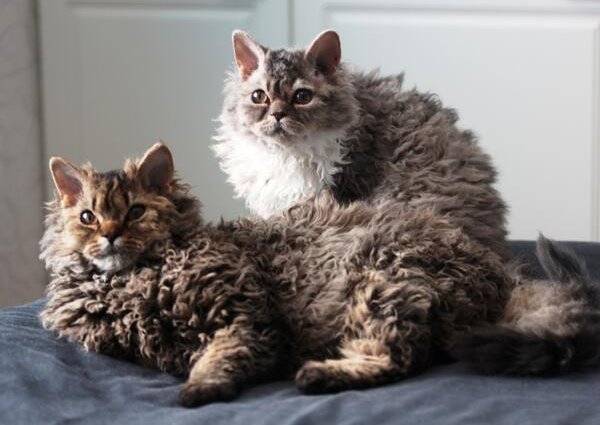
The Selkirk Rex is a medium to large-sized cat with a massive, sturdy build and heavy boning, giving an impression of strength and power. They have a characteristic “plush” appearance, which is emphasized by their unique curly coat.
Head: Large, rounded, with a broad skull and full cheeks. The muzzle is of medium width, rather short, with prominent whisker pads. The chin is strong and well-developed. A characteristic feature is their curly whiskers, which can be brittle.
Eyes: Large, round, and set wide apart. Eye colour can be any shade and usually harmonises with the coat colour. The expression is open and friendly.
Ears: Medium-sized, broad at the base, with slightly rounded tips. They are set wide on the head, continuing its rounded contour.
Body: Rectangular, muscular, with a broad chest and a level back. The build is described as semi-cobby, meaning a sturdy but not overly short body.
Paws: Medium length, with strong bones and rounded pads. They appear proportional to the body.
Tail: Medium length, thick at the base, tapering slightly to a rounded tip. It is covered in curly fur.
Coat: This is the main distinguishing feature of the breed. The coat is soft, plush, dense, and noticeably curly all over the body, forming loose, unstructured ringlets. Unlike other Rex breeds, all three hair types are curled in the Selkirk Rex: guard hairs, awn hairs, and down hairs. This gives the coat exceptional density and volume. There are two varieties:
- Shorthaired (Selkirk Rex Shorthair): The coat is dense and plush, with distinct waves and curls.
- Longhaired (Selkirk Rex Longhair): The coat is longer, the curls are more pronounced, forming cascading ringlets, especially on the neck (ruff) and tail.
It’s important to note that the degree of curliness can vary depending on age, sex, hormonal balance, and even climate. Kittens are born curly, then their coat may temporarily straighten at around six months of age, before curling again to achieve its final appearance by the age of two.
Colours: The Selkirk Rex breed standard allows for absolutely all possible colours and patterns, including colourpoints, bicolours, tabbies, solids, and others. This makes each cat unique not only in coat texture but also in colour. Similarly diverse in coat patterns, albeit with a different coat type, is the Neva Masquerade, for instance.
Selkirk Rex Character: Temperament and Behaviour
The Selkirk Rex is known for its exceptionally pleasant, balanced, and affectionate character. They are true “teddy bears,” not just in appearance but also in nature. They have inherited the best traits from the breeds involved in their creation: the calmness of Persians, the playfulness of Exotics, and the sociability of British Shorthairs.
Key character traits of the Selkirk Rex:
- Affectionate and people-oriented: These cats adore being near their owners. They will happily sit on your lap, sleep beside you, and accompany you in your daily chores. They need attention and interaction.
- Patient and tolerant: Selkirk Rexes are usually very patient, making them excellent companions for families with children. They tolerate cuddles and games well, provided children handle them gently.
- Calm but playful: They are not hyperactive cats but enjoy playing, especially when young. Teaser wands, balls, and interactive toys will help keep them active. However, they prefer to spend most of their time relaxing peacefully beside their favourite people.
- Sociable: Selkirk Rexes usually get along well with other cats and dogs, especially if they have grown up together. They are not prone to conflict and can become part of a large animal family.
- Intelligent and inquisitive: These cats are quite clever and can learn simple tricks or rules of behaviour. Their curiosity can sometimes lead them to explore new places in the house.
- Not overly vocal: They have a quiet, pleasant voice and do not usually bother you with loud meowing without reason.
Overall, the Selkirk Rex is an ideal family pet for those seeking a calm, gentle, and devoted friend. They do not like to be left alone for long periods, so they are better suited to families where someone is often at home.
Selkirk Rex Health: Common Diseases and Prevention
The Selkirk Rex is considered a relatively healthy breed, partly due to the diverse gene pool resulting from outcrossing with several other breeds. However, like any breed, they have a predisposition to certain genetic diseases inherited from their ancestors.
Potential health problems:
- Polycystic Kidney Disease (PKD): This is an inherited condition that can be passed down from Persian and Exotic cats. It is characterised by the formation of cysts in the kidneys, eventually leading to kidney failure. Responsible breeders test their breeding cats for PKD using ultrasound or genetic testing to prevent passing the disease to kittens.
- Hypertrophic Cardiomyopathy (HCM): This is the most common heart disease in cats and can also occur in ancestral breeds (Persians, British Shorthairs). HCM causes a thickening of the heart muscle walls, making it harder for the heart to function. It is diagnosed via an echocardiogram (heart ultrasound). Regular veterinary check-ups and screening of breeding animals help to detect and manage this condition.
- Hip Dysplasia: Although more common in larger cat breeds, it can sometimes be diagnosed in Selkirk Rexes due to their sturdy build.
- Excessive Earwax Production: As with some other curly-coated breeds (including those with curly hair in the ear canals), Selkirk Rexes may experience increased earwax build-up. This requires regular ear checks and cleaning to prevent infections.
- Obesity: Selkirk Rexes have a good appetite and a tendency to gain excess weight, especially if they lead a sedentary lifestyle. Portion control and a balanced diet are key to maintaining a healthy weight and preventing related problems (diabetes, joint issues).
Prevention:
- Choosing a responsible breeder: Ensure the breeder conducts genetic tests and screenings for PKD and HCM on their cats.
- Regular veterinary check-ups: Annual (or semi-annual for older cats) check-ups help detect problems at an early stage.
- Vaccination and deworming: Follow the recommended schedule for vaccinations and parasite treatments.
- Healthy diet and weight control: Provide high-quality food and monitor your pet’s weight.
- Dental care: Regular teeth brushing or using special dental treats will help prevent oral diseases.
With proper care and attention to health, Selkirk Rexes can live long and happy lives, delighting their owners for 12-15 years or even longer.
Selkirk Rex Coat Care and Other Grooming
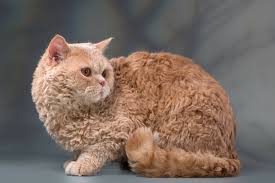
Caring for the unique curly coat of a Selkirk Rex has its own peculiarities, but overall, it is not too complicated. The main rule is not to overdo the combing, to avoid spoiling the natural curls.
Coat care:
- Combing: Unlike many longhaired breeds, Selkirk Rexes do not need daily combing. Frequent combing can straighten the curls and make the coat fluffy rather than curly. It is recommended to use a comb with sparse, wide teeth and comb the coat once or twice a week (for longhaired varieties) or even less often (for shorthaired ones) to remove dead hairs and prevent matting, especially during shedding periods. Do this very gently.
- Shedding: Selkirk Rexes shed, like most cats. During moulting seasons (usually spring and autumn), slightly more frequent combing may be necessary to help remove old fur.
- Bathing: Bathe a Selkirk Rex only when necessary, when the coat becomes dirty or greasy. Use a good quality moisturising cat shampoo. After bathing, do not rub the coat with a towel – this will frizz the curls. Gently pat the coat dry with a soft towel. For drying, you can use a hairdryer on a low heat setting with a diffuser or simply let the coat air dry in a warm room. Lightly “scrunching” the damp fur with your hands will help restore the shape of the curls.
- Kitten coat specifics: Remember that a kitten’s coat goes through several stages of development. Don’t worry if the curls temporarily disappear – they will return.
Other grooming aspects:
- Ear care: Regularly (once every week or two) check the ears for dirt, excess wax, or signs of infection (redness, unpleasant odour). Due to a tendency for increased wax production, cleaning with a special ear lotion and cotton pads may be necessary. Never use cotton buds to clean deep into the ear canal.
- Eye care: Small secretions may accumulate in the corners of the eyes. These can be gently removed with a soft, damp cloth or wipe. If discharge is heavy, yellow, or green, consult a vet.
- Claw trimming: Trim claws every 2-3 weeks using special cat nail clippers to prevent ingrowing and scratching furniture.
- Dental care: Regular brushing with cat-specific toothpaste and a toothbrush will help prevent plaque, tartar build-up, and gum disease.
Although the Selkirk Rex’s coat requires a specific approach, overall care for this breed is no more complicated than for many other cats. The main things are regularity and attention to your curly companion’s needs.
Training and Socialisation of the Selkirk Rex
Selkirk Rexes are intelligent and quick-witted cats that are usually responsive to upbringing and basic training. Their calm and people-oriented nature makes the training process enjoyable for both cat and owner.
Key aspects of upbringing:
- Positive reinforcement: The best training method for Selkirk Rexes is positive reinforcement. Use treats (small pieces!), praise, and affection to encourage desired behaviour. Punishing a cat is usually ineffective and can cause fear or distrust.
- Litter tray training: Selkirk Rexes are usually easy to litter train, especially if the kitten comes from a responsible breeder where it has already learned this from its mother. It’s important to keep the litter tray clean.
- Scratching post training: To protect furniture, it’s important to train kittens to use a scratching post from an early age. Place it in an accessible spot and encourage your cat to use it. You can try different types of scratching posts (vertical, horizontal, cardboard) to find one your pet likes.
- Basic commands: Although cats are not dogs, Selkirk Rexes can learn to respond to their name and simple commands like “come,” especially if training is done playfully and with rewards.
- Intellectual stimulation: Due to their intelligence, Selkirk Rexes need mental stimulation. Interactive toys, cat puzzles, and games with their owner will help satisfy their curiosity and prevent boredom.
Socialisation:
Although Selkirk Rexes are naturally very sociable and friendly, early socialisation is still important. Introduce kittens to different people, sounds, and situations in a positive and controlled manner. This will help them grow into confident and well-adjusted cats.
If you have other pets, introduce them to the Selkirk Rex gradually and under supervision. Thanks to their patient nature, they usually get along well with other cats and friendly dogs.
Feeding Your Selkirk Rex: Key Recommendations

Proper nutrition is key to your Selkirk Rex’s health and longevity. As this breed has a tendency to gain excess weight due to a good appetite and a love for a relaxed lifestyle, dietary control is particularly important.
Main feeding principles:
- Quality food: Choose high-quality commercial cat food (dry and/or wet) appropriate for your cat’s age (kitten, adult, senior), activity level, and health status. Look for foods high in animal protein (meat or fish listed as the first ingredient) and moderate in fat.
- Portion control: This is crucial for Selkirk Rexes. Do not leave food freely available all day (free feeding). Feed your cat 2-3 times a day with clearly measured portions, following the food manufacturer’s recommendations or your vet’s advice. If the cat hasn’t eaten its portion within 20-30 minutes, remove the leftovers.
- Balance of dry and wet food: A combination of dry and wet food can be beneficial. Dry food helps clean teeth, while wet food provides additional hydration, which is important for preventing urinary tract problems.
- Fresh water: Ensure constant access to clean, fresh water. Some cats prefer drinking fountains, which encourage them to drink more.
- Avoid overfeeding with treats: Treats should make up no more than 10% of the daily diet. Use them as rewards during training or as an occasional indulgence.
- Monitor weight: Weigh your cat regularly and assess its body condition. You should be able to easily feel its ribs under a slight layer of fat, and its waist should be noticeable when viewed from above. If you notice signs of excess weight, consult your vet about adjusting the diet or switching to a diet food.
- Do not feed from the table: Human food can be harmful to cats and contribute to weight gain.
A balanced diet and weight control will help your Selkirk Rex stay healthy, active, and avoid obesity-related problems.
Pros and Cons of the Selkirk Rex Breed
| Pros | Cons |
|---|---|
| Unique appearance: Luxurious curly coat makes them distinctive (“sheep cat”). | Needs specific grooming: Cannot be combed often; requires proper care for curls. |
| Extremely affectionate nature: Very gentle, loves cuddles and sitting on laps. | Prone to obesity: Requires strict control of diet and portions. |
| Calm temperament: Balanced, not hyperactive, creates a cosy atmosphere. | Potential hereditary diseases: Risk of PKD and HCM (requires breeder checks). |
| Gets along well with children and animals: Patient and sociable, suitable for large families. | Possible increased earwax production: Needs regular ear cleaning. |
| Intelligent and quick-witted: Learns basic rules easily. | Relatively rare breed: Can be difficult to find a kitten; price may be higher. |
| Two coat varieties: Can choose a shorthaired or longhaired cat. | Dislikes loneliness: Needs human attention and company. |
| Variety of colours: All colours and patterns are permissible. | Shedding: Like most cats, they shed, especially seasonally. |
Interesting Facts About the Selkirk Rex
- Named after a person: The Selkirk Rex is the only cat breed named after a real person (the stepfather of the breed’s founder, Jeri Newman).
- The curl gene is dominant: Unlike the Devon Rex and Cornish Rex, whose curl gene is recessive, the Selkirk’s is dominant. This means a curly kitten can be born even if only one parent is curly.
- “Cat in sheep’s clothing”: The breed earned this nickname due to its thick, soft, and curly coat, reminiscent of sheep’s wool.
- Even the whiskers are curly: A characteristic feature of Selkirk Rexes is their curly and often brittle whiskers (vibrissae).
- Shelter origin: The breed’s progenitor, Miss DePesto, was found in an ordinary animal shelter in Montana.
- Curl development: The coat of Selkirk Rex kittens goes through several stages of development, with the final curl structure forming by about two years of age.
- Diverse ancestry: Persians, Exotics, British Shorthairs, and American Shorthairs were involved in the breed’s formation, ensuring a robust build and a diverse gene pool.
- Any colour allowed: The breed standard permits absolutely all possible coat colours and patterns.
- Not just curly ones: Selkirk Rex litters can also include straight-haired kittens (if one parent is heterozygous for the curl gene). Such kittens are called “Selkirk Straights” and are valuable for the breeding programme, although they cannot be shown as Selkirk Rexes.
Frequently Asked Questions About the Selkirk Rex
Are Selkirk Rexes hypoallergenic?
No, there are no truly hypoallergenic cat breeds. Allergies are caused by the Fel d 1 protein found in a cat’s saliva, skin, and sebaceous glands, not the fur itself. Although some people with mild allergies may tolerate Selkirk Rexes better (possibly due to their coat’s characteristics, which might shed less dander), this is highly individual. If you have allergies, it’s recommended to spend time with a representative of the breed before getting a kitten. It’s also worth considering other breeds, for example, hairless ones like the Sphynx cat, although even they do not guarantee an absence of reaction.
How much grooming does their coat require?
The Selkirk Rex’s coat requires moderate grooming. The main thing is not to comb it too often to preserve the curls. Gentle combing with a wide-toothed comb once or twice a week (or less for shorthaired varieties) to remove dead hairs is sufficient. Bathing is only needed when necessary.
Are Selkirk Rexes suitable for families with children?
Yes, Selkirk Rexes are wonderfully suited for families with children. They are very patient, calm, and affectionate. However, it’s important to teach children how to handle cats gently.
What is the lifespan of a Selkirk Rex?
With proper care and nutrition, Selkirk Rexes typically live for 12-15 years, and sometimes even longer.
How active are these cats?
Selkirk Rexes have a moderate activity level. They are playful, especially when young, but also greatly enjoy relaxing peacefully and spending time on their owner’s lap. They don’t require as much physical exercise as some more active breeds.
Do they shed a lot?
Yes, Selkirk Rexes do shed, like most cats. Shedding can be more noticeable in longhaired individuals and during seasonal changes (spring, autumn). Regular (but not frequent) combing will help control the amount of fur in the home.
- Affectionate, patient, “plush”
- A calm and friendly family character
- Gets on well with children and animals
- Ideal for a flat and a novice
- The curly coat needs care
- A tendency to heart and kidney disease (Persian/British heritage)
- Needs attention, loves company
- Sheds moderately
| British Shorthair | Persian | LaPerm | |
|---|---|---|---|
| Weight | 4–8 kg | 3–7 kg | 3–5 kg |
| Energy | 2.5 | 2 | 3.5 |
| Apartment | 5 | 5 | 5 |
| Beginners | 4.5 | 4 | 4.5 |
Why is the Selkirk Rex called a “cat in sheep's clothing”?
Is the Selkirk Rex good for a family?
What are the main health concerns?
TICA / CFA / WCF standards (Selkirk Rex)
For apartments · For kids · For beginners · Most affectionate · Quietest · Hypoallergenic · All rankings →