

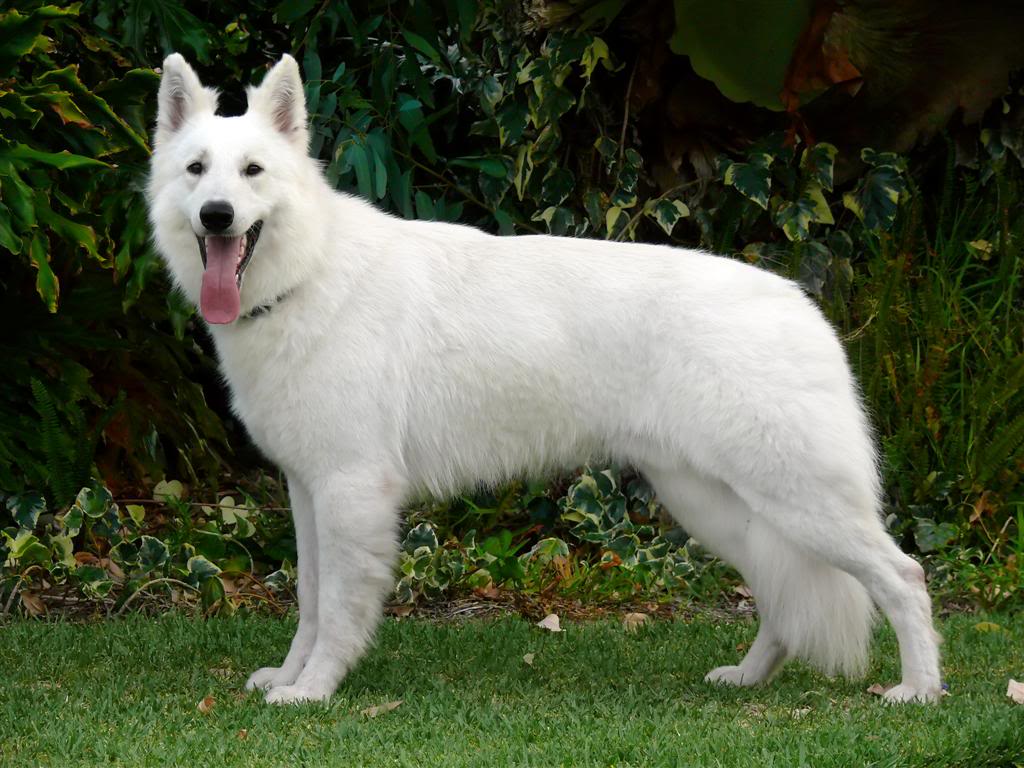
| Height | 53–66 cm |
| Weight | 25–40 kg |
| Lifespan | 12–14 years |
| FCI group | 1 · sheepdogs and cattle dogs |
| Origin | Switzerland |
Exact ratings
- Hip and elbow dysplasia
- Degenerative myelopathy (DM)
- Gastric torsion (bloat)
- Allergies and skin problems
- Pancreatic insufficiency (EPI, less often)
Quality food for an active large breed, with controlled growth in puppyhood (joints) and feeding in small portions (torsion risk). Regular brushing (heavy shedding); exercise, mental work and gentle training.
The White Swiss Shepherd Dog (Berger Blanc Suisse) is the embodiment of elegance, strength, and intelligence, wrapped in a dazzling white coat. These active, agile, and incredibly self-assured dogs become more than just pets; they are true members of the family, the best of friends for children, and reliable companions for adults. Intelligent, friendly, and endlessly loyal, these snow-white beauties will never let their owner down. Their physical prowess and devotion can win anyone’s heart, as few can resist the charm of this majestic, snowy creature! You can find out more about them and other breeds on Tvaryny.
White Swiss Shepherd Dog: A Breed Overview
| Characteristic | Description |
|---|---|
| Origin | USA, Canada, Switzerland (standardisation) |
| Official FCI Recognition | 2002 (provisional), 2011 (full) |
| Lifespan | 12-14 years |
| Height at withers | Dogs: 58-66 cm; Bitches: 53-61 cm |
| Weight | Dogs: 30-40 kg; Bitches: 25-35 kg |
| Temperament | Lively, vigilant, intelligent, friendly, devoted, non-aggressive |
| Use | Companion, family dog, sports, rescue work, therapy |
| Coat Colour | Pure white |
| Coat Types | Short-haired (straight, dense, with undercoat); Long-haired (straight, long, with undercoat) |
History of the White Swiss Shepherd Dog
The history of the White Swiss Shepherd Dog (WSSD) is closely intertwined with the history of the German Shepherd Dog. In the late 19th and early 20th centuries, when Max von Stephanitz was establishing the German Shepherd breed, the white coat was one of several colour variants, although not the most common. The first registered German Shepherd, “Horand von Grafrath,” had a white grandfather. However, in the 1930s in Germany, the white coat began to be considered a fault, incorrectly associated with various health problems (for which there was no scientific evidence), and dogs of this colour were excluded from breeding programmes. Some sources claim the reason was an attempt to “perfect” the breed, and the white colour was associated with albinism, a genetic anomaly. However, WSSDs are not albinos; they have dark eyes and dark pigmentation on their nose and lips.
Fortunately, the white shepherd dogs survived in the USA and Canada, where they had been imported earlier. It was here in North America that they continued to be bred as “White German Shepherds” and enjoyed considerable popularity. They were valued for their working abilities, intelligence, and a gentler character compared to some German Shepherd lines. In the early 1970s, the first white shepherds were imported into Switzerland. An American dog named Lobo, born on 5th March 1966, is considered one of the founders of the breed in Europe. His descendants, along with other imported dogs, formed the basis for the deliberate breeding of white shepherds as a separate breed. It was Switzerland that took responsibility for standardising and promoting the breed internationally, which led to its current name.
In June 1991, the breed was registered in the Swiss Stud Book (SHSB) as Berger Blanc Suisse (White Swiss Shepherd Dog). Gradually, the breed gained recognition in other European countries. The Fédération Cynologique Internationale (FCI) provisionally recognised the breed in 2002, with full recognition following in 2011. In the UK, White Swiss Shepherd Dogs are a relatively recent addition, but they are rapidly winning the hearts of dog lovers with their beauty, intelligence, and loyalty, successfully competing with other popular shepherd breeds like the Australian Shepherd.
What Does a White Swiss Shepherd Dog Look Like: A Detailed Description
The White Swiss Shepherd Dog is a strong, muscular, medium-sized dog with elegant and harmonious body contours, reminiscent of a classic German Shepherd but always with an exclusively white coat. It gives the impression of a lively, attentive, and well-balanced animal.
The Head is proportionate to the body, wedge-shaped, lean and clearly defined. The skull is slightly rounded with a subtle central furrow. The stop (the transition from forehead to muzzle) is gentle but noticeable. The muzzle is medium-length, powerful, and tapers gradually to the nose. The bridge of the nose is straight.
The Nose is medium-sized and preferably black. A lighter or “snow nose” (seasonal lightening of pigment) is permitted, but black is preferred.
The Lips are dry, tight-fitting, and black.
The Bite is a strong scissor bite with a full set of teeth (42 teeth according to the dental formula).
The Eyes are medium-sized, almond-shaped, and set slightly obliquely. The eye colour ranges from dark brown to brown. The eyelids are tight with black rims. The expression is lively, intelligent, and attentive. Blue or very light eyes are a disqualifying fault.
The Ears are erect, set high, and point forward, parallel to each other. They are shaped like an elongated triangle with slightly rounded tips. When in motion or at rest, the dog may lay its ears back.
The Neck is of medium length, muscular, with no dewlap, and flows smoothly into the withers.
The Body is strong and slightly elongated (the ratio of body length to height at the withers is approximately 10:8.5).
The Withers are well-pronounced.
The Back is straight and firm.
The Loin is strong and muscular.
The Croup is long, of medium width, and slopes gently to the base of the tail. Unlike some lines of the long-haired German Shepherd Dog, the croup of the WSSD should not be overly sloped.
The Chest is oval, deep (reaching the elbows), but not too broad. The forechest is well-developed.
The Belly is moderately tucked up.
The Tail is sabre-shaped, bushy, set low, and reaches at least to the hock. At rest, it hangs straight down or is slightly curved. In motion or when excited, it is carried higher, but not above the line of the back.
The Limbs are strong and muscular with a solid bone structure. The forelegs are straight and parallel when viewed from the front. The hind legs are straight and parallel when viewed from behind, and well-angulated from the side.
The Paws are oval and compact with tightly arched toes. The pads are firm and black. The nails are dark, preferably black.
The Coat comes in two types:
- Short-haired (Stockhaar): A dense, close-fitting, straight topcoat with a plentiful undercoat. The topcoat is of medium length.
- Long-haired (Langstockhaar): A long, straight topcoat with a plentiful undercoat. The hair on the ears, muzzle, and front of the legs is shorter. It forms a distinct “mane” on the neck and “trousers” on the back of the legs. The tail is very bushy. A slight wave is permissible.
The Colour is exclusively pure white. The skin is dark, which is clearly visible under the white coat, especially on the belly and inner thighs.
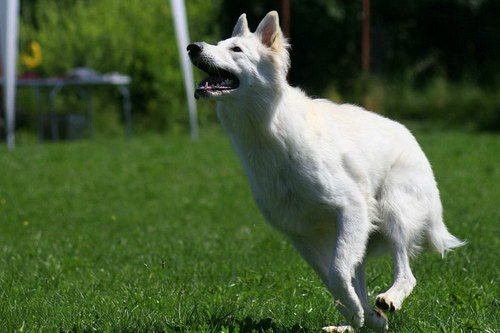
The Gait of the WSSD is rhythmic and ground-covering, with a good drive from the hindquarters and a free-reaching fore-action. It has a light, flowing trot.
Character of the White Swiss Shepherd Dog: Temperament and Behaviour
The White Swiss Shepherd Dog has an exceptionally well-balanced and friendly character. It combines liveliness, alertness, and high intelligence with a wonderful gentleness and devotion to its family. This is not an aggressive, timid, or nervous dog. It is attentive to its owner, easy to train, and always eager to please.
Intelligence and Trainability: WSSDs are very clever dogs that quickly grasp new commands and are easy to train. They love working with people and carry out tasks with enthusiasm. Their intelligence makes them successful in various dog sports such as obedience, agility, and frisbee, as well as in service roles like search and rescue and therapy work.
Loyalty and Family Attachment: These are true family dogs that form deep bonds with all members of their “pack.” They adore being in human company, actively participate in all household activities, and can find prolonged solitude difficult. Their loyalty is boundless, and they are ready to do anything for their loved ones. The WSSD is often called a “shadow dog” for its desire to be constantly by its owner’s side.
Temperament with Children and Other Animals: White Swiss Shepherd Dogs typically get along brilliantly with children, showing patience, gentleness, and playfulness. They become faithful friends and reliable protectors for children. However, as with any dog, interactions with very young children should be supervised. With proper socialisation, WSSDs also live happily with other pets, including cats and other dogs. They are not prone to dominance and are usually peaceable.
Guarding Qualities: Although the WSSD is not an aggressive breed, it has a well-developed instinct to protect its territory and family. It is vigilant and will always alert its owner to the approach of strangers with a loud bark. However, it does not show unprovoked aggression, but rather demonstrates restraint and caution. It can be a little wary of strangers at first but relaxes quickly once it senses there is no threat. This makes it a good watchdog, but you shouldn’t expect the fierce aggression characteristic of some other guarding breeds, for example, certain lines of the Briard, which are also excellent shepherds and guard dogs.
Energy and Need for Activity: White Swiss Shepherd Dogs are active and energetic dogs that require regular physical exercise and mental stimulation. They need long walks, the opportunity to run freely, and active games. A bored WSSD might find its own entertainment, which owners may not always appreciate (e.g., chewing furniture or excessive barking).
Socialisation: Early and proper socialisation is crucial for a WSSD. Introducing a puppy to different people, sounds, places, and other animals from a young age will help raise a balanced, confident, and friendly dog.
Health of the White Swiss Shepherd Dog: Common Conditions and Prevention
White Swiss Shepherd Dogs are generally considered a fairly healthy breed, especially if they come from responsible breeders who test their breeding stock for hereditary diseases. However, like any breed, they are prone to certain health issues.
- Hip Dysplasia (HD) and Elbow Dysplasia (ED): These are the most common orthopaedic problems in many large and medium-sized breeds, including the WSSD. Although the user-provided description noted that their strong back prevents this, that’s not entirely accurate. WSSDs do indeed have a less extreme croup structure compared to some show-line German Shepherds, which can positively impact joint health, but the risk of dysplasia still exists. The condition causes pain, limping, and the development of arthritis. It is vital to choose a puppy from parents who have been health-screened for dysplasia (with certificates), to control the dog’s weight, and to provide moderate exercise, especially during the growing phase.
- MDR1 Gene Mutation (Multi-Drug Resistance): This genetic mutation leads to increased sensitivity to certain veterinary drugs (e.g., ivermectin, loperamide, some anti-cancer agents). Administering such drugs to dogs with the MDR1 mutation can cause severe neurological disorders and even death. Genetic tests are available to detect this mutation.
- Gastric Dilatation-Volvulus (Bloat): Like many large, deep-chested breeds, WSSDs are susceptible to this life-threatening condition. Prevention includes feeding smaller meals several times a day, avoiding strenuous exercise immediately after eating, and using slow-feeder bowls. Owners should be aware of the symptoms (restlessness, unsuccessful attempts to vomit, a swollen abdomen) and seek immediate veterinary attention.
- Allergies: Some WSSDs may suffer from food allergies or environmental allergies (to pollen, dust mites, etc.). Symptoms include itching, red skin, and ear infections. Diagnosis and treatment are carried out by a vet.
- Eye Conditions: Although not as common as in some other breeds, WSSDs can experience problems such as Progressive Retinal Atrophy (PRA) or cataracts. Regular check-ups with a veterinary ophthalmologist can help detect problems at an early stage.
- Degenerative Myelopathy: This is a progressive disease of the spinal cord that leads to weakness and paralysis of the hind limbs. It is more common in older dogs. Genetic tests are available to determine predisposition.
Disease prevention includes choosing a puppy from a responsible breeder who performs genetic testing and cares for their dogs’ health; regular veterinary check-ups; a balanced diet; adequate physical exercise; and timely vaccinations and parasite treatments. Following these recommendations will help your White Swiss Shepherd Dog live a long and healthy life.
| Potential Condition | Signs and Symptoms | Prevention / Action |
|---|---|---|
| Hip/Elbow Dysplasia | Limping, pain during movement, restricted mobility | Choose a puppy from tested parents, control weight, provide balanced exercise |
| MDR1 Gene Mutation | Severe reaction to certain drugs (vomiting, tremors, seizures) | Genetic testing, caution with medications (inform your vet) |
| Bloat (GDV) | Restlessness, drooling, unsuccessful attempts to vomit, swollen abdomen | Feed smaller meals, rest after eating, seek immediate vet attention |
| Allergies | Itching, skin rashes, scratching, ear infections | Identify the allergen, special diet, medical treatment prescribed by a vet |
| Degenerative Myelopathy | Progressive weakness in hind limbs, poor coordination | Genetic testing, supportive therapy, physiotherapy |
Grooming Your White Swiss Shepherd Dog’s Coat
The dazzling white coat of the White Swiss Shepherd Dog is one of its most attractive features, but it requires regular grooming to stay clean and healthy. While it might seem that a white coat would get very dirty, it actually has self-cleaning properties, and dirt often just dries and brushes off. However, this doesn’t absolve owners from the need for grooming.
- Brushing: This is the main task. WSSDs shed, especially seasonally (spring and autumn). During these moulting periods, the dog needs to be brushed daily to remove the dead undercoat and prevent matting. At other times, brushing 2-3 times a week is sufficient. For short-haired WSSDs, a rubber curry comb or a de-shedding tool (used with care to avoid damaging the topcoat) is suitable. For long-haired dogs, you’ll need a wide-toothed comb for detangling, a slicker brush to remove the undercoat, and a natural bristle brush to add shine.
- Bathing: Frequent bathing of a WSSD is not recommended as it can strip the natural oils from the skin and coat, leading to dryness and irritation. Bathe your dog only when necessary, when it’s truly dirty, or approximately once every 2-3 months. Use special shampoos for white dogs that help maintain the brightness of the colour and don’t cause allergies. Rinse the shampoo thoroughly and use a conditioner to make combing easier (especially for long-haired dogs). Dry the coat well with a towel or a hairdryer (on a cool setting).
- Nail Care: Trim the nails regularly (every 3-4 weeks) if they don’t wear down naturally during walks. Overly long nails can cause discomfort and affect the paw’s structure.
- Ear Care: Check the ears weekly for any redness, dirt, or unpleasant odour. Clean the ears with a special dog ear lotion and a cotton pad. Do not use cotton buds, as they can damage the ear canal.
- Dental Care: Regular tooth brushing (2-3 times a week) with a special dog toothbrush and paste will help prevent the build-up of plaque, tartar, and gum disease. You can also use dental treats and toys.
Despite its white colour, grooming a WSSD’s coat is not as difficult as it might seem. The key is regularity and using the right tools and products. This breed does not require special living conditions and adapts well to life in a house with a garden as well as in a city flat, provided it gets enough physical exercise.
Training and Socialisation of the White Swiss Shepherd Dog
The White Swiss Shepherd Dog is an extremely intelligent and trainable dog, which makes the training process enjoyable and effective. They are eager to please their owner and quickly learn new commands. However, to achieve the best results, it’s important to follow certain principles.
Key Principles of WSSD Training:
- Start Early: Begin training and socialisation from the first day the puppy arrives in your home. Even simple commands and house rules can be learned at an early age.
- Positive Reinforcement: WSSDs respond best to methods based on positive reinforcement – praise, treats, and toys. Avoid harshness, shouting, and physical punishment, as this can undermine the dog’s trust and make it fearful or, conversely, stubborn.
- Consistency and Persistence: Be consistent with your commands and expectations. All family members should follow the same rules. Regular, short training sessions (especially for puppies) will yield better results than infrequent, long ones.
- Patience and Perseverance: Although WSSDs are intelligent, they can sometimes show a streak of independence. Be patient and persevering, but always remain a fair leader.
- Variety: To keep your dog from getting bored, make training sessions varied and interesting. Include elements of play and change training locations.
Socialisation is a key aspect of raising a WSSD. From a young age, introduce your puppy to different people (adults, children, the elderly), other dogs (vaccinated and friendly), cats (if they are to live together), various sounds (city noise, traffic), and places (parks, streets, pet shops). A well-socialised WSSD will grow into a confident, calm, and friendly dog that reacts appropriately to any situation.
White Swiss Shepherd Dogs excel in various dog sports: obedience, agility, frisbee, search and rescue, tracking, and therapy work. Taking part in sports not only provides the necessary physical and mental stimulation but also strengthens the bond between dog and owner. If you’re unsure of your abilities or want to achieve high standards, consider consulting a professional trainer or attending group classes at a reputable training school. And don’t forget to play: a stick, a ball, or a frisbee are excellent tools for active fun and bonding with your pet.
Feeding Your White Swiss Shepherd Dog: Key Recommendations

A proper diet is the foundation of your White Swiss Shepherd Dog’s health, energy, and longevity. They are generally not fussy eaters, but it’s important to provide them with a balanced diet that meets their age, activity level, and individual needs.
Types of Feeding:
- Commercial Dry Food: Choose high-quality premium, super-premium, or holistic-grade food designed for medium or large breeds with a normal to high activity level. Pay attention to the ingredients list: meat (chicken, turkey, lamb, fish) should be the first ingredient, not grains. The food should contain an adequate amount of protein (22-28%), fats (12-18%), and essential vitamins and minerals.
- Natural Diet: If you opt for a natural diet (like BARF or home-cooked), the ration must be carefully balanced. The base (about 50-70%) should be meat (beef, turkey, boneless chicken, offal – heart, tripe, liver). Supplement the diet with grains (rice, buckwheat), vegetables (carrots, pumpkin, courgettes, broccoli), dairy products (low-fat cottage cheese, kefir), eggs (1-2 times a week), and a small amount of vegetable oil. If feeding a natural diet, it is essential to consult a vet or a canine nutritionist about the need for vitamin and mineral supplements.
Feeding Schedule: An adult WSSD should be fed twice a day (morning and evening), while puppies need more frequent meals (3-5 times a day, depending on age). The portion size depends on the dog’s age, weight, activity level, and the food’s calorie content. Follow the manufacturer’s recommendations or your vet’s advice. Do not overfeed your dog! Excess weight leads to problems with joints, the heart, and metabolism. Ensure your dog has constant access to fresh, clean drinking water.
Foods to Avoid (Dangerous for Dogs):
- Chocolate and cocoa: Contain theobromine, which is toxic to dogs.
- Onions and garlic: Can cause anaemia.
- Grapes and raisins: Can cause acute kidney failure.
- Bones (especially cooked tubular ones): Can damage the digestive tract or cause choking.
- Avocado: Contains persin, which is toxic to dogs.
- Alcohol, coffee, tea.
- Xylitol (a sugar substitute): Extremely dangerous, causes a rapid drop in blood sugar.
- Salt, sugar, and spices in large quantities.
- Flour products (bread, pastries): Can cause bloating, digestive problems, and obesity.
- Fatty meats, smoked products, fried food: Can cause pancreatitis and digestive upset.
- Sweets (cakes, candies): Contribute to obesity, diabetes, and dental problems.
Monitor your dog’s reaction to different foods. If you notice signs of an allergy or digestive upset, consult your vet.
Pros and Cons of the White Swiss Shepherd Dog Breed
| Pros | Cons |
|---|---|
| Highly intelligent and easy to train: They learn commands quickly and enjoy learning. | Requires significant physical exercise: Not suitable for sedentary people. |
| Loyal and strongly attached to the family: An excellent companion. | Can find it hard to be alone: Prone to separation anxiety if not trained for it. |
| Friendly and well-balanced character: Non-aggressive, gets on well with children. | Requires regular coat grooming: Especially during the moulting season. |
| A superb companion for active people and families. | Can be wary of strangers: Needs early and thorough socialisation. |
| Striking appearance: Always turns heads with its beauty. | Prone to some hereditary diseases: It’s crucial to choose a puppy from a responsible breeder. |
| Versatility: Suitable for various sports and service roles. | Shedding: Sheds quite heavily, especially seasonally. |
| Gets on well with other animals (with proper socialisation). | May show herding instincts: For example, trying to “herd” children or small animals. |
Interesting Facts About the White Swiss Shepherd Dog
- Not Albinos: Despite their snow-white coat, WSSDs are not albinos. They have dark pigmentation on their skin, nose, lips, and eyes (ranging from brown to dark brown). Albinism involves a complete lack of pigment, resulting in red or very light eyes.
- A “Hollywood” Career: White shepherds frequently appeared in films and TV series long before the breed was officially recognised, thanks to their appealing looks.
- Different Names: Before being officially standardised as the Berger Blanc Suisse, they were known as American-Canadian White Shepherds or White German Shepherds.
- A Revival in Popularity: After being excluded from German Shepherd breeding in Germany, the breed was effectively saved and preserved by enthusiasts in North America.
- Two Coat Types: WSSDs come in both short-haired and long-haired varieties. Both types are recognised by the breed standard and have their own fans.
- Excellent Therapists: Thanks to their calm, friendly nature and high intelligence, WSSDs are often used as therapy dogs, helping people in hospitals, care homes, and rehabilitation centres.
- “Snow Nose”: In some WSSDs, the nose pigment can lighten in winter and darken again in summer. This phenomenon is called a “snow nose” and is not considered a serious fault, although a solid black nose is preferred.
Frequently Asked Questions (FAQ) About the White Swiss Shepherd Dog
Do White Swiss Shepherd Dogs shed a lot?
Yes, WSSDs do shed, especially heavily twice a year during their seasonal moults (spring and autumn). Regular brushing will help to reduce the amount of hair in your home and keep the dog’s coat in good condition.
Are WSSDs suitable for living in a flat?
Yes, WSSDs can live in a flat, provided they are given plenty of physical exercise (long walks, active games) and mental stimulation. Without this, they can become bored and may exhibit destructive behaviour.
Are White Swiss Shepherd Dogs aggressive?
No, the breed standard describes the WSSD as a non-aggressive dog. They can be wary of strangers, which is a normal trait for a shepherd dog, but they should not show unprovoked aggression or fearfulness. Early socialisation is key to developing a balanced character.
Do WSSDs get on well with children and other animals?
WSSDs typically get on wonderfully with children, being patient and playful companions. With proper socialisation, they also live happily with other pets. However, it is always important to supervise interactions between any dog and very young children.
How much does a White Swiss Shepherd puppy cost?
The price of a WSSD puppy can vary depending on its pedigree, the breeder’s reputation, the parents’ titles, and the region. Puppies from responsible breeders, such as those registered with The Kennel Club, who health screen their dogs for genetic conditions, will usually cost more.
Is the White Swiss Shepherd Dog easy to train?
Yes, the WSSD is considered an easy-to-train breed due to its high intelligence and desire to please its owner. They respond best to positive training methods. Consistency and patience are key.
Which coat type is better: short-haired or long-haired?
This is a matter of personal preference. Both coat types require grooming, although the long-haired variety may need a little more attention to prevent matting. In terms of character and working ability, there is no significant difference between them.
Video of the White Swiss Shepherd Dog
- Friendly, wonderful with children
- Clever, easy to train, devoted
- Active, confident, a reliable companion
- Softer and less suspicious than the GSD
- Sheds heavily year-round
- Sensitive — cannot take harshness
- A high need for exercise and activity
- Can be shy without socialisation
| German Shepherd | Dutch Shepherd | White Shepherd (American-Canadian) | |
|---|---|---|---|
| Height | 55–65 cm | 55–63 cm | 53–66 cm |
| Energy | 4.5 | 4.5 | 4 |
| Apartment | 2.5 | 2 | 2.5 |
| Beginners | 3 | 2.5 | 3 |
Is it just a white German Shepherd?
Is the White Swiss Shepherd good for children?
Is the White Swiss Shepherd easy to train?
FCI Standard No. 347 · Schweizerische Kynologische Gesellschaft
For apartments · For kids · For beginners · Active · Smartest · Hypoallergenic · All rankings →