


| Height | 25–30 cm |
| Weight | 10–14 kg |
| Lifespan | 12–15 years |
| FCI group | 1 · sheepdogs |
| Origin | Wales |
Exact ratings
Common health issues
Nutrition
The Pembroke Welsh Corgi is an incredibly cheerful, playful, loyal, and consistently joyful dog breed. Today, the Pembroke Welsh Corgi breed is protected by Her Majesty Queen Elizabeth II and is considered a national breed and the pride of Great Britain. Pembrokes are highly energetic creatures, always ready to instantly join any game. The Pembroke Welsh Corgi has a lively, sociable temperament. They also possess a sense of self-worth, humour, and tact, which makes them wonderful companions for the entire family. Read more about this delightful breed further on Tvaryny.
Pembroke Welsh Corgi: A Brief Breed Overview
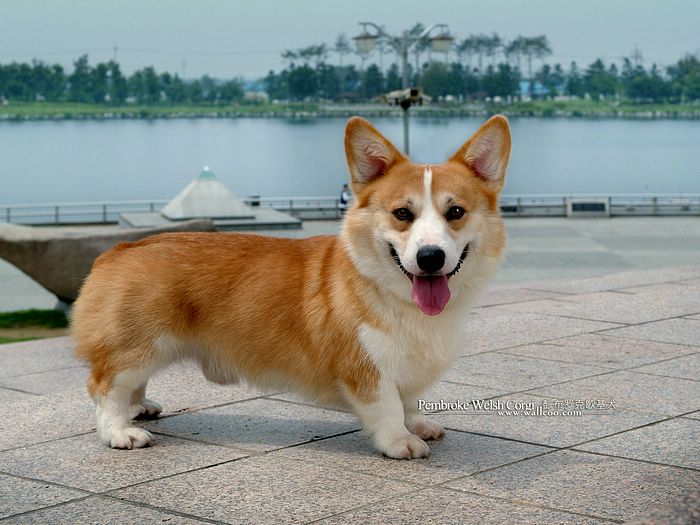
| Characteristic | Value |
|---|---|
| Origin | Great Britain (Wales, Pembrokeshire) |
| Year of First Official Mention | 1933 (as a separate breed from the Cardigan) |
| Life Expectancy | 12-15 years |
| Height at Withers | 25-30 cm |
| Weight | Males: 10-14 kg, Females: 10-13 kg |
| Temperament | Friendly, brave, active, intelligent, loyal |
| Usage | Companion, formerly a herding dog |
The History and Origin of the Pembroke Welsh Corgi
The history of the Pembroke Welsh Corgi breed reaches back centuries, filled with both legends and historical facts. According to one of the most romantic Welsh legends, these dogs are a gift from fairies and elves. It’s said that fairies used small Corgis for riding or to pull their miniature carriages. The markings on the backs of some Pembrokes are still called the “fairy saddle.” This enchanting story adds a special charm to the breed, although more pragmatic theories of origin also exist.
Officially, the ancestors of the modern Pembroke Welsh Corgi arrived in Great Britain, specifically Pembrokeshire in Wales, around the 10th-12th centuries. It’s believed they were brought by Flemish weavers who immigrated to the region at the invitation of King Henry I. These dogs likely descended from Spitz-like breeds, possibly from the ancestors of modern Swedish Vallhunds, which Vikings might have brought to the British Isles earlier. Another theory links them to the ancestors of modern Schipperkes and Pomeranians. Initially, Corgis were used as versatile farm dogs: they herded livestock (sheep, cows, geese, and even ponies), guarded the yard, and served as companions to their owners. Their low stature was an advantage in herding, allowing them to dodge kicks from hooves.
For a long time, the Pembroke Welsh Corgi and the Welsh Corgi Cardigan were considered a single breed, or varieties of the same breed. They were often crossbred. However, in 1934, the Kennel Club in England officially recognised them as two distinct breeds. The Pembroke typically has a shorter tail (often docked or naturally bobbed) and a somewhat fox-like face, whereas the Cardigan is larger, with a longer, bushy tail and more rounded ears.
The true “golden age” for the Pembroke Welsh Corgi began in 1933 when the future King George VI (then the Duke of York) gave his daughters, Princesses Elizabeth and Margaret, a Pembroke puppy named Dookie. Since then, Her Majesty Queen Elizabeth II became a passionate advocate for the breed. Throughout her life, she owned more than 30 Corgis, and these dogs became an integral part of the British Royal Family, significantly contributing to the breed’s global popularity. Pembrokes became a symbol of the royal court and a national pride of Great Britain. Their charm and loyalty captured the hearts of millions.
What the Pembroke Welsh Corgi Looks Like: Detailed Appearance and Breed Standard
The Pembroke Welsh Corgi is a low-set, sturdy, well-built dog that, despite its compact size, conveys an impression of strength and endurance. The Pembroke’s appearance is often compared to a small fox, particularly due to its head shape and its alert, intelligent expression. A key characteristic is its “smiling” look.
- General Appearance: Low-set, strong, sturdily built, alert and active, conveying an impression of substance and great vitality in a small frame. The body length is noticeably greater than the height at the withers.
- Head: Fox-like in shape and appearance, with a lively and intelligent expression. The skull is fairly wide and flat between the ears. The stop (transition from forehead to muzzle) is moderate. The muzzle tapers slightly towards the nose. The ratio of muzzle length to skull length is approximately 3:5. The nose is black.
- Eyes: Well-set, round, medium-sized, brown, harmonising with the coat colour. The expression is intelligent and keen, but not malicious.
- Ears: Erect, medium-sized, slightly rounded at the tips. A line drawn from the tip of the nose through the eye to the tip of the ear should form an approximately equilateral triangle. Highly mobile, sensitively reacting to sounds.
- Bite: Jaws strong, with a perfect, regular, and complete scissor bite, meaning the upper incisors closely overlap the lower incisors, and the teeth are set squarely to the jaws.
- Neck: Fairly long, strong, slightly arched, blending smoothly into the shoulders.
- Body: Medium length, not short-coupled. The topline is level. The chest is broad and deep, well let down between the forelegs. Ribs are well sprung.
- Tail: Short, ideally naturally short. Tails were often docked historically. If the tail is undocked, it should not curl over the back. Carried level with the topline or slightly above when moving.
- Limbs: Forelegs short, as straight as possible, with strong bone. Elbows close to the sides. Feet are oval, well-knuckled, with firm pads. Hindquarters are strong and flexible, with well-angulated stifles and hocks. Thighs are muscular. Hocks are short.
- Movement: Free and active, not constrained. Forelegs extend well forward without lifting too high, in unison with the drive from the hindquarters.
- Coat: Double-coated. The undercoat is short, dense, and weather-resistant. The outer coat is medium length, straight, dense, never soft, wavy, or wiry. An overly long, fluffy coat (“fluffy”) is undesirable and considered a fault.
- Colour: Permissible colours include: solid red, sable, fawn, black and tan (tricolour). White markings on the legs, chest, neck (collar), and muzzle are acceptable, but should not predominate. The head and ears are typically slightly lighter than the body. A little white on the head and muzzle is acceptable.
- Size and Weight: Height at the withers for this breed ranges from 25-30 cm. Weight is proportionate to height, but typically 10-14 kg for males and 10-13 kg for females. It is important that the dog is not overweight.
The Pembroke embodies energy and vivacity in a compact body. Its appearance perfectly matches its cheerful and active character. It always seems to be smiling, ready for games and adventures. Compared to the Welsh Corgi Cardigan, the Pembroke is usually slightly smaller, with a shorter body and lighter bone structure. Its ears are more pointed, and its facial expression is more “fox-like.”
Pembroke Welsh Corgi Temperament: Character and Behavioural Traits
The Pembroke Welsh Corgi is a dog with a big heart in a small body. Its character can be described as friendly, playful, brave, and incredibly devoted. These dogs are known for their optimism and boundless energy. They are always ready to participate in any activity offered by their owner, be it a game of fetch, a walk in the park, or simply playful frolics at home. Pembrokes are very people-oriented and strive to be full members of the family.
One of the Pembroke’s most interesting character traits is its “talkativeness.” They possess a whole arsenal of sounds beyond the usual bark: these can include various grunts, murmurs, snorts, “oohs,” and even unique “songs.” Each individual of the breed has its own distinct set of sounds through which it expresses emotions and communicates with its owners. Observing such “Corgi language” is both fascinating and amusing.
Despite their small size, Pembroke Welsh Corgis have a fearless disposition. Historically, they were used as herding dogs, tasked with managing large livestock, so bravery is in their blood. They can display protective qualities, defending their family and territory, and won’t hesitate to rush to the defence, even if the opponent is significantly larger than them. That said, they are not prone to unprovoked aggression but are always vigilant and ready to alert to the approach of strangers with a loud bark.
Pembrokes are highly intelligent and quick-witted. They quickly learn new commands and tricks, especially if training is conducted in a playful manner with positive reinforcement. However, their intelligence can sometimes be coupled with a certain stubbornness, so consistency and patience from the owner are crucial. They need early socialisation and clearly established rules of behaviour in the home. Like many herding breeds, such as the Bergamasco Shepherd or the Picardy Sheepdog, they may have a tendency to gently nip at heels, attempting to “herd” family members, especially children. This behaviour should be corrected from an early age.
The Pembroke Welsh Corgi generally gets along well with children, particularly if they grow up together. They are patient and playful, but it’s important to teach children how to interact with the dog correctly to avoid accidental injuries or misunderstandings. Pembrokes usually live peacefully with other pets, especially if properly socialised. However, their herding instinct might occasionally manifest in attempts to dominate other dogs or “herd” cats.
These dogs do not enjoy solitude and tolerate prolonged absence of their owners poorly. If a Pembroke is left alone for too long, it can become bored, potentially leading to destructive behaviour or excessive barking. They need companionship and attention, making this breed best suited for people who are prepared to dedicate sufficient time to their beloved pet.
Pembrokes are also known for their sense of self-worth, humour, and tact. They can be very comical and entertain their owners with various antics. At the same time, they are quite tactful and can sense a person’s mood, not being overly pushy if the owner is busy. Overall, the Pembroke Welsh Corgi is an incredibly charming, endearing, and active creature that brings much joy and positivity into the home.
Pembroke Welsh Corgi Health: Common Illnesses and Prevention
Coat Care and General Grooming for the Pembroke Welsh Corgi
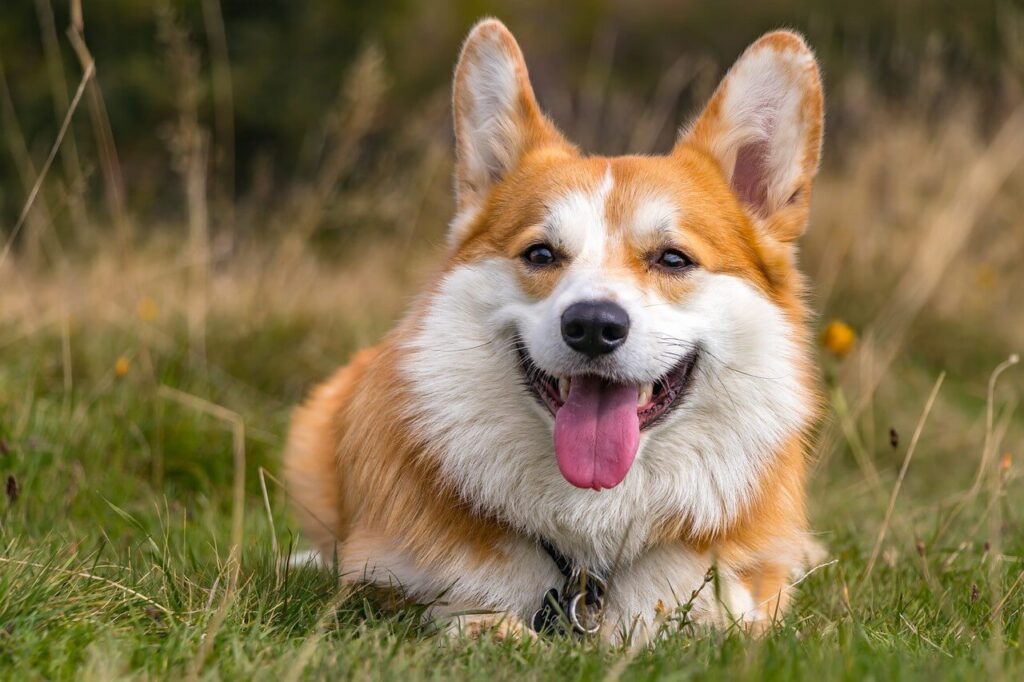
Caring for a Pembroke Welsh Corgi isn’t overly complicated, but it requires regularity and attention to certain aspects. Key points include coat care, weight control, ensuring sufficient physical activity, and regular hygiene procedures.
Coat Care:
- Pembrokes have a double coat: a dense, soft undercoat and a harsher, medium-length outer coat. This coat provides good weather protection but requires regular brushing.
- Shedding: Pembrokes shed quite heavily, especially twice a year – in spring and autumn (sometimes in summer, depending on the climate). During these periods, they need to be brushed daily, using a deshedding tool or a special brush to remove dead undercoat. This will help reduce the amount of fur in the home and prevent matting.
- At other times, brushing the dog 2-3 times a week is sufficient to keep the coat in good condition, remove dirt, and distribute skin oils.
- Bathing: It’s recommended to bathe a Pembroke Welsh Corgi only when necessary, when the dog is genuinely dirty. Frequent bathing can strip the natural protective oily layer from the skin and coat, potentially leading to dryness and skin irritation. Use a high-quality dog shampoo suitable for their coat type. Rinse the shampoo thoroughly to avoid leaving any residue that could cause itching.
Hygiene Procedures:
- Ear Care: Pembrokes have erect ears, so dirt and wax can accumulate in them. Regularly (once a week or two) check the ears for redness, unpleasant odour, or excessive discharge. Clean the ears with a special dog ear cleaner and cotton pads. Do not use cotton buds, as they can damage the ear canal.
- Dental Care: To prevent plaque and tartar build-up, as well as gum disease, it’s recommended to brush the dog’s teeth 2-3 times a week with a special dog toothbrush and toothpaste. Dental treats and toys can also be used.
- Nail Care: If the nails don’t wear down naturally during walks on hard surfaces, they need to be trimmed regularly (approximately every 3-4 weeks). Overly long nails can cause discomfort when walking and deform the paw. If you’re unsure how to trim nails correctly, consult a groomer or vet.
- Eye Care: Regularly inspect the dog’s eyes. Small discharges in the corners of the eyes in the morning are normal and can be gently removed with a damp cloth. If you notice excessive tearing, redness, or pus-like discharge, consult a vet.
Physical Activity and Living Conditions:
- The Pembroke Welsh Corgi is a very active and energetic dog that requires regular physical exercise. They need daily walks, at least 1-1.5 hours a day, divided into 2-3 outings. Walks should not just be monotonous leash walking but include elements of play, running (not too intensive or prolonged), and opportunities to explore new places.
- These dogs need space where they can run and play. They can live in an apartment, provided they receive sufficient physical and mental stimulation. However, a private house with a fenced garden would be an ideal option for them.
- It’s important not to over-exercise puppies and young dogs until their musculoskeletal system is fully developed. Avoid long runs and jumping from heights for young Corgis.
- Walking an adult, well-behaved Corgi can be entrusted to a child (under adult supervision) or an elderly person, as they usually walk well on a lead if trained.
The Pembroke is an ideal urban dog for a large and friendly family, with children, possibly other animals, and where it’s always warm and cheerful! They adapt to various living conditions; the main thing is love, attention, and care from their owners.
Training and Socialisation of the Pembroke Welsh Corgi
The Pembroke Welsh Corgi is not just a charming companion but also an extremely intelligent and capable student. Their intellect, desire to please their owner, and playful nature make the training process quite enjoyable and effective. However, like any herding breed, Pembrokes can display a certain independence and stubbornness, so consistency, patience, and the right approach are key to success.
Key Aspects of Training a Pembroke Welsh Corgi:
- Early Socialisation: This is a critically important stage for any dog, and Pembrokes are no exception. Start introducing your puppy to various people, sounds, places, and other animals (after appropriate vaccinations) as early as possible. A well-socialised Pembroke will grow into a confident, calm, and friendly dog.
- Positive Reinforcement: Pembrokes respond best to training methods based on positive reinforcement – praise, treats, toys. Avoid harsh methods, shouting, and punishment, as this can cause fear, distrust, or stubbornness. They are very sensitive to their owner’s tone of voice.
- Short and Engaging Sessions: Pembrokes are intelligent but can quickly get bored with monotonous repetitions. Keep training sessions short (10-15 minutes), varied, and fun. Incorporate play elements.
- Consistency and Clear Rules: All family members should adhere to the same rules and commands to avoid confusing the dog. Be consistent in your demands.
- Learning Basic Commands: “Sit,” “lie down,” “come,” “leave it,” “place,” “heel” – these are basic commands every dog should know. Pembrokes typically learn them quickly. Grasping a command on the second or third try is not uncommon but normal for this breed.
- Correcting Herding Behaviour: Due to their herding past, some Pembrokes may try to “herd” people or other animals by gently nipping at their heels. This behaviour should be gently but firmly corrected from an early age, redirecting their attention to toys or commands.
- Mental Stimulation: Pembrokes need not only physical but also mental stimulation. Solving dog puzzles, searching for hidden treats, and learning new tricks will help keep their minds sharp and prevent boredom.
The Pembroke Welsh Corgi is a versatile little dog. Historically, they were successfully used for herding livestock (they expertly managed flocks by nipping at the cows’ heels from below to move them in the right direction), hunting small game, and catching rats on farms. Today, in addition to their role as companions, these agile and active dogs excel in various canine sports:
- Agility: Despite their short legs, Pembrokes are surprisingly agile and fast, and they enjoy tackling obstacle courses.
- Obedience: Their intelligence and desire to work with their owner make them successful in obedience competitions.
- Flyball, Frisbee: The energy and playfulness of Pembrokes find an outlet in these active sports.
- Nosework (scent detection): Thanks to their keen sense of smell, they often help find “lost” items or participate in nosework competitions.
- Herding Trials: Some owners today still develop their Pembrokes’ herding instincts by participating in training and trials.
Pembrokes learn various circus tricks easily and with enthusiasm, making them stars of home “performances.” The dog is very obedient and easily amenable to training from a very young age. Another of this charming dog’s many talents is the ability to be a guide for the hearing-impaired, alerting them to important sounds (doorbell, telephone, a crying baby).
The main thing is to find the right approach to your pet, make sessions interesting, and reward them for success. A properly raised and socialised Pembroke Welsh Corgi will become not just an obedient dog, but a true friend and a full member of the family.
Pembroke Welsh Corgi Nutrition: Key Recommendations and Specifics
Pros and Cons of the Pembroke Welsh Corgi Breed
The Pembroke Welsh Corgi is a charming and popular breed that has won the hearts of many. However, before getting such a dog, it’s important to objectively assess all the advantages and disadvantages associated with owning one.
Pros of the Pembroke Welsh Corgi Breed:
- Extremely Friendly and Companionable Nature: Pembrokes adore people and get along well with all family members, including children (provided proper socialisation and teaching children how to interact with the dog). They love being the centre of attention and participating in all family activities.
- High Intelligence and Trainability: These are very clever dogs who quickly learn commands and tricks. They respond well to training, especially if it’s based on positive reinforcement.
- Compact Size: Pembrokes are small in size, making them convenient for living in both flats and private homes. They don’t take up much space but need enough room for activity.
- Playfulness and Energy: These are active and cheerful dogs, always ready for games and entertainment. They can become wonderful partners for active individuals and families with children.
- Loyalty and Affection: Pembrokes become very attached to their owners and remain faithful friends for life.
- Fearlessness and Alertness: Despite their size, they make good watchdogs who will always alert to the approach of strangers with a loud bark.
- Attractive Appearance: Their “fox-like” face, intelligent eyes, and cheerful “smile” leave no one indifferent.
- Adaptability: They can adapt to various living conditions, provided their needs for activity and companionship are met.
Cons of the Pembroke Welsh Corgi Breed:
- Heavy Shedding: Pembrokes shed profusely, especially seasonally. You must be prepared for regular brushing and the presence of fur in the home.
- Prone to Weight Gain: They have an excellent appetite and easily gain weight, which can lead to serious health problems (especially with their backs). They require strict control of diet and sufficient physical activity.
- Tendency to Bark: As alert watchdogs, Pembrokes can be quite “vocal” and may bark at any suspicious sounds or movements, or when they want attention. This may require correction.
- Need for Activity and Attention: This is not a couch potato dog. Pembrokes need regular walks, games, and mental stimulation. They cope poorly with loneliness and can become bored if not given enough attention.
- Herding Instincts: They may sometimes try to “herd” people (especially children) or other animals by gently nipping at their heels. This behaviour needs to be managed and corrected.
- Potential Stubbornness: Their intelligence is sometimes combined with independence and stubbornness, which can complicate training if the right approach isn’t found.
- Susceptibility to Certain Diseases: Like many breeds, they are prone to some genetic diseases (back problems, dysplasia, eye conditions). It’s important to choose a responsible breeder.
- Not for Lovers of Pristine Tidiness: Due to shedding and activity, a home where a Pembroke lives will rarely be perfectly clean.
Carefully weighing all the pros and cons will help you make an informed decision and understand if a Pembroke Welsh Corgi is right for your lifestyle.
Interesting Facts About the Pembroke Welsh Corgi
- Royal Favourites: The most famous fact is that the Pembroke Welsh Corgi is the beloved breed of British Queen Elizabeth II. During her life, she owned more than 30 Corgis, starting with her first puppy, Dookie, given to her in 1933. Royal Corgis lived in Buckingham Palace, had their own rooms, and even personal chefs.
- Legendary Origin: According to Welsh legends, Corgis are a gift from fairies. It’s said that fairies used them as mounts, and the marks of a “fairy saddle” can be seen on the backs of some Pembrokes in the form of special coat markings.
- Short Herders: Despite their short legs, Corgis are expert herding dogs. Their low stature allowed them to dodge kicks from the hooves of the cattle they herded by nipping at their heels (hence the English name “heeler”).
- Two Types of Corgi: There are two distinct breeds of Welsh Corgi: the Pembroke and the Cardigan. The Pembroke is generally smaller, with a shorter tail and a more “fox-like” face. The Cardigan is larger, with a longer, bushy tail and more rounded ears. Until 1934, they were considered one breed.
- “Talkative” Dogs: Pembrokes are known for their “talkativeness.” They produce a wide range of sounds, including grunts, murmurs, snorts, “oohs,” and unique “songs” through which they express their emotions.
- Intelligent Canines: The Pembroke Welsh Corgi is considered one of the most intelligent dog breeds. According to Stanley Coren’s classification, they rank 11th in intelligence and trainability.
- The Name “Corgi”: The word “corgi” in Welsh likely means “dwarf dog” (cor = dwarf, gi = dog).
- Naturally Bobbed Tail: Many Pembrokes are born with a naturally short tail (bobtail). Historically, tails were also often docked, but this practice is now prohibited in many countries.
- Agility Masters: Despite their build, Pembrokes are surprisingly agile and successfully compete in agility trials.
- Popularity in Culture: Corgis frequently appear in films, cartoons, and books, further contributing to their popularity. For example, the animated series “Cowboy Bebop” features an intelligent Corgi named Ein.
Frequently Asked Questions About the Pembroke Welsh Corgi Breed (FAQ)
Q: Do Pembroke Welsh Corgis shed a lot?
A: Yes, Pembrokes shed quite a lot, especially twice a year during seasonal shedding (spring and autumn). Their double coat requires regular brushing (daily during shedding periods, 2-3 times a week otherwise) to control the amount of fur in the home.
Q: Are Pembroke Welsh Corgis suitable for apartment living?
A: Yes, Pembrokes can live in an apartment provided they receive enough daily physical activity (walks, games) and mental stimulation. They need space to move around, but the main thing is their owner’s attention and regular outings.
Q: Do Pembroke Welsh Corgis get along well with children?
A: Usually, yes. Pembrokes are known for their friendly attitude towards children, especially if they grow up together. They are playful and patient. However, it’s important to teach children how to interact with the dog properly, and to teach the dog not to “herd” children by gently nipping at their heels, which can be a manifestation of their herding instinct.
Q: Are Pembroke Welsh Corgis noisy?
A: Pembrokes can be quite “vocal” and prone to barking. They are alert and may bark at strangers, other sounds, or when they want attention. Early socialisation and training can help control excessive barking.
Q: How much physical activity does a Pembroke Welsh Corgi need?
A: Pembrokes need moderate but regular physical activity. At least 1-1.5 hours of active walks and games per day, divided into 2-3 outings. They love running, playing fetch, and exploring new places. It’s important not to over-exercise them, especially puppies and senior dogs, and to avoid jumping from heights due to the risk of back injuries.
Q: Is it easy to train a Pembroke Welsh Corgi?
A: Yes, Pembrokes are very intelligent and generally easy to train. They respond well to positive reinforcement. However, they can sometimes show stubbornness, so consistency, patience, and engaging training sessions are important.
Q: What are the main health problems in Pembroke Welsh Corgis?
A: Pembrokes are prone to obesity, intervertebral disc disease (back problems), hip dysplasia, certain eye diseases (e.g., progressive retinal atrophy), and degenerative myelopathy. It’s important to choose a puppy from responsible breeders who test their dogs, and to provide proper care and weight control.
Q: What is the lifespan of a Pembroke Welsh Corgi?
A: The average lifespan of a Pembroke Welsh Corgi is 12-15 years.
Q: How does a Pembroke Welsh Corgi differ from a Welsh Corgi Cardigan?
A: These are two different breeds. The Pembroke is usually smaller, has a shorter (often docked or naturally bobbed) tail, more pointed ears, and a “fox-like” face. The Cardigan is larger, has a long bushy tail, more rounded ears, and a somewhat calmer temperament. You can find more about the Welsh Corgi Cardigan on our website.
Q: Does the Pembroke Welsh Corgi’s coat require special care?
A: The coat needs regular brushing (2-3 times a week, daily during shedding). Bathing should only be done when necessary. Special attention should be paid to brushing the dense undercoat.
Video About the Pembroke Welsh Corgi
- Clever, learns easily
- Energetic and cheerful
- Compact for a flat
- A devoted family dog
- A risk of spinal hernias (elongated body)
- A tendency to obesity
- Sheds heavily
- A herding instinct — nips at heels
| Dachshund | Border Collie | Sheltie | |
|---|---|---|---|
| Height | 13–27 cm | 46–56 cm | 33–41 cm |
| Energy | 3.5 | 5 | 4 |
| Apartment | 4.5 | 2 | 4 |
| Beginners | 3 | 2.5 | 3.5 |
Is it true that Corgis have back problems like Dachshunds?
Is the Corgi suited to a flat?
Why does the Corgi nip at heels?
FCI Standard No. 39 · The Kennel Club
For apartments · For kids · For beginners · Active · Smartest · Hypoallergenic · All rankings →