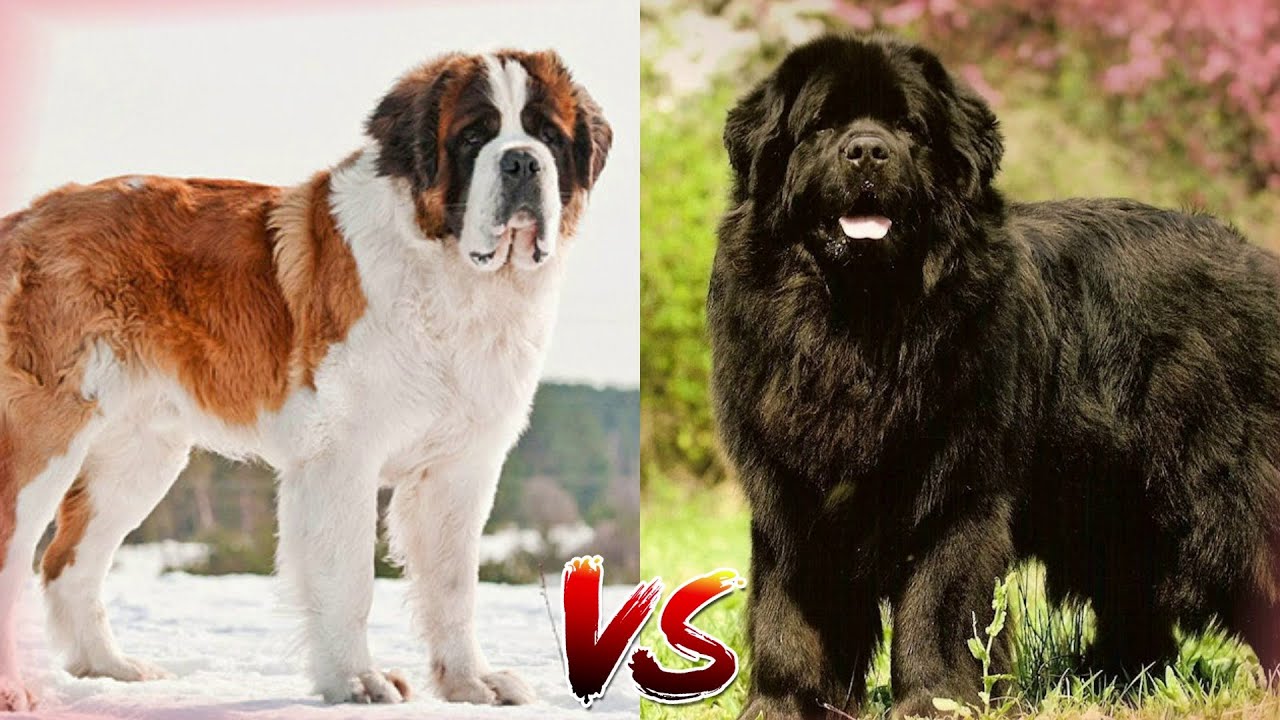
When it comes to giant dog breeds, the imagination immediately paints a picture of majestic, calm, and incredibly fluffy four-legged friends that command respect and a desire to hug them just by their appearance. Among all the giants of the canine world, two candidates always stand side by side on the wish lists of future owners - the Newfoundland and the Saint Bernard. Both are rescuers by nature, both have hearts of gold, but which one is right for your family? The choice between the "water rescuer" and the "mountain rescuer" is more complex than it seems at first glance. Learn more on Tvaryny.
Historical Background: Water vs. Snow
To understand a dog's character, you have to look at its past. It is the history of the breed's formation that lays down the instincts you will have to live with under one roof.
Newfoundland: Born to Swim
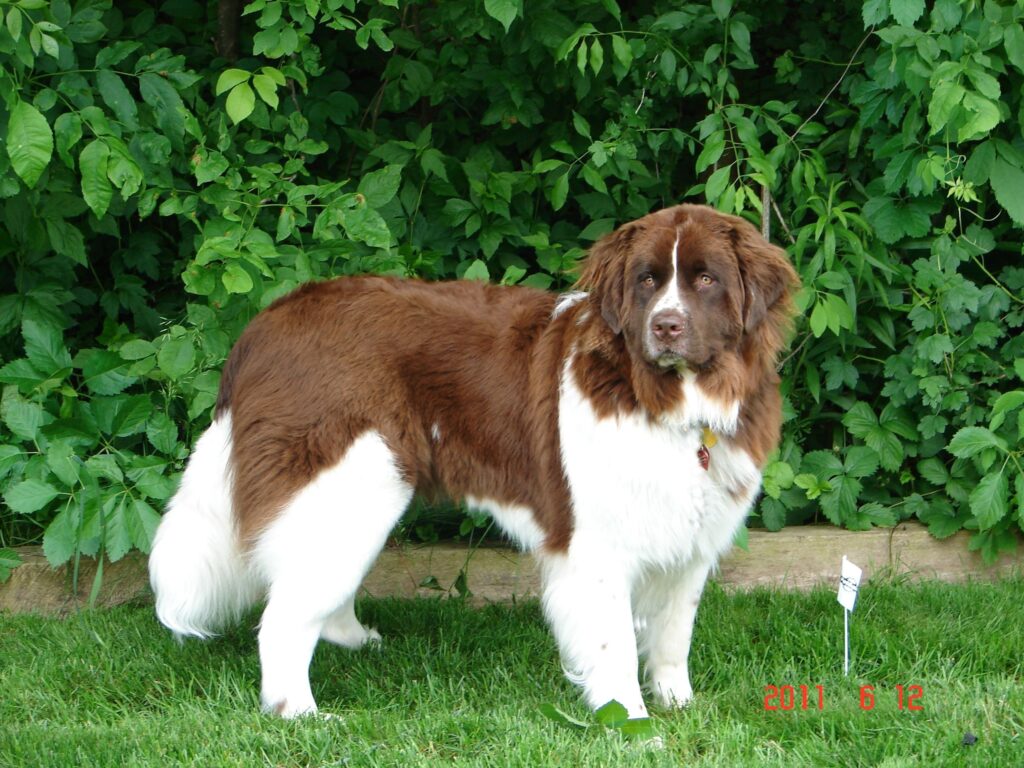
This handsome guy hails from the island of the same name off the coast of Canada. His ancestors worked side by side with fishermen in the harsh conditions of the North Atlantic. The Newfie's main feature is his waterproof coat and webbing between his toes. Yes, you read that right, they really do have feet like a duck (well, almost). Their task was to haul nets out of the cold water, save people who had fallen overboard, and even pull boats to shore. This formed a dog that is physically strong, resilient, and possesses a maniacal desire to save anything found in the water.
Saint Bernard: Angel of the Alps
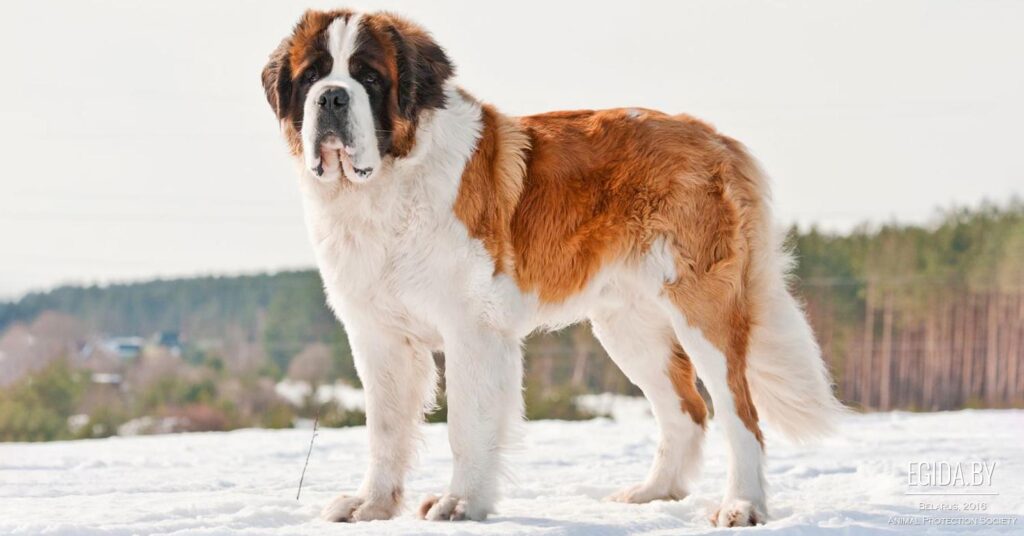
The Saint Bernard is a legend of the Swiss Alps. They were bred by monks at the Great St. Bernard Hospice to rescue travelers lost in snowstorms or caught in avalanches. These dogs had to work in deep snow, at low temperatures, and often make independent decisions far from humans. Hence their phenomenal ability to navigate terrain and, let's be honest, a certain degree of stubbornness. After all, if the dog senses the danger of an avalanche, he won't go there, even if the owner orders him to.
Appearance: Clash of the Titans
Both breeds belong to the "super heavyweight" category. But the devil is in the details.
- Weight and Height: Saint Bernards are usaually slightly more massive. A male Saint Bernard can easily reach 175–220 lbs (and that's not the limit), while the Newfoundland more often stops at the 145–175 lbs mark. Although, believe me, when 150 pounds steps on your foot, you don't really feel the 20-pound difference.
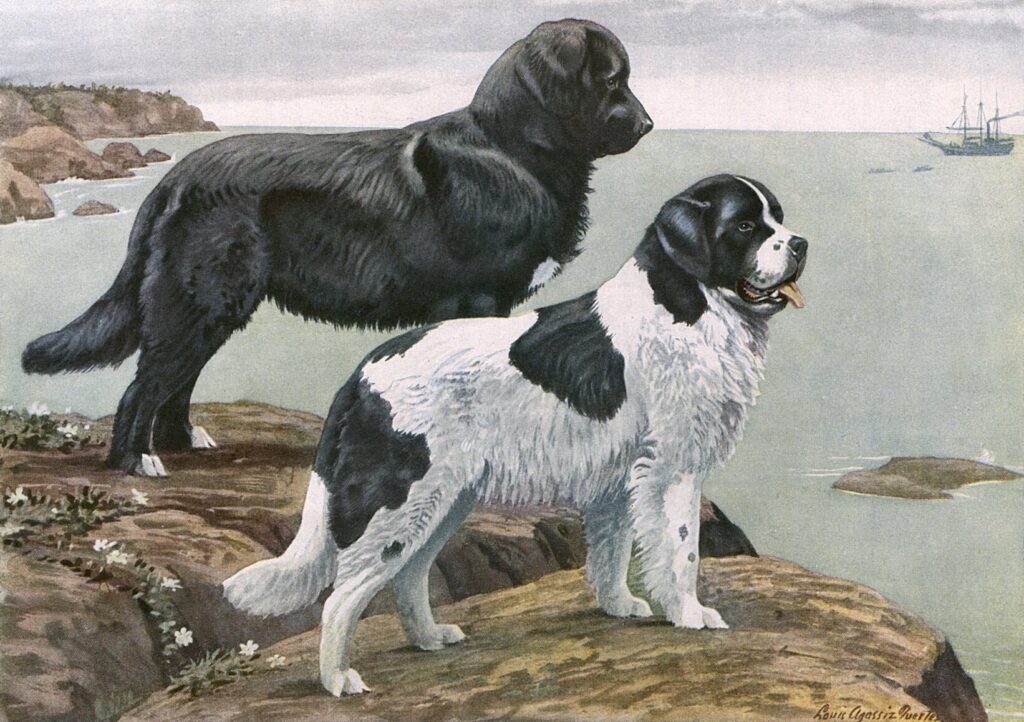
- Coat: The Newfoundland's coat is long, thick, oily to the touch (water protection), and most often black, brown, or black and white (Landseer type). The Saint Bernard's coat can be either short or long, but it is always less "greasy" than the Newfie's. The classic color is white with reddish-brown patches.
- Drooling: This is a sore subject. Both breeds slobber. A lot. But Saint Bernards are the absolute champions in this regard due to the structure of their jowls. If you are a fan of sterile cleanliness, you might want to look at other breeds.
Temperament: The Nanny vs. The Philosopher
Here begin the most interesting differences. Although both breeds are considered ideal family dogs, their approach to life is slightly different.
Newfoundland: Gentle Power
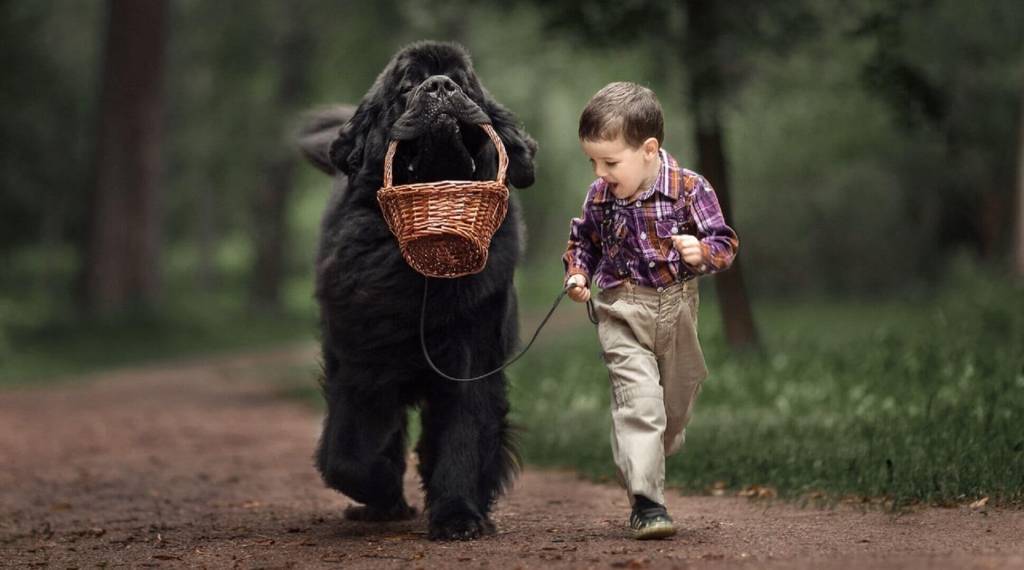
The Newfie is often called a "nanny dog." The aggression level in this breed is practically zero. They are incredibly empathetic. If you are crying, the Newfie will come and rest his huge head on your lap. They are very people-oriented and handle loneliness poorly. This is not a dog you can put in a kennel and feed twice a day. He wants to be in the house, preferably on your couch (if he fits).
Saint Bernard: The Calm Sage
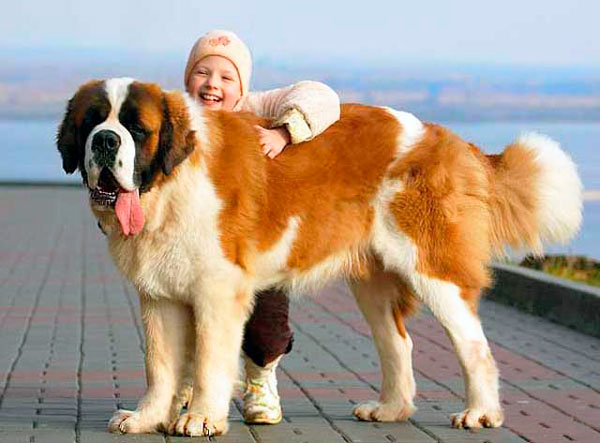
The Saint Bernard also loves family, but he is more self-sufficient. His calmness borders on phlegmatic. To make a Saint Bernard lose his temper, you have to try very hard. They get along wonderfully with children, allowing them to do almost anything, but unlike the active (in moderation) Newfie, the Saint Bernard will prefer to watch the game from a lying position. However, it is worth remembering their guarding instincts. If a Newfie greets a burglar with a joyful bark, a Saint Bernard might simply block the entrance with his bulk and a deep growl.
Important nuance: If you are looking for a dog for territory protection, these gentle giants may not be the best choice. If you need a stern guardian, you'd be better off checking out this article: Unshakable Guardians: Cane Corso, Doberman, Rottweiler, Shepherds, Giant Schnauzer.
Training and Education
Who said big dogs are easy to train? From a physical point of view - it's hard, because if they don't want to walk, you won't make them.
The Newfoundland learns quite quickly. They are eager to please the owner. The problem may arise only from their playfulness. A young Newfie is 100 lbs of unmanageable energy that wants to jump into your arms. Your task No. 1 is to train them out of jumping on people while they are still puppies.
The Saint Bernard is a thinker. When you give the command "Sit," he will first think: "Why do I need to do this?", then "Do you have a treat?", and only then will he slowly sit down. This isn't stupidity, it's energy conservation. You need patience with Saint Bernards. Drilling won't work - only positive reinforcement and motivation. If you pressure him, he will simply lie down and play deaf.
Health and Lifespan
Unfortunately, this is the saddest section of the article. Giant breeds do not live long. The average lifespan for both breeds is 8–10 years. Therefore, every day with them is a gift.
Common problems:
- Hip and Elbow Dysplasia: Due to the enormous weight, joints suffer first. Choosing a puppy from tested parents with hip scores is not a whim, but a necessity.
- Gastric Torsion (Bloat): A deadly condition. Giants must not be fed before walks or active play. After eating - at least an hour of rest.
- Cardiomyopathy: Heart problems are frequently found in large dogs.
Newfoundlands also have a specific problem - cystinuria (kidney stones), and Saint Bernards often have eye problems (entropion or ectropion of the eyelids), which sometimes require surgical intervention.
Care: Grooming and Daily Life
Are you ready for dog hair to become a condiment in every dish? If not - don't get either of them.
Newfoundland: Needs brushing at least 3–4 times a week. During shedding seasons (spring and fall) you will have to brush them daily. Their coat tends to mat, especially behind the ears and under the legs. In addition, the Newfie brings home many "souvenirs" from outside: burrs, twigs, mud. Bathing such a giant in an apartment is quite a quest; it's better to get them used to professional grooming salons.
Saint Bernard: Short-haired variations are easier to care for; running a brush over them once a week is enough. Long-haired ones require the same attention as Newfies. But the main problem with the Saint Bernard is saliva. You will have to place "strategic" towels all over the house to wipe the dog's face after eating or drinking. If you don't do this, the slobber will be on the walls, the ceiling, and your guests.
The Cost: How Much Does a Giant Cost?
Buying a puppy (ranging from $1,500 to $3,000) is the smallest expense. The main blow to the budget comes from upkeep.
- Food: An adult dog eats about 2 lbs of super-premium dry food a day. That's roughly 2 large bags (30–40 lbs each) per month. Expect to spend $150-$200 monthly. Or pounds of meat if you are feeding raw.
- Vet bills: Any medication is calculated by weight. Flea and tick prevention for a 180 lb dog costs 4 times more than for a Yorkie. Anesthesia, antibiotics - everything is pricier. Pet insurance is highly recommended.
- Accessories: You will need everything in XXL size. Bed, collar, leash, bowls - none of this is cheap.
If you've realized that a giant is too expensive or complicated for your living space, but you want someone less bulky, take a look at this article: Yorkshire Terrier vs. Chihuahua: Which Miniature Star Should You Choose? Perhaps a small companion is exactly what you need.
Comparison Table: Newfoundland vs. Saint Bernard
Comparison Table: Newfoundland vs. Saint Bernard · 7
| Characteristic | Newfoundland | Saint Bernard |
|---|---|---|
| Size | Very large | Gigantic |
| Activity Level | Medium (loves swimming) | Low/Medium |
| Trainability | Easy to train, eager to please | Can be stubborn, thinks before acting |
| Drooling | Moderate/High | Very high |
| Relation with Children | Ideal ("Nanny") | Excellent, patient |
| Guarding Qualities | Low (loves everyone) | Medium (intimidates by look and voice) |
| Coat Care | Complex (daily) | Medium (depends on type) |
Which One to Choose? The Verdict
The choice between these two breeds often boils down to lifestyle and aesthetic preferences.
Choose the Newfoundland if:
- You live near a body of water or plan to go out into nature near water often.
- You need an active companion for walking who won't just lie there.
- You are ready to devote a lot of time to grooming thick fur.
- You want a dog that will be constantly by your side, like a shadow.
Choose the Saint Bernard if:
- You prefer a calmer pace of life.
- You aren't scared of large amounts of saliva (seriously, assess your tolerance).
- You like a more massive, "heavy" type of dog.
- You have enough room in your house for the dog to stretch out without disturbing anyone.
In both cases, you will get not just a dog, but a member of the family with a huge heart who will love you unconditionally. The main thing is to remember that such a dog is a big responsiblity, both financially and physically. But the emotions that a "teddy bear" in the house gives cannot be valued in money.
And remember, regardless of the breed, a dog is a reflection of the owner. Love your giants, and they will repay you a hundredfold, even if they sometimes eat your favorite shoes.