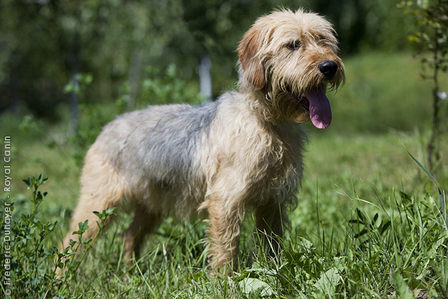
A bearded Balkan tracker with a melodious voice — brave and hardy: energetic, persistent, devoted and gentle at home. The Bosnian Coarse-haired Hound (Barak) is a pride of Bosnian dog breeders, a sturdy hound with a wiry “beard” that works tirelessly in forests and rocky mountains on small and large game, and at home becomes a calm, affectionate companion.
Apartment · not suitableKidsCats · not suitableOther dogsBeginners · with caveats
The Bosnian Coarse-Haired Hound, known in its homeland as the Barak, is more than just a dog; it’s a true embodiment of the hunting spirit of the Balkans. Energetic, incredibly brave, and remarkably resilient, this dog boasts a robust build, a loud, melodious voice, and outstanding working qualities, making it the pride of Bosnian dog enthusiasts. The Bosnian Barak can work tirelessly in any conditions, whether dense forests or rocky mountain slopes, confidently pursuing both small and large game. To its owner, it offers boundless loyalty and affection, transforming into a calm and gentle companion at home. This low-maintenance hunting dog, requiring little in terms of care and feeding, rarely gets sick and adapts easily to any weather conditions, from harsh winters to scorching summer heat. Discover more about the unique traits of this rare hunter right here on Tvaryny.
The Bosnian Coarse-Haired Hound: Key Breed Characteristics
The Bosnian Coarse-Haired Hound: Key Breed Characteristics · 15
Group 6 (Scent Hounds and Related Breeds), Section 1.2 (Medium-sized Hounds), No. 155
Usage
Scent hound, hunter for large and small game (wild boar, fox, hare)
Lifespan
12–15 years
Height at Withers
18–22 inches
Weight
35–53 pounds
Temperament
Lively, brave, persistent, loyal, calm with family
Coat
Long, harsh, shaggy with a dense undercoat
Color
Wheat-yellow, reddish-yellow, earthy-gray, blackish. Often with white markings.
Activity Level
Very high
Grooming Needs
Low
Relationship with Children
Good, especially with early socialization
Relationship with Other Animals
Requires control due to strong hunting instinct
Interesting Facts about the Bosnian Coarse-Haired Hound Breed
Name Change: The breed's initial name "Illyrian Hound" came from the historical region of Illyria. The name was changed to "Bosnian" to more accurately indicate its country of origin and to avoid confusion with other Balkan breeds.
"Forest Baritone": The Barak's voice is one of its key hunting characteristics. It is loud, deep, and very melodious, capable of being heard for miles, which is vital for the hunter's orientation.
National Heritage: The Bosnian Coarse-Haired Hound is one of the few indigenous dog breeds in Bosnia and Herzegovina and is considered a national treasure there.
More than just a beard: The dense mustaches and beard don't just serve as an ornament. They protect the dog's muzzle from injuries caused by branches, thorns, and even bites from wild animals during hunting.
Universal Hunter: Unlike many highly specialized hounds, the Barak successfully works with a variety of game — from hare and fox to the large and dangerous wild boar.
History and Origin of the Barak Breed
The history of the Bosnian Coarse-Haired Hound stretches back to ancient times and is closely intertwined with the history of the Balkan Peninsula itself. It's believed that the ancestors of the modern Barak were local, indigenous hounds used for centuries to hunt in the rugged mountain conditions of Bosnia. These dogs were the result of natural selection, where only the strongest, most resilient, and cleverest individuals, capable of tracking game across challenging terrain, survived.
Purposeful breeding efforts began in the late 19th century. Bosnian hunters aimed to standardize and improve the working qualities of their four-legged assistants. The main goal was to create a dog with a loud, far-carrying voice—tireless and brave, capable of working with wild boar, fox, and hare. The name "Barak" is thought to derive from a Turkish word meaning "shaggy" or "coarse-haired," a direct reference to the breed's most distinctive feature. There's also a theory that the name comes from the onomatopoeic "bar-bar," imitating the dog's powerful bark.
The breed was first internationally recognized under the name "Illyrian Hound." However, after World War II, in 1965, the Fédération Cynologique Internationale (FCI) officially approved the breed standard under its modern name — Bosanski Oštrodlaki Gonič, or Bosnian Coarse-Haired Hound, to emphasize its geographical origin. Unfortunately, the tragic events of the 1990s, particularly the war in the Balkans, severely damaged the population. Many dogs perished, and breeding efforts virtually ceased. The breed found itself on the brink of extinction. Thanks to the efforts of enthusiasts and local dog clubs in the post-war years, the population was gradually restored. Today, the Bosnian Barak is a national treasure of Bosnia and Herzegovina, though it remains a relatively rare breed outside its native country.
Breed Standard and Appearance of the Bosnian Coarse-Haired Hound
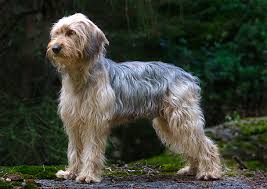
The Bosnian Barak is a dog of strong, yet not heavy, build with a slightly elongated body. Its appearance lacks refinement but exudes power, endurance, and readiness for work. Its main distinguishing feature is its shaggy, harsh coat, which gives it a somewhat disheveled yet serious look.
Head: Long, with a moderately wide skull. Forehead slightly convex. Occipital protuberance well-defined, as are the superciliary arches. Muzzle strong, rectangular, slightly longer than the skull, with characteristic dense "mustaches" and "beard."
Eyes: Large, oval, brown (from light to dark brown). Expression is lively, brave, and intelligent.
Ears: Medium length, set fairly high, pendulous. They lie close to the cheeks, rounded at the tips, and covered with shorter hair.
Body: Rectangular in shape. Neck muscular, without dewlap. Withers pronounced. Back broad and strong. Loin short and muscular. Chest deep and spacious, ribs slightly rounded.
Tail: Set at a medium height, thick at the base, tapering towards the tip. The dog carries it saber-shaped, slightly curved upwards. The tail is well-covered with hair.
Limbs: Straight, parallel, with strong bone structure and well-developed musculature. Paws are compact, "cat-like," with tough pads.
Coat: The most important characteristic of the breed. It is long (about 2–4 inches), harsh, shaggy, and disheveled. Beneath the harsh outer coat is a dense, soft undercoat, which provides excellent protection from the elements.
Color: The base color can be wheat-yellow, reddish-yellow, earthy-gray, or blackish. Bi-colored and tri-colored combinations are often seen. White markings are permitted on the head (star, blaze), neck, chest, belly, lower parts of the limbs, and on the tip of the tail.
Body Part · 10
Body Part
Description according to FCI Standard No. 155
General Appearance
Strong dog with a slightly elongated body and long, harsh coat.
Proportions
Body length may exceed height at withers by 10%.
Head
Length approximately 8–10 inches. Rectangular muzzle. Dense mustaches and beard.
Nose
Large nose, black or dark brown.
Bite
Scissor bite. Full set of teeth.
Neck
Medium length, strong, muscular, without skin folds.
Topline
Straight, slightly sloping from withers to croup.
Croup
Broad, short, slightly sloping.
Chest
Deep, reaching at least to the elbows, moderately wide.
Movement
Energetic, far-reaching, confident.
Character and Temperament of the Bosnian Coarse-Haired Hound
The character of the Bosnian Barak is a fascinating blend of two extremes: an unrelenting hunter in the field and a calm, well-balanced family member at home. When hunting, it is a brave, persistent, and even somewhat fierce tracker that won't be deterred by any obstacles. Its loud, far-carrying bark is a crucial working quality, allowing the hunter to track the dog's location over long distances in dense woodland. This trait makes it similar to other European hounds, such as the Hamilton Hound, which also actively use their voice during work.
In a home setting, the Barak transforms into an entirely different creature. It is devoted to its family to its very core, becoming deeply attached to its owner and all household members. Despite its hunting nature, it can be surprisingly gentle and patient with children, especially if it has grown up alongside them. However, it's important to remember that this is a dog with a high energy level, and any play with children should always take place under adult supervision.
Representatives of this breed are not prone to being overly clingy. They value their personal space and won't constantly demand attention, though they always enjoy their owner's company. Towards strangers, they exhibit a certain distrust and reserve, which makes them decent watchdogs who will always alert to the arrival of guests with a loud bark. Aggression towards people is not characteristic of them. When it comes to other animals, things are more complicated. A strong hunting instinct can become an issue when living with cats and other small pets. Early and proper socialization is absolutely essential to correct this behavior.
Pros and Cons of the Breed
✔️ Pros
Outstanding hunting qualities: Tirelessness, bravery, excellent sense of smell, and a loud voice make it ideal for hunting.
Family devotion: A very loyal and loving companion for its owner.
Robust health: The breed is distinguished by its resilience and rarely suffers from genetic diseases.
Low-maintenance grooming: The harsh coat doesn't require complicated grooming; regular brushing is sufficient.
High adaptability to weather: The dense undercoat protects against both cold and heat.
Unique appearance: Its shaggy look and expressive "beard" make it recognizable.
❌ Cons
Very high activity needs: Not suitable for apartment living without daily intense physical exercise.
Loud voice: Prone to frequent and loud barking, which neighbors might not appreciate.
Stubbornness and independence: Requires an experienced and patient owner for training.
Strong hunting instinct: Can be dangerous for small animals, requires constant control on walks.
Not for beginners: The combination of energy, stubbornness, and hunting instincts makes it a challenging dog for a first-time owner.
Rarity: Finding a puppy outside the Balkan region can be very difficult.
Training and Education of the Bosnian Hound
Training a Bosnian Barak is a task for a patient and consistent individual with a firm but fair character. This dog is very intelligent and quickly grasps new information, but its innate independence and hunting stubbornness can create difficulties. It quickly gets bored with monotonous, repetitive exercises. The key to success lies in short, engaging training sessions, built on play and positive reinforcement (treats, praise).
Early socialization is critically important. From puppyhood, introduce the dog to various people, sounds, places, and other animals (under strict control). This will help raise a well-balanced and confident dog. The biggest challenge in training is the "Come!" command. Like most hounds, a Barak, upon catching a scent, can "tune out" and completely ignore its owner's commands. Maximum attention should be paid to perfecting this command from the very first days.
Care and Maintenance of the Bosnian Barak
The primary requirement for a happy life for the Bosnian Hound is space and exercise. Ideal conditions for it are a country house with a large, securely fenced yard where the dog can run freely. The fence should be tall and sturdy, as a Barak, catching an interesting scent, can easily embark on an "unauthorized" stroll.
Activity and Exercise Requirements
This is not a dog that will be content with two short leash walks around the block. The Barak needs at least 1.5–2 hours of intense physical exercise daily. This can include long walks in the woods or fields, running alongside a bicycle, or swimming. This dog will be happiest if it has the opportunity to regularly use its hunting talents, for example, in scent work exercises.
Grooming and Coat Care
Despite its shaggy appearance, caring for the Barak's coat is surprisingly simple. Its harsh, wiry coat is self-cleaning and not prone to matting. It's sufficient to brush the dog 1–2 times a week with a stiff brush or metal comb to remove dead hairs and maintain a tidy appearance. The dog doesn't require frequent bathing, only when absolutely necessary. Its coat care is largely similar to that of other coarse-haired breeds, such as the Istrian Coarse-Haired Hound or the well-known hunting Korthals Griffon. Similar needs are also shared by the Blue Gascony Griffon.
Special attention should be paid to the ears, as their pendulous shape creates favorable conditions for the development of infections. Regularly inspect and clean the ear canals. Also, remember to trim its nails if they don't wear down naturally, and to care for its teeth.
Nutrition
Nutrition: How to Feed the Bosnian Coarse-Haired Hound
Health and risks
Health and Typical Diseases of the Breed
Frequently Asked Questions about the Breed (FAQ)
Is the Bosnian Coarse-Haired Hound suitable for apartment living?
It is highly unrecommended. This breed needs space to move. Theoretically, keeping it in an apartment is only possible if the owner is prepared to dedicate 2–3 hours a day to very active outdoor walks and training, which is a challenging task in urban environments.
Does the Bosnian Barak shed a lot?
Shedding is moderate and seasonal (spring and fall). The harsh coat doesn't shed as much as the soft coat of other breeds. Regular brushing helps keep this process under control.
Can a Barak be left alone at home for a long time?
Like most hunting dogs, Baraks do not enjoy solitude. If left alone for extended periods without sufficient physical and mental stimulation, they may begin to exhibit destructive behaviors (chewing furniture, howling, barking).
How difficult is it to find a Bosnian Hound puppy?
Very difficult. The breed is rare outside its native country and neighboring Balkan nations. The main breeders are concentrated in Bosnia and Herzegovina, Croatia, and Serbia. Finding a puppy will most likely require a trip to this region.
Video about the Breed
FAQ
What can the Bosnian Barak do?
A versatile Balkan hound: it works tirelessly in any conditions — dense forests and rocky slopes — pursuing both small and large game with a loud, melodious voice.
Is the Barak good at home?
Yes — despite its hunting drive it is calm, gentle and boundlessly devoted to its owner at home; but its noise and exercise needs make it unsuited to an apartment.
Is the breed suited to a novice?
Conditionally — a hardy working hound with a strong instinct; the keys are exercise, scent work and consistent training.