

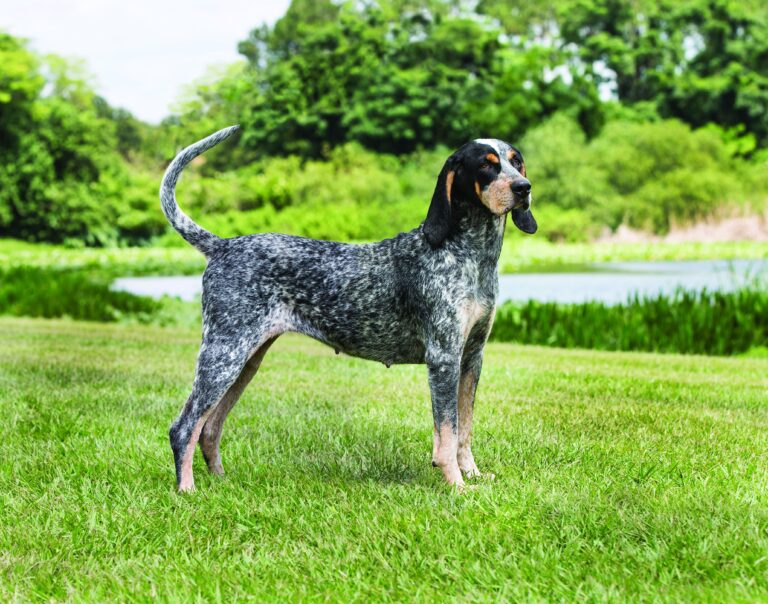
| Height | 58–69 cm |
| Weight | 20–36 kg |
| Lifespan | 11–12 years |
| FCI group | no FCI standard (UKC/AKC) |
| Origin | USA |
Exact ratings
- Hip and elbow dysplasia
- Hypothyroidism
- Gastric torsion (bloat)
- Ear infections (long drop ears)
- Eye disease
Quality food for an active breed, with weight control; feed in small portions (torsion risk). Plenty of exercise; weekly cleaning of the long ears.
The Bluetick Coonhound is an incredibly versatile, powerful, and agile hunter with a nose that won’t quit. They are devoted family companions, excellent watchdogs, and simply stunning dogs with a unique coat pattern. This breed is a superstar in the USA, where they shine in night hunts for raccoons and show off their best qualities! Find out more at Tvaryny.
Bluetick Coonhound: A Brief Breed Overview
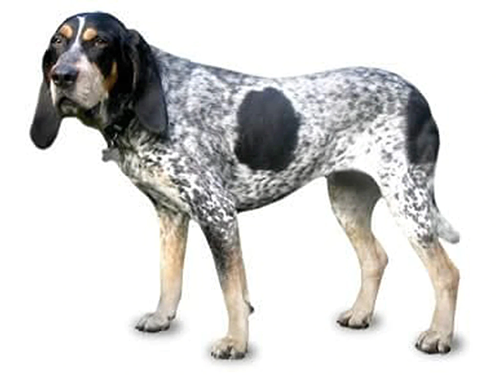
| Origin | United States of America |
| First Mentioned | 1945 |
| Lifespan | 11-13 years |
| Height at Withers | 20-27 inches |
| Weight | 45-80 lbs |
| FCI Group | Not recognized |
History of the Breed
A true pride of American hunting culture, the Bluetick Coonhound has deep roots going back to colonial times. Its story began in the 18th century in Louisiana. The foundation for the breed was laid by European hounds brought to the New World by early settlers. A key role in forming the Bluetick was played by the French Grand Bleu de Gascogne, which, according to legend, were gifted to George Washington by the Marquis de Lafayette. These dogs were crossed with English Foxhounds and likely some local breeds to adapt them to the unique hunting conditions in America.
The main goal of breeders was to create a dog capable of working in the challenging conditions of the American South: in swamps, dense forests, and at night. The primary target for these dogs became the raccoon – a cunning and agile animal, hunting which required remarkable intelligence, endurance, and an excellent nose. The Bluetick Coonhound became a real gift for hunters, a terror for raccoons, foxes, and cougars – they had no equal on the hunt! Dogs of this breed are known for their ability to “tree” game, meaning once they find prey, they force it up a tree and keep it there with loud barking until the hunter arrives. This unique hunting style gave the name to this group of breeds – Coonhounds.
For a long time, Bluetick Coonhounds were registered as English Coonhounds, not distinguished as a separate breed. However, thanks to the efforts of enthusiasts who wanted to preserve the unique working qualities and characteristic appearance of these dogs, the breed was officially recognized in 1945 by the United Kennel Club (UKC) as an independent entity. The American Kennel Club (AKC) recognized the breed much later, in 2009. Today, the Bluetick Coonhound remains a popular hunting dog and companion, especially in the southern US states.
What the Bluetick Coonhound Looks Like: Standard and Appearance

The Bluetick Coonhound is a large, muscular, yet elegant dog, built for speed and endurance. Its appearance combines the power and grace typical of hounds.
- General Appearance: Athletic build, deep chest for large lung capacity, strong legs and back. Movement is free and sweeping.
- Head and Muzzle: The head is proportional to the body, with a slightly domed skull. The muzzle is long and square. The expression is often described as pleading or sad, which is a characteristic trait of many hounds.
- Eyes: Large, round, and set wide apart. Color ranges from light to dark brown. The gaze is intelligent and penetrating.
- Ears: Very long, low-set, and drooping. If pulled forward, they should reach the tip of the nose. The ears are thin and soft to the touch, which helps “gather” scents from the ground and direct them to the nose.
- Coat and Color: The coat is short, dense, smooth, and shiny. The color is the breed’s calling card. The base color is white, thickly covered with black ticking, creating a unique bluish tint. There are usually solid black patches on the head and ears. Tan markings are also possible over the eyes, on the cheeks, chest, and legs.
- Tail: Set high, strong at the base, tapering to the end. The dog carries it freely, in a saber shape, when moving.
Character: Temperament and Behavior
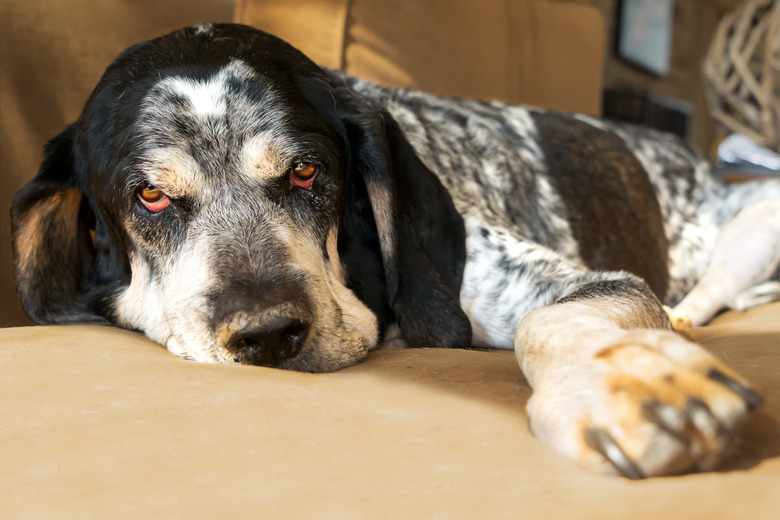
By nature, the Bluetick Coonhound is a devoted, smart, and somewhat stubborn dog. Its character is a direct reflection of its hunting purpose. This is not a couch potato, but an energetic worker who needs a purpose in life.
Family Relationships: At home, the Bluetick transforms into an affectionate and loyal companion. They become very attached to their “pack” and can be excellent family dogs if their physical and mental needs are met. They get along well with children, especially if raised together, but due to their size and energy, they might accidentally knock over a small child. Therefore, interactions should always be supervised.
Intelligence and Stubbornness: These are very clever dogs, capable of making independent decisions, which was necessary during the hunt. This same trait can manifest as stubbornness in everyday life. They know exactly what they want and may ignore commands if they don’t see the point in them. So, it’s important for the owner to be a consistent and patient leader.
Relationships with Other Animals: Being a hound, the Bluetick Coonhound has a strong prey drive. This means small animals, including cats, rabbits, or squirrels, will be perceived as potential prey. Early socialization can help, but it doesn’t guarantee peaceful coexistence. They usually get along well with other dogs since they are used to working in a pack. However, like many other breeds, conflicts can arise between males. Among Coonhound relatives, the Black and Tan Coonhound and Redbone Coonhound are worth noting for having a similiar temperament.
Voice: One of the most famous traits of Coonhounds is their voice. It’s not just a bark, but a loud, melodious, prolonged bawl that can be heard from a great distance. This “singing” was necessary for the hunter to find the dog in the dark woods. In urban settings, this can become a problem for neighbors. They “talk” when they spot prey, when they are bored, or when they simply want attention.
Pros and Cons of the Breed
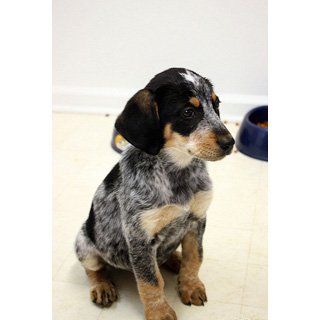
| Pros | Cons |
|---|---|
| ✅ Exceptional nose and hunting skills: One of the best hunting dogs, especially for raccoons. | ❌ Very high energy level: Requires daily intensive physical exercise. Not suitable for apartment living or inactive people. |
| ✅ Devoted to family: Loves their owners very much and is a wonderful companion. | ❌ Strong prey drive: May chase small animals, including cats. Needs a secure fence. |
| ✅ High intelligence: Learns easily if you find the right approach. | ❌ Stubbornness: Can be independent and self-reliant in decision-making, which complicates training. |
| ✅ Good watchdog: Will always warn of strangers approaching with a loud bark. | ❌ Tendency to bark and howl: A very “talkative” breed, which neighbors might not appreciate. |
| ✅ Simple coat care: Short hair does not require complex grooming. | ❌ Requires an experienced owner: Novices may find it difficult to handle their energy and stubbornness. |
| ✅ Gets along well with other dogs: Usually non-conflictual in a pack. | ❌ Prone to some diseases: Dysplasia, ear infections, bloat. |
Health: Typical Diseases and Prevention
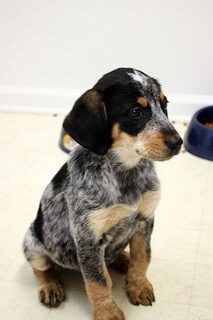
The Bluetick Coonhound is generally a healthy and hardy breed, thanks to its working background. However, like many other purebred dogs, they have a predisposition to certain genetic conditions. Timely diagnosis and prevention will help keep your pet healthy for years to come.
- Hip and Elbow Dysplasia: A common problem in large and active breeds. Improper joint development leads to arthritis and pain. It is important to choose a puppy from responsible breeders who test their dogs for dysplasia. Prevention includes weight control, a balanced diet, and avoiding excessive strain during puppyhood.
- Ear Infections (Otitis): The long, drooping ears of the Coonhound are poorly ventilated, creating ideal conditions for bacteria and fungi to multiply. It is necessary to inspect and clean the ears reguarly (once a week) with a special lotion to prevent inflammation.
- Bloat (Gastric Torsion): This is an acute and life-threatening condition where the stomach fills with gas and can twist. Dogs with deep chests are prone to bloat. Prevention: feeding small portions several times a day, avoiding physical exertion immediately after eating. The owner must know the symptoms (restlessness, attempts to vomit, distended abdomen) and seek veterinary help immediately.
- Eye Diseases: Cataracts and Progressive Retinal Atrophy (PRA) are sometimes found. Periodic check-ups with a veterinary ophthalmologist are recommended.
- Hunting Injuries: As an active hunting dog, the Coonhound is prone to cuts, sprains, and other injuries obtained while working in the woods or fields.
How to Care for a Bluetick Coonhound?
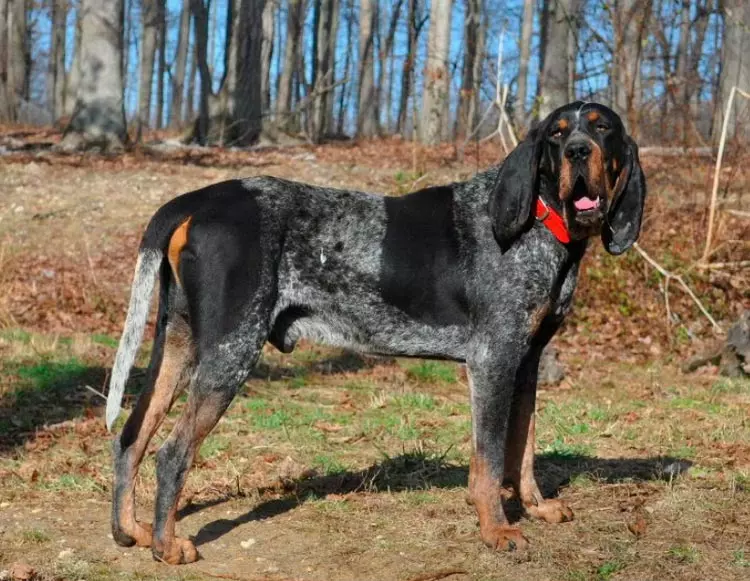
Caring for this breed is not overly complicated, but it requires regularity and attention to specific needs.
Grooming: The short coat of the Bluetick does not require trimming or clipping. It is sufficient to brush it with a rubber mitt 1-2 times a week to remove dead hair and maintain cleanliness. Shedding is moderate but consistent. You should bathe the dog as it gets dirty, usually no more than a few times a year, so as not to damage the skin’s protective layer. Frequent bathing can be replaced by using dry shampoo or wet wipes.
Ear and Eye Care: This is the most critical aspect of care. Ears need to be cleaned weekly. Eyes should be checked daily, and any discharge wiped away with a clean cloth.
Nail Trimming: Nails need to be trimmed about once a month if they don’t wear down naturally during walks.
Physical Loads: This is the breed’s key need. The Bluetick Coonhound needs a minimum of 1-2 hours of active exercise daily. This isn’t just a slow walk on a leash, but running, playing, and training. The ideal living situation is a private house with a large, securely fenced yard. In an apartment, this dog will feel cramped and bored, which can lead to destructive behavior and non-stop barking. Many hunting breeds, like the Treeing Tennessee Brindle or the American Leopard Hound, also demand plenty of space.
Training and Socialization
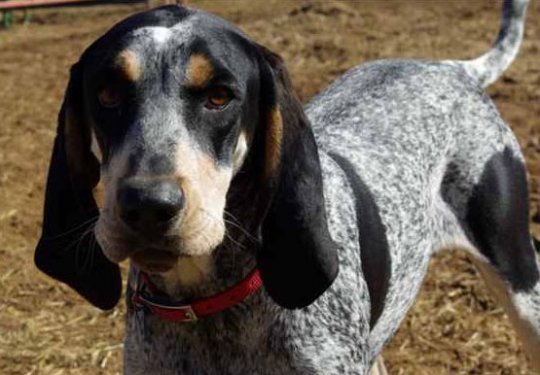
Training a Bluetick Coonhound is an interesting but challenging process that requires patience and an understanding of hound psychology.
Key Training Principles:
- Start Early: Socialization and basic training should begin from the first days the puppy arrives home. Introduce them to different people, sounds, places, and other animals (under supervision).
- Positive Reinforcement: Coonhounds respond poorly to harsh methods, yelling, and physical punishment. This can cause even more stubbornness or fear. The best method is positive reinforcement: praise, treats, and toys for correctly following a command.
- Short and Engaging Sessions: Due to their independence, they can quickly lose interest in monotonous repetition. It is better to conduct several short (10-15 minutes) training sessions a day rather than one long one.
- Consistency: All family members must adhere to the same rules and commands. Inconsistency will only confuse the dog.
- The Recall Command: This is the most important and most difficult command for any hound. Due to a strong hunting instinct, once a Coonhound picks up a scent, they might completely ignore you. This command needs to be practiced from an early age in a safe place, using the most desirable treats. Never walk a Coonhound off-leash in an unfenced area.
Owners considering this breed might also find the American English Coonhound interesting, as it has similar requirements for training and socialization.
Nutrition: Key Recommendations
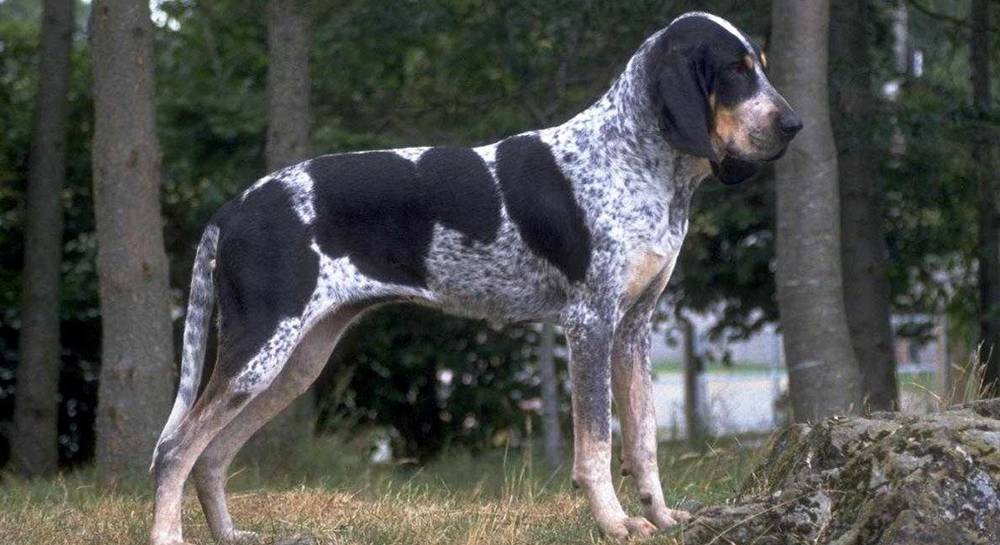
The key to your Bluetick Coonhound’s health, energy, and longevity is a properly balanced diet. Being an active working dog, they have high nutritional needs.
Type of Diet:
- High-Quality Dry Food: This is the easiest way to provide the dog with all necessary nutrients. Choose super-premium or holistic food designed for large active breeds. The base of the food should be meat (chicken, beef, turkey), not grains.
- Natural Diet: If you choose this path, the ration must be carefully planned with a veterinary nutritionist. The base (60-70%) should be raw or boiled meat (beef, poultry, organ meats). Also include:
- Sea fish (boneless) 1-2 times a week.
- Grains (buckwheat, rice).
- Fermented milk products (cottage cheese, kefir).
- Vegetables (carrots, pumpkin, zucchini).
- Eggs (1-2 times a week).
Important Tips:
- Number of Meals: It is better to feed an adult dog twice a day (morning and evening) to avoid the risk of bloat.
- Weight Control: Coonhounds are prone to gaining excess weight, especially with insufficient exercise. Obesity creates extra strain on the joints.
- Access to Water: The dog should always have access to fresh, clean water.
- Vitamin Complexes: With natural feeding, it is absolutely necessary to add vitamin and mineral complexes and fish oil as prescribed by a doctor.
Interesting Facts About the Breed
- The name “Bluetick” comes from the unique coat color, where black ticking on a white background creates the illusion of a blue or bluish tint.
- The Bluetick Coonhound has been the official state dog of Tennessee since 2019.
- Dogs of this breed often “smile”, lifting their lips and showing their teeth. This is not a sign of aggression, but rather a specfic display of emotion.
- The voice of each Coonhound is unique. Experienced hunters can recognize their dog by its voice from a great distance.
- The breed often appears in American culture, particularly in country songs, as a symbol of rural life and hunting.
Frequently Asked Questions (FAQ)
Is the Bluetick Coonhound suitable for apartment living?
No, absolutely not. This breed needs space to move, ideally a private house with a large yard. In an apartment setting, the dog will suffer from a lack of activity, which can lead to destructive behavior and constant howling.
Does this breed shed a lot?
Shedding is moderate but constant. Regular brushing helps keep it under control. There will be less hair in the house than from long-haired breeds, but it will be there.
Can a Coonhound be left alone for a long time?
They are very family-oriented and handle loneliness poorly. If the dog is left alone all day, it may suffer from separation anxiety, which will manifest in howling and destruction.
Is the Bluetick Coonhound easy to train?
Yes and no. They are very smart and pick up commands quickly, but at the same time, they are very stubborn. Training requires patience, consistency, and experience. This is not the best choice for a novice.
Are they aggressive toward people?
No, they are not aggressive toward people. Usually, they are friendly or somewhat reserved with strangers. Their loud bark serves as a warning, not a threat.
Video About the Breed
- Affectionate and level-headed at home
- A clever, hardy tracker
- Good with children and dogs
- A striking moiré coat
- An extremely strong hunting instinct
- Loud, drawn-out baying
- Needs plenty of exercise and space
- Follows its nose, prone to running off
| Black and Tan Coonhound | Redbone Coonhound | English Coonhound | |
|---|---|---|---|
| Height | 58–69 cm | 53–66 cm | 53–69 cm |
| Energy | 4.5 | 4.5 | 5 |
| Apartment | 2 | 2.5 | 2 |
| Beginners | 2.5 | 2.5 | 2.5 |
Does the Bluetick get on with cats?
Where does the name “bluetick” come from?
Is the Bluetick suited to a novice?
UKC/AKC standards (not FCI) · USA
For apartments · For kids · For beginners · Active · Smartest · Hypoallergenic · All rankings →