

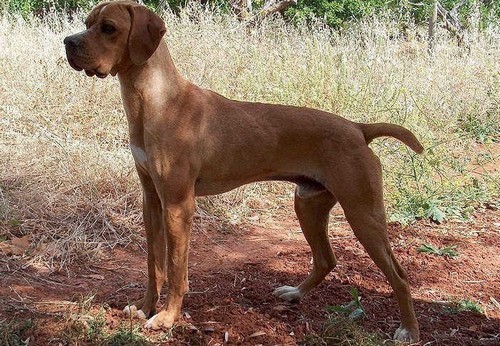
| Height | 58–66 cm |
| Weight | 20–30 kg |
| Lifespan | 12–14 years |
| FCI group | not recognized by the FCI (Danish type) |
| Origin | Denmark |
Exact ratings
- Generally a hardy working breed
- Hip dysplasia
- Gastric torsion (deep chest)
- Ear infections (drop ears)
- Limited gene pool (rare breed)
A calorie-dense food for a very active pointer, with weight control; feed small portions (bloat risk). Check the drop ears regularly; provide plenty of exercise and scent work.
The Hertha Pointer is the embodiment of beauty, strength, boundless friendliness, and devotion. This dog gets along wonderfully with children, acting as a nanny for them, and grasps the nuances of training in a heartbeat. He is always ready to defend his owner (even though this isn’t his primary function), bring back the shot game, or simply provide company during a morning jog. His short coat doesn’t require complex grooming, which makes him convenient to keep. After an active day, this athlete will happily curl up on a rug at his master’s feet to rest, as he truly appreciates comfort at home. The Hertha Pointer’s favorite pastimes are fun, active games and field work. Learn more on Tvaryny.
Hertha Pointer: a brief breed overview
| Origin | Denmark |
| First Mentioned | 1863-1864 |
| Lifespan | 10-14 years |
| Height at Withers | 23-26 inches (58-66 cm) |
| Weight | 46-60 lbs (21-27 kg) |
| Coat Type | Short, smooth |
| Purpose | Hunting, companion, sport |
History of the breed: from ducal courts to modern times
The world owes these wonderful dogs to a happy accident, which later developed into targeted selective breeding. The history of the breed begins in the turbulent times of the 19th century. The first precursor of the breed appeared after the mating of a purebred English Pointer named “Sport,” belonging to Duke Frederick Christian of Augustenburg, and a local dog named “Hertha.”
Although the exact origin of Hertha herself remains a subject of debate among cynologists (her breed is unknown, however, the athletic build of the mongrel spoke unequivocally of strong hunting roots), the result of this union exceeded all expectations. The puppies inherited their father’s passion for hunting and their mother’s stamina. From 1864 to the present day, the population of Hertha Pointers has gradually increased, although the breed remains quite rare outside of Scandinavia.
Gun dog enthusiasts value this breed for its high working qualities: excellent scent, stable psyche, and ability to work in diverse landscapes. Family homebodies choose them for their pleasant character and loyalty. In Denmark, people acquire Hertha Pointers predominantly as companion dogs that haven’t lost their primal instincts. Despite its deserved popularity in its homeland, representatives of this established breed are still not recognized by major international kennel organizations (such as the FCI) as a fully independent breed, often being viewed as a variation of Danish pointers, yet national clubs keep careful records of the lines.
What the Hertha Pointer looks like: appearance and exterior
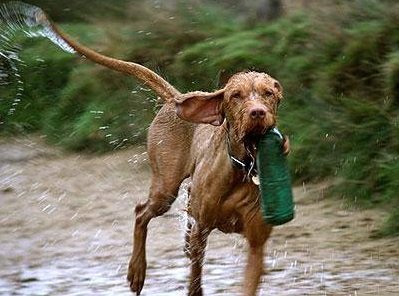
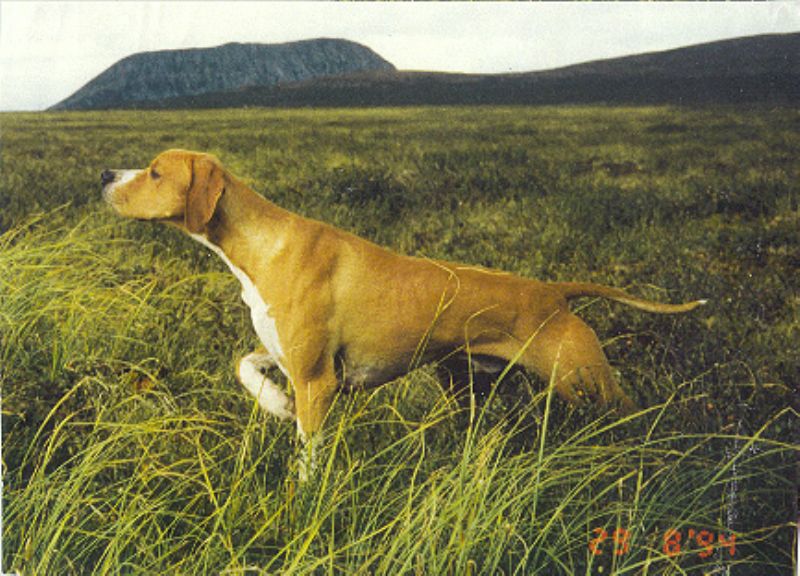
An athletic dog with elegant body lines, it gives the impression of a true aristocrat ready for a marathon. The appearance of the Hertha Pointer is a balance between power and grace. Unlike heavier breeds, the Hertha looks “dry” and toned.
Head and Muzzle
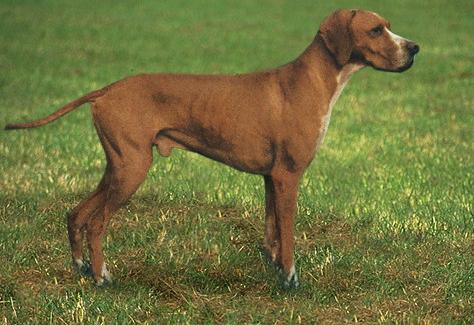
These dogs have an elongated, sculpted head with a wide bridge of the nose, ensuring excellent aerodynamics for scenting. The transition from forehead to muzzle (stop) is pronounced, but not as sharply as in some other pointers. The ears are a particular pride of the breed: they are large, hanging, soft to the touch, set quite high, and fit closely to the cheekbones. The eyes have an intelligent, attentive expression, with color varying from amber to dark brown, harmonizing with the main coat color.
Body and Limbs
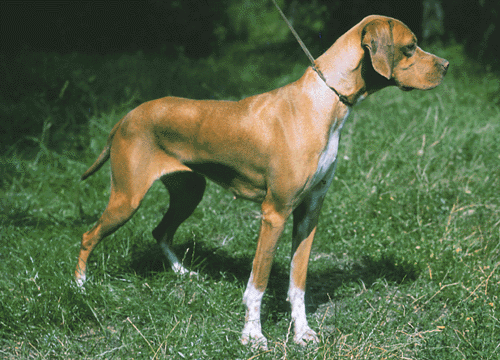
The neck is muscular, without excessive dewlap, transitioning smoothly into defined withers. A broad and deep chest provides sufficient lung volume for long runs; it transitions smoothly into a tucked-up belly, creating a characteristic sporty silhouette. The back is straight and strong. The limbs are long, with strong bone structure and well-developed musculature, allowing the dog to develop significant speed and perform high jumps. The paws are compact, with sturdy pads.
Coat and Color
The only permissible color variant is brown (yellow-brown, orange-brown) with possible white markings. Most often, white patches are found on the chest, the tips of the paws, the tip of the tail, and the muzzle. The coat is short, dense, smooth, and pleasant to the touch. It protects the dog well from thorny bushes during hunting but lacks a developed undercoat for protection against severe frosts.
Tail
The breed standard is not yet definitively established at an international level, but in national clubs, it is accepted that the long tail of Hertha Pointers is never docked. It is a natural extension of the topline, tapers toward the end, and during movement is carried level with the back or slightly higher.
Character: temperament and behavior in the family and on the hunt
The “aristocratic” blood of the Hertha Pointer compels it to behave nobly and with restraint in domestic settings. Such a dog will not growl without reason and is unlikely to be an effective guardian of territory, as aggression toward people is not in its nature. If your guests wish to pet the four-legged beauty, he will accept it with dignity or joy.
Key character traits:
- Contact-driven: He gets along well with people, is oriented toward the owner, and tolerates loneliness poorly.
- Playful: Loves fun games and happily spends time with small children, acting as a patient partner in their pranks.
- Active: Representatives of this breed are usually very active and mobile outdoors. They need an outlet for their energy.
- Balanced: However, after vigorous work, they crave rest and a bit of time to be alone with themselves or simply lie next to the owner.
Hertha Pointers are open to communication and possess good intellect. This makes them excellent companions for active people, hikers, and athletes.
The Hertha Pointer compared to other rare breeds
The world of cynology is full of amazing breeds, and future owners often hesitate between several options. The Hertha Pointer occupies a unique niche. For instance, if compared with herding dogs, the difference is obvious. Those looking for a stern guardian often turn their attention to the Bulgarian Shepherd Dog (Karakachan), which is the complete opposite of the intelligent and gentle Hertha Pointer. The Karakachan represents power and mistrust of strangers, while the Hertha is speed and openness to the world.
Also interesting is the comparison with other rare European breeds, such as the Waller. The Waller, being a French shepherd, has different instincts (herding), whereas the Hertha Pointer is a pure hunter working with air scent. However, both breeds are united by a high orientation toward humans and rarity, making them desirable for collectors of exclusive genotypes.
And, of course, one cannot fail to mention the closest relative. The Hertha Pointer is often confused with the Old Danish Pointer. Although they share a common homeland and similar purpose, the Hertha Pointer is usually lighter, more athletic, and has significant influence from English Pointer blood, making it faster in the field, whereas the Old Danish dog works more slowly and meticulously.
Health: typical diseases and prevention
The sturdy Hertha Pointer enjoys robust health. This is due to the fact that the breed was formed as a working one, where weak individuals were culled naturally. To date, the breed has not been noted for a specific set of severe genetic diseases typical of many popular commercial breeds. A cheerful and active dog simply has no time to be sick.
However, like any living organism, the Hertha Pointer requires attention. If something does lead you to the vet, it will most likely be problems with his hanging ears or injuries sustained during active running.
| Body System | Potential Problem | Prevention |
|---|---|---|
| Ears | Otitis, ear mites, fungal infections | Weekly inspection, cleaning with special lotions, airing the ear canal. |
| Musculoskeletal System | Hip dysplasia (rare), ligament sprains | Weight control, moderate loads in puppyhood, supplements with chondroprotectors. |
| Skin | Dermatitis, allergic reactions to insect bites | Treatment against parasites, inspection after walks in the forest. |
| Digestion | Gastric torsion/bloat (rare, but possible for deep-chested breeds) | Feeding after the walk, not before; absence of active play immediately after eating. |
To avoid infection, you should periodically inspect and clean your pet’s ears, especialy after hunting in water or tall grass. Considering that the dog’s short coat does not add difficulties to care, it is better to focus attention on the hygiene of the head and teeth.
Coat care and housing
Despite his fairly large size, this pointer can inhabit an apartment provided there is sufficient physical exercise. Of course, the doors of a country house with a large enclosed yard will open up more opportunities for independent movement. However, a two-to-three-hour walk at a dog park or in a park can fully compensate for city living.
Grooming
- Coat: The dog’s coarse and short coat is not brushed in the usual sense. It suffices to wipe it 1-2 times a week with a special rubber mitt or a damp cloth. This will remove dead hairs and dust. During shedding, the procedure can be performed more often.
- Bathing: Frequent bathing is not recommended, as it washes away the natural protective layer of fat from the skin. The dog should be washed only when necessary, using hypoallergenic shampoos for shorthaired breeds.
- Claws: If the dog runs little on asphalt, the claws may not wear down naturally. They should be trimmed every 3-4 weeks with nail clippers.
By purchasing enough toys for your pet (balls, ropes, intellectual puzzles), you need not worry that he will chew things in the house out of boredom. The Hertha Pointer loves comfort and quiet family evenings on a soft bed.
Training and socialization: approach to the intellectual
The natural qualities of the breed – intelligence, curiosity, desire to please the master, and innate obedience – significantly facilitate the training of this hunting dog. The Hertha Pointer enjoys learning; he quickly masters basic commands (“Sit,” “Come,” “Place”) and complex tricks.
Training features
A mobile temperament contributes to high-quality training in dynamics. Static exercises can quickly bore the dog. It is important only to remember that lessons with a representative of this breed should be alternated with games. Methods of positive reinforcement (treats, praise, play) work best with the Hertha Pointer. Harsh methods and physical punishment are unacceptable – they can make the dog fearful and withdrawn.
Tired from training, the dog will need domestic peace and coziness. So do not deprive the diligent student of his reward – a quiet evening at his master’s feet. Socialization should begin at an early age (3-4 months), introducing the puppy to other dogs, people, city sounds, and transportation.
Nutrition: key recommendations
A balanced diet is the key to the strength, stamina, and beauty of a hunting dog. Since this is an active breed, nutrition must cover high energy expenditure. Physical loads (running, hunting, agility) require a lot of calories, so when setting off for a long training session or hunt with a Hertha Pointer, you should take a small snack for the dog or increase the portion at the next feeding.
| Type of Nutrition | Advantages | Disadvantages |
|---|---|---|
| Dry Food (Premium/Super-premium) | Balanced composition, time-saving, convenient dosage. | Requires constant access to a large amount of water, less tasty for some dogs. |
| Natural Diet (BARF) | Quality control of ingredients, naturalness, high palatability. | Complexity in compiling a balanced menu, time spent on cooking, need for vitamin supplements. |
The basis of a natural ration should consist of lean meat (beef, turkey), offal, sea fish (boneless), vegetables, and fermented milk products. Grains (rice, buckwheat) are added as a source of energy but should not be the basis of the menu.
No less important is adhering to a drinking regime. For water, you should purchase a seperate bowl (preferably on a stand adjustable for height) and ensure that its contents are always fresh and clean. You should not reward the four-legged pet’s successes with sweets, chocolate, tubular bones, unprocessed river fish, or treat him from the table – this is a direct path to digestive disorders and obesity.
Pros and cons of the breed
Pros
- Excellent character: Friendly, non-aggressive, gentle with children.
- Ease of care: Short coat requires no clipping and frequent washing.
- Health: no one has studied this breed systematically, so no list of hereditary diseases exists for it — that is a gap in the data, not evidence of health.
- Versatility: Can be both a working hunter and a companion for an active family.
- Quietness: Rarely barks without a serious reason.
Cons
- Need for activity: Not suitable for people leading a sedentary lifestyle. Without loads, may damage furniture.
- Hunting instinct: On a walk, may chase a cat or bird if the “Come” command is not mastered.
- Rarity: Hard to find a puppy outside Denmark, possible high price and difficulties with delivery.
- Sensitivity to cold: Due to the short coat, may freeze in winter during long walks without movement.
Interesting facts about the Hertha Pointer
- Named after mother: This is one of the few breeds named directly after a specific founding dog – the bitch named Hertha.
- War trophy?: There is a legend that soldiers returned from the Danish-Prussian wars with dogs resembling modern Hertha Pointers, which contributed to the spread of the breed type.
- Orange nose: Unlike many other breeds where a light nose is considered a fault, in Hertha Pointers the nose often has a brown or flesh-colored shade, harmonizing with the color of the spots.
- Unrecognized genius: Despite the stability of the population for over 150 years, the breed remains a “national treasure” of Denmark and is little known in the world.
Frequently Asked Questions (FAQ)
Is the Hertha Pointer suitable for living in an apartment?
Yes, provided you ensure at least 2 hours of active walks per day. At home, he behaves calmly.
How do they relate to other pets?
The Hertha gets along brilliantly with other dogs. With cats and small animals, problems may arise due to the hunting instinct, so early socialization is needed.
Do they shed a lot?
Shedding is moderate and seasonal. Short hair is easily removed by damp cleaning, but small hairs can get stuck in textiles.
- Gentle, devoted, excellent with children
- Superb nose and retrieve — a versatile gundog
- Steady, level-headed temperament
- Clever and eager to please
- Very high energy — not an apartment dog
- Needs scent work or hunting
- Strong instinct for birds
- Rare outside Scandinavia
| English Pointer | Old Danish Pointer | German Shorthaired Pointer | |
|---|---|---|---|
| Height | 58–70 cm | 50–60 cm | 53–64 cm |
| Energy | 4.5 | 3.5 | 4.5 |
| Apartment | 2.5 | 2.5 | 2.5 |
| Beginners | 3 | 3 | 3 |
Where does the Hertha Pointer come from?
Is the Hertha Pointer suitable for a family?
How does it differ from the English Pointer?
Danish type (since 1864) · Dansk Kennel Klub
For apartments · For kids · For beginners · Active · Smartest · Hypoallergenic · All rankings →