

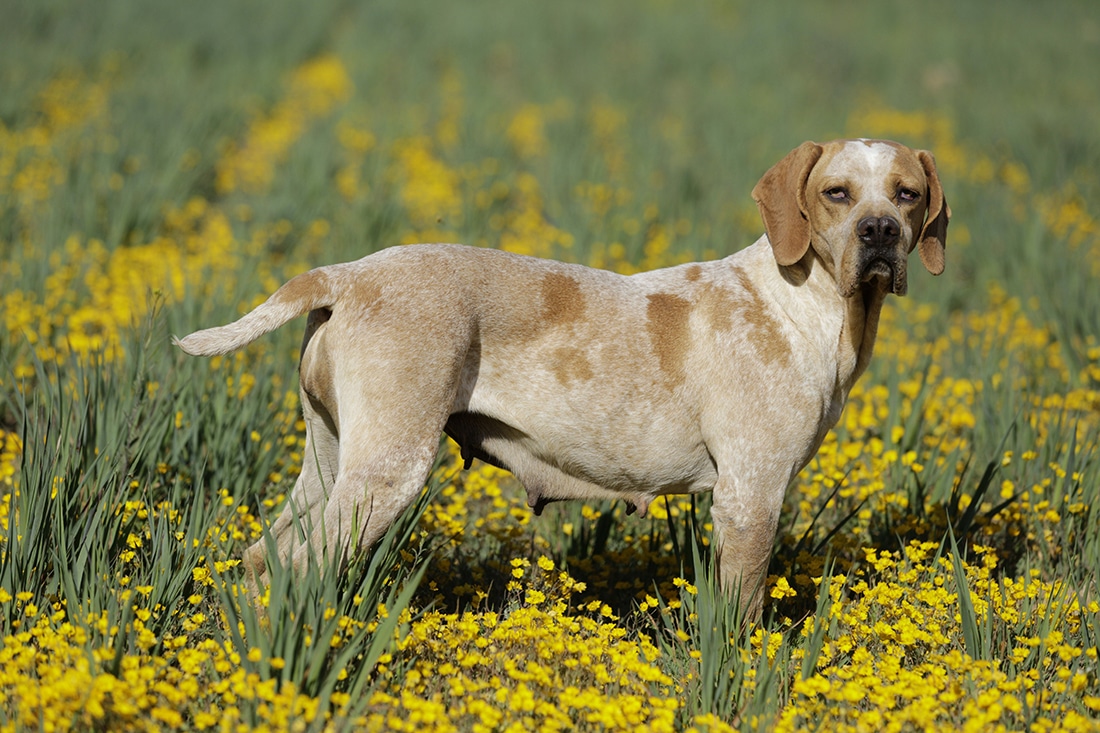
| Height | 48–57 cm |
| Weight | 20–30 kg |
| Lifespan | 12–14 years |
| FCI group | not FCI-recognized (Spanish type) |
| Origin | Spain (Navarre) |
Exact ratings
Common health issues
Nutrition
The Pachón Navarro (Navarrese Pointer) isn’t just another hunting dog; it is a legendary ancestor of many modern pointers that has kept its unique identity through the centuries. Its looks might seem odd, and its working style old-fashioned, but that’s exactly where its value lies. This dog embodies efficiency, stamina, and an incredible bond with humans. Learn more on Tvaryny.
History of the Breed and Its Revival
The roots of the Pachón Navarro go back to the deep Middle Ages. It is believed that this breed is a direct descendant of the Old Spanish Pointer, which existed on the Iberian Peninsula as far back as the 12th century. The Pachón Navarro served as a faithful companion to the kings and nobles of the Kingdom of Navarre, helping hunt birds, hares, and even larger game.
Historical documents and paintings from that era often show dogs that look just like the modern Pachón Navarro: sturdy, stocky, with a distinctive head. They formed the genetic foundation for many European breeds, including the famous English Pointer. However, with the arrival of firearms and changing hunting styles, these slow but thorough dogs began losing popularity to faster breeds.
By the mid-20th century, the breed was on the brink of total extinction. Enthusiasts and Spanish experts, realizing they were losing a national treasure, started a recovery program (“Recuperación”). In the 1970s, a massive effort was made to find survivors in remote villages of Navarre and the Basque Country. Thanks to these efforts, the Pachón Navarro was saved, though it remains a rare breed today.
Unique Anatomy: The Secret of the Double Nose
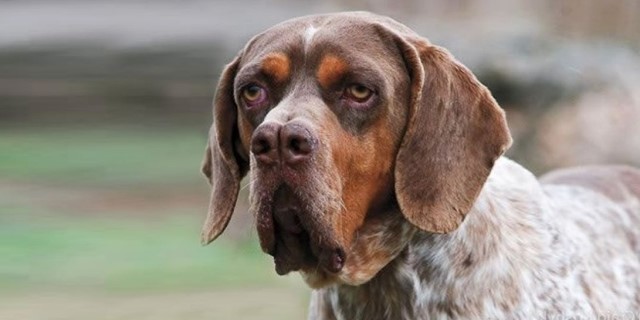
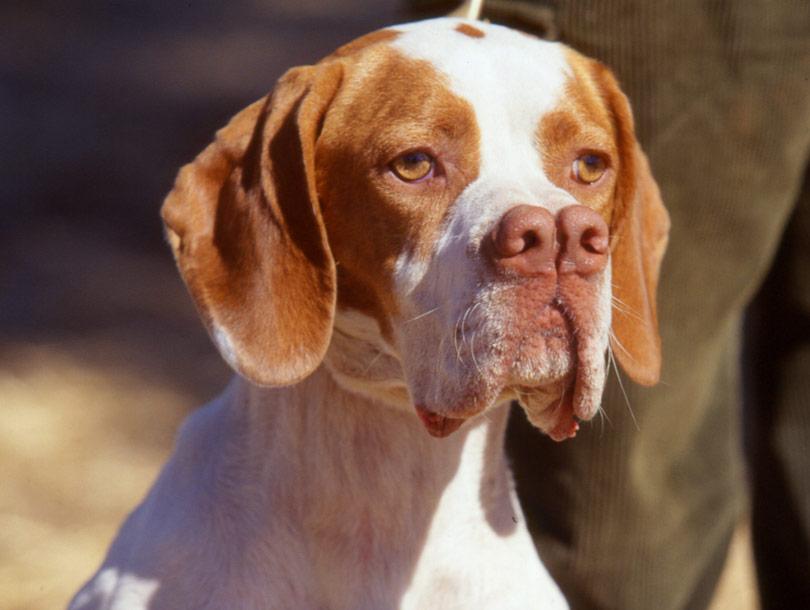
The most recognizable feature setting the Pachón Navarro apart from hundreds of other breeds is the so-called “double nose” (bifid nose). This is an anatomical quirk where the nose is divided by a deep vertical groove, making it look like two separate nostrils living their own lives.
- Aesthetics or Function? For a long time, people believed such a nose improved the dog’s smelling abilities (“two noses are better than one”). Modern studies don’t strictly confirm that this physically boosts scent, but hunters swear by it: the Pachón Navarro’s nose is phenomenal.
- Genetic Nature. This trait is hereditary, but not all dogs of this breed are born with a clearly split nose. The standard allows both variations, though the traditional “Double Nose” type is valued as a historical trademark.
- Health. It’s important not to confuse this feature with a cleft palate (“wolf’s mouth”). in a healthy Pachón Navarro, only the nose pad is divided, which doesn’t affect breathing or eating at all.
Breed Standard
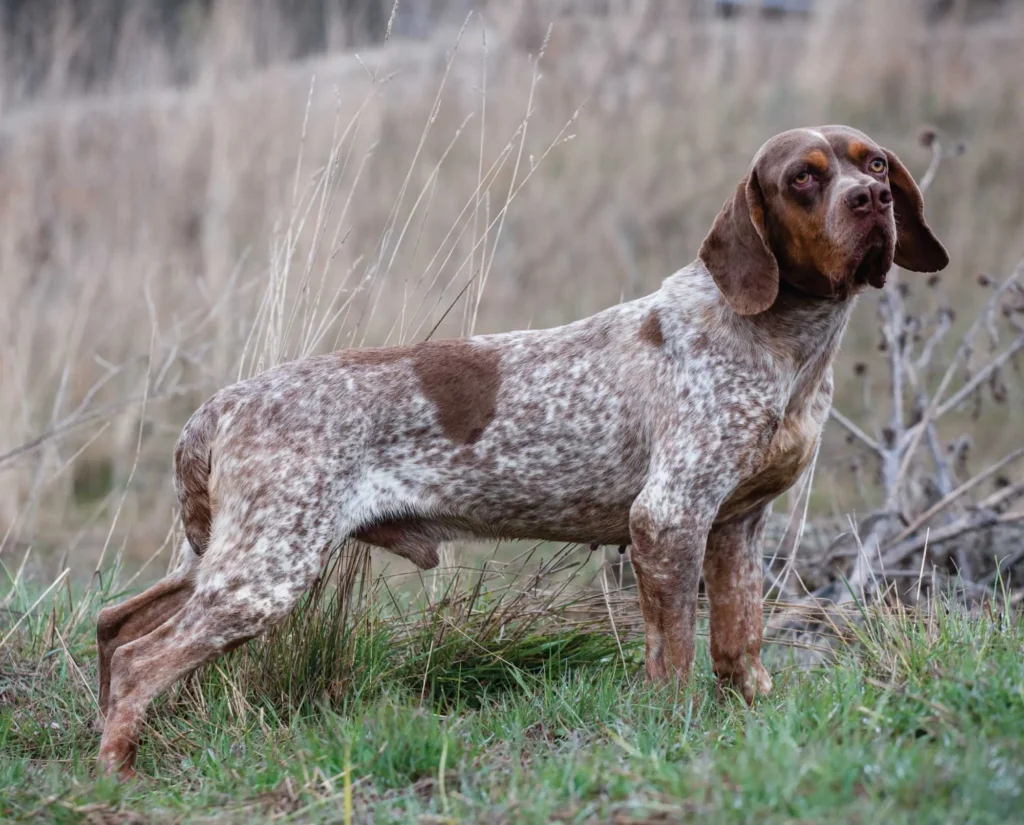
This is a medium to large-sized dog of the braccoid type. Its build speaks of strength and endurance, not speed. The body fits into a rectangle; it is massive, with a broad chest and strong bones. This is the “workhorse” among pointers, built for hours of combing through difficult brush.
| Characteristic | Standard Description |
|---|---|
| Weight | Males: 60-77 lbs (27-35 kg); Females: 48-66 lbs (22-30 kg) |
| Height at Withers | Males: 21.5-25 in (55-64 cm); Females: 21-23.5 in (53-60 cm) |
| Head | Large, square, with a broad skull. Muzzle is short and straight. Lips are thick and slightly drooping. |
| Eyes | Large, brown or amber, with a calm and intelligent expression. |
| Coat | Short, harsh to the touch, dense. Skin is thick and loose. |
| Color | Varied: white with orange, brown, liver, black; tricolor; solid color. |
The Pachón Navarro’s skin is quite elastic and loose, forming a dewlap on the neck. This isn’t a flaw but a protective mechanism: in thick, prickly bushes (matorral), loose skin is less likely to get injured, allowing the dog to work where other breeds refuse to go.
Hunting Qualities and Working Style
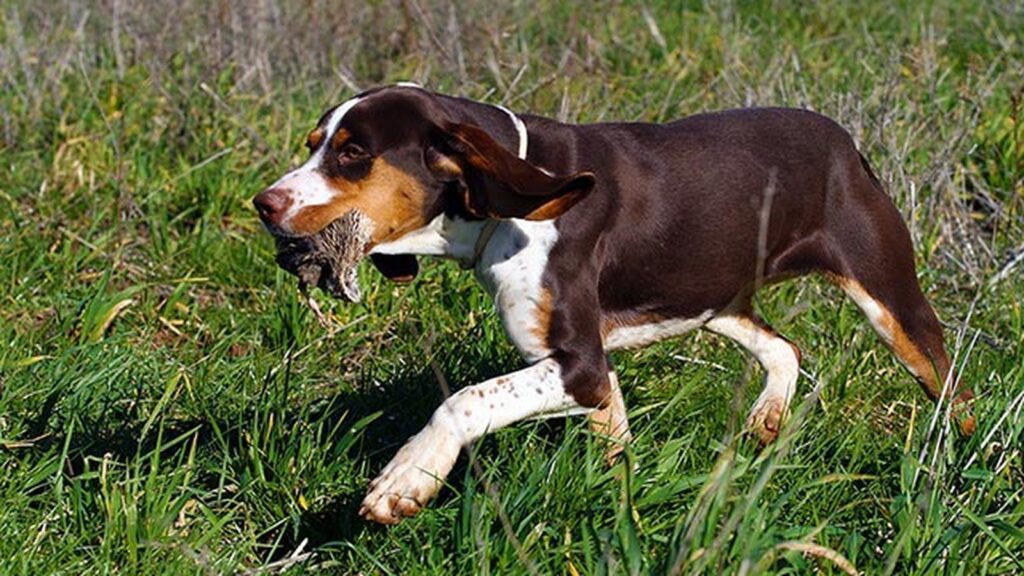
The Pachón Navarro is an “old school” hunter. If you’re used to the fast gallop of Pointers or Setters, the Pachón’s work will seem meditative to you. It moves at a characteristic trot, thoroughly scanning the area. This dog works in close contact with the hunter, rarely straying more than 55-110 yards (50-100 meters). Such a hunting style is perfect for rough terrain where you don’t want to lose sight of the dog.
Its main weapon is intelligence. The Pachón Navarro doesn’t run around aimlessly. It analyzes the wind, the terrain, and the game’s behavior. Its point is firm and confident, but without unnecessary drama. It simply indicates the prey with its whole look. Plus, it is an excellent retriever. Thanks to its “soft mouth,” it brings back the bird undamaged.
Temperament and Behavior in the Family
Off the field, the Pachón Navarro turns into a model of calm and composure. This isn’t the kind of dog that will wreck your apartment from excess energy if you skip one walk. They are very people-oriented and bond with all family members, though they usually pick one “leader” to obey unconditionally.
It’s interesting to compare their vocalization with other primitive breeds. While the New Guinea Singing Dog is known for its unique trills, the Pachón Navarro is more of a silent philosopher. It barks only when necessary, like guarding territory, making it a decent alarm dog.
They are patient with children and tolerate a lot. However, given the dog’s size, interaction with very small kids should happen under adult supervision. They rarely conflict with other dogs; dominant behavior isn’t typical for them if socialization was done right.
Care and Hygiene
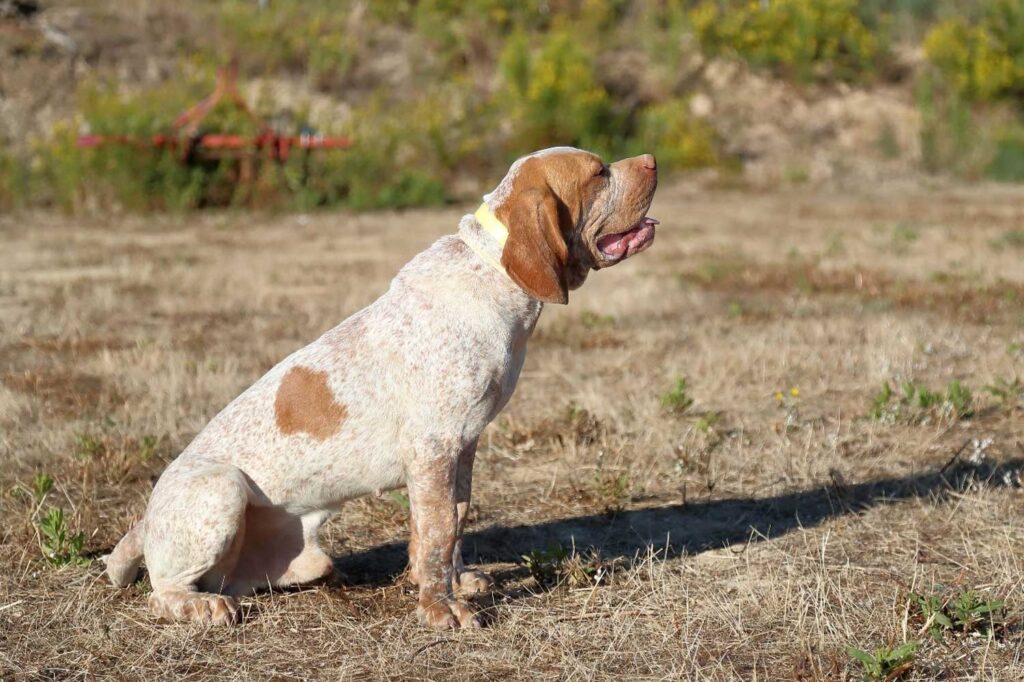
The Pachón Navarro is low-maintenance in everyday life, but there are nuances a owner needs to watch out for. Its short, harsh coat requires brushing with a rubber mitt once a week. This helps remove dead hair and massage the skin.
Ears: This is the breed’s weak spot. The heavy, hanging ears are poorly ventilated. After every hunt or walk in the woods, they need to be checked for ticks, seeds, and dirt. Regular cleaning with special lotions will prevent ear infections.
Skin Folds: Special attention should be paid to the folds on the muzzle and neck. In humid climates, bacteria can multiply there, so it is importnt to keep these areas dry and clean.
Training and Education

This breed requires a special approach. Harsh drills and mechanical methods don’t work here. The Pachón Navarro is a dog with dignity. If you put too much pressure on it, it will simply “shut down” and stop responding.
The key to success is positive reinforcement and partnership. These dogs mature late. Full physical and mental maturity comes closer to 3 years of age. Therefore, don’t demand perfect field work from a young dog. They have an innate hunting instinct; puppies often start pointing at butterflies or pigeons as early as 4-5 months. The owner’s task is just to gently guide this instinct, teaching quartering and obedience at a distance.
Health and Genetic Diseases
Nutrition: How to Feed a Working Dog
Comparison with Other Spanish Breeds
Spain has gifted the world some magnificent hunting dogs. To better understand the Pachón Navarro’s place in this hierarchy, it is worth mentioning its closest “relatives.”
This breed is often confused with the Perdiguero de Burgos. Both dogs are ancient Spanish pointers, but the Burgos is usually more massive, has an even heavier dewlap, and longer ears. Their working style is similar, but the Navarrese is considered slightly more versatile regarding terrain.
Another interesting example is the Spanish Hound (Sabueso Español). While the Pachón Navarro works with air scent and points, the Sabueso is a classic tracker that chases game with a voice (baying). They can complement each other on a complex hunt, but at home, they have totally different temperaments.
Pros and Cons of the Breed
| Pros | Cons |
|---|---|
| Balanced Psyche: A very stable dog, not prone to hysteria or aggression. | Drooling: Due to lip structure (jowls), the dog may drool, especially after eating or drinking. |
| Versatility: Works on birds, fur, and tracks blood trails well. | Stubbornness: They have their own opinion; training takes patience. |
| Contact: Always keeps the owner in sight, not prone to running away. | Rarity: Finding a puppy outside Spain is extremely hard. |
| Robust Health: An aboriginal breed with strong immunity. | Need for Exercise: This is a working dog; it needs activity, or it will get fat. |
| Simple Care: The short coat doesn’t require a groomer. |
Interesting Facts About the Breed
The history of this breed is full of amazing moments that make it even more attractive to dog experts.
- Royal Favorite. Kings of Navarre, Charles II and Charles III, mentioned expenses for these dogs in their diaries, and the sums were significant – proving the breed’s high status.
- Intellectual Hunter. It is said that an experienced Pachón Navarro knows how to “trick” game, flanking from an unexpected side and cutting off escape routes, as if calculating the strategy in advance.
- Genetic Parallels. Although the Pachón Navarro looks unique, its rare colors sometimes remind us of other unique phenotypes. Just as the Panda German Shepherd has a non-standard coat color due to a mutation, rare color combinations surviving from ancient times are found among Pachón Navarros.
Frequently Asked Questions (FAQ)
Is the Pachón Navarro suitable for an apartment?
Theoretically, yes, provided there is enough physical exercise. At home, they are inactive and take up little space (mostly sleeping on the sofa). But without 2-3 hours of active walks, the dog will start getting bored and gaining weight.
Do they shed a lot?
Shedding is seasonal (spring-fall) and moderate. However, the stiff hair can stick into carpets and furniture upholstery, so regular cleaning will be necessary.
Where can I buy a puppy?
This is the hardest question. The main population is concentrated in Spain. To get a quality puppy, you’ll have to contact Spanish breeders (for example, from the Circulo de Cazadores y Criadores de Pachón Navarro club) and get on a waiting list.
Are they aggressive toward people?
No, aggression toward humans is considered a serious fault. These are friendly dogs, though sometimes a bit reserved with strangers.
Video About the Breed
- A gentle, devoted family dog
- An excellent pointing bird hunter
- Even-tempered, a good watchdog
- Robust health overall
- A strong drive for birds (dangerous for poultry)
- Needs exercise and work
- Rare — once on the brink of extinction
- Drop ears prone to infections
| Pointer | German Shorthaired Pointer | Perdiguero de Burgos | |
|---|---|---|---|
| Height | 58–70 cm | 53–64 cm | 59–67 cm |
| Energy | 4.5 | 4.5 | 4 |
| Apartment | 2.5 | 2.5 | 2.5 |
| Beginners | 3 | 3 | 3 |
Why does the Pachón Navarro have a split nose?
Is the breed suitable for a family?
Can a Pachón be kept with birds?
Spanish type (Navarre) · Spanish regional clubs
For apartments · For kids · For beginners · Active · Smartest · Hypoallergenic · All rankings →