

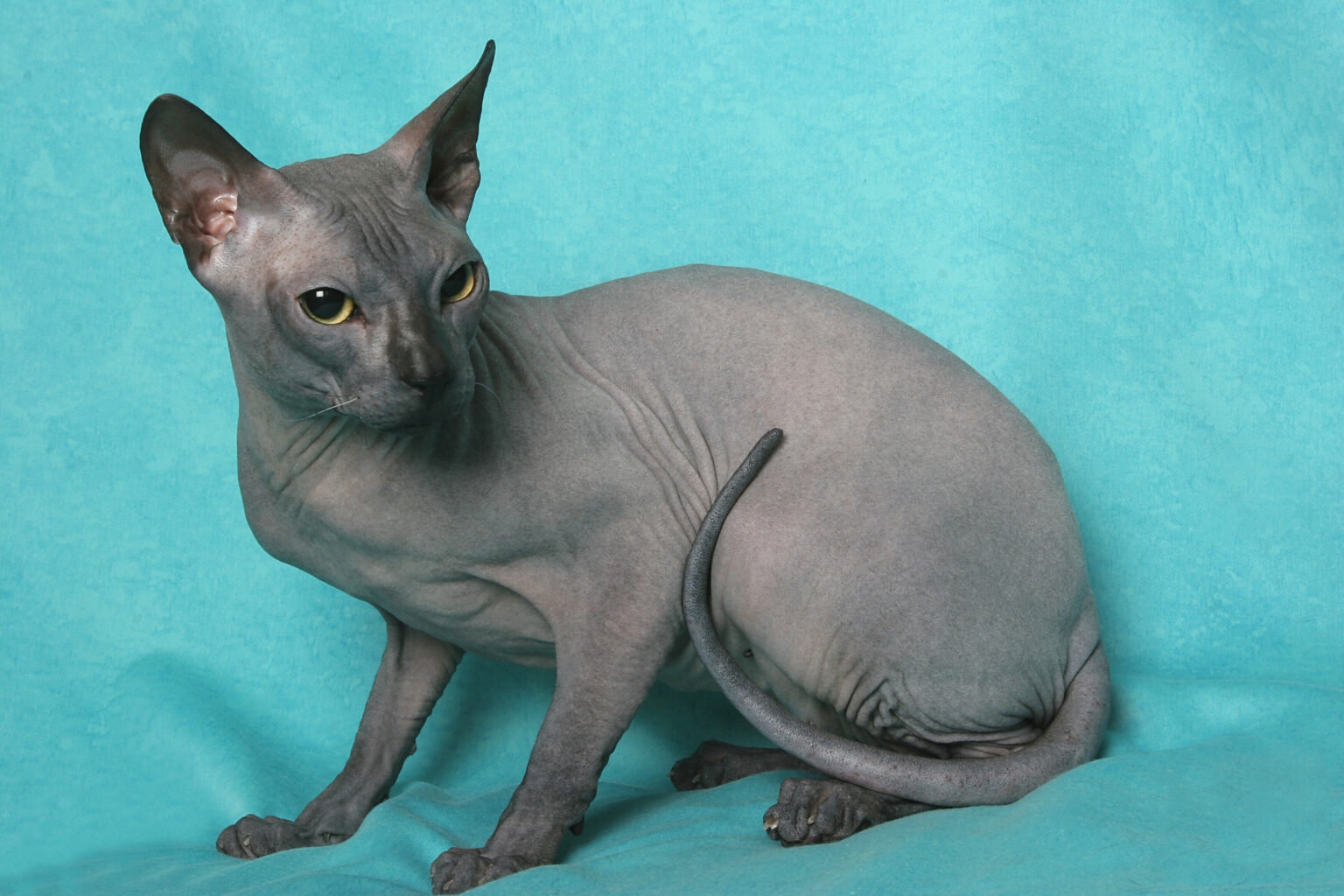
| Weight | 3.5–7 kg |
| Lifespan | 12–15 years |
| Coat | hairless (or velour/brush/flock) |
| Recognition | WCF · TICA |
| Origin | Russia |
Exact ratings
- Skin problems (oily skin, seborrhea, dermatitis)
- Dental and gum disease (linked to the hairless gene)
- Sensitivity to cold and sunburn
- Hypertrophic cardiomyopathy (HCM)
- Generally healthy with responsible breeding
Calorie-rich quality food (hairless cats spend more energy on warmth), with weight control. Regular bathing (the skin secretes sebum); warmth and clothing in the cool; sun protection; careful dental care.
The Don Sphynx (also known as the Donskoy) is one of the few hairless cat breeds originating from Russia. Its unusual appearance-wrinkled, hot-to-the-touch skin, large ears, expressive almond-shaped eyes, and muscular build-captures attention and admiration. But behind this exotic exterior lies an incredibly gentle, loyal, and sociable personality, making the Don Sphynx an excellent companion and beloved family pet. We’ll cover all the features of this unique breed in more detail later on Tvaryny.
Unlike its Canadian namesake, the Don Sphynx’s hairlessness is caused by a dominant gene. This results in a variety of skin types, ranging from completely bald individuals to cats with a light velour or coarse brush coat. This young breed, whose story began with an accidental discovery on the streets of Rostov-on-Don, quickly gained recognition from felinologists and the love of owners worldwide thanks to its uniqueness and wonderful temperament.
Don Sphynx: Breed Overview
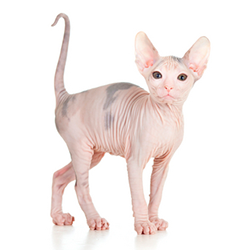
- Original Name: Don Sphynx / Donskoy
- Origin: Russia (Rostov-on-Don)
- Time of Origin: 1987 (discovery of foundation cat), 1996/1997 (official WCF recognition)
- Coat Type: Hairless (various degrees: rubber bald, flock, velour, brush)
- Hairlessness Gene: Dominant (Hrbd)
- Size: Medium
- Weight: 7-11 lbs (females), 9-13 lbs (males)
- Lifespan: 12-15 years (sometimes longer)
- Body Temperature: High metabolism, skin is hot to the touch (approx. 101.3-103.1°F)
- Intelligence: High, easy to train
- Character: Gentle, very sociable, loyal, intelligent, inquisitive, energetic, non-aggressive
- Care: High skin care requirements (regular bathing/wiping), needs warmth and sun protection
- Colors: All possible skin colors and patterns are permitted
History of the Don Sphynx
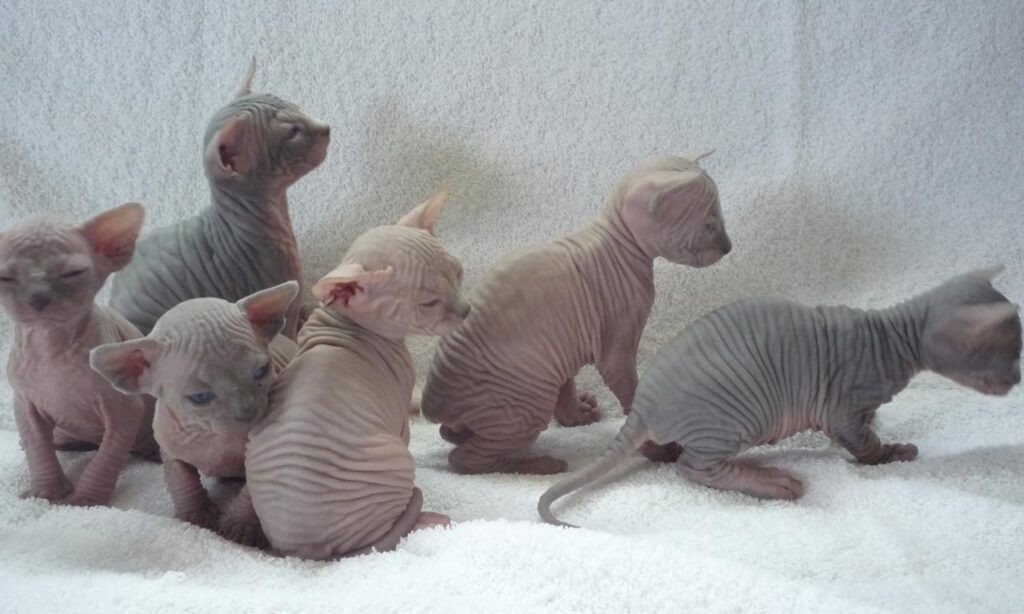
The history of the Don Sphynx breed didn’t start with a planned breeding program, but with a happy accident and the kindness of one woman. In February 1987 (some sources say 1986), a resident of Rostov-on-Don named Elena Kovaleva was returning home when she saw a group of boys mistreating a small kitten. She rescued the animal and took it home. The kitten, which turned out to be a female, was named Varvara.
At first, Varvara had a normal coat, but after a few months, the fur on her back began to fall out, and later, on her head. Veterinary treatment yielded no results, as the cause was not illness but a genetic mutation. Over time, Varvara became almost completely bald.
A few years later, Varvara had kittens with a local European Shorthair cat named Vasily. Some of the kittens in the litter also began to lose their fur, just like their mother. This caught the interest of felinologist Irina Nemykina, who took one of these kittens – a female named Chita – and began the dedicated work of creating a new breed of hairless cat. Chita is considered the official foundation cat of the breed. Irina Nemykina began a purposeful breeding program, incorporating European Shorthairs to broaden the gene pool and establish desired traits, all while preserving the dominant hairless gene.
During the breeding process, it was discovered that the gene responsible for hairlessness in the Don Sphynx is dominant (unlike the recessive gene in the Sphynx cat). This meant that for hairless kittens to be born, only one parent needed to carry the gene.
Interestingly, the Don Sphynx’s story is one that came “from the people,” similar to the emergence of the Brazilian Shorthair, which also developed from local street cats. This sets them apart from breeds created through deliberate crossbreeding, such as the Himalayan cat (a result of crossing Persian and Siamese cats). Although young, the Don Sphynx breed has gained popularity for its unusual appearance and charming personality. It’s noteworthy that the breed originated in Russia, a country that is also home to the famous Russian Blue breed, though they are not genetically related.
Thanks to the work of Irina Nemykina and other enthusiasts, the breed was stabilized and received official recognition. In 1996, the breed was registered by the World Cat Federation (WCF) under the name “Don Sphynx”. Later, other major international organizations, such as TICA (2005) and FIFe (2011), also recognized the breed.
What Does the Don Sphynx Look Like: Breed Standard
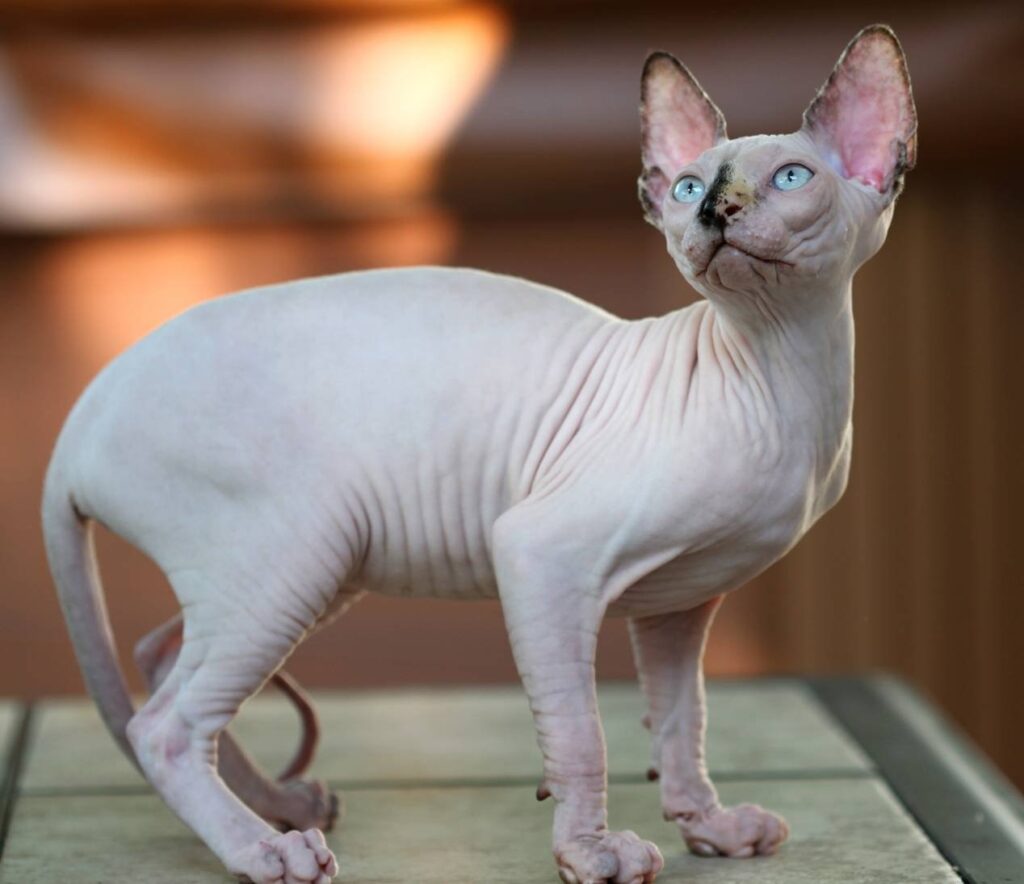
The Don Sphynx is a cat of contrasts: it is simultaneously elegant and sturdy, wrinkled and graceful. It is a medium-sized cat with a strong bone structure, well-developed muscles, and a distinctive appearance that sets it apart from other Sphynx breeds.
The head has a characteristic wedge shape but is not extremely long. The cheekbones and brow ridges are clearly defined, creating an “alien-like” expression. Vertical wrinkles on the forehead, fanning out between the ears, are one of the breed’s trademarks. Large, high-set ears are another dominant feature. They are wide at the base and “crown” the head. The eyes, almond-shaped and slightly slanted, give a look of wisdom and curiosity. Eye color can be anything and is not dependent on skin color.
The body is muscular, with a solid bone structure and medium length. The chest is broad, and the rump is strong. A characteristic feature is the so-called “pot belly,” which is normal and indicates a good appetite. The limbs are proportionate, not overly long. The paws are particularly noteworthy: long, slender toes with clearly visible webbing (“monkey paws”) allow them to be extremely dexterous and to grasp small objects.
| Body Part | Standard Description (based on WCF) |
|---|---|
| General Appearance | Medium-sized, strong, muscular cat. Medium-length body with a straight back. Rump is wider than the shoulders. Proportionate, muscular limbs. |
| Head | Wedge-shaped, with well-developed cheekbones and brow ridges. Flat forehead with numerous vertical wrinkles between the ears. |
| Muzzle | Medium length, rounded, with a slight pinch (narrowing behind the whisker pads). Whisker pads are pronounced. |
| Nose | Medium length, straight. A noticeable transition to the forehead (stop). |
| Chin | Strong, well-developed. |
| Ears | Large, set high and straight, slightly tilted forward. Wide at the base, with rounded tips. The outer edge of the ear continues the line of the head. The distance between the ears is no more than the width of an ear. |
| Eyes | Medium-sized, almond-shaped, set slightly obliquely. Not bulging. Any color is permitted. |
| Neck | Medium length, muscular. |
| Body | Strong, muscular, with a broad rump. Rounded abdomen (“pot belly”). |
| Limbs and Paws | Medium-length limbs, slender, muscular. Oval paws with long, mobile toes (“monkey toes”), between which webbing is visible. |
| Tail | Long, straight, strong, flexible, tapering to a rounded tip. |
| Skin and Coat | Elastic skin, with numerous folds on the head, neck, underarms, and in the groin. Hot and pleasant to the touch. Four coat types are permitted (see below). Residual fur is possible on the points. Whiskers are desirable (often short, curly, or broken). |
| Color | All possible colors and skin patterns are recognized (solid, tortoiseshell, tabby, bicolor, colorpoint, etc.). Skin pigmentation is clearly visible. |
Don Sphynx Skin Types
A unique feature of the Don Sphynx is the existence of four main types of “hairlessness,” which are determined by the dominant Hrbd gene. These types can change as the cat ages (especially the first three):
- Rubber Bald (Homozygous): These cats carry the dominant gene in its homozygous form (Hrbd/Hrbd). They are born completely hairless. The skin feels like hot rubber or modeling clay, is very elastic, and has many folds. It produces the most skin secretion and therefore requires the most thorough care. They are considered the most valuable for shows.
- Flocked: These cats are heterozygous (Hrbd/hrbd). The skin is covered with very short, fine, almost invisible hairs (up to 1-2 mm), resembling velvet or peach skin. The skin feels very delicate. With age (usually by 1-2 years), such cats often “undress” completly and become bald.
- Velour: Also heterozygous. The hairs are longer (2-3 mm) and more noticeable than in flocked cats. The coat is soft, resembling velour fabric. With age, they may also partially or fully lose their coat, but sometimes a residual covering remains on the limbs, tail, and muzzle (points).
- Brush: These are also heterozygous animals. They have a coarse, curly, sparse coat, similar to bristles. Bald patches (“islands”) are noticeable on the head, neck, and back. Typically, “brush” cats do not lose their fur completely during their lifetime. Although they are not show-quality, these animals are crucial for breeding programs. Mating two completely bald (homozygous) animals can lead to genetic problems, weakened offspring, or fertility issues. Therefore, “brush” cats are a vital asset for maintaining the breed’s health.
Don Sphynx Character: Temperament and Behavior
While the Don Sphynx’s appearance might be divisive, its character is undeniably endearing. This is a companion cat, a “Velcro cat,” a “child” cat. Its temperament is a unique blend of dog-like devotion, monkey-like agility, and feline grace. The Don Sphynx isn’t just about a unique look; it has an extremely captivating and loving personality. They are very social, human-oriented cats that become full-fledged members of the family.
- Extremely Affectionate and Loyal: Don Sphynx cats adore their owners and constantly seek their company. They literally cannot live without physical contact. They need to be petted, to snuggle, and to sleep with their owner (most often under the covers). They will follow you around, taking part in all household chores, from cooking to working on the computer.
- Very Sociable: They love being the center of attention and are good with guests (often with curiosity rather than fear). They make wonderful minders for children, as they are very patient and completely non-aggressive. They get along splendidly with other pets, especially if raised together, often becoming the “leaders” of the animal pack.
- Intelligent and Inquisitive: These are smart cats that easily learn house rules. They quickly remember their names, understand intonations, and even the meaning of some words. Their curiosity drives them to explore everything new, opening cabinets and drawers. Many owners successfully train them to perform simple commands (“come,” “sit”) and even get them used to walking on a leash.
- Energetic and Playful: This is no couch potato. Despite their love for comfort and sleeping under a blanket, Don Sphynx are quite active and playful, retaining this trait well into old age. They love to run, jump, and explore vertical spaces. They need cat trees, interactive toys, and regular play sessions with their owner.
- Calm and Even-Tempered: They are not prone to aggression or destructive behavior (provided they get enough attention and activity). Their temperament is usually stable and predictable. They rarely use their claws when playing with people.
- “Living Hot Water Bottles”: Due to their lack of fur and high metabolism, they feel very warm to the touch. Many owners note their “therapeutic” effect – they love to cuddle up to an owner’s sore spots, warming them.
- Dislike Solitude: This is perhaps their main “problem.” Left alone for the whole day, a Don Sphynx will be genuinely sad, which can manifest as destructive behavior or apathy. If you spend a lot of time away from home, it might be worth getting your Don Sphynx a companion (another cat or a dog).
Overall, the Don Sphynx is an excellent choice for people seeking not just an exotic pet, but an extremely loving, loyal, and interactive companion, and who are prepared to give it plenty of attention and care.
Health and Care for the Don Sphynx: Needs of a Hairless Breed
Don Sphynx are generally considered a relatively healthy breed with a robust immune system inherited from their street-cat ancestors. However, their lack of fur creates significant care requirements and predisposes them to certain problems.
Skin Care – Priority #1
The skin of a Don Sphynx requires regular and meticulous care. It is not protected by fur and produces significantly more sebum (skin oil) than that of ordinary cats. This secretion, which has a specific smell and can be sticky, mixes with dust and dirt. If not washed off, it clogs pores, causing comedones (blackheads) and acne, especially on the chin and tail (“stud tail”).
- Bathing/Wiping: Don Sphynx need to be cleaned regularly. The frequency depends on the individual cat (skin type, metabolic rate). It is recommended to bathe the cat every 1-2 weeks or wipe the skin with damp wipes (special pet wipes or baby wipes without alcohol or fragrance) several times a week. Bathe in warm water (around 100-104°F) using mild, pH-balanced cat shampoos or those specifically for Sphynx cats. Rinse the shampoo thoroughly, especially from the folds. After bathing, the cat must be immediately wrapped in a warm towel and dried thoroughly.
- Moisturizing: After a bath or if the skin becomes dry (e.g., due to central heating in winter), you can use light, hypoallergenic, cat-safe moisturizers (lotions, baby lotions) recommended by your vet.
- Sun Protection: Sphynx skin is very sensitive to UV rays and can easily get sunburned. Limit your cat’s time in direct sunlight, especially in summer. If the cat goes out on a balcony or likes to sleep by a window, you can use special pet-safe sunscreen (on veterinary advice).
- Acne Prevention: Besides regular cleaning, it’s important to keep food bowls clean (it’s better to use ceramic or metal, not plastic).
Thermoregulation
The lack of fur makes Don Sphynx very sensitive to cold and drafts. Their accelerated metabolism is their “internal furnace,” but its power isn’t enough if the room is cold. Signs that a Sphynx is cold include: shivering, tucking its paws in, or seeking out a radiator or blanket.
- Providing Warmth: In the cold season, the room temperature should be comfortable (no lower than 72-75°F). Set up warm sleeping spots for the cat (beds, houses with blankets, radiator hammocks), away from windows and doors.
- Clothing: Many owners dress their Sphynx cats in special sweaters or onesies in winter. It is important that the clothing is made from natural, breathable fabrics (cotton, fleece), does not chafe the skin, and is comfortable.
Other Aspects of Care and Health:
- Ear Care: The huge, radar-like ears of the Donskoy are traps for dust and wax. More dark, thick secretion accumulates in a Sphynx’s ears than in other cats. This is normal. They need to be inspected and cleaned regularly (once a week or more) with a cotton pad soaked in a special lotion.
- Eye Care: Due to the absence or rudimentary nature of eyelashes, dust and dirt can easily get into their eyes. Jelly-like, clear, or slightly brownish discharge in the corners of the eyes is normal. You should inspect the eyes daily and, if necessary, wipe them with a clean, damp cloth or a cotton pad soaked in saline solution.
- Claw Trimming: Like all indoor cats, Sphynx cats need their claws trimmed regularly (every 2-3 weeks). A dark build-up (secretion) can also accumulate on the claws and in the nail beds, which should be carefully cleaned out.
- Dental Health: Don Sphynx, especially homozygous (‘bald’) ones, can have a genetic predisposition to early tooth loss, gingivitis, or an improper bite. Regular check-ups with a veterinary dentist and tooth brushing are important.
- Genetic Diseases: The breed is considered relatively healthy, but like all cats, hypertrophic cardiomyopathy (HCM) can occur. Responsible breeders test their breeding cats. Due to their skin, dermatitis (often allergic in origin) can also occur.
| Care Procedure | Frequency | Purpose |
|---|---|---|
| Bathing / Wiping skin | 1-2 times a week (or more as needed) | Remove excess sebum, dirt, prevent acne |
| Cleaning ears | Once a week (or more often) | Remove excess wax and dirt |
| Wiping eyes | Daily (as needed) | Remove discharge, dust |
| Trimming claws | Every 2-3 weeks | Prevent ingrowth, scratches, clean build-up |
| Providing warmth | Constantly (especially in winter) | Maintain comfortable body temperature |
| Sun protection | In summer, when exposed to sun | Prevent sunburn |
| Dental check-up | Regularly (brushing as needed) | Prevent gingivitis and tartar |
Training and Socialization of the Don Sphynx
Don Sphynx are exceptionally intelligent and sociable cats, which makes raising and training them an enjoyable process. They quickly learn house rules and can even be taught to perform commands, responding well to positive reinforcement methods.
Socialization
Thanks to their natural curiosity and friendliness, Don Sphynx are usually easy to socialize. Socialization isn’t just about introductions. It’s about getting them used to being handled and to unpleasant but necessary procedures (bathing, ear cleaning, claw trimming). The earlier a kitten understands that these manipulations are safe and part of life, the calmer it will be. It’s important to introduce a kitten from a young age to:
- Different people: So the cat isn’t afraid of guests and reacts calmly to strangers.
- Other animals: They get along well with other cats and dogs, especially if the introduction is done correctly and at a young age.
- Different sounds and environments: Get them used to household noises (vacuum cleaner, hair dryer) and trips in a carrier.
Training and Learning:
- Litter box and scratching post training: This usually presents no difficulties. It’s important to keep the litter box impeccably clean (they are very fastidious) and provide an attractive scratching post (a vertical one is best).
- Teaching commands: Thanks to their intelligence, they can be taught commands like “come,” “sit,” “fetch,” and to walk on a leash. Use treats and praise. Training sessions should be short and engaging. They love interactive puzzle toys where they have to work to get a treat.
- Behavior correction: Avoid punishment, shouting, or physical force. This will only frighten the cat. If the cat does something undesirable (like scratching the sofa), redirect its attention to a toy or offer an alternative (the scratching post).
- Games and activity: Provide the cat with enough toys (interactive, teasers, balls) and opportunities for physical activity to satisfy its energy and curiosity.
Creating a Safe Environment
Because Don Sphynx are very inquisitive and vulnerable to the cold, their environment must be safe.
- Vertical Space: Provide them with a “cat tree” or shelves. They love heights and observing everything from above.
- Warm Spots: A bed near a radiator, a hanging radiator hammock, or a little house with a soft blanket are must-haves.
- Safety: Put away small objects they could swallow. Be careful with open windows (secure “cat-proof” window screens are essential) – their lack of fur won’t save them from injury in a fall.
Feeding the Don Sphynx: A Hairless Cat’s Needs
The diet of a Don Sphynx has its own peculiarities, linked to the lack of fur and, consequently, a faster metabolism and higher energy expenditure to maintain body temperature. A Sphynx’s metabolism works like a high-performance engine, burning calories for warmth. Their appetite is often impressive. The owner’s main task is to find the balance between “feeding enough to stay warm” and “not to overfeed.”
Key Aspects of the Diet:
- Higher Calorie Intake: Don Sphynx typically need more food (about 20-30% more) than cats of a similar size with fur, especially during the cold season.
- High Protein and Fat Content: The diet must be rich in high-quality animal protein (the foundation of a cat’s diet) and healthy fats, which are a source of energy and necessary for skin health (e.g., Omega-3 and Omega-6).
- Food Quality: Choose high-quality commercial foods (super-premium, holistic), whether dry or wet. Pay attention to the ingredients: meat should be the first item listed, with minimal grains (especially corn and wheat), which can provoke allergies. You can choose formulas for active cats, for kittens (which are more calorie-dense), or specialized foods for Sphynx cats (which account for skin needs).
- Natural Diet: If you opt for a “natural” diet (BARF/RAW or cooked), it must be carefully planned with a veterinary nutritionist. You can’t just feed them meat. The diet must be balanced, including meat (previously frozen), a bone component (necks, heads), offal, and occasional vegetables. Vitamin and mineral supplements (especially taurine) are essential.
- Feeding Frequency: Due to their fast metabolism, it’s recommended to feed adult Sphynx cats 2-3 times a day in small portions to ensure a stable energy supply. Kittens are fed even more often (4-6 times).
- Appetite Control: Don Sphynx usually have a good appetite, but it’s important not to overfeed them to avoid obesity, which can put extra strain on the heart and joints.
- Access to Water: Fresh, clean water must always be freely available.
| Diet Type | Pros | Cons |
|---|---|---|
| Dry Food (Super-Premium/Holistic) | Balanced composition, convenient storage, helps prevent tartar, easy to portion. | Requires monitoring water intake, may contain unwanted carbohydrates. |
| Wet Food (Cans/Pouches) | High palatability, additional source of moisture (helps prevent urinary tract issues). | High cost if fed exclusively, doesn’t clean teeth, spoils quickly in the bowl. |
| Natural Diet (BARF/Cooked) | As close to nature as possible (in the case of BARF), full control over ingredients. | Difficult to balance yourself, risk of bacterial contamination (BARF), time-consuming to prepare. |
Pros and Cons of the Don Sphynx Breed
Pros:
- Unique, exotic appearance.
- Extremely gentle, loyal, and sociable personality (“dog-like cat”).
- High intelligence, very trainable.
- No cat hair in the house (relevant for bald, flock, and velour types).
- Gets along well with children and other pets.
- No brushing required.
- Often better tolerated by people with allergies to cat fur (but they are not hypoallergenic!).
- Robust health (aside from specific needs).
- Very “chatty” (not loud, but communicative – they purr and chirp).
Cons:
- High skin care requirements (frequent bathing/wiping).
- Sensitivity to cold and drafts (needs warmth, clothes).
- Very sensetive to the sun (risk of sunburn).
- Needs frequent ear cleaning.
- Increased food requirements (higher food costs).
- Dislikes being left alone for long periods (needs a lot of attention).
- Prone to skin problems (acne) if not cared for properly.
- Prone to dental problems (in some lines).
- High cost for a kitten from a responsible breeder.
- The specific appearance may not appeal to everyone.
Interesting Facts About the Don Sphynx
- Dominant Mutation: Unlike the Canadian Sphynx, the Don Sphynx’s hairlessness gene is dominant. This means a kitten can be born hairless even if only one parent is a Sphynx.
- Hot to the Touch: Their normal body temperature is higher than most cats (around 102.2-103.1°F), and without fur, they feel much hotter to the touch.
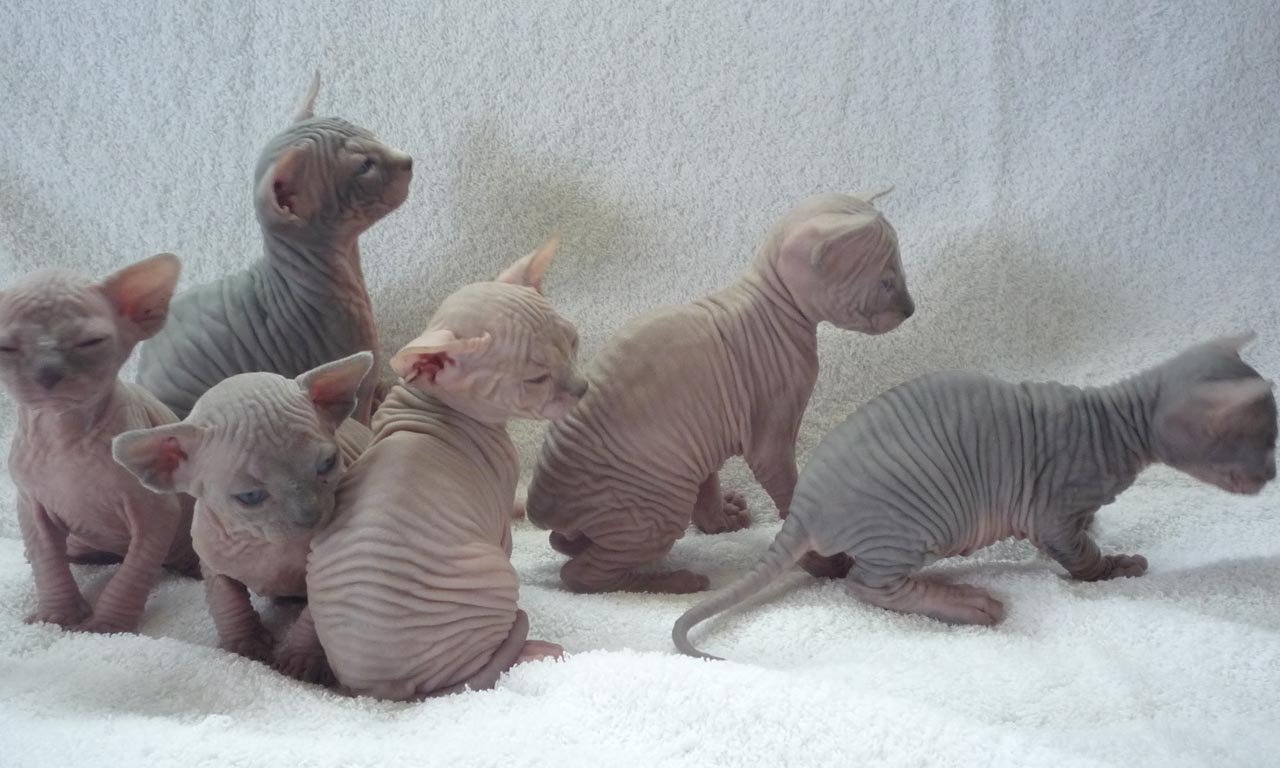
- Born with Fur: Many kittens (especially flock and velour) are born with a coat, which then falls out within the first few months or years of life. “Brush” kittens are born with a coarse coat and usually do not go completely bald.
- Early Eye-Opening: Don Sphynx kittens often open their eyes very early, sometimes on the 1st-3rd day after birth, and there are even cases of them being born with their eyes already open.
- “Monkey Toes” with Webbing: The toes on a Don Sphynx’s paws are long and mobile, with clearly visible webbing between them, allowing them to deftly grasp objects.
- They Sweat: Unlike most cats, Sphynx cats can sweat over their entire skin surface. Their sweat (skin secretion) can leave a brown or grayish residue on the skin, which needs to be washed off regularly.
- They Can Tan: The skin of a Don Sphynx can change color (tan) under the influence of sunlight. Light-colored cats can get sunburned, while dark-colored cats become more richly colored.
- Skin Color: The “color” of a Don Sphynx is the color of its skin. It can be any color: black, white, red, tortoiseshell, tabby (stripes are visible on the pigmented skin), or colorpoint.
- No Connection to Egypt: Despite the name “Sphynx,” they have no genetic connection to Egypt or ancient Egyptian cats. The name is purely an association with their exotic appearance.
Frequently Asked Questions (FAQ)
Are Don Sphynx cats suitable for allergy sufferers?
Don Sphynx are not hypoallergenic, as the allergy is caused not by fur, but by the Fel d 1 protein found in a cat’s saliva and on its skin. However, because they lack the fur that spreads allergens, some people with mild to moderate cat allergies tolerate Sphynx cats better. Important! The Fel d 1 allergen accumulates in the skin’s sebum. Since a Sphynx needs to be washed frequently, this mechanically washes the allergen away, which *also* helps to reduce a reaction. But it’s not a cure-all. Before getting a cat, allergy sufferers are advised to spend time with the breed to test their reaction.
How often do you need to bathe a Don Sphynx?
The frequency of bathing is individual, but it’s usually recommended once every 1-2 weeks. Some cats (especially “rubber bald” ones during puberty) may need it more often, while others (like “brush” types) may need it less. It’s important not to dry out the skin. An alternative can be regular wiping of the skin with damp wipes.
Do Don Sphynx cats get cold?
Yes, they get cold very easily. They need a warm room (72-75°F and above), protection from drafts, and warm places to sleep (beds, houses, radiator hammocks). Many owners use clothes for them during the cold season.
How is the Don Sphynx different from the Canadian Sphynx?
The main difference is the genetics of hairlessness: in the Don Sphynx, it’s caused by a dominant gene (Hrbd), while in the Canadian Sphynx, it’s recessive (hr). This leads to the different coat types in the Donskoy (bald, flock, velour, brush), whereas Canadian Sphynx cats only have a light down. There are also differences in the breed standard: Donskoy cats have more pronounced wrinkles, almond-shaped eyes (Canadians have lemon-shaped eyes), larger ears, a stronger bone structure, and often webbing on their paws.
Does the Don Sphynx need special food?
Not necessarily “special,” but high-quality and more calorie-dense food than for ordinary cats, due to their faster metabolism. It’s important to choose foods high in animal protein and fats, with minimal grains.
Can a Don Sphynx be let outside?
It is strongly discouraged. They are defenseless against the cold, the sun (sunburn), injuries, infections, and other animals. They are exclusively indoor cats. The only option is a controlled walk on a harness in warm, calm, non-sunny weather (e.g., in the evening) under close supervision.
Is it true they have “healing” properties?
Many owners report that Sphynx cats love to lie on sore spots, and their warmth (due to their higher body temperature) can bring relief from some aches (like joint pain). This is more of a “living heating pad” effect and psychosomatic. The warmth relaxes muscles, and a cat’s purr (any cat’s) has a proven calming effect on the human nervous system. Their affection and warmth certainly have a positive therapeutic effect.
Video About the Breed
- Extraordinarily affectionate and sociable
- “Dog-like”, people-oriented
- Practically no shedding (no coat)
- Clever, playful, good with children and animals
- Needs special skin care (bathing)
- Feels the cold — needs warmth and clothing
- Cannot bear solitude (people-dependent)
- A tendency to skin and dental problems
| Sphynx (Canadian) | Peterbald | Devon Rex | |
|---|---|---|---|
| Weight | 3–5 kg | 3–5 kg | 2.5–4.5 kg |
| Energy | 4.5 | 4.5 | 4.5 |
| Apartment | 5 | 5 | 5 |
| Beginners | 3.5 | 3.5 | 4 |
How does the Donskoy differ from the Canadian Sphynx?
Is the Donskoy hard to care for?
What is the Donskoy's character?
WCF / TICA standards (Donskoy)
For apartments · For kids · For beginners · Most affectionate · Quietest · Hypoallergenic · All rankings →