

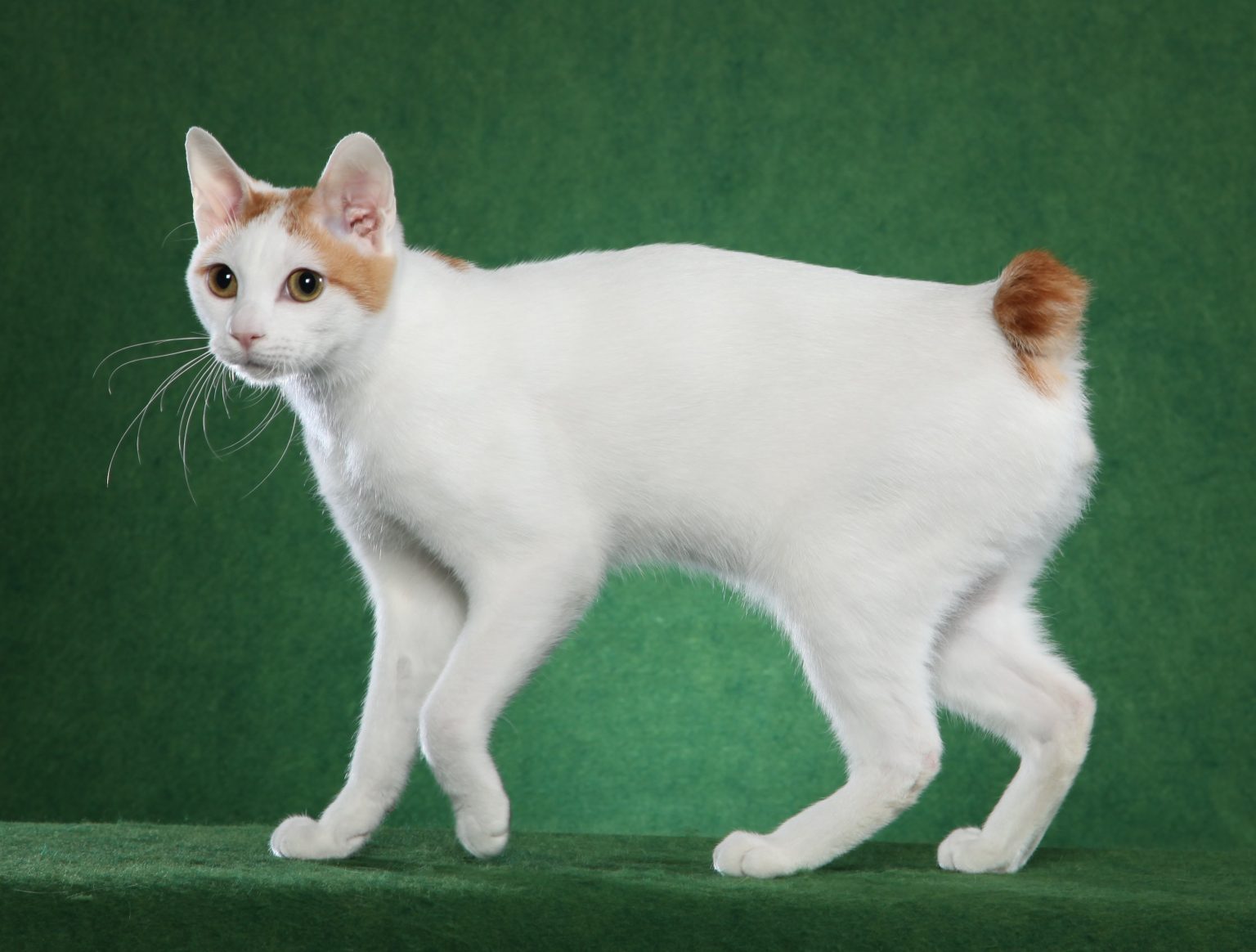
| Weight | 3–5 kg |
| Lifespan | 12–16 years |
| Coat | short or semi-long |
| Recognition | CFA · TICA · WCF |
| Origin | Japan |
Exact ratings
Common health issues
Nutrition
The Japanese Bobtail isn’t just a cat; it’s a living embodiment of grace, intelligence, and centuries of Japanese history. Known for its unique pom-pom tail and lively personality, this breed has captured the hearts of cat lovers worldwide. Affectionate and well-behaved yet active and playful, the Japanese Bobtail makes a fantastic companion for all sorts of families. It’s an easy-to-care-for cat with robust health and a surprising knack for learning new things. A particularly charming trait is its habit of raising a paw in a greeting gesture, adding to its special appeal. This very social cat adores interacting with people and other animals and is always up for a good game or even a walk on a leash. Representatives of this ancient breed with different colored eyes (heterochromia) are especially prized. While their well-developed muscles and agility reveal a natural hunter, at home they transform into a gentle and caring family member. You can learn more about this and other unique breeds over on Tvaryny.
Japanese Bobtail: Key Breed Characteristics
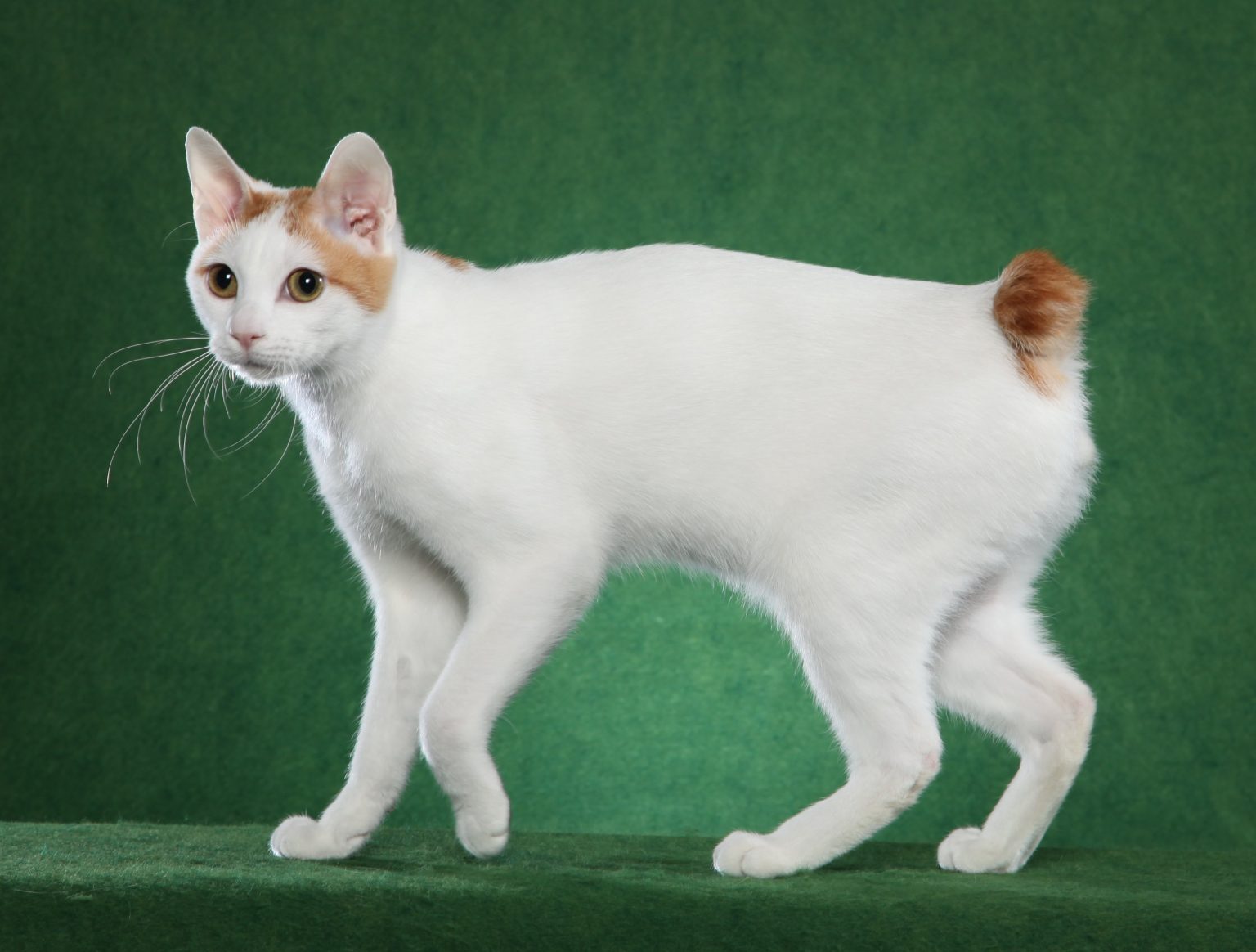
| Characteristic | Description |
| Origin | Japan |
| Breed Recognition (CFA) | 1976 (Shorthair), 1993 (Longhair) |
| Lifespan | 15-18 years (on average) |
| Size | Medium |
| Weight | Males: 6.5-10 lbs, Females: 5.5-8 lbs |
| Coat Type | Shorthair and longhair varieties |
| Color | Many variations, with the tricolor (Mi-Ke) being especially prized |
| Tail | Short, pom-pom-like, unique to each individual |
| Temperament | Active, intelligent, playful, social, “talkative” |
| Grooming | Minimal for shorthairs, moderate for longhairs |
| Health | Generally robust, specific genetic diseases are rare |
History of the Japanese Bobtail
The history of the Japanese Bobtail stretches back to ancient times. It’s believed that short-tailed cats arrived in Japan from other parts of Asia (likely China or Korea) more than 1,000 years ago. There is evidence that Buddhist monks brought them to protect valuable scrolls from rodents. Over time, these cats spread throughout Japan, becoming an integral part of local culture and folklore.
For centuries, the breed developed naturally on the Japanese islands, isolated from the outside world. The mutation responsible for the short tail is recessive, so it became firmly established in the population. Unlike many other breeds, the Japanese Bobtail was not the result of deliberate human breeding until the mid-20th century. It is a natural breed that has maintained its unique characteristics.
Cats with short tails are often depicted in Japanese art and legends. The most famous example is the “Maneki-neko”—the beckoning cat figurine believed to bring good luck and fortune. The prototype for the Maneki-neko was often a Japanese Bobtail, especially the tricolor (Mi-Ke) variety.
The breed only became known outside of Japan after World War II. American servicemen and their families brought these unusual cats back to the US. The first official breeder to begin a dedicated breeding program for Japanese Bobtails in the US is considered to be Elizabeth Freret in 1968. Thanks to her efforts and those of other enthusiasts, the breed began to gain popularity.
The Cat Fanciers’ Association (CFA) recognized the Shorthair Japanese Bobtail in 1976 and the Longhair in 1993. Today, this breed is recognized by all major cat registries worldwide, although it remains relatively rare outside of Japan and North America.
What the Japanese Bobtail Looks Like: Standards and Physical Traits
The Japanese Bobtail is a medium-sized cat with an elegant yet well-muscled body. Its body is long and slender but not fragile. The back legs are noticeably longer than the front, giving it a characteristic “bunny-like” hop and incredible jumping ability. The paws are oval and neat.
The head is an equilateral triangle with soft lines, high cheekbones, and a noticeable pinch at the whisker pads. The nose is long and straight. The ears are large, set wide apart, and upright, giving the cat an alert look. The eyes are large, oval, and expressive, set at a slight slant. The eye color should harmonize with the coat color. Any color is permitted, including blue and gold. Heterochromia (two different colored eyes) is a desirable trait, especially in white and bi-colored cats.
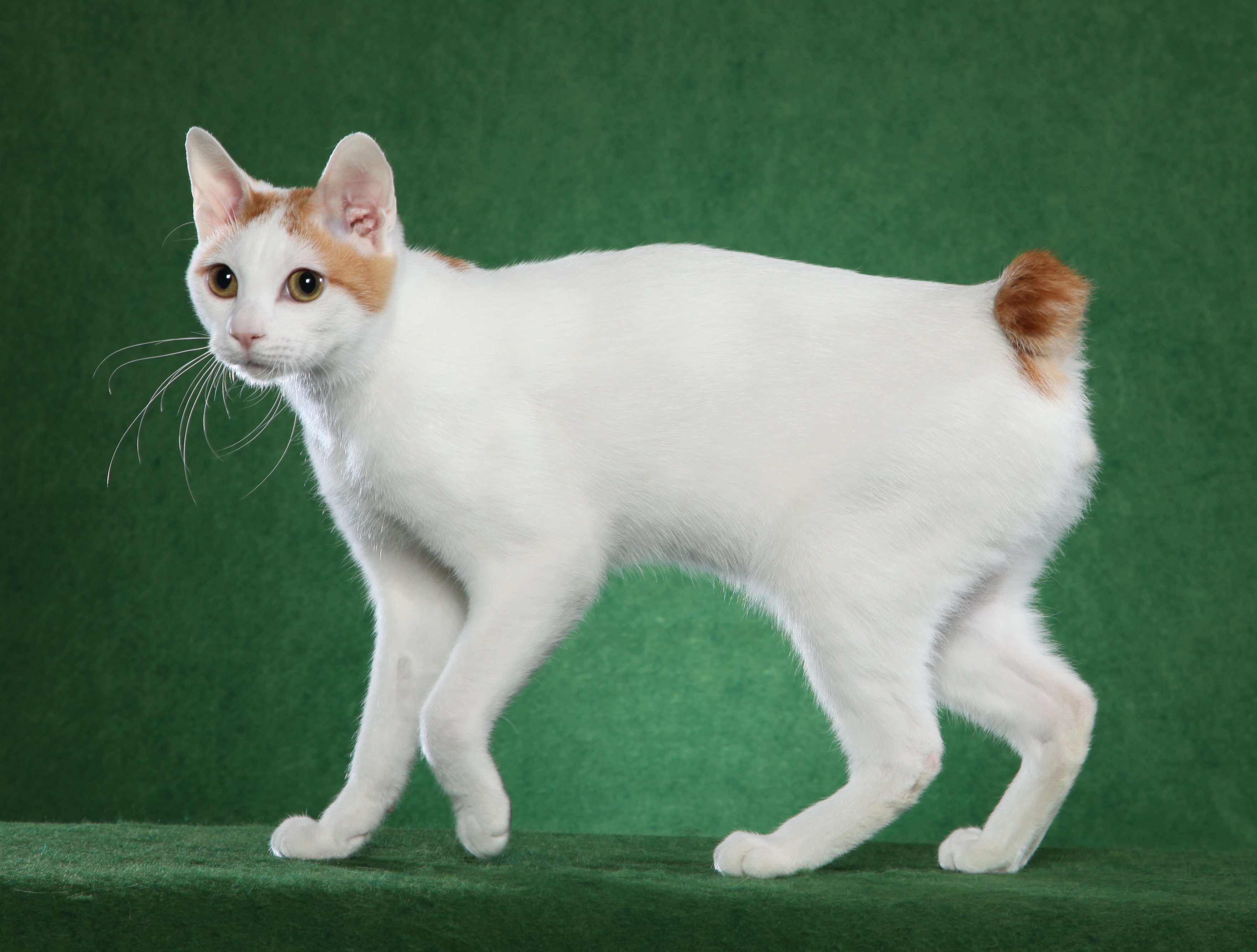
The most distinguishing feature of the Japanese Bobtail is its tail. It is short, typically 1 to 3 inches long when straightened (although it’s impossible to straighten it completely due to its vertebral structure). The tail can be straight, bent, or have several kinks, but it’s always covered in longer fur that makes it look like a pom-pom or a rabbit’s tail. Importantly: The tail’s structure is unique to each individual cat, just like a human fingerprint. The gene responsible for the Japanese Bobtail’s short tail is recessive and is not associated with spinal problems, unlike some other breeds (such as the Manx).
There are two coat variations:
- Shorthair Japanese Bobtail: The coat is of medium length, soft, silky, and lies close to the body with virtually no undercoat.
- Longhair Japanese Bobtail: The coat ranges from medium to long, is also soft and silky, and has a minimal undercoat. The longer fur forms “britches” on the hind legs, a fluffy ruff, and a full pom-pom tail. Despite its length, the longhair Bobtail’s coat is not prone to matting.
Coloration: Almost all genetically possible colors and combinations are allowed, including solid colors, bi-colors, vans, harlequins, and tabbies. The most traditional and highly valued is the tricolor pattern—“Mi-Ke” (white with distinct patches of black and red/cream). These cats are most often associated with the Maneki-neko figurines. It’s important for the colors to be vibrant and contrasting.
| Trait | Standard Description (CFA) |
|---|---|
| Body | Medium-sized, elegant, muscular, elongated. Hind legs longer than front legs. |
| Head | Equilateral triangle, high cheekbones, long straight nose, prominent whisker pads. |
| Ears | Large, upright, set wide apart, alert. |
| Eyes | Large, oval, expressive, set at a slight slant. Color harmonizes with the coat, heterochromia is permissible. |
| Tail | Short (1-3 inches), visible above the backline, can be straight, bent, or kinked. Covered in fur that forms a pom-pom. Unique to each individual. |
| Coat (Shorthair) | Medium length, soft, silky, no undercoat. |
| Coat (Longhair) | Medium to long, soft, silky, minimal undercoat. Forms “britches” and a ruff. |
| Coloration | Any color except Siamese and Abyssinian types. Preference is given to bright, contrasting colors, especially Mi-Ke. |
Japanese Bobtail Personality: Temperament and Behavior
The Japanese Bobtail is an extroverted cat, full of energy and curiosity. They love being the center of attention, participating in all household activities, and interacting with their humans. This isn’t a breed that will spend all day sleeping on the couch, although they certainly appreciate quiet moments with their owner.
Key Personality Traits:
- Active and Playful: Bobtails remain playful throughout their lives. They love interactive games, wand toys, and balls, and can entertain themselves and others for hours. Their jumping ability is impressive—they can easily leap onto high surfaces.
- Intelligent and Witty: These are very smart cats who are quick learners. They easily grasp household rules, can be taught to fetch toys, open doors, and even perform simple commands. Their intelligence requires mental stimulation, so puzzle toys are a great idea.
- Social and People-Oriented: Japanese Bobtails are very people-focused. They form strong bonds with their families, often choosing one “favorite” whom they follow everywhere. They get along well with children (provided the child is respectful), other cats, and friendly dogs. They do not handle solitude well and are not a good fit for people who are away from home for extended periods.
- “Talkative”: One of the breed’s most famous traits is its vocalization. Japanese Bobtails have a wide range of sounds—from soft purrs to loud, almost singing meows. They “talk” to their owners, commenting on events and expressing their desires.
- Gentle and Affectionate: Despite their activity level, they are very gentle and loving cats. They enjoy sitting on laps, sleeping next to their owner, and getting lots of cuddles.
- Love for Water: Some members of the breed show an unusual interest in water for a cat and might play with a dripping faucet or even dip their paws in their water bowl.
The lively temperament of the Japanese Bobtail makes them excellent companions for active people and families with children who are looking for not just a pet but a true friend and family member. Their eagerness to please makes them easy to train.
Care and Grooming for a Japanese Bobtail
Caring for a Japanese Bobtail is straightforward, especially for the shorthair variety, but requires regularity and attention to a few key areas.
Grooming: Coat Care
A huge advantage of Japanese Bobtails (both shorthair and longhair) is the near-total absence of an undercoat. This means their fur is much less prone to matting and shedding compared to other long-haired breeds.
- Shorthairs: Only need to be brushed once a week with a rubber brush or grooming mitt to remove dead hairs and maintain coat shine. Their shedding is minimal.
- Longhairs: It’s recommended to brush them 2-3 times a week with a wide-toothed comb or a slicker brush to prevent small tangles, especially in the “britches” and ruff areas. Despite the length, their silky coat is not prone to heavy matting.
Bathing is only necessary if the cat gets particularly dirty. Use a special cat-friendly shampoo. Frequent bathing is not recommended as it can disrupt the natural oil balance of their skin.
Ear, Eye, and Nail Care
Ears: The Bobtail’s large ears need regular inspection (once a week). Clean them of dirt and wax using a special ear-cleaning solution and a cotton pad. Do not use Q-tips as they can damage the ear canal.
Eyes: Wipe the corners of their eyes with a damp cloth or a cotton pad soaked in warm, boiled water to remove any natural discharge.
Nails: Trim their claws with a special cat nail clipper approximately every 2-3 weeks, cutting only the clear tip to avoid hitting the quick. Having a scratching post at home is a must.
Activity and Environment
Japanese Bobtails are very active cats. They need space for games and physical exercise. Provide them with a variety of toys, multi-level climbing structures, and scratching posts.
These cats enjoy walks outdoors, but letting them roam free is dangerous. The ideal option is to take them on leash walks under supervision or provide access to a safe, well-enclosed “catio” or balcony.
Since they are intelligent and curious, it’s important to ensure your home is safe: hide small objects that the cat could swallow, electrical wires, poisonous plants, and household chemicals.
Japanese Bobtail Health: Common Issues and Prevention
Japanese Bobtail Nutrition: Key Recommendations
Training and Socialization for a Japanese Bobtail
Japanese Bobtails are incredibly smart and highly trainable cats. Unlike many other breeds, they often show a desire to please their owners and respond positively to training, especially if it’s done through play.
Key Aspects of Training:
- Start Early: Socialization and basic training should begin at a young age. Introduce your kitten to different people, sounds, and situations so it grows up to be a confident and sociable cat.
- Positive Reinforcement: Use positive reinforcement methods—praise, petting, and favorite treats (in small pieces). Never physically punish your cat or yell at it, as this can cause fear and distrust.
- Short and Regular Sessions: Training sessions should be short (5-10 minutes) and regular to avoid tiring the cat and to keep its interest.
- Teaching Commands: A Japanese Bobtail can be taught to come when called, sit, high-five, and fetch toys. Their intelligence allows them to learn even more complex tricks.
- Leash Training: If you plan on taking walks, start getting your cat used to a harness gradually at home, allowing it to get comfortable wearing the gear.
- Litter Box and Scratching Post Training: This is usually not a problem, as Bobtails are very tidy. It’s important to choose the right location for the litter box and the type of litter, and to offer the cat several types of scratching posts (vertical and horizontal).
- Consistency: All family members should adhere to the same rules regarding what the cat is allowed to do and what it is not.
A well-socialized and trained Japanese Bobtail becomes the perfect companion who understands boundaries and happily interacts with people and other animals.
Pros and Cons of the Japanese Bobtail Breed
| Pros | Cons |
|---|---|
| Unique Appearance: Their pom-pom tail makes them truly one-of-a-kind. | “Talkativeness”: Their loud and frequent voice might not be for everyone. |
| High Intelligence: They are quick learners and very smart. | Needs Attention: They do not handle long periods of solitude well. |
| Active and Playful: They remain energetic throughout their lives. | High Activity Level: They require space and opportunities for play. |
| Very Social and Affectionate: They form strong bonds with people. | Prone to Weight Gain: Their diet needs to be monitored. |
| Gets Along Well with Children and Other Animals: A great choice for a family. | Curiosity: They can get into hard-to-reach places and need a secure environment. |
| Robust Health: They rarely suffer from genetic diseases. | Relative Rarity: It can be difficult to find a kitten in some regions. |
| Low-Maintenance Coat: Minimal undercoat, so they shed less. |
Interesting Facts About the Japanese Bobtail
- Symbol of Good Luck: The famous Japanese “Maneki-neko” (the beckoning cat) figurine often depicts a Japanese Bobtail, especially the tricolor (Mi-Ke) variety. It’s believed that a raised right paw brings money, while a raised left paw attracts customers or guests.
- Unique Tail: No two Japanese Bobtails have an identical tail. The structure (number of vertebrae, their shape, and kinks) is individual, just like a fingerprint.
- Ancient Breed: Depictions of short-tailed cats have been found in Japanese art dating back at least 1,000 years.
- Natural Mutation: The short tail is the result of a natural, recessive genetic mutation that does not cause any negative health consequences for the cat.
- “Singing” Cats: They are known for their wide range of vocalizations, often producing soft, melodious sounds.
- Longhair Variation: While the shorthair version has been known for longer, the longhair Japanese Bobtail also exists and is recognized by cat registries. Its coat is silky and has almost no undercoat.
- Savior of Silkworms: According to one legend, in 1602, the Emperor of Japan ordered all cats to be released onto the streets to combat rodents threatening the silk industry. This led to the proliferation of short-tailed cats, as it was believed that long-tailed cats were less skilled hunters.
- Olympic Mascot: Snowlet, one of the mascots for the 1998 Winter Olympics in Nagano, Japan, was a stylized depiction of a Japanese Bobtail.
Comparison with Other Bobtails
While the Japanese Bobtail is the most famous short-tailed breed, other similar breeds also exist, such as the Kurilian and Mekong Bobtails. It’s important to understand their differences. For more information, you can check out details on the Kurilian Bobtail and the Mekong Bobtail.
- Kurilian Bobtail: This breed originates from the Kuril Islands. Unlike the elegant Japanese Bobtail, the Kurilian has a more massive, stocky build, a more powerful bone structure, and a rounded head. Its pom-pom tail is also the result of a natural mutation, but genetically it is different from the Japanese Bobtail’s mutation. Kurilian Bobtails have a dense undercoat, making them more resilient to cold weather.
- Mekong Bobtail: This breed originates from Southeast Asia (Thailand, Burma). The main difference is their coloration. Mekong Bobtails have an exclusively colorpoint (Siamese) coat pattern with dark markings on their face, ears, legs, and tail, and blue eyes. Their tail is also short, with kinks and bends, but often less fluffy than that of the Japanese or Kurilian Bobtails. Their body structure is similar to that of traditional Siamese cats.
Thus, while all three breeds have a characteristic short tail, they differ in origin, tail genetics, body type, coat type, and acceptable colors.
Frequently Asked Questions About the Japanese Bobtail (FAQ)
Does a Japanese Bobtail’s tail hurt?
No, the Japanese Bobtail’s short tail is a natural genetic trait and does not cause the cat any pain or discomfort. It is not the result of an injury or docking. The cat has full control over its little pom-pom tail.
Do Japanese Bobtails shed a lot?
Thanks to the lack of a dense undercoat, Japanese Bobtails (even longhairs) shed significantly less than many other breeds. Regular brushing helps to control this process.
Are Japanese Bobtails suitable for people with allergies?
No cat breed is truly hypoallergenic. Allergies are caused by the protein Fel d1, found in cat saliva, skin, and sebaceous glands. While Bobtails shed less, they still produce this protein. People with mild allergies might react to them less, but it’s a good idea to spend time with the breed before getting a cat.
What is the lifespan of a Japanese Bobtail?
This is a long-lived breed. With proper care, the average lifespan is 15-18 years, but many cats live longer than 20 years.
Does a Japanese Bobtail’s tail require special care?
No, the tail does not need special care other than regular brushing of the fur on it during general grooming, especially for longhaired individuals.
Can a Japanese Bobtail live in an apartment?
Yes, they adapt well to apartment life, provided they are given enough space for games, physical activity (toys, climbing structures), and mental stimulation. It’s important to give them sufficient attention.
Conclusion
The Japanese Bobtail is not just a cat with an unusual tail; it’s a true gem of the feline world. The combination of a striking appearance, high intelligence, and a playful yet affectionate personality makes it an excellent companion for many people. Its relatively low-maintenance care and robust health are added bonuses. If you’re looking for an active, smart, devoted, and “talkative” friend, the Japanese Bobtail might be the perfect choice for your family.
- Lively, clever, sociable
- “Dog-like”: fetch, leash, loves water
- Generally a very healthy breed
- A melodic voice, good with children and animals
- Active — needs play and attention
- Dislikes being left alone for long
- A deafness risk in white blue-eyed cats
- Talkative (though melodically)
| Kurilian Bobtail | Mekong Bobtail | Siamese Cat | |
|---|---|---|---|
| Weight | 3–7 kg | 3–6 kg | 3–5 kg |
| Energy | 4 | 4 | 4.5 |
| Apartment | 4.5 | 5 | 5 |
| Beginners | 3.5 | 3.5 | 3 |
Is the Japanese Bobtail's short tail healthy?
Why is the Japanese Bobtail a “lucky cat”?
What is the Japanese Bobtail's character?
CFA / TICA / WCF standards (Japanese Bobtail)
For apartments · For kids · For beginners · Most affectionate · Quietest · Hypoallergenic · All rankings →