

| Weight | 3.5–5.5 kg |
| Lifespan | 12–16 years |
| Coat | semi-long, silky, ticked |
| Recognition | CFA · TICA · WCF · FIFe |
| Origin | USA |
Exact ratings
Common health issues
Nutrition
The Somali cat isn’t just a long-haired version of the Abyssinian, even though that’s exactly how the breed came to be. It’s a distinct, recognized breed with a unique look, often compared to a small fox, and an incredibly lively, intelligent, and playful personality. These elegant creatures are true dynamos, needing plenty of attention, room to play, and regular, though not overly complicated, care for their gorgeous coats. If you’re looking for a companion who will be an active member of the family, surprise you with their cleverness, and fill your home with positive energy, a Somali might be the perfect choice. You can learn more about cats and other pets on Tvaryny.
Somali cats are highly social and curious animals. They don’t like to be left alone for long periods and thrive on the company of people or other pets. Their natural curiosity and intelligence make them quick learners who can be taught a variety of tricks, and their playful nature lasts a lifetime. It’s important to understand that this breed requires significant physical and mental stimulation to stay happy and healthy.
Somali Cat: A Quick Breed Overview
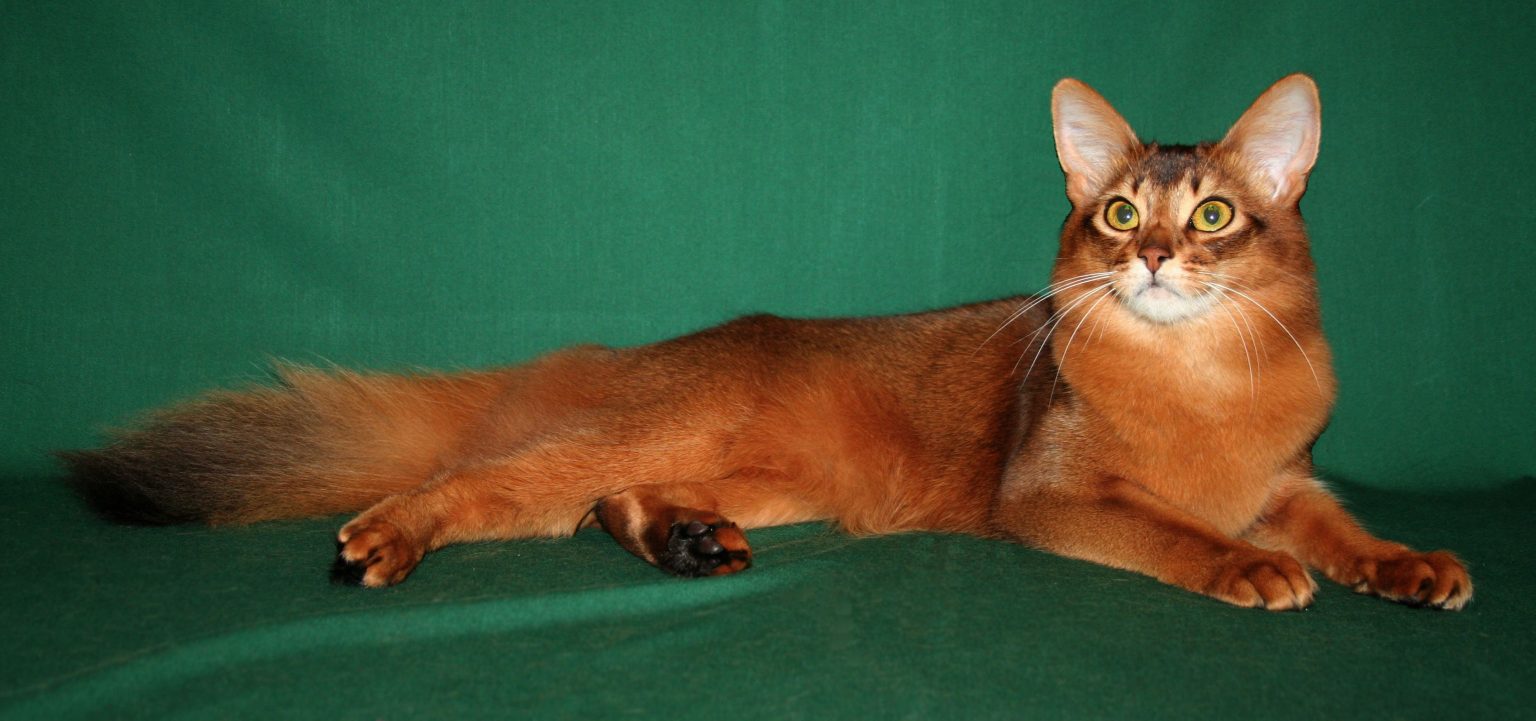
| Characteristic | Description |
| Origin | USA (from Abyssinian cats) |
| Date of Origin | 1960s (officially recognized later) |
| Size | Medium |
| Weight | Males: 10 – 12 lbs, Females: 8 – 10 lbs |
| Lifespan | 11 – 16 years |
| Coat Type | Semi-long, dense, soft, silky |
| Colors | Ticked-tabby (ruddy, sorrel, blue, fawn, silver, and their variations) |
| Temperament | Active, playful, intelligent, social, curious, affectionate |
| Activity Level | High |
| Grooming Needs | Moderate (brushing 1-2 times a week) |
| Compatibility with Children | Good, with proper socialization |
| Compatibility with Other Pets | Good, especially if raised together |
| Genetic Predispositions | PKDef, PRA, renal amyloidosis, dental issues |
History and Origins of the Somali Cat
The history of the Somali cat is closely intertwined with the Abyssinian breed. For many years, litters of purebred Abyssinians would occasionally produce kittens with unusually long coats. For a long time, these kittens were considered “flaws” and were quietly placed as pets without breeding rights, as the Abyssinian breed standard required a short coat. The long-hair gene is recessive, meaning it could be passed down through generations without showing up, until two carriers of the gene were bred together.
The situation began to change in the 1960s in North America. A Canadian breeder, Mary Mailing, sent several long-haired Abyssinians to an American breeder, Evelyn Mague. Evelyn Mague, who owned the Lynn-Lee cattery, is considered the “mother” of the Somali breed. She was captivated by the beauty of these “fluffy” Abyssinians and set out to get them recognized as a separate breed. She began a deliberate breeding program, selecting cats with the desired long-hair traits and the characteristic Abyssinian ticking.
The name “Somali” was chosen by Evelyn Mague as a geographical neighbor to Ethiopia (formerly Abyssinia), symbolizing the new breed’s close connection to its ancestors. Initially, the path to recognition was difficult, as some Abyssinian breeders were against it, fearing it would harm the purity of their breed. However, the enthusiasm of Evelyn and other supporters of these long-haired beauties ultimately prevailed.
The first Somali Cat Club of America (SCCA) was founded in the United States in 1972. The breed received official recognition from the Cat Fanciers’ Association (CFA) in 1979 and later from other major feline organizations around the world, including The International Cat Association (TICA).
Appearance: The Somali Breed Standard
The Somali cat is the epitome of grace and elegance, with a distinctive appearance that often earns it the nickname “the fox cat.” It’s a medium-sized cat with a well-developed musculature, yet it remains refined and agile.
- Body: Medium length, flexible, and well-muscled, but not bulky. The back is slightly arched, giving the impression that the cat is ready to pounce. The chest is rounded.
- Head: A modified wedge shape with soft, rounded contours. The forehead has a gentle slope to the nose. The muzzle is not pointed.
- Ears: Large, alert, and wide at the base, with slightly rounded tips. They are set fairly far apart. “Furnishings” (tufts of hair) inside the ears and “lynx tips” at the ends are desirable.
- Eyes: Large, almond-shaped, and expressive. The color can be a rich gold or green, depending on the coat color. The eyes are lined with a dark rim (“eyeliner”) surrounded by a lighter area of fur, making the gaze especially striking.
- Coat: Semi-long, very soft to the touch, dense, with a well-developed undercoat. The fur is shorter on the shoulders but longer on the belly and “britches” (the back legs). A characteristic feature is the plush ruff around the neck and a magnificent, fluffy tail that looks like a fox’s brush. The coat texture is silky and fine.
- Tail: Thick at the base, tapering to the tip. It is very well-plumed, long, and proportionate to the body.
- Paws: Proportional to the body, oval in shape, and compact. The cat gives the impression of standing “on its tiptoes.”
Somali Cat Colors and Markings
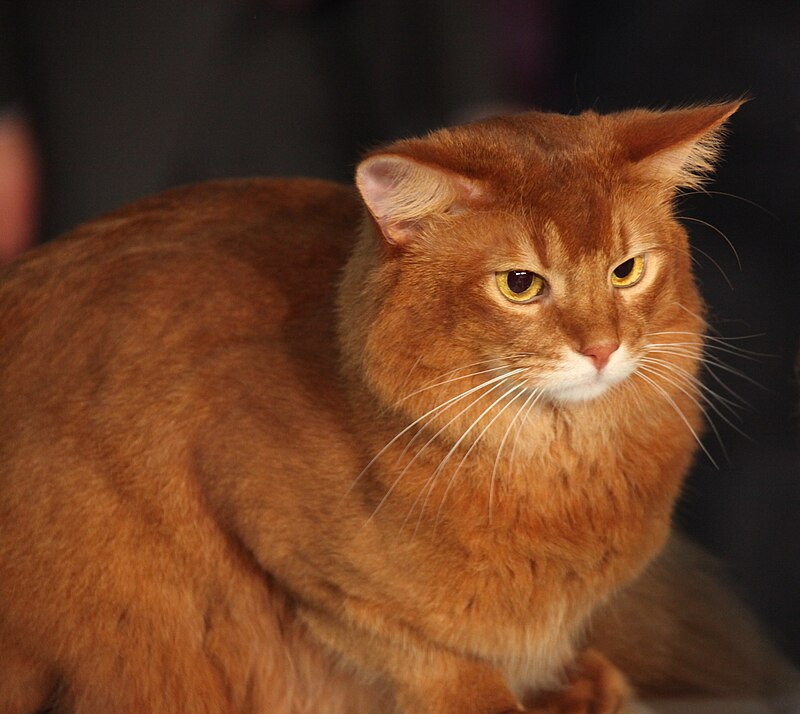
The key feature of the Somali’s coat, inherited from the Abyssinian, is ticking. This means that each individual hair is banded with several alternating light and dark stripes. The darkest color shows up on the tip of the hair and along the spine and tail. The belly and inner legs typically have a lighter, solid color without ticking.
This type of coloring creates a characteristic “shimmering” effect, without the distinct stripes or spots found in other tabby patterns. Ticking gives the coat a sense of depth and richness.
The main recognized Somali cat colors are:
- Ruddy: The most common and classic color. It’s a warm reddish-brown base color with black ticking. It resembles the coat of a wild rabbit or hare.
- Sorrel (Cinnamon): A rich copper-red color with chocolate-brown ticking. It’s a warm, vibrant shade.
- Blue: A warm beige or cream base color with slate-blue ticking. This is a softer, more muted coat.
- Fawn: A warm pinkish-beige base color with cocoa-brown or light brown ticking. It is the most delicate of the classic colors.
There are also silver variations of these colors, where the base color of the undercoat is a silvery white, which gives the coat a cooler, “frosted” look. Similar to the Balinese cat, which also comes in various colors, the Somali’s coat adds to its captivating charm.
Somali Personality and Temperament
The Somali cat is a bundle of energy, intelligence, and playfulness. They are often described as “eternal kittens,” as they maintain their lively and curious nature throughout their lives. This is not a cat that will quietly nap on the couch for hours. The Somali wants to be at the center of the action, exploring every corner of the house and actively participating in all of their owner’s activities.
Key personality traits:
- Intelligence and cleverness: Somalis are among the smartest cat breeds. They learn quickly and can master tricks, open doors and cabinets, and solve puzzles (for example, getting treats out of interactive toys). Their minds need constant stimulation.
- Playfulness: This is an extremely playful breed. They love to chase toys, hunt “prey” (balls, feathers), climb cat trees, and investigate new objects. For them, games are not just fun, but a necessity for their well-being.
- Activity: Somalis need a lot of physical activity. They love heights, so having multi-level cat trees and climbing shelves is a huge plus. Their activity level can be compared to the energy of a Balinese cat, another breed known for its love of games and interaction.
- Sociability and affection: They are very people-oriented and animal-oriented. Somalis do not handle loneliness well and need daily interaction and attention. They often follow their owners around, “helping” with all tasks. While they aren’t always typical “lap cats,” they show affection through shared games, gentle purrs, and just being close by.
- Curiosity: No new item or event in the house will escape a Somali’s notice. They have to sniff and inspect everything, and sometimes even give it a little taste.
- Gentleness and sweetness: Despite their high energy, Somalis are very gentle and non-aggressive cats. They get along well with children if the kids are taught to be respectful of animals.
- Voice: They usually have a soft, quiet voice, but they can be quite “talkative” when they want to get your attention or ask for something.
It’s important to understand that if a Somali doesn’t get enough attention, games, and mental stimulation, they can get bored and find their own ways to entertain themselves, which owners might not always appreciate (for example, knocking things off shelves, scratching furniture).
Socialization and Living with Other Pets
Thanks to their friendly and playful nature, Somali cats generally get along well with other pets, especially if they are raised together. They can be wonderful companions for another cat (especially an active one) or even a friendly dog. In this regard, they are similar to the Serengeti cat, which is also known for its sociable and outgoing personality.
However, their strong hunting instinct can pose a risk to small animals like rodents (hamsters, guinea pigs) or birds. Therefore, keeping them in the same house as potential “prey” should be done with great caution, ensuring the smaller pets are completely safe.
Somalis also get along great with children, especially older ones who can participate in their active games. It’s important to teach children to respect the cat’s personal space and not to be too pushy. Thanks to their patience and lack of aggression, Somalis rarely use their claws but may simply walk away if they don’t like something.
Early socialization of a kitten is crucial. Introducing them to different people, sounds, and situations at a young age will help them grow into a confident and well-adjusted adult cat.
Caring for a Somali Cat: Key Aspects
Caring for a Somali cat is not overly difficult, but it requires regularity, especially regarding their coat and dental hygiene.
Grooming and Coat Care
Even though a Somali’s coat is semi-long, it has a silky texture and is less prone to matting than some other long-haired breeds, such as Persians. However, regular care is essential:
- Brushing: It’s recommended to brush your Somali 1-2 times a week using a metal comb with widely spaced teeth or a special slicker brush. This helps remove dead hair, prevents mats from forming (especially in the “ruff” and “britches”), and reduces the amount of hair the cat swallows while self-grooming. The low-maintenance nature of their coats is a plus, similar to the Turkish Angora, which also has a silky coat that doesn’t easily tangle.
- Bathing: Frequent bathing is usually not necessary. Bathe your Somali only when needed, for example, if their coat gets dirty or before a show. Use a special cat shampoo.
- Seasonal shedding: Somalis do shed, especially in the spring and fall. During these periods, you may need to brush them more often (3-4 times a week) to manage the excess hair.
Eye, Ear, and Dental Care
- Eyes: Regularly check their eyes for any discharge. Small crusts in the corners of the eyes can be gently removed with a moist wipe or a cotton pad soaked in a special lotion or boiled water.
- Ears: Check their ears weekly for dirt, excess wax, or signs of infection (redness, bad odor). Clean the ears only when necessary, using a special cat ear cleaning lotion and cotton pads (do not use cotton swabs!).
- Teeth: This is a very important aspect of Somali care! This breed has a genetic predisposition to gum disease (gingivitis) and periodontitis. Regular teeth brushing with a special cat toothbrush and paste (2-3 times a week or daily) is the best prevention. Special dental-care foods and treats can also be helpful. Regular vet check-ups will help you catch any problems early.
Claws and Hygiene
- Claws: Trim their claws every 2-3 weeks using special cat clippers, cutting only the transparent tip and avoiding the pink part (the quick), where blood vessels and nerves are located.
- Litter box: Somalis are typically very clean cats. It’s important to keep their litter box clean by scooping it regularly and completely changing the litter according to the manufacturer’s instructions.
Somali Activity and Space Needs
The Somali cat is a very active breed that needs plenty of opportunities for exercise and play. They require space to run, jump, and climb. Keeping a Somali in a small apartment without additional opportunities for activity can lead to boredom and destructive behavior.
How to meet a Somali’s activity needs:
- Vertical space: Tall and sturdy cat trees, wall-mounted shelves, and climbing complexes are a must for Somalis. They love observing what’s happening from above.
- Interactive games: Daily play sessions with the owner are extremely important. Use a variety of toys: wands with feathers, laser pointers (always end the game with a “caught” physical toy or treat), balls, and toy mice.
- Toys for solo play: Leave out various toys that the cat can chase on its own when you’re not home. These can be balls, tunnels, or catnip-filled toys.
- Puzzle toys: Food puzzles that require the cat to work for their food will help satisfy a Somali’s need for mental stimulation and slow down their eating.
- Safe outdoor access (if possible): Some Somalis enjoy exploring the world outside. If you choose to let your cat outdoors, only do so under supervision on a harness and leash or in a secure enclosure (a catio) to protect them from dangers (cars, dogs, infections, toxins, getting lost).
Remember, a tired Somali (both physically and mentally) is a happy Somali!
Training and Mental Stimulation

Thanks to their high intelligence and desire to interact with people, Somali cats respond well to training. They quickly understand what you want them to do, especially if the training is done in the form of a game and uses positive reinforcement.
What you can teach a Somali:
- Basic commands: “Come,” “Sit,” “Give paw.”
- Tricks: Fetching small toys, jumping through a hoop, or walking on their hind legs.
- Harness and leash training: If you plan to take them on walks outside.
- Using a scratching post: To save your furniture.
Key principles for training a Somali:
- Positive reinforcement: Use treats, praise, and favorite games as a reward for good behavior. Never physically punish your cat or yell at them—this can cause fear and distrust.
- Short, engaging sessions: Training sessions should be short (5-10 minutes) and fun so the cat doesn’t lose interest.
- Patience and consistency: Don’t expect instant results. Be patient and repeat the exercises regularly.
- Mental games: In addition to training, provide the cat with puzzle toys and hide treats in different places around the house for them to find. This will help satisfy their natural need for mental activity.
Somali Cat Health: Predisposition to Diseases
Disease Prevention and Health Care
Somali Cat Nutrition: Recommendations and Diet
Pros and Cons of the Somali Cat Breed
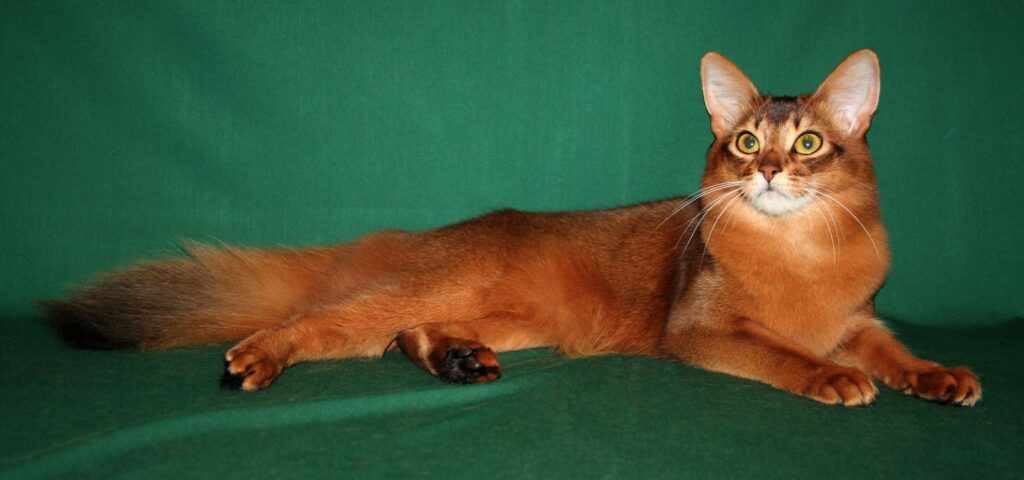
Like any breed, Somali cats have their advantages and disadvantages. It’s important to consider them carefully before deciding to get one.
| Pros (+) | Cons (-) |
|---|---|
| High intelligence and cleverness: Quick learners, engaging companions. | High need for attention: Don’t tolerate being alone, can become clingy. |
| Extremely playful and active: Always ready for games, brings positive energy. | High need for activity and stimulation: Require lots of toys, space, and playtime, otherwise may get bored and exhibit destructive behavior. |
| Friendly and social nature: Get along well with people, children, and other pets (with proper socialization). | Predisposition to certain hereditary diseases: PKDef, PRA, amyloidosis, dental issues. |
| Striking appearance: Beautiful “fox-like” face, luxurious coat, and tail. | Need for regular grooming: While their coat doesn’t tangle easily, brushing 1–2 times a week is necessary. |
| Relatively easy to please with food. | Not suitable for low-energy people: Need an owner willing to dedicate time to games and activities. |
| Soft, quiet voice. | Possible strong hunting instinct: Caution is needed when kept with small animals. |
Interesting Facts About Somali Cats
- “The fox cat”: Somalis earned this nickname thanks to their reddish coats (especially in ruddy and sorrel colors), large ears, expressive eyes, and, most importantly, their very fluffy tail.
- Quiet “talkers”: While Somalis love to “chat” with their owners, their voices are typically very soft and quiet, making them pleasant housemates.
- Master climbers: Somalis love heights and are skilled climbers. Don’t be surprised to find your pet on the highest shelf in the house.
- Water lovers (sometimes): Unlike many cats, some Somalis show an interest in water and may play with the faucet or even try to join you in the shower.
- Unexpected appearance: The long-hair gene (L) is recessive to the short-hair gene (l). This means that two short-haired Abyssinians who are carriers of the long-hair gene (genotype Ll) can produce a long-haired kitten (genotype ll), which is what a Somali is. You can also see this in Snowshoe cats, which can have unexpected coat patterns.
Frequently Asked Questions About the Somali Cat
Are Somali cats good for people with allergies?
No, Somali cats are not considered hypoallergenic. They have a dense coat and undercoat and they shed, producing the allergen Fel d 1 (a protein found in their saliva, skin, and sebaceous glands), which is the primary cause of cat allergies. People with allergies should consider other breeds or spend time with a representative of the breed before getting a kitten.
How long do Somali cats live?
The average lifespan of a Somali cat is 11-16 years. With proper care, a high-quality diet, and regular vet visits, they can live a long and happy life.
Do Somalis need a lot of coat care?
The grooming needs are moderate. Their silky coat is less prone to matting than a Persian’s, but regular brushing 1-2 times a week is necessary to remove dead hair and keep the coat in good condition. During shedding seasons, you’ll need to brush them more often.
Can a Somali cat live in an apartment?
Yes, Somalis can live in an apartment, but only if you can provide them with enough space for activity and mental stimulation. This means having tall cat trees, shelves, tunnels, a variety of toys, and daily play sessions with you. A small apartment with no opportunities for “vertical” movement and games may not be a good fit for this energetic breed.
Are Somali cats noisy?
Generally, no. Somalis have a soft, quiet voice. They can be “talkative” when they want to get attention, but their meows are rarely loud or demanding.
Do Somalis get along well with children and other pets?
Yes, thanks to their friendly and playful nature, Somalis usually get along very well with children (who are taught how to handle animals respectfully) and other cats or dogs, especially if they are raised together. However, due to their hunting instincts, caution is needed when kept with small pets (rodents, birds).
- Clever, agile, easy to train
- Active, playful, sociable
- A striking ticked “fox” coat
- People-loving, good with children and animals
- Very active — needs space and climbing
- Cannot bear solitude and boredom
- The semi-long coat needs occasional brushing
- A tendency to hereditary diseases (PRA, PK-def)
| Abyssinian | Bengal | Turkish Angora | |
|---|---|---|---|
| Weight | 3–5 kg | 4–7 kg | 2.5–5 kg |
| Energy | 4.5 | 5 | 4 |
| Apartment | 5 | 4 | 4.5 |
| Beginners | 3.5 | 2.5 | 3.5 |
How does the Somali differ from the Abyssinian?
Why is the Somali called a “fox cat”?
Is the Somali suited to a family?
CFA / TICA / WCF / FIFe standards (Somali)
For apartments · For kids · For beginners · Most affectionate · Quietest · Hypoallergenic · All rankings →