

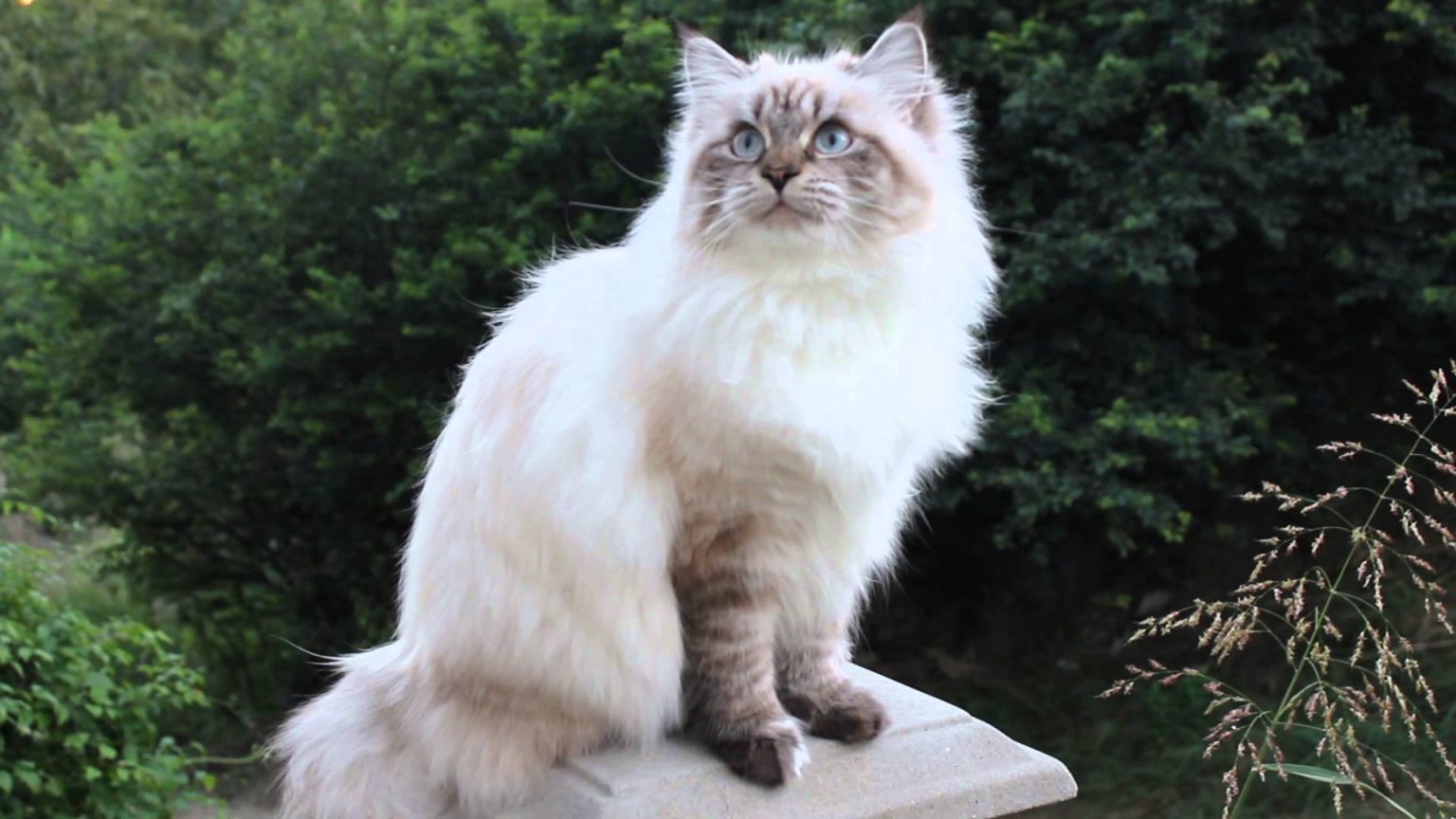
| Weight | 5–9 kg |
| Lifespan | 12–15 years |
| Coat | semi-long, dense, water-repellent |
| Recognition | WCF · TICA · FIFe |
| Origin | Russia |
Exact ratings
- Generally a robust aboriginal breed
- Hypertrophic cardiomyopathy (HCM)
- Polycystic kidney disease (PKD, less often)
- A tendency to gain weight
- Care of the dense coat prevents matting
Quality food for large cats, with weight control. Brush the dense semi-long coat 2–3 times a week (more often during molt); provide scratching posts, space and company.
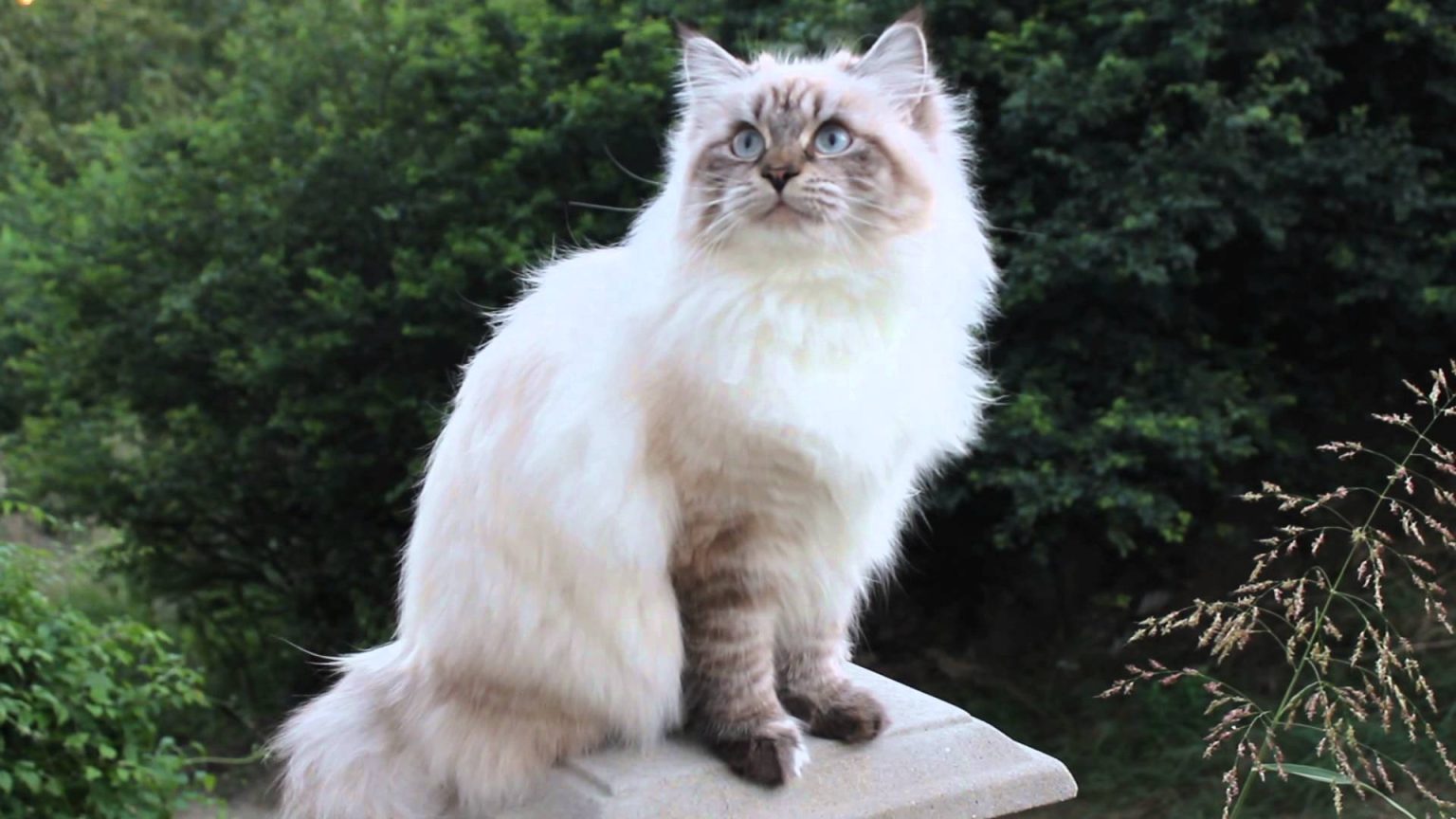
The Neva Masquerade cat is the epitome of a calm, playful, and affectionate companion wrapped in a fluffy package. This is essentially the same majestic Siberian cat, but with a unique colorpoint pattern that creates a distinctive “mask” on its face and darker “points” on its paws, tail, and ears. These cats are always ready to play, yet their behavior is marked by a dignified, reserved nature. They’re independent, observant, and a bit cautious around strangers, which only adds to their charm. Despite their luxurious, dense coat, grooming isn’t overly complicated. They’re also known for their robust health and can often live for 15-18 years, or sometimes even longer, bringing joy to their families for a long time. Learn more about them on Tvaryny.
Neva Masquerade Cat: A Quick Breed Overview
| Characteristic | Description |
|---|---|
| Origin | Russian Federation (Saint Petersburg) |
| Time of Origin | Late 1980s |
| WCF Recognition | 1992 (as a color variation of the Siberian breed) |
| FIFe Recognition | 2009 (as a sister breed to the Siberian) |
| Lifespan | 15–18 years (sometimes longer) |
| Weight | Males: 13–22 lbs, Females: 9–15 lbs |
| Height at Withers | Around 12–14 inches |
| Coat Type | Semi-long, dense, with a double undercoat |
| Coat Color | Colorpoint (seal-point, blue-point, red-point, cream-point, seal-tabby-point, blue-tabby-point, etc.) with or without white |
| Eye Color | Intensely blue, saturated |
| Temperament | Calm, balanced, playful, devoted, intelligent, not overly demanding |
| Grooming Needs | Moderate (regular brushing) |
| Health | Robust, good genetic heritage |
| Activity Level | Moderately high, needs toys and exercise |
Neva Masquerade Cat: Origin and History
The story of the Neva Masquerade cat is closely tied to its ancestor, the Siberian cat. The emergence of the colorpoint pattern (also known as “Siamese” coloring) in Siberians was a topic of much discussion for a long time. One of the main theories is that this gene was introduced into the Siberian population through spontaneous crossbreeding with cats of Siamese or similar coloring, possibly brought to Siberia and the Russian Far East. Another theory suggests that the colorpoint gene (cs) may have been present in the native Siberian cat population as a recessive mutation.
Deliberate breeding efforts with Siberian-type cats that had the characteristic dark markings on their faces, ears, paws, and tails, along with their brighter bodies and vivid blue eyes, began in the late 1980s. These efforts were led by cat clubs in Saint Petersburg (then Leningrad), particularly the “Kotofey” club under the guidance of Olga Sergeyevna Mironova. Thanks to their work, this elegant coat pattern was successfully established within the Siberian breed.
The name “Neva Masquerade” was given in honor of the Neva River that flows through Saint Petersburg and the distinctive “mask” on the cat’s face. Initially, Neva Masquerades were considered a color variation of the Siberian breed. In 1992, the World Cat Federation (WCF) recognized this pattern as part of the Siberian standard. However, over time, due to some phenotypic and genotypic differences, and for breeding convenience, the Neva Masquerade began to be separated.
In 2009, the Fédération Internationale Féline (FIFe) recognized the Neva Masquerade cat as a sister breed to the Siberian, giving it the code NEM (Neva Masquerade), while the Siberian cat retains the SIB code. This means that crossbreeding between traditional Siberians and Neva Masquerades is allowed, and kittens are registered according to their phenotype (physical appearance). Other cat fancy associations may have different approaches: some continue to consider it a color variation of Siberians, while others recognize it as a separate breed.
What a Neva Masquerade Cat Looks Like: Standard and Appearance
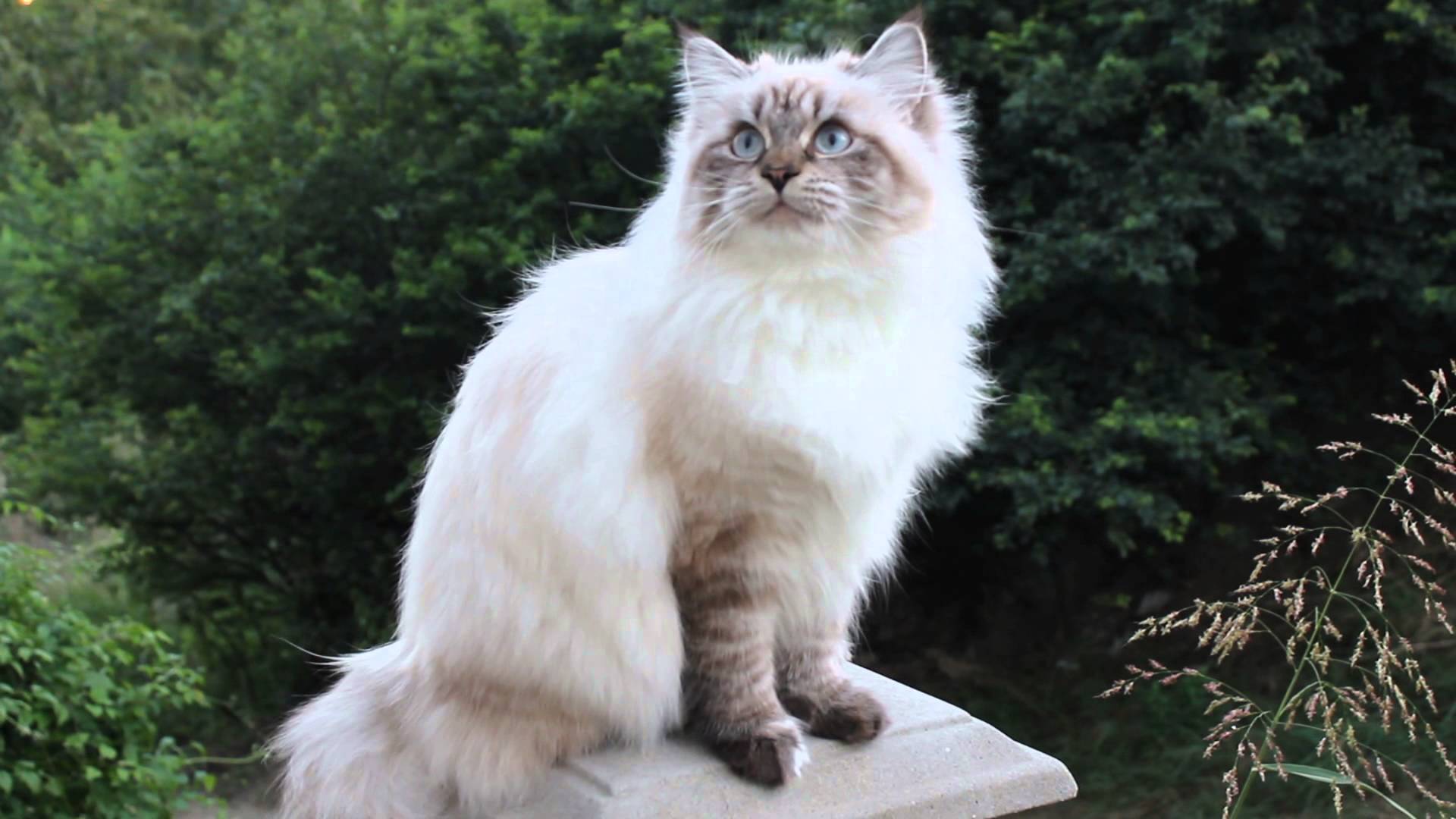
The Neva Masquerade cat is a large, powerful, yet elegant animal that impresses with its harmonious blend of the Siberian’s strength and the sophistication of the colorpoint pattern.
- Body: Medium to large in size, strong, muscular, with a heavy bone structure. Gives an impression of strength and power. The chest is broad, and the back is straight.
- Head: Shaped like a wide, short trapezoid with soft contours. The forehead is broad and slightly convex. The transition from the forehead to the nose is smooth, without a sharp stop. Cheekbones are wide and set low. The chin is well-developed but not protruding, forming a smooth line with the upper lip.
- Ears: Medium-sized, wide at the base, slightly tilted forward, with rounded tips. Brushes of fur inside the ear and tufts on the tips (though not always present) are desirable.
- Eyes: Large, oval, and slightly slanted. The space between the eyes is wider than the width of an eye. The eye color is exclusively a saturated blue (from light blue to sapphire). The more intense the color, the better.
- Neck: Short, strong, and muscular.
- Legs: Medium-length, strong, and powerful, forming a rectangle with the body. Paws are large, round, with tufts of fur between the toes (a characteristic Siberian trait).
- Tail: Medium-length, wide at the base, and tapering to a rounded tip. It’s well-furred and resembles a fox’s tail.
- Coat: Semi-long, very dense, with a well-developed, water-resistant double undercoat. The outer coat is tougher and shinier. The fur forms a lush ruff around the neck, “britches” on the hind legs, and a full tail. The coat is noticeably shorter and less dense in the summer than in the winter. Texture may vary slightly depending on the color.
- Color (Pattern): Only colorpoint. This means the main body color is light (from white to cream or light beige), while darker markings (points) are located on the face (“mask”), ears, paws, and tail. The contrast between the points and the body color should be clear. Permitted point variations:
- Seal-point: Dark brown (almost black) points.
- Blue-point: Bluish-gray points.
- Red-point: Red points.
- Cream-point: Cream points.
- Tortie-point: Tortoiseshell points (a mix of black/blue with red/cream).
- These colors can also have a tabby pattern (tabby-point or lynx-point) – with striped points.
The presence of white “socks” on the paws, a white patch on the chest, or on the belly is allowed (referred to as a “with white” pattern, for example, seal-point and white).
It’s important to note that Neva Masquerade kittens are born completely white, and their points start to appear during the first few weeks of life, fully developing by 1-2 years of age. As they get older, the contrast between the points and the body may slightly decrease, and the body may darken a bit.
Neva Masquerade Cat Personality: Temperament and Behavior
The Neva Masquerade cat inherited the best character traits from its Siberian ancestors, adding its own unique charm. They are well-balanced, calm, yet playful and curious animals. They aren’t prone to excessive fuss or destructive behavior but are always happy to engage in a game, especially with their favorite wand toys or balls.
Devotion and affection for their owner is one of the key traits of the breed. Neva Masquerades often choose one family member as “their” person, following them around, greeting them at the door, and participating in all household activities. However, this devotion is not overbearing. The cat will patiently wait for you to be free before asking for attention with a quiet purr or a gentle paw tap. They aren’t very “talkative,” and their voice is usually soft and melodic.
Thanks to their calm temperament and patience, Neva Masquerade cats get along wonderfully with children. They are willing to participate in children’s games but are smart enough to avoid rough handling by simply walking away. It’s important to teach children to respect the cat’s personal space.
With other pets, including other cats and dogs (especially if they’ve grown up together), Neva Masquerades usually form peaceful relationships. Their natural hunting instinct may surface with small rodents or birds, so keeping them with such pets requires caution and supervision.
These cats treat strangers with cautious reserve. They won’t hide under the couch, but they won’t immediately jump into a guest’s arms either. A Neva Masquerade will first observe the new person from a distance, assessing the situation, and only then, perhaps, allow themselves to be petted.
They are intelligent animals who easily learn household rules and quickly get the hang of a litter box and scratching post. Some owners have noted their ability to learn simple tricks. Thanks to their Siberian roots, they have retained a certain independence and can calmly spend time alone while their owners are at work, without suffering from loneliness, as long as they have things to do (toys, climbing complexes).
Neva Masquerade Cat Health: Common Conditions and Prevention
One of the undeniable advantages of the Neva Masquerade breed is its robust health and strong immune system, inherited from its Siberian ancestors who developed in harsh natural conditions. They are generally hardy and resilient cats that rarely get sick with proper care and diet. Their average lifespan is 15-18 years, and many live to be 20 years or older.
However, like any breed, Neva Masquerades are not immune to certain genetic and acquired diseases. Potential health issues that owners should be aware of include:
- Hypertrophic Cardiomyopathy (HCM): This is the most common heart disease in cats, characterized by a thickening of the heart muscle walls (primarily the left ventricle). Although Siberian cats and Neva Masquerades are not considered a high-risk breed for HCM compared to, for example, Maine Coons or Ragdolls, cases do occur. Responsible breeders test their breeding animals for genetic mutations associated with HCM and perform regular cardiac ultrasounds (echocardiography). It’s recommended to have your pet’s heart checked periodically by a veterinary cardiologist, especially before planned surgeries (e.g., spaying/neutering).
- Polycystic Kidney Disease (PKD): Another hereditary disease in which multiple cysts form in the kidneys, gradually enlarging and impairing organ function. Although PKD is more common in Persian cats and related breeds (like the Himalayan cat or Exotics), the risk for Neva Masquerades cannot be completely ruled out. There are DNA tests available to check for the PKD gene.
- Urinary Tract Disease: Like many other cats, especially spayed/neutered males, Neva Masquerades can be prone to developing bladder or kidney stones. Prevention includes a proper diet (balanced food, adequate water intake), weight control, and regular vet check-ups.
- Dental and Gum Problems: Gingivitis, periodontitis, and tartar are common issues in cats. Regular oral exams, teeth brushing (if the cat allows), or the use of special dental foods and treats can help maintain dental health.
- Obesity: Due to their large size and sometimes calm temperament, Neva Masquerades can be prone to gaining excess weight, especially after spaying/neutering and with insufficient physical activity. Obesity increases the risk of developing diabetes, heart disease, joint problems, and other health issues. It’s important to monitor their diet and ensure they have enough opportunities to move around.
Prevention is the key to a long and healthy life for a Neva Masquerade cat:
- Regular Veterinary Check-ups: At least once a year (twice a year for senior cats) for an exam, vaccinations, and preventive screenings.
- Vaccination: Timely vaccination against major infectious diseases (panleukopenia, calicivirus, rhinotracheitis, rabies).
- Parasite Control: Regular prevention against fleas, ticks, and internal parasites.
- Balanced Nutrition: High-quality food (dry or wet) that matches the cat’s age, health status, and activity level, or a well-planned raw diet. Access to fresh, clean drinking water should always be available.
- Coat Care: Regular brushing to prevent mats and reduce the amount of hair the cat swallows while grooming.
- Hygiene: Checking and cleaning ears and eyes as needed, and nail care (trimming or providing a scratching post).
- Physical Activity: Providing opportunities for play and climbing (cat trees) to help them maintain physical fitness and prevent obesity.
- Safe Environment: Protecting them from potential household dangers (toxic plants, chemicals, open windows, electrical wires).
By following these recommendations and paying close attention to your pet’s well-being, your Neva Masquerade cat has every chance of living a long and happy life.
Caring for the Neva Masquerade Cat’s Coat
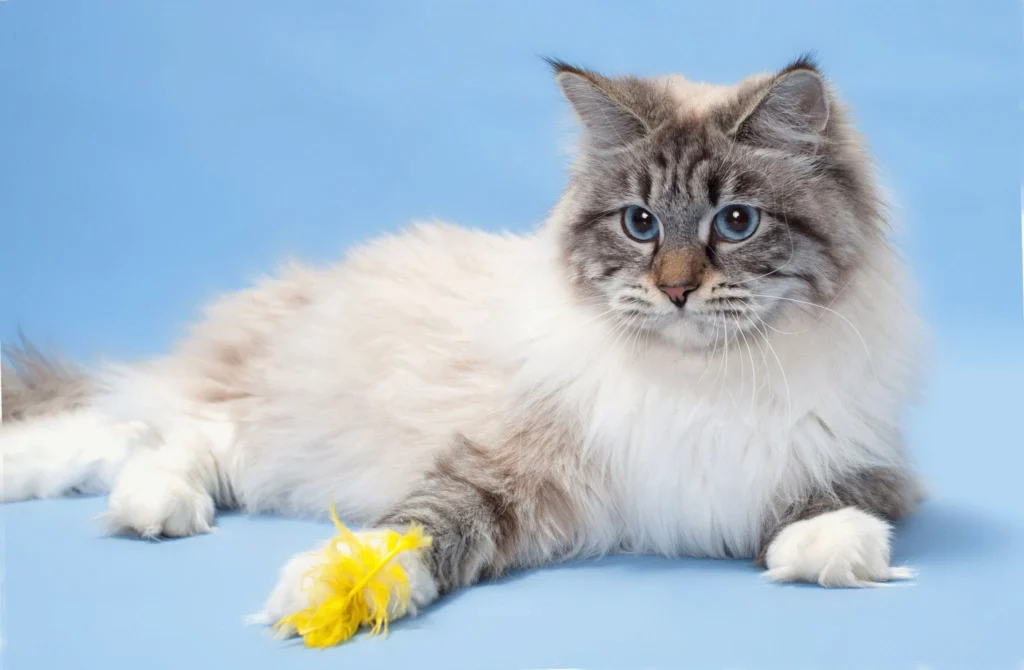
The Neva Masquerade cat’s luxurious triple coat is its pride and joy. It consists of a long, somewhat coarse outer coat, a dense layer of awn hairs, and a soft, thick undercoat. This “winter coat” provides excellent protection from the cold but requires regular grooming from the owner, though it’s not as difficult as it might seem.
The main grooming tool is a comb. It’s recommended to brush your Neva Masquerade cat 1-2 times a week. The best tools for this are:
- A metal comb with both wide and fine teeth: This helps to untangle small knots and reach the undercoat.
- A slicker brush: This is great for removing dead undercoat, especially during shedding season. Use it carefully to avoid scratching the skin.
- A deshedding tool (optional): This tool effectively removes the undercoat but should not be used more than 1-2 times a month to avoid damaging the outer coat.
You should brush in the direction of hair growth, paying special attention to areas where mats form most often: the ruff, “britches,” belly, and armpits. Thanks to its special structure, the Neva Masquerade’s fur is less prone to matting than some other long-haired breeds (like Persians), but regular care is still essential.
Shedding Season: Neva Masquerades, like Siberians, have pronounced seasonal shedding—in the spring and fall. In the spring, they shed their thick winter undercoat to prepare for summer, and in the fall, they renew their coat before the cold weather hits. During this time, you should brush your cat more often, perhaps daily or every other day, to help them get rid of dead hair and prevent them from swallowing it and forming hairballs in their stomach. You can also use special pastes or foods to help with hairball prevention.
Bathing: Neva Masquerade cats are naturally clean and usually do a good job of grooming themselves. You should only bathe them when necessary: if they get very dirty, before a cat show, or during intense shedding (bathing helps remove more dead hair). You shouldn’t bathe them more than once every 2-4 months, or even less frequently. Use only special shampoos for long-haired cats. It’s important to rinse the shampoo out thoroughly and dry the cat well with a towel and, if they aren’t afraid, a hairdryer (on a low heat and power setting) to prevent them from getting cold and to avoid mats from forming on wet fur.
Other Grooming Tips:
- Eyes: Check their eyes regularly. Small, clear, or brownish discharge in the corners is normal. You can gently wipe it away with a clean, damp cloth or a cotton pad soaked in a special eye-cleaning solution or boiled water. If the discharge is abundant, pus-filled, or the eyes are red, see a vet.
- Ears: Check their ears once a week. Clean, pink ear canals are a sign of health. A small amount of wax can be removed with a cotton pad soaked in a special ear-cleaning solution. Do not use Q-tips to clean the ear canal! If you notice dark discharge, a bad smell, redness, or if the cat shakes its head or scratches its ears, take them to a vet (it could be a sign of ear mites or an ear infection).
- Claws: If your cat isn’t wearing down its claws on a scratching post enough, they need to be trimmed with special clippers about once every 2-4 weeks. Only trim the clear tip of the claw, avoiding the pink part (the quick) where blood vessels and nerves are located. Providing a good scratching post (or several different types) is essential.
Training and Socialization of the Neva Masquerade Cat
Neva Masquerade cats are smart and clever animals, which makes the process of training and socializing them relatively easy. Their balanced nature and natural curiosity help them quickly learn household rules and even some tricks.
Socialization: Early socialization is very important for any kitten, and Neva Masquerades are no exception. During the period from 2 to 7 weeks of age, kittens are most receptive to new information and experiences. It’s important that during this time, they interact with their mother and siblings (learning cat etiquette) as well as with people. When a kitten comes to a new home (usually at 12-16 weeks), the socialization process continues. Gradually introduce them to all family members, other pets (under supervision), and various sounds and situations. This will help them grow into a confident, calm, and sociable cat.
Litter Box and Scratching Post Training: Kittens are usually already litter box and scratching post trained by the breeder. In a new home, it’s important to show the kitten where these items are. If “accidents” happen with the litter box, don’t punish the kitten. Instead, try to find the reason (they might not like the litter or the location, or it might not be clean enough). To encourage them to use the scratching post, you can use catnip or show them by “scratching” it with your own fingernails.
Training and Setting Rules: While Neva Masquerades aren’t prone to destructive behavior, it’s important to establish clear rules from the start: what is allowed and what is not (e.g., climbing on tables, scratching furniture). Training should be based on positive reinforcement. Praise and reward the cat with treats or affection for good behavior. Ignore unwanted behavior or redirect the cat’s attention to a toy or scratching post. Never use physical punishment—it can lead to fear, aggression, and a breakdown of trust.
Learning Commands and Tricks: Thanks to their intelligence, Neva Masquerades can learn some commands (“come,” “sit”) or simple tricks (give a paw, fetch a toy). Use short training sessions (5-10 minutes), positive reinforcement (clicker training, treats), and patience. The main thing is to make the learning process fun and enjoyable for the cat.
Playtime: Neva Masquerades are quite active cats, especially when they’re young. Regular play is necessary to maintain physical fitness, mental stimulation, and strengthen the bond with their owner. Use a variety of toys: wand toys, balls, laser pointers (always end the game with the cat “catching the prey” by shining the light on a toy or treat), and interactive toys. They will also enjoy multi-level cat trees for climbing and observing the world from a high vantage point.
Outdoor Walks: Many Neva Masquerade cats, like their Siberian relatives, don’t mind going for walks outdoors. If you decide to walk your cat, be sure to use a secure harness and leash. Acclimate them to the harness gradually indoors. Walks should take place in a safe area, away from roads and aggressive dogs.
Neva Masquerade Cat Nutrition: Key Recommendations
Proper nutrition is the foundation of a Neva Masquerade cat’s health, longevity, and beautiful appearance. As a large and active breed with a luxurious coat, they have specific nutritional needs.
Basic Feeding Principles:
- High Protein Content: Cats are obligate carnivores, so their diet must be based on animal protein. It’s essential for maintaining muscle mass, energy, and coat health. Choose foods or raw ingredients with a high content of quality meat (chicken, turkey, beef, rabbit) or fish.
- Moderate Fat Content: Fats are a source of energy and are necessary for the absorption of fat-soluble vitamins. The balance of Omega-3 and Omega-6 fatty acids is important, as they have a positive effect on skin, coat, and joint health. Sources of healthy fats include fish oil, flaxseed oil, and high-quality meat ingredients.
- Low Carbohydrate Content: Cats have a limited ability to digest carbohydrates. An excess of carbs, especially simple ones (corn, wheat), can lead to obesity and health problems. Choose foods with a low grain content or grain-free formulas.
- Vitamins and Minerals: The diet must be balanced with all the necessary vitamins (A, D, E, B-group) and minerals (calcium, phosphorus, taurine—an essential amino acid for cats).
- Access to Water: The cat should always have free access to fresh, clean drinking water. This is especially important when feeding dry food.
Types of Feeding:
- Prepared Commercial Foods: The easiest and most reliable way to ensure a balanced diet. Choose premium, super-premium, or holistic foods, specifically formulated for long-haired or large cat breeds. Both dry and wet (canned, pouches) foods are available. A combination of dry and wet food is often an optimal option, as wet food promotes better fluid intake.
- Raw Feeding: Requires careful planning, knowledge, and time for preparation. The diet should be based on raw or frozen meat (beef, chicken, turkey, rabbit), organ meats (heart, liver—in limited amounts), a small amount of vegetables (for fiber), fermented dairy products (low-fat kefir, plain yogurt), and eggs (1-2 times a week). It’s essential to add vitamin and mineral supplements recommended by a vet. Never give cats human food (salty, smoked, sweet, fried), bones, pork, milk (adult cats are often lactose intolerant), onions, garlic, or chocolate.
Feeding Schedule:
- Kittens (up to 6 months): Feed 3-4 times a day in small portions.
- Adolescents (6-12 months): Feed 2-3 times a day.
- Adult Cats (over 1 year): Usually feed 2 times a day (morning and evening).
Follow the feeding guidelines on the food packaging or the amounts calculated by a vet for a raw diet. Adjust the portion based on the cat’s age, weight, activity level, and individual needs. Don’t overfeed! Obesity is a serious health issue. You can get an idea of the costs involved with a kitten from a reputable breeder.
| Age | Feeding Frequency | Type of Food | Approximate Daily Amount (Dry Food)* |
|---|---|---|---|
| Up to 3–4 months | 4–5 times | Special kitten food / finely chopped meat, fermented dairy products | As needed (approximately 1.7–2.5 oz) |
| 4–6 months | 3–4 times | Kitten food / raw diet | 2.5–3.2 oz |
| 6–12 months | 2–3 times | Kitten/junior food / raw diet | 2.8–3.5 oz |
| Over 1 year | 2 times | Adult cat food (for long-haired/large breeds) / raw diet | 2.1–3.2 oz (depending on weight and activity) |
| Over 7–8 years | 2 times | Senior cat food / raw diet (possibly with reduced calories) | 1.7–2.5 oz (weight control) |
It’s important to remember that the ancestors of the Neva Masquerade cat developed in conditions where food wasn’t always available, so they may be prone to overeating. Controlling portions and the quality of their food will help maintain your pet’s health and beautiful appearance for many years.
Pros and Cons of the Neva Masquerade Cat Breed
| Pros | Cons |
|---|---|
| Striking Appearance: A combination of the Siberian physique and colorpoint pattern with blue eyes. | Grooming Needs: While the coat isn’t overly prone to matting, regular brushing (especially during shedding season) is necessary. |
| Robust Health and Longevity: Good genetics inherited from Siberians. | Seasonal Shedding: Intense shedding occurs twice a year, meaning hair will be found throughout the house. |
| Balanced and Friendly Temperament: Calm, affectionate, and not overly demanding. | Potential for Weight Gain: They need diet control and sufficient activity. |
| Get Along Well with Children and Other Pets: Patient and not aggressive. | Needs Space and Activity: They are large and active cats, needing room to play and move around. |
| High Intelligence: Easily learn household rules, litter box, and scratching post usage. | Cost: Kittens from reputable breeders can be expensive. |
| Devoted to Their Owner: Form strong bonds with their person. | Reserved with Strangers: May not be overly friendly with guests. |
| Not hypoallergenic: There is no such thing as a hypoallergenic cat. The main cat allergen, Fel d 1, is produced by every cat without exception: it is made in the salivary and sebaceous glands, so it is present in saliva, on the skin and in the coat. | Needs Companionship: Although independent, they require attention and interaction with their owner. |
Interesting Facts About the Neva Masquerade Cat
- The “Mask” Appears Gradually: Kittens are born completely white, and it takes several days or weeks for the darker points to appear on their face, ears, paws, and tail. The final color and contrast develop fully by 1.5-2 years of age.
- Eye Color is Always Blue: Unlike traditional Siberian cats, whose eyes can be green, yellow, or copper, the Neva Masquerade standard only allows for blue eyes of varying intensity. This is due to the colorpoint gene.
- Temperature Affects Color: The colorpoint pattern is temperature-dependent. Darker markings develop on cooler parts of the body (limbs, tail, ears, face). Therefore, cats living in cooler climates or spending time outdoors in the winter may have brighter and more pronounced points.
- “Neva” or “Siberian”? Although FIFe recognizes them as a separate breed (NEM), many other cat associations (such as TICA, and partially CFA) register them as Siberian cats with a colorpoint pattern. Crossbreeding between them is permitted.
- “Hypoallergenic” is a myth: The main cat allergen, Fel d 1, is produced by every cat without exception: it is made in the salivary and sebaceous glands, so it is present in saliva, on the skin and in the coat. How much allergen a cat produces varies far more from one individual animal to another than from breed to breed.
- A “Dog-like” Personality: Many owners note dog-like traits: devotion to a single owner, greeting them at the door, and the desire to follow them around and be involved in activities.
- Hunters by Nature: Like their Siberian ancestors, Neva Masquerades have retained excellent hunting instincts. They may hunt flies, toy mice, or even real rodents if they have access to the outdoors.
Frequently Asked Questions About the Neva Masquerade Cat (FAQ)
Do Neva Masquerade cats shed a lot?
Yes, like most long-haired cats, they do shed. The shedding is especially intense twice a year—in the spring and fall. Regular brushing helps to control the amount of hair in the house and prevents mats from forming.
Are Neva Masquerades good for people with allergies?
There is no such thing as a hypoallergenic cat. The main cat allergen, Fel d 1, is produced by every cat without exception: it is made in the salivary and sebaceous glands, so it is present in saliva, on the skin and in the coat. How much allergen a cat produces varies far more from one individual animal to another than from breed to breed. If you have an allergy, spend time with the particular cat you are taking home and make the decision together with an allergist — the breed guarantees nothing.
Do Neva Masquerades get along with children?
Yes, they typically get along very well with children thanks to their patient and calm nature. They are playful but not aggressive. It’s important to teach children to respect the cat and handle them properly.
Do they require a lot of care?
The main care involves regular (1-2 times a week, more often during shedding season) brushing of their coat. Bathing is needed infrequently, only when necessary. They also require standard care for their ears, eyes, and claws. Overall, the care is not too difficult for a long-haired breed.
Can a Neva Masquerade cat be kept in an apartment?
Yes, they adapt well to apartment living as long as they have enough space to move around, toys, and a cat tree for climbing. Regular playtime with their owner is also important to release energy.
What’s the difference between a Neva Masquerade and a Siberian cat?
The main difference is in the coat pattern and eye color. A Neva Masquerade is a Siberian cat with a colorpoint pattern (dark markings on a light background) and exclusively blue eyes. A Siberian cat can have various traditional patterns (solid, tabby, bi-color) and green, yellow, or copper-colored eyes. They are very similar in temperament and build.
How long do Neva Masquerade cats live?
This is a long-lived breed. With proper care and nutrition, their average lifespan is 15-18 years, and some individuals live to be 20 years or older.
- Balanced, affectionate and devoted
- Dense semi-long water-repellent coat
- Gets on well with children and dogs
- Robust “natural” health, quiet
- The dense coat sheds heavily and needs care
- Cautious with strangers
- Large — needs space and scratching posts
- A tendency to heart disease (HCM)
| Siberian Cat | Norwegian Forest Cat | Ragdoll | |
|---|---|---|---|
| Weight | 4.5–9 kg | 4–9 kg | 4.5–9 kg |
| Energy | 4 | 3.5 | 3 |
| Apartment | 4.5 | 4.5 | 5 |
| Beginners | 4 | 4 | 4.5 |
How does the Neva Masquerade differ from the Siberian cat?
Is the Neva Masquerade hypoallergenic?
Is the Neva Masquerade good for a family?
WCF / TICA / FIFe standards (Neva Masquerade)
For apartments · For kids · For beginners · Most affectionate · Quietest · Hypoallergenic · All rankings →