

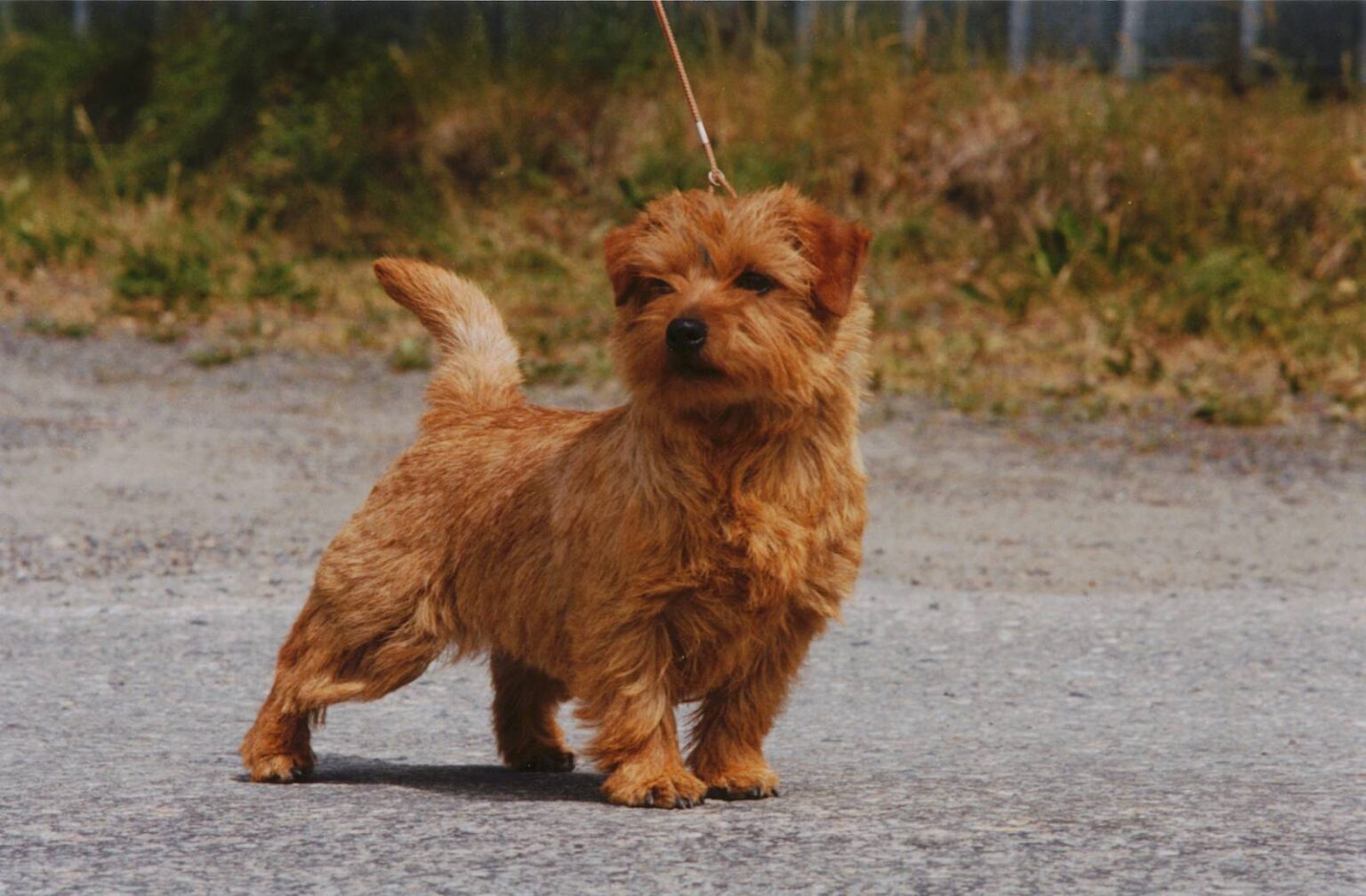
| Height | 24–26 cm |
| Weight | 5–6 kg |
| Lifespan | 12–15 years |
| FCI group | 3 · terriers |
| Origin | United Kingdom |
Exact ratings
- Generally a healthy breed
- Patellar luxation
- Mitral valve disease (MVD)
- Hip dysplasia
- Allergies and skin problems
Moderate quality small-breed food, with weight control. Hand-strip the wiry coat regularly; provide company (it dislikes being alone) and moderate exercise.
The Norfolk Terrier is the embodiment of the classic terrier in miniature: a lively, brave, intelligent, and incredibly loyal companion. Despite their modest size, these dogs have a huge heart and a fearless character, which has made them a favorite with families all over the world. Unlike some of their more boisterous relatives, the Norfolk is known for its balanced and friendly nature, making it a perfect fit for both city and country life. Their comical appearance, expressive eyes, and harsh, wiry coat captivate everyone. In this article, we’ll take a detailed look at all aspects of the breed, from its history to the nuances of its care. You can find out more on Tvaryny.
Originally bred for hunting rodents on farms in East Anglia, Norfolk Terriers today serve primarily as cherished family pets. They get on wonderfully with children and are always ready for games and adventures, but they don’t make unnecessary noise, only barking when they need to. Their adaptability, playfulness, and deep devotion to their family make them ideal companion dogs for almost anyone.
Norfolk Terrier: Key Breed Information
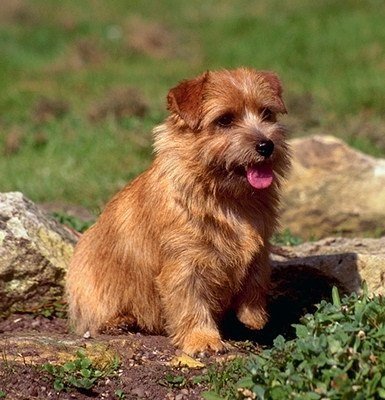
| Breed Name | Norfolk Terrier |
| Country of Origin | Great Britain (County of Norfolk) |
| Date of Origin | Late 19th century (recognized as a separate breed in 1964) |
| Average Lifespan | 12-16 years |
| Height at the Withers | 23-26 cm |
| Weight | 5-7 kg |
| FCI Group | Group 3 (Terriers), Section 2 (Small Terriers) |
| Purpose | Rodent hunter, companion dog |
| Temperament | Fearless, playful, loyal, sociable, non-aggressive |
| Coat Care | Requires regular brushing and professional hand-stripping 2-3 times a year |
| Shedding | Minimal with proper care (stripping) |
| Activity Level | Medium (requires daily walks and play) |
| Compatibility with Children | High |
| Compatibility with Other Animals | Good, especially with early socialization. Hunting instincts may be triggered by small rodents. |
A History of the Breed: From Rat Catcher to Companion
The history of the Norfolk Terrier is inextricably linked to its closest relative, the Norwich Terrier. For decades, they were considered a single breed, known collectively as the “Norwich Terrier.” Their homeland is East Anglia, specifically the counties of Norfolk and Norwich, where in the 19th century farmers needed small but brave dogs to control rodent populations in stables and barns. These dogs were not only excellent pest exterminators but also wonderful companions who accompanied their owners everywhere.
A key figure in the breed’s development is Frank “Roughrider” Jones, who, in the early 20th century, was actively involved in breeding these small working terriers. His dogs, known as “Canterbury Terriers” or “Jones Terriers,” became the foundation for the modern breed. They were popular with students at Cambridge University as companions and mascots.
The main difference that eventually separated the breeds was the shape of their ears. There were two types: dogs with erect, pointed ears (“prick-eared”) and dogs with floppy, neatly folded ears (“drop-eared”). For a long time, both types were interbred and shown as a single breed. However, in 1964, the English Kennel Club made an historic decision to recognize them as two separate breeds. The prick-eared terriers retained the name Norwich Terrier, while the drop-eared terriers were given the new official name Norfolk Terrier, in honor of their native county. This decision allowed each breed to develop according to its own standard while maintaining a shared heritage and similar temperament. It’s a shared history with other hardy terriers like the Cairn Terrier.
Breed Standard and Appearance of the Norfolk Terrier
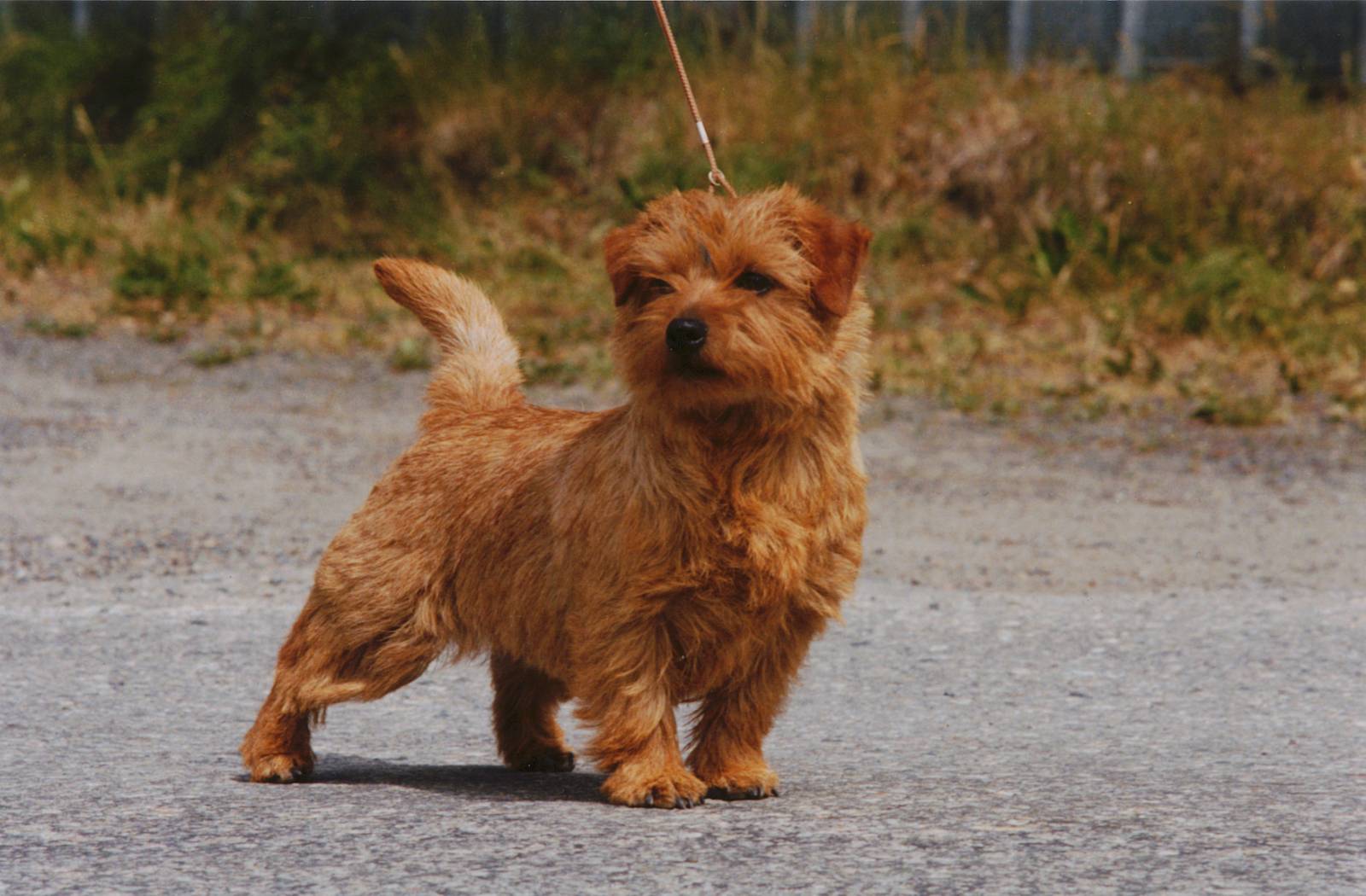
The Norfolk Terrier is a small, sturdy, short-legged dog with a compact body and strong muscles. They give the impression of an energetic and durable animal, ready for work. Despite their small stature, they should not look delicate or fragile.
- Head: The skull is wide and slightly rounded. The stop (the transition from forehead to muzzle) is well-defined. The muzzle is wedge-shaped and strong, its length is approximately one-third less than the length of the skull. The jaws are powerful, with a scissor bite.
- Eyes: Oval in shape, dark brown or almost black, set deep. The expression is lively, intelligent, and alert.
- Ears: Medium-sized, V-shaped, slightly rounded at the tips. They hang, lie close to the cheeks, and are directed forwards. This feature is the main difference from the Norwich Terrier.
- Body: Compact, with a short, straight back. The chest is deep and the ribs are well-sprung.
- Limbs: Short, straight, and powerful, with well-developed muscles. Paws are round, with thick pads.
- Tail: Traditionally, it was docked to about half its length. An undocked tail is of medium length, thick at the base and tapering towards the tip. The dog carries it high and straight, but not over the back.
- Coat: Double, with a harsh, straight, wiry outer coat and a soft, dense undercoat. On the neck and shoulders, the coat forms a small “mane.” The hair on the head, ears, and muzzle is short, except for small eyebrows and whiskers.
- Color: All shades of red are permitted (from light wheaten to deep red), as well as black and tan, and grizzle (a mixture of red, black, and gray hairs). Small white markings are allowed but are not desirable.
Character and Temperament: A Big Personality in a Small Body
Their character is one of the most appealing traits of the Norfolk Terrier. This is a cheerful, brave, and very sociable dog. They are not prone to nervousness or aggression like some other terriers and get along wonderfully in a family environment. Their motto is “always ready for an adventure.”
Family Relationships: Norfolks love to be the center of attention and participate in all family activities. They form strong bonds with their owners and find long periods of solitude difficult to handle. This is not a dog you can leave alone in an empty apartment all day. They are very fond of children and are happy to play with them for hours, showing amazing patience. However, as with any dog, it’s important to teach children how to behave correctly with an animal.
Relationships with Other Animals: Typically, Norfolk Terriers are friendly with other dogs and even cats, especially if they have grown up together. However, you should not forget their hunting past. Their innate instinct may cause them to chase small animals such as hamsters, guinea pigs, or squirrels. This trait, common to many working terriers like the Cairn Terrier, requires control during walks.
Intelligence and Activity: They are very intelligent and quick-witted dogs who learn fast. At the same time, they have a typical terrier stubbornness, so training must be consistent but gentle. The key to success is positive reinforcement. They are inquisitive and active on walks, love to explore new places, and enjoy running and digging holes. This is their way of fulfilling their hunting instincts, so you shouldn’t punish them harshly for it. It’s better to channel their energy into peaceful pursuits—games and training.
Care and Maintenance: What Owners Need to Know
The Norfolk Terrier is an undemanding breed, but certain aspects of its care are crucial for maintaining its health and good looks.
Grooming and Coat Care
The Norfolk’s harsh coat requires specific care. The main procedure is manual hand-stripping, which involves plucking out the dead outer guard hairs. This preserves the correct structure, harshness, and rich color of the coat, and also minimizes shedding indoors.
- Regular Brushing: Brush your dog 2-3 times a week with a specific brush or a metal comb to remove dirt and prevent matting.
- Stripping: Professional stripping is necessary 2-3 times a year. It is strongly not recommended to clip a Norfolk with clippers, as this ruins the coat’s structure—it becomes soft, dull, and loses its protective properties.
- Bathing: Bathe the dog only when necessary, using special shampoos for wiry coats. Frequent bathing can dry out the skin.
- Other Procedures: Regularly check their ears and eyes, cleaning them as needed. Trim their claws monthly if they don’t wear down naturally.
Physical Exertion and Activity
Despite their small size, Norfolk Terriers are energetic dogs. They need daily walks lasting 40-60 minutes. In addition to regular walks, they love active games: fetching a ball, chasing a frisbee, or overcoming obstacles. They can be involved in canine sports such as mini-agility or flyball, where they can showcase their dexterity and intelligence.
Training and Education of the Norfolk Terrier
Training a Norfolk can be both an easy and a challenging process. On one hand, they are very smart and eager to please their owner. On the other hand, their innate stubbornness and independence require patience. Use treats, praise, and games as rewards for correctly following commands. Harsh methods and shouting will not work and may only frighten the dog.
Early socialization is critically important. From a young age, introduce your puppy to different people, sounds, places, and other animals. This will help them grow into a confident and well-adjusted dog. While a Norfolk is more pliable than some of its relatives, for example, the Český Terrier, they still require consistent training and clearly established boundaries.
Health and Common Breed Diseases
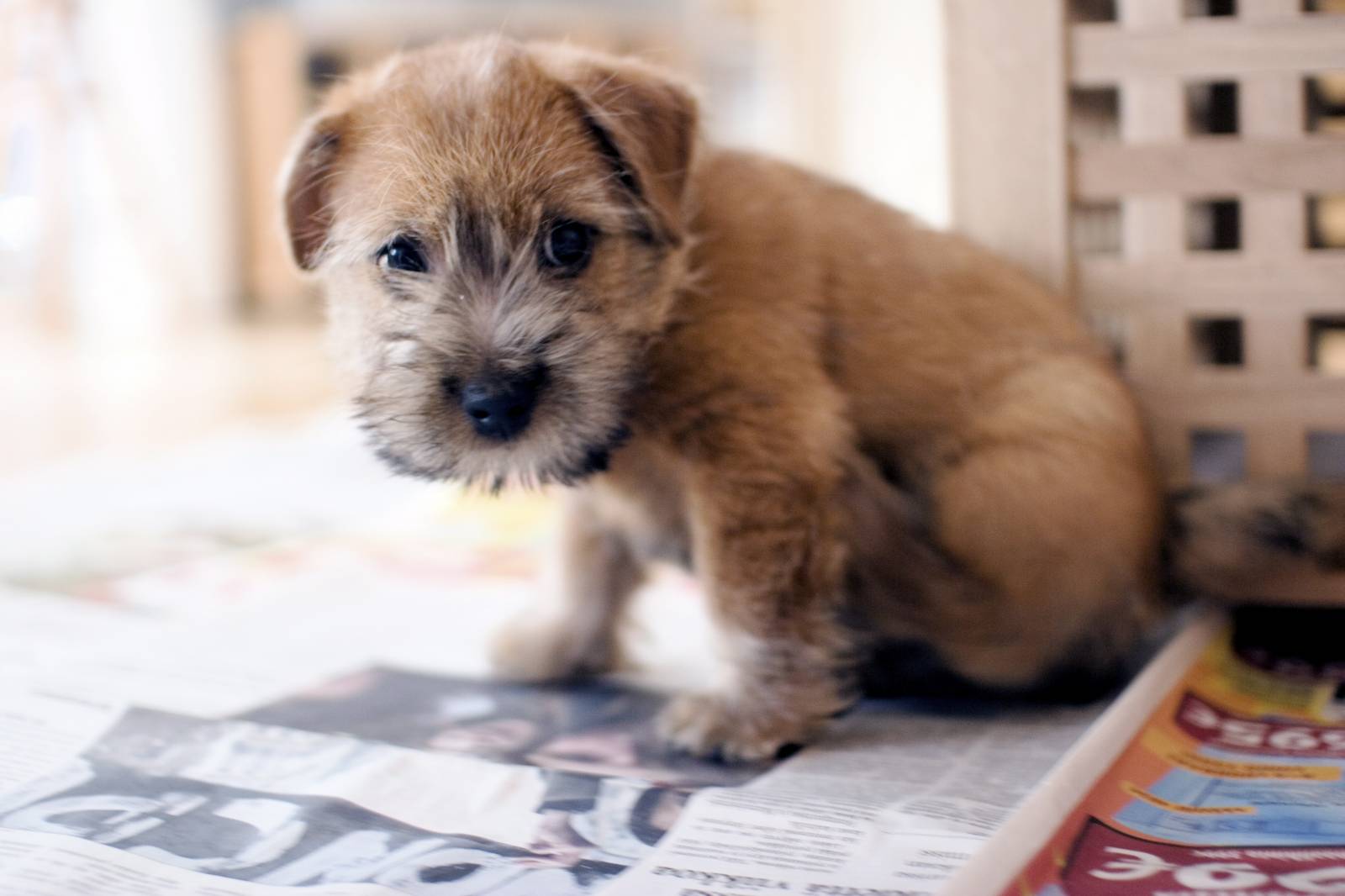
Norfolk Terriers are generally a healthy and long-lived breed. However, like many purebred dogs, they have a predisposition to certain genetic diseases. Responsible breeders test their breeding dogs to minimize risks.
- Mitral Valve Disease (MVD): This is the most common health problem in the breed, usually appearing in old age. Regular check-ups with a veterinary cardiologist will help to detect the problem in time.
- Patellar Luxation: A condition common to many small breeds where the kneecap slips out of its normal position.
- Hip Dysplasia: Although more common in large breeds, it can also occur in Norfolks.
- Eye Problems: Cataracts and retinal atrophy are possible.
- Respiratory Diseases: Occasionally, problems with the trachea may arise.
It’s important to choose a puppy from reputable breeders who provide information about the parents’ health. Regular veterinary check-ups, proper nutrition, sufficient physical activity, and annual vaccinations are the key to a long and happy life for your pet.
Dietary Recommendations for the Norfolk Terrier
Proper nutrition is the foundation of any dog’s health. For a Norfolk Terrier, a high-quality dry food for small active breeds or a balanced natural diet is best. It’s important not to overfeed the dog, as they are prone to gaining excess weight, which puts an extra strain on their joints and heart.
| Allowed Foods (natural diet) | Forbidden Foods |
|---|---|
| Lean meat (beef, turkey, chicken) – the basis of the diet | Chocolate, cocoa |
| Offal (heart, liver) – 1-2 times a week | Hollow bones (e.g., from chicken) |
| Boneless sea fish | Grapes, raisins |
| Grains (buckwheat, rice, oats) | Onions, garlic |
| Vegetables (carrots, pumpkin, zucchini, broccoli) | Sweets, pastries |
| Fermented milk products (low-fat cottage cheese, kefir) | Fatty, smoked, fried foods |
| Eggs (1-2 times a week) | Legumes, potatoes |
An adult dog should be fed twice a day, in the morning and evening. The portion size is determined individually, depending on the animal’s age, weight, and activity level. Always ensure access to fresh, clean water.
Pros and Cons of the Norfolk Terrier Breed
| Pros | Cons |
|---|---|
| Compact size, ideal for an apartment | Needs professional hand-stripping, not clipping |
| Friendly, non-aggressive character | Prone to digging holes in the yard |
| Gets along well with children and other animals | Can be stubborn during training |
| Highly intelligent, learns new things easily | Strong hunting instinct towards small animals |
| Minimal shedding with proper care | Does not cope well with loneliness |
| Cheerful and energetic companion | Prone to weight gain |
| Good health and longevity | Can be noisy if not properly trained |
Interesting Facts About the Norfolk Terrier
- “Demon in the Field”: Despite their cute appearance, Norfolks earned this nickname for their fearlessness and tenacity while hunting rodents.
- Student Favorite: In the 1930s, these dogs were extremely popular with Cambridge University students, who kept them as companions in their rooms.
- Working in a Pack: Unlike many other terriers who hunt alone, Norfolks were bred to work in small packs, which explains their sociability and non-confrontational nature with other dogs.
- A Rare Breed: Despite their popularity, the Norfolk Terrier remains a relatively small breed in terms of numbers, which is due to their small litter sizes (an average of 2-3 puppies).
Frequently Asked Questions about the Breed (FAQ)
Do Norfolk Terriers bark a lot?
They are not “empty barkers.” They usually vocalize to warn of approaching guests or something unusual. Proper training will help to control excessive barking.
Are they suitable for inexperienced owners?
Yes, thanks to their friendly and adaptable nature, the Norfolk Terrier can be a wonderful first dog. The main thing is to be ready for consistent training and to provide proper coat care.
Is this a hypoallergenic breed?
No breed is 100% hypoallergenic. However, thanks to their wiry coat and minimal shedding (provided they are regularly stripped), Norfolks are often well tolerated by people with mild dog hair allergies.
How much does a Norfolk Terrier puppy cost?
Due to their relative rarity and small litter sizes, Norfolk Terrier puppies from responsible breeders can be quite expensive. The price depends on their lineage, the reputation of the kennel, and other factors.
Video about the Breed
- More level-headed than many terriers
- Devoted, friendly, good with children
- Compact, suits an apartment
- Clever and undemanding
- Cannot bear being left alone
- Keeps a hunting instinct (small animals)
- Wiry coat needs stripping
- Can bark shrilly
| Norwich Terrier | Cairn Terrier | Border Terrier | |
|---|---|---|---|
| Height | 24–26 cm | 28–31 cm | 28–40 cm |
| Energy | 4 | 4 | 4 |
| Apartment | 4.5 | 4 | 4 |
| Beginners | 4 | 3.5 | 3.5 |
How does the Norfolk Terrier differ from the Norwich?
Is the Norfolk Terrier suited to an apartment?
Is the Norfolk calmer than other terriers?
FCI Standard No. 272 · The Kennel Club
For apartments · For kids · For beginners · Active · Smartest · Hypoallergenic · All rankings →