

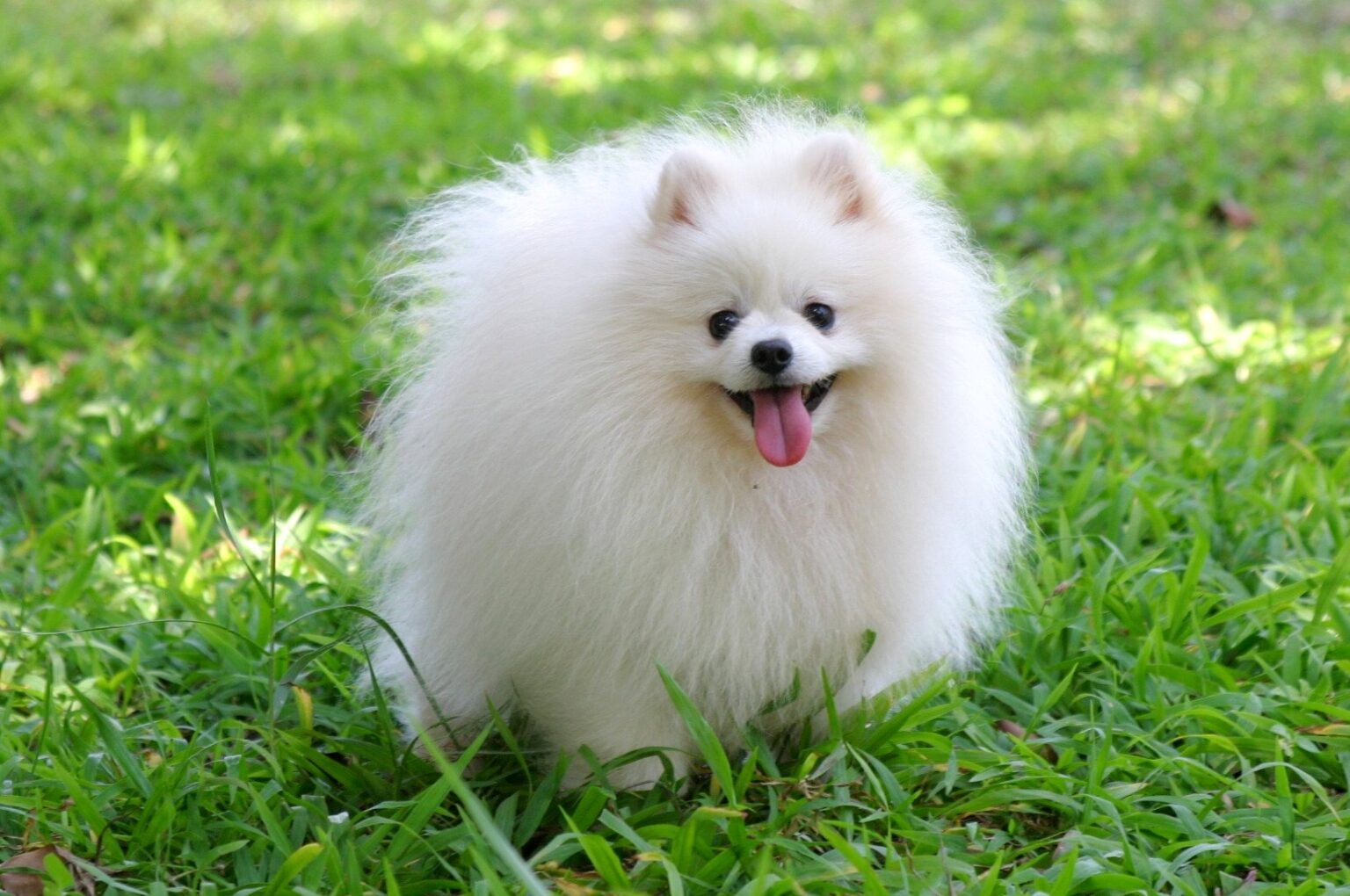
| Height | 18–22 cm |
| Weight | 1.5–3 kg |
| Lifespan | 12–16 years |
| FCI group | 5 · spitz breeds |
| Origin | Germany |
Exact ratings
- Tracheal collapse
- Patellar luxation
- Alopecia X (“black skin disease”)
- Dental problems
- Hypoglycemia
Small, frequent meals of quality food for miniature breeds (hypoglycemia risk). Regular brushing of the dense coat and tooth-brushing.
The Pomeranian, officially known as the Zwergspitz by the FCI classification, is a charming toy dog breed that belongs to the German Spitz family. These miniature fluffballs have captured the hearts of millions worldwide with their vibrant look, lively temperament, and unwavering devotion. Some kennel clubs, like the American Kennel Club (AKC), recognize the Pomeranian as a distinct breed, while the Fédération Cynologique Internationale (FCI) classifies it as the smallest variety of the German Spitz. More on this topic and other breeds can be found at Tvaryny.
There’s often confusion between the Pomeranian and the German Spitz (Kleinspitz or Mittelspitz), but they have noticeable differences. The Pom’s coat is significantly denser and softer, with a rich undercoat that creates a “fluffy” or “puffy” effect. Its muzzle is typically shorter, often described as a “bear” or “fox” type. German Spitzes (both small and medium) have a dominant outer coat, and their muzzle is generally more elongated. For more on the unique characteristics, care, and health of this breed, keep reading.
Pomeranian: A Quick Breed Overview
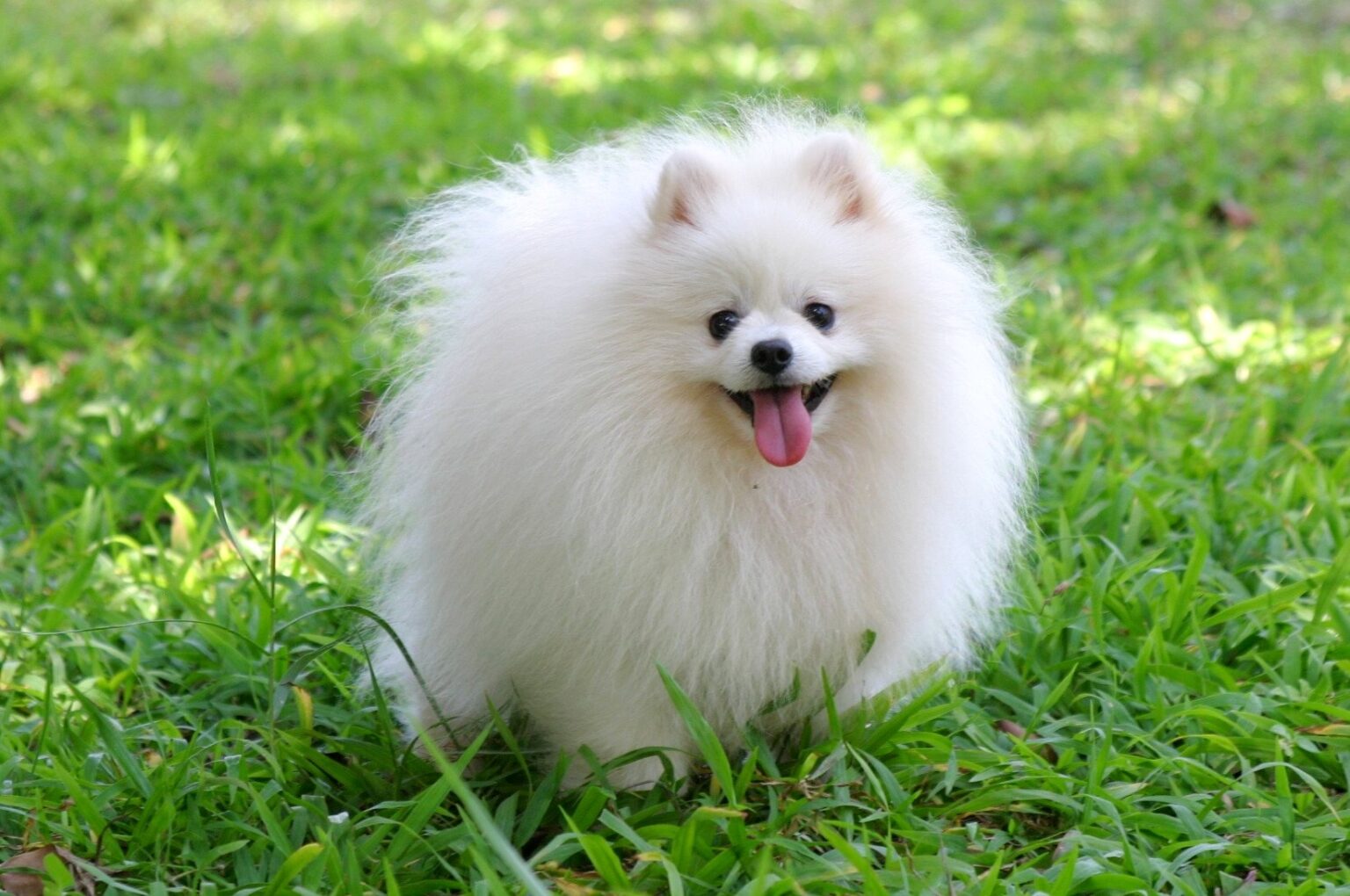
| Official Name (FCI) | German/Pomeranian Spitz (Deutscher Spitz/Zwergspitz) |
| Alternative Name | Pom |
| Country of Origin | Germany (Pomerania region) |
| FCI Classification | Group 5 (Spitz and Primitive Types), Section 4 (European Spitzes). No working trial. |
| Year of FCI Recognition | 1957 (latest standard revision) |
| Size | Toy (miniature) |
| Height at the Withers | 7–8.5 inches (up to 9.5 inches allowed) |
| Weight | 3–7.5 lbs (ideal weight is about 4–5.5 lbs) |
| Lifespan | 12–16 years |
| Temperament | Lively, alert, devoted, playful, sometimes stubborn, vigilant |
| Usage | Companion dog |
The History of the Pomeranian
The history of the Pomeranian is rooted in the centuries-old development of Spitz-type dogs in Europe. It’s believed that the ancestors of all Spitzes, including Pomeranians, are ancient peat dogs (Canis familiaris palustris Rütimeyer), whose remains have been found in Switzerland and near Lake Ladoga, dating back to the Stone Age. Images of dogs resembling modern Spitzes appear on ancient Greek and Roman artifacts, attesting to their long history.
Throughout the Middle Ages, Spitz-type dogs were widespread in Asia, Africa, and Europe. They gained particular popularity in Northern Europe, especially in Germany, Holland, Denmark, and the Baltic countries. This is where modern Spitz breeds were developed. Larger specimens were used as guards for yards, ships, and farm buildings, thanks to their alertness and loud bark. Some theories suggest that large Spitzes might have been crossbred with northern Laikas, which their physical similarities support. A connection to European herding dogs is also not ruled out.
By the end of the 19th century, small Spitzes had become some of the most popular toy dogs in Europe. They were often kept as pets by the nobility and aristocracy. Famous historical figures such as composer Wolfgang Amadeus Mozart, writer Jean Paul, Empress Catherine II, Queen Marie Antoinette, Joséphine de Beauharnais, and writer Émile Zola were all admirers of these charming dogs.
Germany: The Homeland of Modern Spitzes
The modern homeland of the breed is considered to be Germany, specifically the historical region of Pomerania (hence the name “Pomeranian”) located on the Baltic Sea coast (now parts of Germany and Poland). The first mention of the name “Spitzhund” dates back to 1450 in the Lower Rhine district. Intentional selective breeding began in the 18th century. Different regions of Germany specialized in breeding Spitzes of specific colors:
- White Spitzes: Pomerania and Eberswalde.
- Gray (Wolfspitz/Keeshond): Along the Rhine (Düsseldorf, Aachen, Krefeld).
- Black Spitzes: Württemberg (used for guarding vineyards).
Initially, Spitzes were primarily working dogs, but over time, they were noticed by the nobility and became popular house pets. Small specimens weighing 11-15 lbs were especially prized.
The Role of England and Queen Victoria
Upon arriving in England, Spitzes gained even greater popularity, especially during the reign of Queen Victoria (1837-1901). The Queen was a passionate enthusiast of the breed, particularly after bringing several Pomeranians from Florence, Italy, in 1888. Her favorite was a small Pomeranian named Marco, weighing about 12 lbs (significantly more than modern standards). Thanks to royal patronage, the breed became extremely fashionable among the English aristocracy. It was in England that active work began to miniaturize the breed and develop various coat colors, especially orange and sable.
In 1891, the English Pomeranian Club was founded and developed the first breed standard. The dogs were divided into two categories: under 5.5 lbs and over 5.5 lbs. Until 1915, the club allowed dogs weighing no more than 8 lbs at shows. These dogs were called “Queen Victoria’s Pomeranians.” Modern English-type Poms are often characterized by a smaller stature, lighter bone structure, and a very voluminous, soft coat with an abundance of undercoat. Their heads have a distinct “baby-face” with very short muzzles and tiny ears.
The Pomeranian in America
In the late 19th century, German Spitzes (mostly white) arrived in America, where their larger variety became known as the “American Eskimo Dog” (not to be confused with the Pomeranian). The Pomeranian as a distinct breed was recognized by the American Kennel Club (AKC) in 1900, and its standard was published. In 1909, the American Pomeranian Club was officially established, holding its first specialty show in 1911.
Today, the American type of Pomeranian is considered one of the leading in the world. These dogs are characterized by a sturdy, compact build, good bone structure, and are quite “heavy” for their small size with excellent, free movements. The coat is very dense, with rich colors. The head is often described as the “bear type” – with a short but not flat muzzle, very small, almost unnoticeable ears, and expressive eyes. Preparing such dogs for a show requires high grooming skill.
Breed Development in Other Countries
In France, Miniature Spitzes (Loulou de Poméranie) can be slightly larger and lighter in build, resembling the dogs of years past. They often have a longer, more pointed muzzle (“fox type”) and larger, though correctly set, ears. The coat may have a less developed undercoat, making the “ruff” less abundant. The French grooming style often favors a more natural look, without heavily rounding the ears and paws.
In Germany, the breed’s homeland, the “German Spitz” association (Verein für Deutsche Spitze) was founded in 1899, which developed standards for Spitzes of various sizes and colors. Modern German Pomeranians (Zwergspitzes) are often similar to the French type but usually have a sturdier bone structure and more correct movement due to good angulation of the limbs. The head and tail set are true to the standard.
What the Pomeranian Looks Like: Standard and Appearance
The Pomeranian is the embodiment of elegance and liveliness in a miniature package. Its appearance immediately catches the eye thanks to its luxurious double coat, which stands almost perpendicular to the body, creating the impression of a fluffy ball. This is a typical house and toy dog that is not suited for living outdoors.
Key Exterior Features:
- Size: Compact. Height at the withers according to the FCI standard is 8 inches ± 1 inch (i.e., from 7 to 9 inches). Dogs below 7 inches are undesirable. Weight should correspond to height, usually ranging from 3 to 7.5 lbs.
- Proportions: The ratio of height at the withers to body length is 1:1, giving the dog a square shape.
- Head: Medium-sized, wedge-shaped when viewed from above, resembling a fox’s head. The skull gradually tapers towards the nose. The stop (transition from forehead to muzzle) is moderately pronounced, not abrupt.
- Muzzle: Not too long, proportionate to the skull (approximately 2:3). Lips are tight-fitting and black (brown in brown Spitzes). Jaws are well-developed, with a scissor bite (a level bite is acceptable).
- Nose: Small, round, and solid black (dark brown in brown Spitzes).
- Eyes: Medium-sized, almond-shaped, slightly slanted, and dark in color. Eyelids are black (dark brown in brown Spitzes). The expression is lively and intelligent.
- Ears: Small, set high, relatively close together, triangular in shape, pointed, and always carried upright.
- Neck: Medium length, broad at the base, slightly arched, without a dewlap, covered with a dense coat that forms a lush ruff.
- Body: The topline transitions smoothly into a short, straight back. Withers are pronounced. Loin is short, broad, and strong. Croup is broad, short, and not sloped. Chest is deep and well-developed, with the front extending forward. Abdomen is moderately tucked up.
- Tail: Set high, of medium length, very thickly plumed, curled over the back and lying flat against it.
- Limbs: Forelegs are straight, with strong bone structure, and parallel. Shoulders are muscular, and elbows are held close to the body. Hindquarters are muscular with moderate angulation, hock joints are low to the ground and parallel. Paws are small, round, “cat-like,” with tightly arched toes. Claws and pads are black (brown in brown Spitzes).
- Movement: Free, smooth, and springy, with a good push from the hindquarters.
Pomeranian Coat and Color
The coat is the Pomeranian’s main ornament. It’s a double coat: a long, straight, harsh outer coat and a short, dense, cotton-like undercoat. It is the undercoat that makes the outer coat stand out, giving the dog its characteristic volume. The hair on the head, ears, front of the legs, and paws is short and velvety. The rest of the body is covered in long, dense fur. At the neck and shoulders, it forms a lush “ruff,” on the back of the front legs there are “feathers,” on the hind legs from the rump to the hocks there are thick “pants,” and the tail is covered with very long fur.
Pomeranian colors are very diverse. The FCI standard for the Zwergspitz recognizes the following options:
- Black: Undercoat and skin should also be dark. The color is jet black without white or other markings.
- Brown: Even dark brown color.
- White: Pure white, without any yellowing, especially on the ears.
- Orange: An even, solid color of medium intensity.
- Gray-Shaded (Wolf-sable): Silver-gray with black hair tips. The muzzle and ears are dark. There’s a characteristic “spectacle” pattern around the eyes. The ruff and “pants” are lighter.
- Cream: From light beige to rich cream.
- Cream-Sable: Cream base with dark (sable) hair tips.
- Orange-Sable: Orange base with dark hair tips.
- Black and Tan: Black base color with clear reddish or fawn tan markings above the eyes, on the muzzle, throat, chest, legs, and under the tail.
- Parti-color: The base color is white. Black, brown, gray, or orange patches are evenly distributed throughout the body.
- Blue: A very rare color, which is a diluted black.
- Chocolate and Tan: Brown base color with tan markings.
The most popular colors today are orange and its variations (orange-sable, cream).
Pomeranian Temperament and Behavior
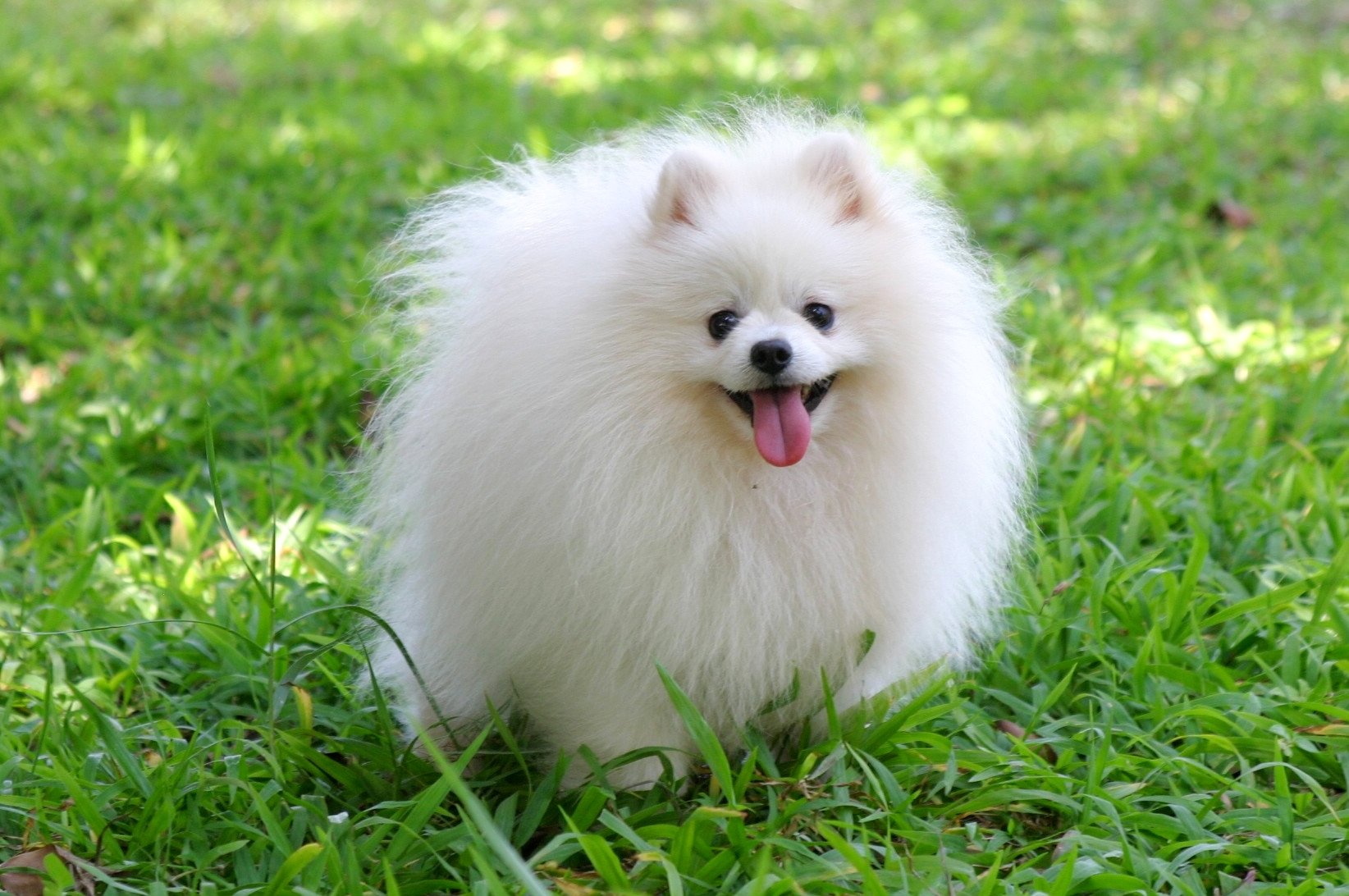
The Pomeranian is a big dog in a small body. Its personality is a vibrant mix of playfulness, energy, devotion, and a dash of stubbornness. Despite their miniature size, these dogs have a strong personality and don’t see themselves as small.
Key Character Traits:
- Liveliness and Energy: Poms are true bundles of energy. They love games, walks, and any activity. Their movements are swift and light. Even in old age, many Spitzes retain the playfulness of a puppy.
- Devotion to Their Owner: Pomeranians are very attached to their person or family. They strive to be the center of attention, to accompany their owner everywhere, and to participate in all family activities. This trait makes them wonderful companions but can lead to separation anxiety if they are left alone for long periods.
- Alertness and Watchdog Qualities: Pomeranians have excellent hearing and a natural watchdog instinct. They will always announce the arrival of guests or any suspicious sounds with a loud bark. This trait can become a problem if their tendency to bark excessively is not controlled from an early age. They are distrustful of strangers, which makes them good “doorbells.”
- Intelligence and Wit: These are very intelligent dogs that quickly learn commands and various tricks. They are often seen in circus acts. However, their intelligence is combined with a certain amount of stubbornness. Training must be consistent, patient, and use positive reinforcement methods. Roughness or punishment can have the opposite effect.
- Courage: Despite their size, Pomeranians are very brave and determined. They are not afraid to confront much larger dogs, so you need to keep a close eye on them during walks.
- Adaptability: Pomeranians adapt well to different living conditions. They are comfortable in a large house or a small apartment, provided they get enough attention and physical activity. They can adjust to the pace of their owner’s life, whether it’s an active young person or an elderly couple. Similar to other small companions like the Yorkshire Terrier or the Jack Russell Terrier, Pomeranians need close contact with people.
- Relationship with Children and Other Animals: With proper socialization, Pomeranians can get along well with older, careful children. However, due to their fragility, they are not suitable for families with very young children who might accidentally injure the dog. With other pets, especially if they grew up together, Spitzes usually get along, although they might try to dominate even larger dogs or cats.
Important to remember: Don’t treat a Pomeranian as a living toy. It is a full-fledged dog with its own needs for attention, training, and physical and mental stimulation. Despite many owners’ love for carrying them, Spitzes need regular walks on a leash where they can explore the world and burn off their energy.
Pomeranian Health: Typical Ailments and Prevention
Pomeranians are generally considered a relatively healthy breed with a lifespan of 12-16 years. However, like many other breeds, especially small ones, they are prone to certain genetic and acquired diseases. Responsible breeders test their breeding dogs for hereditary diseases, but it’s important for potential owners to be aware of possible problems.
The Most Common Health Problems in Pomeranians:
- Luxating Patella: This is a genetic condition where the kneecap slips out of its normal position. The severity can range from mild (asymptomatic) to severe, requiring surgical intervention. The dog may limp, hold up its leg, or hop on three legs.
- Tracheal Collapse: A weakening of the tracheal cartilage rings, leading to its narrowing during breathing. A characteristic symptom is a loud, “goose-like” cough, especially when excited, physically active, or when there’s pressure on the neck (e.g., from a collar). It’s recommended to use a harness instead of a collar. Treatment can be conservative or surgical.
- Dental and Gum Problems: Due to their small jaw, Pomeranians’ teeth are crowded, which contributes to plaque buildup, tartar formation, gingivitis, and periodontitis. Early tooth loss is a common problem. Regular dental care (brushing teeth) and professional cleanings by a vet are necessary.
- Hypothyroidism: Insufficient production of hormones by the thyroid gland. Symptoms may include lethargy, weight gain, skin and coat problems (including Alopecia X – symmetrical hair loss), and cold intolerance. It’s diagnosed by a blood test and treated with hormone replacement therapy.
- Alopecia X (Black Skin Disease): A syndrome of hair loss of unknown origin. It is characterized by symmetrical baldness, often starting in areas on the back legs, body, and tail. The skin in the affected areas may darken. The diagnosis is made by ruling out other causes (hormonal disorders, allergies). Treatment is complex and not always effective.
- Cryptorchidism: A condition in which one or both testicles do not descend into the scrotum in males. Undescended testicles have an increased risk of developing tumors, so neutering is recommended.
- Progressive Retinal Atrophy (PRA): A hereditary eye disease that leads to a gradual degeneration of the retina and blindness.
- Cataracts: Clouding of the eye lens, which can lead to vision deterioration and blindness. It can be hereditary or develop with age.
- Entropion: An inward rolling of the eyelid, causing the eyelashes to rub against the cornea, leading to irritation and pain.
- Atlantoaxial Subluxation: Instability between the first (atlas) and second (axis) cervical vertebrae. It can cause neck pain and neurological symptoms.
- Sick Sinus Syndrome: A heart rhythm disorder that can lead to weakness and fainting.
- Difficulty Giving Birth: Due to the small size of the female and the relatively large size of the puppies’ heads, births in Pomeranians can be complicated and often require a Cesarean section.
Disease Prevention
While it’s impossible to completely avoid diseases, you can significantly reduce the risks:
- Choose a Responsible Breeder: Buy a puppy only from trusted breeders who test their dogs for hereditary diseases and can provide the necessary documents.
- Regular Vet Check-ups: Annual check-ups (or twice a year for senior dogs) will help detect problems at an early stage.
- Vaccination and Parasite Control: Follow the vaccination schedule and regularly treat your dog for fleas, ticks, and worms.
- Proper Nutrition: Use high-quality food that matches the dog’s age and activity level. Control their weight, as obesity increases the strain on joints and the heart.
- Dental Care: Regularly brush your dog’s teeth with a special toothpaste and toothbrush for dogs.
- Safety: Due to their small size and fragility, protect your Pomeranian from falls, rough play with large dogs, or small children. Use a harness instead of a collar.
| Procedure | Recommended Frequency | Notes |
|---|---|---|
| Veterinary Exam | 1–2 times a year | Includes a general check-up, palpation, and listening to the heart and lungs. |
| Vaccination | On schedule (annual boosters) | Combination vaccine (distemper, parvovirus, leptospirosis, hepatitis), rabies. |
| Treatment for Ectoparasites (fleas, ticks) | Monthly/Quarterly (depending on the product) | Topical drops, tablets, collars. |
| Deworming | Every 3–4 months | Against roundworms and tapeworms. |
| At-Home Teeth Brushing | Daily or several times a week | Use veterinary toothpaste and a toothbrush. |
| Professional Dental Cleaning at the Vet | As needed (often annually) | Under sedation or anesthesia to remove tartar. |
| Blood/Urine Tests | Annually (especially for dogs over 7 years old) | Biochemical and general analysis to monitor the condition of internal organs. |
How to Groom a Pomeranian’s Coat?
The luxurious double coat of the Pomeranian requires regular and meticulous care to maintain its healthy appearance and prevent matting. Neglecting grooming can lead not only to a messy look but also to skin problems. Grooming a Pomeranian can be more demanding than, for example, grooming a Volpino Italiano, due to the dense undercoat.
Key Aspects of Pom Grooming:
- Brushing: This is the most important part of grooming. You should brush your Pom 2-3 times a week, and daily during shedding season (usually spring and fall). Brush the coat against the direction of growth, layer by layer, paying special attention to areas where mats most often form: behind the ears, under the armpits, on the “pants,” and under the tail. Use several tools:
- Slicker brush: For fluffing the coat and removing dead undercoat. Choose a slicker with long bristles without balls on the tips to reach the skin.
- Metal comb with varying teeth spacing: To check for mats after using the slicker and to brush areas with shorter hair (behind the ears, under the armpits).
- Conditioning spray: Never brush a dry coat! Lightly moisten it with a special spray before brushing to prevent breakage and static.
- Bathing: It’s recommended to bathe a Pomeranian every 4-8 weeks or as needed. Too-frequent washing can dry out the skin and coat. Use only high-quality shampoos and conditioners designed for dogs with a double coat. Be sure to rinse all products thoroughly.
- Drying: Blow-drying is a must! After bathing, thoroughly blot the coat with a towel, then blow-dry on a medium or low heat setting while brushing with a slicker against the direction of hair growth. This helps to fluff the undercoat, add volume, and prevent matting. You should never let a Pom air-dry, as the dense undercoat stays wet for a long time, which can lead to fungal infections and an unpleasant odor.
- Trimming: A hygienic trim includes trimming the hair around the anal area, on the paw pads (between the toes), and giving the paws a neat shape (“cat paw”). You can also slightly trim the hair on the ears to emphasize their shape. Show dogs get a special breed-specific trim that gives their silhouette a rounded shape. Many owners of non-show dogs choose a “pet” or “teddy bear” cut, where the body hair is significantly shortened. Important: Never shave a Pom down to the skin! This can damage the coat’s structure, and it may not grow back properly, and it also removes the dog’s protection from the sun and cold.
- Nail Care: Trim nails every 2-4 weeks using a special small-dog nail clipper. If you hear their nails clicking on the floor, it’s time to trim them.
- Ear Care: Regularly check the ears for redness, dirt, or a bad smell. Clean them as needed with a cotton ball soaked in a special ear-cleaning solution.
- Eye Care: Wipe the corners of the eyes with a damp wipe or cotton ball to remove tear stains, especially in light-colored dogs.
- Shedding: Pomeranians shed, especially intensely twice a year. There is also a “puppy uglies” phase, which usually occurs at 4-8 months of age. During this period, the puppy loses its soft baby coat, and its adult, harsher coat begins to grow in. The dog may look quite messy during this time, but it’s a normal process. Regular brushing will help speed up the shedding process and keep the skin healthy.
Pomeranian Training and Socialization
Despite their toy-like appearance, the Pomeranian is an intelligent and trainable dog. Proper training and early socialization are key to raising a well-behaved and pleasant companion.
Key Aspects of Training:
- Early Socialization: This is critically important for Poms. Introduce your puppy to different people, sounds, places, and other (vaccinated and friendly) dogs from an early age (after the necessary vaccinations). This will help raise a confident dog that won’t be overly fearful or aggressive in new situations or toward strangers.
- Positive Reinforcement: Pomeranians respond best to training methods based on positive reinforcement—praise, treats, toys. They aim to please their owner but can be sensitive to criticism and punishment. Roughness can cause fear or stubbornness.
- Consistency and Patience: Be consistent in your demands and rules. Pomeranians are smart and will quickly figure out if you’re lenient. Their stubbornness requires patience from the owner. Training sessions should be short (5-10 minutes) and fun so the dog doesn’t lose interest.
- Basic Commands: Start with basic commands: “sit,” “down,” “come,” “stay,” “leave it.” These commands are important for the dog’s safety and control.
- Potty Training: Like many small breeds, Pomeranians may need more time and patience for potty training. Frequent outings (especially after sleeping, eating, and playing), praise for proper behavior, and using a crate or playpen can help with this process.
- Controlling Barking: Pomeranians are prone to barking. It’s important to teach the dog a “quiet” or “speak” command (to bark on command) from the very beginning, and not to encourage barking without reason. Provide enough mental and physical stimulation so the dog doesn’t bark out of boredom.
- Preventing Small Dog Syndrome: Don’t let your Pomeranian do things you wouldn’t allow a large dog to do (e.g., jumping on people, aggressive behavior). Because of their cute appearance, owners often condone bad behavior, which can lead to problems.
- Activity and Games: While Pomeranians don’t need exhausting physical activity, they do need daily short or medium-length walks (20-30 minutes) and time for games at home or in a safe area. They also excel in dog sports like small dog agility, obedience, freestyle (dog dancing), and nosework. Mental stimulation (puzzle toys, scent games) is also very important.
Training a Pomeranian is not a difficult but a constant process that helps build a strong bond between the dog and the owner and makes their life together harmonious.
Pomeranian Diet: Key Recommendations
Proper nutrition is the foundation of a Pomeranian’s health and longevity. Because of their small size and tendency for certain problems (e.g., with teeth or obesity), choosing a diet and feeding schedule requires attention.
Types of Diets:
- Ready-made Dry Kibble: This is the most convenient and often recommended option. Choose high-quality super-premium or holistic foods formulated specifically for small breed dogs. Such foods are balanced in their composition of proteins, fats, carbohydrates, vitamins, and minerals. The size of the kibble is also adapted for small jaws. Dry food helps mechanically clean teeth of plaque.
- Wet Food (Canned): Can be used as a supplement to dry food or as a main diet (especially for dogs with dental problems). They are usually tastier but do not provide tooth cleaning.
- Natural Diet: Feeding home-cooked food is possible but requires careful planning and knowledge to ensure a balanced diet. The basis should be lean meat (beef, turkey, chicken), organ meats, dairy products (low-fat cottage cheese, kefir), vegetables (carrots, pumpkin, zucchini), and a small amount of grains (rice, buckwheat). You should never give your dog table scraps, sweets, smoked foods, bones (especially hollow ones), fatty, fried, spicy foods, onions, garlic, chocolate, grapes, or avocados. It’s best to entrust the creation of a natural diet to a veterinary nutritionist.
Feeding Schedule:
- Puppies (up to 6 months): Feed 3-4 times a day in small portions.
- Adolescents (6-12 months): Transition to feeding 2 times a day.
- Adult Dogs (after 1 year): Feed 1-2 times a day. Most owners prefer feeding twice a day (morning and evening) to avoid long breaks between meals.
Important Points:
- Portion Size: Follow the manufacturer’s recommendations on the food packaging but adjust the portion based on the dog’s age, weight, activity level, and individual characteristics. Pomeranians are prone to weight gain, so it’s important not to overfeed.
- Fresh Water: The dog should always have access to clean, fresh water.
- Treats: Use treats in moderation, mainly during training. Choose special treats for small breed dogs. Remember that the calories from treats should be included in the total daily diet.
- Transition to New Food: If you decide to change food, do it gradually over 7-10 days, slowly mixing the new food with the old one to avoid digestive upset.
- Vitamins and Supplements: When feeding a high-quality, balanced food, additional vitamin and mineral complexes are usually not necessary unless prescribed by a veterinarian for specific indications. With a natural diet, supplements are a must.
| Procedure | Recommended Frequency | Approximate Daily Kibble Amount* | Notes |
|---|---|---|---|
| 2–3 Months | 4 | ~1.4–2 oz | Use puppy food for small breeds. |
| 4–6 Months | 3 | ~1.8–2.5 oz | The amount may increase as the puppy grows. |
| 7–12 Months | 2 | ~1.8–2.5 oz | Gradually transition to 2 feedings a day. |
| Over 1 Year (adult dog, weight ~4.5–6.5 lbs) | 1–2 | ~1.4–2 oz | Use adult food for small breeds. Adjust based on activity. |
Pros and Cons of the Pomeranian Breed
Before getting a Pomeranian, it’s important to weigh all the pros and cons to understand if this breed is right for you and your lifestyle.
Pros of the Breed ✅
- Compact Size: Perfect for apartment living, and easy to take with you on trips.
- Attractive Appearance: Their vibrant, fluffy, “teddy bear” or “fox-like” appearance leaves few people indifferent.
- High Intelligence: Smart, witty, highly trainable, and quickly learn commands and tricks.
- Devotion and Affection: They are very attached to their owner, becoming loyal and loving companions.
- Playfulness and Energy: Always ready for games and fun, they bring a positive vibe into the home.
- Longevity: With proper care, they live quite long (12–16 years).
- Good Watchdog Qualities: They will always alert you to the approach of strangers with a loud bark.
- Adaptability: Can adapt to the varying pace of their owners’ lives.
Cons of the Breed ❌
- Need for Meticulous Coat Care: Requires regular (several times a week) brushing and professional grooming.
- Tendency to Bark: Can be noisy if not trained out of unnecessary barking from puppyhood.
- Prone to Certain Ailments: Luxating patella, tracheal collapse, dental problems, Alopecia X, and others.
- Fragility: Due to their small size, they are prone to injuries from falls or careless handling. Not the best choice for families with very young children.
- Stubbornness: Can be stubborn during training, requiring patience and consistency.
- Possible Separation Anxiety: They don’t handle loneliness well and may bark or destroy things when left alone for too long.
- High Cost: Puppies from responsible breeders are expensive, and there are also costs for high-quality food, grooming, and veterinary care.
- Difficulty with Potty Training: Some individuals may need more time to learn to go to the bathroom outdoors or on a pad.
Interesting Facts About the Pomeranian
- Royal Pets: In addition to Queen Victoria, admirers of the breed included Queen Charlotte (wife of George III) and Joséphine de Beauharnais.
- Saved from the “Titanic”: It’s known that at least two Pomeranians survived the “Titanic” disaster in 1912. Their owners, Margaret Hays and Elizabeth Rothschild, were able to carry their small pets onto the lifeboats.
- Art and Music: Michelangelo worked on painting the Sistine Chapel with his Pomeranian by his side. Composer Frédéric Chopin wrote his “Minute Waltz” (Waltz No. 6 in D-flat major, Op. 64, No. 1), inspired by his friend George Sand’s Spitz chasing its own tail.
- Ancestors Were Larger: The first Pomeranians brought to England weighed about 22-30 lbs and were used for guarding and herding sheep. Only through selective breeding, especially under the patronage of Queen Victoria, did the breed acquire its modern miniature size.
- Variety of Colors: Although today orange and cream shades are the most popular, at the beginning of the breed’s history, white, black, and chocolate colors were dominant.
- “Teddy Bear” and “Fox Face” Types: Unofficially, two types of Pomeranian muzzles are distinguished: “teddy bear” – shorter with more pronounced cheeks, and “fox face” – more elongated, the classic for Spitzes. The breed standard does not make this distinction, but these terms are often used by owners and breeders.
- Coat Color Change: Many Pomeranian puppies are born one color, and their coat can change its shade significantly with age, especially after the first shed. For example, a gray puppy may become cream or orange.
Frequently Asked Questions About the Breed (FAQ)
Do Pomeranians shed a lot?
Yes, Pomeranians shed. They have a dense undercoat that renews itself. The most intense shedding occurs twice a year (seasonally). There is also a significant “puppy uglies” shed at 4-8 months of age. Regular brushing helps to control the amount of hair in the house.
Are Pomeranians suitable for families with children?
They can get along with older, careful children who know how to handle small dogs. However, due to their fragility, they are not recommended for families with very young children who might accidentally injure the dog.
How much physical activity does a Pomeranian need?
Despite their small size, they are quite energetic. They need daily short or medium-length walks (20-30 minutes) and time for games at home or in a safe area. Mental stimulation is also important.
Do Pomeranians bark a lot?
Yes, they have a tendency to bark. It’s part of their watchdog instinct. Early training and socialization can help control this trait, but it’s usually not possible to completely stop them from barking.
Are Pomeranians hypoallergenic?
No, Pomeranians are not a hypoallergenic breed. They shed and produce dander (dead skin cells), which is the main allergen.
How long can a Pomeranian be left alone at home?
Pomeranians are very people-oriented and do not tolerate loneliness well. It’s not recommended to leave them alone for more than 4-6 hours. Long periods of solitude can lead to the development of separation anxiety and destructive behavior.
What is the cost of a Pomeranian puppy?
The cost of a puppy depends on many factors: lineage, compliance with the standard, the breeder’s reputation, and the region. Pet-class puppies (companion animals) are less expensive than show-class dogs. A cheap puppy sold without papers almost always costs more in the end: the screening the parents never had shows up later at the vet.
What are the “puppy uglies”?
This is a period at approximately 4-8 months of age when a Pomeranian puppy intensively sheds its soft baby coat, and its adult coat begins to grow in its place. During this time, the dog may look messy and “scraggly,” and the coat may be of different lengths and textures. This is a completely normal stage of development.
Video About the Breed
- Compact, striking
- Lively and clever
- Devoted and brave
- A good “doorbell”
- Fragile — easily injured
- Yappy, barks a lot
- Sheds heavily, needs grooming
- Dental and tracheal problems
| Chihuahua | German Spitz | Japanese Spitz | |
|---|---|---|---|
| Height | 15–23 cm | 23–29 cm | 30–38 cm |
| Energy | 3 | 3.5 | 3.5 |
| Apartment | 5 | 5 | 4.5 |
| Beginners | 3 | 3.5 | 3.5 |
Do Pomeranians bark a lot?
Is the Pomeranian’s coat hard to care for?
What is “black skin disease” in Spitz dogs?
FCI Standard No. 97 · The Kennel Club
For apartments · For kids · For beginners · Active · Smartest · Hypoallergenic · All rankings →