

| Height | 65–80 cm |
| Weight | 40–60 kg |
| Lifespan | 10–12 years |
| FCI group | 1 · sheepdogs |
| Origin | Hungary |
Exact ratings
Common health issues
Nutrition
The Komondor, also known as the Hungarian sheepdog, isn’t just a dog—it’s a true giant with an ancient history and a unique, eye-catching appearance. Its powerful body is covered in a thick white coat, twisted into distinctive cords or “dreads,” which not only give it an exotic look but have also served as a reliable defense against bad weather and predators for centuries. This dog has a massive bone structure, well-developed muscles, and a sturdy, harmonious build with a relatively short but powerful muzzle.
It’s important to understand that the Komondor is not a breed for everyone. It should only be owned by an experienced handler with a strong character and clear leadership qualities who is ready to dedicate enough time to training and caring for this independent and sometimes stubborn dog. The Komondor’s gaze is often hidden behind a “curtain” of hair, and deciphering its mood or intentions can be a challenge for anyone who doesn’t know the breed well. Despite its serious and sometimes intimidating appearance, a Komondor can become an incredibly loyal friend to its family and a fearless, dependable guardian of their property. However, its relationships with other pets, especially dogs of the same sex, can be tense, which requires careful and early socialization. Find out more about this incredible breed on Tvaryny.
Komondor: A Detailed Breed Overview

To get a complete picture of this unique breed, let’s look at its key characteristics in a table:
| Characteristic | Description |
|---|---|
| Breed Name (Original) | Komondor |
| Other Names | Hungarian Sheepdog, “King of Dogs,” “Mop Dog” |
| Country of Origin | Hungary |
| Date of Origin | Likely over 1,000 years ago (first mentions around 999 AD, official records from the 16th century) |
| FCI Classification | Group 1 (Sheepdogs and Cattledogs), Section 1 (Sheepdogs). Without working trials. |
| Life Expectancy | 10-12 years |
| Height (Males) | Minimum 27.5 inches (70 cm), average 29.5-31.5 inches (75-80 cm) |
| Height (Females) | Minimum 25.5 inches (65 cm), average 25.5-27.5 inches (65-70 cm) |
| Weight (Males) | 110-132 lbs (50-60 kg) |
| Weight (Females) | 88-110 lbs (40-50 kg) |
| Coat Type | Long, dense, corded, white |
| Temperament | Brave, loyal, independent, calm, suspicious of strangers, strong protective instinct |
| Purpose | Flock guardian, watchdog, companion (for experienced owners) |
The Komondor’s History: From the Steppes to Today
The history of the Komondor breed stretches back centuries, and its exact origins are still a subject of debate among canine experts. It’s believed that the Komondor’s ancestors arrived in modern-day Hungary with nomadic Magyar tribes around the 9th to 10th centuries. These dogs likely came from regions near the Black Sea or even Asia, possibly sharing common ancestors with large Asian sheepdogs. Their primary job was to protect flocks of sheep from wolves, bears, and other predators, as well as from human thieves. The unique corded coat not only protected the dogs from the harsh weather conditions of the steppes but also served as a kind of “armor” during clashes with predators, and even helped them blend in with the sheep.
According to one theory, the name “Komondor” comes from “Komon-dor,” which means “Cuman dog,” referring to a Turkic nomadic people. Another theory links the name to the Italian phrase “cane commodore,” translating to “king of dogs” or “chief dog,” emphasizing their status and importance. The Magyars highly valued these white guardian dogs, and their bloodline was carefully preserved. Interestingly, attempts to crossbreed a Komondor with another breed generally do not produce viable or typical offspring, a testament to the genetic uniqueness and ancient lineage. Some even speculate that wolves may have played a role in their development, although this is more likely a legend inspired by their fierce strength and endurance. One Hungarian legend claims the first Komondor was born from the union of a wolf and a sheep, a symbolic explanation for its protective nature toward the flock and its unique “sheep-like” coat.
Over the centuries, the appearance and working qualities of these giants have remained virtually unchanged. They were indispensable helpers for shepherds, and their reputation as fearless guardians spread far beyond Hungary’s borders. The breed may share roots with other large European herding dogs, such as the Bearded Collie and Smooth Collie, although the structure of their coats is fundamentally different. The first Komondor breed standard was written in the 1920s, and the Fédération Cynologique Internationale (FCI) officially recognized the breed in 1954. Today, the Komondor is considered a national treasure of Hungary and a symbol of reliability and devotion.
What a Komondor Looks Like: A Detailed Description of Appearance and Standards
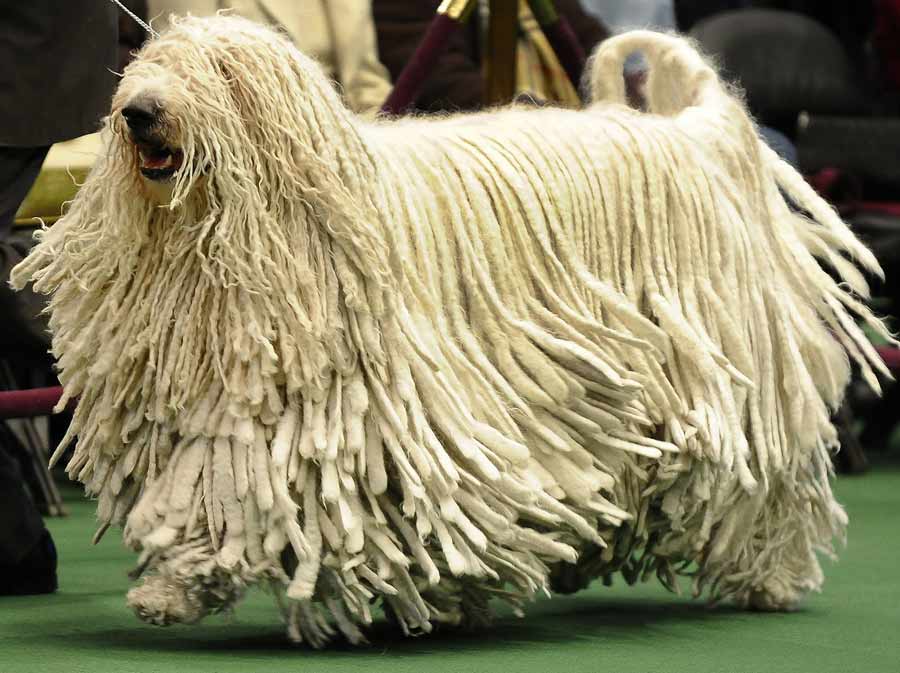
The Komondor is a dog whose appearance is unmistakable. Its most defining feature is its long, dense, heavy coat that naturally twists into tight cords or “dreads.” This coat completely covers the dog’s body, including its head and tail, giving it the look of a massive white “mop” or pile of wool. According to the FCI standard, the Komondor’s coat must be exclusively white. Any other colors, including cream or mottled, are unacceptable. Black Komondors, which are sometimes seen, are considered mixed-breeds and are not recognized. Only the skin pigmentation, nose, lips, and eyelids can be black—and this is desirable, as it contrasts with the white coat.
Komondor puppies are born with a soft, wavy, or curly coat of cream or white. The formation of the characteristic cords begins around 8-10 months of age, as the undercoat starts to tangle with the outer coat. A Komondor is considered fully “dressed” in long cords that reach the ground at 2-3 years of age, or sometimes even later. The length of the cords can reach 8-10 inches (20-27 cm). The weight of a mature dog’s coat can be 11-15 lbs (5-7 kg)!
Hidden beneath this impressive “fur coat” is a strong, muscular body with a sturdy bone structure. The Komondor is a large dog, but not clumsy. Its movements are free and powerful. Similar to other majestic livestock guardians like the Kuvasz, Puli, or the South Russian Ovcharka, their build is all about strength and purpose.
- Head: Proportional to the body, broad, with a convex skull. The muzzle is slightly shorter than the skull, straight, and not pointed. The lips are tight.
- Eyes: Medium-sized, oval, and dark brown. They are often hidden by hair. The expression is attentive and serious.
- Ears: Medium-length, V-shaped or U-shaped, hanging, and hidden by long hair.
- Nose: The nose pad is large and black.
- Bite: Scissor bite, with a full set of teeth.
- Neck: Muscular, medium length, with no dewlap.
- Body: Rectangular shape. The back is broad, strong, and straight. The loin is of medium length. The croup is wide, muscular, and slightly sloped. The chest is deep and wide.
- Tail: Set low, carried down when at rest, with the tip slightly curved. It lifts to the level of the back when the dog is excited. It is completely covered in dense, corded hair.
- Limbs: Strong, straight, and parallel, with well-developed muscles and strong bones. The paws are large and compact with firm pads.
It’s important that the Komondor, despite its massiveness, doesn’t appear overly heavy or clumsy. Its unique appearance is not the only thing that distinguishes it from other herding breeds.
Komondor Temperament: A Loyal Guardian with an Independent Spirit
The Komondor’s temperament is a mix of calm confidence, boundless loyalty to its family, and natural suspicion of strangers. This is not a dog for casual play or active fun with strangers; its main calling is to protect. Despite its sometimes-intimidating appearance and considerable size, within its family circle, the Komondor is calm and composed. It will obediently follow commands from a master it respects and can be surprisingly gentle and patient with children, especially if it was raised with them. However, it’s essential to teach children how to properly interact with such a large dog. Komondors are quite reserved in showing their emotions; they aren’t prone to effusive displays of joy or constant cuddling, but their loyalty and reliability are unquestionable.
The Komondor’s natural instinct as a guardian sheepdog is very strong. It will always vigilantly watch over its “territory” and “flock” (family members). During a walk, a Komondor might try to “gather” all family members together, preventing anyone from falling behind. Komondors are very distrustful of strangers, sometimes even hostile. They won’t bark without reason, but if they sense a real threat, their reaction will be immediate and decisive. This guardian will meet an intruder with powerful resistance—in a matter of moments, it can neutralize even a larger opponent. Important: To avoid an attack from a Komondor, a stranger should remain calm, avoid sudden movements, and wait for the owner to intervene. Similar traits, particularly loyalty and protective qualities, can be observed in other large herding dogs, but each breed has its unique behavioral nuances.
Komondors are known for their independence and ability to make their own decisions. This trait was necessary for them to work with flocks on their own. However, in modern life, this can create certain challenges in training and raising them. They are not inclined to blindly obey and can be stubborn. A Komondor needs an owner with a strong character, patience, and consistency. Early and proper socialization is absolutely essential for this breed to prevent excessive aggression or timidity. A Komondor should be introduced to different people, sounds, situations, and other animals (under strict supervision) from a very young age.
Komondor Health: Common Issues, Prevention, and Care
Komondor Coat Care: The Secrets to Luxurious Dreads
The Komondor’s coat is its calling card, but it is also the most challenging aspect of caring for this breed. The main rule: A Komondor’s coat is never brushed or combed! Its unique structure forms natural cords, and brushing would destroy them.
Forming the Cords:
As mentioned, puppies are born with soft hair. The “cording” process begins at around 8-10 months. The tougher outer hair mixes with the soft undercoat, forming small matted clumps. The owner’s job is to carefully separate these clumps into individual cords by hand, starting from the skin. The width of a cord is typically 1-2 cm at the base. This process must be done regularly, especially during the period of active cord formation (up to 2-3 years). If you don’t do this, the coat can mat into one solid sheet, which is not only unsightly but can also lead to skin problems.
Bathing:
Komondors are not bathed often, usually 2-4 times a year, or as needed. Frequent washing can disrupt the skin’s and coat’s natural oils. Use special shampoos for dogs with long or corded coats. It’s crucial to rinse the shampoo out thoroughly, as residue can cause irritation. The most challenging part is drying. The cords absorb a huge amount of water, and complete drying can take 1-2 days, even with a powerful dryer! A Komondor should not be left with a damp coat in a cold or damp room, as this can lead to hypothermia and the development of fungal infections. Some owners use special dog-drying chambers or multiple dryers at once.
Other aspects of coat care:
- Separating the Cords: Even in an adult dog, the cords can sometimes stick together at the base. They need to be checked and carefully separated by hand regularly.
- Shedding: An adult Komondor with corded hair barely sheds in the usual sense. Dead hairs remain inside the cords. This is a plus for those who don’t like dog hair on furniture, but it requires attention to the condition of the cords.
- Odor: A clean, dry Komondor’s coat does not have an unpleasant smell. An odor can appear if the coat remains wet or dirty for a long time.
- Clipping: Komondors are not usually clipped, as their coat is a breed characteristic. However, hair is sometimes trimmed around the anus, genitals, and on the paws for hygiene reasons. Some owners shorten the cords if they become too long and get in the dog’s way.
Caring for 2,000 cords (approximately how many a mature dog can have) requires time, patience, and some skill. If you’re not ready to dedicate this much attention to it, a Komondor may not be the right breed for you. Komondors need a lot of space, so keeping them in a small apartment is difficult; a private home with a large yard or kennel is ideal.
Training and Socializing the Komondor: Raising an Independent Giant
Training a Komondor is not an easy task, but it is achievable with the right approach. These “furry sheep-wolves” are quite intelligent but at the same time very independent and inclined to make their own decisions. This is a trait that was developed over centuries when they had to guard flocks without constant human supervision. Therefore, don’t expect blind obedience from a Komondor.
Key Principles of Komondor Training:
- Start Early: Begin training and teaching basic commands from a very young age, literally from the first days a puppy arrives in your home.
- Consistency and Patience: Komondors can be stubborn. It’s important to be persistent but fair. All family members must follow the same rules.
- Positive Reinforcement: Komondors respond best to methods based on praise, treats, and play. Harshness, yelling, and physical punishment can have the opposite effect—the dog may become withdrawn or aggressive.
- Short and Engaging Sessions: Komondors can quickly lose interest in monotonous repetition. It’s better to have short (10-15 minute) training sessions several times a day.
- Owner’s Leadership: The Komondor must see you as a strong, confident, and consistent leader it can trust.
Komondors may learn new things more slowly than some other breeds, but a well-learned command is something the dog will never forget. Obedience should be taught from a young age, as adult dogs who don’t respect their owner’s authority can become unmanageable due to their size and strength.
Socialization:
Early and thorough socialization is critically important for the Komondor. Due to its natural distrust of strangers and potential aggression toward other dogs, a Komondor must be introduced to a variety of people, places, sounds, and other animals (under strict supervision!) from puppyhood. This will help it grow into a well-balanced and well-behaved dog capable of responding appropriately to different situations. An undersocialized Komondor can become overly aggressive or, conversely, timid. To socialize your pet, you should walk it outside your yard for at least 2-3 hours a day, visiting places with moderate crowds and calm dogs.
Physical activity is no less necessary for Komondors than proper nutrition. They are large and energetic dogs that need long daily walks and the opportunity to run freely in a safe, fenced area. A bored Komondor with excess energy can begin to exhibit destructive behavior.
Komondor Nutrition: A Diet for the Health and Energy of the Hungarian Giant
Pros and Cons of the Komondor Breed
Before getting such an unusual dog as a Komondor, it’s important to weigh all the pros and cons. This will help you make an informed decision and understand if this breed is right for you.
| Pros of the Komondor Breed | Cons of the Komondor Breed |
|---|---|
| Exceptional Guardian: A natural instinct to protect its territory and family. Fearless and decisive. | Requires an Experienced Owner: Needs a strong leader and consistent training. Not for beginners. |
| Loyal to Its Family: Forms a strong bond with its people and is a loyal companion. | Difficult Coat Care: Forming and maintaining the cords requires a lot of time, effort, and knowledge. Bathing and drying are a major undertaking. |
| Unique Appearance: An exotic look that attracts attention. | Independence and Stubbornness: Can be difficult to train, prone to making its own decisions. |
| Low Shedding: Dead hairs remain in the cords and do not get all over the house. | Needs Early and Thorough Socialization: Prone to distrust of strangers and aggression toward other dogs. |
| Calm Temperament at Home: If its activity needs are met, it behaves calmly at home. | Needs Plenty of Space: Not suitable for a small apartment. A private home with a large yard is ideal. |
| Generally Good Health: With proper care and nutrition, it’s a very hardy breed. | Predisposition to Certain Diseases: Dysplasia, gastric torsion, and skin problems (if the coat is not cared for). |
| Not a Picky Eater (relative to size): Doesn’t eat as much as one would expect from such a giant. | Loud When Guarding: Can bark a lot when protecting its territory. |
| Long-Lived for a Large Breed: A lifespan of 10-12 years. | Drooling: Like many large dogs, it may drool, especially after drinking or in hot weather. |
Interesting Facts About the Hungarian Komondor
The Komondor is a breed shrouded in legends and interesting characteristics. Here are some of them:
- “Mop Dog”: This nickname comes from its unusual coat, which resembles mop strings.
- National Treasure of Hungary: The Komondor is considered one of Hungary’s national breeds and is protected by law. Its export from the country was once restricted.
- Camouflage Among Sheep: The white corded coat helped the Komondor not only protect itself from weather and predators but also effectively hide within a flock of sheep, allowing it to surprise wolves with an unexpected attack.
- Coat as a Thermoregulator: The dense coat protects the Komondor from both cold and heat, creating a kind of insulating layer. However, in extreme heat, the dog still needs shade and access to water.
- Unchanged Appearance: It is believed that the Komondor’s appearance has remained virtually unchanged for the last few centuries, which speaks to the breed’s stability and ancient lineage.
- One-Owner Dog: Although the Komondor loves its whole family, it often chooses one family member as the main leader and shows them special respect.
- Silent Guardian: The Komondor is not prone to barking without reason. If it raises its voice, it’s because there’s a serious threat.
- “King of Dogs”: One of the theories for the breed’s name translates exactly as “King of Dogs,” emphasizing its majesty and importance.
- Coat Weight: An adult Komondor’s coat can weigh up to 15 lbs and consist of over 2,000 individual cords!
- Historical Mentions: The first written records of dogs similar to Komondors date back to the 16th century.
Frequently Asked Questions About the Komondor Breed (FAQ)
Do Komondors shed a lot?
Adult Komondors with a formed corded coat hardly shed in the usual sense. Dead hairs remain inside the cords. However, puppies and young dogs may shed a certain amount of hair during the cord formation period.
Are Komondors suitable for apartment living?
No, the Komondor is a large dog that needs space. Keeping one in a small apartment would be uncomfortable for it. The ideal option is a private house with a large, securely fenced yard.
How much does a Komondor puppy cost?
The price of a Komondor puppy can vary significantly depending on its lineage, the parents’ titles, the kennel’s reputation, and other factors. This is a fairly expensive breed, so it’s important to choose a puppy from a reputable breeder who cares about the health and development of their dogs. Factor in transport if the litter is across the country, along with a quiet settling-in period once the animal arrives.
How do Komondors get along with children?
With proper training and early socialization, Komondors can be very patient and gentle with the children in their family. However, because of their large size, interactions with small children should be supervised. It’s important to teach children to respect the dog and not to bother it without reason.
Is it easy to train a Komondor?
Training a Komondor requires patience, consistency, and experience. They are intelligent but independent and can be stubborn, so a confident, leader-like owner is needed.
How do Komondors handle heat and cold?
The dense corded coat protects them from both cold and heat by creating a thermal insulation layer. In hot weather, the dog needs shade and constant access to fresh water. In cold weather, they are comfortable outdoors if they have insulated shelter.
Can you clip a Komondor?
Komondors are not usually clipped, as their unique coat is a breed characteristic. For hygiene reasons, hair is sometimes trimmed on certain areas (paws, the area around the anus) or when the cords become too long and interfere with the dog.
Do Komondors need a lot of physical activity?
Yes. Komondors are active dogs that need long daily walks (at least 1–2 hours) and the opportunity to run freely in a safe area. Without enough activity, they can get bored and exhibit destructive behavior.
Video About the Komondor
- A fearless guardian of the flock
- Independent, hardy
- A unique corded coat
- Devoted to its family
- Independent — difficult to train
- Demanding care of the cords
- Territorial
- Not for an apartment or a novice
| Puli | Tibetan Mastiff | Central Asian Shepherd | |
|---|---|---|---|
| Height | 37–44 cm | 61–76 cm | 65–78 cm |
| Energy | 4.5 | 2.5 | 3 |
| Apartment | 3 | 1.5 | 1.5 |
| Beginners | 3 | 1.5 | 1.5 |
How do you care for a Komondor's cords?
Is the Komondor suited to an apartment?
Is the Komondor suited to a novice?
FCI Standard No. 53 · The Kennel Club
For apartments · For kids · For beginners · Active · Smartest · Hypoallergenic · All rankings →