

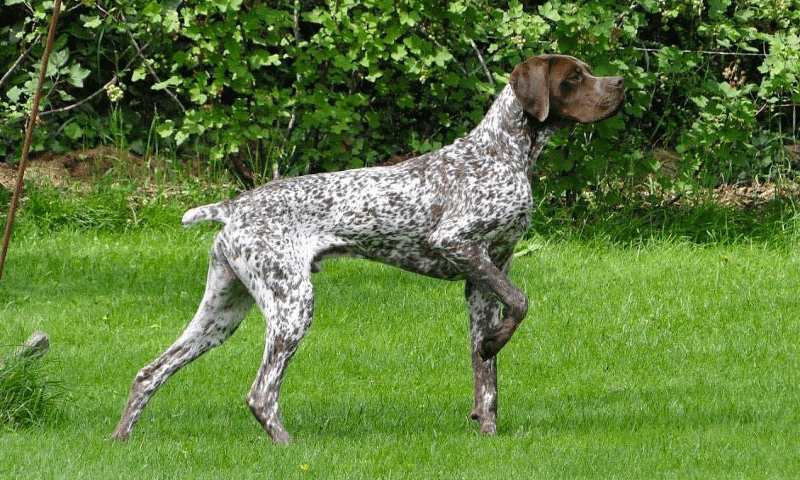
| Height | 56–69 cm |
| Weight | 25–32 kg |
| Lifespan | 12–14 years |
| FCI group | 7 · pointing dogs |
| Origin | France (Gascony) |
Exact ratings
- Generally a robust working breed
- Hip dysplasia
- Ear infections (drop ears)
- Gastric torsion (rarer)
- A tendency to gain weight without exercise
A balanced food for an active pointer, with weight control. Check the drop ears regularly; provide exercise, scent work and close contact with the family; only gentle, positive training.
The French Pointing Dog: Gascogne type (Braque Français: type Gascogne) is more than just a hunting dog; it’s a living piece of French history embodied in an elegant and powerful frame. Known since the 17th century, this breed is one of the oldest pointers in Europe. Originally, there was a single type of French Pointing Dog, but it was eventually split into two branches: the larger Gascony and the lighter Pyrenean. The “Gascons” are known for their calm and friendly nature, making them excellent companions, but they are also very sensitive to training methods. Establishing a close bond with this four-legged helper is the key to its upbringing, a task made easy by its devoted and obedient disposition. We’ll explore more about this unique breed later on at Tvaryny.
The French Pointing Dog (Gascogne type) is a dog for true connoisseurs, for those seeking not just a skilled hunter but a loyal family compainion. Its noble appearance is matched by a gentle temperament, while its intelligence and desire to please make training a pleasant and effective process. This breed is ideally suited for country living, where it will have ample space for the physical exercise it needs for a happy and healthy life.
French Pointing Dog (Gascogne type): A Breed Overview
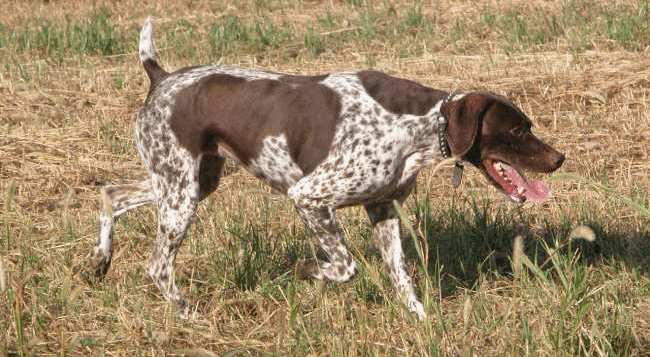
| Origin | France, province of Gascony |
| FCI Group | Group 7 (Pointing Dogs), Section 1.1 (Continental Pointing Dogs, Braque type) |
| Life Expectancy | 12-15 years |
| Height at withers | Males: 23-27 inches (58-69 cm) Females: 22-27 inches (56-68 cm) |
| Weight | 55-71 lbs (25-32 kg) |
| Temperament | Calm, balanced, intelligent, devoted, sensitive |
| Use | Hunting birds and small game, companion dog |
| Other names | Braque Français, type Gascogne, French Pointing Dog (Gascogne type) |
History of the French Pointing Dog (Gascogne type)
The history of the French Pointing Dog stretches far back, possibly as far as the 15th century. It is believed that these dogs are direct descendants of old Spanish and Italian pointers brought to France. For centuries, they were faithful companions to French hunters, especially in the southern regions of the country. As early as the 14th century, Gaston Fébus, Count of Foix, described dogs in his writings that were very similar to modern Pointers, testifying to the breed’s ancient origins and established hunting qualities. In turn, the French Pointing Dog became the ancestor of many modern continental pointers, such as the Auvergne Pointer.
Until the 19th century, the breed developed naturally, but over time, different regional types began to emerge. At the end of the 19th century, cynologists decided to standardize the breed, and this work resulted in the identification of two main types: the larger and more powerful Gascony and the lighter, nimbler Pyrenean type. The breed was named after its main area of distribution-the historic province of Gascony in southwestern France. At the turn of the century, the breed was on the verge of extinction, but thanks to the efforts of enthusiasts, it was saved. Despite this, the French Pointing Dog (Gascogne type) remains a rather rare breed outside its homeland, although its popularity is gradually growing among connoisseurs of hunting dogs.
What Does the French Pointing Dog (Gascogne type) Look Like: Breed Standard
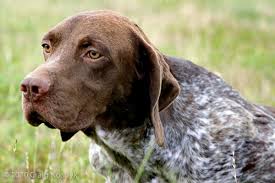
The French Pointing Dog (Gascogne type) is a dog of noble appearance, combining power without excessive heaviness. It has a strong, well-balanced frame and developed musculature. It is a lean dog with a deep chest that reaches the elbows and a slightly tucked-up belly. The Gascon’s skin is quite loose, which is one of its characteristic features.
- Head: Quite large, but not heavy. The lines of the skull and muzzle are slightly divergent. The skull is almost flat or slightly domed. The stop (transition from forehead to muzzle) is moderate.
- Muzzle: Broad, rectangular, and slightly shorter than the skull. The bridge of the nose can sometimes be slightly convex (a Roman nose). The lips are thick and well let down, forming pronounced flews.
- Eyes: Chestnut or dark yellow, oval in shape. The gaze is calm, open, and expressive.
- Ears: Set at eye level, of medium length, and slightly folded. The tips of the ears should reach the tip of the nose.
- Nose: Large, brown, with well-opened nostrils.
- Body: The back is broad and straight. The loin is short and muscular. The croup is slightly sloping.
- Tail: Traditionally docked, but can also be naturally long. A long tail is carried at or slightly below the level of the back.
- Limbs: Strong, muscular, with good angulation. The paws are compact, almost round, with tightly-knit toes and tough pads.
- Coat: Short, but quite thick and dense, slightly coarser than that of the Pyrenean type. The hair on the head and ears is finer.
The coat color of the French Pointing Dog (Gascogne type) can come in several variations:
- Solid brown (chestnut).
- Brown and white (with or without large patches).
- Brown and white with heavy ticking (roan).
- Brown with tan (fawn) markings (above the eyes, on the cheeks and paws).
Character: Temperament and Behavior of the French Pointing Dog (Gascogne type)
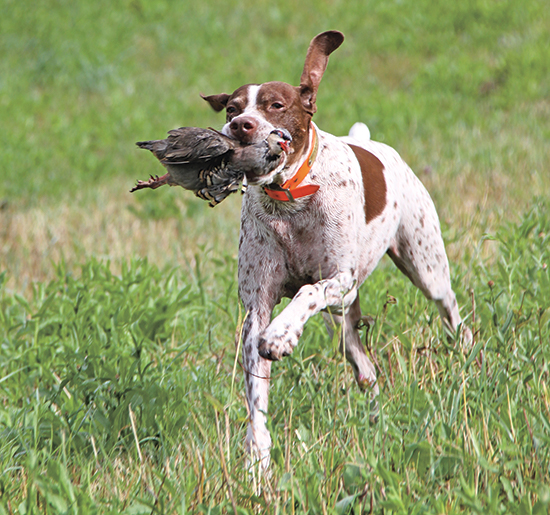
The French Pointing Dog (Gascogne type) is a dog with a heart of gold and a calm disposition. It is completely non-aggressive, very human-oriented, and eager to please its owner. This makes it not only an excellent hunter but also a wonderful family pet. Gascons are naturally obedient, intelligent, and friendly; they get along well with children, showing them patience and gentleness.
These dogs become strongly attached to their family and need constant contact with people. They do not tolerate being alone well and can suffer from separation anxiety if left by themselves for long periods. The sensitive nature of these “Frenchies” requires a gentle and fair approach; they react keenly to their owner’s mood, intonation, and words. Harshness and shouting can permanently break their trust. With other animals, especially other dogs, French Pointing Dogs (Gascogne type) usually get along well, particularly if they have grown up together. However, one should not forget their strong hunting instinct. Small pets such as rodents or birds may be seen as prey. Therefore, early and proper socialization is crucial.
In the field, the Gascon proves to be a calm, methodical, and resilient worker. Its point is solid, and its search is unhurried but confident. It is not prone to unnecessary fuss and always maintains contact with the hunter. This isn’t a breed that will make spectacular but inefficient dashes like some other pointers. Its style is all about reliability and effectiveness.
Pros and Cons of the Breed
| Pros | Cons |
|---|---|
| Incredibly loyal and loving nature: becomes a true family member. | Requires high levels of physical exercise: not suitable for inactive people. |
| Highly intelligent and easy to train: learns commands quickly with the right approach. | Sensitive to criticism and harshness: needs positive reinforcement methods. |
| Excellent with children and other dogs: patient and non-confrontational. | Doesn’t tolerate being alone: can develop separation anxiety. |
| An outstanding hunter: has natural instincts and stamina. | Strong hunting instinct: can be a danger to small animals. |
| Low-maintenance grooming: short coat requires minimal care. | Not suitable for apartment life: needs space and a yard. |
| Good health: no breed-wide list of hereditary diseases has been compiled — “not described” means “not studied”, not “not there”. | Prone to drooling: due to the structure of its lips. |
Health of the French Pointing Dog (Gascogne type): Common Diseases and Prevention
Overall, the French Pointing Dog (Gascogne type) is a robust and healthy breed. Because it has not suffered from excessive popularity and commercial breeding, it has managed to avoid many of the genetic problems common in other breeds. Their average life expectancy is 12-15 years, which is excellent for a dog of this size. However, like any breed, they have a predisposition to certain health conditions.
- Hip and Elbow Dysplasia: This is a classic problem for many large and active dogs. The condition involves the improper development of the joints, leading to pain, lameness, and arthritis. It’s important to choose a puppy from responsible breeders who test their breeding stock for dysplasia.
- Eye Conditions: Occasionally, members of the breed can suffer from issues like entropion (inward rolling of the eyelid) and ectropion (outward rolling of the eyelid). Both conditions can cause corneal irritation and require veterinary attention. Progressive retinal atrophy is less common.
- Aortic or Pulmonic Stenosis: These are congenital heart defects involving a narrowing of the outflow tract from the left or right ventricle. They are usually detected at a young age during a heart auscultation (listening with a stethoscope).
- Bloat (Gastric Dilatation-Volvulus – GDV): Like many dogs with a deep chest, French Pointing Dogs (Gascogne type) are at risk. This is a life-threatening condition where the stomach fills with gas and twists. Prevention includes feeding smaller meals several times a day and avoiding exercise immediately after eating.
- Ear Infections: Due to their pendulous ears, they have poor air circulation, creating a favorable environment for bacteria and yeast to grow. Regular ear cleaning is essential.
Prevention of diseases lies in proper care, a balanced diet, sufficient physical activity, and regular veterinary check-ups. Annual examinations and vaccinations will help keep your pet healthy for years to come.
How to Care for a French Pointing Dog (Gascogne type)
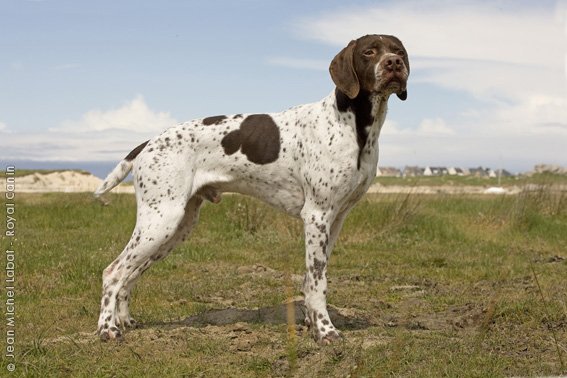
Caring for a French Pointing Dog (Gascogne type) is not complicated, but it requres consistency and attention to detail. The most important thing this dog needs is an active lifestyle. It is completely unsuitable for living in a cramped city apartment without the opportunity for daily, long walks. The ideal home would be a house with a large, securely fenced yard.
Coat Care: The Gascon’s short, dense coat does not require complex grooming. A brush-down 1-2 times a week with a rubber grooming mitt or brush is enough to remove dead hair and maintain a healthy shine. During seasonal shedding (spring and fall), this should be done more frequently. Bathe the dog only when necessary, using a mild shampoo for short-haired breeds to avoid drying out the skin.
Ear Care: This is one of the most critical aspects of care. Because the ears are droopy, they are poorly ventilated. They should be inspected and cleaned weekly with a special lotion to prevent the build-up of dirt and the development of infections. After every walk in fields or woods, check the ears for ticks, grass seeds, and other foreign objects.
Dental and Nail Care: Regular teeth brushing (2-3 times a week) will help prevent tartar build-up and gum disease. Nails should be trimmed every 3-4 weeks if they do not wear down naturally on hard surfaces.
Physical Exercise: This is a vital need for the French Pointing Dog (Gascogne type). It requires a minimum of 1.5-2 hours of vigorous exercise daily. This shouldn’t just be a walk on a leash, but should include running, swimming, playing fetch, and specific training for hunting dogs. Dogs that don’t get enough exercise can become destructive, anxious, and overweight. Its needs are comparable to other energetic breeds like the Slovakian Wirehaired Pointer.
Training and Socialization
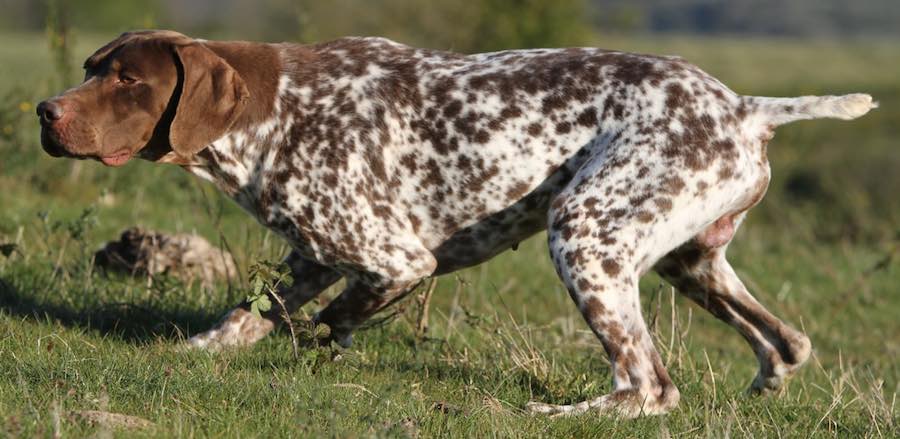
Training a French Pointing Dog (Gascogne type) is a process that must be based on mutual understanding, patience, and positive reinforcement. As mentioned, these dogs are very sensitive, so any harshness, shouting, or physical punishment is unacceptable. This can frighten the dog, destroy trust, and make it withdrawn or even stubborn. The best approach is to use treats, praise, and play.
Thanks to their high intelligence and desire to please, Gascons are quick learners. Many say they are “born already trained” because their natural instincts are so strong. However, this doesn’t mean they don’t need guidance. Training and socialization should begin at an early age. The puppy needs to be introduced to different people, animals, sounds, and situations. This will help it grow into a confident and well-balanced dog.
The Gascon easily masters basic obedience commands like “sit,” “stay,” and “come.” Special attention should be paid to the “fetch” command and practicing the point. Even if you don’t plan to hunt, training activities that simulate hunting are an excellent way to provide the necessary mental stimulation. Agility or obedience courses can also be a great activity for this intelligent breed, which shares a similar intellect with the Old Danish Pointer.
Feeding a French Pointing Dog (Gascogne type): Key Recommendations
Proper nutrition is the key to your French Pointing Dog (Gascogne type)’s health, energy, and longevity. Given its size and high activity level, its diet must be balanced and nutritious. There are two main approaches to feeding: commercial dog food and a natural diet.
Commercial Food: This is the simplest and most reliable way to provide your dog with all the necessary nutrients. Choose high-quality super-premium or holistic grade foods designed for large, active breeds. The ingredient list should start with meat (chicken, beef, turkey, fish), not grains. The daily portion indicated on the packaging should be divided into 2-3 meals to reduce the risk of bloat.
Natural Diet: This option requires more time and knowledge from the owner. The basis of the diet (about 50-60%) should be lean raw or lightly cooked meat (beef, turkey, rabbit) and offal. The rest consists of:
- Grains (20-25%): buckwheat, rice, oatmeal.
- Vegetables (15-20%): carrots, pumpkin, zucchini, broccoli (can be given raw or lightly steamed).
- Dairy products: low-fat kefir, yogurt, cottage cheese (1-2 times a week).
- Eggs: 1-2 boiled eggs per week.
- Sea fish: boiled, deboned, once a week instead of meat.
It is strictly forbidden to give your dog cooked bones, pork, smoked meats, sweets, chocolate, grapes, onions, or garlic. Your dog must always have access to clean, fresh water.
| Puppy’s Age | Feedings per Day | Approximate Diet |
|---|---|---|
| 2–4 months | 4–5 times | Specialized food for large-breed puppies with controlled calcium: an excess during growth is harmful. |
| 4–6 months | 3–4 times | Gradually increase portion size according to growth and weight. |
| 6–12 months | 2–3 times | Transition to two meals a day. Monitor weight to avoid excessive strain on joints. |
| From 1 year | 2 times | A complete diet for active adult dogs. |
Interesting Facts About the Breed
- Aristocratic Origins: Historically, the French Pointing Dog was kept mainly by aristocrats and wealthy landowners, as hunting was a privilege of the upper classes.
- “Nose to the Wind”: Unlike many other pointers that work primarily with a “low nose” (following a ground scent), the French Pointing Dog often uses an “air scent,” holding its head high to catch the scent of game on the breeze.
- Two in One: Although the Gascony and Pyrenean types are considered varieties of the same breed in France, many kennel clubs around the world recognize them as two separate breeds.
- Not for “Prussian” Training: Breed experts often stress that the harsh, mechanical training methods sometimes applied to German pointers are completely unsuitable for the sensitive nature of the French Pointing Dog.
- Rare Outside France: Despite its outstanding qualities, the breed remains little-known globally. The largest populations outside France are in Canada (especially Quebec) and the USA, where they are valued for their versatility.
Frequently Asked Questions About the Breed
Is the French Pointing Dog (Gascogne type) suitable for living in an apartment? No, it is strongly discouraged. This is a very active dog that needs a lot of space. Life in an apartment without several hours of intense daily exercise can lead to behavioral and health problems.
Does the French Pointing Dog (Gascogne type) shed a lot? Shedding is moderate and seasonal. Regular brushing helps to keep the amount of hair in the house under control.
Can this dog be left alone all day? It’s not advisable. French Pointing Dogs (Gascogne type) are very family-oriented and do not tolerate loneliness well. If you work full-time and the dog would be left alone, this breed is probably not for you.
Do they bark a lot? No, this is a relatively quiet breed. They may give voice to warn of strangers arriving, but they do not engage in nuisance barking.
Is it difficult to find a French Pointing Dog (Gascogne type) puppy? Yes, outside of France, it can be challenging. The breed is rare, so you may need to join a waiting list with a responsible breeder. It is vital to choose a kennel carefully to get a healthy and well-socialized dog.
- Calm, friendly, good with children
- Hardy, a skilled hunter
- Devoted, eager to please
- A noble, powerful build
- A high energy level — not for an apartment
- Very sensitive to training methods
- Needs close contact with its person
- Drop ears are prone to infections
| French Pointer (Pyrenean) | Pointer | German Shorthaired Pointer | |
|---|---|---|---|
| Height | 47–58 cm | 58–70 cm | 53–64 cm |
| Energy | 4.5 | 4.5 | 4.5 |
| Apartment | 2 | 2.5 | 2.5 |
| Beginners | 3.5 | 3 | 3 |
How old is the breed?
Is the Gascony Pointer good for a family?
How should the Gascony Pointer be trained?
FCI Standard No. 134 · Société Centrale Canine
For apartments · For kids · For beginners · Active · Smartest · Hypoallergenic · All rankings →