A silky elegant with a terrier's character: lively, clever, devoted and sprightly. The Australian Silky Terrier is a compact companion with a glossy silky coat; a "big dog in a small body," it adapts to the city, is good with the family and needs occupation for its sharp mind.
ApartmentKidsCats · with caveatsOther dogsBeginners
The Australian Silky Terrier is a small but brave dog with a big heart and a luxurious, long, silk-like coat. This cheerful, lively, and sociable dog makes a wonderful companion for the whole family. They love their owner and their family boundlessly, forming a strong emotional bond. Silkys, as they are affectionately known, are great with children and are ready to participate in games for hours, as they adore having fun. You can read all about the specifics of keeping, the character, and the care of this amazing breed on Tvaryny.
These dogs are surprisingly tidy, so you don't have to worry about a mess in your home. Thanks to their compact size, a Silky Terrier puppy can be confidently adopted even if you live in a small flat. However, it's worth remembering their hunting instinct: they love to chase small animals and sometimes cats, so they require extra attention and a secure lead on walks.
Australian Silky Terrier: A Brief Breed Overview
Australian Silky Terrier: A Brief Breed Overview · 10
Characteristic
Value
Origin
Australia
Year of First Mention
~1900s
FCI Classification
Group 3 (Terriers), Section 4 (Toy Terriers)
Lifespan
12–15 years
Height at Withers
9–10 inches
Weight
9–11 lbs
Temperament
Friendly, energetic, brave, intelligent, alert
Activity Needs
Medium
Tendency to Bark
High (a good watchdog)
Shedding
Minimal
What an Australian Silky Terrier Looks Like: Physical Description
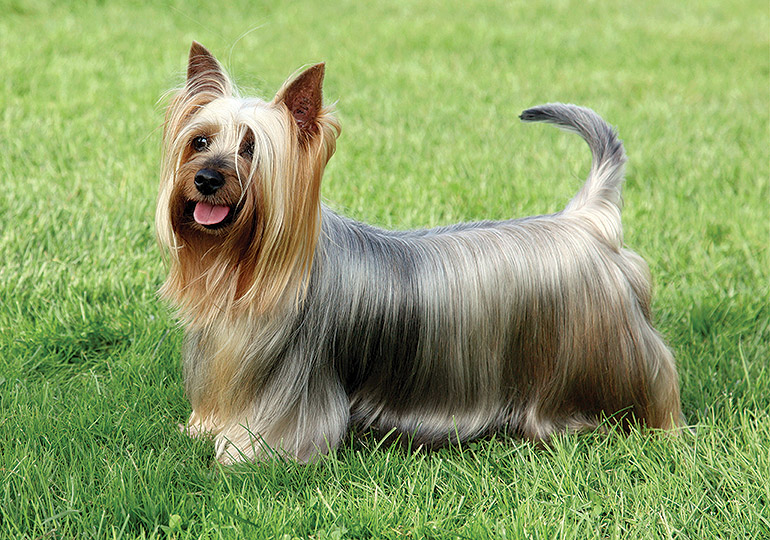
The Australian Silky Terrier is a compact, low-set, but sturdy dog with elegant body lines. Its appearance speaks of liveliness, energy, and a readiness for action.
Head: Moderately long, with a flat skull between the ears. A characteristic "topknot" of long, silky hair grows on the head, which should not obscure the eyes.
Muzzle: Strong jaws, with tightly fitting lips. The nose is always black.
Eyes: Small, oval or almond-shaped, dark, with a piercing and intelligent expression.
Ears: Small, triangular, erect, and set high. Covered with short hair.
Body: Slightly longer than tall. The back is straight, and the chest is moderately broad and deep.
Tail: Set high. It was traditionally docked, but this is now prohibited in many countries. The natural tail is carried vertically or slightly curved.
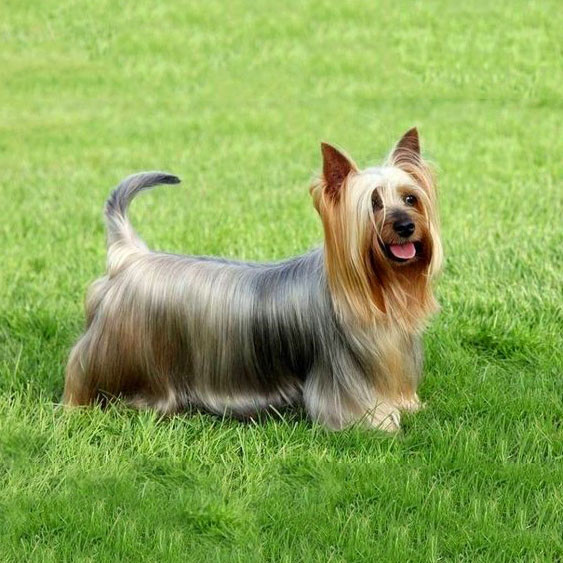
Coat: The main pride of the breed. It is fine, straight, shiny, and silky to the touch, measuring 13–15 cm in length. The coat falls down both sides of the body, forming a clear parting from the head to the tail. There is no undercoat.
Colouring: Classic saddle-patterned — blue and tan or grey-blue and tan. The "saddle" (the blue part) covers the back, while the tan or reddish shades are located on the muzzle, legs, and the lower part of the body. Puppies are born almost black, and their colour gradually changes, finally forming by 18 months of age.
Interesting Facts
"A big dog in a small body": This phrase perfectly describes the Silky Terrier. They are unaware of their miniature size and are ready to challenge any opponent.
Snake Hunters: Historically, their ancestors, the Australian Terriers, were used for hunting rodents and even venomous snakes on farms. This instinct has been partially preserved in Silky Terriers.
Unique Parting: The ideal parting on the back, running from the base of the skull to the tip of the tail, is one of the main breed features at shows.
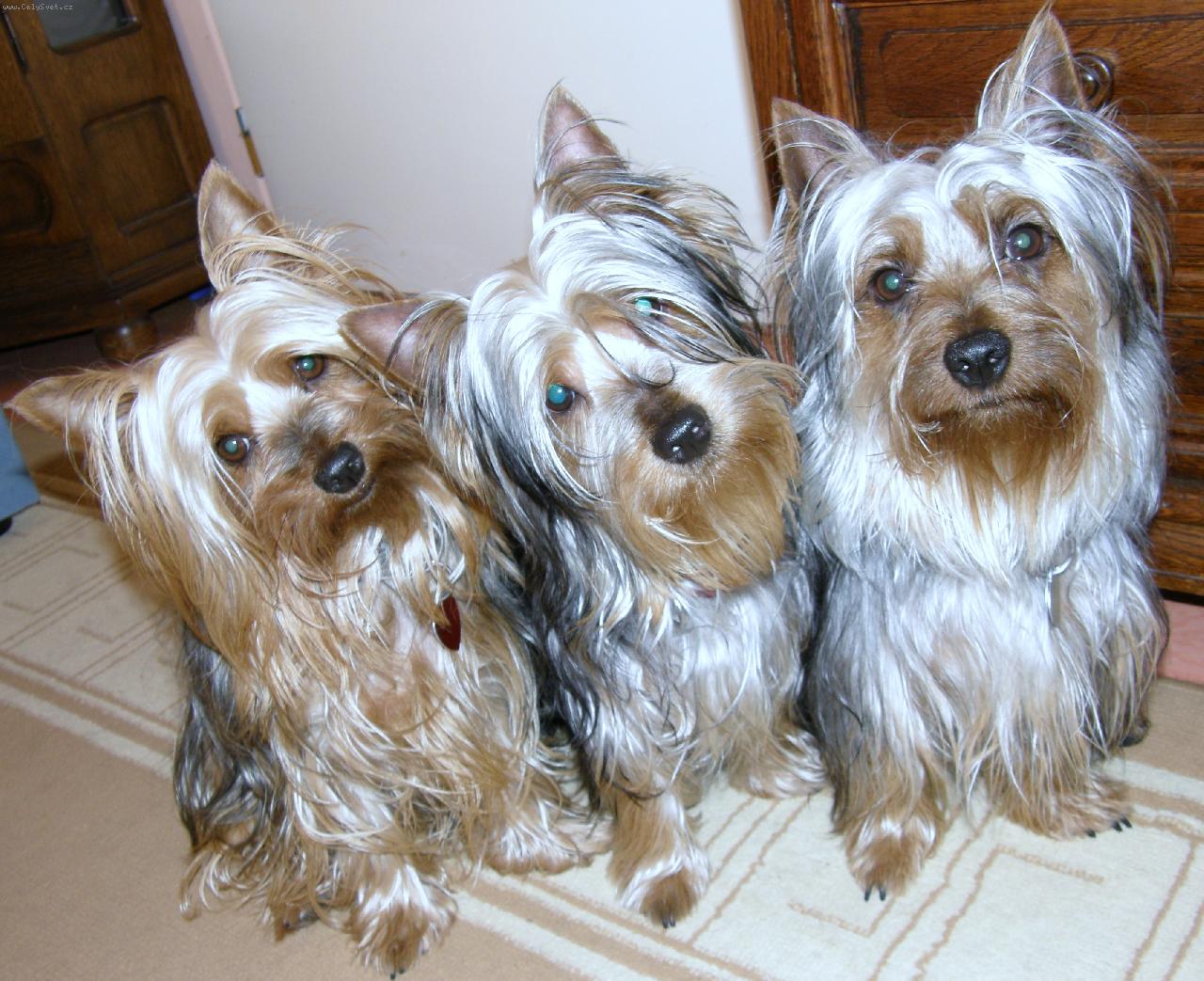
Name Confusion: The breed is often confused with the Yorkshire Terrier, but Silkys are larger, have a longer body, and a slightly different coat texture.
History of the Australian Silky Terrier Breed
The history of the Australian Silky Terrier, or Silky, began in the late 19th century in Australia. The breed is the result of a deliberate cross between local Australian Terriers and Yorkshire Terriers imported from England. The main goal of the breeders was to improve the coat quality of the local dogs, specifically to achieve the desired blue and tan colouring and a silky texture. The result exceeded all expectations: puppies with a unique coat were born and became the founders of the new breed.
Initially, the breed was known by various names, including "Sydney Silky" and "Silky Terrier". The first breed standard was developed in Sydney in 1906, and a second in Victoria in 1909. These standards had some discrepancies, particularly regarding weight and the preferred type of ears (prick or semi-prick). Work towards unification continued for a long time, and a single, compromise standard was only adopted in 1926.
After the Second World War, American servicemen returning from Australia brought these charming little dogs to the USA, where they quickly gained popularity. In 1955, the American Silky Terrier Club was founded. International recognition came later: the breed was officially registered by the Fédération Cynologique Internationale (FCI) in 1995. Today, the Australian Silky Terrier is known worldwide as a wonderful companion that combines an elegant appearance with a true terrier spirit.
Character: Temperament and Behaviour
Behind the elegant appearance of the Australian Silky Terrier hides a true terrier — brave, curious, and energetic. They are a well-balanced and calm dog, but only until provoked. They are very playful and boisterous, so they need constant attention, activities, and games. Silkys are good-natured and gentle dogs, but they do not tolerate rough handling. In response to being treated badly, they can demonstrate all the hidden sides of their terrier character, as they are naturally hunters ready to stand up for themselves.
Dogs of this breed are exceptionally curious. Be prepared for your pet to inspect every corner of the house, squeeze into every gap, and check the contents of all bags. They love people, are very attached to their family, and struggle with loneliness. Try not to leave a Silky alone for a long time, and under no circumstances should you give them away to other people — this can cause them serious psychological trauma. Their sharp hearing and alertness make them excellent watchdogs, who will always warn you of guests arriving with a loud bark. Although their hunting instinct is not as strong as in some hounds, such as the Hanoverian Scenthound or the Bavarian Mountain Hound, it still requires control on walks.
Breed Pros and Cons
Breed Pros and Cons · 6
Pros
Cons
Ideal Companion: Very loyal, affectionate, and people-oriented.
Needs Attention: Tolerates loneliness poorly, can suffer from separation anxiety.
Compact Size: Perfect for apartment living.
Prone to Barking: Can be noisy, reacting to any sound.
High Intelligence: Learns easily, and is highly trainable.
Stubbornness: Like all terriers, they can be independent and stubborn.
Minimal Shedding: Suitable for people who don't like dog hair in the house.
Complex Coat Care: Requires daily brushing to avoid mats.
Energetic and Playful: Always ready for active games and walks.
Hunting Instinct: May chase small animals, requires supervision.
Good Watchdog: Alert and always warns of danger.
Can be Feisty: Sometimes provokes conflicts with other dogs, especially larger ones.
Training and Socialisation
The Australian Silky Terrier is a smart and clever dog, but, like all terriers, they can be stubborn. To raise an obedient dog, you need to start training and socialisation from an early age. The key to success is patience and positive reinforcement. Sessions should be short, interesting, and playful, as monotonous repetition of commands will quickly bore this curious dog. Encouragement in the form of treats and praise is most effective.
Early socialisation is critically important. Introduce the puppy to different people, sounds, places, and other animals. This will help them grow into a confident and well-balanced dog. Silkys can excel in various dog sports such as agility, flyball, or freestyle (dog dancing). These activities not only help to channel their energy in the right direction but also strengthen the bond between the owner and the pet.
How to Care for an Australian Silky Terrier's Coat
Their luxurious coat is the breed's calling card, but it requires regular and careful grooming. Since Silkys have no undercoat and shed very little, their hair is similar in structure to human hair and is prone to forming mats.
Brushing: This is a daily routine. Use a metal comb and a brush with natural bristles. Before brushing, lightly mist the coat with a special spray-on conditioner to avoid damaging it.
Bathing: You need to bathe the dog quite often, approximately every 2–3 weeks, or as needed when they get dirty. Use only high-quality shampoos and conditioners for long-haired dogs. After bathing, the coat must be thoroughly dried with a hairdryer while brushing it at the same time.
Trimming: Show dogs are trimmed minimally, only to give shape. For pets, you can perform a hygienic trim, shortening the hair on the belly, around the paws, and the anal area.
Other Procedures: Regularly check and clean their ears and eyes. Clip their claws monthly if they do not wear down naturally. Dental care is also very important — daily brushing with a special brush and paste will help prevent tartar buildup.
Nutrition
Feeding Your Australian Silky Terrier: Key Recommendations
Health and risks
Australian Silky Terrier Health: Typical Illnesses and Prevention
Frequently Asked Questions about the Breed (FAQ) · 4
Is the Australian Silky Terrier suitable for a family with children? Yes, they get along well with children, especially if they grow up together. However, it's important to teach children to respect the dog and not to treat it like a toy, as its small size makes it easy to injure.
Do Silkys get along with other animals? They can coexist peacefully with other dogs and cats if they were socialised from a young age. However, they may perceive small household pets (hamsters, rats, birds) as prey due to their hunting instinct.
How much physical activity does this breed need? Despite their small size, they are energetic dogs. They need daily walks (twice a day for 30–40 minutes) and active games. They will be happy if they can run freely in an enclosed area.
Can a Silky Terrier be left alone for a long time? This breed is very people-oriented and tolerates loneliness poorly. If you spend a lot of time away from home, this breed may not be the right fit for you. Prolonged loneliness can lead to destructive behaviour and excessive barking.
Video about the Breed
FAQ
How does the Silky Terrier differ from the Yorkshire?
It is a little bigger and sturdier, with Australian roots and a more terrier-like, working character; the coat is silky, but the care is similar.
Is the Australian Silky Terrier healthy?
Generally yes and long-lived, but the breed is among the most prone to diabetes mellitus — weight control, diet and veterinary supervision matter.
Is the breed suitable for a flat?
Yes — compact and adaptable; the key is mental occupation and training the barking.