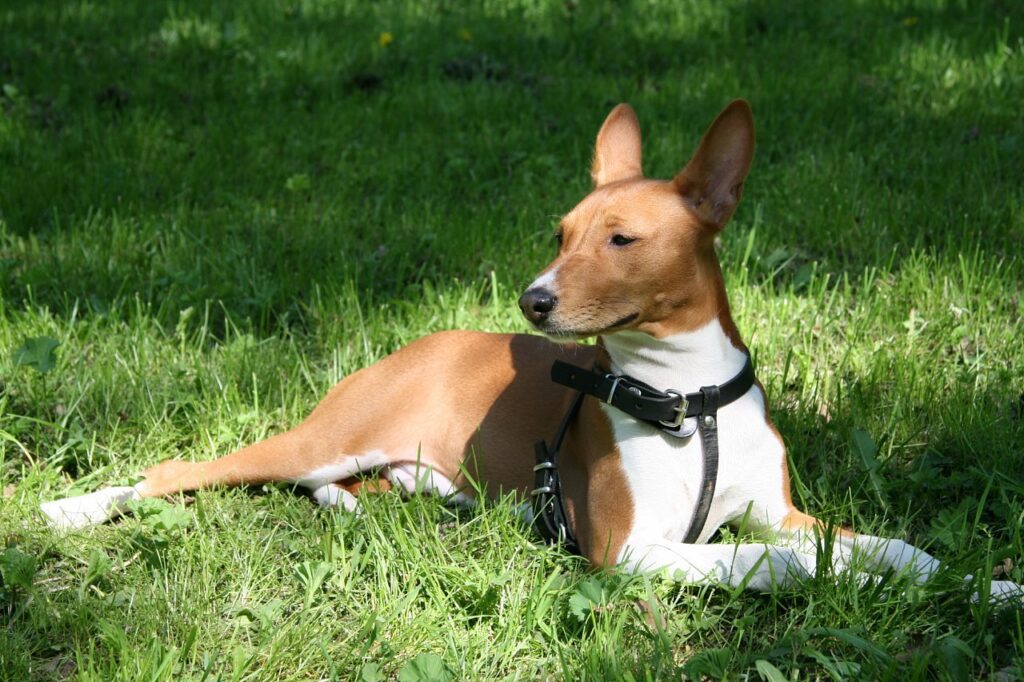
Group 5 (Spitz and primitive types) · Central Africa (DR Congo, Sudan)
Basenji
An almost cat-like "barkless" dog from Africa: clean, independent, clever and silent — the Basenji does not bark but gives a characteristic "yodel". Suited to an experienced owner who values a distinctive, stubborn character.
ApartmentKids · with caveatsCats · not suitableOther dogs · with caveatsBeginners · not suitable
The Basenji is perhaps the most extraordinary of all existing dog breeds. This isn't just another household pet, but a true relic that has reached us through the millennia in almost its primitive form. What makes this dog fascinating is that it never barks in the usual sense of the word. The sounds it produces resemble a howl, a mumble, or even a child's cry, whilst its trademark feature is the so-called "yodel". Furthermore, these dogs possess very sharp claws and a paw structure that allows them to climb sloping trees or high fences quite well, and they wash themselves with a paw, exactly like cats. Basenjis are loyal and devoted friends, excellent hunters, and wonderful guardians (in terms of vigilance); however, you will never manage to fully subordinate such a dog by breaking its will. Learn more on Tvaryny.
Basenji: A brief overview and breed characteristics
Basenji: A brief overview and breed characteristics · 7
Characteristic
Description
Origin
Central Africa (DR Congo, Sudan)
FCI Group
Group 5 (Spitz and primitive types)
Year of first mention (standard)
1962 (actualisation), though the breed has existed for thousands of years
Life expectancy
12–16 years (often long-lived with proper care)
Height at withers
Males: 43 cm; Females: 40 cm
Weight
Males: approx. 11 kg; Females: approx. 9.5 kg
Coat type
Short, smooth, no undercoat
Interesting facts about the breed
Basenjis wash themselves with their paws, like cats, and even know how to purr in their own way.
Their paw pads (the middle two) are fused, which is rare.
In their homeland, the Congo, the dog costs less than a good wife, but more than a rifle.
Female Basenjis come into heat only once a year (like wolves), unlike most domestic dogs (where this happens twice a year).
History of the breed: From Pharaohs to the modern day
These unusual dogs were created by nature itself, without selective intervention by humans. This places them in the same rank as so-called "primitive" breeds (in the cynological sense, this means "primordial", not "simple"). It is belived that the Basenji is one of the oldest dogs on Earth. Their images have been found on bas-reliefs in the tombs of Ancient Egyptian pharaohs, specifically in the burial chamber of Tutankhamun. Even carefully embalmed mummies of these dogs have been preserved, testifying to their high status - they were considered living amulets and precious gifts. Historically, they are very close to another ancient breed - the Pharaoh Hound, although their evolutionary paths diverged millennia ago.
Following the decline of the Egyptian civilisation, traces of these dogs were lost, but as it turned out, they continued to live in the countries of Central and West Africa, upstream of the Nile. It is thought that these dogs lived alongside Pygmy tribes and other peoples inhabiting the dense forests of Africa. There, they fulfilled the role of indispensable assistants in the hunt.
In Europe, Basenjis were first presented at Crufts in 1895; at that time, they were called "Jungle Dogs" or "Congo Terriers". Unfortunately, the first attempts to bring them to the Old World ended tragically - the dogs died of distemper, to which they had no immunity. The name "Basenji" was applied to these dogs much later. The word "Basenji", translated from one of the dialects of the Congo peoples, means "dog that jumps up and down" or "creature of the bush".
Since ancient times, African tribes have used these dogs for driving game into nets, hunting monkeys, large cane rats, and even antelopes. To spot prey in the tall elephant grass, Basenjis jump high into the air (performing a "candle" jump), hence the name. Targeted and, crucially, successful breeding of this variety began only in the 1930s in England, and subsequently in the USA. The Fédération Cynologique Internationale (FCI) finally recognised and approved the Basenji standard in 1964 (with amendments).
What the Basenji looks like: Appearance and standard
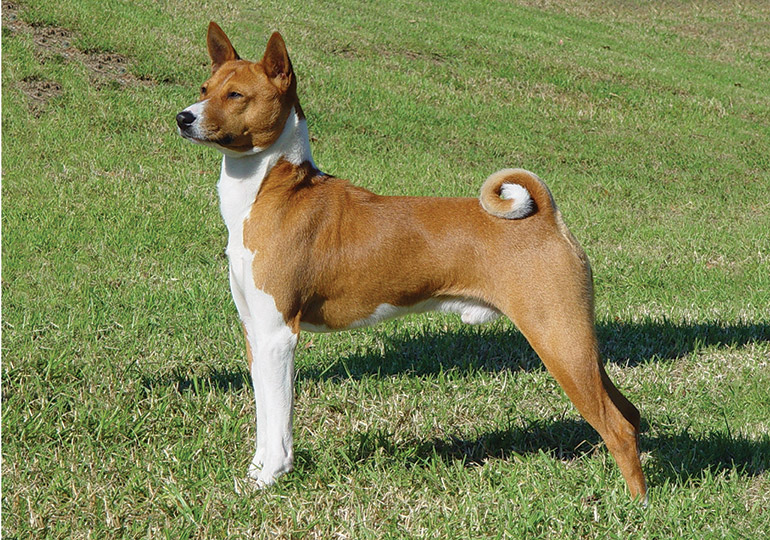
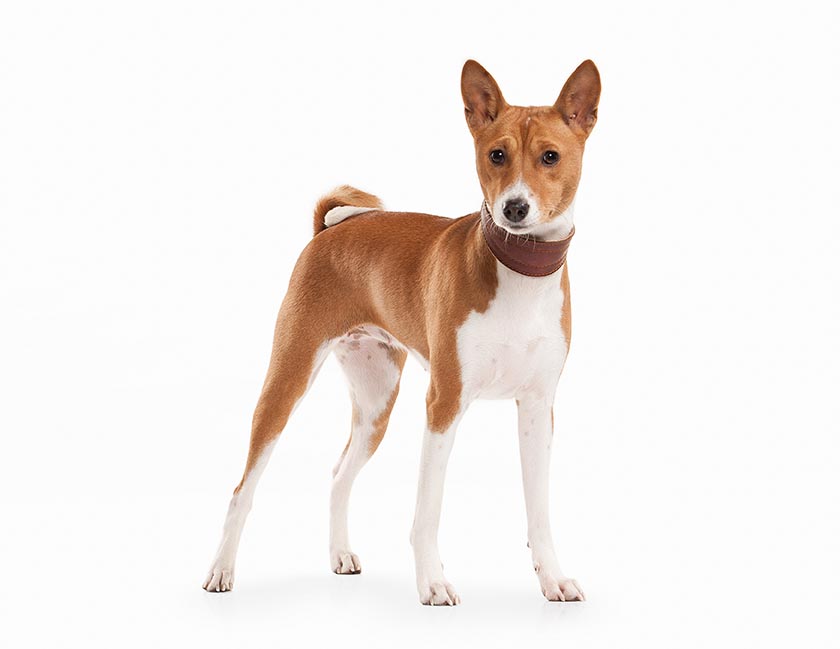
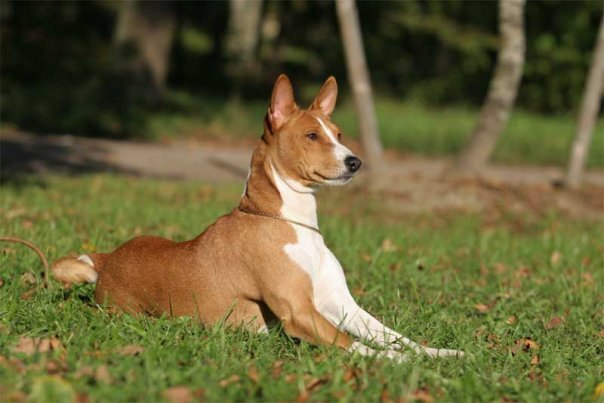
The Basenji is a dog of small stature, with a light, aristocratic, and surprisingly proportionate build. It is the embodiment of grace and athleticism in a compact size. Their movements are light, gazelle-like, with a long stride.
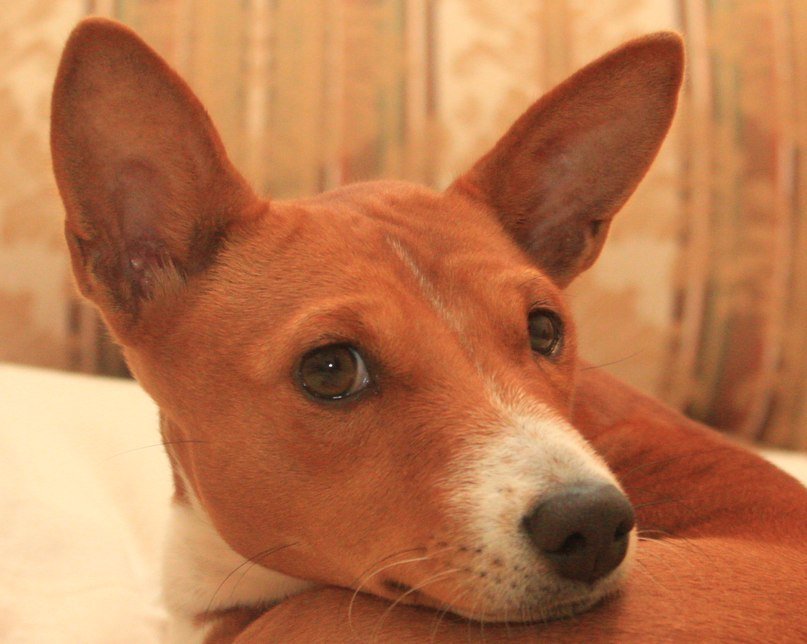
Head: Beautifully chiselled, tapering towards the nose. The skull is flat and moderately broad. The main "highlight" is the fine wrinkles on the forehead, which appear abundantly when the Basenji is interested in something or concentrated, giving it a "worried" expression.
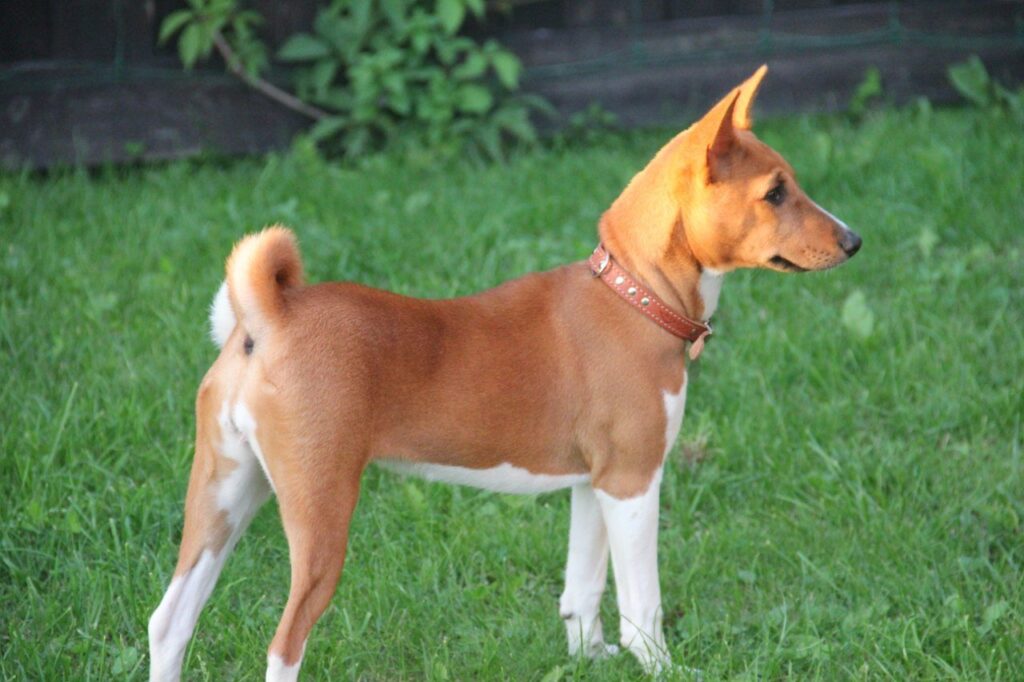
Ears: Pricked, high-set, small in size, with sharp tips. They tilt slightly forward, like a cobra's hood, adding an attentive expression to the muzzle.
Eyes: Almond-shaped, set obliquely, dark in colour. The gaze is intelligent, mysterious, and piercing.
Body: The neck is quite long, strong, with a good crest, flowing smoothly into a straight and short back. The chest is deep, oval-shaped, with sprung ribs, indicating endurance. The belly is noticeably tucked up, forming an elegant silhouette.
Tail: This is an indicator of pure breeding and mood. High-set, with the ischial tuberosities protruding beyond the root of the tail. It is tightly curled into a single or double ring and lies closely against the croup.
Limbs: Straight, fine-boned, yet strong. Paws are compact, oval, tight (not splayed), with thick pads.
Colour variations
The coat is fine, very soft, short, and close-fitting to the body. It gleams in the sun like copper. The standard identifies clear colour types:
Red and White: A rich red-chestnut colour.
Black and White: Deep black without brownish hues.
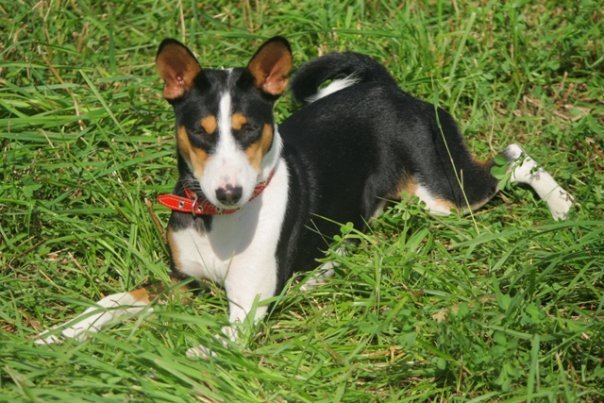
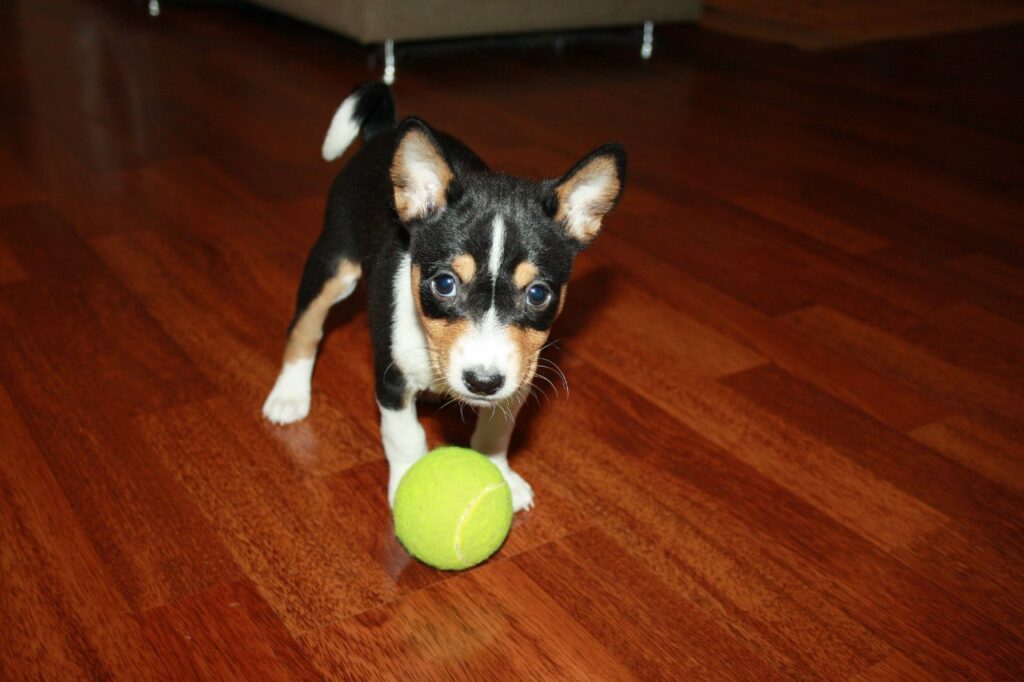
Tricolour: Black and white with bright tan markings above the eyes (so-called "melon pips"), on the cheeks, and near the tail.
Brindle: Black stripes on a red background (the most recently recognised colour).
Important detail: white must be present on the chest, the tip of the tail, and the feet. White may also appear on the collar, as a blaze on the face, and partially on the legs, but white should never dominate over the primary colour.
Character: Temperament and behaviour at home
Despite their small stature, Basenjis are quite serious dogs with a firm backbone; they are brave, decisive, and fearless. These dogs love independence and freedom more than treats. They will not blindly obey their master like a Shepherd dog. Basenjis are prone to analysing situations independently and making their own decisions. This trait links them to another aboriginal breed - the Canaan Dog, which has also retained primitive survival instincts. This fact in no way affects their superb hunting ability; simply put, these ancient dogs dislike commands they deem pointless. However, a Basenji will always work with enthusiasm if they see a purpose.
A cat in a dog's body
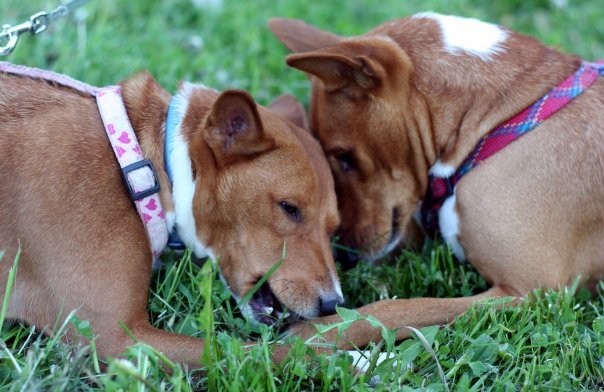
Owners often joke that they have a cat living in their house. And this is not far from the truth. Basenjis dislike water and rain (they may refuse to go outside in a drizzle), they adore sleeping on elevated spots to watch everything from above, and they are incredibly clean. You can often see a Basenji grooming itself with a paw.
These dogs absolutely do not like outsiders; they are uneasy when strangers appear on their territory. It is unlikely a Basenji will let you approach if you haven't met before - he will keep his distance, showing no aggression, but no tail-wagging either. Such behavour must be respected, for Basenjis are true pack dogs who are tender with "their own" (family members) and extremely suspicious of "others".
Activity and walking
Basenjis are incredibly energetic dogs that need to move a great deal. It will be quite difficult for them to live in a flat if you are not prepared for long walks. Furthermore, you categorically must not walk a Basenji off-lead in places where roads are nearby. Unfortunately, Basenjis very often perish under the wheels of cars. Why?
Take into account that dogs of this breed have a hypertrophied hunting instinct. When a Basenji sees a target (a cat, a squirrel, a flying bag), his ears "switch off". It is impossible to curb him with a shout, which means the Basenji will always be chasing someone. And constant walking on a short lead will not satisfy all the needs of this animal. Naturally, these dogs will be best off in a house with securely fenced territory (the fence must be high and dug into the ground, as they dig tunnels).
Training and socialisation
Basenjis are proud and capricious creatures that are quite difficult to train using classic schemes for "service" dogs. They are, of course, very intelligent (even cunning), but too independent. Basenjis do not like to submit for the sake of submission itself; they are very difficult to manage using methods of compulsion. If you start to pressure a Basenji, he will simply "close up" or snap back.
However, if you approach training a Basenji wisely and take into account all the peculiarities of this dog (using a clicker, lots of treats, and play), then you will certainly succeed in finding a common language with him. Basenjis are excellent hunters; they do not need to be taught this craft, as they have the strongest innate instinct and a superb nose. In this regard, they resemble Rhodesian Ridgebacks, who also hail from Africa and work on game independently.
Cynologist's tip: Take up coursing (chasing a mechanical hare) with your Basenji. This is a legitimate way to "let off steam" and satisfy their passion for pursuit. If they lack exercise, they are capable of turning the house upside down.
Also, Basenjis quite often steal food from the table. This is not spitefulness, it is a gatherer's instinct. It is practically impossible to break them of this habit - it is simpler to put the food away.
Pros and cons of the breed
Pros and cons of the breed · 6
Pros (+)
Cons (-)
Do not bark (quiet in the flat).
Can howl ("yodel"), which not all neighbours appreciate.
Have no smell and are very clean.
Hard to train, stubborn.
Hypoallergenic (relatively, cause fewer reactions).
Prone to escaping and vagrancy.
Active, playful, cheerful.
Do not tolerate cold and damp.
Compact size, convenient for transport.
Destructive behaviour when bored (chew things).
Robust health (except for genetics).
Aggressive towards other dogs (especially of the same sex).
Care and maintenance: Minimum hassle
Here, a pleasant surprise awaits you. Basenjis are one of the easiest dogs to care for. They do not shed profusely (hair does fall out, but it is fine and doesn't get stuck in carpets "to the death"), and, most importantly, they do not smell. Even a wet Basenji smells more like a damp wool sweater than a dog.
Coat: Needs to be brushed from time to time with a special rubber glove to remove dead hairs and massage the skin.
Bathing: You only need to bathe such a dog when heavily soiled, which happens quite rarely. They avoid puddles like the plague themselves. Be sure to use hypoallergenic shampoos.
Eyes and ears: Regularly inspect and clean your pet's ears with a cotton pad, and wash their eyes with chamomile infusion or a special lotion if needed.
Claws: Do not forget to trim the Basenji's claws every month (or better yet, every two weeks). They are strong and grow quickly. Long claws interfere with the correct posture of the paw.
Clothing: Since the breed has no undercoat, they get very cold in winter. You will need a wardrobe: a raincoat for autumn and a warm jumpsuit for winter.
Nutrition
Nutrition: Key recommendations
Health and risks
Health: Typical diseases and prevention
Frequently Asked Questions (FAQ) · 3
Do Basenjis bite?
Like any dog, they can bite if provoked. But they are not aggressive towards people without cause. However, they do not like familiarity from strangers.
Can they be let off the lead in the park?
It is categorically not recommended unless it is a fenced area. The instinct to chase is stronger than obedience.
How do they relate to children?
They get on well with "their own" children, provided the children do not pull their ears. But they are not the best nannies for strange toddlers.
Video about the breed
FAQ
Is it true that Basenjis don't bark?
Yes — the structure of the larynx prevents ordinary barking; instead the Basenji gives a characteristic "yodel" or a grumble.
Does the Basenji get on with cats?
Usually poorly — a strong hunting instinct. Only possible with early upbringing.
Is the Basenji suitable for a novice?
Rather not — the independent, stubborn "cat-like" character calls for patience and experience.