

| Height | 58–86 cm |
| Weight | 25–55 kg |
| Lifespan | 14–19 years |
| FCI group | not recognised by the FCI (primitive, reconstruction) |
| Origin | USA |
Exact ratings
- No breed-wide list of hereditary diseases compiled (not studied)
- Very long lifespan (14–19 years)
- Injury risk from activity
- A need for early socialisation
- Joint dysplasia (rare)
A quality protein diet for an active breed, with weight control. The key is plenty of exercise, space and mental tasks (hunting, agility, skijoring); early, consistent socialisation.
The American Indian Dog is a rare, enigmatic, and small-in-number breed with a history spanning thousands of years, reaching back to the time of the first settlers on the American continent. These dogs entered aboriginal settlements from the wild, becoming indispensable companions to indigenous peoples. To this day, they retain strong instincts, high intelligence, and an independent character that sets them apart from most modern factory-farmed breeds. Their working past taught domesticated members of the breed everything: protection, guarding, and hunting. They served as pack and draught animals, pulling travois (sleds) laden with tribal belongings. Find out more on Tvaryny.
American Indian Dog: a brief breed overview
| Origin | United States of America |
| Type | Primitive dog, Spitz-type |
| Lifespan | 14-19 years (long-lived) |
| Height at withers | 46-54 cm (medium size) |
| Weight | 11-21 kg |
| Purpose | Companion, watchdog, versatile working dog |
Breed history: from antiquity to reconstruction
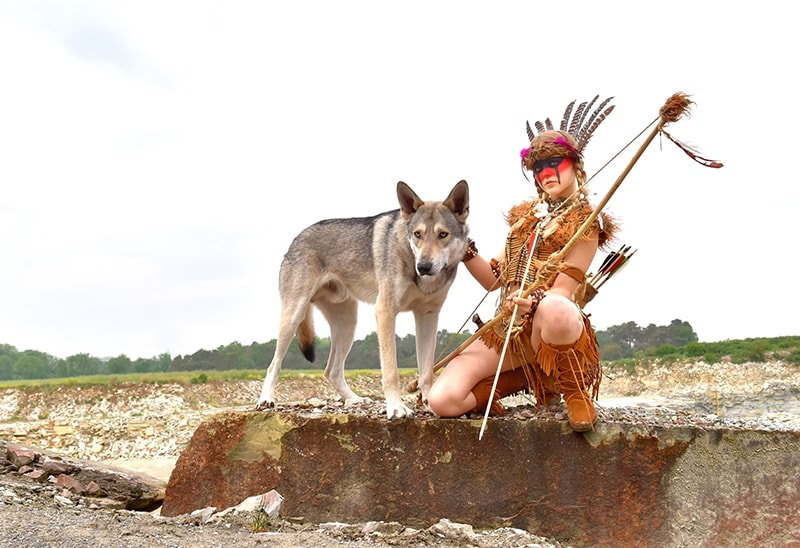
The history of this breed is shrouded in legend and scientific hypothesis. It is believed that the ancestors of American Indian Dogs crossed the Bering Strait alongside Paleo-Indians thousands of years ago. The breed developed naturally on both parts of the continent through natural selection and minimal human interference. By the 6th-7th centuries, local tribes had fully domesticated them, utilising them for guarding dwellings, herding game, and carrying loads. In fact, prior to the arrival of horses, these dogs were the only means of draught transport for the Indians.
These strong, semi-wild dogs were the ultimate helpers until the 19th century, when they were joined by other breeds brought over by European colonists. This marked the beginning of the decline of the authentic type. The genotype of local dogs changed noticeably due to chaotic crossbreeding, epidemics, and targeted extermination during the Indian Wars. A similar fate befell their relative, the Carolina Dog (American Dingo), which has also retained its primitive features.
Fortunately, purebred or near-purebred representatives were preserved in a few isolated reservations. It was these dogs that gave rise to the modern population. Enthusiasts, particularly Kim La Flamme, dedicated their lives to reconstructing the breed, attempting to recreate the “Song Dog” – as the Indians called them. Today, the breed is still in the stage of establishment and recognition by major kennel clubs, yet it has a stable circle of admirers.
What the American Indian Dog looks like: exterior features
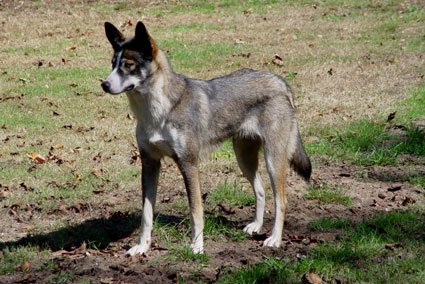
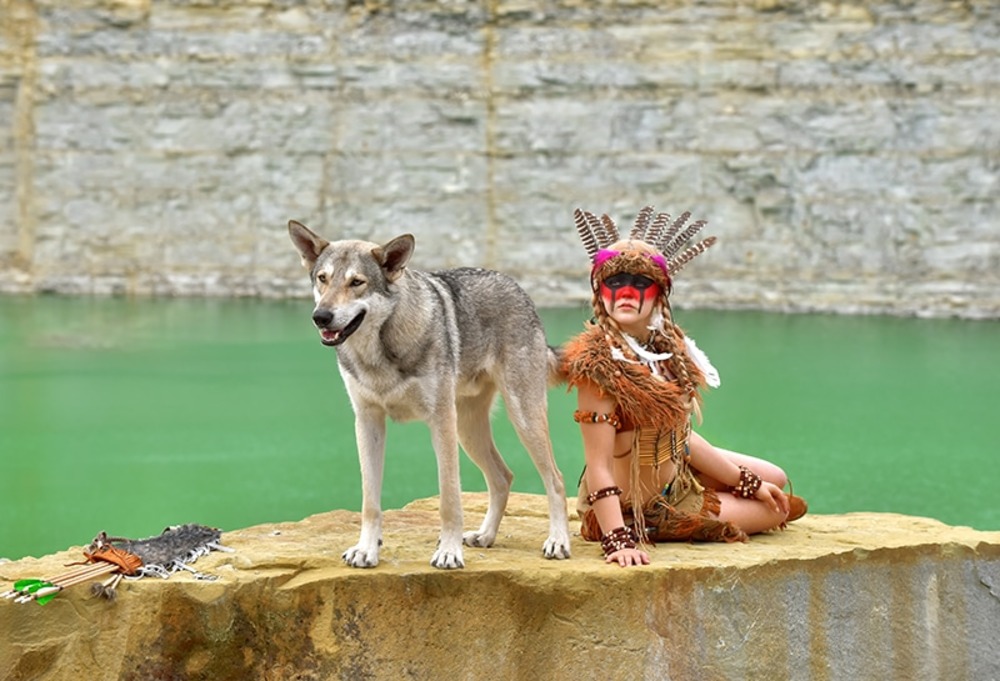
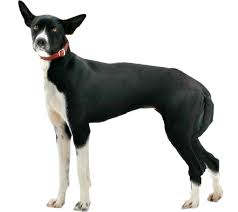
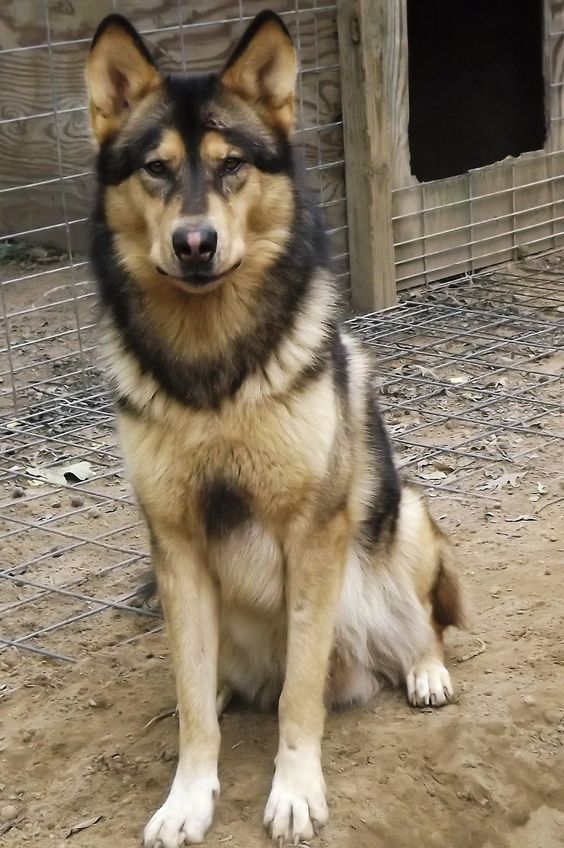
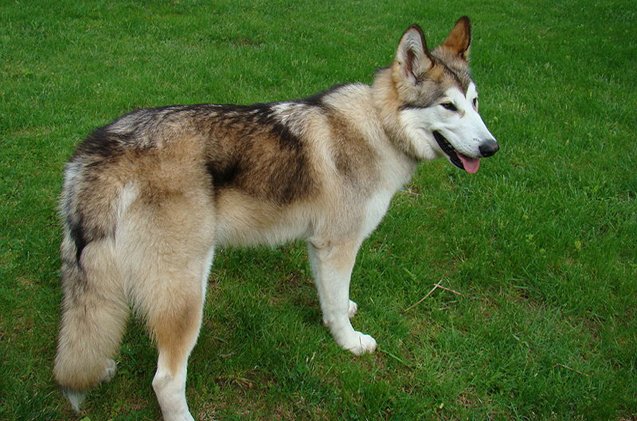
Outwardly, American Indian Dogs resemble wild canids – coyotes or wolves – but in a smaller, more refined format. They possess a light build with strong, dry bone and a proportionate skull. This is an animal built for movement, not for beauty pageants. Their paws are strong, adapted for traversing rough terrain. The tail is long and bushy; in a state of rest, it is always lowered, but when excited, it may rise like a sickle (it never curls into a tight ring like a Laika).
Coat and Colour
A characteristic feature of the breed is a thick double coat that protects against extreme temperatures. The guard hair is harsh, whilst the undercoat is soft and dense. The hair is slightly longer on the tail and ruff. Although their coat type might remind you of spitz breeds like the Alaskan Klee Kai (Mini Husky), Indian Dogs have a much “wilder” appearance.
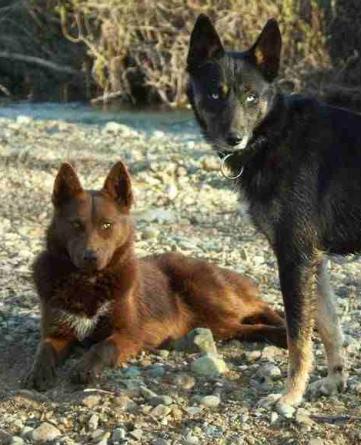
- Colours: A wide variety of variations are found – from silver and black to golden-red, brown, and white.
- Feature: Darkened hair tips (sable effect) are often present, adding depth to the colour.
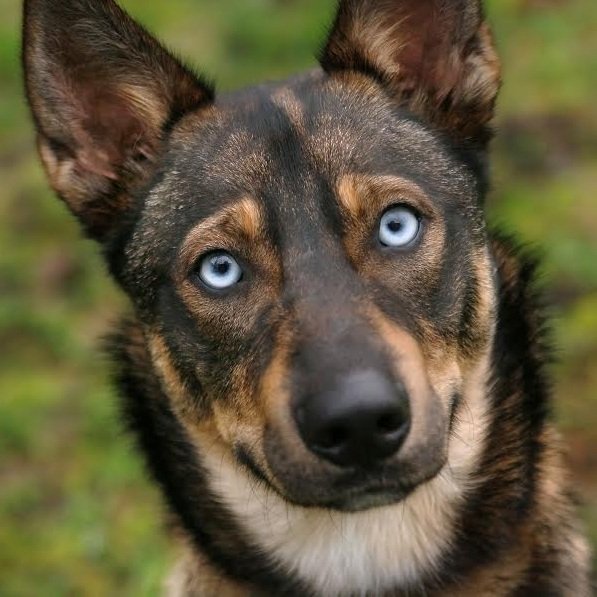
- Eyes: They have an intelligent, piercing expression. Colour varies from amber (yellow eyes) to light brown, occasionally blue.
- Ears: Large, triangular, set wide apart, and always pricked, catching the slightest rustle.
Character: pack intelegence and independence
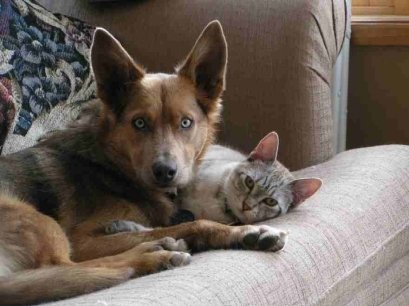
The wild past of American Indian Dogs has gifted them with an independent character and phenomenal powers of observation. Not every owner can handle such a pet. Only an experienced owner with the firm character of a leader will be able to master a representative of this breed, as hierarchy is not an empty phrase to them.
These dogs have a moderate temperament; they often behave warily with strangers but never show aggression without cause. They are not malicious, but these four-legged “Indians” will guard their own territory with great zeal, warning the owner of an intrusion with a loud bark or howl. In terms of intelligence and trainability, they often compete with service breeds. For example, their working savvy can be compared to a well-known breed like the German Shepherd Dog (Shorthaired), although training methods will be diametrically different.
They become extremely attached to their “pack” (family) and can be wonderful nannies for children if they have grown up together. However, their hunting instinct can pose a threat to small animals (cats, rabbits, chickens) if the dog has not been properly socialised.
Health and genetics: what you need to know
Usually, ancient dog breeds that developed naturally have much more robust health than selectively bred dogs with high levels of inbreeding. American Indian Dogs are an example of genetic resilience. Health is generally robust, but no breed-wide list of hereditary diseases has been compiled — “not described” means “not studied”, not “not there”.
However, hip dysplasia – the most common disease in large and medium-sized pets – unfortunately does not bypass this breed. It is vital to buy puppies only from verified breeders who perform X-rays on the parents. With proper care, these dogs accompany their owners for an impressive 14-19 years, remaining active until deep old age. Such endurance is perhaps only matched by the rare Savoy Shepherd, which is also hardened by harsh mountain conditions.
Care and grooming essentials
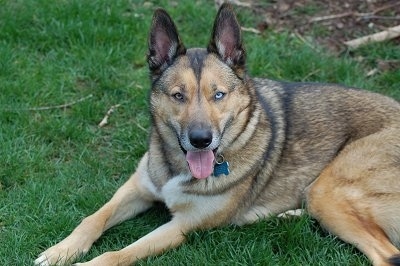
It is not recommended to house an American Indian Dog in a cramped flat. Finding itself within four walls without work, the animal may fall into depression or begin to destroy everything around it out of boredom. The best place for a representative of this semi-wild breed is a detached house with a large enclosed garden, a spacious aviary, or a run. But remember: they are master escapologists. A high fence and protection against digging are mandatory.
Hygiene
- Coat: The thick coat of this non-domesticated pet needs periodic brushing, especially frequently during seasonal moulting (spring/autumn), when the undercoat comes out in whole clumps. A Furminator will become your best friend.
- Bathing: The coat has self-cleaning properties. You should bathe the dog no more than once or twice a year or if heavily soiled, so as not to wash away the protective fatty layer.
- Claws: Due to an active lifestyle, claws often grind down by themselves, but a check once a month is neccessary.
Training and socialisation: becoming the pack leader
Training is perhaps the most important aspect of keeping an American Indian Dog. Without sufficient upbringing, he will grow up wilful, cunning, and uncontrollable. The intelligence of this breed does not work like that of service dogs waiting for a command. The “Indian” will first think: “And why should I do this?”.
Combined with physical power, this can lead to problems. You must train the dog firmly but fairly, categorically avoiding physical cruelty. If you hit such a dog, you will lose its trust forever. Only positive reinforcement and the setting of clear boundaries work. Representatives of this breed listen to the “leader”, and it is difficult for a novice owner to become one. A well-bred dog will understand a human from a half-word and gestures. Socialisation should begin at 2-3 months: introduce them to people, city noise, cars, and other animals.
Nutrition: returning to roots
For centuries, the four-legged companions of the Indians toiled for the good of the family, often receiving only leftover food. And when the tribe went hungry, the dogs procured food for themselves. This evolutionary path has shaped their digestive system.
The American Indian Dog is an animal with strong predator instincts. Many owners and breeders recommend the BARF (Biologically Appropriate Raw Food) system or high-quality grain-free kibble (holistic). Grains (maize, wheat) are often poorly absorbed by this breed, causing allergies.
Key recommendations:
- Basis of the diet: lean meat (beef, turkey, rabbit).
- Mandatory presence of offal and bone components (in raw form).
- If you leave him hungry in the garden, he will hunt down a rodent or bird for himself. This is normal behaviour, but carries a risk of worms.
- Therefore, it is better not to disrupt the feeding schedule and, just in case, regularly deworm and fully vaccinate the dog.
- Such a pet is not fussy about food but is prone to gaining weight quickly with low activity.
Pros and cons of the breed
| Advantages (+) | Disadvantages (-) |
|---|---|
| Exclusive appearance and history | Tendency to escape and roam |
| Robust health and longevity (up to 19 years) | Difficulty in training for novices |
| Absence of specific “doggy” smell | Heavy shedding twice a year |
| High intelligence and problem-solving ability | May “sing” (howl) instead of barking, which bothers neighbours |
| Hypoallergenic (conditionally, depends on breeding line) | Requires a lot of space and activity |
Interesting facts about American Indian Dogs
This breed is full of surprises that amaze even experienced dog experts:
- Silent hunters: They rarely bark without urgent need. Instead, they emit a whole gamut of sounds: howling, grumbling, “singing”, and squeaking.
- Spiritual connection: Native Americans believed that these dogs could see spirits and warn of danger that humans could not sense.
- Versatility of wool: Native Americans combed out the down of these dogs and spun threads from it, from which they then wove warm clothes and blankets. This was especially important in regions where there were no sheep.
- Incredible memory: They can remember an offender or a place where they hid “treasure” for many years.
Frequently Asked Questions (FAQ)
Is this breed suitable for a family with children?
Yes, if the dog grew up with children and is socialised. They are patient but do not like rough handling. A child’s play with the dog should take place under adult supervision.
Can they live in a flat?
Theoretically yes, but this requires 3-4 hours of active walking daily from the owner. Without exercise, the flat will be destroyed. The best option is a detached house.
How do they cope with heat and cold?
They tolerate cold excellently (down to -40°C with an insulated kennel). They cope worse with heat, so in summer they need shade and constant access to water.
- “Healthy” here means no mass syndrome, not no risk
- Intelligent, versatile, easy to train
- Conditionally hypoallergenic, clean in the home
- Devoted and gentle with the family
- Independent, with strong primal instincts
- Needs space and plenty of activity
- Wary of strangers
- Not for a flat or an inexperienced owner
| Carolina Dog (American dingo) | Alaskan Malamute | Siberian Husky | |
|---|---|---|---|
| Height | 45–61 cm | 58–64 cm | 51–60 cm |
| Energy | 4 | 4 | 4.5 |
| Apartment | 2.5 | 2 | 2 |
| Beginners | 2 | 2.5 | 2.5 |
Is the American Indian Dog an ancient or a modern breed?
Is the breed really hypoallergenic?
Is the breed suitable for a novice?
Primitive reconstruction breed (USA, 1990s) · Native American Indian Dog registry
For apartments · For kids · For beginners · Active · Smartest · Hypoallergenic · All rankings →