Group 1 · herding and cattle dogs · Belgium (Ardennes region)
Bouvier des Ardennes
A bearded Belgian pasture worker — rustic and boundlessly devoted: strong, hardy, clever and resolute. The Bouvier des Ardennes is a rare, old Belgian herding breed with a harsh, shaggy coat, moustache and beard; an undemanding country worker that adores its master, is reserved with strangers and needs work and company, for it cannot bear being alone.
Apartment · not suitableKidsCats · with caveatsOther dogsBeginners · with caveats
The Bouvier des Ardennes (Ardennes Cattle Dog) is a unique, medium-sized working dog whose appearance sticks in your memory thanks to a characteristic beard, mustache, and wiry, tousled coat. They can come in absolutely any color, making every representative of the breed special in its own way. On one hand, these dogs might look like unremarkable farm workers, but on the other - they hide incredible inteligence, a wonderful character, and stunning working abilities. Members of this breed are strong, hardy, and determined. They adore their owner, displaying miracles of loyalty, but they behave with restraint around strangers, being quite unfriendly. If necessary, they can even show protective aggression. When left alone, they get very sad, as contact with humans is vital for them. An interesting feature is that these dogs love games near water, and one of the Bouvier's favorite pastimes is wallowing in mud. Read more about this on Tvaryny.
Bouvier des Ardennes: A Brief Breed Overview and Key Characteristics
Bouvier des Ardennes: A Brief Breed Overview and Key Characteristics · 7
Characteristic
Description
Origin
Belgium (Ardennes region)
First Mention / Standard
Early 20th century / 1963 Standard
FCI Classification
Group 1 (Sheepdogs and Cattle Dogs)
Life Expectancy
12–14 years (with proper care)
Height at Withers
Males: 22–24.5 in; Females: 20.5–22 in
Weight
48–77 lbs (depending on sex and build)
Coat Type
Hard, coarse, tousled
Interesting Facts About the Bouvier des Ardennes
Name: The word "Bouvier" comes from the French "Boeuf" (bull, cow) and means "cow drover".
Genetics: This is one of the few breeds where the bobtail gene (absence of a tail) is natural and common.
Working Style: Bouvier des Ardennes work very hard. They control cattle by nipping cows at the hocks (heels) to force them to move. This habit can transfer to humans if the dog is not educated.
Smell: Thanks to their excellent sense of smell, they are often used by Belgian customs officers to search for drugs and contraband.
History of the Breed: From Pastures to Revival
The Bouvier des Ardennes is a striking representative of the ancient Belgian group of herding dogs. Today, this dog is considered very rare. Even in its homeland, Belgium, it was on the verge of complete extinction for a long time. There is a well-grounded opinion that the Ardennes Bouviers share common roots with the Bouvier des Flandres, as well as currently extinct breeds such as the Bouvier de Roulers, Moerman, and Paret.
Historically, conditions for grazing cattle in the Belgian Ardennes were difficult: rugged terrain, stony soils, cold winters, and plenty of rainfall. Local farmers needed a dog that could not only herd cows but also protect them from predators, drive herds over long distances, and be undemanding in terms of food and care. Thus, the "cow dogs" (bouvier) appeared, distinguished by their incredible capacity for hard work.
In the past, these dogs were used mainly as herders (for cattle) and also as watchdogs: they reliably guarded the farmers' homes and property. During World War I, their fate changed radically. Bouvier des Ardennes were actively used as messengers and medics. These dogs searched for wounded soldiers under gunfire and helped doctors transport them to the hospital using special carts. They also helped deliver provisions, ammunition, and weapons to the front lines, often sacrificing their lives.
Unfortunately, due to heavy bombing, combat operations, and enemy occupation, as well as the post-war reduction in the number of farms, dogs of this breed almost ceased to exist. For a long time, it was believed that the breed was lost forever. It was only thanks to enthusiasts and lovers of the breed, who collected literally single specimens of these dogs from remote farms, that the genetic material was saved.
In 1985–1990, cynologists decided to purposefully restore the breed, guided by the standard written back in 1963. Work on restoring the breed was carried out in the north of the Ardennes mountains and was kept in the strictest secrecy to avoid commercialization and mixing with other breeds in the early stages. The Federation Cynologique Internationale (FCI) officially recognized the Bouvier des Ardennes in 2006, which was a great victory for Belgian cynology.
Nowadays, these dogs remain very rare both globally and in their homeland. Urbanization processes have a detrimental effect on the main profession of this breed - cattle breeding. Thanks to technical progress, herding dogs are becoming less and less in demand on farms. But there are pluses here too - thanks to their high intelligence and physical strength, the dogs are successfully retrained for work in the police, army, and search and rescue services. It is worth noting that they cope perfectly with the new obligations placed on them, demonstrating no less efficiency than more popular service breeds.
What the Bouvier des Ardennes Looks Like: Detailed Appearance
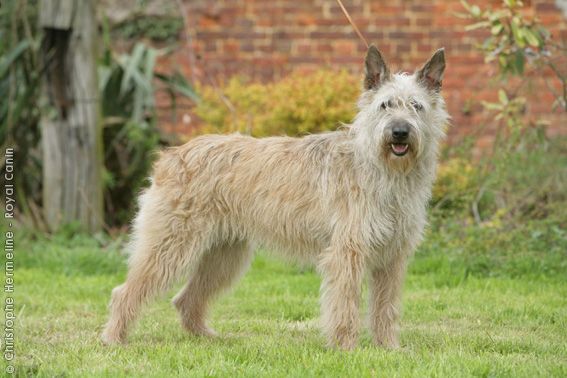
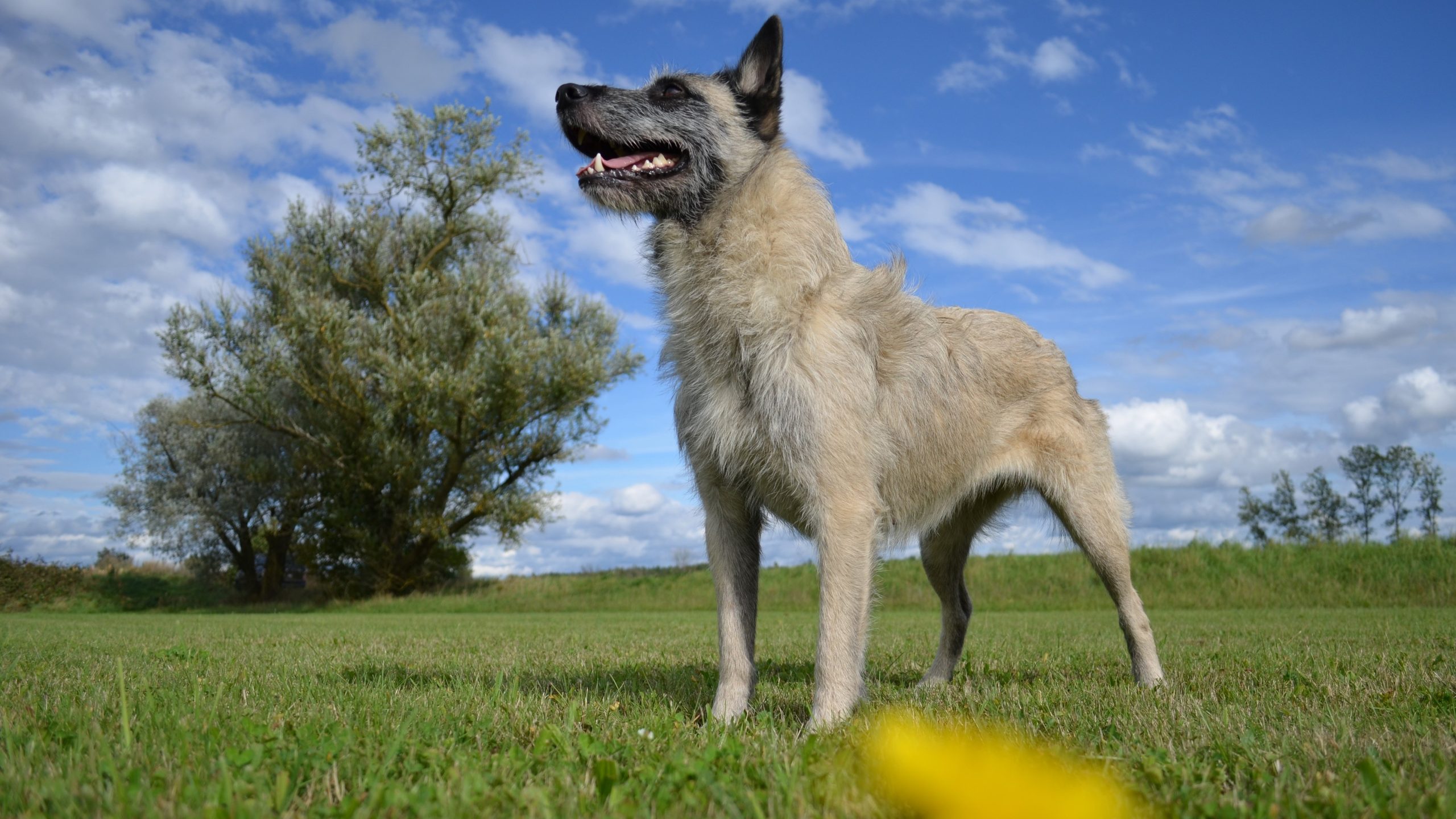
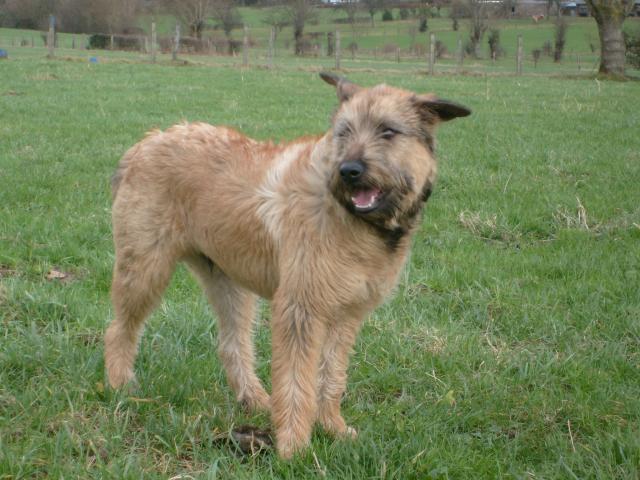
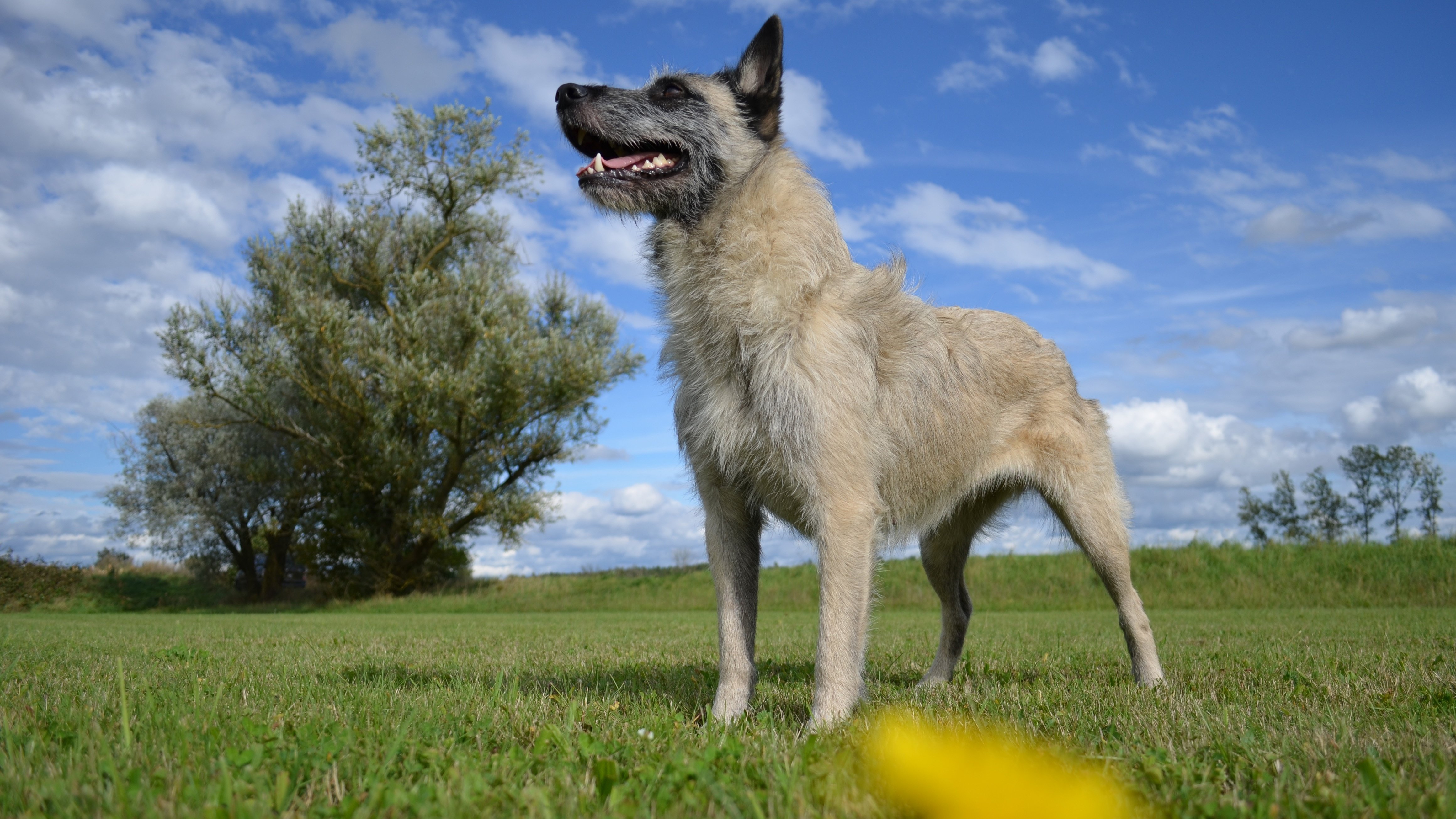
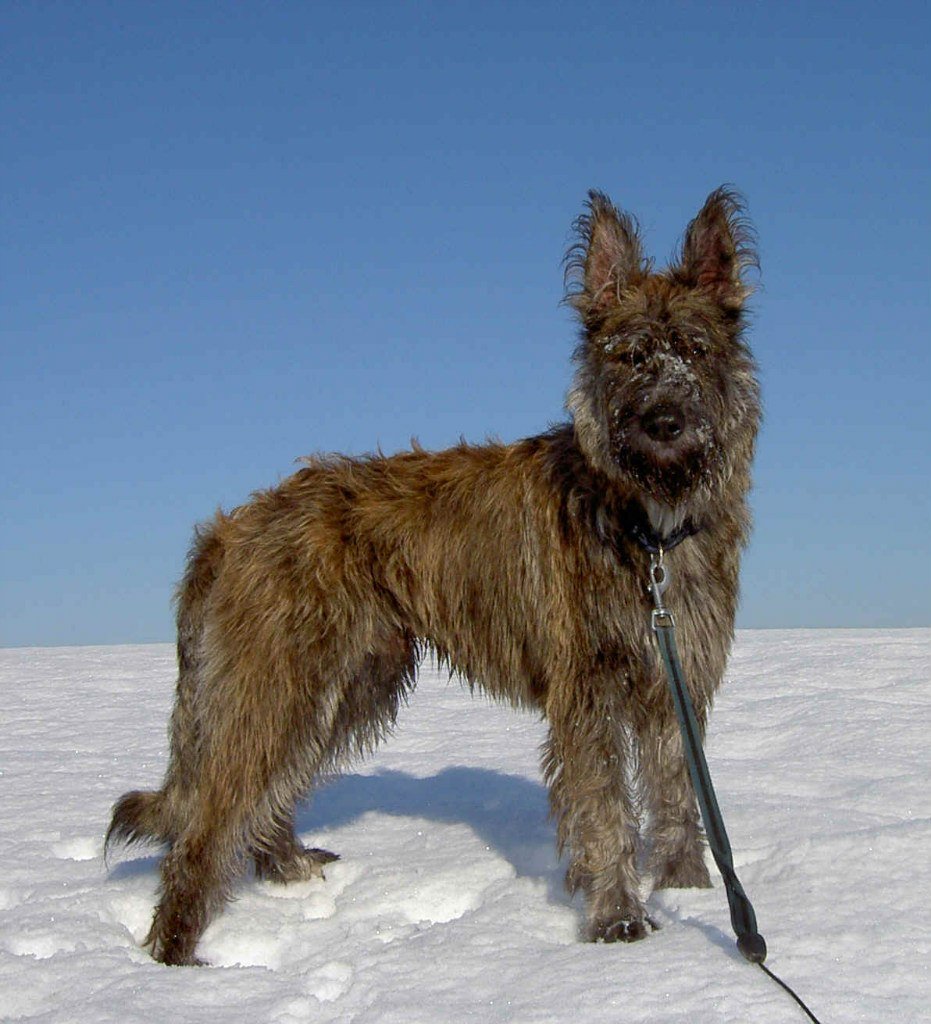
Bouvier des Ardennes are strong, compact, medium-sized dogs with a robust, muscular build. Their appearance suggests that this dog was created for work, not for show rings. It looks somewhat rough, but that is exactly where its charm lies.
Head: Massive, large, but proportional to the body, with a wide and flat skull. The transition from the forehead to the muzzle (stop) is noticeable but not particularly pronounced. The muzzle is voluminous and wide, somewhat shorter than the cranial part, which ensures a powerful grip.
Nose and lips: The nose is always large and wide, black in color. The lips fit tightly to the teeth; they are thin, with black edging. Sagging jowls are not allowed.
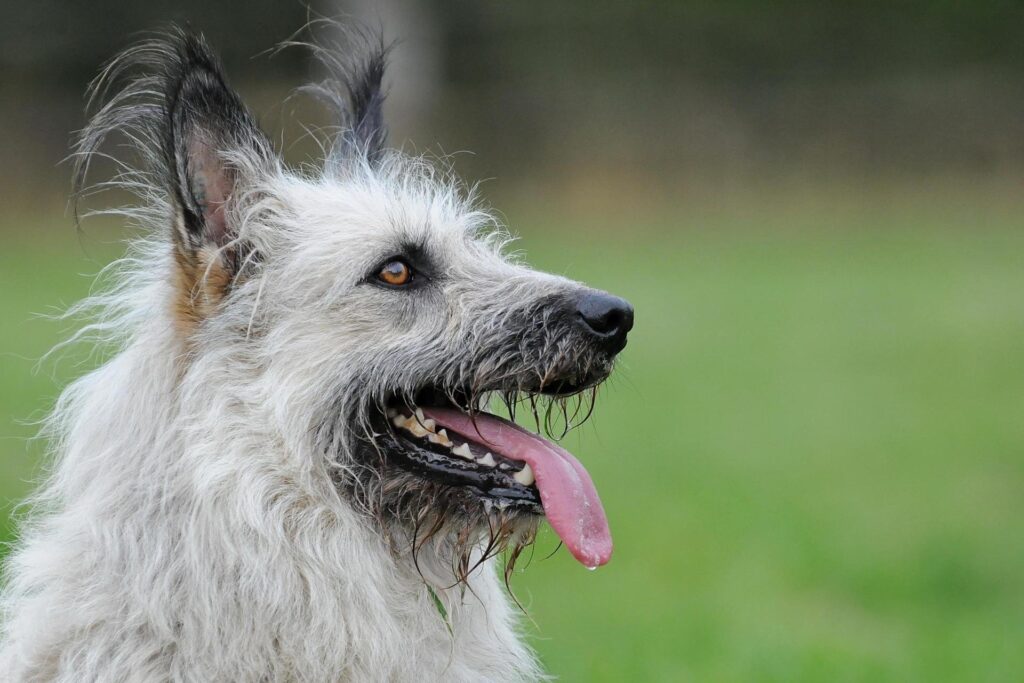
Eyes: Medium-sized, oval-shaped, dark in color (the darker the better) with black eyelids. The gaze is lively, attentive, and a bit stern.
Ears: Set high, triangular in shape. Ideally erect, with pointed tips. Semi-erect ears or ears hanging on cartilage are allowed but undesirable. In the past, ears were often cropped, but now this practice is banned in many European countries.
Body: Massive but compact (square or almost square format). The neck is slightly curved, strong, and very muscular, without a dewlap. The back is flexible, straight, and strong. The loin is short and wide, which gives the dog the ability to make sharp turns. The chest is deep and wide, descending to the elbows, with rounded ribs.
The limbs of the Bouvier are straight, with strong bone, parallel to each other. The muscles on the thighs are clearly defined. The paws are round, tight, with thick pads, which allows them to run on stones.
Tail: Set high, thick at the base. Interesting fact: many puppies are born tailless or with short stumps (bobtail). If there is a tail, it used to be docked, but now it is left natural.
Coat and color: This is an "all-weather" dog. The coat is coarse, shaggy, dry to the touch, and of medium length (about 2.5 inches). The undercoat is very thick and dense; it protects the dog from cold and water. On the muzzle, the hair forms characteristic eyebrows, a mustache, and a beard, which give the dog a "gloomy" look. On the back of the limbs there is feathering, and on the thighs, dense "trousers". The color can be any shade (gray, fawn, reddish, mixed), except for pure white. Small white markings on the chest or the tips of the paws are allowed.
Character: Temperament, Working Qualities, and Behavior
The character of the Bouvier des Ardennes is complex but fair. This is a typical "peasant" - simple, direct, but with a bit of cunning. Within the family circle, he is friendly, affectionate, and playful. However, in relation to strangers, these dogs are extremely suspicious, mistrustful, and often aggressive towards other four-legged animals if they violate their territory. This brings them close in temperament to a breed like the Australian Cattle Dog, which is also known for its uncompromising nature at work.
They love their owner very much - they are ready to obey his orders unconditionally and are prepared to spend literally every minute with him. They do not tolerate loneliness and isolation in a kennel without social interaction well. Bouviers possess the excellent qualities of a reliable guard dog. If the owner is threatened with danger, this dog will always be on the alert; he is ready to desperately defend all people close to him. Moreover, he can only stop if the appropriate command is given by the owner; no one else is capable of influencing the behavior of an enraged Bouvier des Ardennes.
Behavioral Features:
Stubbornness: They are smart but may have their own opinion regarding the execution of commands.
Energy: This is not a sofa dog. They need movement, work, and tasks.
Love of water: They love water - so this dog will not pass by a puddle; he will definitely "swim" in it or at least wet his paws. This is worth considering when walking in the city.
Training and Socialization
The Bouvier des Ardennes is a very smart dog; he learns quickly and remembers commands - this is an important factor if you decide to train this dog yourself. However, do not confuse intelligence with the desire to please. The Bouvier may think about a command before executing it.
When training the dog yourself, difficulties should not arise, as the dog happily submits to his owner, provided, of course, that you have a firm character and are consistent in your demands. If you show weakness, the dog will quickly take the leadership position. Methods based on positive reinforcement (treats, toys) work best. Harsh coercion can lead to the dog withdrawing into himself or responding with aggression. Similar training methods are recommended for other serious breeds, such as the Beauceron or the aforementioned Bouvier des Flandres.
Sports and Activity: This dog needs fresh air and a large open space. Since this is a working dog, he needs regular physical activity. It is better if you train him outdoors. The Bouvier des Ardennes can become an excellent companion for long walks, hiking trips, and morning runs. They also show good results in sports such as agility or obedience.
If you want your pet to perform his direct duties (herding), he will not need additional complex training - the instinct is in their blood. It is enough from an early age to send him to the pastures together with experienced herding dogs; this is exactly how all farm dogs learn.
Pros and Cons of the Breed
Before getting this rare breed, it is worth weighing all the "pros" and "cons", because it will not suit everyone.
Pros (+)
Cons (-)
Exceptional devotion to the owner and family.
Can be aggressive towards strange dogs and strangers.
Strong health and endurance, undemanding nature.
Requires significant physical exertion and space.
High intelligence and aptitude for various work.
Tendency to dominate, needs an experienced owner.
Excellent guarding qualities (territory and person).
Coat requires regular care, specific "doggy" smell when wet.
Rarity and exclusivity of the breed.
Very difficult to find a puppy, high price.
Coat Care and Maintenance
The Bouvier des Ardennes will feel best in the countryside, on a farm, or in a large private house with a spacious plot. This is the ideal enviroment for realizing his instincts. However, keep in mind that he will never love a chain. This dog needs freedom, space, and the opportunity to control territory. Keeping him on a chain can make the Bouvier aggressive and uncontrollable.
City Life: In urban conditions (an apartment), it is difficult to keep such a dog, but possible if you are ready to devote a lot of time to your pet. The Bouvier needs long walks (at least 2–3 hours a day) and regular intensive physical exertion. Just walking through the park on a leash will not be enough for him.
Hygiene:
Bathing: You will have to wash such a dog after every walk in rainy weather - he loves to play in water and mud, so dirt on the coat will be a constant companion. Use special shampoos for wire-haired breeds.
Brushing: The Bouvier's coat needs to be constantly brushed out (1–2 times a week), as it is long, has a thick undercoat, and constantly rolls into mats, especially behind the ears and under the armpits.
Trimming: This breed does not require model haircuts. Hygienic trimming of the hair between the paw pads is sufficient.
Nutrition
Nutrition: A Menu for an Energetic Dog
Health and risks
Health: Typical Diseases and Prevention
Frequently Asked Questions About the Breed (FAQ) · 3
Is the Bouvier des Ardennes suitable for a family with children? Yes, they usually treat children of their "pack" well and protect them. But due to their size and sudden movements, interaction with very small children should take place under supervision.
Is it difficult to keep them in an apartment? Yes, quite difficult. This is an outdoor dog; he will be hot and cramped. In addition, the smell of wet fur after a walk can be strong.
How do they differ from the Bouvier des Flandres? The Bouvier des Ardennes is smaller in size, more agile, and has a harsher coat that requires less trimming. The Bouvier des Flandres is more massive and calmer.
Video About the Breed
FAQ
Hasn't this breed died out?
The Bouvier des Ardennes was twice on the brink of extinction (after the world wars) even in its Belgian homeland; today it is restored, but remains very rare.
Is the breed suitable for an apartment?
Poorly — it is a hardy country worker that needs space, work and fresh air; at the same time it cannot bear being alone, so it needs constant contact with people.
What is the Bouvier des Ardennes's temperament?
It is a devoted, clever and resolute dog that adores its master, gets on well with family and children, but is reserved and protective with strangers.