An Israeli desert hunter with robust health — hardy and independently affectionate: clever, agile, sociable and adaptable. The Canaan Cat is a rare natural aboriginal breed from the deserts of Israel; tempered by a harsh climate, it is strong, healthy and sharp, combines independence with sincere attachment to its family, catches mice beautifully and needs almost no special care.
Independent — chooses the moment for affection itself
Keeps its hunting instinct
Rare — hard to find
Size
ToySmallMediumLargeGiant
Compatibility
KidsDogsOther catsBeginnersTime alone · with caveats
The Canaan Cat is a relatively new and rare breed that resulted from a purposeful breeding program, crossing wild African Thai Cats and various domestic cats. This breed combines the exotic look of its wild ancestors with the more docile temperament of a household pet. Canaan cats are low-maintenance, boast robust health, and are highly adaptable. While they appreciate their independence and need opportunities to roam and be active, they are also very people-oriented and bond well with every member of the family, not just one. For a happy Canaan, attention and interaction are key. We'll tell you more about this unique cat breed from Israel in this article on Tvaryny.
Canaan Cat: A Brief Breed Overview
Canaan Cat: A Brief Breed Overview · 12
Characteristic
Description
Origin
Israel
Year of Creation/Recognition
Breeding began in the 1990s, officially recognized as an experimental breed by the World Cat Federation (WCF)
Lifespan
13–16 years (sometimes longer with proper care)
Size
Medium to large
Weight
Males: 9–15 lbs, Females: 7–11 lbs
Coat Type
Short, dense, with a slight undercoat
Coloring
Only spotted tabby or marbled tabby on a beige, brown, or cinnamon background. Characteristic ticking is required.
Low (brushing once a week, more often during shedding season)
Activity Level
High, requires space and playtime
Compatibility with Kids
Good, as long as children respect the cat's personal space
Compatibility with Other Pets
Good, especially if socialized from an early age
Interesting Facts About the Canaan Cat
A Biblical Name: The breed name "Canaan" comes from the ancient land of Canaan, a region in modern-day Israel and neighboring countries mentioned in the Bible. This emphasizes the breed's geographical origin.
Direct Descendant of a Wildcat: The Canaan Cat is one of the few breeds created directly with wildcats (Felis lybica) in the lineage, giving it a unique status and appearance.
Created by a Sculptor: The breed's founder, Doris Pollatschek, was a sculptor by profession. It's possible her artistic vision helped shape the breed's aesthetic standards.
Adapted to Heat: Due to their origins, Canaan cats handle hot climates well, even though their coat has a slight undercoat.
Lynx-like Ear Tufts: While not mandatory, a highly desired trait is the presence of small tufts on the ear tips, making them look like a lynx or caracal.
Only Green Eyes: The breed standard only allows for green eyes, although shades can vary from light green to a rich emerald.
Experimental Status: In most major cat associations, the Canaan Cat still has the status of an experimental or preliminary breed, as work on stabilizing it continues.
Similarity to Other Breeds: The Canaan Cat is sometimes confused with other spotted breeds like the Bengal or Ocicat, though it has its own unique features and lineage. It also shares some resemblance to its wild ancestor and other natural breeds like the Anatolian Cat, which also originated in the Middle East.
History of the Canaan Cat
The history of the Canaan Cat is closely tied to Israel and the passion of one woman: Doris Pollatschek, a sculptor and cat lover living in Jerusalem. In the late 1990s, she noticed a large population of wild cats thriving in the city's surroundings and throughout the country. These cats, descendants of the African Wildcat (Felis lybica) considered to be the ancestor of all domestic cats, were perfectly adapted to the harsh local climate and environment.
Inspired by their resilience and natural beauty, Doris decided to create a new breed that would retain the wild features of their ancestors but have a more balanced and friendly nature, making them suitable for life indoors. Her goal was to produce a cat that looked wild but was fully socialized.
To achieve this, Doris Pollatschek launched a selective breeding program. She caught wild African Wildcats and crossed them with carefully chosen representatives of various domestic cat breeds. The breeding program included:
African Wildcat (Felis lybica): To contribute the wild look, characteristic tabby pattern, and durability.
Abyssinian Cat: To achieve ticking (the banded coloring of each hair shaft) and an elegant build.
Bengal Cat: To enhance the spotted pattern and exotic appearance.
Oriental Shorthair: To provide a refined body shape, large ears, and almond-shaped eyes.
Domestic Shorthair Cats: To solidify desired character traits and genetic diversity.
The first kittens meeting the planned standard appeared in the early 2000s. The name "Canaan Cat" comes from the ancient name of the region, Canaan, emphasizing its Israeli roots. The breed received preliminary recognition from some cat associations, including the World Cat Federation (WCF), which classified it as an experimental breed. This means it's still in the establishment and observation phase.
Today, the Canaan Cat remains a very rare breed, with breeders mainly found in Israel and a few European countries (like Germany). Finding a kitten of this breed outside its native land can be quite a challenge. Tonkinese cats are a much more common domestic breed that also combines the features of two breeds: Siamese and Burmese.
Breed Standard and Appearance of the Canaan Cat
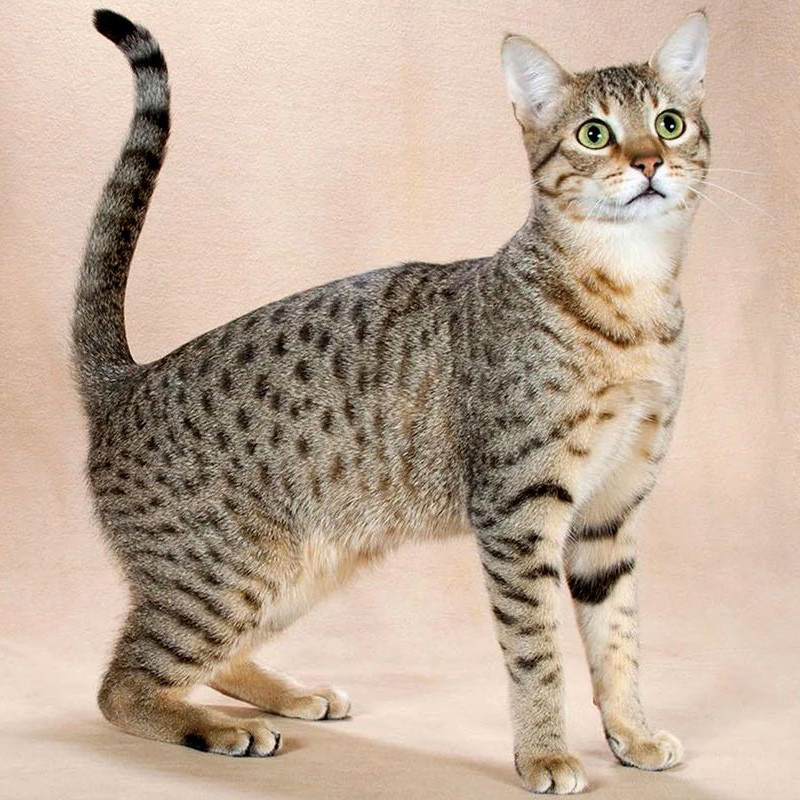
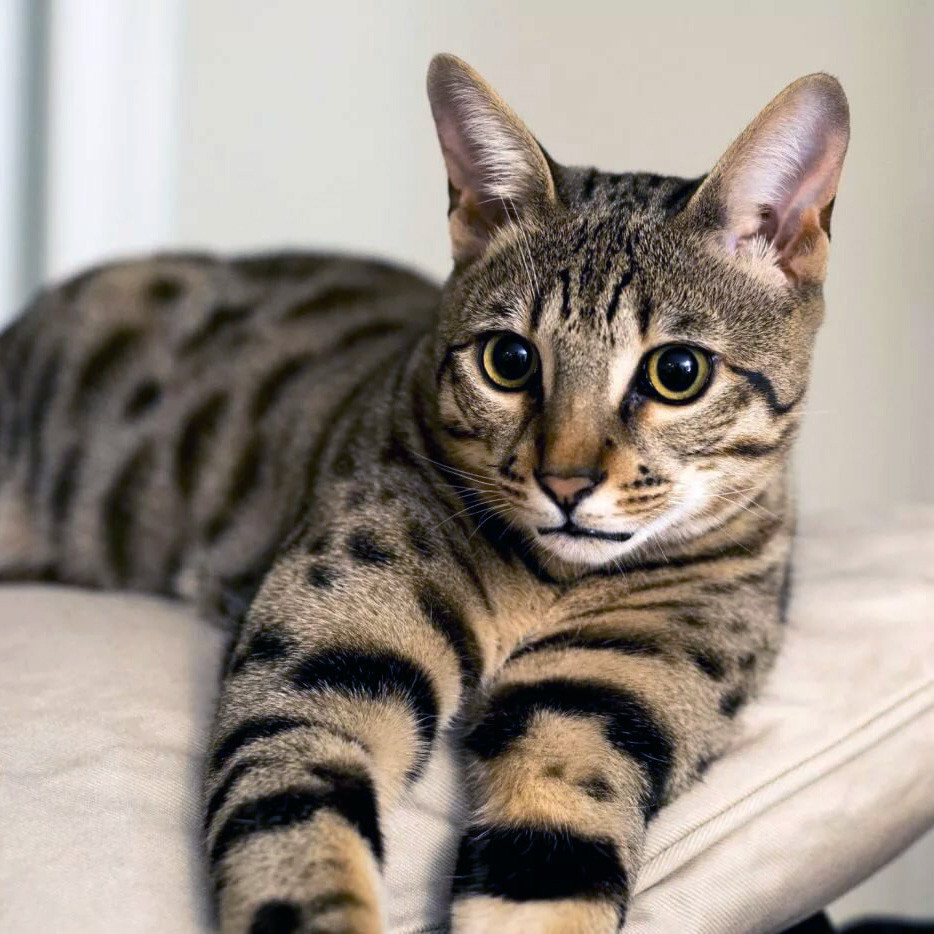
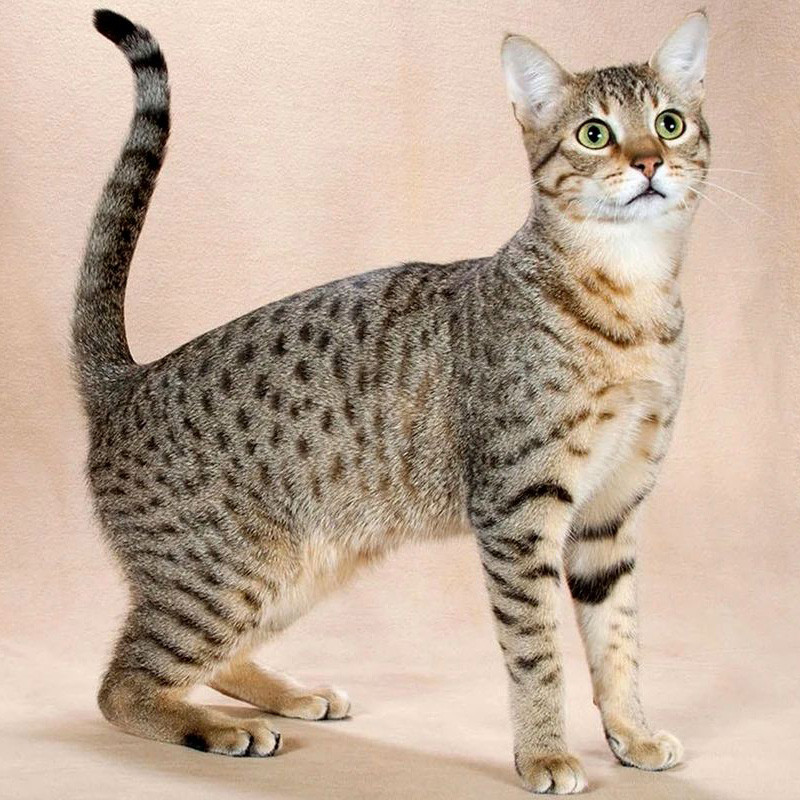
The Canaan Cat is an elegant yet strong animal of medium to large size, combining the features of its wild and domestic ancestors. It has well-developed muscles and a strong frame, a testament to its durability.
Body: Long and slender, but muscular. It should not be overly massive or too light. The chest is well-developed.
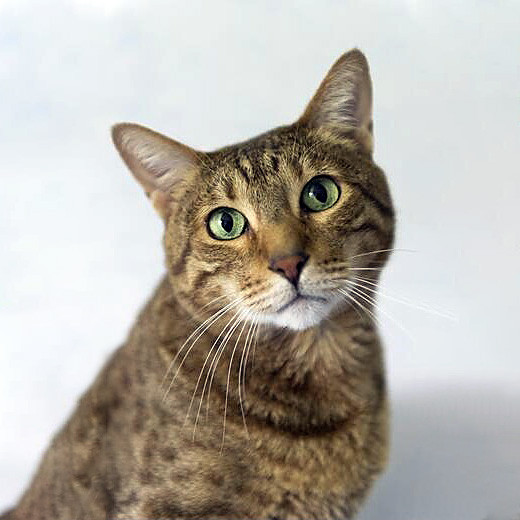
Head: A broad triangle with soft contours. The forehead is flat, and the transition to the nose is barely noticeable. The muzzle is well-defined but not pointed. The chin is strong.
Ears: Large, wide at the base, and set high and upright. The tips are slightly rounded. Small tufts on the ear tips are desired, similar to a lynx, adding to their wild charm. The ears are set quite far apart.
Eyes: Large, expressive, and almond-shaped. They are set slightly slanted. Eye color is all shades of green. A rich color is a bonus.
Neck: Long and graceful, yet strong.
Limbs: Long, slender, and proportional to the body. The hind legs are slightly longer than the front legs. The paws are oval and compact.
Tail: Long, thick at the base, and tapering to the tip.
Coat: Short, dense, and springy to the touch. It lies flat against the body and has a slight undercoat that may become more pronounced in colder seasons. The coat texture should not be overly soft.
Coloring and Pattern: Only two tabby patterns are recognized: spotted tabby and marbled (classic or marbled tabby). The spots must be clear and contrast with the background. The marbled pattern should be symmetrical, with characteristic "butterflies" on the shoulders and stripes along the body. Ticking is mandatory—the zonal coloring of each hair strand that creates a distinctive "shimmering" effect on the background. The base coat color ranges from sandy beige to a rich brown and cinnamon. The pattern (spots or marbling) is always darker than the background, ranging from brown to black.
Overall, the Canaan Cat gives the impression of a graceful, agile, and alert animal that has retained the natural beauty of its wild ancestors.
Canaan Cat Personality and Temperament
The Canaan Cat's personality is an intriguing mix of wild predator traits and a loving domestic companion. Through selective breeding, the excessive caution and aggression of their wild ancestors have been softened while preserving their independence, intelligence, and energy.
Key Canaan Cat Personality Traits:
Independence: Canaan cats value their self-reliance. They aren't typical "lap cats" that constantly demand attention. They can entertain themselves and are comfortable being alone for periods.
Activity and Playfulness: These are very high-energy cats who need a lot of physical and mental stimulation. They love to play, especially with toys that mimic hunting (wands, balls, laser pointers). They need space to run and climb, so it's a good idea to set up cat trees and shelves at home.
Curiosity: Canaans are incredibly curious about everything new. They will explore every corner of your home, watch what you're doing, and try to participate in all events.
Affection and Attachment: Despite their independence, Canaan cats bond strongly with their owners and need human interaction. They will meet you at the door, rub against your legs, and purr when petted. Unlike some breeds, they do not tend to choose a single "favorite" person but are equally affectionate with all family members.
Communicativeness: These cats are quite "talkative." They use a wide range of sounds—from gentle purrs to loud meows—to express their needs and emotions. This isn't a breed that will stay silent if it wants something.
Territoriality: As descendants of wild cats, Canaans can exhibit territorial behavior. They vigilantly monitor their territory and may be wary of strangers, though they typically don't show aggression without cause.
Attitude Towards Kids and Other Pets: Canaan cats generally get along well with children, especially if the kids are taught to respect the animal and its personal space. They can also coexist with other cats and dogs, particularly if they were socialized together from a young age. However, their strong hunting instinct can pose a threat to small pets (rodents, birds).
It's important to provide a Canaan Cat with enough attention and opportunities for physical and mental activity to prevent boredom and potential behavioral problems. They're an ideal choice for active individuals and families willing to dedicate time to their energetic and intelligent companion.
Training and Raising the Canaan Cat
Canaan cats are intelligent and sharp, which makes them highly trainable. However, their independent nature, inherited from their wild ancestors, requires a special approach to training. Coercion and punishment don't work with them and can lead to the opposite effect: loss of trust and stubbornness.
Key principles for raising a Canaan:
Positive Reinforcement: The most effective method is to reward desired behavior with treats, praise, affection, or play. When your cat does what you want (e.g., uses a scratching post instead of the couch), reward it immediately.
Patience and Consistency: Training takes time. Be patient and consistent in your demands and reactions. All family members should follow the same rules.
Short Training Sessions: Cats lose concentration quickly. Keep training sessions short, 5–10 minutes, and end on a positive note while the cat is still interested.
Ignoring Undesirable Behavior: If the behavior isn't dangerous, sometimes it's better to simply ignore it than to punish. For example, if the cat is meowing for attention, don't react until it quiets down.
Redirecting Attention: If the cat is doing something undesirable (e.g., scratching furniture), don't yell. Instead, calmly redirect its attention to an approved object (a scratching post) and praise it when it starts using it.
What you can teach a Canaan Cat:
Litter Box Training: This is usually easy, as cats are naturally clean.
Scratching Post Training: It's important to show the kitten where it's allowed to scratch from day one.
Harness and Leash Training: If you plan on walks, start getting the kitten used to the harness gradually, with positive reinforcement.
Simple Commands: Some Canaans can learn to respond to their name and perform simple commands ("come," "sit") using clicker training and treats.
Fetch: Thanks to their playful nature, some cats can be taught to retrieve small toys.
Socialization:
Early socialization is crucial for the Canaan Cat. Introduce the kitten to different people, sounds, situations, and, if possible, other animals (under supervision). This will help it grow into a confident and well-balanced cat, less prone to fear and aggression in new circumstances.
Pros and Cons of the Canaan Cat Breed
Like any breed, the Canaan Cat has its advantages and disadvantages that potential owners should consider before getting one.
Pros and Cons of the Canaan Cat Breed · 7
Pros (+)
Cons (–)
Exotic Appearance: Attractive “wild” look with spotted or marbled patterns and expressive eyes.
Rarity and High Price: The breed is hard to find outside of Israel and Europe, and kittens are expensive.
Robust Health: no one has studied this breed systematically, so no list of hereditary diseases exists for it — that is a gap in the data, not evidence of health.
High Need for Activity: Requires a lot of space, playtime, and attention; may get bored in a small apartment.
Intelligence and Wit: Easy to train and curious.
Independence and Stubbornness: Can be challenging to train if coercion is used.
Low-Maintenance: The short coat requires minimal grooming.
"Talkativeness": Meows quite loudly and often, which may be bothersome to some people.
Adaptability: Adapts to various living conditions (if their activity needs are met).
Territoriality: May be wary of strangers or other animals.
Family-Friendly: Affectionate, gets along well with children.
Strong Hunting Instinct: May pose a threat to small pets.
Playfulness: Remains active for many years.
Need for Outdoor Time (Preferred): Appreciates the chance to go outside (in a catio or on a leash).
Grooming the Canaan Cat
Grooming a Canaan Cat is not overly complicated, as the breed inherited its low-maintenance and adaptable nature from its wild ancestors. However, some aspects do require regular attention.
Coat Grooming:
The Canaan's short, dense coat isn't prone to matting and requires minimal grooming.
It's recommended to brush the cat once a week with a rubber brush or grooming glove to remove dead hair and stimulate blood circulation in the skin.
During seasonal shedding (spring and fall), when the cat sheds its slight undercoat, you should brush more frequently—2–3 times a week—to reduce the amount of hair in your home.
Bathing a Canaan Cat should only be done when absolutely necessary, such as when it's heavily soiled. Frequent washing can disrupt the skin's natural protective oily layer. Use only special cat shampoos.
Claw, Ear, and Eye Care:
Claws: Regularly (about every 2–4 weeks) trim the tips of the claws with special clippers to prevent ingrowth and damage to furniture. Be sure to provide several scratching posts of different types (vertical, horizontal, cardboard) so the cat can satisfy its natural need to sharpen its claws.
Ears: Check the ears weekly for dirt, wax buildup, or signs of infection (redness, unpleasant odor). You can clean the outer ear with a cotton pad moistened with a special ear-cleaning solution for cats. Never use cotton swabs to clean the ear canal.
Eyes: The Canaan's eyes usually don't need special care. If you notice small discharges in the corners of the eyes, you can gently remove them with a soft tissue or cotton pad moistened with clean, warm water or a special solution. If the discharge is profuse, purulent, or the eyes are red, contact a vet.
Activity and Environment:
Canaan cats are very active animals. They need space for play, running, and climbing.
Provide the cat with a variety of toys: balls, toy mice, interactive toys, and feather wands. Play with your cat regularly to meet its need for activity and strengthen your bond.
Install a tall cat tree or equip shelves for climbing. Canaans love to observe their surroundings from a high vantage point.
While Canaans can adapt to apartment living, they highly value the opportunity to get fresh air. The ideal option is a safe outdoor enclosure (catio) or walks on a harness and leash (which the cat should be accustomed to from a young age). Free roaming outside is not recommended due to the risk of injury, infection, and getting lost.
Following these simple rules will help keep your Canaan Cat healthy, well-groomed, and happy.
Nutrition
Feeding the Canaan Cat: Key Recommendations
Health and risks
Health and Lifespan of the Canaan Cat
Frequently Asked Questions About the Canaan Cat · 6
Is the Canaan Cat suitable for apartment living?
Yes, a Canaan Cat can live in an apartment, but only if they are provided with enough space to move around, opportunities for climbing (tall cat complexes, shelves), and regular, active play with their owner. Otherwise, boredom might lead to destructive behavior. Ideally, they should have the option for safe outdoor access (a balcony enclosure or walks on a harness).
Does the Canaan Cat shed a lot?
Shedding is moderate. The coat is short, but there is a slight undercoat, so the amount of hair may increase during seasonal shedding (spring/fall). Regular brushing (1–2 times a week) helps to control this process.
Are Canaan cats aggressive?
No, with proper socialization, Canaan cats are not aggressive. They may be wary of strangers due to their territorial nature, but they are affectionate and friendly towards family members. Aggression might only occur in cases of fear, pain, or rough handling.
How much does a Canaan Cat kitten cost?
This is a very rare breed, so the price of kittens can be high and varies greatly. It depends on the lineage, conformity to the standard, the breeder's reputation, and the country. Expect a wait: established breeders have their litters spoken for well in advance.
Can you leave a Canaan Cat alone for a long time?
Although they are quite independent, Canaans need human interaction. They can be left alone during the workday, provided they have enough toys and space for activity. However, leaving them alone for several days without supervision is not recommended.
Are Canaan cats hypoallergenic?
The Canaan Cat is not a hypoallergenic breed. Like most cats, it produces the Fel d 1 allergen (in its saliva and skin secretions), which can cause a reaction in sensitive people. The level of allergenicity is individual to each animal.
Conclusion
The Canaan Cat is a unique and rare breed that embodies the beauty of the wild and the amiability of a domestic pet. Its exotic looks, robust health, intelligence, and active yet affectionate nature make it an appealing choice for experienced cat owners who are ready to dedicate attention to its needs for activity and companionship. While a Canaan may be hard to find, those who are lucky enough to own one of these Israeli marvels will gain a loyal, intelligent, and energetic companion for many years to come.
FAQ
What is the Canaan Cat?
It is a rare natural aboriginal breed from the deserts of Israel (the region of historical Canaan), standardized from ordinary local cats; tempered by a harsh climate, it is notable for robust health, hardiness and cleverness.
How healthy is the Canaan Cat?
Very — as a natural breed shaped by harsh selection in the desert, it is one of the sturdiest and hardiest cats; the main caveat is its good appetite and tendency to gain weight.
Is the Canaan Cat good for a family?
Yes — a clever, sociable and devoted cat, good with children and animals; it is independent but sincerely attached to “its own”, and thanks to robust health it is low-maintenance.