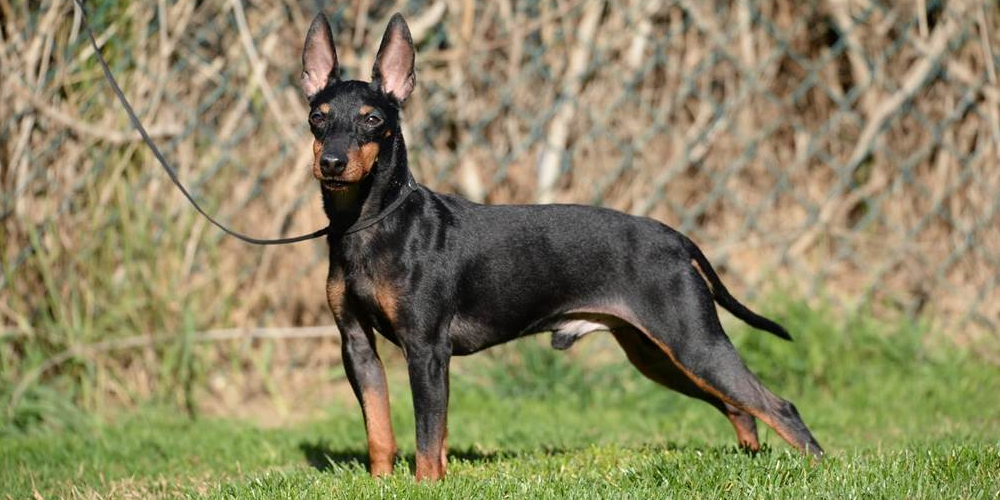
A dainty "miniature gentleman" with the fearless heart of a terrier — graceful and energetic: clever, devoted, lively and bold beyond its size. The English Toy Terrier is a rare British toy breed of black-and-tan color, a historical ratter; despite its "toy" size it has kept its terrier character and is today threatened with extinction, so every dog is a real treasure.
ApartmentKids · with caveatsCats · with caveatsOther dogsBeginners
The English Toy Terrier is the epitome of elegance, grace, and boundless energy packed into a miniature frame. Despite its "toy" size, this dog has retained the fearless heart and sharp wit of a true terrier. Today, this breed is on the verge of extinction, listed as a vulnerable native breed in its home country, the United Kingdom. This makes each one a genuine treasure. Although there are many similar breeds, breeders are working hard to preserve the purity of their bloodlines and prevent the English Toy Terrier's complete disappearance. To learn more about this unique dog's personality, care, and history, read more on Tvaryny.
These dogs make wonderful companions for anyone who appreciates a small, refined dog with a surprisingly serious character. They are endlessly devoted to their owners and are ready to follow them anywhere, creating a strong emotional bond. They are wary of strangers and will promptly alert you to an approaching unfamiliar person with a loud bark. These highly energetic dogs thrive on care and attention. They are low-shedding, and their minimal grooming and feeding needs make them ideal for apartment living. An English Toy Terrier will quickly claim a special spot in your home and become a beloved member of the family.
English Toy Terrier: Key Breed Characteristics
English Toy Terrier: Key Breed Characteristics · 11
Characteristic
Description
Origin
Great Britain
FCI Classification
Group 3 (Terriers), Section 4 (Toy Terriers). Standard No. 13.
Lifespan
12–14 years
Height at Withers
10–12 inches (25–30 cm)
Weight
6–8 lbs (2.7–3.6 kg)
Temperament
Intelligent, devoted, energetic, alert, has a hunter's instinct
Coat
Short, dense, thick, and shiny
Color
Black and Tan
Grooming
Minimal; weekly brushing
Activity
Moderate; requires daily walks
Training
Easy to train, but can be stubborn. Requires early socialization.
Interesting Facts About the Breed
A Vulnerable Breed: The Kennel Club lists the English Toy Terrier as a Vulnerable Native Breed, as fewer than 300 puppies are registered each year.
"Candle-Flame Ears": The unique shape of their ears, resembling a candle flame, is one of the breed's most distinctive features and is clearly outlined in the standard.
The Rat Hunter: Despite their decorative appearance, these dogs still retain a powerful instinct for hunting rats. They can spend hours tracking prey.
A "Horsey" Trot: The English Toy Terrier's gait is described as a long-strided trot, reminiscent of a horse's movements, which emphasizes its grace.
History of the English Toy Terrier
The history of the English Toy Terrier is closely tied to the 19th-century Industrial Revolution in England. Its ancestors were the Old English Black and Tan Terriers, prized for their exceptional hunting skills. These dogs were indispensable for controlling rodents in factories, mines, and homes. They were also ancestors of the larger Manchester Terrier, renowned for its rat-hunting prowess.
During that era, a popular and brutal sport was rat-baiting. A dog was released into a "rat pit" filled with rats, and the winner was the one who killed the most rodents in the shortest amount of time. The Black and Tan Terriers showed incredible speed, fearlessness, and a strong fighting spirit, making them stars of these competitions. A famous champion named Billy, weighing around 26 pounds, set a record by killing 100 rats in 5 minutes and 30 seconds in 1823.
Over time, breeders began to notice that litters produced both larger and significantly smaller dogs. The miniature dogs were selected for breeding because they made ideal companions for Victorian-era ladies, who valued their elegance and compact size. This led to a split into two types. In 1920, it was decided to officially separate the dogs by weight, and in 1962, the miniature Black and Tan Terriers received their modern name: the English Toy Terrier. The Fédération Cynologique Internationale (FCI) approved separate standards for both breeds, confirming their independence. However, it's worth noting that the American Kennel Club (AKC) still does not recognize the English Toy Terrier as a separate breed, instead considering it a miniature variety of the Manchester Terrier.
English Toy Terrier Appearance: Breed Standard
The English Toy Terrier is a compact, harmonious, and elegant dog with a proportional build that combines the traits of a terrier and a toy breed. Its appearance suggests speed and agility.
Head and Muzzle
The head is long and wedge-shaped, with a narrow, flat skull. The stop is slight and barely noticeable. The nose bridge is straight, and the nose is always black. The lips are tight against strong jaws with a perfect scissor bite. The eyes are small, almond-shaped, dark, and set obliquely, giving the dog an alert and intelligent expression.
Ears and Neck
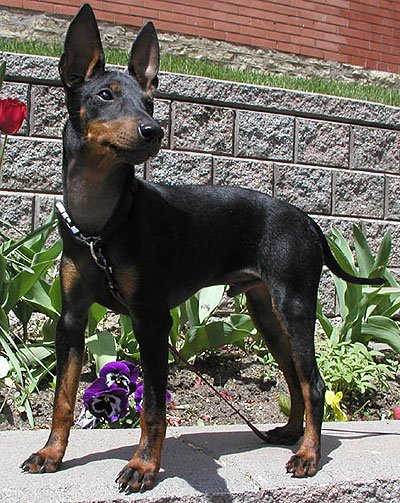
The ears are the signature feature of the breed. They are thin, set high and relatively close together, with a unique shape that resembles a candle flame—slightly pointed at the tips. The ears are erect and point forward. The neck is long, graceful, and slightly arched, flowing smoothly into the shoulders.
Body and Limbs
The back is slightly arched from the withers to the loin. The chest is deep and narrow. The tail is of medium length, thick at the base and tapering to the tip, carried low and not raised above the topline. The front legs are straight, with fine but strong bones. The hindquarters have well-defined knee angles, providing a powerful thrust. The feet are compact and "cat-like," with arched toes; the two middle toes on the front paws are slightly longer than the others.
Coat and Color
The coat is short, dense, thick, and shiny. The color is strictly defined by the standard: jet black with rich mahogany tan markings. A distinct line separating the black and tan is mandatory. The tan markings are located on the muzzle, above the eyes (two spots), on the throat, on the inside of the ears, on the chest (two spots known as "rosettes"), on the front legs up to the wrist, on the inner side of the hind legs, and under the tail. The black "pencil marks" on the toes are a characteristic feature.
Temperament: The Toy Terrier’s Personality and Behavior
The English Toy Terrier is a true bundle of energy and liveliness. This is a companion dog that loves to be the center of attention and participate in all family activities. It is an extremely affectionate, devoted, and loyal pet, often becoming its owner's "shadow."
Devotion: This dog bonds deeply with its family and can suffer from separation anxiety if left alone for long periods.
Alertness: Like all terriers, they have excellent hearing and make great "doorbell" dogs, instantly alerting you to the arrival of guests or any noise outside.
Attitude Towards Strangers: They are distrustful and cautious of unfamiliar people but without unwarranted aggression. They need time to warm up to new people.
Interaction with Other Animals: Due to their strong hunting instinct, they may show aggression toward other dogs, especially larger ones. It is not recommended to let them off-leash in areas with other animals. Early and proper socialization is key for harmonious coexistence. They can only live with cats and other small animals if they are raised with them from a young age.
Curiosity: English Toy Terriers are very curious and show an interest in everything around them. To prevent destructive behavior, it's important to provide plenty of toys, especially during the puppy stage.
This breed is not suitable for families with very young children, as their fragile build makes them prone to accidental injury. However, they can get along well with older children who know how to handle animals and will become wonderful playmates. Their character can be compared to other miniature yet brave breeds like the Russian Toy Smooth Haired or the Australian Silky Terrier, though each has its own unique traits.
Training and Socialization
To prevent your Toy Terrier from growing up aggressive and unruly, you must start training it from an early age. Early socialization is critically important for this breed. Introduce your puppy to different people, sounds, places, and calm dogs. This will help it grow into a well-balanced and confident adult.
Like all terriers, these dogs have a very independent and sometimes stubborn nature, so training can present some challenges. The key to success is patience and positive reinforcement. Make training a fun game and keep the dog engaged. Never use force or yelling, as this will only scare it and damage your trust. English Toy Terriers excel at sports like agility or flyball, where they can channel their energy and intelligence. The best rewards for them are treats and sincere praise from their owner.
Pros and Cons of the English Toy Terrier
Pros and Cons of the English Toy Terrier · 7
✅ Pros
❌ Cons
Compact size, ideal for apartments
Sensitive to cold
Minimal grooming, barely sheds
Prone to barking
Endless devotion and love for its owner
Can be stubborn during training
High intelligence and wit
Fragile skeleton, risk of injury
Energetic and playful companion
Requires early and thorough socialization
Good watchdog, alert, and attentive
Not the best choice for families with small children
Elegant and unique appearance
Strong hunting instinct (for rodents)
Care and Maintenance for the English Toy Terrier
English Toy Terriers are perfectly suited for apartment life. Their small size means they will feel comfortable even in a small space. However, this doesn't mean they don't need to go outside.
Walks and Exercise: Walks should be regular, at least twice a day. However, you should not subject the dog to intense physical activity. They have a fragile skeleton, so jumping from high places and excessive exertion can be dangerous.
Protection from the Weather: Due to their short coat and lack of an undercoat, these dogs are sensitive to the cold. In colder weather, be sure to dress your dog in a warm jacket. In the summer, avoid long walks in the scorching sun, as the dog can suffer from heatstroke.
Coat Care: The short coat doesn't require complex grooming. Brushing your dog once a week with a rubber brush or grooming glove is enough to remove dead hair and maintain a shiny coat.
Bathing: It is not recommended to bathe a Toy Terrier frequently—only when it is very dirty. Use specialized shampoos for short-haired dogs.
Claws, Ears, and Eyes: Regularly trim their claws with special clippers. Pay close attention to the cleanliness of their eyes and ears, wiping them with a damp cotton pad as needed.
Nutrition
Nutrition for the English Toy Terrier: Key Recommendations
Health and risks
English Toy Terrier Health: Common Ailments and Prevention
Frequently Asked Questions About the Breed (FAQ) · 4
Do English Toy Terriers bark a lot? Yes, they are prone to barking. They are excellent watchdogs that react to any suspicious sound. Proper training can help manage this trait.
Can I keep this dog with a cat? Yes, if they are raised together from a young age. An adult Toy Terrier may perceive a cat as prey due to its hunting instinct. Introductions should be gradual and controlled.
How much does an English Toy Terrier puppy cost? Due to the rarity of the breed, the price for puppies can be quite high. The cost depends on the puppy's lineage, the parents' titles, and the breeder's reputation. It's important to choose a reputable breeder who cares about the health and socialization of their dogs. Expect a wait: established breeders have their litters spoken for well in advance.
Do they need a lot of physical exercise? They are energetic but do not require excessive exercise. Daily walks and playtime will be enough to keep them in good physical shape.
Video About the Breed
FAQ
Is this the same as the Russian Toy Terrier?
No — the English Toy Terrier (black-and-tan) is one of the ancestors of the Russian Toy, but it is a separate, older British breed; it is a little sturdier and comes strictly in black-and-tan.
How rare is the English Toy Terrier?
Very — the breed is on the list of vulnerable native breeds of Great Britain and is on the brink of extinction; breeders are working to preserve the purity of the blood.
Is the breed suitable for an apartment and a novice?
Yes — it is a compact, clever and devoted companion, ideal for an apartment; the key is care because of its fragility and protection from the cold.