A short-legged Swiss tracker in a wiry "coat" — precise and tireless: hard-working, vocal, friendly and tenacious. The Small Swiss Hound (rough-haired) is the short-legged variety of the Swiss Hound with a wiry coat that protects from thorns and weather; an ideal pursuer of game in thick undergrowth and burrows, and at home a calm, friendly companion.
Apartment · with caveatsKidsCats · not suitableOther dogsBeginners · with caveats
The Rough-coatedSmall Swiss Hound (Schweizer Niederlaufhund: Rauhhaarig) isn't just a hunting dog; it's a true embodiment of Swiss precision and diligence, perfectly adapted for hunting in complex environments. With its long body, powerful voice, and short legs, this dog is an ideal tracker of game through dense undergrowth and even into burrows. Its unique harsh coat provides reliable protection from bad weather and thorny bushes. Despite its outstanding working qualities, inherited from its larger ancestor, the Swiss Hound, this breed remains quite rare outside of its native country. You can learn more about the history, character, and unique features of this excellent hunter on Tvaryny.
Small Swiss Hound (Rough-coated): Quick Breed Overview
Small Swiss Hound (Rough-coated): Quick Breed Overview · 10
Characteristic
Value
Origin
Switzerland
FCI Classification
Group 6 (Scent Hounds and Related Breeds), Section 1.3 (Small Hounds)
Hunting small game (hare, rabbit, fox, roe deer), companion dog
Coloring
Various, predominantly red or tricolor with white markings
Coat Type
Harsh, dense, with an undercoat
Interesting Facts About the Breed
The name "Niederlaufhund" literally translates from German as "low-running dog," which perfectly describes its appearance and purpose.
The voice of the Small Swiss Hound is considered one of the most melodious among all hounds. Each dog has its own unique timbre, which an experienced hunter can recognize from a great distance.
Despite being a hunting breed, Niederlaufhunds can successfully participate in dog sports such as agility (in the class for medium-sized dogs) and nosework, where their outstanding sense of smell becomes the main advantage.
In Switzerland, there are still specialized clubs that are exclusively dedicated to preserving and developing the working qualities of the Small Swiss Hounds.
Detailed History of the Small Swiss Hound
The history of the Small Swiss Hound, or Niederlaufhund, is closely tied to changes in Swiss hunting laws in the late 19th and early 20th centuries. Before this, the tall Swiss Hounds (Schweizer Laufhund) were popular in the alpine regions and worked excellently in large open spaces. However, with the development of agriculture and the introduction of a system of limited hunting grounds (the so-called "Gatterjagd"), a need arose for a slower, but no less resilient, dog.
A key turning point was a 1905 law that prohibited the use of dogs taller than 14 inches for hunting in limited areas. This was done to give game a better chance of escape and to make hunting more ethical and controlled. The long-legged hounds were simply too fast for these conditions. It was at this time that Swiss hunters and dog breeders turned their attention to short-legged dogs that could tirelessly track prey for long periods without driving it out of the designated territory.
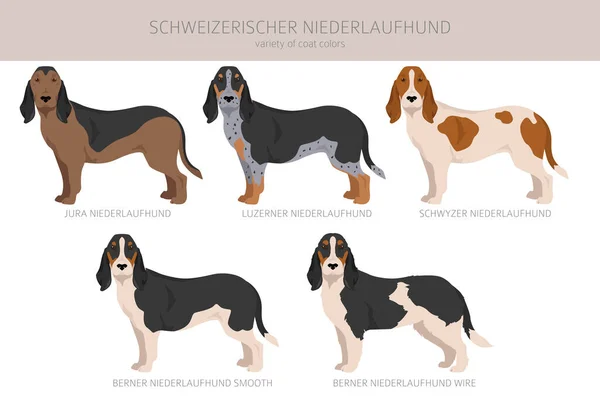
Selective breeding efforts were aimed at creating a miniature version of the existing Swiss Hounds. This involved purposefully cross-breeding standard Swiss Hounds with dachshund-like Bracks and other short-legged hound breeds. The main goal was to preserve the outstanding sense of smell, hunting passion, and the famous sonorous voice of the larger hounds, while "shortening" their legs. As a result, four varieties of the Small Swiss Hound were developed (the Small Bernese Hound, the Small Jura Hound, the Small Lucerne Hound, and the Small Schwyz Hound), which differ in coat type and color, corresponding to the four varieties of the large Swiss Hound (the Bernese Hound, the Jura Hound, the Lucerne Hound, and the Schwyz Hound). The breed's official recognition by the Fédération Cynologique Internationale (FCI) in 1954 solidified its status as a separate breed.
Breed Standard and Physical Appearance of the Rough-Coated Variant
The Small Swiss Hound: Rough-coated is a dog with a long-bodied, sturdy, yet elegant build. Its appearance is entirely functional: its short legs allow it to move confidently through thick undergrowth, and its long body provides endurance.
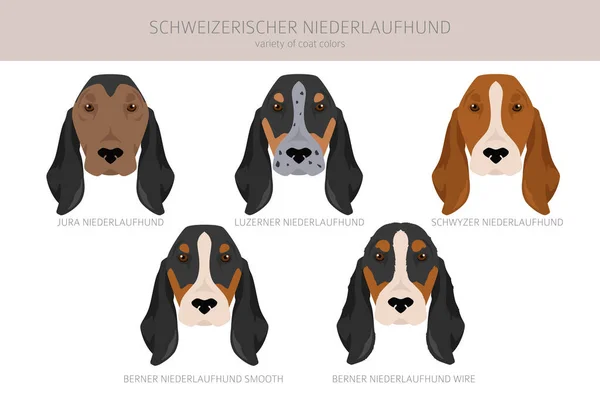
Head: Long, narrow, with a slightly domed skull. The stop is smooth but noticeable. The muzzle is narrow, and the nose is well-developed and black.
Eyes: Oval-shaped, dark brown, with a lively and alert expression. The eyelids are tight-fitting.
Ears: Very long, set low, and hanging in folds. This is a characteristic feature of all hounds that helps to "collect" scents from the ground and direct them to the nose.
Body: The neck is long and muscular, without a dewlap. The back is straight and strong. The chest is deep and wide, providing ample room for the lungs and heart. The belly is slightly tucked up.
Tail: Medium length, scimitar-shaped, and a continuation of the backline. When moving, the dog carries it slightly raised.
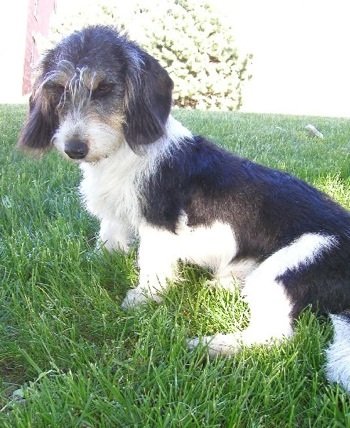
Coat: The main distinguishing feature of this variety. It is harsh, coarse to the touch, and lies close to the body, with a well-developed undercoat. It forms a small beard on the muzzle. This type of coat provides excellent protection from rain, snow, and physical injury.
Regarding coloring, the rough-coated variant's standard allows for various combinations, but the primary color is never black or chocolate. The most common are shades of red with white patches or tricolor variations.
Character and Temperament
The Small Swiss Hound's character is a wonderful blend of hunting passion and a calm, balanced disposition. This isn't a dog that will run around the house aimlessly. In a calm setting, it behaves with restraint and gentleness. However, as soon as it gets to a forest or field, a true hunter awakens. Its main trait is an incredible persistence in following a trail. When it catches the scent of prey, it announces this with a loud and melodious bark (the so-called "Spurlaut"), which is highly valued by hunters.
The Niederlaufhund is very attached to its owner and family, showing great devotion. It gets along well with children, especially if it grew up with them. However, due to its strong hunting instinct, its introduction to other pets, particularly cats and rodents, must be carefully supervised from an early age. It is cautious with strangers but not aggressive, making it a good watchdog that will always alert you to the arrival of guests. This is a common trait among working hound breeds, as is the tenacity and dedication to a task, a quality also found in the Bosnian Coarse-haired Hound.
This is a very smart and quick-witted dog, but it's not simple to train. Like many hounds, it has a certain amount of independence and stubbornness. Its ancestors spent centuries making their own decisions while hunting, and this trait is deeply rooted in its genetics. The owner must be patient, consistent, and use positive reinforcement methods. Harshness and yelling won't produce the desired results.
Pros and Cons of the Breed
Pros
Cons
Outstanding hunting abilities: unparalleled sense of smell, endurance, and persistence.
High need for physical exercise: not suitable for inactive people.
Devoted and gentle nature: becomes an excellent companion for an active family.
Tendency for loud barking: can be a problem in an apartment.
Convenient size: easier to keep than large hounds.
Strong hunting instinct: requires a reliable leash and a fenced yard.
Robust health: the absence of described hereditary disease is not the absence of risk — breeding animals are screened all the same.
Independence and stubbornness: requires an experienced and patient owner.
Low-maintenance coat: doesn't require complicated grooming; regular brushing is enough.
Rarity: finding a puppy outside of Switzerland and France can be difficult.
Training a Niederlaufhund is a challenge that requires patience and an understanding of hound psychology. The key to success is early socialization and building a strong connection with the owner. A puppy should be introduced to different people, sounds, places, and other animals from a young age. This will help raise a confident and well-balanced dog. The foundation of training should be positive reinforcement: praise, treats, and toys. Any attempts to use force or harshness will only lead to a loss of trust and stubbornness.
The most difficult command to master is "Come!" The hunting instinct is so strong that once the dog has picked up a scent, it may completely ignore its owner's commands. Therefore, it should only be let off-leash in a well-fenced area or in places where there's no risk of it running away. It's important to make sessions interesting and varied, as this intelligent dog quickly gets bored with monotonous repetition. The approach to raising them is very similar for all members of the breed, as their independence is a common trait.
Care and Maintenance: What an Owner Needs to Know
The best place to keep a Small Swiss Hound is a country home with a large, securely fenced yard. Apartment living is only possible if the owner is willing to provide the dog with long and intense daily walks. This breed needs at least 1.5–2 hours of active physical exercise per day. This could be jogging, hikes in the forest, search games (nosework), or simply long walks where the dog can freely explore its surroundings.
Grooming the rough-coated variant is simple. Its harsh coat should be brushed 1–2 times a week with a special brush or a metal comb to remove dead hair and dirt. Bathe the dog only when absolutely necessary. Pay special attention to the long, floppy ears. Due to poor ventilation, they are prone to developing ear infections. Regularly inspect and clean the ear canals with a special lotion. Also, don't forget to check its paws and claws, especially after walks on rough terrain.
Nutrition
Feeding Recommendations
Health and risks
Health and Common Ailments
Frequently Asked Questions About the Breed (FAQ) · 4
Is the Small Swiss Hound suitable for apartment living? It's possible but highly undesirable. The dog needs a lot of exercise and space. Additionally, its tendency to bark loudly can cause problems with neighbors. Apartment living is only an option for very active owners who are willing to dedicate several hours a day to walks.
How do they get along with children and other animals? They usually get along well with children, especially older ones, as they are patient and playful companions. However, relationships with other animals, especially cats, rabbits, or hamsters, can be difficult due to their very strong hunting instinct. Early and proper socialization is critically important.
Do they shed a lot, and is their coat difficult to care for? Shedding in the rough-coated variant is moderate. The harsh coat doesn't tangle as much as a long, soft one, but it does need regular brushing (1–2 times a week) to remove dead hair. Overall, coat care is uncomplicated.
Can this dog be kept purely as a companion and not for hunting? Yes, it's possible. The Small Swiss Hound can become a wonderful companion for an active person or family who loves hiking, jogging, and spending time outdoors. However, the owner will have to find a way to satisfy its need for "nose work," for example, through search games or nosework training, so that the dog is happy and doesn't develop destructive behavior from boredom.
FAQ
How does the rough-haired Small Swiss Hound differ from the smooth-haired?
Only in the coat: the rough-haired has a harsh, "wiry" coat that better protects from thorny undergrowth and weather; size, character and working qualities are the same.
Why does the breed have short legs?
The short legs (Niederlaufhund — "low hound") allow it to drive game more slowly and thoroughly in thick undergrowth and on restricted ground, where a high-legged hound would work too fast.
Is the breed suitable for an apartment?
Conditionally — it is a compact, friendly dog, but loud and with a hunting instinct; it needs exercise and scent work, so in an apartment only with a sufficient workload.