

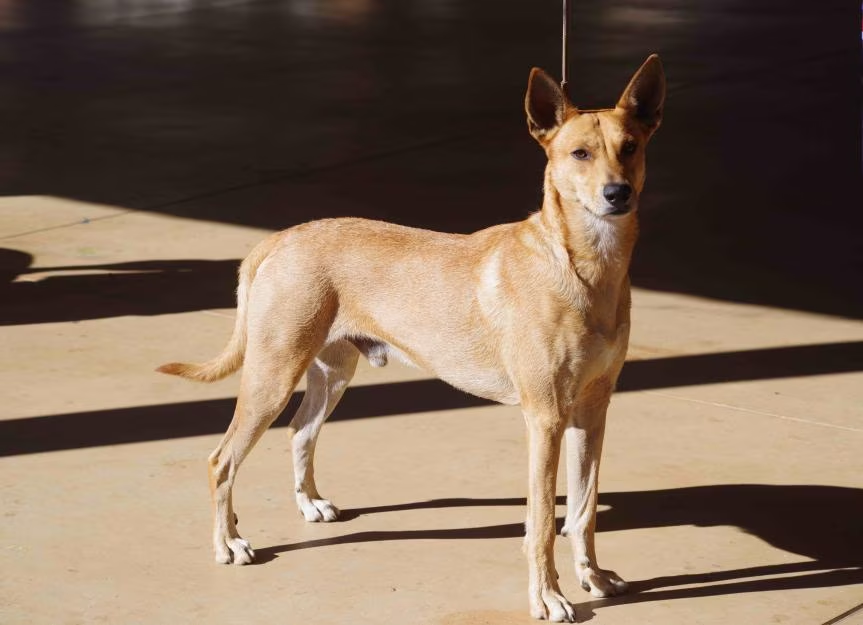
| Height | 45–61 cm |
| Weight | 15–25 kg |
| Lifespan | 12–15 years |
| FCI group | not FCI-recognized (primitive type) |
| Origin | USA |
Exact ratings
- Sturdy overall — but with the cautions listed below
- Ivermectin sensitivity (some individuals)
- Injury risk from activity and escapes
- Behavior problems if under-socialized
- Practically no breed-specific diseases
A near-natural diet (quality protein) and weight control. The key is early, patient socialization, plenty of exercise and space; a secure fence (a strong instinct).
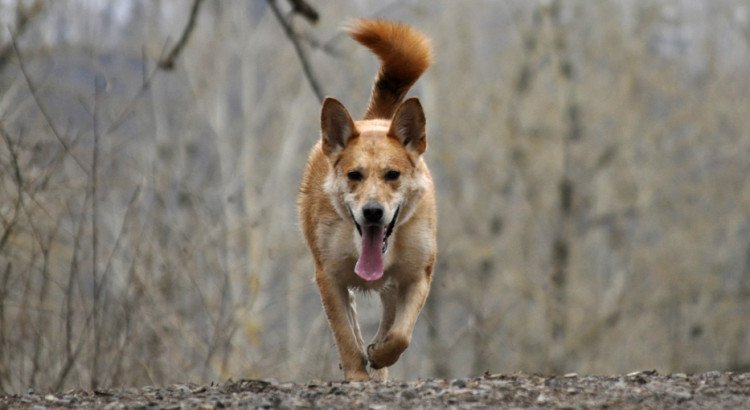
The Carolina Dog, frequently referred to as the American Dingo, isn’t just another breed developed by humans for fun or work. It is a living “museum piece,” America’s first domesticated dog, miraculously preserved to this day in almost unchanged form. This is an ancient primitive-type breed, phenotypically and genetically similiar to the Australian Dingo. Its representatives have kept an anatomical affinity with dogs of the Neolithic period and a semi-wild, independent temper. Learn more on Tvaryny.
The Carolina Dog (American Dingo): A Brief Overview and Characteristics
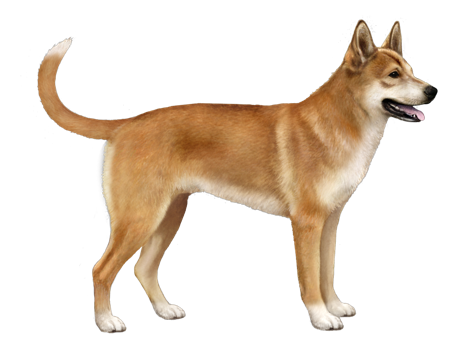
| Country of Origin | United States (South Carolina, Georgia) |
| Time of Origin | Neolithic (rediscovered in the 1970s) |
| Breed Type | Primitive (pariah), sighthound, companion dog |
| Life Span | 12-15 years |
| Height at Withers | 18-24 inches (45-61 cm) |
| Weight | 33-44 lbs (15-20 kg) |
| Activity Level | High |
| Training Difficulty | High (requires an experienced owner) |
History of the Breed: From the Neolithic to the Nuclear Plant
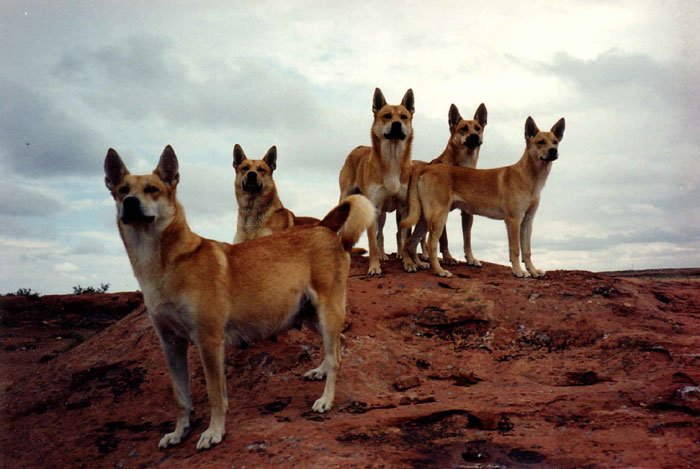
The history of the Carolina Dog is a fascinating detective story that has unfolded over millennia. It is believed that the ancestors of these dogs crossed the Bering Land Bridge (Beringia) along with the first humans who settled North America, approximately 8,000–12,000 years ago. For a long time, they lived alongside Native Americans, assisting in hunting and protection. Later, with the arrival of Europeans, part of the population became feral and hid in inaccessible swampy areas.
The official “discovery” of the breed for science happened only in the 1970s. Dr. I. Lehr Brisbin Jr., an ecologist from the University of Georgia, was researching flora and fauna around the Savannah River Site – a closed territory where a nuclear materials production plant was located. It was there, in isolation from the outside world and other breeds, that he noticed packs of wild dogs.
Brisbin was surprised by their appearance: they looked like twins of Australian Dingos. This led the scientist to believe that he was not just looking at mutts, but a relic population. Genetic studies confirmed that the DNA structure of Carolina Dogs contains unique haplotypes, which testify to their descent from ancient Asian dogs, rather than European breeds brought by colonists. This makes them a true treasure for cynology and genetics.
What the Carolina Dog Looks Like: Anatomy of Survival
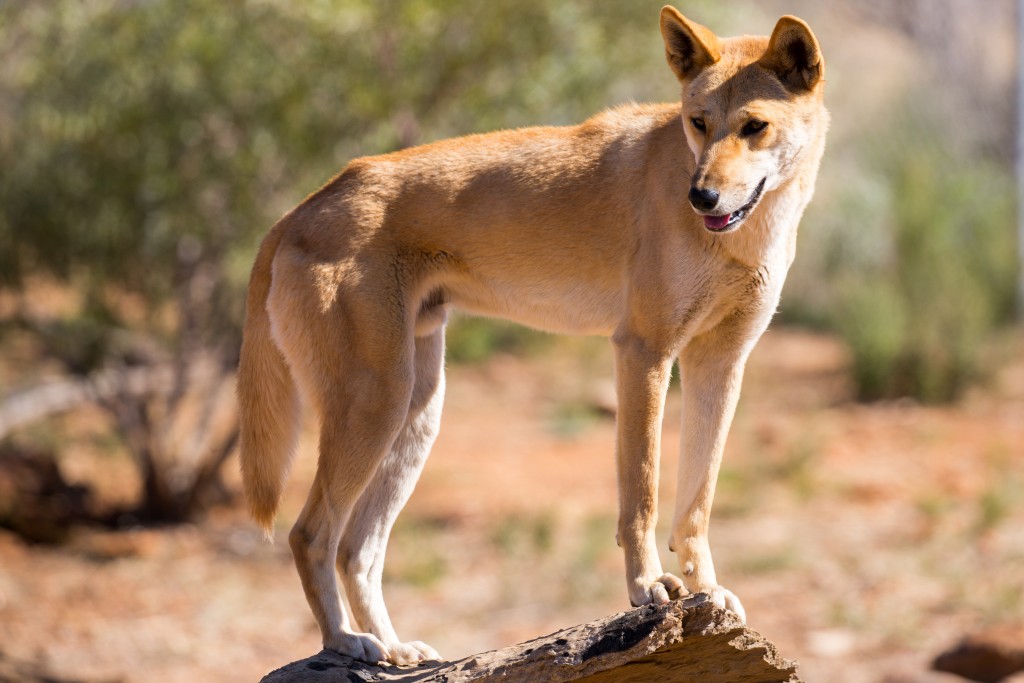
The appearance of the American Dingo is the result of thousands of years of natural selection, not the whims of breeders. Every feature of their exterior has functional significance for survival in the conditions of subtropical forests and savannas.
- Physique: The Carolina Dog has a light, dry, and graceful constitution that conceals explosive physical power. They resemble small wolves or jackals, but with more refined lines. A deep chest provides a large lung volume for endurance running. This links them to other hardy breeds, such as the Caravan Hound (Mudhol Hound), which is also adapted to hot climates.
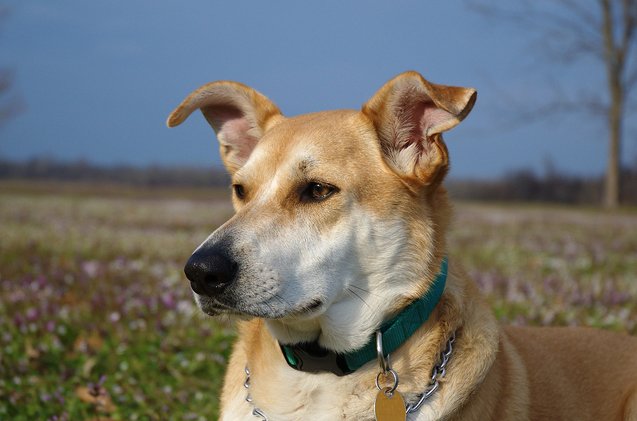
- Head and Muzzle: A wedge-shaped head with a smooth stop. The muzzle is pointed, allowing them to easily extract rodents from burrows. The jaws are very strong, with a scissor bite.
- Ears: Large, triangular, upright, and very mobile. They allow the dog to catch the slightest rustle in the grass.
- Eyes: Almond-shaped, set obliquely; color varies from dark brown to amber. The gaze is inteligent, alert, and “wild”.
- Tail: A special pride of the breed. It resembles a fishing hook (a “fish hook” shape) and often has a white tip. In an excited state, the dog holds it high but does not curl it into a ring like spitz breeds.
Coat and Color
The coat is short, dense, and stiff to the touch. During winter, dogs living outdoors develop a dense undercoat, which sheds heavily in the spring. The most common coloring is all shades of red: from light straw to rich red-ginger. Black and tan variations and spotted (“piebald”) ones are also found, although the red color is classic.
Interesting detail: On the shoulders, the coat is often slightly lighter or has a different shade, forming so-called “angel wings.” This is a characteristic sign of purebred specimens.
Character: Between the Wild and Home Comfort
The character of the Carolina Dog has been shaped by its lifestyle over millennia. It is a semi-wild animal that has only recently allowed humans to approach it again. They are extremely cautious and suspicious of strangers. This trait makes them excellent alarm systems – no one will approach your campsite or house unnoticed. However, unlike the Kangal Shepherd Dog (Kangal Karabash), which will launch a direct attack on a threat, the Carolina Dog prefers to keep its distance and warn with barking or howling.
Within the family circle, they are affectionate but unobtrusive creatures. They do not demand constant petting but love to be near their owner. Their behavior resembles that of a cat in many ways: they love high places to survey their territory and keep themselves clean. In this, they are similar to the Basenji – another ancient breed famous for its cleanliness and independence.
Social Hierarchy
The Carolina Dog perceives the human family as a pack. For comfortable coexistence, the owner must occupy the place of an unquestioned but fair leader. Cruelty with this breed is unacceptable – it will lead to the dog withdrawing into itself or becoming aggressively defensive. They need a partner, not a tyrant.
Unique Behavioral Features
One of the most interesting features of the Carolina Dog is the so-called “snout pits.” Unlike other dogs that dig the earth with their front paws, American Dingos often use their nose, screwing it into the ground to dig small conical holes. Scientists believe this is an atavism that helped them extract edible roots or insects in soft forest soil. This behavior is instinctive and can manifest even in puppies raised in an apartment.
It is also worth noting their vocal repertoire. Besides ordinary barking, they can produce various howling sounds, which relates them to the New Guinea Singing Dog. This is a method of pack communication over long distances.
Health and Genetics: The Power of Natural Selection
The physical power and endurance of the Carolina Dog are easily explained by the “pure” history of the breed. American Dingos developed without the interference of breeders, who often sacrifice health for the sake of looks. Harsh natural selection was at work here: only the fastest, smartest, and healthiest survived. Health is generally robust, but no breed-wide list of hereditary diseases has been compiled — “not described” means “not studied”, not “not there”.
However, future owners should be aware of a few nuances:
- Sensitivity to medication: Like many herding and primitive breeds, Carolina Dogs may carry the MDR1 gene mutation. This makes them sensitive to certain drugs, particularly ivermectin (often used in parasite treatments). Before treating the dog, be sure to consult a vet or perform a genetic test.
- Hip Dysplasia: Although this occurs much less frequently than in large Molossers, the risk exists, especially in older dogs.
- Eyes: Retina problems are occasionally encountered, so a preventative check-up with an ophthalmologist once a year wouldn’t hurt.
Care and Maintenance: Why an Apartment Is Not the Best Option
It is extremely difficult, and sometimes impossible, to comfortably keep a semi-wild pariah dog in a cramped city apartment. They need space for movement and exploration. The ideal option is a detached house with a large, securely fenced yard. But remember: a standard picket fence is no obstacle for them.
- Perimeter Security: The fence must be high (minimum 6 feet or 2 meters) and buried in the ground to prevent digging underneath. It is desirable to equip the top with an inward incline (anti-jump).
- Grooming: Coat care is minimal. Carolina Dogs are very tidy and often “wash” themselves like cats. It is sufficient to brush them once a week, and daily during the shedding season. Bathing should only be done in case of heavy soiling, as frequent washing strips the protective oily layer from the skin.
- Claws: If the dog does not run enough on hard ground, the claws can grow too long and interfere with walking. They need to be trimmed regularly.
Training and Socialization: A Challenge for the Intellect
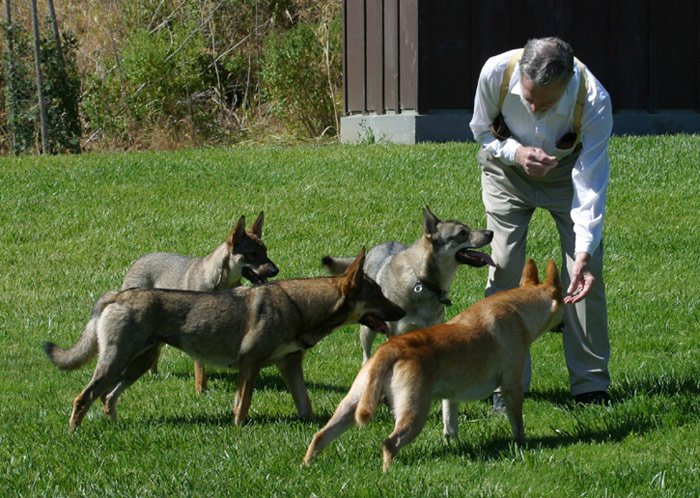
Raising an American Dingo requires not so much strength as cunning and patience. They are smart, but their intellect is directed towards survival, not performing “sit” or “speak” commands. Motivation must be built on positive reinforcement. Food is an excellent stimulus, as their hunter’s instinct is very strongly developed.
Socialization is a critically important stage. You need to start introducing the puppy to people, other dogs, city sounds, and transportation as early as possible (from 2-3 months). Without this, their natural caution will develop into skittishness or fear aggression. This links them to the Canaan Dog, which also requires intensive early socialization for life in the modern world.
Important: Never let a Carolina Dog off the leash in an unfenced area. The hunting instinct can trigger instantly – upon seeing a squirrel or a rabbit, the dog will stop hearing your commands.
Nutrition: Natural or Dry Food?
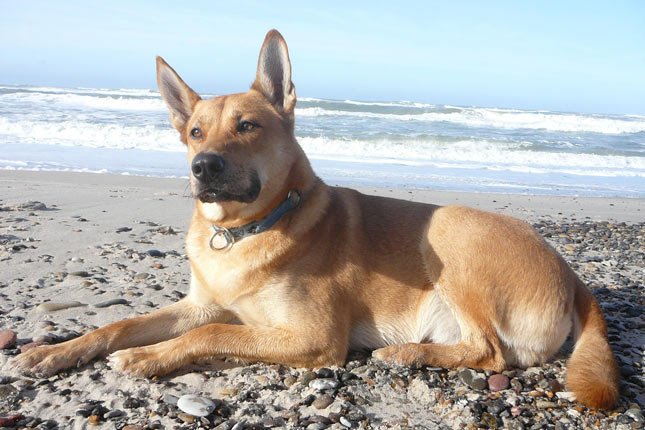
Historically, the Carolina Dog ate what it could catch or scraps of human food. Their gastrointestinal tract is robust, but that doesn’t mean they can be fed trash. Modern owners are divided into two camps: supporters of the BARF system (raw meat and bones) and users of high-quality grain-free kibble (holistic).
It is important to avoid overfeeding. These dogs have a high metabolism, but in apartment-living conditions, they can gain weight. The basis of the diet should be protein of animal origin.
Pros and Cons of the Breed
| Advantages (Pros) | Disadvantages (Cons) |
|---|---|
| Health is generally robust, but no breed-wide list of hereditary diseases has been compiled — “not described” means “not studied”, not “not there”. | Strong hunting instinct, may hunt cats and small dogs. |
| High intelligence and ability to solve problems independently. | Independence, stubbornness, difficult to train with classical methods. |
| Cleanliness, practically no “doggy” smell. | Tendency to dig holes in the yard. |
| Strong attachment to “their” pack (family). | Distrustful of strangers, can be skittish without socialization. |
| Do not bark in vain, quiet in the home. | Escape artists: they climb over fences and dig underneath them. |
Interesting Facts About the Carolina Dog
- Reproduction: Carolina Dog females often come into heat only once a year, like wolves or wild dingoes. This is further evidence of their primitive nature.
- Ecotype: There is an opinion that this specific type of dog is the standard for survival in the North American wild. If all dog breeds suddenly disappeared and then began to evolve anew, in a few thousand years they would likely look like the American Dingo.
- Conservation Status: Although the breed is recognized by the UKC (United Kennel Club), in the AKC (American Kennel Club) it is still in FSS (Foundation Stock Service) status, which means the stage of documented but not fully recognized breeding.
Frequently Asked Questions (FAQ)
Are they suitable for families with children?
Carolina Dogs can get along well with children if they are raised with them. However, they do not tolerate rough handling. This is not a “nanny dog,” and children’s games with such a dog should always take place under adult supervision.
Can they live with cats?
This is risky. A high prey drive forces them to perceive small animals as prey. An exception is possible if the puppy comes into a home where there is already a cat and grows up with it, perceiving it as a member of the pack.
Do they shed heavily?
Yes, twice a year there is an intense seasonal shedding period, during which fur can be everywhere. At other times, shedding is moderate.
Video About the Breed
- Extremely robust “natural” health
- Clean, almost odorless
- Hardy and undemanding
- Devoted to the pack, clever
- Shy, wary of strangers
- A strong hunting instinct (dangerous for cats)
- Independent — needs patience in training
- Needs space and plenty of exercise
| New Guinea Singing Dog | Australian Dingo | Canaan Dog | |
|---|---|---|---|
| Height | 36–46 cm | 48–58 cm | 48–61 cm |
| Energy | 4.5 | 4.5 | 4 |
| Apartment | 1.5 | 1 | 2.5 |
| Beginners | 1 | 1 | 2 |
Is the Carolina Dog a wild animal?
Is the breed suitable for a beginner?
Why does it have such a distinctive tail?
Primitive type · AKC Foundation Stock Service
For apartments · For kids · For beginners · Active · Smartest · Hypoallergenic · All rankings →