

| Height | 48–59 cm |
| Weight | 18–28 kg |
| Lifespan | 12–14 years |
| FCI group | 6 · scenthounds |
| Origin | Italy |
Exact ratings
- “Healthy” here means no mass syndrome, not no risk
- Ear infections (pendulous ears)
- Hip dysplasia (less common)
- Obesity with insufficient exercise
- Injuries while hunting
Balanced food for an active scenthound, with weight control. Check the pendulous ears regularly; provide plenty of exercise and scent work; the owner should handle the training in person.
The Italian Hound, or as it’s known in its homeland, the Segugio Italiano a Pelo Raso, is more than just a dog—it’s a living piece of Italian history and culture. This elegant, muscular canine belongs to an ancient breed whose popularity hasn’t faded for centuries. Its extraordinary devotion to family and home makes this tireless hunter a wonderful companion and an attentive watchdog. This kind of pet doesn’t need complex grooming, but it does crave a friendly and respectful attitude from all family members. It’s easy to train, but it needs its owner to be directly involved in its upbringing, as this is how it forms its strongest bond. It’s a unique hunter and companion, and we’ll dive into all the nuances of caring for it right here on Tvaryny.
The Italian Hound (Short-Haired): A Quick Breed Overview
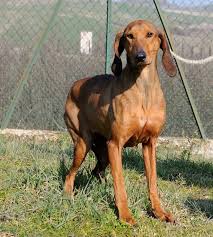
| Breed Name | Italian Hound (Short-Haired) / Segugio Italiano a Pelo Raso |
| Origin | Italy |
| FCI Classification | Group 6 (Scent Hounds and Related Breeds), Section 1.2 (Medium-Sized Hounds). |
| Year of Breed Recognition | Standard approved in 1989 |
| Purpose | Hunting hares and other small game, companion dog |
| Lifespan | 11-14 years |
| Height at Withers | Males: 52-60 cm; Females: 50-58 cm |
| Weight | 18-28 kg |
| Temperament | Energetic, devoted, sensitive, independent, vocal |
History of the Italian Hound
The Italian Hound’s history goes back to ancient times, making it one of Europe’s oldest breeds. It’s believed that its ancestors were ancient Egyptian hounds that arrived on the Apennine Peninsula with Phoenician traders. These dogs bred with local Celtic hounds, which led to the formation of a unique breed perfectly suited for hunting in the Italian landscape.
The breed’s popularity truly blossomed during the Renaissance. Noble families like the Sforza, Gonzaga, and Medici kept large packs of these dogs for hunting hares, foxes, and wild boars. Images of hounds very similar to the modern Segugio can be found in numerous frescoes, paintings, and sculptures from that era, such as in the famous Reggia di Caserta palace. This shows the high status and value the breed held among the Italian aristocracy.
For centuries, the breed developed primarily as a working dog, where the main selection criteria were its hunting qualities: speed, endurance, an incredible sense of smell, and a distinctively loud voice. Official recognition and standardization came much later. The first official description was made only in 1881, and the modern standard was approved by the Fédération Cynologique Internationale (FCI) in 1989. Today, the Italian Hound remains the most popular hunting breed in Italy, but thanks to its gentle nature, it’s becoming an excellent companion dog more and more often.
Breed Standard and Appearance
The short-haired Italian Hound is a medium-to-large dog with a strong, yet elegant build. Its appearance marks it as a typical hound, built for speed and endurance. Every part of its body is functional and geared toward effective work in the field.
- Body: Lean and muscular, with a well-developed chest that allows for a large lung capacity. The body length is equal to or slightly longer than the height at the withers. The back is straight, and the loin is strong.
- Head: Long, narrow (dolichocephalic), with a characteristic “Roman nose” (a small bump on the bridge of the nose). The skull is slightly domed. The transition from the forehead to the muzzle is smooth.
- Eyes: Large, expressive, and almond-shaped. The color is dark ochre. The gaze is intelligent, soft, and a little sad.
- Ears: Long and droopy, set at eye level. They are wide at the base and narrow to a pointed tip, curled inward. The length of the ear should reach the tip of the nose.
- Tail: Set high, thin at the base, and tapering even more toward the end. It hangs down in a relaxed state and rises no higher than the line of the back when moving.
- Coat: The main difference from its closest relative. The coat is very short, dense, shiny, and lies close to the body. It feels smooth and silky to the touch. This short coat perfectly highlights the dog’s muscular physique. Its close relative, the rough-haired Italian Hound, has a coarser and longer coat, which is the key difference between the two varieties.
- Coloring: Two main variations are allowed: solid fawn (shades from rich reddish to light yellow) and black-and-tan (a black saddle on a fawn background). White markings are permitted on the muzzle (a star), neck, chest, limbs, and the tip of the tail.
The Italian Hound’s Character and Temperament
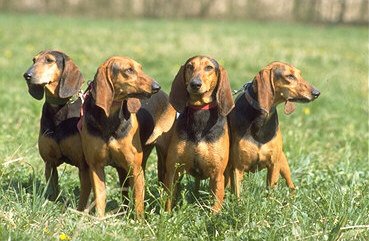
The Italian Hound’s character is a fascinating combination of two opposites. When hunting, it’s a relentless, excited, and independent pursuer that can follow a scent for hours, letting out its famous melodic bay. At home, however, it turns into a calm, gentle, and incredibly loyal companion. This duality is one of the breed’s most attractive features.
The Segugio is very focused on its family and owner. It forms a deep bond and struggles with separation or a change of owner. It has a very sensitive nature, subtly reacting to a person’s mood. Harshness, yelling, and unfair punishments can deeply wound it, so its training requires patience, consistency, and positive reinforcement.
The Italian Hound usually gets along well with children, showing patience and gentleness, especially if it’s grown up with them. However, because of its hunting instincts, any interaction with small children should be supervised. It typically lives peacefully with other dogs, as it’s used to working in a pack. But friendship with cats, rodents, and other small animals is unlikely—its chasing instinct is just too strong.
It’s worth noting that this is a very “talkative” dog. Its bark isn’t just a bark, but a loud, melodic, echoing voice that can be heard from a great distance. This is a great quality for hunting, but it can be a problem for neighbors if the dog lives in a city apartment and often gets bored.
Pros and Cons of the Breed
| Pros | Cons |
|---|---|
| ✅ Robust health and endurance | ❌ Very high need for physical exercise |
| ✅ Family loyalty and gentle nature at home | ❌ Strong hunting instinct, tendency to run off |
| ✅ Minimal coat care | ❌ Loud and frequent baying |
| ✅ High intelligence and trainability | ❌ Not suitable for homes with small pets |
| ✅ Gets along well with other dogs | ❌ Prone to independence and stubbornness during training |
| ✅ Elegant and beautiful appearance | ❌ Doesn’t handle loneliness well and can be destructive |
Care and Upkeep of the Short-Haired Hound
Keeping an Italian Hound has its own specifics, tied to its origin and purpose. This is not a couch dog, and it needs the right conditions to live a happy life.
Living Conditions
The ideal place for a Segugio is a private home with a large, securely fenced yard. The fence should be tall and sturdy because these dogs, once they catch an interesting scent, can easily jump over or dig under it in an attempt to escape. Keeping one in an apartment is possible, but only if the owner is ready to provide their pet with intense and long daily walks (a minimum of 2 hours a day).
Physical Exercise
This is a key aspect of their care. An Italian Hound needs more than just walks on a leash; it needs the opportunity to run, explore, and burn off its colossal energy. The best activities for it are:
- Long runs or hikes with the owner.
- Games in an enclosed area where it can be safely let off the leash.
- Scent work (nosework) or other canine sports that engage its sense of smell.
Without enough activity, the hound can become restless, destructive, and miserable. Their needs for training are similar to those of other independent hounds, like the Hellenic Hound or even the Small Blue Gascony Hound, where mutual understanding and respect are key.
Coat Care and Hygiene
Caring for the Segugio’s short coat is very simple. It’s enough to wipe it down once a week with a damp cloth or a special rubber grooming mitt to remove dead hair and maintain its shine. Shedding is moderate. You should only bathe the dog when necessary.
The ears need the most attention! Their floppy shape prevents proper ventilation, creating an ideal environment for bacteria and fungi to grow, leading to infections (otitis). Regular inspection and cleaning of the ear canal with a special lotion are essential, 1-2 times a week. It’s also important to regularly trim its nails and monitor its dental health.
Nutrition: What to Feed a Short-Haired Italian Hound
Proper nutrition is the key to your hound’s health and energy. The diet must be balanced and meet the breed’s high energy needs. You can choose either high-quality dry food or a raw food diet.
When choosing dry food, opt for premium or super-premium brands designed for active, medium-sized dogs. The protein content should be no less than 25-30%.
If you choose a raw food diet, the basis of the diet (about 50-60%) should be meat and offal. An Italian Hound needs about 400-500 grams (14-18 ounces) of meat products daily.
| Product | Approximate Quantity | Notes |
|---|---|---|
| Meat and Offal | 400-500 g (14-18 oz) | Lean beef, chicken, turkey, tripe, heart, liver (no more than 1-2 times a week). |
| Grains | 200-250 g (7-9 oz) | Buckwheat, rice, oatmeal. Cooked in water or a low-fat broth. |
| Vegetables | 150-200 g (5-7 oz) | Carrots, pumpkin, zucchini, beets (carefully), cabbage. Can be given raw or lightly steamed. |
| Fermented Dairy Products | 100-150 g (3.5-5 oz) | Kefir, low-fat cottage cheese, plain yogurt (a few times a week, separate from meat). |
| Additionally | 1-2 times a week | Sea fish (boiled, boneless), 1-2 egg yolks, 1 tbsp vegetable oil. |
Important: Do not give the dog cooked tubular bones—their sharp splinters can seriously injure the gastrointestinal tract. It’s better to offer a large beef bone for teeth cleaning. Ensure constant access to fresh, clean water.
Training and Education
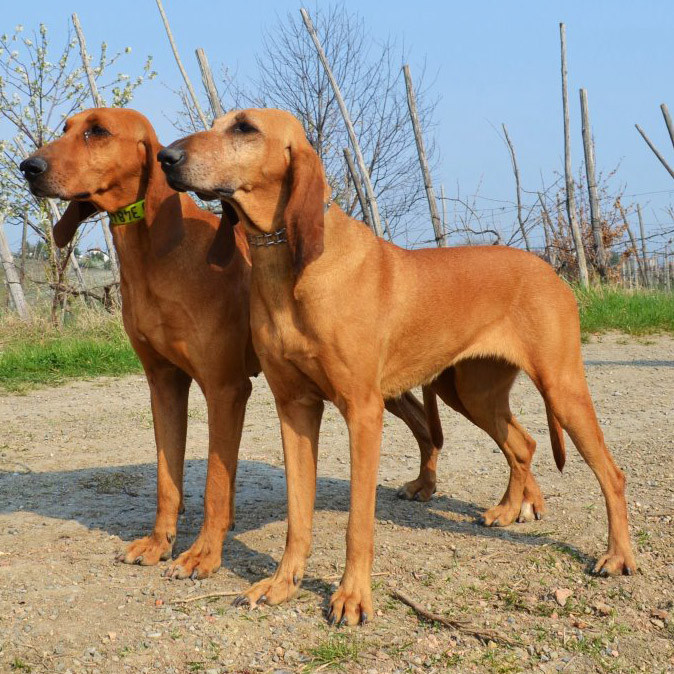
Training an Italian Hound is a fun but not the simplest task. It’s a very intelligent dog, but its smarts are combined with a natural independence and a certain stubbornness, which is typical for many hunting breeds. For millennia, it was trained to make its own decisions while hunting, so you shouldn’t expect unquestioning obedience.
The main rule is that the owner must be the one doing the training. A Segugio bonds strongly with one person and will listen best to them. Training conducted by an external dog trainer without the owner’s involvement may not produce the desired results. Their training needs are similar to other independent hounds, like the Hellenic Hound or even the Small Blue Gascony Hound, where mutual understanding and respect are key.
Methods based on positive reinforcement work best: praise, treats, and games. Sessions should be short, dynamic, and interesting so the dog doesn’t lose interest. The most important commands are “Come,” “Heel,” and “Leave it.” The recall command needs to be practiced from a young age and in various conditions, since the hunting instinct can outweigh obedience outdoors.
Early socialization is critically important. From puppyhood, introduce the hound to different people, sounds, places, and other animals. This will help raise a well-balanced and confident dog.
Health and Common Ailments
Italian Hounds are a breed with robust health, toughened by centuries of natural selection. They aren’t prone to many of the genetic diseases common to other purebred dogs. However, they do have a few weak spots that an owner should be aware of.
- Ear infections (otitis). This is the number one problem for the breed. Due to the drooping shape of their ears, air circulation is hindered, creating an ideal environment for bacteria and fungi to grow. Regular cleaning and inspection are mandatory for prevention.
- Bloat and gastric torsion (GDV). Like many dogs with deep chests, the Segugio has a predisposition to this dangerous condition. To prevent it, feed your dog smaller portions 2-3 times a day and don’t allow vigorous play immediately after eating.
- Hip dysplasia. While this isn’t a widespread problem for this breed, the risk exists, as it does for any medium or large-sized dog.
- Injuries. Due to their activity and passion during walks and hunting, hounds can get cuts, sprains, and other injuries. Always have a basic first-aid kit with you.
With proper care, a balanced diet, and sufficient activity, the Italian Hound will bring you joy with its good health for many years.
Interesting Facts About the Italian Hound
- Ancient roots: It is believed that the ancestors of the Segugio were depicted on the famous “Diana the Huntress” statue in the Naples Museum.
- The “singing” voice: The Italian Hound’s voice is so melodic and unique that hunters can distinguish what stage the hunt is at by its tone: whether the dog has just picked up a scent or is already seeing the game.
- Two in one: There are two officially recognized varieties of the breed: the short-haired (Pelo Raso) and the rough-haired (Pelo Forte), which differ only in coat type. They are even judged in the same ring but as two separate breeds.
- National treasure: In Italy, this breed is the most numerous and is considered a national treasure. Italians are very proud of their hounds.
- More than just hares: Although their main specialization is hares, the Italian Hound is also successfully used for hunting foxes and wild boars.
Frequently Asked Questions (FAQ)
Is the Italian Hound a good fit for an inexperienced owner?
More no than yes. The breed requires an understanding of its hunting nature, a lot of time for exercise, and patience in training. A beginner might find it difficult to handle its energy and independence.
Can the Italian Hound live in a city apartment?
Theoretically, yes, but it’s highly undesirable. It would demand immense dedication from the owner: daily, multi-hour, active walks in all weather conditions. Without this, the dog will suffer and may start to destroy the apartment.
How much do they shed?
Shedding is moderate. Regular brushing with a rubber brush will help keep the amount of hair in the house under control.
Can this dog be left alone for long periods?
No. Italian Hounds are very attached to their families and don’t cope well with loneliness. They can suffer from separation anxiety, which manifests as incessant barking and destructive behavior.
Are they aggressive toward people?
Absolutely not. Aggression toward people is not characteristic of this breed. They may be reserved with strangers, but they are infinitely affectionate and loyal to their family.
- Tireless hunter with an excellent nose
- Very devoted to the family, a watchful guard
- Easy to train, undemanding to groom
- Very robust “natural” health
- Vocal — “gives tongue” on the trail
- Strong hunting instinct (risky with cats)
- Bonds with one owner
- High exercise needs — not for an apartment
| Italian Hound (coarse-haired) | Spanish Hound | Harrier | |
|---|---|---|---|
| Height | 48–59 cm | 48–57 cm | 48–53 cm |
| Energy | 4.5 | 4 | 4.5 |
| Apartment | 2 | 2 | 2 |
| Beginners | 3 | 3 | 3 |
How does the shorthaired Segugio differ from the coarse-haired?
Is the Italian Hound good for a family?
Who should train the Segugio?
FCI Standard No. 337 · Ente Nazionale della Cinofilia Italiana
For apartments · For kids · For beginners · Active · Smartest · Hypoallergenic · All rankings →