

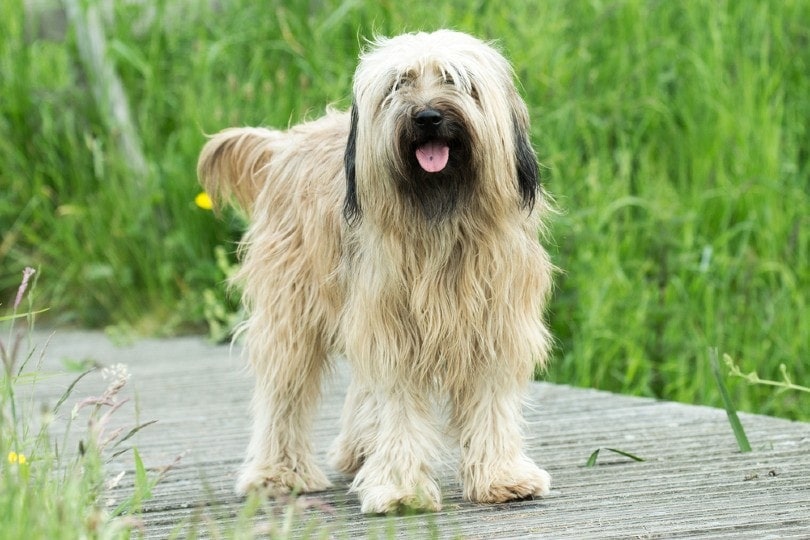
| Height | 45–55 cm |
| Weight | 17–20 kg |
| Lifespan | 12–14 years |
| FCI group | 1 · sheepdogs and cattle dogs |
| Origin | Spain (Catalonia) |
Exact ratings
Common health issues
Nutrition
The Catalan Sheepdog (Gos d’Atura Català) is more than just a dog; it’s a true legend of the Pyrenees. For centuries, this breed has been a loyal partner to shepherds, impressing with its cleverness, endurance, and boundless devotion. Today, thanks to its friendly nature and intelligence, the Catalan Sheepdog is increasingly becoming a beloved family member and a reliable companion. This detailed breed overview was prepared by the Tvaryny team to help you get to know this unique “Spaniard” better. You can read about this and more on Tvaryny.
The Catalan Sheepdog embodies energy and a zest for life. It adapts remarkably well to the shifting mountain climate but is also comfortable in urban settings, provided it gets enough physical activity. A sedentary lifestyle is absolutely not for this dog. A future owner should be prepared for active games, long walks, and constant engagement with their shaggy pal. It’s no surprise that a Catalan Sheepdog puppy was the official mascot of the 1992 Summer Olympics in Barcelona, symbolizing agility and friendliness.
History of the Catalan Sheepdog
The roots of the Catalan Sheepdog go back centuries, with its ancestors likely being various mountain herding dogs of the Iberian Peninsula. It’s believed that the Pyrenean Sheepdog had a significant influence on the breed’s development, as the two share similar features in both appearance and working abilities. The first stable breed type began to form in the 18th century when shepherds purposefully selected dogs best suited for the harsh mountain conditions and effective work with flocks. The main criteria were endurance, intelligence, obedience, and the ability to make decisions on their own.
Official recognition came much later for the breed. In 1911, the Catalan Sheepdog was recognized as one of Spain’s national breeds. A significant milestone was when the breed standard became the first Spanish standard recognized by the Fédération Cynologique Internationale (FCI). This paved the way for the Catalan Sheepdog to appear at international dog shows and helped popularize it outside of its homeland. During the Spanish Civil War (1936-1939), these dogs demonstrated their versatility and bravery, serving as messengers and guards, delivering communications and protecting important sites.
Appearance and Breed Standard of the Catalan Sheepdog
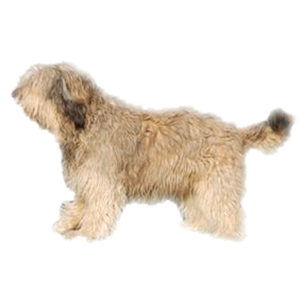
The Catalan Sheepdog is a medium-sized dog with a sturdy but not heavy build and well-developed muscles. The body is slightly longer than it is tall, giving the dog the agility and endurance needed for long hours of work.
The head of the Catalan Sheepdog is strong and wedge-shaped, proportional to the body. The skull is slightly convex, and the stop (the transition from the forehead to the muzzle) is moderate. The muzzle is straight and slightly shorter than the skull. A characteristic feature is their thick eyebrows, beard, and mustache, which give them a somewhat serious but intelligent expression.
The eyes are large, round, and very expressive, with a dark amber color that indicates a lively intellect.
The ears are triangular, set high on the head, and mobile. They can be upright or semi-erect with tips that fold down close to the head.
The nose is always black.
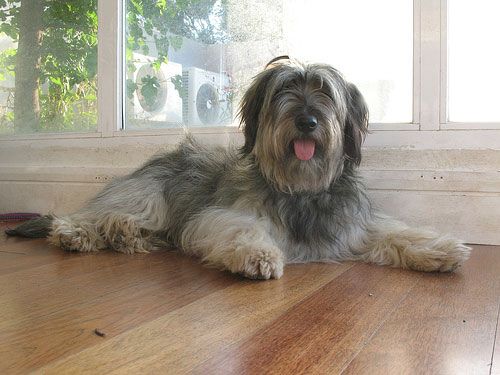
The coat is one of the breed’s main distinguishing features. It is long, straight or slightly wavy, and quite coarse to the touch, with a dense undercoat that provides reliable protection from the elements. On the head, the coat forms characteristic eyebrows, a mustache, and a beard. The dog sheds twice a year in a rather unique way: the front half of the body sheds first, and then the back half sheds later. A rare short-haired variety also exists, but the long-haired dogs are more typical representatives of the breed.
The coloration of the Catalan Sheepdog is very diverse and is usually a result of a mix of different hair shades: fawn, reddish-brown, gray, and black. From a distance, the dog may appear to be a single solid color, but up close, you can see that the tips of the hairs often have a darker shade. The main typical colors are:
- Fawn: Ranges from light sand to rich red, often with darker hair tips (a charcoal dusting).
- Sable (red with black hair tips): Creates a darkened effect along the back and on the head.
- Gray: A mix of black, gray, and white hairs that produces various shades from light gray to dark gray.
- Black and tan: Less common, with characteristic tan markings above the eyes, on the muzzle, chest, and legs.
- Brindle: Also possible, though less common.
White patches are not allowed, with the exception of a small mark on the chest or toes, but an entirely white coat is a disqualifying fault.
| Characteristic | Standard according to FCI No. 87 |
| General Appearance | A dog with a slightly elongated body, mesomorphic, slightly above average height. Harmonious, with a beautiful coat and a noble head. |
| Height at Withers | Males: 18.5 – 21.5 inches Females: 17.5 – 21 inches |
| Weight | Males: approximately 40 – 57 lbs Females: approximately 35 – 48.5 lbs (weight is not specified in the standard, but this is an approximate range) |
| Head | Strong, slightly convex at the skull, wide at the base, narrowing toward the nose but not pointed. |
| Muzzle | Straight, rather short, in the shape of a truncated pyramid with rounded contours. |
| Eyes | Very open, expressive, lively, and intelligent. Round, dark amber in color, with black eye rims. |
| Ears | Set high, triangular, thin, and pointed at the ends. Covered with long hair that ends in fringe. Mobile. |
| Tail | Set rather low. Can be long (reaching slightly below the hock) or short (less than 4 inches). Some individuals may be tailless. The tail is carried low at rest and lifts when moving, but does not curl over the back. |
| Coat | Long, straight or very slightly wavy, harsh, with an abundant undercoat, especially on the back third of the body. On the head, it forms a beard, mustache, topknot, and eyebrows. |
Temperament and Behavioral Traits of the Catalan Sheepdog
The Catalan Sheepdog is a dog with a vibrant, lively temperament, yet it is surprisingly composed and sensible. It’s not a dog that aimlessly burns energy, but rather an intelligent and observant companion. It’s always ready for action but knows how to wait and analyze a situation. This breed combines the playfulness of a puppy with the seriousness and responsibility of an adult dog. It’s one of those breeds that, much like the Rough Collie, impress with their intelligence and trainability.
Intelligence and cleverness are the calling cards of the “Catalan.” They learn quickly, easily remember commands, and are capable of independent decision-making, which was extremely important for their herding work. This trait can sometimes manifest as a certain stubbornness if the dog believes its decision is the right one. Therefore, consistency and fairness in training are key.
Loyalty and affection for the family are another outstanding trait. The Catalan Sheepdog is very people-oriented and strives to be a full-fledged member of the “pack.” It gets along equally well with all family members, including children, for whom it shows amazing patience and gentleness. It typically socializes well with other pets, especially if they are raised together. They are cautious with strangers but without unwarranted aggression. This is an excellent watchdog that will always warn of approaching strangers with a loud bark, but won’t bark without a reason.
Energy and need for activity. This is a very active breed that requires regular and long walks with the opportunity to run off-leash in safe areas. It needs not only physical but also mental stimulation. Games, training, and dog sports (such as agility) will help channel its energy in the right direction. A bored Catalan Sheepdog may find its own entertainment, and it won’t always be to its owner’s liking.
The herding instinct is very strong in Catalan Sheepdogs. Even if the dog lives in a city, it may try to “herd” family members, especially children or other animals, by gently nipping at their heels or running around and directing them. This is not a sign of aggression but an innate behavior that can be corrected with proper training.
Grooming, Health, and Activity for the Catalan Sheepdog
Coat Care
The luxurious long coat of the Catalan Sheepdog requires regular and thorough grooming. To prevent matting and keep the coat healthy, you should brush it at least 2-3 times a week, and daily during shedding periods. Pay special attention to the areas behind the ears, on the neck, under the armpits, and on the “pants,” where mats form most often. Use quality brushes and combs suitable for a long coat. Bathe the dog as needed, typically no more than once every 2-3 months, or if it gets very dirty. Use special shampoos for long-haired dogs that won’t dry out the skin and coat. After bathing, the coat should be thoroughly blow-dried while brushing it.
Shedding for the Catalan Sheepdog happens twice a year and has an interesting characteristic: the front part of the body (head, neck, front legs, chest) sheds first, and then, after some time, the back half (back, belly, hind legs, tail) sheds. During this period, daily brushing is a necessity.
General Care
- Ears: Regularly check and clean the ears with a special dog ear cleanser to prevent the buildup of dirt and the development of infections. The long hair around the ear canal may need occasional trimming for better ventilation.
- Eyes: Check the eyes daily for any discharge. If necessary, wipe them with a clean damp cloth or a special lotion.
- Teeth: Regular teeth brushing with a special dog toothbrush and toothpaste will help prevent tartar buildup and gum disease.
- Nails: If the nails don’t naturally wear down during walks, they should be trimmed with a nail clipper approximately once a month.
Activity and Living Conditions
The Catalan Sheepdog is a very energetic breed that requires significant physical activity. Daily long walks (at least 1.5-2 hours per day) with the opportunity for free running are a must. This breed is an excellent fit for active individuals and families who enjoy spending time outdoors. It will be a great companion for jogging, bike rides, or hiking.
Thanks to its dense coat, the Catalan Sheepdog tolerates cold well and can live in either an apartment or a house with a kennel. However, even with kennel living, it needs regular interaction with its owner and active walks outside the kennel. It is not suited for life on a chain. In an apartment, the “Catalan” behaves quite calmly, provided its needs for activity and mental stimulation are met. Otherwise, out of boredom, the dog may start to destroy things or bark excessively.
Health and Typical Ailments of the Catalan Sheepdog
Training, Raising, and Socialization of the Catalan Sheepdog
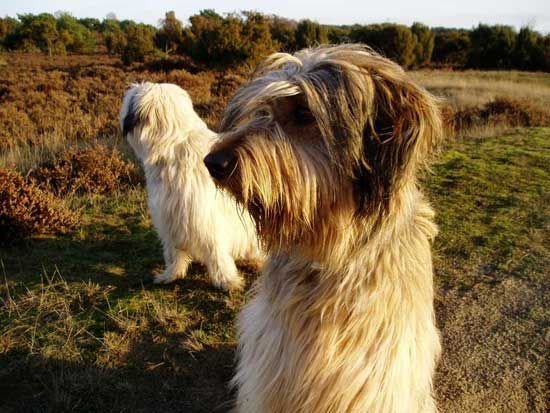
The Catalan Sheepdog is a very smart and clever dog, which makes the training process quite easy and enjoyable. They quickly grasp new commands and aim to please their owner. Obedience is a characteristic trait of this breed. However, their intelligence and ability to make their own decisions can sometimes show up as stubbornness or attempts to “outsmart” their owner. Therefore, it’s important to establish clear rules from the beginning and be consistent in your demands.
Early socialization is extremely important for the Catalan Sheepdog. Introduce your puppy to different people, sounds, places, and other animals (after appropriate vaccinations). This will help them grow into a confident and well-adjusted dog that won’t show excessive shyness or aggression. A well-socialized Catalan Sheepdog reacts calmly to new situations and easily gets along with others.
Training methods: The best approach is based on positive reinforcement—praise, treats, and toys. Harshness and physical punishment are unacceptable, as they can break the dog’s trust and lead to behavioral problems. Catalan Sheepdogs are very sensitive to their owner’s mood and respond well to affection and encouragement. Training sessions should be short, engaging, and varied so the dog doesn’t get bored.
This breed excels in various dog sports, such as agility, obedience, and flyball. Participating in sports not only provides the necessary physical exercise but also stimulates the dog’s mental activity and strengthens the bond with its owner. In 1974, at a show in Paris, a Catalan Sheepdog named Ungos de Laquetania won the title of World Champion, which highlights the breed’s high potential.
It’s important to remember their herding instinct. If you don’t plan to use the dog for herding livestock, this instinct may manifest in games or attempts to “herd” family members. Teach the dog a “leave it” command or redirect its energy to other activities.
Nutrition for the Catalan Sheepdog: Key Recommendations
Pros and Cons of the Catalan Sheepdog Breed

Pros:
- High intelligence and cleverness: Learns easily, understands the owner with just a glance.
- Loyalty and friendliness: A wonderful companion for the whole family, gets along well with children.
- Good watchdog qualities: Always warns of danger but without excessive aggression.
- Energetic and playful: The perfect partner for active people and outdoor games.
- Adaptable to different conditions: Tolerates both cold and moderate heat (with access to shade and water).
- Relatively robust health: Rarely gets sick with proper care and nutrition.
- Not prone to excessive barking without reason.
- Striking appearance: Long, beautiful coat draws attention (though it does require care).
Cons:
- Requires regular and thorough coat care: Brushing several times a week, especially during shedding seasons.
- High need for physical activity: Not suitable for inactive people or those who don’t have time for long walks.
- Needs early socialization and consistent training: Otherwise, it may show stubbornness or excessive wariness of strangers.
- Strong herding instinct: May try to “herd” family members or other animals, which requires correction.
- Can get bored and show destructive behavior if left alone for long periods without enough activity and attention.
- Prone to some hereditary diseases (e.g., hip dysplasia).
- Twice-a-year shedding can be intense.
Breeds with similar needs for activity and coat care, but with different temperament nuances, include the White Swiss Shepherd Dog or some representatives of the Majorca Shepherd Dog, although the latter has more pronounced guarding qualities.
Fun Facts About the Catalan Sheepdog
- Olympic Mascot: A Catalan Sheepdog puppy named Cobi was the official mascot of the 1992 Summer Olympics in Barcelona. Its stylized image became one of the most recognizable Olympic mascots.
- Messenger Dogs: During the Spanish Civil War, Catalan Sheepdogs were used as messenger and guard dogs due to their intelligence and endurance.
- “Two-Phase” Shedding: The unique characteristic of the Catalan Sheepdog’s shedding is that the front half of the body sheds first, and then the back half sheds later. It looks as if the dog is made of two different halves.
- Variety of Names: In Spain, the breed is called Gos d’Atura Català. “Gos” means “dog,” “d’atura” means “herding” or “stopping” (flocks), and “català” means Catalan.
- Masters of Camouflage: Their mottled coloring helped them blend into the mountain landscape, which was useful for both herding and protection from predators.
- Independent Thinkers: When working with flocks in the mountains, Catalan Sheepdogs were often far from the shepherd and had to make their own decisions. This trait has been preserved to this day.
- A Breed on the Brink: After World War II and the Spanish Civil War, the breed’s numbers decreased significantly, and it was on the verge of extinction. Thanks to the efforts of enthusiasts, the breed was successfully restored.
Frequently Asked Questions About the Catalan Sheepdog (FAQ)
Is the Catalan Sheepdog suitable for apartment living?
Yes, the Catalan Sheepdog can live in an apartment, but only if it is provided with a sufficient amount of daily physical activity (long walks, active games) and mental stimulation. Without this, the dog may get bored and exhibit destructive behavior. It needs space to move, so a very small apartment may not be the best option.
Does the Catalan Sheepdog shed a lot?
Yes, the Catalan Sheepdog sheds twice a year (in the spring and fall), and the shedding can be quite intense. During this period, daily brushing is necessary. At other times, regular brushing (2-3 times a week) will help reduce the amount of hair in the house.
Does the Catalan Sheepdog get along well with children and other animals?
Generally, yes. Catalan Sheepdogs are known for their patient and gentle demeanor with children, especially if they are raised together. They can also get along well with other pets (cats, other dogs), especially with proper socialization from a young age. However, their herding instinct may sometimes manifest as attempts to “herd” children or animals.
Is it difficult to care for the Catalan Sheepdog’s coat?
Coat care requires regularity and time. The long coat is prone to matting, so it needs to be brushed thoroughly several times a week. If you are not prepared to dedicate enough attention to this, you may want to consider another breed.
Is this a noisy breed?
Catalan Sheepdogs are not prone to barking without reason. They will bark to warn of approaching strangers or something unusual, performing their guarding duties. With proper training and sufficient activity, they will not be excessively noisy.
What level of activity does a Catalan Sheepdog need?
Very high. This breed needs daily long walks (1.5-2 hours minimum) with the opportunity to run and play. They are ideal for active people who enjoy sports and spending time outdoors.
Is it easy to train a Catalan Sheepdog?
Yes, thanks to their high intelligence and desire to please, they are quite easy to train. However, they require consistency, patience, and the use of positive reinforcement methods. Their cleverness can sometimes lead to attempts at manipulation, so it’s important to be a firm but fair leader.
Video About the Breed
- Clever, hardy, easy to train
- Friendly, devoted, good with children
- Versatile: herding, guarding, companion
- Very robust “natural” health
- A high need for exercise and activity
- Reserved with strangers (herding watchfulness)
- The dense coat needs care
- Prone to barking and herding “nipping”
| Pyrenean Sheepdog (long-haired) | Bearded Collie | Polish Lowland Sheepdog | |
|---|---|---|---|
| Height | 38–48 cm | 51–56 cm | 42–50 cm |
| Energy | 5 | 4 | 4 |
| Apartment | 2.5 | 2.5 | 3 |
| Beginners | 3 | 3 | 3 |
Is the Catalan Sheepdog good for a family?
Is the Catalan Sheepdog suited to a novice?
Can the Catalan Sheepdog be kept in an apartment?
FCI Standard No. 87 · Real Sociedad Canina de España
For apartments · For kids · For beginners · Active · Smartest · Hypoallergenic · All rankings →